
(Last updated: Aug 2026)
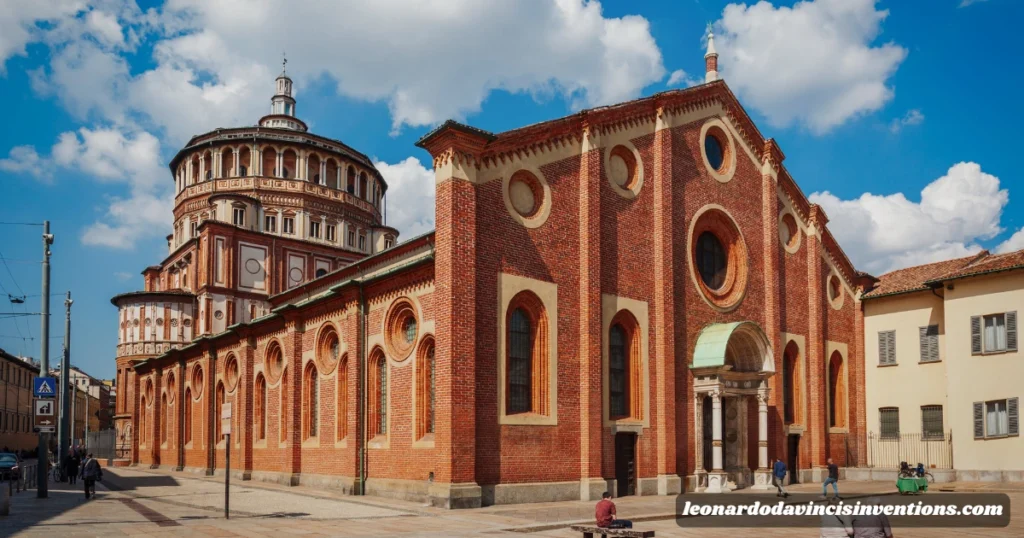
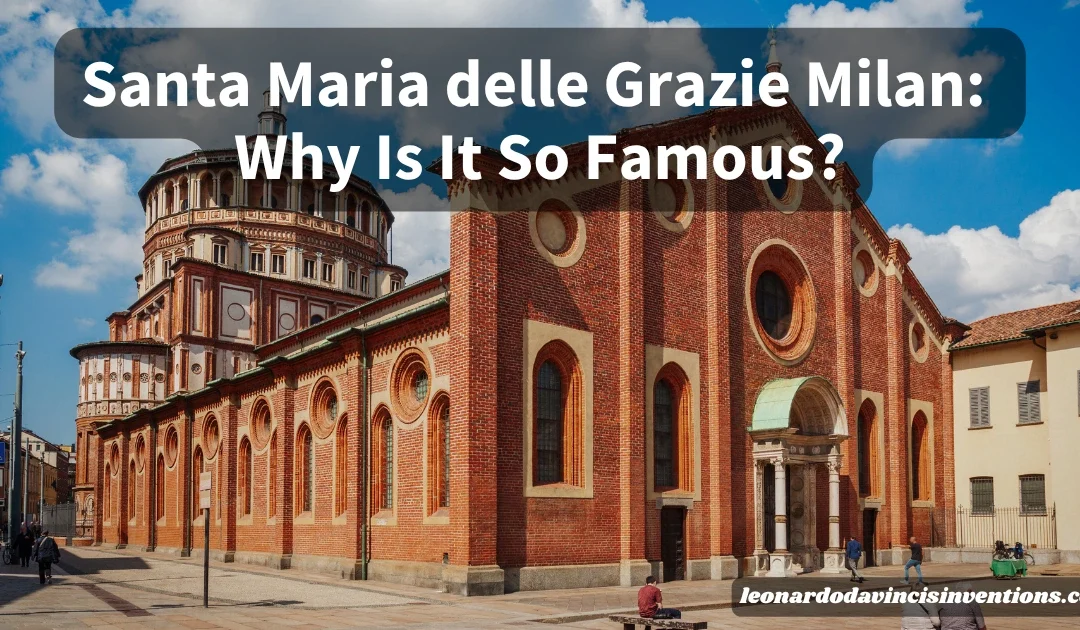
Santa Maria delle Grazie in Milan is one of the most significant religious and artistic sites in Italy — a 15th-century church and convent that houses, in its former dining hall, one of the most studied paintings in human history.
It is not simply a church. It is the place where Leonardo da Vinci's vision of the Last Supper has survived five centuries of war, neglect, and restoration, remaining a defining monument of the Renaissance.
Understanding this site means understanding something larger: how art, faith, and political power merged in Renaissance Milan, and why a single mural painted on a crumbling wall continues to draw millions of visitors each year. The experience of standing before the Last Supper — after waiting, after learning its history — is unlike anything else Italy has to offer.
This post is all about Santa Maria delle Grazie in Milan — its history, its architecture, the masterpiece it houses, and how to experience it as a thoughtful traveler.
What is Santa Maria delle Grazie in Milan?
History of Santa Maria delle Grazie
From Dominican Convent to Sforza Monument
Construction of the church began in 1463, commissioned by the Dominican Order under the patronage of Gaspare Vimercate, a Milanese nobleman. The original design was relatively modest — a Gothic structure suited to the contemplative needs of the friars who lived there.
Everything changed in 1492, when Ludovico Sforza — known as "Il Moro" and the most powerful ruler of Renaissance Milan — claimed the church as his personal dynastic monument. He brought in the great Donato Bramante, who transformed the eastern end of the building into something entirely new: a sweeping Renaissance tribune crowned by a massive drum and dome.
Bramante's addition is considered one of the purest expressions of early Renaissance architecture in northern Italy. The contrast between the older Gothic nave and Bramante's luminous, perfectly proportioned tribune is still visible today — and worth examining closely when you visit.
Leonardo and the Convent Refectory
At the same time, Bramante was reshaping the church, Ludovico Sforza commissioned Leonardo da Vinci to paint the north wall of the convent's refectory. The result — The Last Supper — took roughly three years to complete.
Leonardo made an unusual technical choice. Rather than using the traditional fresco technique (painting into wet plaster), he applied tempera and oil directly onto a dry plastered wall. He wanted to revise and layer the work as a panel painter would.
The choice allowed him greater control and detail — but it also made the painting vulnerable. Deterioration began within decades of its completion.
What survives today is the product of centuries of damage, overpainting, and careful restoration. Yet the composition, the emotional clarity of the twelve apostles, and the extraordinary naturalism of each figure remain legible — and overwhelming.
War, Restoration, and UNESCO Recognition
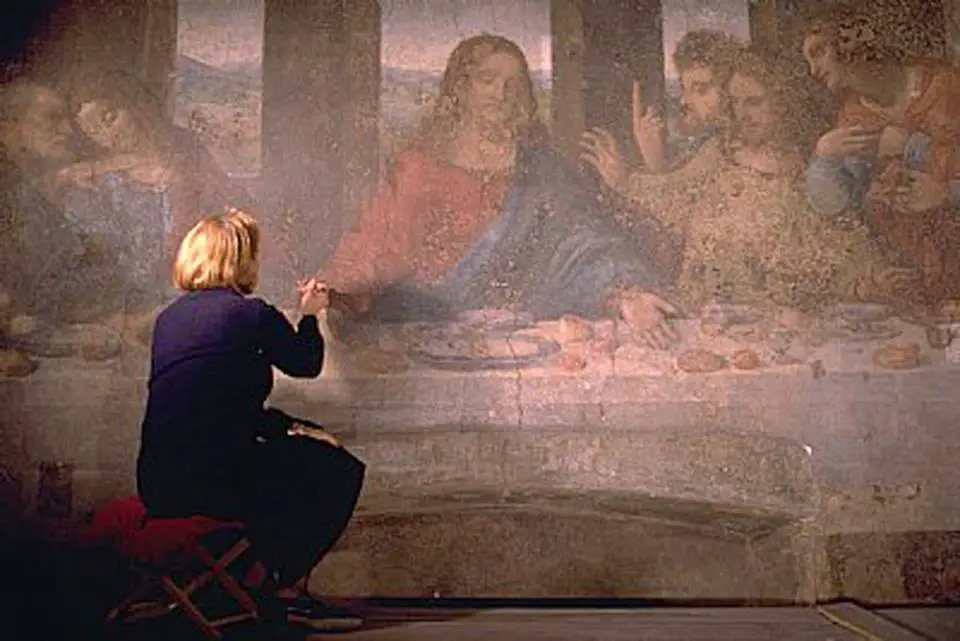
The refectory suffered heavy bomb damage in 1943 during World War II. The exterior walls collapsed, but the wall bearing the Last Supper survived — protected, many believe, by sandbags that local custodians had packed around it.
UNESCO designated Santa Maria delle Grazie, together with the Last Supper, a World Heritage Site in 1980. A major restoration of the painting, completed in 1999 after 21 years of painstaking work, stripped away centuries of retouching and stabilized the original pigments. The version visible today is the most scientifically accurate view of Leonardo's original work ever seen in modern times.
Understanding this layered history before you arrive can transform the experience entirely — especially with expert context and priority entry, as seen in these guided Last Supper tours with skip-the-line access, where art historians unpack Leonardo’s technique, symbolism, and Bramante’s architectural vision.
Leonardo's Works and What You'll Find Inside
The Last Supper: Reading the Painting
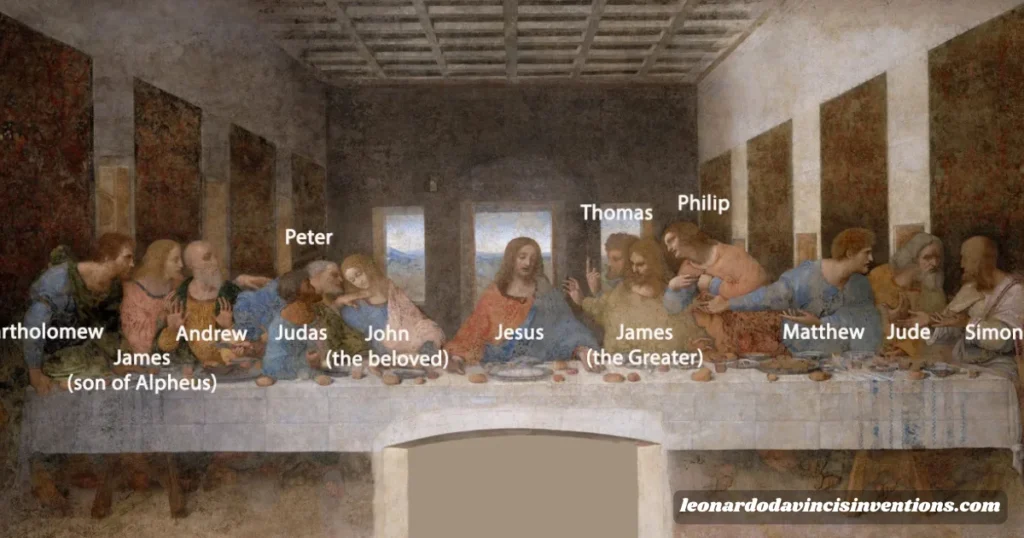
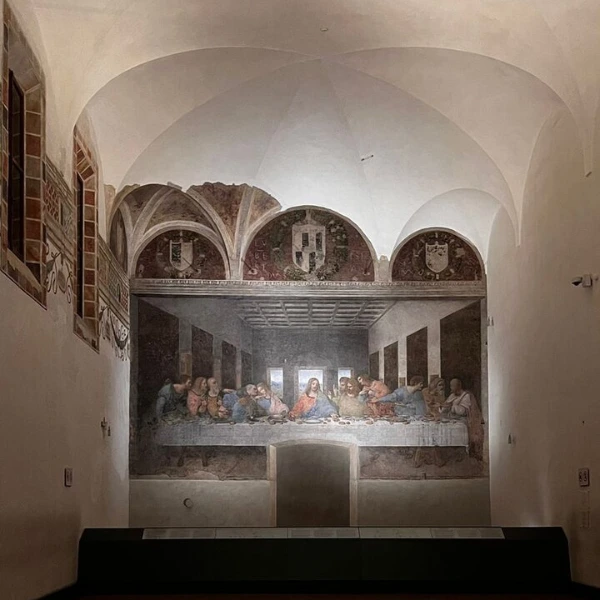
The Last Supper measures roughly 4.6 by 8.8 meters. It covers the entire north wall of the refectory, positioned so that the painted perspective aligns with the room's real architecture — creating an illusion that the scene extends the space itself.
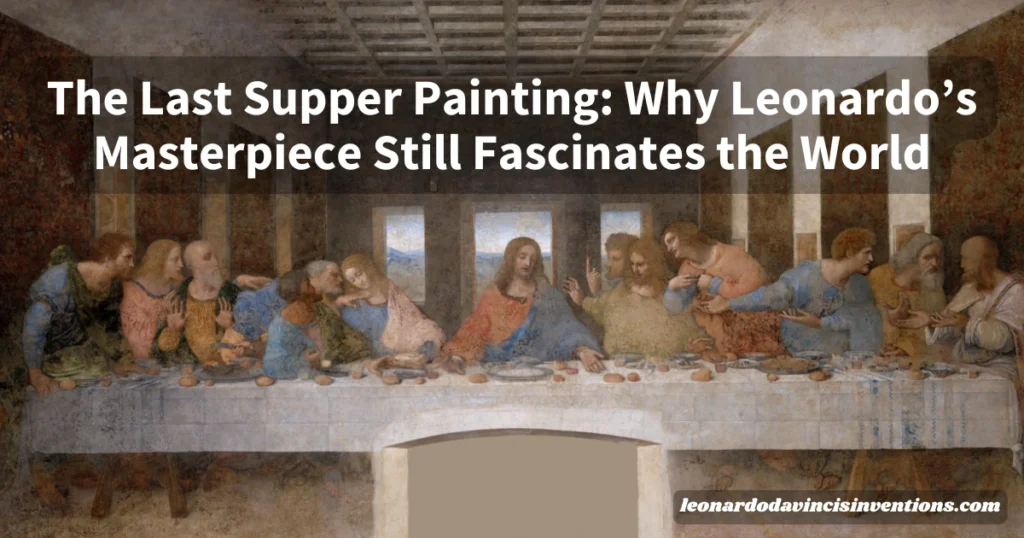
Leonardo depicted the moment described in the Gospel of John when Christ announces that one among his disciples will betray him. The twelve apostles react in groups of three, each with distinct gestures and expressions.
Judas — holding a small money bag — is the only figure who leans away from the light. Christ sits at the center, serene and resigned, his arms open in a gesture that simultaneously offers and accepts.
The painting is a masterclass in narrative psychology. Leonardo studied human emotion obsessively, filling notebooks with sketches of faces caught in extreme states — grief, surprise, denial, rage. Every apostle at that table is a case study. Peter grips a knife. John nearly faints. Thomas raises a single finger as if demanding clarification from God himself.
The Church Interior and Bramante's Tribune
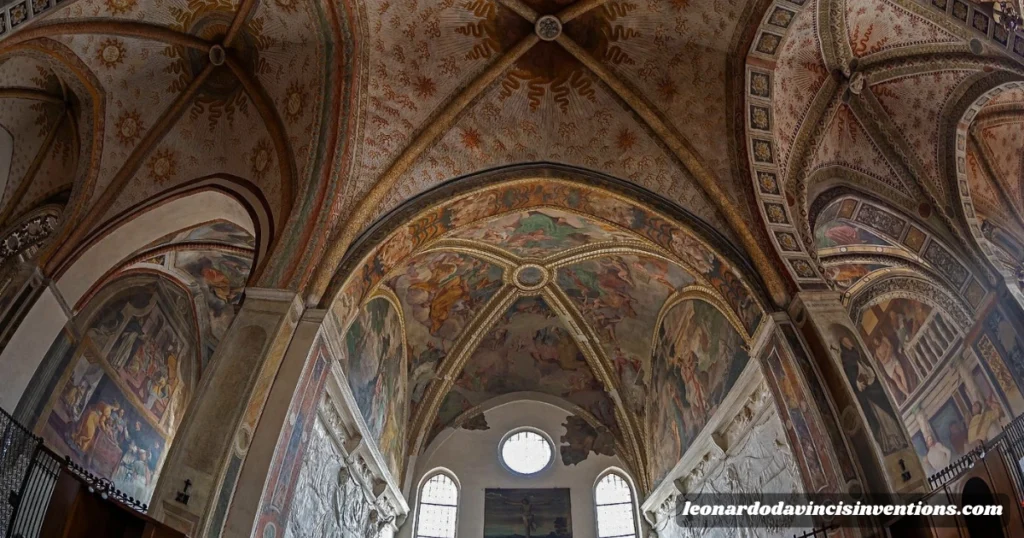
Most visitors focus entirely on the Last Supper and miss the church itself. This is a mistake worth correcting.
The interior of Santa Maria delle Grazie rewards slow attention. The older Gothic nave gives way to Bramante's late-15th-century tribune — an airy, centrally planned space lit by windows set into the drum of the dome. The geometry is deliberate and mathematical, reflecting the same humanist ideals that shaped Leonardo's own approach to proportion and spatial harmony.
Look for the terracotta decorative details on the exterior of Bramante's apse. They are among the finest examples of Lombard Renaissance ornamental work in existence — detailed, warm-colored, and easy to overlook in the rush toward the refectory.
The Cloister and Convent Spaces
The small cloister adjacent to the church, known as the Chiostro delle Rane (Cloister of the Frogs), is a peaceful, often-overlooked space. Bramante is attributed with its design, and its proportions carry the same quiet clarity as the tribune.
Access to the cloister depends on visiting arrangements, but it is worth seeking out. Standing there — in a space that Leonardo himself would have crossed regularly during his years working on the Last Supper — creates a different kind of proximity to history than the refectory alone can offer.
How to Experience Santa Maria delle Grazie Today
Tickets, Timing, and the 15-Minute Rule
Viewing the Last Supper is tightly controlled. The refectory admits small groups — generally no more than 30 visitors at a time — for precisely 15 minutes. The climate-controlled environment is designed to protect the fragile painting from humidity and temperature fluctuation.
Tickets sell out weeks, and often months, in advance. Walk-in access is essentially impossible during peak months. Booking through the official Italian Ministry of Culture ticketing system (vivaticket.com) is the standard approach, but slots disappear quickly.
The museum opens Tuesday through Sunday. Monday is closed. Morning slots tend to offer slightly softer light through the refectory's windows, though the artificial lighting system is designed to minimize variation throughout the day.
What to Do With Your Time in the Space
Fifteen minutes sounds brief. In practice, it is enough if you arrive knowing what to look for. Before entering, study the composition. Know the groups of apostles, know where Judas sits, know that the window behind Christ's head functions as a halo created by negative space rather than paint.
Inside, resist the impulse to photograph immediately. Let your eyes adjust. The painting is large and occupies the room in a way that photographs simply do not convey. The sense of depth Leonardo engineered — the coffered ceiling continuing the room's actual ceiling, the tapestries on the side walls echoing the real walls — is only fully experienced in person.
Ready to Plan Your Visit?
Because The Last Supper has limited daily access, tickets often sell out early. Explore available tickets and guided tours.
Plan Your Last Supper VisitThe Neighborhood: Magenta and Corso Magenta
Santa Maria delle Grazie sits on Corso Magenta in the Magenta neighborhood, one of Milan's quieter and more residential central districts. The area surrounding the church is worth exploring on foot.
The Museo Nazionale della Scienza e della Tecnologia Leonardo da Vinci is a short walk away — Italy's largest science museum, which houses an entire section dedicated to Leonardo's machines and inventions, including large-scale reconstructions built from his notebooks. For visitors interested in Leonardo beyond the Last Supper, this museum is essential.
Castello Sforzesco, the great fortress-palace of the Sforza family, is also walkable from Santa Maria delle Grazie. Ludovico Sforza's court — the court where Leonardo worked as artist, engineer, and festival designer for nearly two decades — was based there.
The castle now houses several civic museums, including collections of sculpture, furniture, and Milanese medieval art. Michelangelo's unfinished Rondanini Pietà is displayed in the castle's museum of ancient art.
Exploring Leonardo da Vinci in Milan and Beyond
Milan was the city where Leonardo spent the most productive years of his life, nearly twenty years at the court of Ludovico Sforza. The Last Supper and the science museum are the two anchor sites, but the city's relationship with Leonardo extends further, into the canals he helped design and the notebooks that filled the Ambrosiana library.
For travelers moving through northern Italy, Leonardo's connection to Florence — the city where his career began — offers essential context for understanding how the painter became the polymath. The Uffizi holds early Leonardos, and the Bargello preserves sculptural works from his formative circle.
Further afield, Venice and its libraries hold pages from Leonardo's notebooks that never made it into the major codices — rare glimpses of ideas he never fully developed. And in France, the Château du Clos Lucé in Amboise preserves the house where Leonardo spent his final years under the patronage of King Francis I — a fitting end to a life spent in motion between Italian courts.
Final Thoughts
This post was all about Santa Maria delle Grazie, Milan — one of the most layered and historically resonant sites in Renaissance Italy. What makes it extraordinary is not simply the painting it contains, but the way the entire complex — the Gothic nave, Bramante's tribune, the small cloister, the refectory — speaks to a single remarkable moment in time when Milan was the cultural capital of Europe.
Leonardo da Vinci spent years in this neighborhood. He crossed the cloister, ate in rooms adjacent to the refectory, and argued with Ludovico Sforza about whether the painting would ever be finished.
Standing before the Last Supper today, knowing even a fraction of that history, transforms what might otherwise be a five-minute photo stop into something closer to what it actually is: one of the most concentrated expressions of human curiosity, technical ambition, and narrative empathy ever committed to a wall.
The painting is fragile. Time has taken its toll. But it endures — and so does the invitation it extends to anyone willing to look carefully enough.
Getting to the Last Supper requires planning, and the 15-minute window rewards preparation. For travelers who want to arrive informed — understanding the painting's technique, its symbolism, its restoration history — a guided experience remains the most reliable way to make the visit count.
Travel Essentials for Visiting Milan for the First Time
Preparing for a visit to Milan often comes down to a few small details that can make long museum days, historic walking routes, and city exploration significantly more comfortable.
Comfortable Walking Shoes
Milan’s major landmarks are often best experienced on foot, with visitors covering long distances between museums, churches, and historic streets. Supportive shoes can make a full day of exploration far more comfortable → explore comfortable walking shoes for long city days
Portable Power Bank
Navigation, photography, and digital tickets can quickly drain battery life during a full day in the city. A compact power bank helps avoid interruptions, with many visitors choosing lightweight options → view reliable portable chargers
Lightweight Day Backpack
Carrying essentials like water, tickets, and small personal items becomes easier with a compact backpack designed for daily use. Many visitors prefer lightweight designs that balance comfort and accessibility →
see lightweight day backpacks for travel

FAQs about the Santa Maria delle Grazie in Milan
Yes, you can visit The Last Supper in Milan, but access is strictly controlled and requires advance booking. Visitors are admitted in small timed groups for a short viewing period, typically around 15 minutes, to protect the fragile painting.
Entry to the church of Santa Maria delle Grazie is generally free, but visiting The Last Supper requires a paid ticket and advance reservation. Special occasions may offer free entry, but booking is still mandatory.
Santa Maria delle Grazie is considered one of Milan’s most important cultural sites because it houses Leonardo da Vinci’s The Last Supper and represents a key example of Renaissance art and architecture.
Yes, the original Last Supper painting by Leonardo da Vinci is located in Milan, on the refectory wall at Santa Maria delle Grazie, where it has remained since the 15th century.
Tickets are difficult to obtain because visitor numbers are strictly limited to protect the fragile mural, and demand is extremely high, requiring reservations weeks or even months in advance.
Yes, visitors must follow a modest dress code that covers shoulders and knees, as the site is part of a religious complex, and entry may be denied if the requirements are not met.
Related Post You May Like
Disclosure: This page may contain affiliate links. If you choose an experience through them, it helps support the site at no extra cost to you.
 Leonardo Bianchi is the founder of Leonardo da Vinci Inventions & Experiences, a cultural travel guide helping visitors explore Leonardo da Vinci’s art, inventions, and legacy across Italy and Paris.