
(Last updated: Aug 2026)
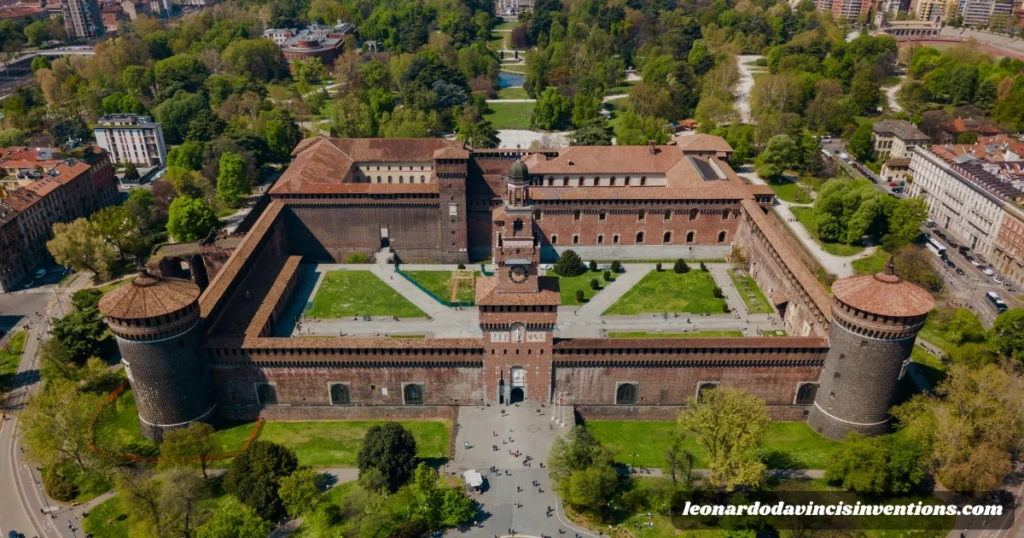
Sforza Castle in Milan — known in Italian as Castello Sforzesco — is one of the most significant Renaissance structures in Europe, a place where military ambition and artistic brilliance collided under one roof. For five extraordinary decades, Leonardo da Vinci walked its corridors, painted its ceilings, and designed its defenses, leaving behind traces that visitors can still encounter today.
Understanding this fortress means understanding the world that made Leonardo. It was not simply a duke's residence. It was a laboratory for ideas — architectural, artistic, and engineering — funded by the wealthiest dynasty in northern Italy. Few monuments on the continent can claim a connection to so many Renaissance masterpieces in a single location.
This post is all about Sforza Castle in Milan — its turbulent history, its treasures, and how to experience it for yourself on a visit to the city.
What is the Sforza Castle in Milan?
History of Sforza Castle in Milan
From Military Fortress to Renaissance Court
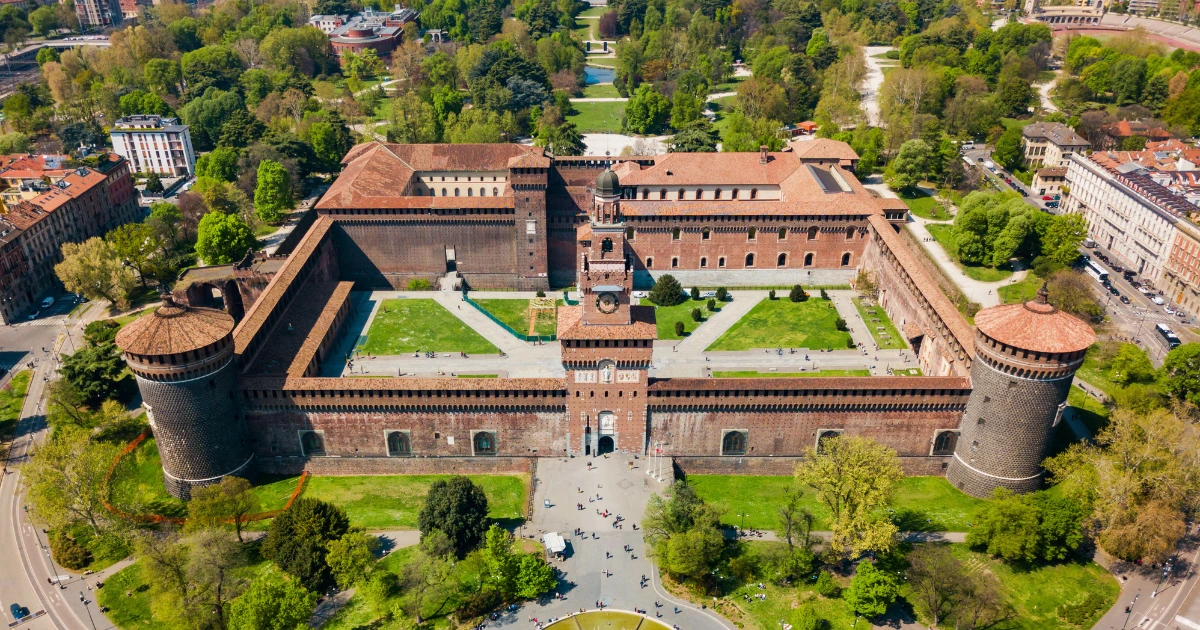
The castle's origins are older than most visitors realize. The first fortification on this site dates to 1368, built under Galeazzo II Visconti. After decades of political upheaval and a brief period as a popular republic, Francesco Sforza — a mercenary general turned duke — took control of Milan in 1450 and began transforming the ruined fort into a palatial stronghold.
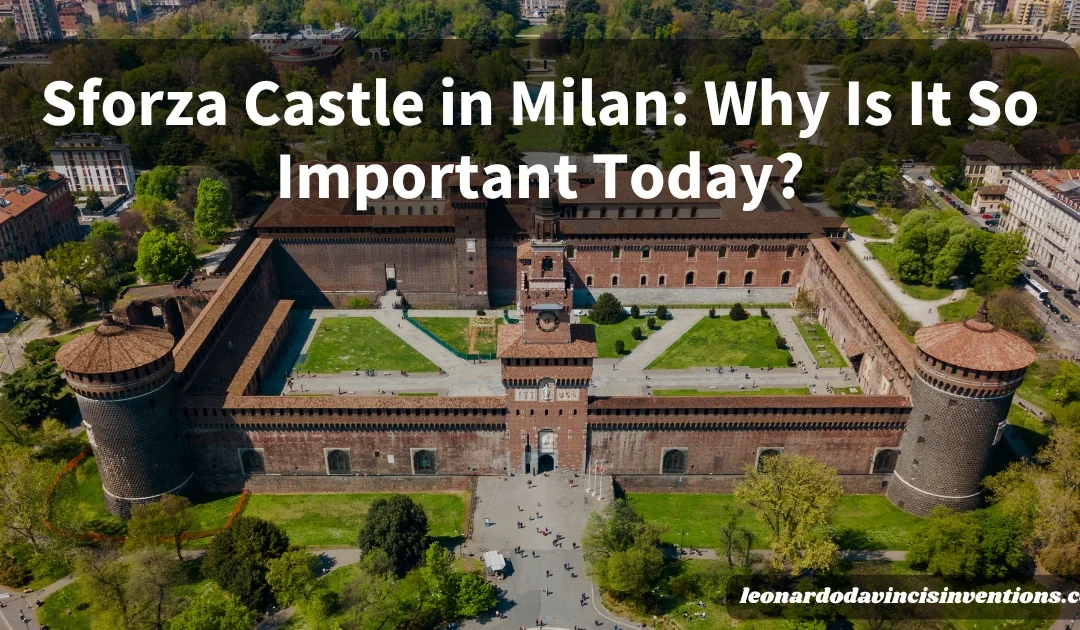
What he built was immense. Thick brick walls stretched across 180,000 square meters. Round towers anchored each corner. A central keep, the Torre del Filarete, rose above the city skyline and became the castle's defining silhouette. This was not merely a defensive structure. It was a declaration: the Sforzas were the new power in northern Italy.
Successive dukes added courts, apartments, chapels, and gardens. By the time Ludovico Sforza — called 'il Moro' — took power in the 1480s, the Castello Sforzesco was one of the most cultured courts in Europe. It attracted poets, engineers, architects, and painters. It attracted Leonardo.
Leonardo da Vinci at the Castello Sforzesco
Leonardo arrived in Milan around 1482, having written a famous letter to Ludovico listing his skills as a military engineer, bridge builder, and — almost as an afterthought — painter. He stayed for nearly twenty years.
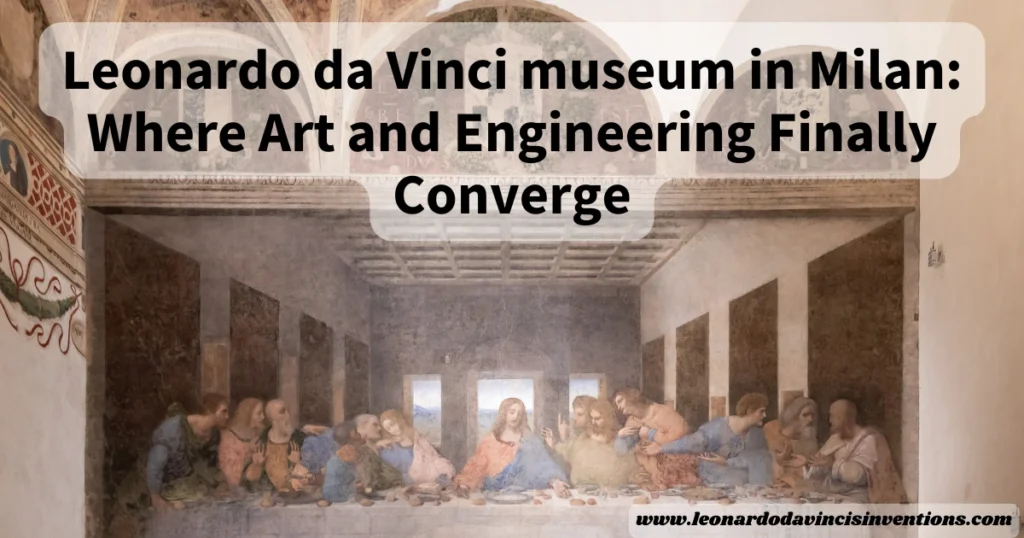
During that time, he painted The Last Supper at the nearby church of Santa Maria delle Grazie. He designed court entertainments, hydraulic machines, and canal systems. And inside the Castello itself, he painted the ceiling of the Sala delle Asse — a stunning trellis of interlocking mulberry branches, still visible today after painstaking restoration.
The relationship between Leonardo and the Sforzas was never simple. He served as a painter, engineer, pageant designer, and occasional military consultant. The castle was his base of operations in Milan — the place he returned to between projects, where he kept notebooks and worked out ideas that would appear in his codices for decades afterward.
The Castle After the Sforza
The Sforza dynasty fell in 1499 when French forces under Louis XII invaded Milan. Leonardo left the city. The castle passed through French, Spanish, and Austrian hands over the following centuries, serving alternately as barracks, prison, and public park.
It was not until the late 19th century, under the leadership of architect Luca Beltrami, that the Castello Sforzesco was systematically restored. The Torre del Filarete, demolished in a gunpowder explosion in 1521, was rebuilt. The museums opened to the public, and the fortress regained something approaching its Renaissance splendor.
For visitors wanting to connect this layered history with Leonardo’s presence in Milan, exploring both the castle and nearby masterpieces through a guided Last Supper and Sforza Castle tour can bring the experience into sharper focus.
Leonardo Works and Exhibits Inside the Castello Sforzesco
The Sala delle Asse: Leonardo's Only Surviving Fresco in Milan
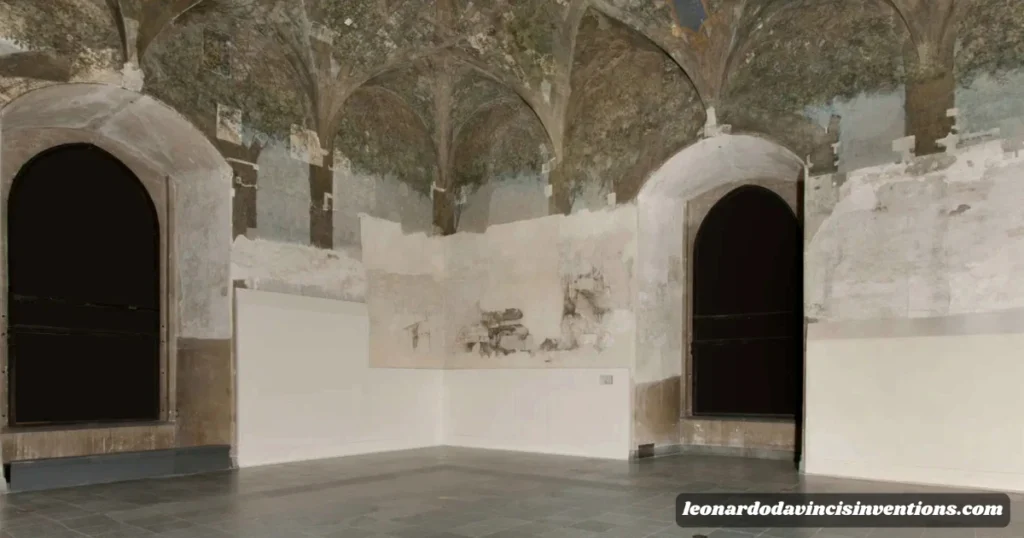
Of everything Leonardo created during his Milan years, the Sala delle Asse is the only major work still in its original location inside the Castello. Painted around 1498, this large octagonal room features a ceiling covered in a painted canopy of mulberry trees — their branches intertwining in geometric patterns that mirror the mathematical interests Leonardo was pursuing in his notebooks at the same time.
The word 'asse' means planks, likely referring to the wooden panels once hung here. But Leonardo transformed a utilitarian space into something astonishing. Each branch seems to grow naturally from the stone walls, while gold ropes weave through the canopy in patterns that blend heraldry, botany, and pure visual rhythm.
Recent restoration work, completed in stages over the past decade, uncovered sinopie — preparatory drawings made directly on the plaster — that revealed Leonardo's working process in extraordinary detail. You can see not just the finished fresco, but the thinking behind it.
Michelangelo's Rondanini Pietà
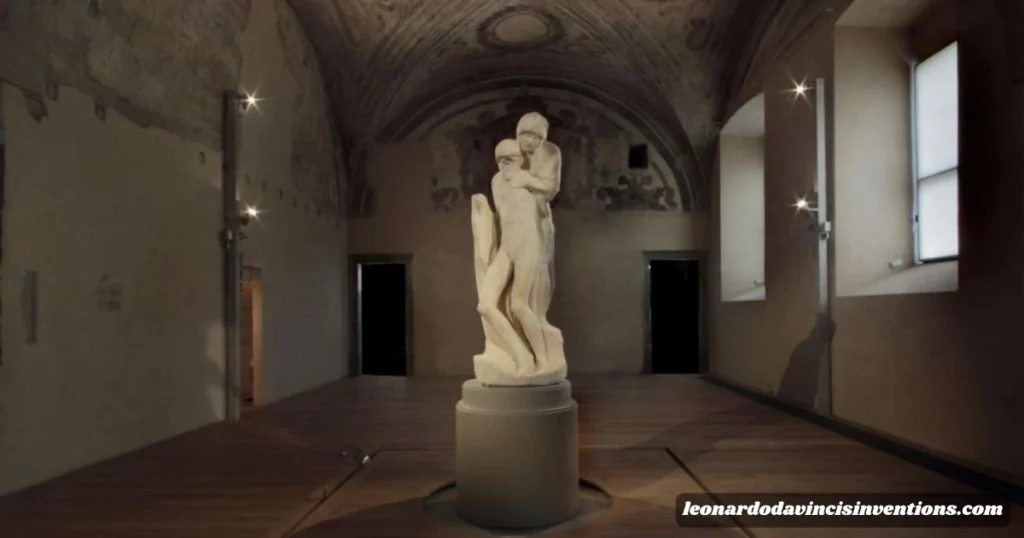
The Castello Sforzesco houses one of the great final works in Western art. Michelangelo's Rondanini Pietà, on which the sculptor was working just days before his death in 1564, stands in a dedicated space in the Ospedale Spagnolo wing. It is unfinished. It is rough. And it is devastating in its emotional directness.
The work is not a Leonardo piece — but its presence here speaks to the density of artistic genius concentrated in Milan during the Renaissance. You are in a city that Michelangelo visited, that Raphael's contemporaries shaped, that Leonardo called home for two decades.
The Museum Collections
The Sforza Castle museum complex encompasses multiple collections spread across the fortress:
- The Museum of Ancient Art — Egyptian artifacts, Roman sculpture, medieval armor, and Renaissance decorative arts
- The Pinacoteca del Castello — paintings from the 13th to 18th centuries, including works by Mantegna, Bellini, and Filippino Lippi
- The Museum of Musical Instruments — one of the finest collections in Europe
- The Prehistoric collections and the Applied Arts Museum
Together they make the Castello Sforzesco one of the most content-rich museum complexes in Italy — a full day's visit, at minimum.
How to Experience Sforza Castle in Milan Today
Planning Your Visit
The Castello Sforzesco is located in the Parco Sempione area, about a ten-minute walk from Milan's main train station and a short metro ride from the Duomo. Entry to the castle grounds is free. Entry to the museum collections requires a ticket.
The castle is open every day except Mondays. Museum hours typically run from 9 AM to 5:30 PM, with last entry at 5 PM. Prices are modest by major-museum standards — around €5 for general admission, with reductions for students and over-65s. Combination tickets covering multiple collections offer the best value for those planning to spend the day.
Tip: The Sala delle Asse has specific opening hours and may be closed at times due to ongoing restoration work. Check the museum website before your visit to confirm access.
What to Prioritize Inside
If your primary interest is Leonardo, head first to the Sala delle Asse on the ground floor of the Rocchetta wing. Give yourself time. The ceiling is large, the details are intricate, and the space rewards attention.
Then move to the Rondanini Pietà — even if it lies outside Leonardo's biography, the emotional experience of standing before Michelangelo's last work is something difficult to articulate and impossible to forget.
The Pinacoteca del Castello rounds out the artistic picture. Its rooms are relatively uncrowded compared to nearby major galleries like the Pinacoteca di Brera, making the experience more intimate.
Combining the Castle with Other Leonardo Sites in Milan
The Castello Sforzesco is best understood as part of a larger Leonardo itinerary in Milan. The city holds an extraordinary concentration of sites connected to his twenty-year residence.
- Santa Maria delle Grazie — The Last Supper, 15 minutes on foot from the castle (advance booking essential)
- Museo Nazionale della Scienza e della Tecnologia Leonardo da Vinci — the world's largest collection of models based on his designs
- The navigli canal system — the city's network of canals, whose design Leonardo helped refine
A single day allows you to see the castle and the Museo della Scienza. The Last Supper requires its own dedicated slot — book weeks ahead, as visitor numbers are strictly controlled.
Ready to Plan Your Visit?
Begin with timed entry to The Last Supper, then walk to Castello Sforzesco to explore Leonardo's Milan.
Exploring Leonardo da Vinci in Italy
Milan was the city where Leonardo spent the most productive years of his life, but his story stretches across the Italian peninsula and beyond.
Florence, where he trained under Verrocchio and painted the Annunciation, holds its own concentration of his early work — the Uffizi Gallery, the Museo del Bargello, and the Museo Nazionale del Bargello all display works from his formative years.
Venice holds the Vitruvian Man in the Gallerie dell'Accademia — though access is restricted and requires special arrangements. Rome's Vatican Museums contain drawings connected to his later career.
And in Paris, the Louvre holds the single largest collection of Leonardo paintings in the world, including the Mona Lisa and The Virgin of the Rocks. Each city adds a chapter. Milan and the Castello Sforzesco are where the story becomes full.
Final Thoughts
This post was all about Sforza Castle in Milan — a fortress that outlasted its dynasty, absorbed centuries of European history, and still carries, in one painted room on its ground floor, the direct visual thinking of the most curious mind the Renaissance produced.
Leonardo's Sala delle Asse is not as famous as the Mona Lisa. It does not have crowds thirty deep. You can stand beneath it and simply look, for as long as you want.
That is what makes a visit to the Castello Sforzesco different from so many other encounters with Renaissance genius. The scale is human. The history is legible in the brickwork. And the art, including one of Leonardo's most technically ambitious ceiling paintings, is still exactly where he left it.
Travel Essentials for Visiting Milan for the First Time
Preparing for a visit to Milan often comes down to a few small details that can make long museum days, historic walking routes, and city exploration significantly more comfortable.
Secure Crossbody Bag
Busy areas near major attractions can require extra awareness. Many travelers prefer a compact crossbody bag worn in front to keep essentials accessible and secure →
explore practical crossbody bags for travel
Portable Power Bank
Navigation, photography, and digital tickets can quickly drain battery life during a full day in the city. A compact power bank helps avoid interruptions, with many visitors choosing lightweight options →
view reliable portable chargers
Comfortable Walking Shoes
Milan’s major landmarks are often best experienced on foot, with visitors covering long distances between museums, churches, and historic streets. Supportive shoes can make a full day of exploration far more comfortable →
Explore comfortable walking shoes for long city days

FAQs about the Sforza Castle in Milan
Yes—Sforza Castle in Milan is worth seeing because it combines Renaissance architecture, multiple museums, and open courtyards in one location. It is one of the city’s most important historical landmarks and offers both cultural depth and a relaxed visit in central Milan.
Sforza Castle in Milan is partially free to visit. Entry to the courtyards and exterior grounds is free, but you need a ticket to enter the museums inside. Admission is typically low-cost, with free entry on selected days.
Sforza Castle in Milan is famous as a Renaissance fortress that served as the residence of the powerful Sforza family. Today, it houses major museums and artworks, including works by Michelangelo, making it a key cultural site in Milan.
It takes about 2 to 3 hours to tour Sforza Castle in Milan. Visitors who explore multiple museums or exhibitions in depth may spend 3–4 hours in the complex.
Inside Sforza Castle in Milan are several museums and art collections, including Renaissance paintings, ancient art, musical instruments, and archaeology exhibits. Highlights include the Rondanini Pietà and extensive galleries covering Milan’s history.
2 to 3 days in Milan is enough to see major highlights like Sforza Castle, the Duomo, and key museums. This timeframe allows you to explore the city comfortably without rushing.
Related Post You May Like


Disclosure: This page may contain affiliate links. If you choose an experience through them, it helps support the site at no extra cost to you.
 Leonardo Bianchi is the founder of Leonardo da Vinci Inventions & Experiences, a cultural travel guide helping visitors explore Leonardo da Vinci’s art, inventions, and legacy across Italy and Paris.