
(Last updated: May 2026)
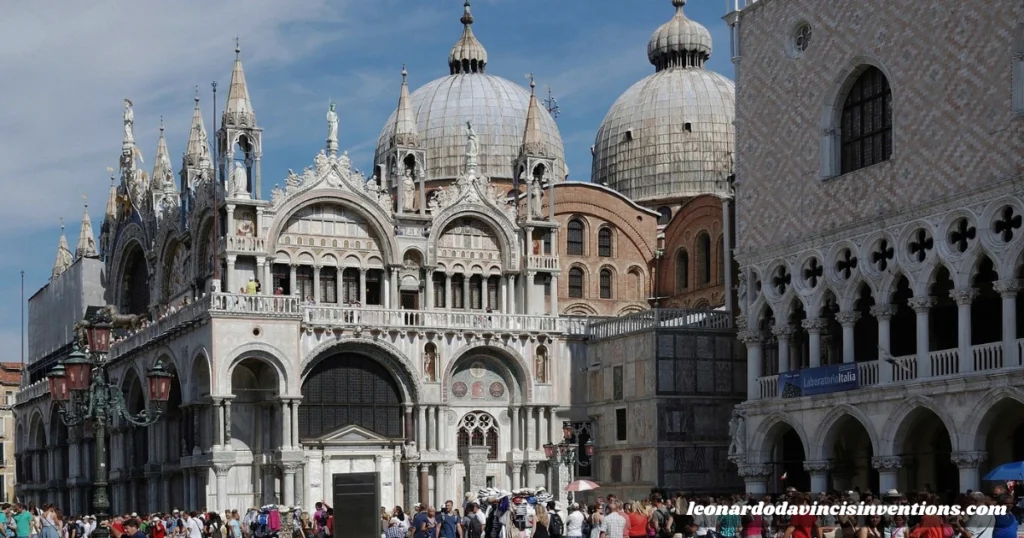
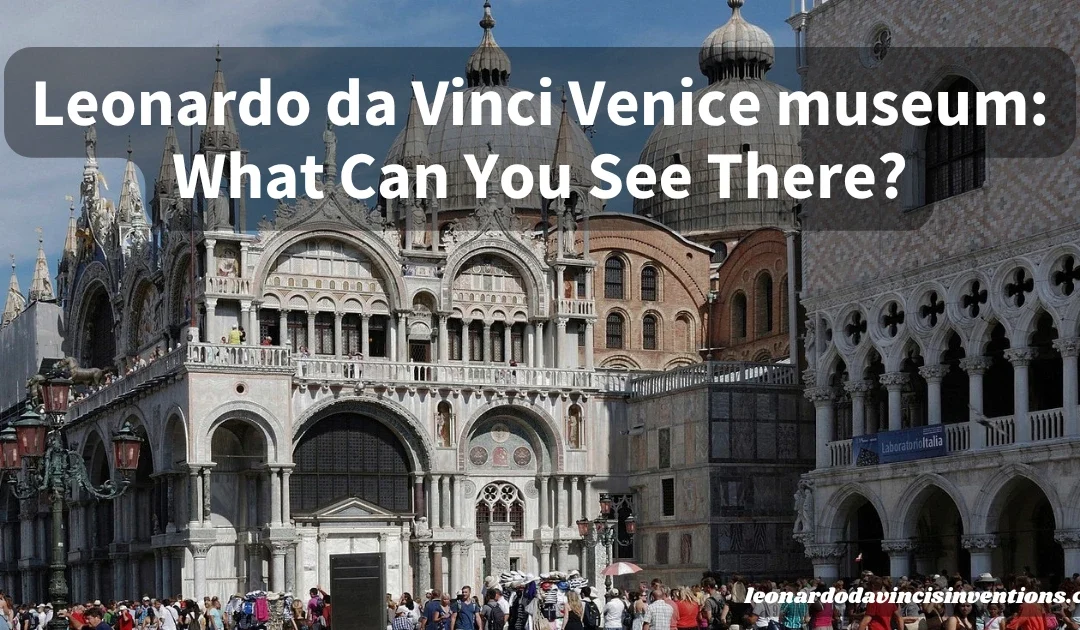
Leonardo da Vinci Venice museum is one of the most visited cultural destinations in Italy — and it is only one stop on a remarkable journey through the life, art, and inventions of history's greatest Renaissance mind. From the canals of Venice to the cobblestone streets of Florence, Leonardo da Vinci left a legacy so vast and varied that no single city or museum can contain it all.
Leonardo da Vinci lived from 1452 to 1519. In those 67 years, he produced some of the most celebrated paintings in human history, filled thousands of pages with scientific drawings and engineering plans, and explored nearly every field of human knowledge. He was a painter, sculptor, architect, musician, mathematician, engineer, inventor, anatomist, geologist, and writer — often all at once.
For travelers interested in Renaissance history, following Leonardo's footsteps across Italy and Europe is a deeply rewarding experience. Visiting the museums, churches, and galleries that hold his work connects you to a man who saw the world differently from everyone around him — and whose ideas were often centuries ahead of their time.
This post is all about the Leonardo da Vinci Venice museum — and the wider world of museums, exhibitions, and cultural sites dedicated to his extraordinary life and work.
What Is the Leonardo da Vinci Venice Museum?
The Leonardo da Vinci Venice museum, located in the historic San Barnaba church in the Dorsoduro district, is an interactive exhibition dedicated to Leonardo's scientific drawings and mechanical inventions. Visitors can explore life-size reconstructions of his legendary machines, study his iconic Vitruvian Man drawing, and discover the full breadth of his genius.
Leonardo da Vinci and the Renaissance: Why His Work Still Matters
To understand why the Leonardo da Vinci museum in Venice — and every other museum dedicated to him — matters so deeply, you need to understand the world he came from.
The Renaissance, which flourished in Italy from roughly the 14th to the 17th century, was a period of extraordinary intellectual and artistic renewal. After centuries of medieval tradition, European thinkers and artists began to look back to the classical world of ancient Greece and Rome for inspiration. They celebrated human reason, scientific observation, and artistic beauty.
Leonardo da Vinci was the perfect embodiment of this spirit. He was born in the small Tuscan town of Vinci in 1452, the illegitimate son of a Florentine notary. As a young man, he trained in the workshop of the painter Andrea del Verrocchio in Florence, mastering drawing, sculpture, and painting before moving on to work for some of the most powerful rulers of his age.
Leonardo's Life Across Italian Cities
Leonardo's life was defined by movement. He worked in Florence during the height of the Medici Renaissance. He spent nearly two decades in Milan at the court of Ludovico Sforza. He worked briefly in Venice, Rome, and other Italian cities. In his final years, he accepted an invitation from the French king Francis I and spent his last years in France, where he died at the Chateau du Clos Luce in 1519.
Each city where Leonardo lived left traces — in paintings, in notebooks, in buildings, and in institutions that now celebrate his name. Today, visitors can follow this trail across Italy and Europe, visiting the Leonardo da Vinci museums, galleries, and historic sites that preserve his extraordinary heritage.
The Notebooks: A Window Into His Mind
Perhaps the most astonishing aspect of Leonardo's legacy is his notebooks. Over the course of his life, he filled more than 7,000 pages with drawings, observations, and ideas. He studied the human body through dissection. He designed flying machines, solar power concentrators, armored vehicles, and hydraulic machines. He mapped the course of rivers and the patterns of water. He wrote about geology, botany, and the nature of light.
Many of the exhibits at the Leonardo da Vinci Interactive Museum in Venice — and at similar museums in Florence and Rome — are based directly on these notebooks. Seeing the machines engineers have built from his blueprints brings Leonardo's genius to life in a tangible, unforgettable way.
Why Leonardo Fascinates the Modern World
Part of what makes Leonardo so endlessly fascinating is the gap between his ideas and his time. He conceptualized flying machines 400 years before the Wright Brothers. He designed robots, submarines, and solar panels. His anatomical drawings were the most accurate produced in the Western world for centuries.
At the same time, his paintings remain among the most analyzed and admired works of art in human history. The Mona Lisa, housed in the Louvre in Paris, draws millions of visitors every year. The Last Supper, painted on a wall in Milan, is one of the most recognized images in art history. His brilliance combined scientific precision with artistic beauty in ways that still astonish viewers today.
The Leonardo da Vinci Venice Museum: Art, Science, and the Adriatic
Venice is one of Italy's most beautiful and distinctive cities. Built on a lagoon, it is a city of canals, bridges, and magnificent Gothic and Renaissance architecture. It is also home to one of the most engaging Leonardo exhibitions in Italy.
The Leonardo da Vinci museum Venice San Barnaba church is the main venue for Leonardo-related exhibitions in the city. The church of San Barnaba, situated in the quiet Dorsoduro neighborhood, has been converted into a permanent exhibition space where visitors can explore the inventions and ideas that Leonardo documented in his notebooks.
What You Will See at the Da Vinci Interactive Museum Venezia
The da Vinci Interactive Museum Venice is designed for general visitors, students, and curious travelers. Unlike traditional art museums, this exhibition focuses on Leonardo's role as an inventor and engineer. Visitors can see and sometimes interact with reconstructions of his machines.
The exhibition includes reconstructions of Leonardo's famous flying machines, his designs for armored vehicles, his hydraulic machines, and his studies of human anatomy. Many of the models are built directly from the da Vinci Venice blueprints — the original drawings preserved in his notebooks and codices.
One of the highlights is the display dedicated to the Vitruvian Man. This iconic drawing, which shows a male figure inscribed in a circle and a square, is one of the most recognized images in Western culture.
The Leonardo Vitruvian Man drawing is housed at the Gallerie dell'Accademia in Venice — making Venice one of the few places in the world where you can see this extraordinary work in person, though it is displayed only rarely due to its fragility.
The Vitruvian Man: A Symbol of Renaissance Thinking
The da Vinci Vitruvian Man is much more than a beautiful drawing. It is a visual argument about the relationship between the human body, mathematics, and the natural world. Leonardo drew it around 1490, inspired by the writings of the ancient Roman architect Vitruvius, who argued that human proportions could serve as the basis for architectural design.
Leonardo went further than Vitruvius. His drawing showed that the human body could be simultaneously inscribed in a circle — centered on the navel — and a square — centered on the genitals. This was a radical geometric insight. The Vitruvian Man drawing became a symbol of the Renaissance belief that humanity was the measure of all things.
For travelers visiting Venice, even seeing a high-quality reproduction of the Leonardo Vitruvian Man at the interactive museum offers a profound connection to Renaissance thinking.
Planning Your Visit to the Da Vinci Museum Venice Italy
The da Vinci museum Venice Italy is located in the Dorsoduro district, one of Venice's most atmospheric neighborhoods. It is easily accessible on foot from the Accademia Bridge and is close to other major cultural sites, including the Gallerie dell'Accademia and the Peggy Guggenheim Collection.
Visitors should plan for at least 1 to 2 hours at the Leonardo da Vinci Interactive Museum in Venice. The exhibition is well-suited for families, students, and anyone interested in Renaissance history or the history of science and technology. Guided tours are available and can significantly enrich the experience.
Where to Experience Leonardo's Legacy: From Florence to Paris
Venice is just one chapter in the story of Leonardo da Vinci's legacy. Across Italy and Europe, a remarkable network of museums, galleries, and historic sites preserves and celebrates his work.
Da Vinci Museum Florence: The City Where It All Began
Florence was Leonardo's first home and the city where his artistic education took shape. Several Leonardo museums and exhibitions operate in the city, offering visitors a chance to explore his inventions and his artistic development.
The Museo Nazionale del Bargello houses important Renaissance sculptures, while the Uffizi Gallery contains several works from Leonardo's early career, including his contribution to The Baptism of Christ alongside his teacher, Verrocchio. Dedicated Leonardo exhibitions in Florence showcase detailed reconstructions of his inventions, making the da Vinci museum in Florence one of the most enriching experiences in Italy.
Milan: Home of The Last Supper
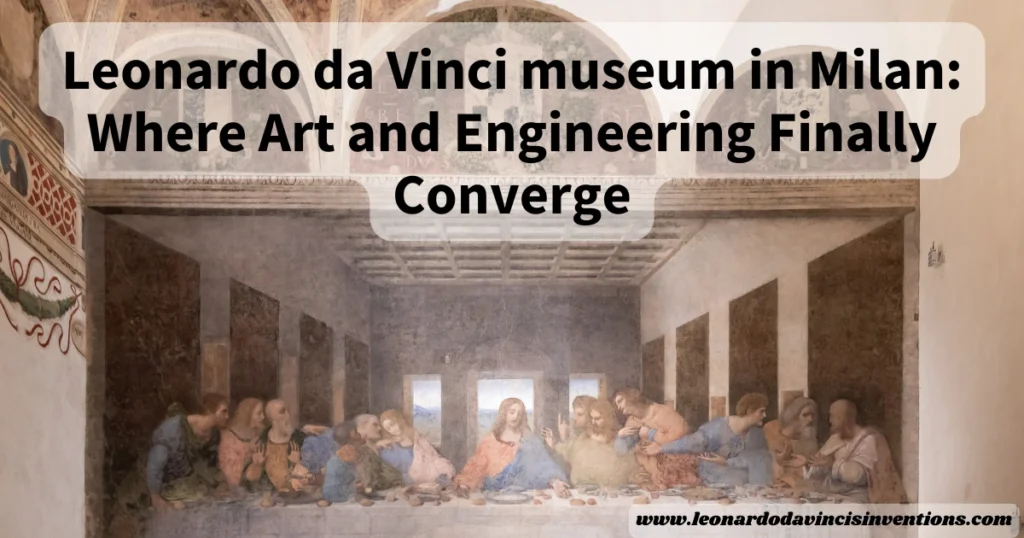
Milan is arguably the city most deeply shaped by Leonardo's presence. He lived and worked there for nearly 18 years, and his influence can be felt throughout the city. The greatest treasure is The Last Supper, painted between approximately 1495 and 1498 on a wall of the refectory of Santa Maria delle Grazie.
The Museo Nazionale della Scienza e della Tecnologia Leonardo da Vinci is the most comprehensive museum dedicated to his inventions anywhere in the world. It houses an enormous collection of models based on his engineering drawings, spanning aviation, hydraulics, and military technology.
Davinci Museum Rome and Beyond
Rome is home to the Leonardo da Vinci Experience museum, one of several dedicated Leonardo exhibitions that have opened across Italy in recent years. The davinci museum Rome focuses on interactive experiences with reconstructions of his most famous machines and detailed presentations of his scientific work.
In Paris, the Louvre is home to the Mona Lisa, Saint John the Baptist, and several other Leonardo paintings. The Chateau du Clos Luce, in Amboise, France, where Leonardo spent his final years under the patronage of King Francis I, has been converted into a museum and park celebrating his life and inventions.
Experience Leonardo's World in Person
Reading about Leonardo da Vinci is one thing. Experiencing his world in person is something entirely different.
Standing in front of The Last Supper in Milan, you feel the scale and ambition of his vision. Walking through the interactive exhibitions at the Leonardo da Vinci museum in Venice, Italy, you begin to understand how his mind moved effortlessly between art and science. Seeing the fragile pages of his notebooks reproduced in careful detail, you grasp the extraordinary range of his curiosity.
Guided Tours and Educational Experiences
Many of the major Leonardo museums and Renaissance cities offer guided tours that provide historical context and interpretive depth that self-guided visits often cannot match. Expert guides at the Leonardo da Vinci Venice museum, for example, can explain the relationship between his engineering drawings and the broader Renaissance scientific tradition, bringing the machines to life.
In Florence and Milan, guided walking tours connect Leonardo's life story to the actual streets, buildings, and neighborhoods where he lived and worked. These tours are particularly valuable for first-time visitors and for students with an academic interest in Renaissance history.
Planning a Leonardo-Focused Itinerary
A dedicated Leonardo da Vinci travel itinerary might begin in Florence, where his career started, and then move north to Milan to see The Last Supper and the Museo della Scienza. A visit to Venice to see the da Vinci Interactive Museum and the Gallerie dell'Accademia would include the Vitruvian Man. For those traveling further, Paris and Amboise offer the final chapters of his remarkable story.
Each of these cities rewards careful, unhurried exploration. Leonardo's legacy is not confined to any single room or any single masterpiece. It is woven into the fabric of the Renaissance cities themselves.
What to Know Before You Go
The Leonardo da Vinci museum in Venice, like most Italian museums, recommends advance booking, especially during peak tourist season from spring to early autumn. Many exhibitions offer reduced admission for students and cultural pass holders.
Photography policies vary between museums. The Gallerie dell'Accademia, where the Vitruvian Man drawing is housed, has strict rules about when and how the drawing is displayed due to its extreme fragility. It is worth checking the current exhibition schedules before your visit.
Final Thoughts
This post was all about the Leonardo da Vinci Venice museum — and through it, about the broader world of institutions, exhibitions, and cities that keep Leonardo's extraordinary legacy alive.
From the interactive halls of the da Vinci Interactive Museum in Venice to the solemn beauty of The Last Supper in Milan, from the grand galleries of Florence to the intimate rooms of the Chateau du Clos Luce in France, Leonardo da Vinci's work continues to speak to us across five centuries with astonishing clarity and power.
Leonardo’s greatness lies not just in talent, but in his rare blend of curiosity, discipline, and vision, driving him to explore everything from human anatomy to flight, water, and mathematics—an ambition perfectly captured in the Vitruvian Man, where art, science, and philosophy meet.
Whether you are a traveler or a curious learner, visiting Leonardo da Vinci museums across Italy and Europe offers a lasting experience, revealing how his ideas reshaped not only art but the way we understand ourselves and the world.
FAQs about Leonardo da Vinci Venice Museum
Yes, there is a Leonardo da Vinci museum in Venice. In fact, the city has interactive exhibitions dedicated to his work, including one at the Scuola di San Rocco and another in the San Barnaba district. These museums showcase his inventions, drawings, and scientific ideas through hands-on displays and reconstructions.
Yes, the Leonardo da Vinci Museum in Venice is generally considered worth visiting, especially for those interested in science and engineering. It features interactive machines, multimedia exhibits, and working models that allow visitors to engage directly with Leonardo’s inventions, making it both educational and enjoyable for all ages.
Leonardo da Vinci museums are located across Italy, not just in Venice. Major locations include Florence (his birthplace), Milan (where he painted The Last Supper), Rome, and Venice. Each city offers a different perspective on his life, from art and painting to engineering and scientific innovation.
Leonardo da Vinci visited Venice around 1499 while working on military engineering and hydraulic projects for the Venetian Republic. While there is no confirmed long-term residence, historical accounts suggest he stayed temporarily during this period to advise on defense strategies against invasion.
The most famous museum in Venice is widely considered to be the Doge’s Palace (Palazzo Ducale), followed closely by major institutions such as the Gallerie dell’Accademia. These museums are globally renowned for their Renaissance art collections and historical significance, attracting millions of visitors each year.
No, the Leonardo da Vinci Museum in Venice is generally not free. Standard admission typically costs €8–€17, though reduced or free entry may be available for children or special categories, depending on the venue.
Related Post You May Like


Disclosure: This page may contain affiliate links. If you book through them, we may earn a small commission at no extra cost to you. Learn more.
 Leonardo Bianchi is the founder of Leonardo da Vinci Inventions & Experiences, a cultural travel guide helping visitors explore Leonardo da Vinci’s art, inventions, and legacy across Italy and Paris.