
(Last updated: Aug 2026)
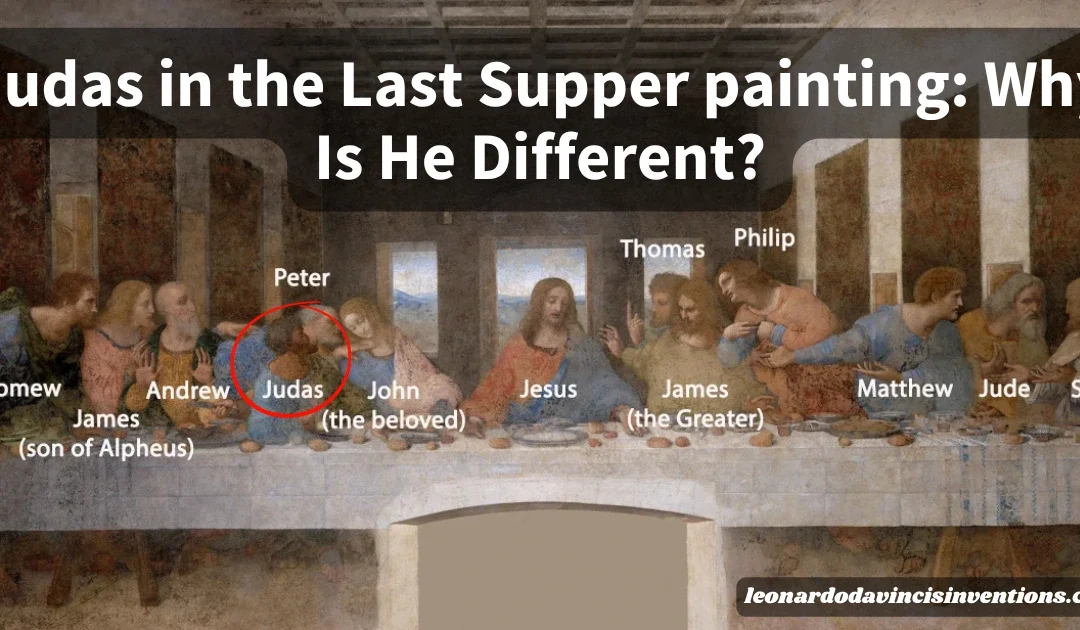
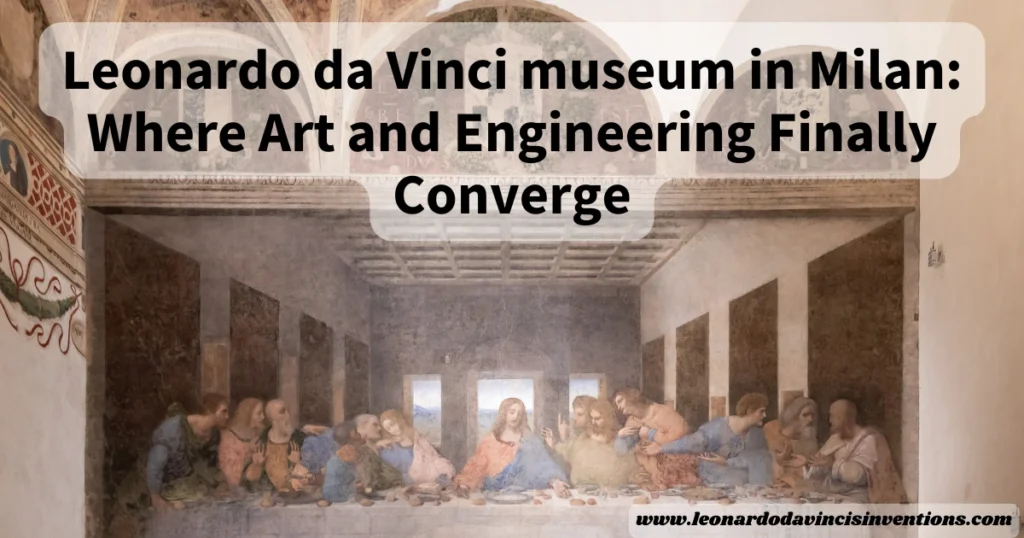
Judas in the Last Supper painting is one of the most studied figures in all of Western art — a man caught mid-gesture, reaching for bread, his face shadowed with guilt. Leonardo da Vinci painted this scene on a refectory wall in Milan between 1495 and 1498, and it has fascinated scholars, pilgrims, and curious travelers ever since.
Understanding who Judas is — and why Leonardo placed him exactly where he did — transforms a glance into a conversation with history. It turns a famous painting into a puzzle worth solving in person.
This post is all about Judas in the Last Supper painting, why he matters, and what his presence reveals about Leonardo's unmatched genius.
Why does Judas appear different in The Last Supper?
The Artistic Genius Behind Judas in the Last Supper Painting
Leonardo's Radical Departure from Tradition
Before Leonardo, most depictions of The Last Supper followed a simple convention: Judas sat alone on the opposite side of the table, visually separated from the other apostles. The message was blunt — here is the traitor.
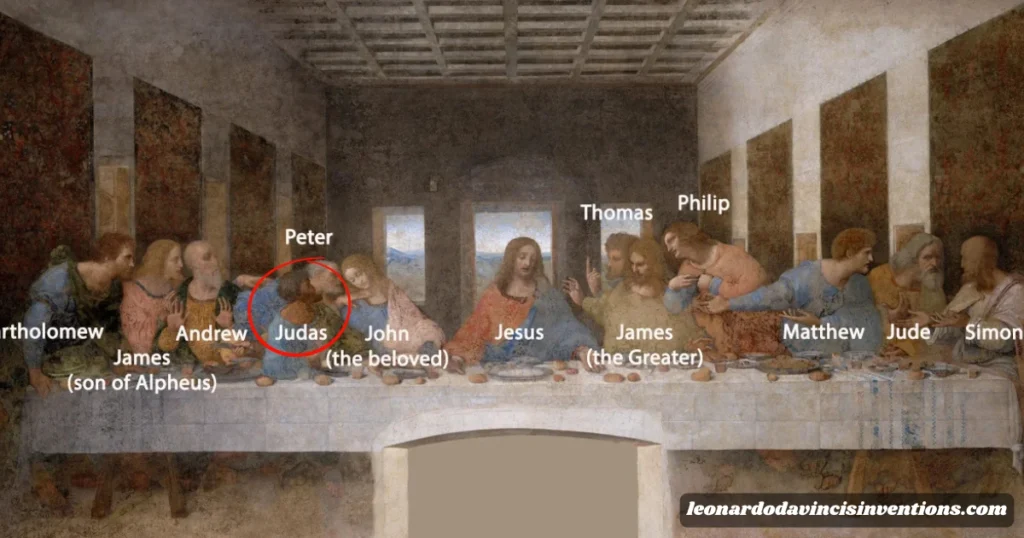
Leonardo broke this entirely. He placed all thirteen figures on the same side of the table. Judas sits among the apostles, third from Jesus's right. He is not isolated. He is hidden in plain sight.
This was a revolutionary psychological choice. Leonardo wanted viewers to search, to look, to feel the unease. He understood that ambiguity is more disturbing than clarity.
The Psychological Portrait of a Betrayer
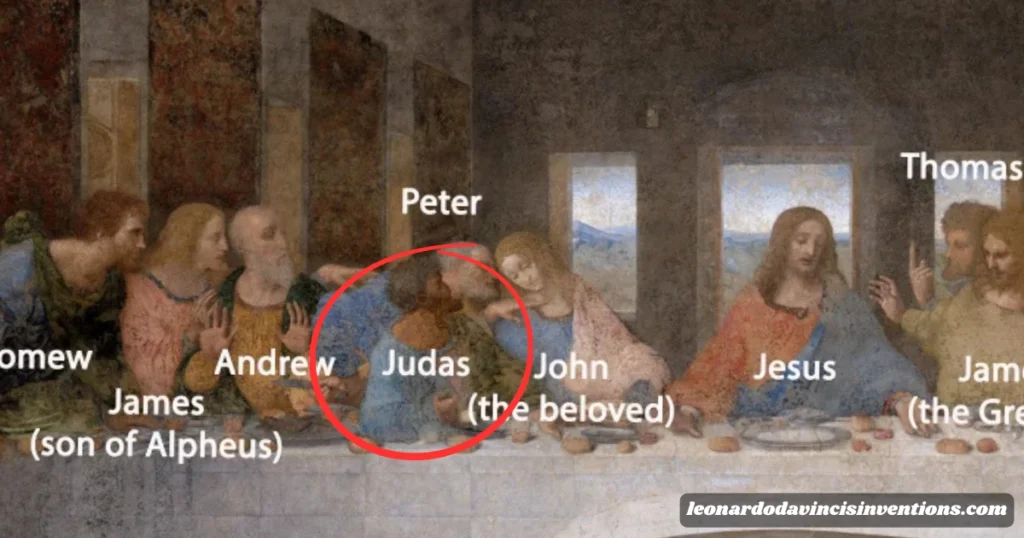
Look closely at Judas in the da Vinci Last Supper painting. He leans back from the table. His shoulders are tense. His arm reaches toward the bread — the same gesture Jesus makes, fulfilling the Gospel of John: "It is the one to whom I will give this piece of bread when I have dipped it."
In his right hand, Judas clutches a small purse. Art historians widely interpret this as the bag of silver coins paid for his betrayal. His face is darker than the others, turned slightly away from the light that floods in from the painted windows behind Jesus.
Leonardo did not paint a villain. He painted a man who has already made a choice—and is living under the weight of it.
Why Is Judas Placed in Shadow?
The Last Supper painting's meaning is embedded in its light. Jesus is illuminated at the center. The disciples around him receive that light. Judas, while not in literal darkness, sits in the one area of the composition where the ambient light does not reach his face directly.
Leonardo used this subtle tonal shift to separate Judas without isolating him. It requires attention. It rewards careful looking. This is precisely why the painting has never stopped generating questions.
Why Judas in the Last Supper Painting Became Famous
The Gospel Moment Leonardo Chose to Capture
Leonardo did not paint the moment of institution of the Eucharist, which was the traditional subject for refectory paintings. He chose instead the precise instant after Jesus says: "Truly I tell you, one of you will betray me."
This is the Judas-and-Jesus painting moment — not of sacred ritual, but of human reaction. Shock. Denial. Grief. And somewhere in the group, guilt. Leonardo turned a theological scene into a drama of human psychology.
Each apostle reacts differently. They cluster in groups of three, gesturing, questioning, leaning. This wave of emotion flows from Jesus outward, and Judas is part of that wave — but his reaction is withdrawal, not shock.
Is There a Woman in the Last Supper Painting?
This question has generated considerable debate, especially since Dan Brown's The Da Vinci Code suggested the figure to Jesus's immediate right was Mary Magdalene rather than the Apostle John.
Art historians are nearly unanimous: the figure is John the Apostle, traditionally depicted as young and beardless in Renaissance iconography. John's youthful appearance was conventional, not conspiratorial.
Leonardo's preparatory drawings for The Last Supper consistently identify this figure as John. The soft features reflect the artistic convention of the time, not a hidden identity.
Why the Last Supper Painting Is Important
Why is the Last Supper painting important beyond its religious subject? It is the first monumental group portrait in Western painting to fully individualize every figure psychologically. Each of the thirteen men has a distinct emotional response. Each is a complete human being.
Leonardo also invented a new perspective system for this painting. He used an architectural illusion — the painted room appears to continue the actual room — that was unprecedented. The painting defines the wall as a window into another world.
It influenced every subsequent depiction of group narrative in Western art. It is not simply famous because it is old. It is famous because nothing like it had ever existed.
Visitors who explore Santa Maria delle Grazie with a knowledgeable local guide often discover details — the bread positioning, the hand gestures, the hidden architectural lines — that are invisible to the untrained eye. Guided visits to The Last Supper in Milan typically include reserved entry to the refectory and expert commentary on Leonardo's techniques and historical context.
Where to See Judas in the Last Supper Painting Today
Santa Maria delle Grazie, Milan
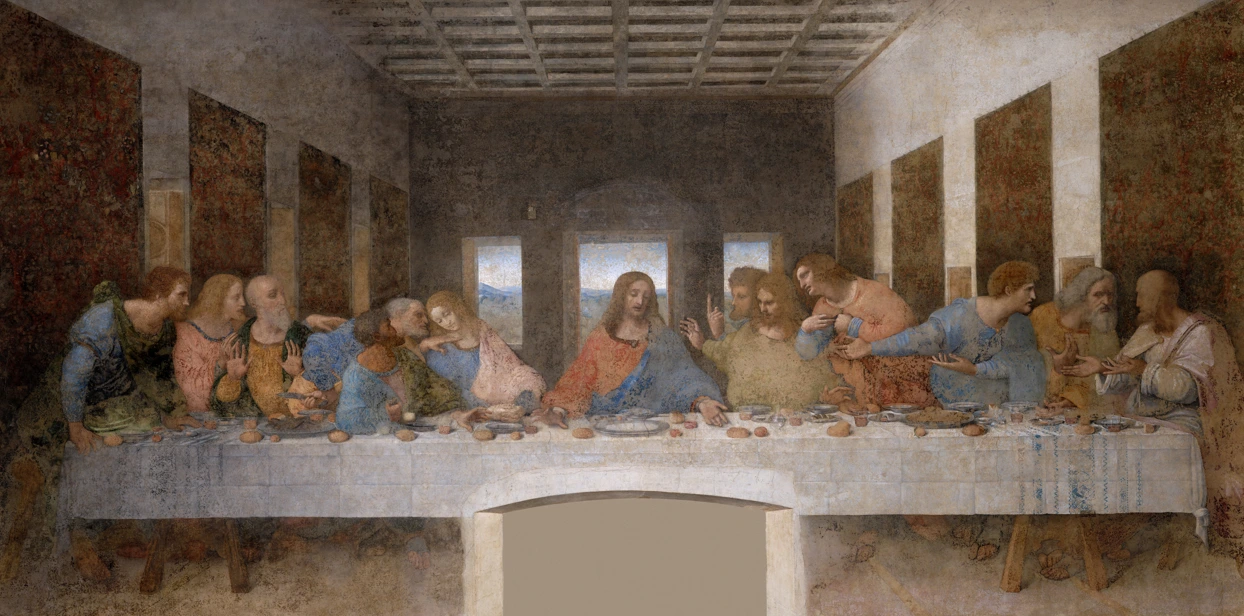
The Last Supper — known in Italian as Il Cenacolo — is located in the refectory of the Convent of Santa Maria delle Grazie in Milan. The painting covers an entire wall of what was once the monks' dining room, measuring roughly 460 by 880 centimeters.
The site was designated a World Heritage property by UNESCO in 1980. Entry is timed and limited to groups of around thirty visitors at a time, with each group permitted fifteen minutes inside. Tickets must be booked weeks — sometimes months — in advance, especially during spring and summer.
The painting is not on canvas or wood. Leonardo applied tempera and oil directly onto a dry plaster wall, a technique that allowed extraordinary detail but proved unstable over time. What you see today is a painting that has been restored repeatedly over five centuries.
Seeing Judas More Clearly in Milan
Early access to the Cenacolo creates a quieter setting to study Judas’s shadow, posture, and placement, while a private guide explains details of the painting and church that are easy to overlook in the short viewing window.
What Visitors See Inside the Refectory
The room is climate-controlled to protect the fragile surface. Visitors pass through two antechambers designed to regulate temperature and humidity before entering the refectory itself.
The painting fills the north wall. On the opposite wall hangs a large Crucifixion fresco by Giovanni Donato da Montorfano, painted the same year as Leonardo's work. Together, they frame the room as a complete narrative of Christ's Passion.
Standing in the space, the perspective illusion becomes apparent. The painted room seems to extend the actual room outward. The light from the painted windows mimics the real light from the room's side windows. It is an architectural and painterly achievement still astonishing five hundred years later.
Planning Your Visit
Santa Maria delle Grazie is located in the Magenta district of Milan, about a twenty-minute walk from the Duomo. The nearest metro stop is Cadorna. The museum opens Tuesday through Sunday; Monday is closed.
Book entry tickets directly through the official ticketing site or through a reputable tour operator. Tickets are time-slotted and non-transferable. Arriving without a ticket means no entry — the queue system is strictly managed.
Many visitors find that a guided visit is the most efficient way to make sense of the painting in the short time available during their visit. Fifteen minutes pass quickly without context.
Exploring Leonardo da Vinci in Milan and Beyond
Milan is the city most directly associated with Leonardo's mature work. Beyond The Last Supper, the Pinacoteca Ambrosiana holds his Portrait of a Musician and the Codex Atlanticus — the largest surviving collection of Leonardo's drawings and scientific notes. The Castello Sforzesco, where Leonardo lived and worked under Ludovico Sforza, houses his painted ceiling in the Sala delle Asse.
Florence is where Leonardo trained under Verrocchio and where the Uffizi Gallery preserves his early Annunciation and the unfinished Adoration of the Magi. Rome holds his Saint Jerome in the Wilderness at the Vatican Pinacoteca.
Venice's Gallerie dell'Accademia displays the famous Vitruvian Man drawing. And in Paris, the Louvre is home to the Mona Lisa, Saint John the Baptist, and The Virgin of the Rocks — together making it the largest single collection of Leonardo paintings in the world.
A Focused Way to Understand Judas in The Last Supper
At Santa Maria delle Grazie, your guide leads you into the Cenacolo with early access, where expert insights make the short visit especially meaningful—particularly when observing Judas.
Final Thoughts
This post was all about Judas in the Last Supper painting — one of the most psychologically complex figures Leonardo da Vinci ever created. In an era when art told stories through symbols and conventions, Leonardo chose ambiguity.
He hid guilt in posture, in shadow, in the turn of a face. He made viewers work for the answer, and in doing so, he made the painting impossible to forget.
Five centuries later, that tension still holds. Judas still reaches toward the bread. The purse is still clutched in his hand. And Jesus's words still hang in the air of that painted room in Milan — real enough to walk into, if you book far enough in advance.
Seeing The Last Supper in person is a different experience from any reproduction. The scale, the light, the room itself — they change what the painting means. Guided visits with reserved entry and expert commentary are available on most dates throughout the year.
Travel Essentials for Visiting Milan for the First Time
Preparing for a visit to Milan often comes down to a few small details that can make long museum days, historic walking routes, and city exploration significantly more comfortable.
Comfortable Walking Shoes
Milan’s major landmarks are often best experienced on foot, with visitors covering long distances between museums, churches, and historic streets. Supportive shoes can make a full day of exploration far more comfortable → explore comfortable walking shoes for long city days
Portable Power Bank
Navigation, photography, and digital tickets can quickly drain battery life during a full day in the city. A compact power bank helps avoid interruptions, with many visitors choosing lightweight options → view reliable portable chargers
Secure Crossbody Bag
Busy areas near major attractions can require extra awareness. Many travelers prefer a compact crossbody bag worn in front to keep essentials accessible and secure →
Explore practical crossbody bags for travel
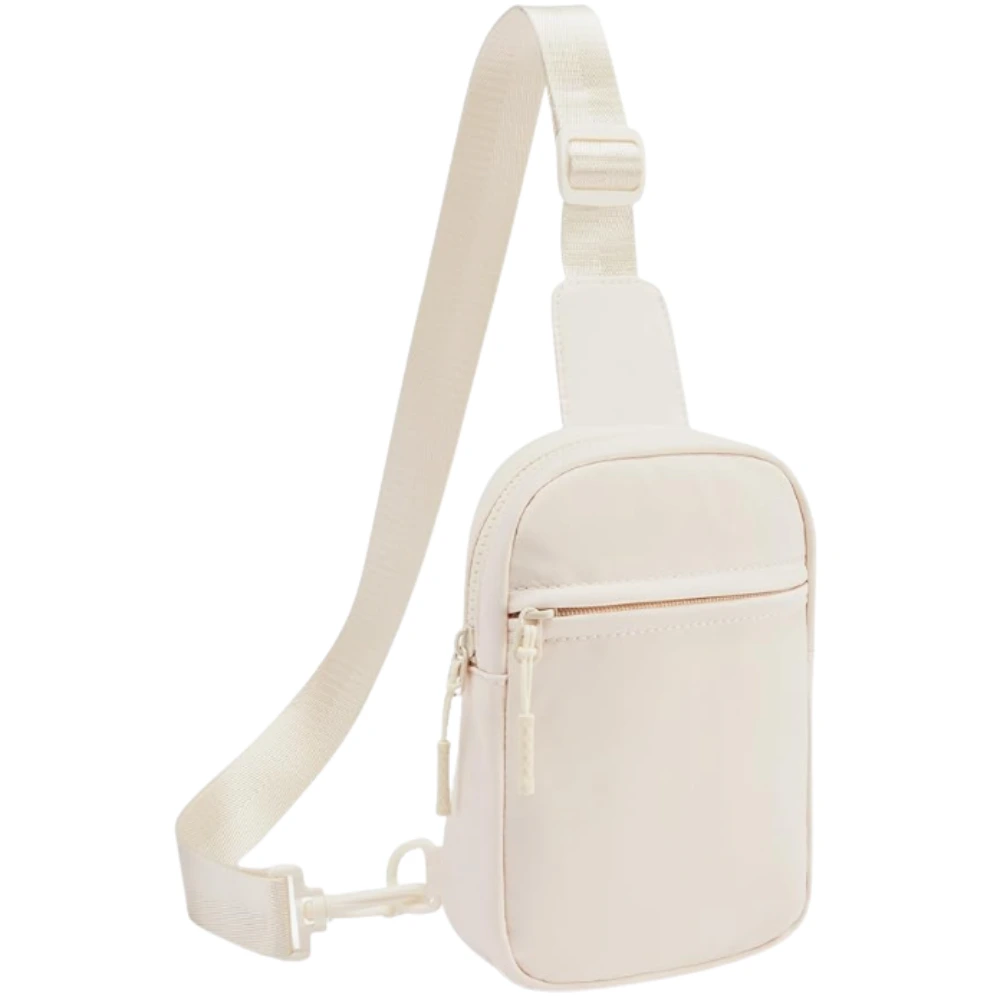
A compact option often preferred for full-day city travel.
FAQs about Judas in the Last Supper painting
In The Last Supper, Judas is shown reacting to Jesus’ announcement of betrayal while clutching a small bag—commonly interpreted as the 30 pieces of silver he received—and leaning back in shadow. His posture and expression signal guilt and a sense of separation from the group, underscoring his role as the betrayer.
Salvator Mundi is controversial mainly because experts disagree about its authorship. While some scholars consider it an authentic work by Leonardo, others argue it was largely painted by his workshop or heavily altered during restoration, making its true origin difficult to confirm.
The sexuality of Leonardo da Vinci remains uncertain. Historical records show he was accused of sodomy in 1476 (charges dismissed), and later scholars have speculated about possible relationships with male pupils. However, there is no definitive proof, and historians generally agree that his private life cannot be confirmed with certainty.
According to the Gospels, the betrayal of Jesus Christ by Judas Iscariot occurred after the Last Supper, which took place during Passover week. Traditionally, the betrayal is associated with the night before the crucifixion—commonly commemorated as Holy Thursday leading into Good Friday.
The Bible does not explicitly state that Jesus refused to forgive Judas. Instead, Christian theology generally holds that forgiveness was possible, but Judas did not seek it and instead died in despair. Interpretations vary, but many scholars see Judas’ fate as tied to his own actions rather than a denial of forgiveness by Jesus.
According to Giorgio Vasari’s account, Leonardo da Vinci reportedly expressed regret on his deathbed, saying he had “offended against God and men” by not fully developing his art. He also received last rites, though some details—like the presence of the French king—may be partly legendary.
Related Post You May Like


Disclosure: This page may contain affiliate links. If you choose an experience through them, it helps support the site at no extra cost to you.
 Leonardo Bianchi is the founder of Leonardo da Vinci Inventions & Experiences, a cultural travel guide helping visitors explore Leonardo da Vinci’s art, inventions, and legacy across Italy and Paris.