
(Last updated: June 2026)
Standing in front of the Last Supper is not like standing in front of any other painting in the world.
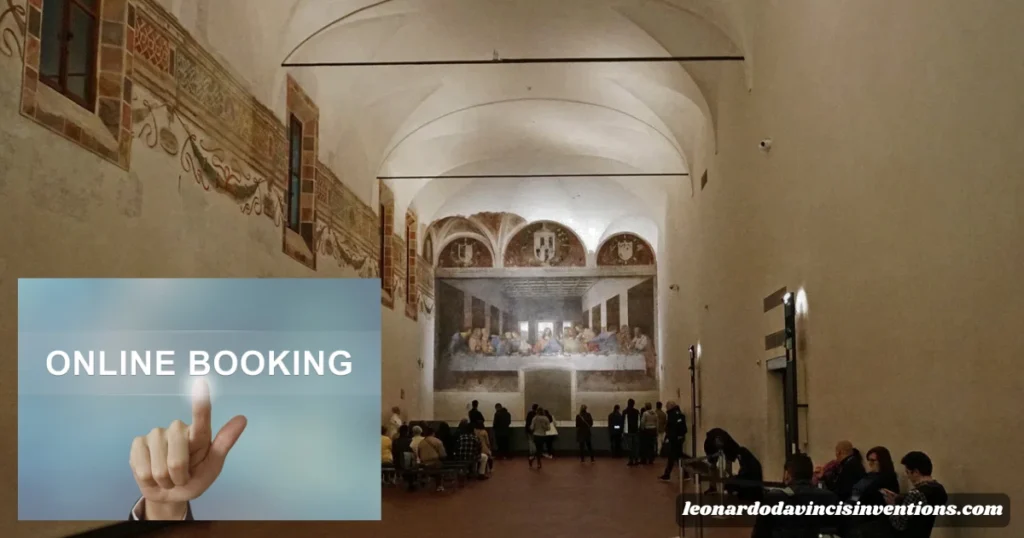
You don’t walk into a gallery and stumble upon it between two smaller works. You move through three sealed climate chambers, the humidity drops, a guard counts you in, and then — for exactly fifteen minutes — you are inside a refectory where a mural has survived five centuries of war, flooding, and near-destruction.
That is the strange, disciplined ritual surrounding the most carefully guarded fresco in Europe. And it begins, long before you arrive in Italy, with a single question: how far in advance should you lock in your entry?
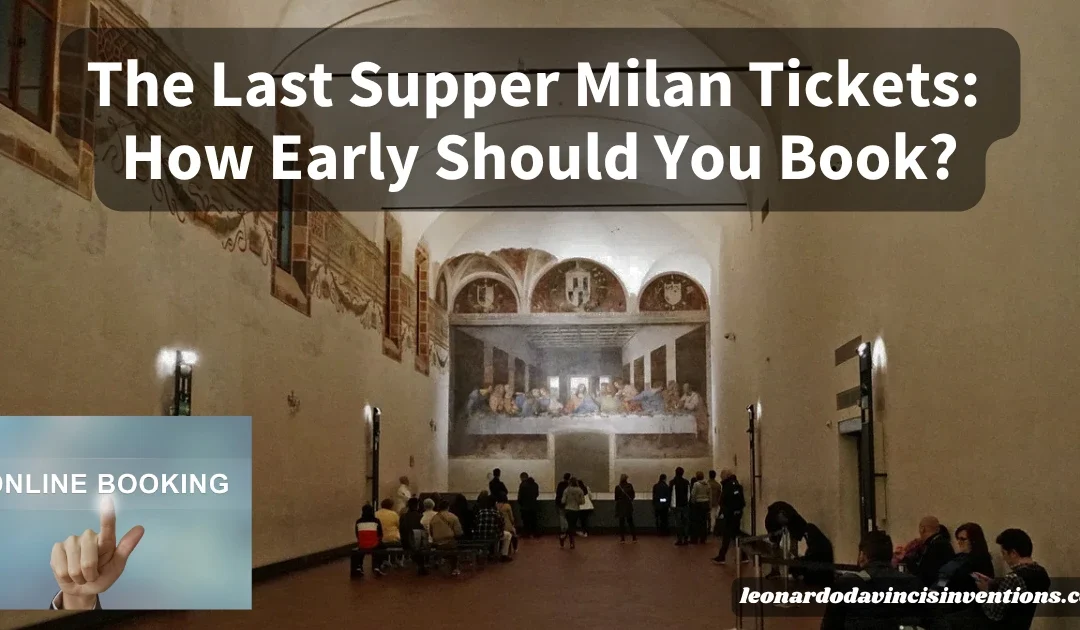
If you’re searching for The Last Supper Milan tickets, the short answer is this: earlier than you think, and earlier than almost any other attraction in Europe. Only about 1,300 visitors are admitted per day. On peak weekends, slots disappear within hours of release.
This guide walks you through why access is so restricted, how booking actually works, what you’ll experience inside Santa Maria delle Grazie, and how to secure your spot without the stress of refreshing a sold-out calendar.
Curious how this looks in real life? Explore guided Last Supper Milan experiences and see what most visitors miss.
Why The Last Supper Isn’t Like Any Other Painting You’ll Ever See
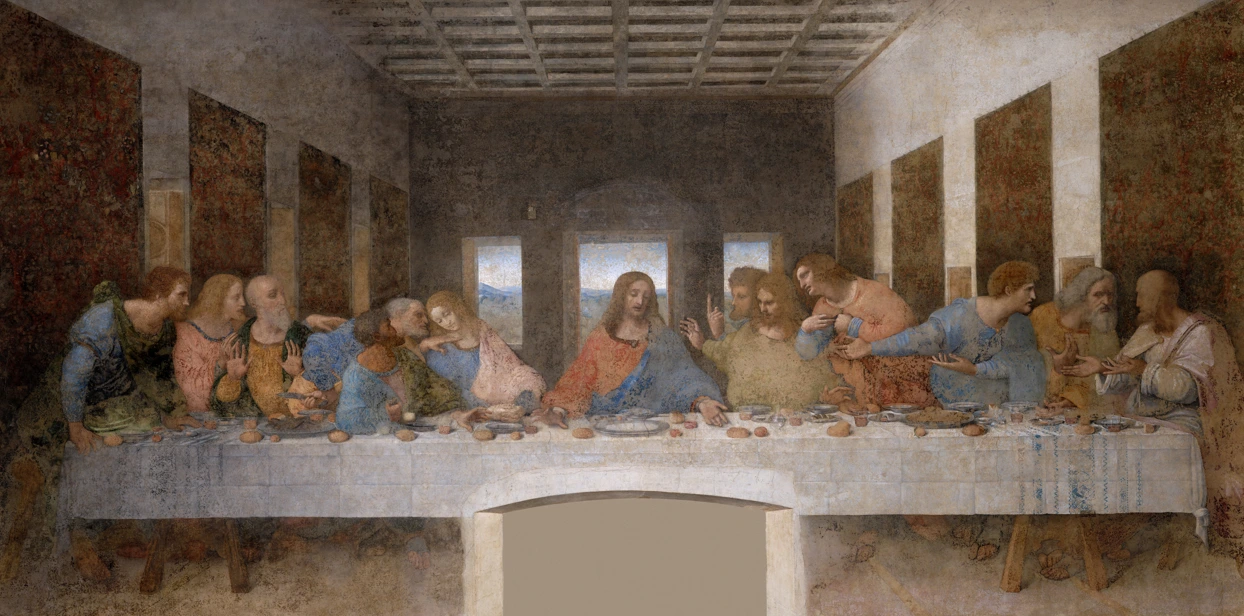
Leonardo da Vinci finished The Last Supper (known in Italy as Il Cenacolo) around 1498, painted directly onto the northern wall of the dining hall belonging to the Dominican friars at Santa Maria delle Grazie. It measures roughly 15 feet tall by 29 feet wide. And here is where the trouble — and the mystique — begins.
Leonardo refused to use the traditional buon fresco technique, in which pigment is applied to wet plaster and chemically bonds with the wall as it dries. Fresco is fast, unforgiving, and permanent — three qualities Leonardo, an obsessive reviser, despised.
Instead, he experimented with tempera and oil on dry plaster, which let him rework details for months at a time. It also meant the paint began to flake during his lifetime. By the mid-1500s, biographer Giorgio Vasari described the mural as already ruined.
What you see today is the result of a two-decade restoration completed in 1999 that stripped away centuries of overpainting and grime. It is fragile, faded in places, and protected by one of the strictest visitor protocols on earth.
That’s why tickets to the Last Supper in Milan are not sold like museum tickets elsewhere — they are rationed.
Why Availability Runs Out So Fast
Here is what almost no first-time visitor understands until they try to book: the limit isn’t commercial. It’s conservational.
Groups of a maximum of 35 people are allowed into the refectory at a time, for exactly 15 minutes, every 15 minutes. That math is brutal. The room operates roughly 8 hours a day, closed on Mondays.
At full capacity, that caps the daily total at around 1,300 people — worldwide demand, squeezed through a doorway the size of a small chapel. For comparison, the Uffizi in Florence admits roughly 10,000 visitors daily. On a busy day, the Louvre admits 45,000.
This is why the question isn’t really “where do I buy official Last Supper tickets?” — it’s “how early can I buy them?”
Tickets are typically released in three-month blocks, and for peak season (April through October, plus the Christmas holidays), the most desirable morning and late-afternoon slots are claimed within the first 48 hours of release.
If you’re traveling in summer and searching the official Last Supper tickets website two weeks before your trip, you will almost certainly find nothing. This isn’t a booking failure. It’s the system working exactly as designed.
The practical rule: for any visit between May and September, start planning at least 3 months in advance. For October through April (excluding Christmas week), six to eight weeks is usually workable. For Easter, Christmas, and Milan Design Week in April, treat four months out as your floor, not your ceiling.
Seeing this detail in person changes everything. Discover how visitors experience The Last Supper in Milan with expert context that reveals hidden meaning.
What You’re Actually Looking At
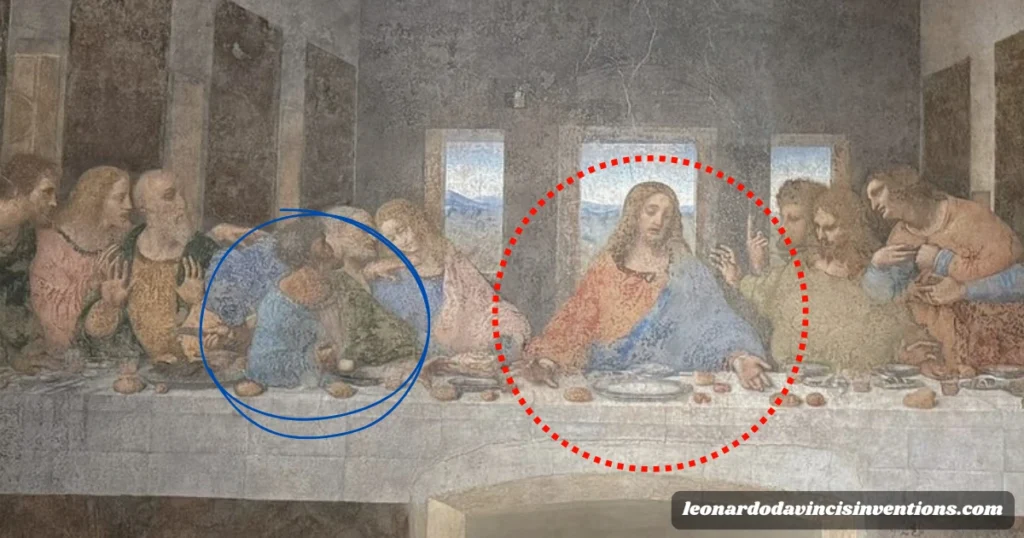
Most visitors know the painting depicts the moment Christ announces that one of the twelve apostles will betray him. What they often miss is that Leonardo chose the exact second the words land — not the betrayal itself, but the reaction. Every gesture in the room is a response, frozen mid-flinch.
The apostles are arranged in four groups of three, a compositional rhythm that echoes the Trinity's theology. Judas is the only figure leaning back into shadow, his right hand clutching a small bag — traditionally read as the thirty pieces of silver.
He has just knocked over a salt cellar, a detail so subtle you can miss it in the faded pigment, but one Leonardo placed deliberately: spilled salt was a medieval emblem of broken trust. Peter grips a knife behind Judas’s back. Thomas raises a single finger, the same finger that will later probe Christ’s wounds.
And then there is the vanishing point. Every line of linear perspective in the room — the beams of the ceiling, the edges of the tapestries, the sides of the table — converges behind Christ’s right temple.
Leonardo didn’t just paint a scene; he built an optical machine that forces your eye to land on one specific point no matter where you stand. This is the detail that guides tend to save for last, because once you see it, you can’t unsee it.
Where to See It: Santa Maria delle Grazie
The mural lives where Leonardo painted it — on the north wall of the refectory of the Dominican convent of Santa Maria delle Grazie, a UNESCO World Heritage site on the western edge of central Milan. The address is Piazza di Santa Maria delle Grazie 2, about 15 minutes on foot from the Duomo or a five-minute walk from the Cadorna and Conciliazione metro stops.
The church itself, designed in part by Bramante, is worth arriving early for — especially its luminous tribune and small cloister that almost nobody visits. The refectory is a separate structure accessed through a modest modern doorway to the left of the church facade, marked Cenacolo Vinciano. That’s where your Last Supper in Milan, Italy, experience actually begins.
Arrive at least 20 minutes before your assigned slot — it’s enforced. If you miss your entry time, you forfeit the ticket entirely. No refunds, no rescheduling.
Security checks your ID against the name on the reservation, large bags go into a cloakroom, and then you move through climate-controlled dehumidification chambers that protect the mural from the moisture human bodies bring into the room. By the time the last door opens, you’re ready.
Experience This in Milan
This isn’t just something you read about — it’s something you feel standing inside that room. Knowing what to look for before you arrive transforms 15 minutes into something that stays with you.
Explore Guided Last Supper Experiences In Milan >>What It Feels Like in Person
The first thing that surprises almost everyone is the size. Photographs never communicate how much wall this painting covers. When the final door slides open, the mural fills your entire field of vision — the table stretches across the room at roughly eye level, as if you’ve walked into the meal itself.
This was Leonardo’s intention. The refectory was where the friars ate their daily meals in silence. The painted table and the real tables of the Dominicans were meant to mirror each other, so that every dinner the community shared was, in a sense, sitting across from Christ.
The second surprise is the silence. The ventilation system hums faintly. Visitors speak in whispers, if at all. There is no velvet rope, no jostling crowd. You can walk the length of the room or sit on the low bench along the opposite wall.
On the far side of the refectory, almost always overlooked, is a Crucifixion by Giovanni Donato da Montorfano, painted in 1495. It’s worth turning around — Leonardo himself added the kneeling donor figures to that wall, though time has faded his contributions beyond recognition.
Fifteen minutes sounds short until you’re in the room. Then it feels exactly right — long enough to slow your breathing, short enough that you leave still hungry for it. When the far door opens to release you, there is always a pause. Most people don’t want to go.
It’s completely different standing in front of it. See how small-group visits to the Last Supper work and why timing matters.
The Experience: Guided vs. Independent Visits
There are two basic ways to see Milan’s Last Supper. The first is to buy a direct-entry ticket through the official ministry site, cenacolovinciano.vivaticket.it, which releases slots roughly three months in advance and sells them as bare entry: no audio guide, no explanation, 15 minutes on your own.
This option costs less, but you’re on your own to interpret what you’re looking at — and most visitors, staring at a 500-year-old mural for the first and only time in their life, wish afterward they had known more.
The second option is a small-group guided visit, typically booked through experience platforms that hold reserved ticket allocations. These are especially useful when the official website shows sold out, because tour operators often purchase time-slot inventory months in advance.
A guide spends 20 to 30 minutes outside the refectory explaining the commission, the Sforza dynasty that paid for it, Leonardo’s strange working habits, and the iconography — so when your fifteen minutes inside begin, your eyes already know where to go. Many guided options also bundle the nearby Sforza Castle or the Duomo.
For most first-time visitors, the guided option is worth the difference in cost. You’re not paying for a ticket you could have found yourself — you’re paying for the context that turns the visit into something you’ll actually remember five years from now.
How to Experience the Last Supper Without Missing the Details
Access is limited, and most visitors only get a few minutes inside. The difference is having the right context before you walk in.
- Skip-the-line timed entry
- Small-group guided access
- Expert explanation of key details
A Practical Booking Timeline
If you’re still deciding how early is early enough, here is a realistic rhythm. For a summer visit — say, a week in June — you should be looking at availability in early March, the moment the next trimester opens.
Official releases happen quarterly: January opens April through June, April opens July through September, July opens October through December, and October opens the following January through March.
Midweek mornings (Tuesday through Thursday, 8:15 to 10:30 AM) disappear first because tour operators buy them in bulk. Late afternoons on weekends are the second wave.
The slots that linger longest are early weekday afternoons in November and February — shoulder-season gold, if your dates are flexible. For trade fairs like Salone del Mobile in April or Milan Fashion Weeks in February and September, assume all inventory evaporates six weeks before the event.
One more thing worth knowing: the official platform does release small batches of last-minute inventory, sometimes just a few days before, when group reservations are returned to the pool. These appear unpredictably.
If you’re already in Milan and missed your window, check the official Last Supper tickets website at 9 AM local time — and also look at guided experience platforms, which sometimes have same-week slots that the direct channel doesn’t.
What to Pair With Your Visit
Because the Last Supper visit is so brief, it’s worth building a half-day around it. Within a ten-minute walk of Santa Maria delle Grazie, you’ll find the Museo Nazionale Scienza e Tecnologia Leonardo da Vinci, which houses the world’s largest collection of models built from Leonardo’s engineering drawings.
The Vigna di Leonardo — the small vineyard gifted to him by Ludovico Sforza in 1499, restored in 2015 and replanted with the original Malvasia grape — sits directly across the street from the church.
For a meal after, the neighborhood around Corso Magenta has unfussy trattorias serving Milanese classics: risotto alla milanese, cotoletta, ossobuco. Avoid the restaurants immediately fronting the piazza — they charge tourist rates — and walk two blocks in any direction.
If you’re already planning to visit, take a look at the current Last Supper experience options before availability runs out.
The Bottom Line
Leonardo worked on this mural for three years, revising, scraping, and starting over. Visitors get fifteen minutes.
The asymmetry is part of what makes the experience so charged — you are handed a narrow, guarded window into something that has survived bombs, floods, and Napoleon’s troops stabling horses in the room. Booking early isn’t a tourist hack. It’s the only way to be in the room at all.
For summer, book three to four months ahead. For shoulder season, six to eight weeks. For holiday periods, treat four months as your minimum.
Choose a guided experience if you want the mural to come alive beyond what a wall label can tell you; choose a direct ticket if you want fifteen uninterrupted minutes alone with it. Either way, don’t wait until you land in Milan. By then, the room is already full.
Travel Essentials for Visiting Milan for the First Time
Preparing for a visit to Milan often comes down to a few small details that can make long museum days, historic walking routes, and city exploration significantly more comfortable.
Comfortable Walking Shoes
Milan’s major landmarks are often best experienced on foot, with visitors covering long distances between museums, churches, and historic streets. Supportive shoes can make a full day of exploration far more comfortable → explore comfortable walking shoes for long city days
Portable Power Bank
Navigation, photography, and digital tickets can quickly drain battery life during a full day in the city. A compact power bank helps avoid interruptions, with many visitors choosing lightweight options → view reliable portable chargers
Secure Crossbody Bag
Busy areas near major attractions can require extra awareness. Many travelers prefer a compact crossbody bag worn in front to keep essentials accessible and secure →
Explore practical crossbody bags for travel
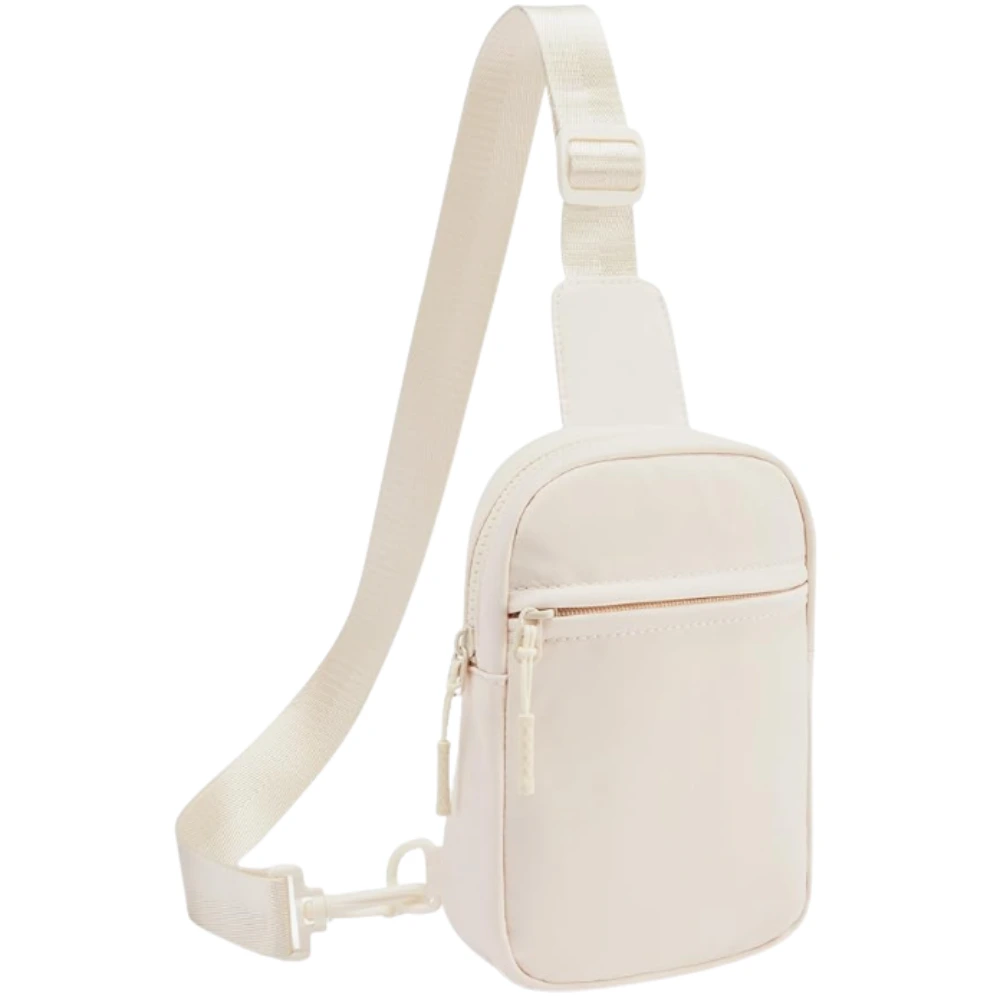
A compact option often preferred for full-day city travel.
FAQs about The Last Supper Milan Tickets
Yes, you need tickets to see The Last Supper in Milan, and advance reservations are mandatory. Entry is strictly controlled, with timed slots, and tickets are released in limited batches that often sell out months in advance.
It is difficult to get tickets because access is tightly limited to protect the fragile mural. Only small groups are allowed inside for short time slots, while global demand remains extremely high, leading to tickets selling out quickly.
Yes, seeing The Last Supper in Milan is widely considered worth it, as it is one of the most important artworks of the Renaissance and a unique, immersive experience. Despite the effort required to book, many visitors rank it as a must-see highlight of Milan.
You should book The Last Supper tickets as early as possible—ideally 2–4 months in advance. Tickets are released in advance blocks and often sell out within days, especially during peak travel seasons.
There is no strict formal dress code, but visitors are expected to dress respectfully since the site is part of a religious complex. Avoid overly casual or revealing clothing to ensure entry without issues.
No, you generally cannot just turn up to see The Last Supper without a reservation. Same-day tickets are rarely available, and most visitors must book in advance or join a guided tour with pre-reserved access.
Related Post You May Like
Disclosure: This page may contain affiliate links. If you choose an experience through them, it helps support the site at no extra cost to you.
 Leonardo Bianchi is the founder of Leonardo da Vinci Inventions & Experiences, a cultural travel guide helping visitors explore Leonardo da Vinci’s art, inventions, and legacy across Italy and Paris.