
(Last updated: May 2026)
Every year, roughly 1 million people try to stand for 15 minutes in front of a peeling wall in Milan. Only a fraction succeeds.
The painting on that wall is Leonardo da Vinci’s Il Cenacolo — the Last Supper — and securing entry has become one of the most frustrating rituals in European travel.
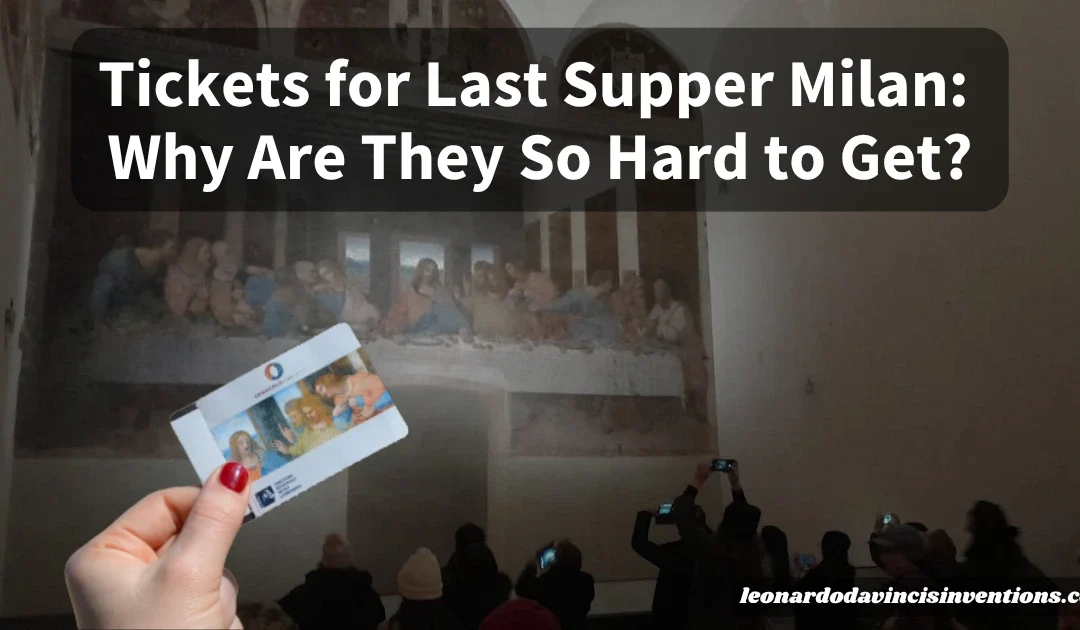
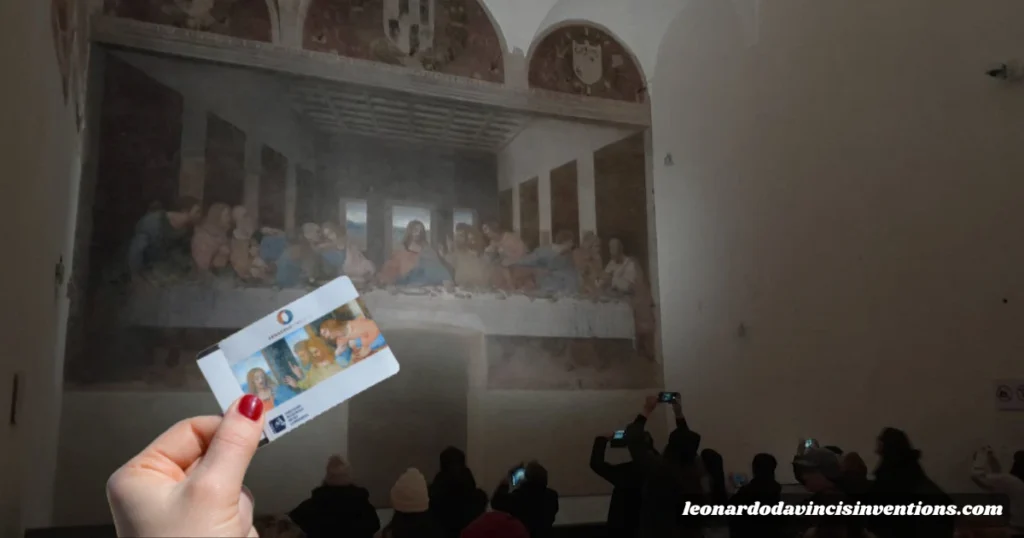
Unlike the Mona Lisa, which greets tens of thousands of visitors a day, Leonardo’s masterpiece admits just 35 people at a time, for quarter-hour sessions, behind climate-controlled doors.
If you’ve ever searched for tickets for Last Supper Milan and found everything sold out for months, you’ve discovered what millions already know: this is not a casual walk-in attraction. It’s the hardest reservation in Italian art.
A Fragile Masterpiece on a Refectory Wall
To understand why access is so restricted, you have to understand what you’re actually looking at. Leonardo began painting the Last Supper in 1495 on the north wall of the dining hall of Santa Maria delle Grazie, a Dominican convent.
Instead of using the traditional fresco technique — pigment applied to wet plaster, which locks color into the wall as it dries — Leonardo experimented.
He wanted to work slowly, to revise, to capture the subtle psychology of thirteen men in a single suspended moment. So he painted on dry plaster using a tempera-and-oil mixture.
The technique failed almost immediately. Within twenty years, the surface was already flaking. By the 17th century, monks cut a doorway through Christ’s feet.
In 1796, Napoleon’s troops used the refectory as a stable. In August 1943, an Allied bomb destroyed the roof and part of the wall — but the painting, protected by sandbags, survived.
What you see today is the result of a 21-year restoration that ended in 1999, which stripped away centuries of overpainting to reveal whatever Leonardo originally left behind. It is, in the literal sense, hanging on by a thread.
Curious how this looks in real life? Explore guided Last Supper experiences in Milan and see what most visitors miss.
Why Tickets Are Scarce by Design
Here is the detail almost no travel blog explains clearly: the scarcity is not a marketing trick. It’s a conservation protocol.
Every visitor who enters the refectory carries humidity, carbon dioxide, and microscopic dust on their clothes. Each of these accelerates the deterioration of a painting that is already, by any honest measure, dying.
To slow that process, the Italian Ministry of Culture enforces an airlock system. You pass through three successive glass chambers before entering the hall — each one filtering the air and stabilizing temperature.
Only 35 people may enter per slot. Slots last exactly 15 minutes. The room is then cleared, the air is reconditioned, and the next group is admitted.
This means the absolute maximum daily capacity is roughly 1,300 visitors — against global demand of tens of thousands. The official booking window opens in quarterly batches through the state-run portal, and these slots are typically claimed within hours of release.
This is why searching for how to get tickets for the Last Supper in Milan on a Tuesday afternoon and expecting to visit on Saturday is, in most seasons, impossible. The supply was gone before you started looking.
What many travelers don’t realize is that a parallel supply exists: a limited allocation of slots is released to authorized tour operators, who bundle them with guided access. These are not black-market tickets — they are official inventory distributed through a different channel.
This is often the only realistic way to visit within a standard trip window, which explains why people searching for Last Supper tickets at the last minute keep finding guided experiences available when the direct-booking site shows nothing.
Seeing this detail in person changes everything. Discover how visitors experience the Last Supper in Milan with expert context that reveals hidden meaning.
What Leonardo Actually Painted
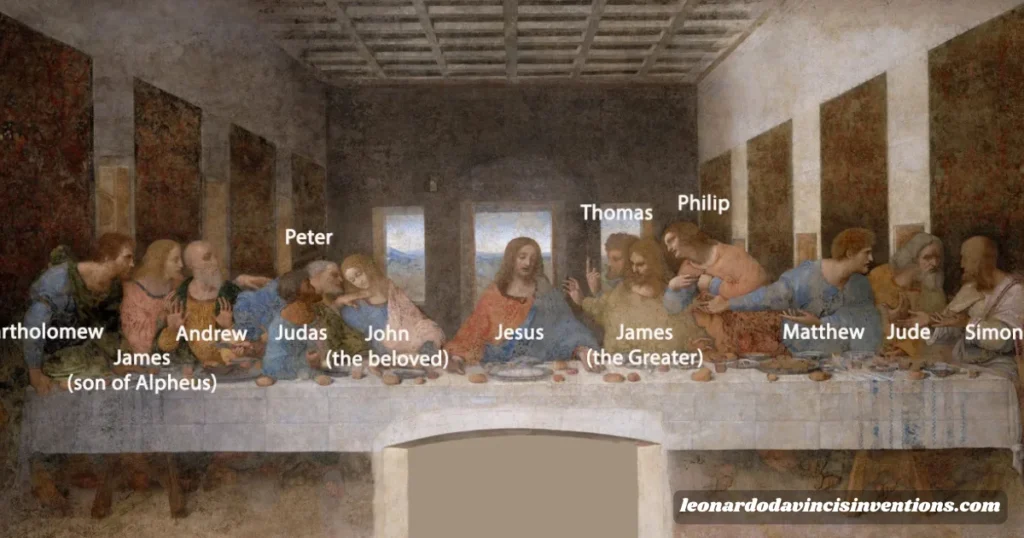
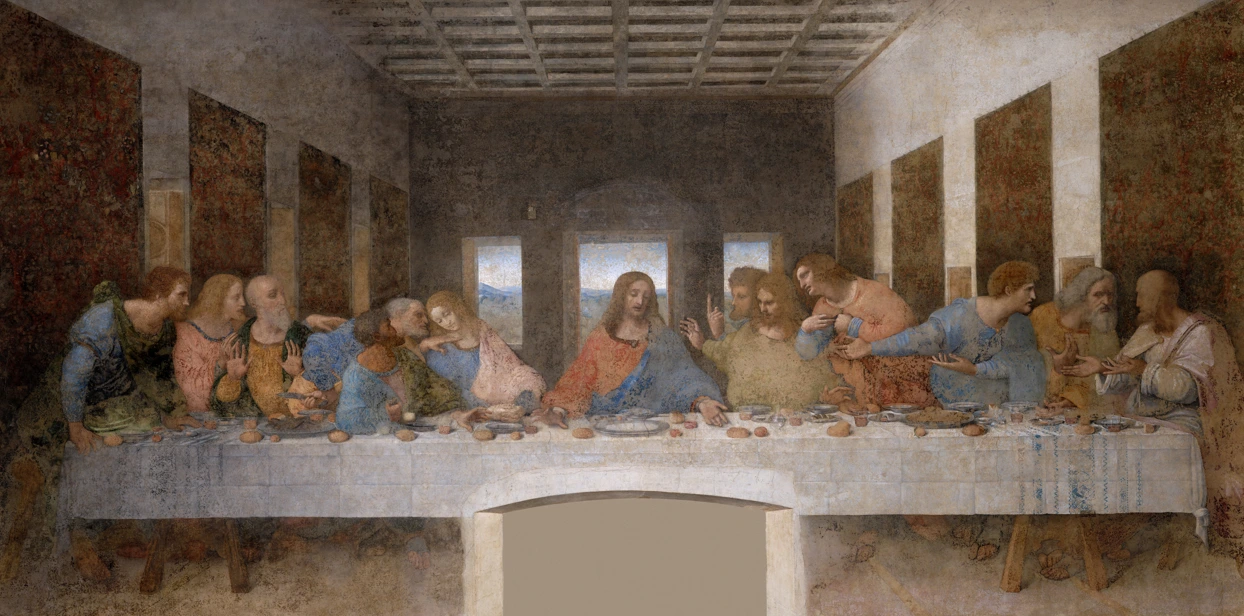
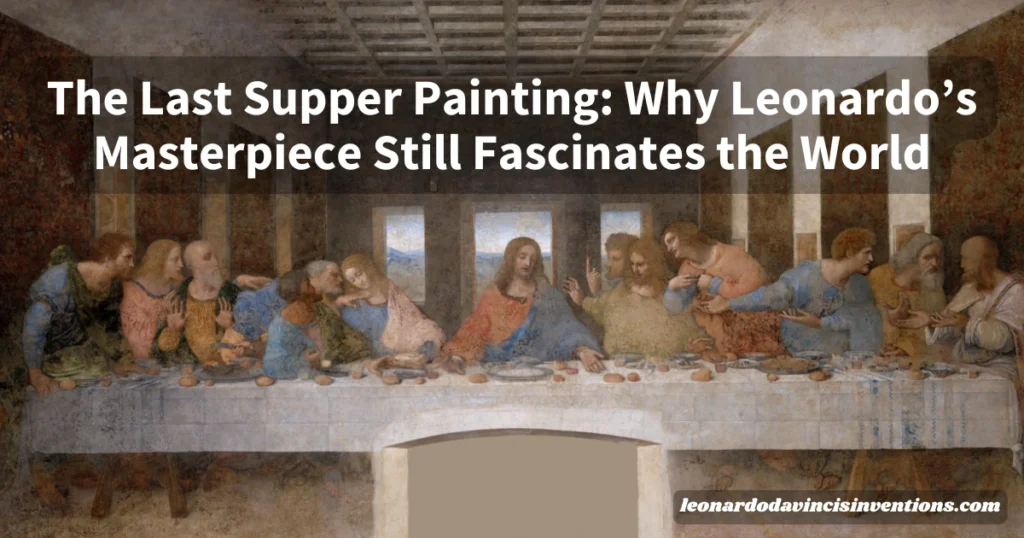
Most visitors arrive expecting a religious tableau. What Leonardo gave them is a psychological thriller frozen at its turning point. The moment depicted is not the institution of the Eucharist, as earlier painters had shown, but the instant immediately after Christ says, “One of you will betray me.”
Twelve men react simultaneously, and Leonardo arranges them in four groups of three, each cluster responding with a different emotion: shock, denial, suspicion, grief.
Look closely, and you see Judas pulling back, clutching a money bag, his elbow knocking over the salt — a medieval omen of betrayal. Peter leans forward, holding a knife, already angry. Thomas raises the finger that will later probe Christ’s wound.
Every gesture is a sentence. The painting is, in effect, an essay on human reaction, and the composition draws all sight lines to the calm vanishing point behind Christ’s head. If you know where to look, fifteen minutes is barely enough. If you don’t, it can feel like staring at a faded wall.
There are quieter details that reward attention. The table is set with bread rolls, glassware, and small ceramic dishes — pattern studies Leonardo made from real Milanese tableware of the 1490s.
The window behind Christ frames a distant Tuscan landscape, not Jerusalem, placing the scene in a recognizable Renaissance Italy. The tilework on the floor, painstakingly reconstructed during restoration, uses the same single-point perspective to pull your eye toward the center.
Nothing in the composition is accidental. Leonardo spent years sketching hands, faces, and postures in his notebooks before committing a single stroke to the wall.
Where to See It: Santa Maria delle Grazie
The refectory sits beside the church of Santa Maria delle Grazie, in a quiet residential pocket of central Milan about a ten-minute walk from the Duomo. The nearest Metro stops are Cadorna (M1, M2) and Conciliazione (M1).
The entrance is not through the church itself but through a discreet side door marked Cenacolo Vinciano. Arrive at least 20 minutes before your slot. Latecomers are not admitted — the airlock schedule cannot absorb delays, and there is no refund.
Bags larger than a small purse must be checked. Photography is permitted without flash, though honestly, you’ll spend your limited time better just looking. The whole site — including the Bramante-designed cloister next door — is a UNESCO World Heritage property, and worth lingering in before and after your entry.
Travelers often ask whether it’s easier to find tickets to the Last Supper in Milan, Italy, by showing up in person. The answer, unfortunately, is no.
There is no walk-up queue. Unsold same-day slots are extremely rare and claimed by visitors who arrived at opening. If you want a reasonable chance of seeing the painting on a specific date, you need to secure your entry before you land.
Experience This in Milan
This isn’t just something you read about — it’s something you feel standing inside that room. Knowing what to look for before you arrive transforms 15 minutes into something that stays with you.
Explore Guided Last Supper Experiences In Milan >>What It Feels Like to Stand in Front of It
No reproduction prepares you for the scale. The painting is nearly 15 feet tall and 29 feet wide, occupying the entire end wall of a long, cool hall.
When the inner door seals behind your group and the lights come up, there is a brief, almost involuntary silence. People stop talking. Phone's lower.
The wall ahead is paler than photographs suggest — the pigments have faded into something closer to pastel — and yet the figures feel larger, more present, than you expected.
What surprises most visitors is the ceiling. Leonardo extended the painted architecture into the real room, so the illusion only resolves when you stand roughly in the middle of the hall.
Take a few steps forward, and the perspective collapses. Step back, and it locks into place. The effect is subtle, almost theatrical, and it’s one of the things that distinguishes this from any printed image you’ve ever seen.
On the opposite wall, often ignored, hangs Giovanni Donato da Montorfano’s Crucifixion from 1495 — a fully intact fresco that, ironically, survives in far better condition than Leonardo’s masterpiece.
Most visitors turn their backs on it. It’s worth a glance. It shows you what Leonardo was refusing to do.
It’s completely different standing in front of it. See how small-group visits to the Last Supper work and why timing matters.
How to Experience It: Your Real Options
There are essentially three paths in, and they differ significantly in effort and reliability.
The direct government portal. The Italian Ministry’s Cenacolo Vinciano booking site releases slots roughly three months in advance, in quarterly drops. If you can be online the moment a batch opens — and you have flexibility across multiple dates and times — this is the cheapest route.
It’s also the most frustrating. Slots vanish within hours, the interface is dated, and there is no waiting list. If you miss the window, you miss the quarter.
Authorized guided experiences. A portion of tickets is distributed through licensed tour operators who combine timed entry with a professional art historian. These official tickets for Last Supper Milan are genuine — same airlock, same 15 minutes, same painting — but they come with context that most solo visitors lack.
A good guide will, in the 30 minutes before you enter, walk you through the gestures, the vanishing point, the salt cellar, and the restoration history, so that when the doors open, you already know where to look.
Combined Milan itineraries. Some experiences bundle the refectory with a walking tour of the surrounding Leonardo-era quarter, a visit to the church itself, or entry to other nearby sites. These tend to be the most practical option for first-time visitors who want to understand Milan rather than tick a box.
How to Experience the Last Supper Without Missing the Details
Access is limited, and most visitors only get a few minutes inside. The difference is having the right context before you walk in.
- Skip-the-line timed entry
- Small-group guided access
- Expert explanation of key details
Practical Details Most Guides Leave Out
A few things worth knowing before your visit. The site is closed on Mondays and on certain national holidays, so build your itinerary around Tuesday through Sunday.
Morning slots tend to feel quieter, but the light in the refectory is artificial and consistent — there is no “best time of day” for visibility. Strollers are allowed but must be folded at the entrance. Children under six enter free with a reserved ticket, but the quiet, dim environment is demanding for very young kids; plan accordingly.
Reselling is officially prohibited, and tickets are tied to the name on your reservation — bring photo ID matching the name on your reservation. This is enforced. Travelers hunting for tickets to the Last Supper in Milan, Italy, on secondary marketplaces should be especially careful; invalid names mean denied entry, with no recourse.
One more piece of advice from people who visit regularly: don’t schedule anything important for an hour after your slot. The visit is short, but the emotional aftermath is longer than you expect.
Most people want to sit somewhere quiet afterward and think. The cloister next door, or a café on Corso Magenta, is ideal for exactly that.
If you’re already planning to visit, Take a look at the current Last Supper options before availability runs out.
Final Thoughts
The Last Supper is difficult to see because it is difficult to keep. Every restriction around it — the airlocks, the 35-person limit, the three-month booking window, the 15-minute slot — exists because the alternative is losing the painting entirely within a generation.
That scarcity changes how the visit feels. You are not looking at a tourist attraction. You are looking at a 530-year-old experiment that almost didn’t survive, in a room where 500 years of monks, soldiers, and conservators have passed through before you.
The effort to get in is part of what makes the fifteen minutes matter. Plan early, know what you’re looking at, and give the painting the attention the planning costs you. It returns more than you expect.
Travel Essentials for Visiting Milan for the First Time
Preparing for a visit to Milan often comes down to a few small details that can make long museum days, historic walking routes, and city exploration significantly more comfortable.
Comfortable Walking Shoes
Milan’s major landmarks are often best experienced on foot, with visitors covering long distances between museums, churches, and historic streets. Supportive shoes can make a full day of exploration far more comfortable → explore comfortable walking shoes for long city days
Portable Power Bank
Navigation, photography, and digital tickets can quickly drain battery life during a full day in the city. A compact power bank helps avoid interruptions, with many visitors choosing lightweight options → view reliable portable chargers
Secure Crossbody Bag
Busy areas near major attractions can require extra awareness. Many travelers prefer a compact crossbody bag worn in front to keep essentials accessible and secure →
Explore practical crossbody bags for travel
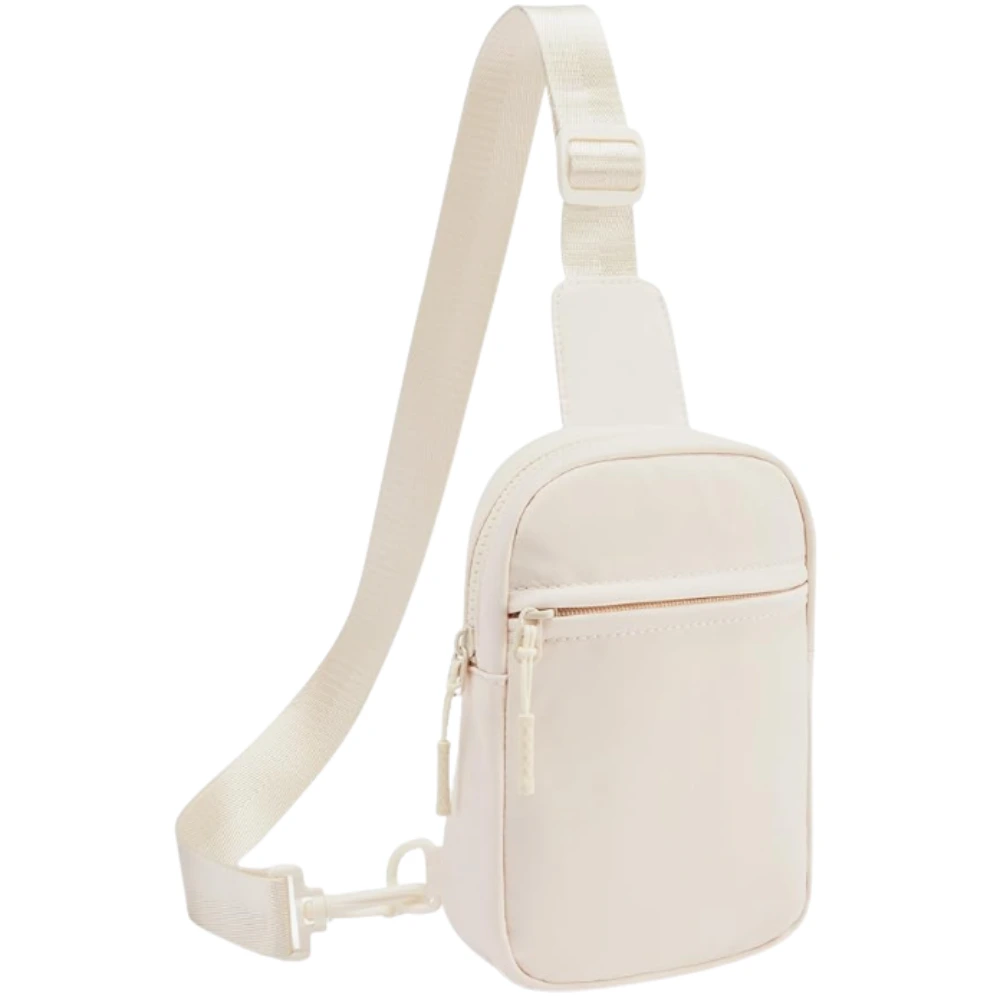
A compact option often preferred for full-day city travel.
FAQs about Tickets for Last Supper Milan
u003cspan style=u0022box-sizing: border-box; margin: 0px; padding: 0px;u0022u003eTickets for the Last Supper in Milan should be booked as early as possible—ideally weeks or even months in advance, especially during peak seasons like summer and holidays.u003c/spanu003e Official tickets are released in three-month batches and often sell out within hours, making early planning essential.
No, you cannot simply turn up to see The Last Supper. All visits require a pre-booked timed ticket, and there is no reliable walk-up availability. Entry is strictly controlled, and without a reservation, you will not be admitted.
u003cspan style=u0022box-sizing: border-box; margin: 0px; padding: 0px;u0022u003eYou can buy tickets for the Last Supper in Milan without a guide only through the official Cenacolo Vinciano website or booking system.u003c/spanu003e You must select a time slot in advance and complete the reservation online or by phone, as tickets are not sold on-site.
Tickets are released in quarterly batches (every three months) on the official booking platform, typically at a specific set time, such as 12:00 p.m. CET on release day. These release windows are highly competitive and sell out quickly.
u003cspan style=u0022box-sizing: border-box; margin: 0px; padding: 0px;u0022u003eIt is difficult to get tickets for the Last Supper in Milan because visitor numbers are strictly limited to about 35–40 people every 15 minutes to protect the fragile painting. This results in extremely low daily capacity relativeu003c/spanu003e to global demand.
u003cspan style=u0022box-sizing: border-box; margin: 0px; padding: 0px;u0022u003eYes, tickets for the Last Supper in Milan sell out quickly—often months in advance, particularly during peak travel periods.u003c/spanu003e Even official tickets and guided tours can be fully booked well before your travel dates.
Related Post You May Like

Disclosure: This page may contain affiliate links. If you choose an experience through them, it helps support the site at no extra cost to you.
 Leonardo Bianchi is the founder of Leonardo da Vinci Inventions & Experiences, a cultural travel guide helping visitors explore Leonardo da Vinci’s art, inventions, and legacy across Italy and Paris.