
(Last updated: May 2036)
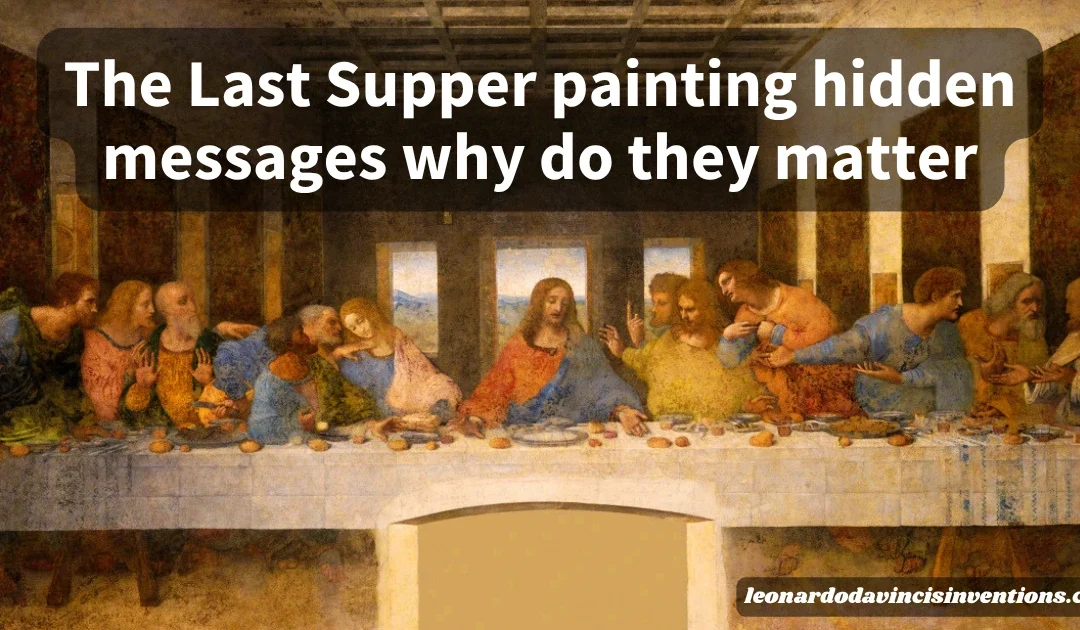
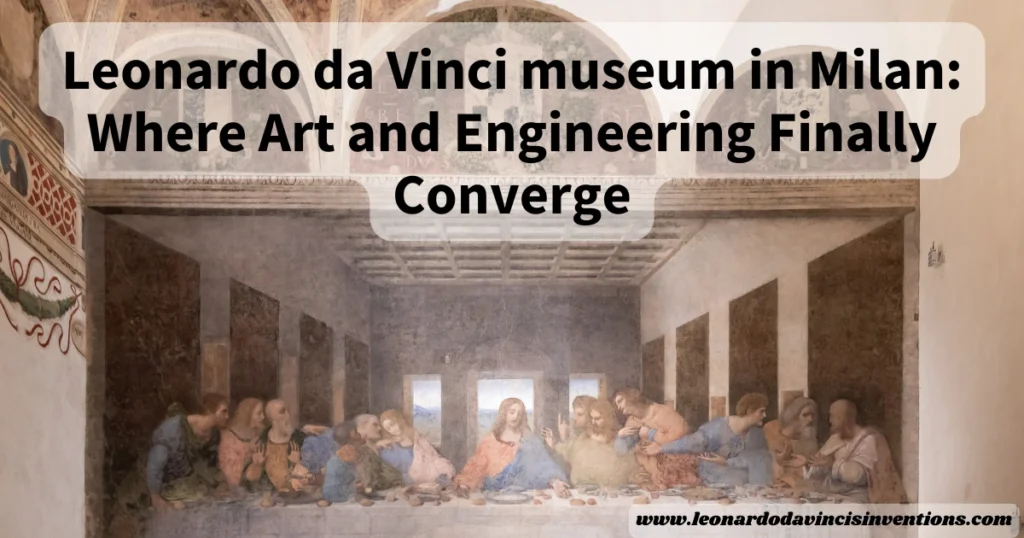
The Last Supper painting hidden messages have captivated scholars, historians, and ordinary visitors for over five centuries — and the more you look, the more you find. Leonardo da Vinci completed this monumental work between 1495 and 1498 on the refectory wall of Santa Maria delle Grazie in Milan, and he embedded within it a visual language so layered that researchers are still decoding it today.
Understanding these hidden symbols doesn't just enrich your knowledge of Renaissance art; it also deepens your understanding of the period. It changes the way you stand in front of the painting. What might look like a dramatic dinner scene turns out to be a precisely engineered meditation on faith, betrayal, human psychology, and divine geometry.
This post is all about the Last Supper painting hidden messages — the symbols, the codes, the controversies, and what they mean for anyone who wants to truly see one of the greatest works ever created.
What Are the Last Supper Painting Hidden Messages?
The Artistic Genius Behind The Last Supper Painting Hidden Messages
Why Leonardo Chose a Refectory Wall
Most painters of the era would have used fresco — wet plaster, fast brushwork, no second chances. Leonardo refused. He wanted to revise. He wanted to think. So he painted directly onto dry plaster with tempera and oil — a technique that gave him extraordinary control over detail but began to deteriorate within his own lifetime.
The choice of location was deliberate, too. A refectory is a dining hall for monks. Leonardo placed the Last Supper — history's most sacred meal — inside a room where real monks ate real meals every day. The painted table was designed to feel like a continuation of their table. The illusion was architectural and theological at once.
The Mathematics of Divine Composition
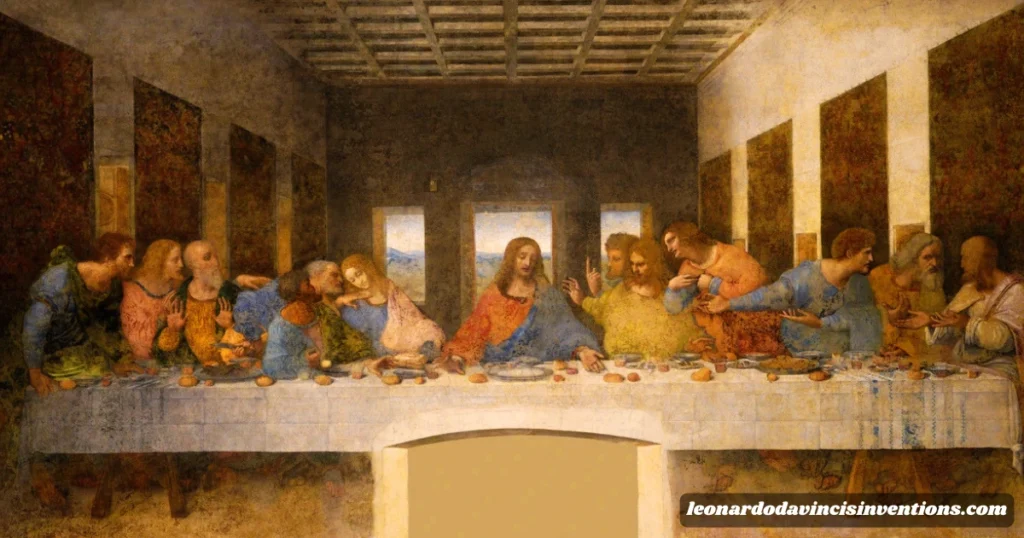
Leonardo was a mathematician as much as a painter. Every measurement in the Last Supper is intentional. The room depicted in the mural follows a single-point perspective so precise that art historians have been able to reconstruct the exact position Leonardo stood when he conceived it.
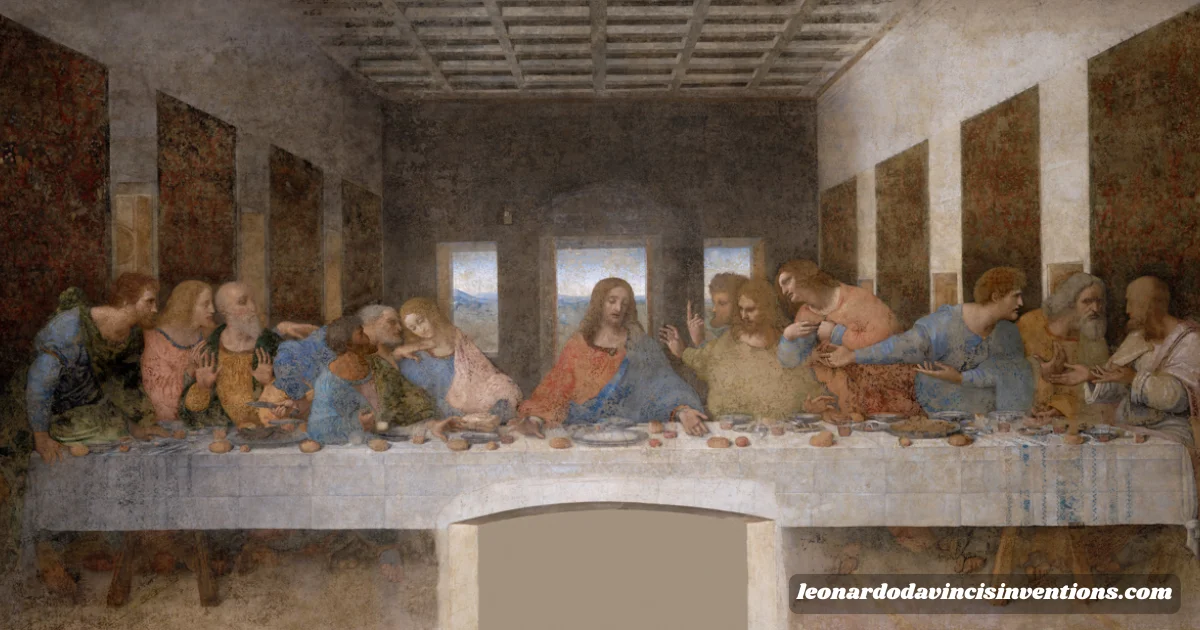
The apostles are divided into four groups of three — the number three appearing throughout as a reference to the Holy Trinity. Christ sits at the center in perfect isolation, framed by a window that floods him with natural light. He is, geometrically, the vanishing point. Every line in the painting leads back to him.
Light as Language
In most paintings of the period, light was decorative. In the Last Supper, it is a narrative. Leonardo painted a single natural light source — the windows on the left wall — yet Christ appears bathed in light, even though the windows shouldn't fully illuminate him from that angle. This was intentional. Christ does not merely receive light. He generates it.
The apostles, by contrast, exist in varying degrees of shadow. The closer they are to the moment of betrayal, the darker they appear in mood, posture, and — subtly — illumination.
For visitors traveling to Milan specifically to see this work, guided Last Supper tours with skip-the-line access are available that include expert commentary on the painting's symbolism — a context that is genuinely difficult to absorb from reading alone.
Why the Last Supper Painting Hidden Messages Became Famous
The Moment of Betrayal — Frozen in Time
Leonardo chose to depict a specific instant: the moment Jesus declares, "One of you will betray me." The entire drama of the painting unfolds from that single sentence. Each apostle reacts differently — shock, denial, anger, sorrow, guilt. Leonardo studied human expression obsessively for this piece, reportedly wandering the streets of Milan in search of faces that matched specific emotions.
Judas is not separated from the group, as he was in earlier treatments of the subject. Instead, Leonardo placed him in the center cluster — fourth from the left — leaning back, clutching a small bag of coins, his face partially in shadow. He is hiding in plain sight.
Is There a Woman in the Last Supper Painting?
One of the most persistent theories — popularized widely in the early 2000s — is that the figure to Christ's right is not the apostle John but Mary Magdalene. This claim rests on the figure's distinctly softer, more feminine features, the mirrored clothing worn by Christ and this figure (suggesting two halves of a whole), and the V-shape formed between them, interpreted as a symbol of sacred union.
Art historians remain divided. The prevailing academic position is that Leonardo simply depicted John, the youngest apostle, in a style consistent with Renaissance conventions for portraying youthful male beauty. But the debate itself reveals something important: Leonardo encoded enough visual ambiguity to sustain five centuries of genuine scholarly argument.
Musical Notes in the Bread — A Hidden Melody?
Italian musician Giovanni Maria Pala made a striking claim in 2007: the positions of the bread rolls and apostles' hands, read from right to left (as Leonardo — left-handed — would have written), form a musical score. When played, it produces a 40-second composition with qualities consistent with Renaissance sacred music.
The theory remains unverified but is remarkable in its specificity. Leonardo left notebooks full of music, composed songs, and designed musical instruments. The idea that he embedded a melody into his greatest painting is improbable — but not impossible.
To explore details like these more closely, seeing the Last Supper in person — with expert context — reveals nuances that are almost impossible to catch from images alone.
Where to See the Last Supper Painting Today
Santa Maria delle Grazie, Milan
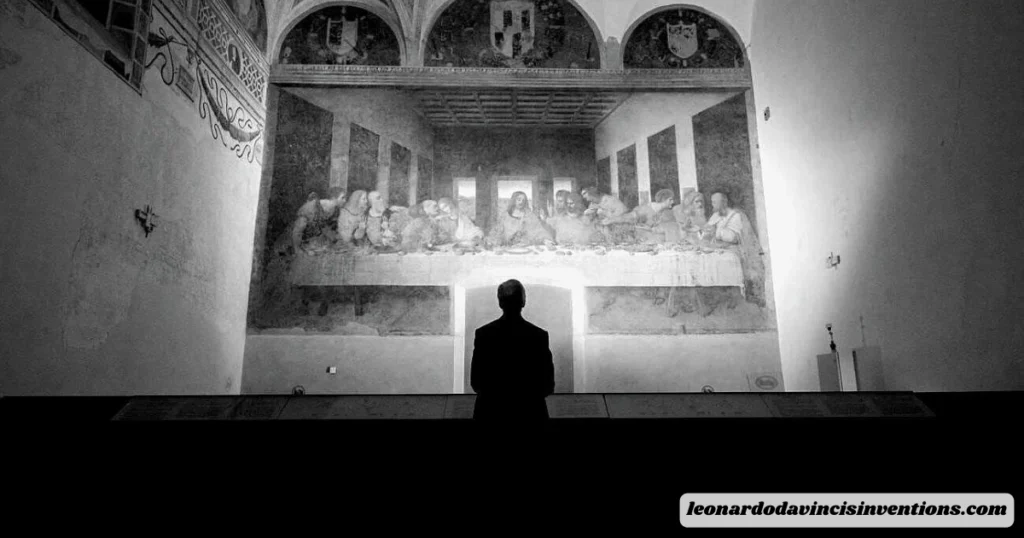
The painting exists in one place: the north wall of the refectory of Santa Maria delle Grazie, in the Magenta district of Milan, Italy. The complex — church and convent — was declared a UNESCO World Heritage Site in 1980, specifically citing the mural as the reason.
Access is strictly controlled. Groups of 30 visitors enter for exactly 15 minutes at a time, in a temperature- and humidity-regulated environment designed to slow the painting's ongoing deterioration. Tickets sell out weeks — sometimes months — in advance. Arriving without a booking almost always means not getting in.
What You Will Actually See
The painting measures roughly 4.6 by 8.8 meters. The surface you see today is the product of multiple restoration campaigns, most recently completed in 1999 after 21 years of painstaking work. Restorers removed centuries of overpainting, grime, and well-intentioned but damaging earlier repairs to reveal colors closer to what Leonardo intended.
Even in its deteriorated state, the painting is breathtaking. The expressions are still readable. The geometry still functions. The light still falls from the left. Standing before it, even briefly, produces an attention that reproductions simply cannot replicate.
Planning Your Visit to Milan
Santa Maria delle Grazie is located at Piazza di Santa Maria delle Grazie 2, in the Magenta neighborhood of Milan. The nearest metro stop is Cadorna on the M1 (red) and M2 (green) lines — about a 10-minute walk. The area around the church is quiet and pleasant, with several good cafes and an excellent Leonardo-related museum, the Museo Nazionale della Scienza e della Tecnologia Leonardo da Vinci, nearby.
Decode the Last Supper in Milan
The Last Supper painting hidden messages become clearer when a guide explains the symbolism, composition, and moment of betrayal directly in front of the original mural.
Exploring Leonardo da Vinci in Milan
Milan was Leonardo's most productive city. He spent nearly two decades here under the patronage of Ludovico Sforza, Duke of Milan, producing not only the Last Supper but also the now-lost equestrian statue, the Sala delle Asse ceiling in the Castello Sforzesco, and hundreds of pages of his notebooks. The city is saturated with his presence.
Beyond Santa Maria delle Grazie, the Museo Nazionale della Scienza e della Tecnologia Leonardo da Vinci houses scale models of his inventions. Leonardo's connection to other Italian cities is equally deep — his birthplace in Florence, his final years in France, and his lesser-known periods in Venice and Rome all trace a life that was as restless as it was brilliant.
Final Thoughts
This post was all about the Last Supper painting hidden messages — and hopefully it has made clear that these are not the product of conspiracy theories or modern imaginations. They are the deliberate work of a man who believed that a painting should function on multiple levels simultaneously: as a religious image, as a psychological portrait, as a mathematical demonstration, and perhaps even as music.
Leonardo da Vinci did not paint the Last Supper to be admired from a distance. He painted it to be read. The more knowledge you bring to those fifteen minutes in Milan, the more the painting gives back.
No reproduction, no documentary, no article — including this one — fully substitutes for standing in that refectory and letting the geometry, the light, and the human drama of it wash over you. That is the final hidden message Leonardo left for every visitor: understanding unlocks seeing.
Travel Essentials for Visiting Milan for the First Time
Preparing for a visit to Milan often comes down to a few small details that can make long museum days, historic walking routes, and city exploration significantly more comfortable.
Comfortable Walking Shoes
Milan’s major landmarks are often best experienced on foot, with visitors covering long distances between museums, churches, and historic streets. Supportive shoes can make a full day of exploration far more comfortable → explore comfortable walking shoes for long city days
Portable Power Bank
Navigation, photography, and digital tickets can quickly drain battery life during a full day in the city. A compact power bank helps avoid interruptions, with many visitors choosing lightweight options → view reliable portable chargers
Secure Crossbody Bag
Busy areas near major attractions can require extra awareness. Many travelers prefer a compact crossbody bag worn in front to keep essentials accessible and secure →
Explore practical crossbody bags for travel
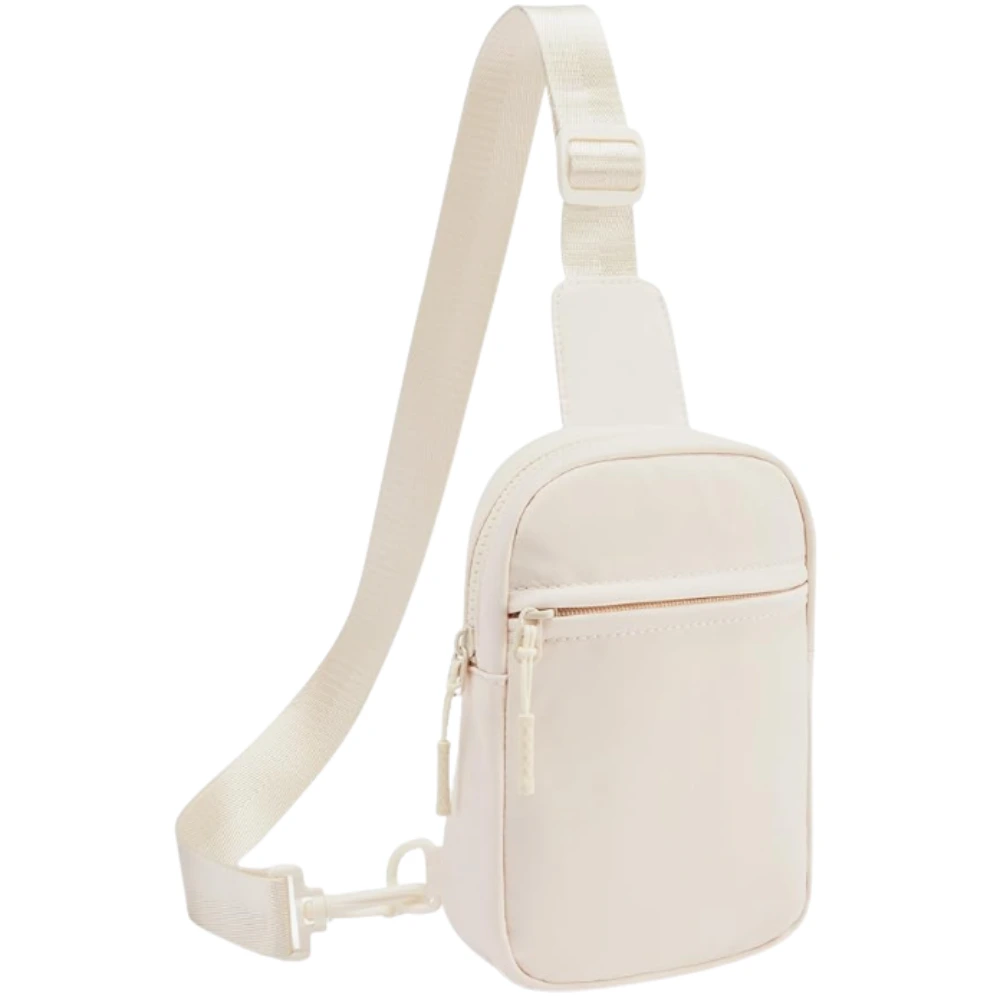
A compact option often preferred for full-day city travel.
There is no single “secret message,” but the painting contains many layers of symbolism. Leonardo used composition, gestures, and objects—such as the spilled salt near Judas—to convey themes of betrayal, faith, and human emotion rather than to encode hidden meanings.
Leonardo da Vinci’s original grave was destroyed during periods of conflict and later demolition. His burial site in the Church of Saint-Florentin was damaged during religious wars and eventually demolished in the early 1800s, scattering his remains.
The “secret” lies in its layered meaning. Leonardo structured the painting with mathematical precision, symbolic groupings, and emotional storytelling to represent the moment Jesus announces betrayal, blending art, theology, and human psychology.
Modern AI and digital analysis have not uncovered hidden codes or prophecies. Instead, they confirm Leonardo’s use of mathematics, perspective, and traditional symbolism, reinforcing scholarly interpretations rather than sensational theories.
According to historical accounts, Leonardo expressed regret on his deathbed, saying he had not fully realized his artistic potential and had “offended God and men” by not working as he should have.
Leonardo da Vinci’s personal life remains largely private and is the subject of debate. Some historians suggest close relationships with male assistants, such as Salaì, but there is no definitive evidence of a romantic partner.
Related Post You May Like


Disclosure: This page may contain affiliate links. If you choose an experience through them, it helps support the site at no extra cost to you.
 Leonardo Bianchi is the founder of Leonardo da Vinci Inventions & Experiences, a cultural travel guide helping visitors explore Leonardo da Vinci’s art, inventions, and legacy across Italy and Paris.