
(Last updatged: May 2026)
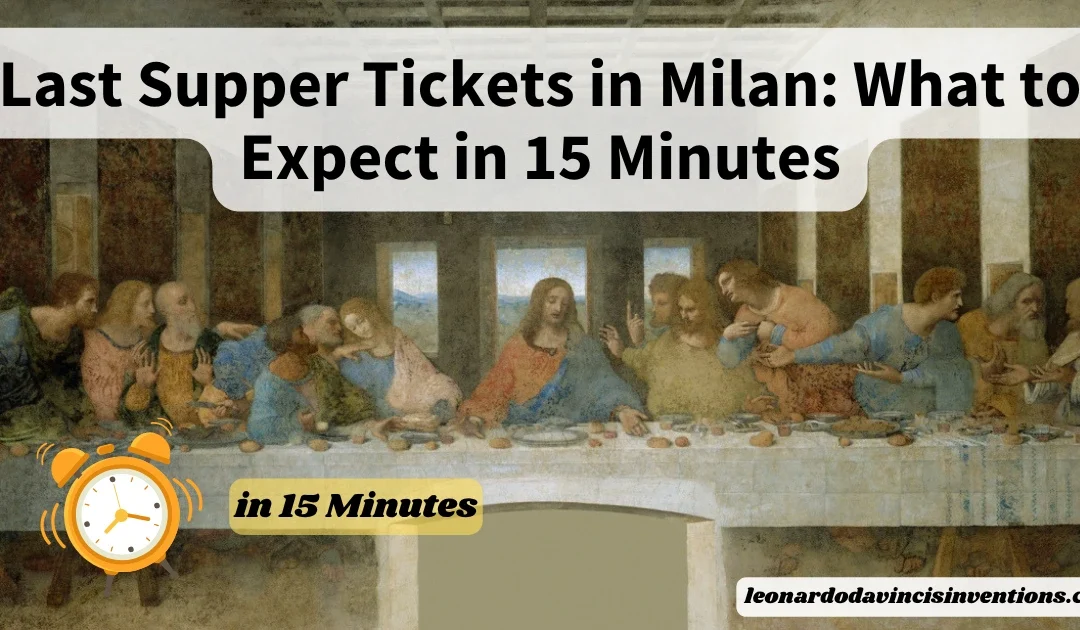
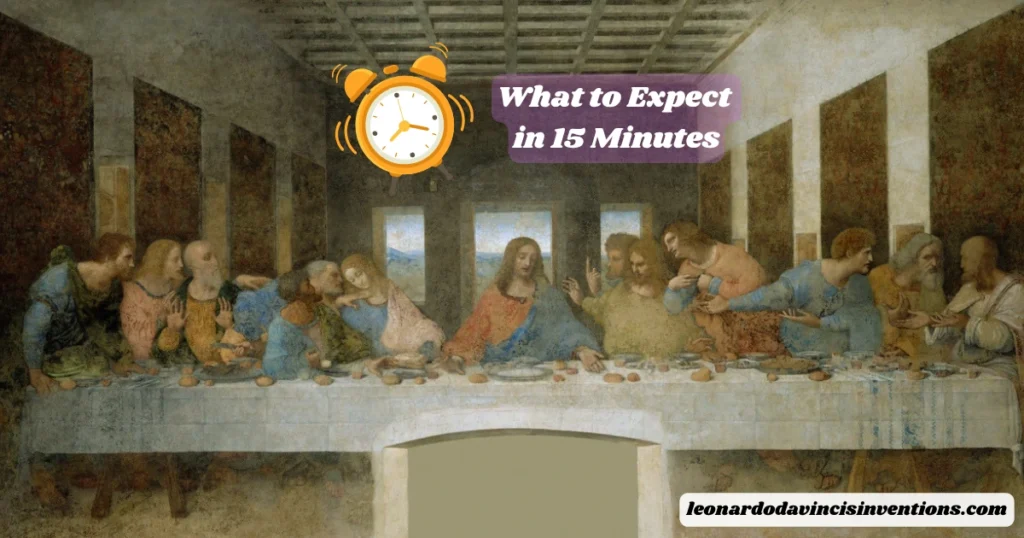
You walk into a quiet refectory in Milan. The room is cool, almost hushed. The doors seal behind you. And there, stretched across a wall that has stood for more than 500 years, is Leonardo da Vinci’s Il Cenacolo — The Last Supper. You have exactly 15 minutes. Then the next group enters, and your window closes.
That is the strange, beautiful reality of securing Last Supper tickets in Milan. Unlike most masterpieces, you cannot linger in front of it. You cannot return after lunch for a second look.
Access is controlled down to the minute because the painting is still fading. Every breath, every degree of humidity, every particle of dust matters. So the 15 minutes you get are rationed, rare, and — if you know what to look for — completely unforgettable.
This guide walks you through what those 15 minutes actually feel like, what Leonardo hid inside the composition, and what most visitors miss in front of one of the most analyzed paintings in history.
Curious how this looks in real life? Explore guided Last Supper tickets in Milan experiences and see what most visitors miss.
Why This Painting Survives at All
Leonardo painted the Last Supper between 1495 and 1498 on the north wall of the dining hall of the Dominican convent of Santa Maria delle Grazie. Duke Ludovico Sforza commissioned it, and Leonardo — restless, experimental — refused to use traditional fresco technique.
Fresco required speed: pigment applied to wet plaster and completed within hours. Leonardo wanted time to revise, to layer, to perfect individual faces over the course of weeks.
So he invented his own method, mixing tempera and oil on dry plaster. It gave him the freedom he craved. It also meant that within 20 years of completion, the painting had already begun to deteriorate.
By the 1600s, monks had cut a doorway through Jesus’s feet. Napoleonic troops used the room as a stable. In 1943, an Allied bomb collapsed the roof and an adjacent wall — the painting survived only because sandbags had been stacked against it. What you see today is the result of a 21-year restoration that ended in 1999.
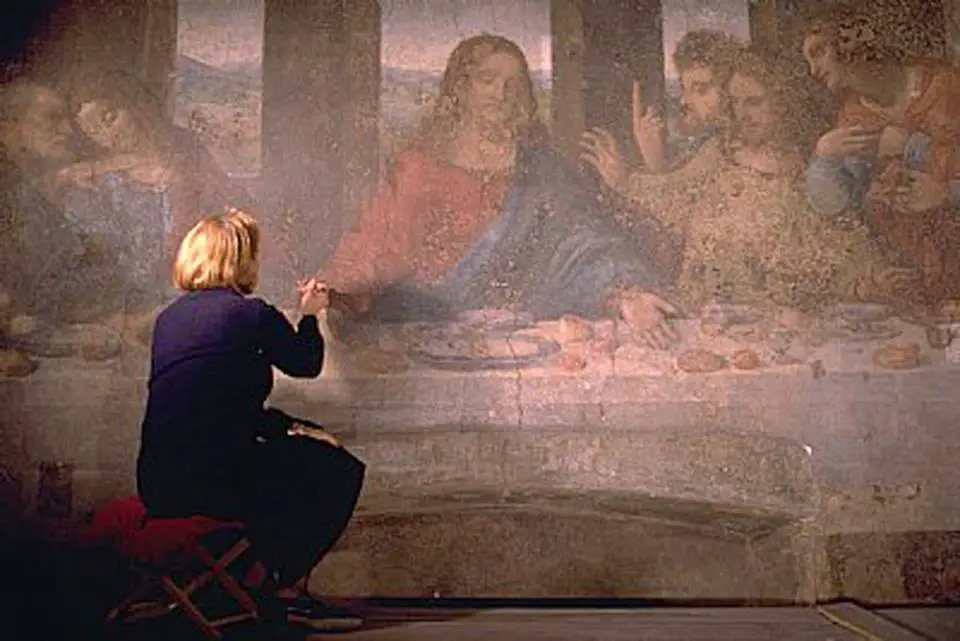
Knowing this changes everything about the visit. You are not looking at a painting. You are looking at a ghost of one — a fragile, breathing, barely-held-together survivor.
That is why tickets to view the Last Supper in Milan are capped at around 35 people every 15 minutes, and why the climate-controlled anteroom strips humidity and dust from your clothes before you enter.
What Leonardo Actually Painted
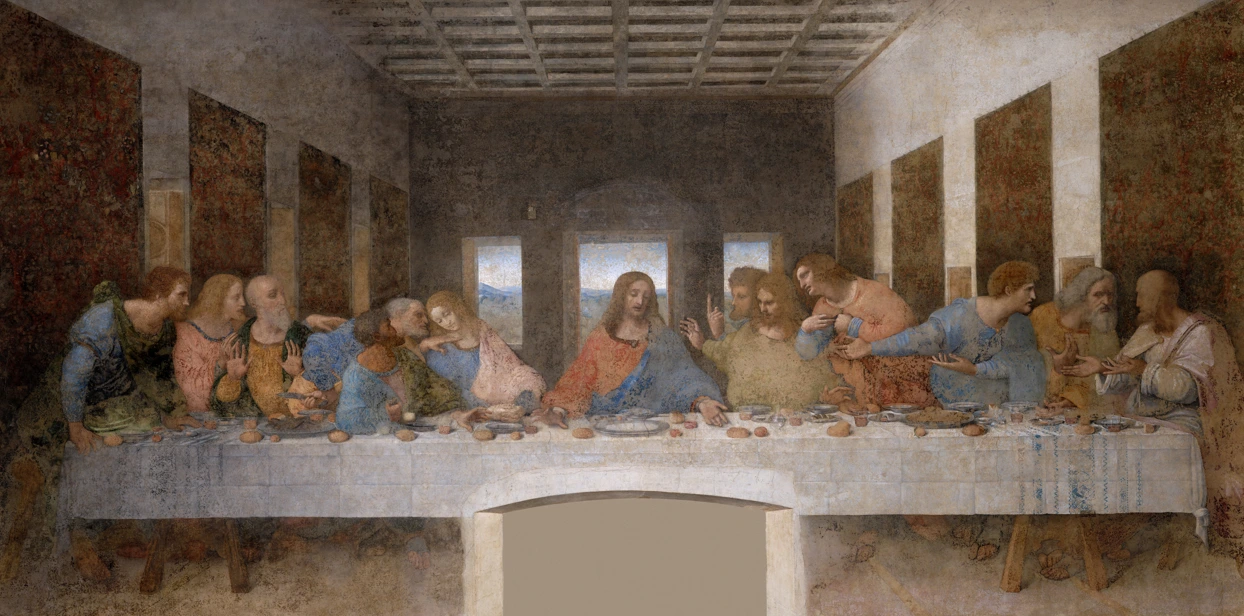
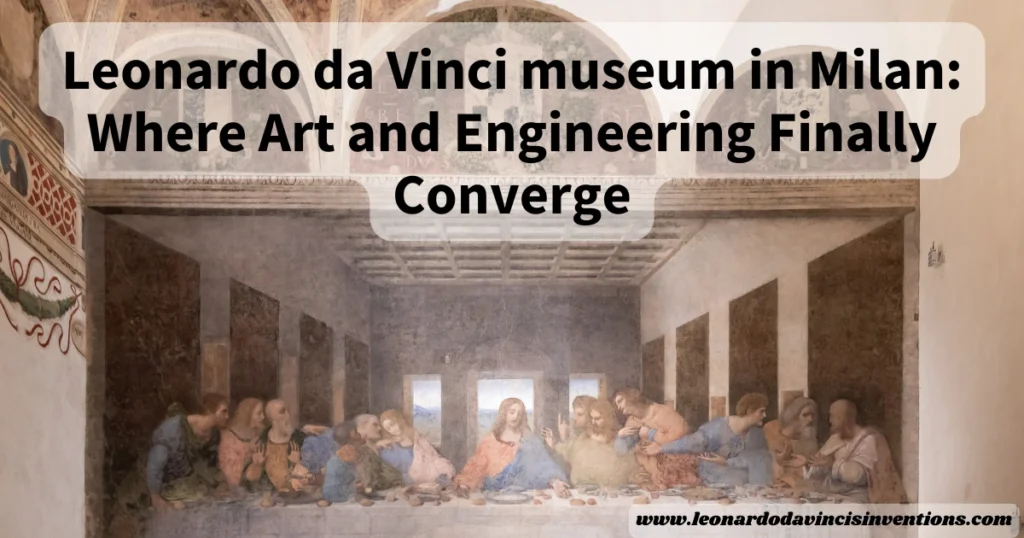
Most visitors arrive expecting to see a religious scene. They are not — or at least, not only. Leonardo painted the precise instant after Jesus had said, “One of you will betray me.” The painting is not about the meal. It is about the reaction.
Every apostle is mid-gesture, mid-emotion. Leonardo clustered them into four groups of three, each a different psychological response — shock, denial, outrage, anxious questioning.
Philip presses both hands to his chest, pleading. Thomas raises a finger, already doubting. James the Greater throws his arms wide in disbelief.
And Judas — crucially — is the only figure leaning back, clutching a small bag of silver, his face shadowed. Leonardo integrated him into the group rather than isolating him on the opposite side of the table, as earlier painters always had. It was a radical choice.
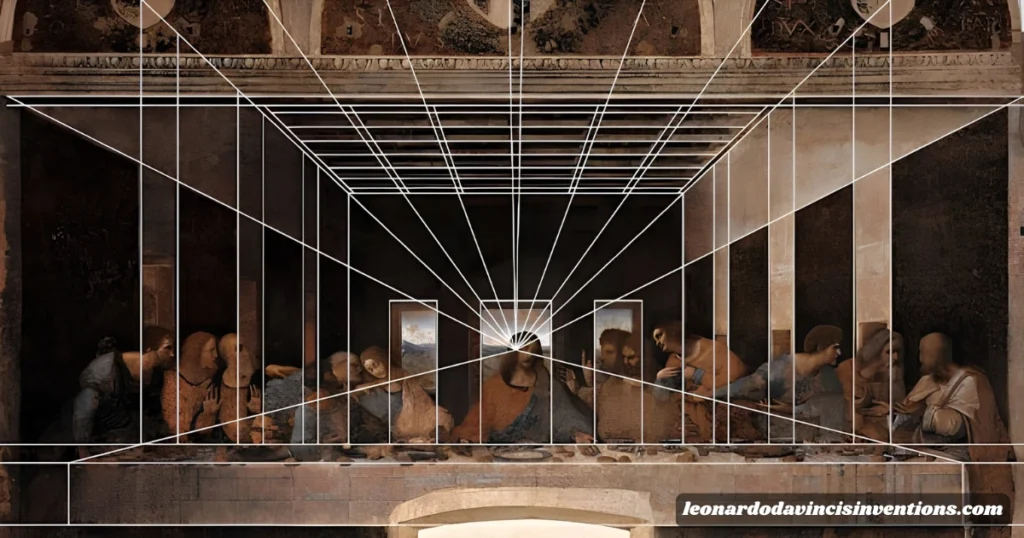
Then there is the geometry. Jesus sits at the exact vanishing point of the entire composition. Every line of the room — the ceiling beams, the wall tapestries, the tiled floor — converges directly behind his head, as if the architecture itself bends toward him.
The window behind him forms a natural halo without any gold leaf. Photographs flatten this effect. You have to stand in the room.
Seeing this detail in person changes everything. Discover how visitors experience the Last Supper painting in Milan through an expert context that reveals its hidden meaning.
Symbols Hiding in Plain Sight
Once you know what to look for, the painting opens up in layers. Leonardo placed exactly 13 figures at a table designed to echo the dimensions of the real refectory — the illusion was meant to feel as though Christ and the apostles were dining alongside the monks. The figures are life-sized. The table linen matches the tablecloths the Dominicans actually used.
There are subtler clues, too. A knife floats unnervingly in the hand of Peter, pointed toward Bartholomew — a visual foreshadowing of violence to come. A spilled salt cellar sits near Judas, an old symbol of betrayal.
Three windows behind the figures echo the Trinity. The bread and wine are arranged in a way Renaissance viewers would have read as Eucharistic, tying the scene directly to the liturgy performed in the adjacent church.
None of this is accidental. Leonardo was not decorating a wall. He was translating a sacred story into the language of human psychology, geometry, and architectural illusion.
The answer to what makes this painting special is not that it is beautiful, although it is. It is a piece of theatre frozen at its most volatile moment.
Finding Santa Maria delle Grazie
The question of where the Last Supper painting is has a precise answer: the refectory of the Convent of Santa Maria delle Grazie, at Piazza di Santa Maria delle Grazie 2, in Milan’s Magenta district.
It is about a 15-minute walk west of the Duomo, or two stops on Metro Line 1 to Conciliazione or Cadorna. The church itself is a Bramante masterpiece — cool and luminous —, but the painting is housed separately, in the old dining hall attached to the cloister.
Tickets must be reserved in advance. There is no walk-up option. The official website for The Last Supper tickets, cenacolovinciano.vivaticket.it, is managed by the Italian Ministry of Culture, and tickets are released in quarterly batches.
They sell out within hours for peak season. During spring and summer, slots often fill up weeks in advance. Winter is slightly easier, but never casual.
If the official site is fully booked — which is common — licensed tour operators hold a separate allocation of slots bundled with guided experiences. These tend to be the most reliable way to secure tickets for the Last Supper by Leonardo da Vinci when the state portal has sold out, and they come with the added benefit of a professional art historian walking you through the details during your 15 minutes inside.
Experience This in Milan
This isn’t just something you read about — it’s something you feel standing inside that room. Knowing what to look for before you arrive transforms 15 minutes into something that stays with you.
Explore Guided Last Supper Experiences In Milan >>What It Feels Like in Person
The entry process is the first surprise. You do not walk straight in. After scanning your ticket at a small side entrance, you pass through a series of climate-controlled vestibules — glass doors that seal behind you before the next opens.
The air is drier than outside. You are being prepared, in a sense, like the painting itself.
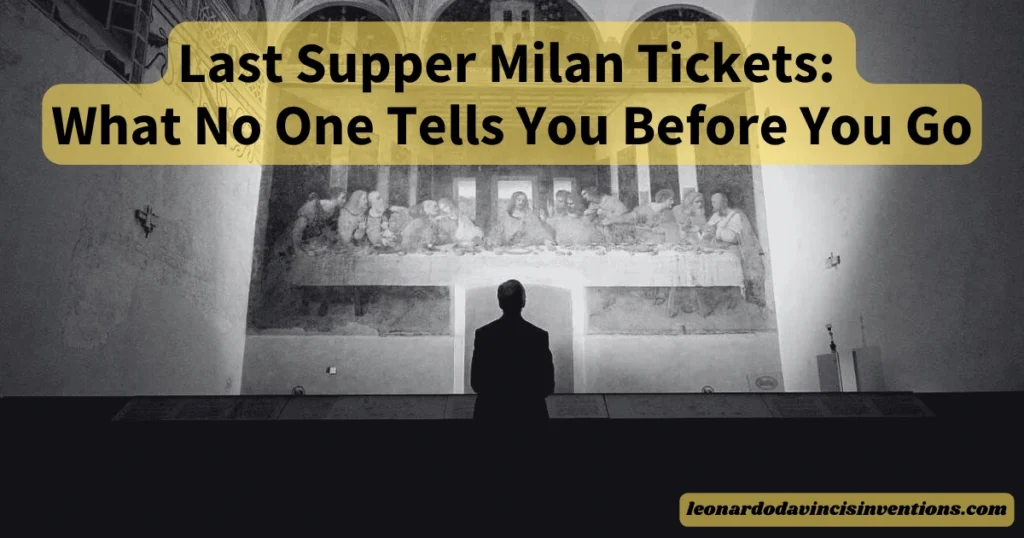
When the final door opens, you step into the refectory, and the scale catches you immediately. The room is much larger than photographs suggest — over 130 feet long, with a vaulted ceiling.
The Last Supper fills one entire end wall. On the opposite wall is Donato Montorfano’s Crucifixion, a fully intact fresco painted just two years earlier. Most people don’t glance at it. They walk directly to Leonardo and stop.
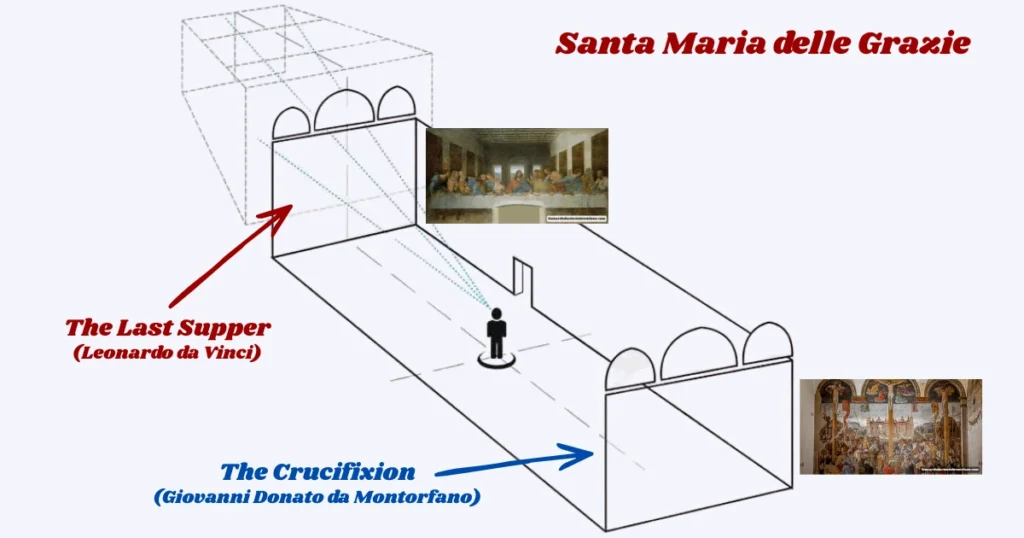
Here is what no reproduction prepares you for: the softness. The colors are muted now, ghost-pale in places, but the faces still hold their expressions with astonishing precision.
John leans toward Peter. Judas recoils. Christ’s hands rest open on the table, palms turned outward — one toward the bread, one toward the wine. The restoration stripped away centuries of overpainting, so what you see is essentially what Leonardo himself painted.
The room stays hushed. People whisper, if they speak at all. A guide, if you have one, will move quickly — pointing out details you would otherwise miss: the landscape glimpsed through the back windows, the subtle gradations of light on each apostle’s robes. Fifteen minutes pass in what feels like four.
It’s completely different standing in front of it. See how small-group visits to the Last Supper painting work and why timing matters.
How the 15 Minutes Actually Break Down
There is a rhythm to the visit that surprises first-timers. The first two or three minutes are orientation — you stand still, adjusting to the scale, letting your eyes travel across the composition.
The urge to photograph passes quickly. Flash is forbidden, and the painting’s faded palette doesn't translate well on phone cameras anyway. Most people put their phones down after a single attempt.
The next seven or eight minutes are where the painting opens up, especially with context. This is when you can trace the grouping of the apostles, find the vanishing point behind Christ’s temple, notice the spilled salt, and spot the knife.
If you are visiting alone without preparation, you are often left realizing how much you are missing. This is why the quality of your preparation matters more than the quality of the ticket itself.
The final few minutes tend to be quieter — reflective rather than analytical. You stop looking for symbols and just look. The expressions become less about theology and more about humanity: fear, loyalty, doubt, love. That emotional register is what lingers after you leave.
How to Experience It Without Missing the Details
If you are booking tickets to the Last Supper in Milan, Italy, for the first time, a few practical details will shape your experience more than anything else. Arrive 20 minutes early — late arrivals are not readmitted to a later slot.
Bring ID that matches the name on your reservation. Leave large bags at the coat check. Dress in layers because the climate control runs cool.
Above all, decide in advance whether you want to enter with context or without. A visit without a guide is quieter, more personal, and leaves more room for your own interpretation.
A visit with a guide is denser, richer in detail, and tends to deliver more lasting understanding — especially for first-time visitors to the Last Supper in Milan, Italy, who only get one shot at seeing it in person.
How to Experience the Last Supper Without Missing the Details
Access is limited, and most visitors only get a few minutes inside. The difference is having the right context before you walk in.
- Skip-the-line timed entry
- Small-group guided access
- Expert explanation of key details
What Most Visitors Get Wrong
3 common Last Supper ticket mistakes in Milan
| Mistake | What Happens | Tickets sell out, no availability during the trip |
|---|---|---|
| Booking too late | Book first, plan the Milan itinerary around it | Learn the key context before entering |
| Arriving unprepared | Limited understanding, forgettable visit | Learn the key context before entering |
| Treating it as a checklist | Rushed, shallow experience | Slow down, stay present, engage deeply |
Why the 15 Minutes Matter
There are paintings you visit and paintings that visit you. The Last Supper belongs to the second category. Long after you leave the refectory, details tend to resurface — the pale outline of a hand, the shadow across Judas’s face, the exact slope of Christ’s shoulders.
It is a painting designed to embed itself in memory precisely because it was designed to be seen, originally, every day, by monks at their meals. Leonardo built it to keep revealing itself over time.
That is ultimately why the strict ticketing, the short slots, and the climate controls are worth navigating. They are not obstacles to the experience. They are part of it.
The difficulty of securing tickets to see the Last Supper painting in Milan is what has kept the painting alive long enough for any of us to see it at all.
If you’re already planning to visit, take a look at the current Last Supper experience options before availability runs out.
Milan has the Duomo, the Galleria, La Scala, and the Navigli canals — all extraordinary. But in a city full of monuments, there is only one room where a 500-year-old painting quietly fades into its own wall while 35 people at a time stand silent before it, watching history hold itself together for another quarter hour.
Those 15 minutes, properly prepared for, are among the most remarkable you can spend anywhere in Europe.
Travel Essentials for Visiting Milan for the First Time
Preparing for a visit to Milan often comes down to a few small details that can make long museum days, historic walking routes, and city exploration significantly more comfortable.
Comfortable Walking Shoes
Milan’s major landmarks are often best experienced on foot, with visitors covering long distances between museums, churches, and historic streets. Supportive shoes can make a full day of exploration far more comfortable → explore comfortable walking shoes for long city days
Portable Power Bank
Navigation, photography, and digital tickets can quickly drain battery life during a full day in the city. A compact power bank helps avoid interruptions, with many visitors choosing lightweight options → view reliable portable chargers
Secure Crossbody Bag
Busy areas near major attractions can require extra awareness. Many travelers prefer a compact crossbody bag worn in front to keep essentials accessible and secure →
Explore practical crossbody bags for travel
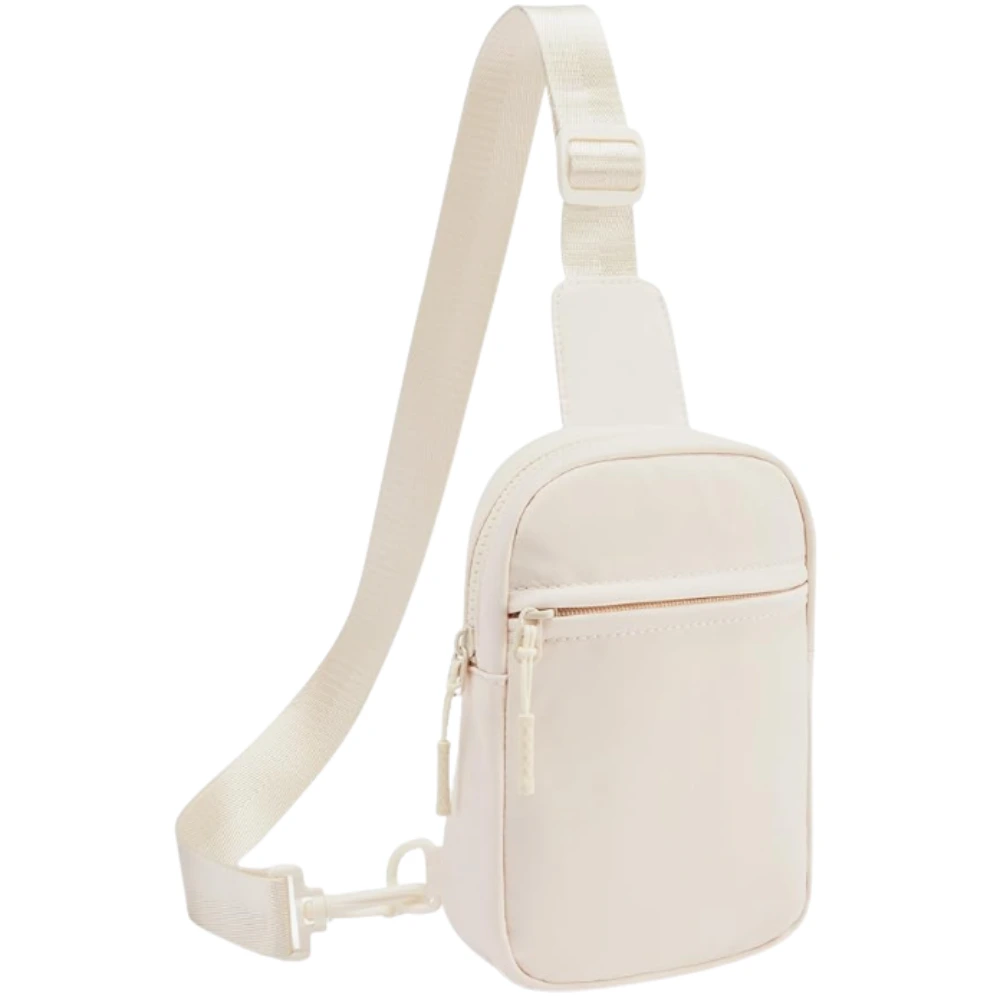
A compact option often preferred for full-day city travel.
FAQs about Last Supper Tickets in Milan
The official ticket to see the Last Supper in Milan costs about €15 for adults, with reduced tickets (€2) for young EU visitors and free entry for children under 18, although all visitors must still reserve a time slot.
No, you cannot simply turn up to see the Last Supper; advance reservations are mandatory because entry is strictly controlled with timed slots and limited group sizes.
If official tickets are sold out, last-minute access is usually only possible through guided tours or third-party providers that bundle reserved tickets with a guide.
You should book the Last Supper as early as possible—tickets are released in batches every few months and often sell out quickly due to limited daily capacity.
Tickets are difficult to obtain because only about 35 visitors are allowed per 15-minute session to protect the fragile mural, creating extremely limited daily availability.
Yes, visitors must wear modest clothing, as the painting is in a former religious site—shoulders and knees must be covered, and hats must be removed.
Related Post You May Like
Disclosure: This page may contain affiliate links. If you choose an experience through them, it helps support the site at no extra cost to you.
 Leonardo Bianchi is the founder of Leonardo da Vinci Inventions & Experiences, a cultural travel guide helping visitors explore Leonardo da Vinci’s art, inventions, and legacy across Italy and Paris.