
(Last updated: May 2026)
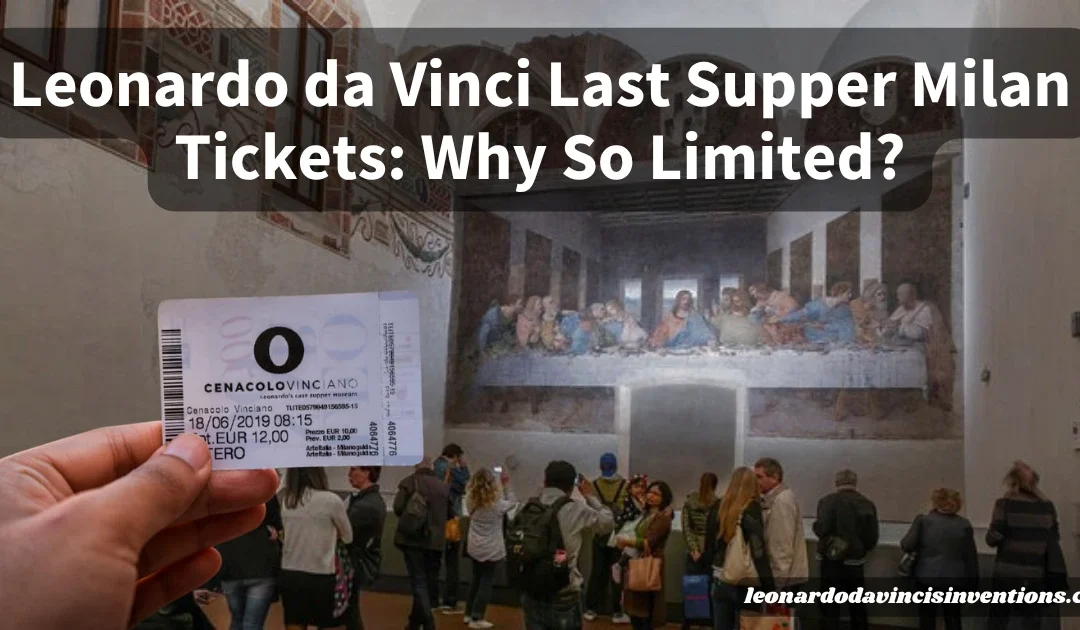
There's a strange moment when travelers pull up the official booking page for the Last Supper in Milan and realize something unexpected: the tickets are already sold out. Not for today. Not for this week. For months.
It feels absurd for one of the most famous paintings in the world. But once you understand why Leonardo da Vinci Last Supper Milan tickets are so tightly controlled, the whole experience starts to make sense — and you start to see why the people who actually get inside describe it the way they do.
This isn't a gallery hang. It isn't a painting on canvas that can be moved, rotated, or lent to another museum. The Cenacolo Vinciano — the Last Supper — is a wall. A specific wall, in a specific refectory, inside a specific Dominican convent in Milan.
You cannot bring it to the crowds. The crowds have to come to it, in small groups, for a measured number of minutes, through a carefully sealed chamber. And that scarcity isn't a marketing trick. It's the only reason the painting still exists at all.
Curious how this looks in real life? Explore guided Last Supper experiences in Milan and see what most visitors miss.
A Masterpiece That Was Never Supposed to Survive
To understand the ticket system, you have to understand what Leonardo actually did in the 1490s — and what he refused to do.
Fresco, the standard wall-painting technique of the Italian Renaissance, requires speed. Pigment is applied to wet plaster, the artist commits to every brushstroke before it dries, and the result bonds chemically with the wall for centuries. Michelangelo painted the Sistine Chapel in fresco. So did nearly every major master of the era.
Leonardo hated fresco. He was a tinkerer, a reviser, a man who could spend an entire morning adjusting a single lip. Fresco gave him no room to change his mind.
So for his commission in the refectory of Santa Maria delle Grazie, he experimented — he painted in tempera and oil directly onto a dry, sealed wall. The technique allowed him the freedom he wanted. It also meant the paint had no real bond with the surface beneath it.
Within twenty years of its completion, the painting was already flaking. By the 17th century, monks casually cut a doorway through the bottom center of it, amputating Jesus's feet.
Napoleonic troops used the refectory as a stable. During World War II, an Allied bomb destroyed the roof of the building — the Last Supper survived only because it had been sandbagged. Every century has tried to kill this painting. It is, in a real sense, a ghost.
Why the Tickets Are So Limited
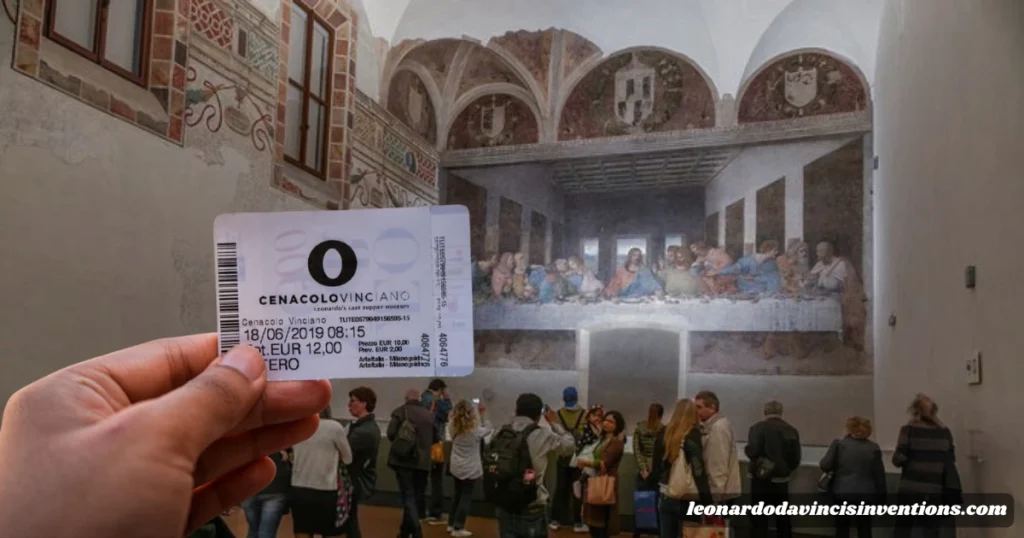
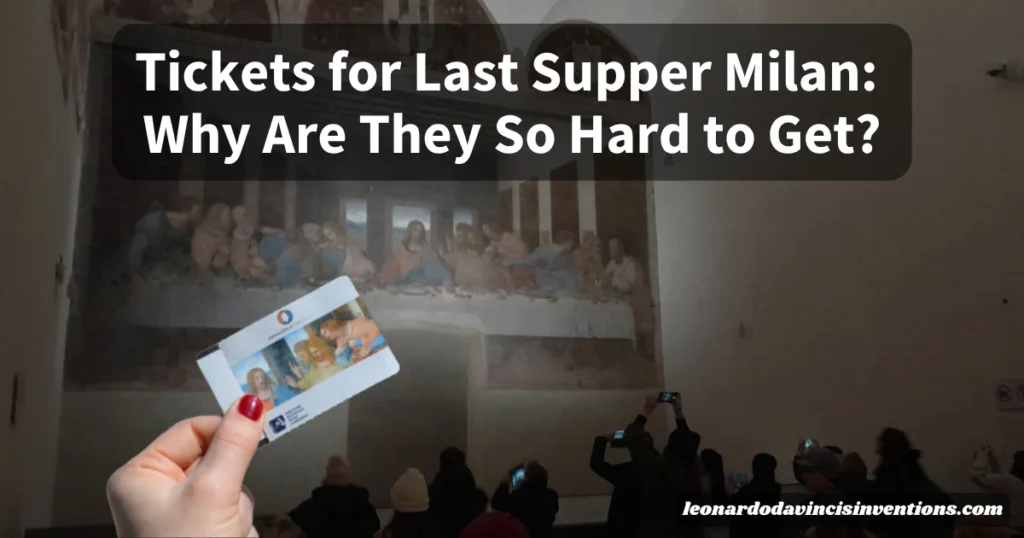
Here is the part that most visitors don't fully grasp until they're standing outside the entrance. The Last Supper lives behind a climate-controlled airlock. Groups of roughly 30 people enter a sealed chamber, the door closes behind them, humidity and temperature stabilize, and only then does a second door open into the refectory itself.
The moisture, breath, and body heat of human visitors are literally dissolving the painting — slower now, but still measurable. Every single person inside that room is, in a tiny way, accelerating its decay.
So the tickets to the Last Supper in Milan, Italy, are rationed by time, not by demand. Italy's Ministry of Culture has capped visits at a strict number of people per day, in 15-minute windows.
Do the math: roughly 1,300 visitors a day, in a city that receives millions of tourists a year, for a painting that appears on every postcard and in every guidebook. There is no scenario in which supply meets demand. There can't be. The painting won't allow it.
This is why booking windows open months in advance and disappear within minutes of release. It's why scalpers and resellers have built entire businesses around this one refectory wall. And it's why "just showing up" — the classic traveler's fallback — simply doesn't work here.
The Last Supper painting tickets aren't scarce because of hype. They're scarce because the artwork is, biologically and physically, a dying thing being kept alive one breath at a time.
Seeing this detail in person changes everything. Discover how visitors experience the Last Supper in Milan through an expert context that reveals its hidden meaning.
What Leonardo Actually Painted (and Why It Still Shocks People)
Before Leonardo, almost every depiction of the Last Supper followed the same template. The twelve apostles line up politely on one side of the table.
Judas sits alone on the opposite side, sometimes halo-less, sometimes with a small black figure hovering over him, always visually quarantined from the others so the viewer knows exactly who the traitor is. The image is didactic. It tells you the answer before you ask the question.
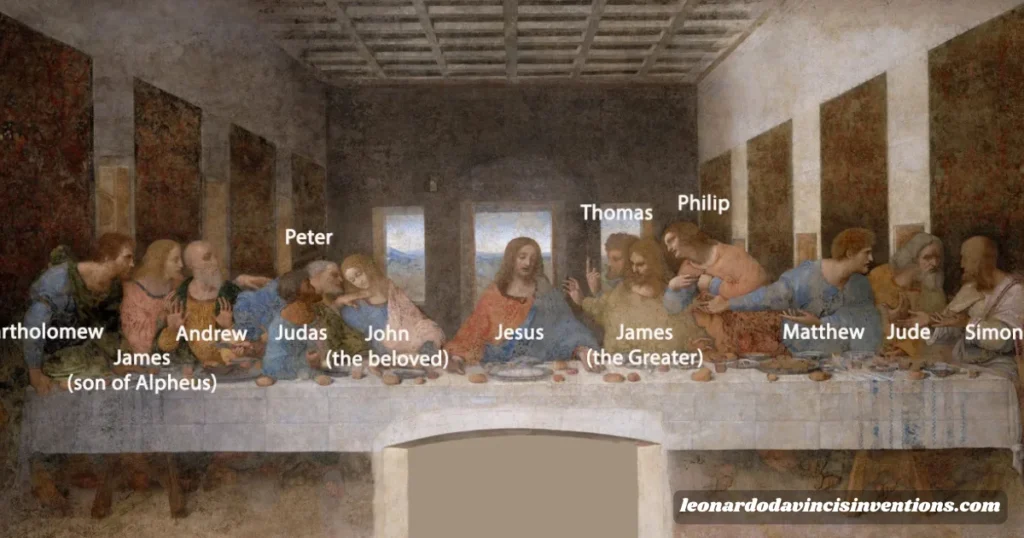
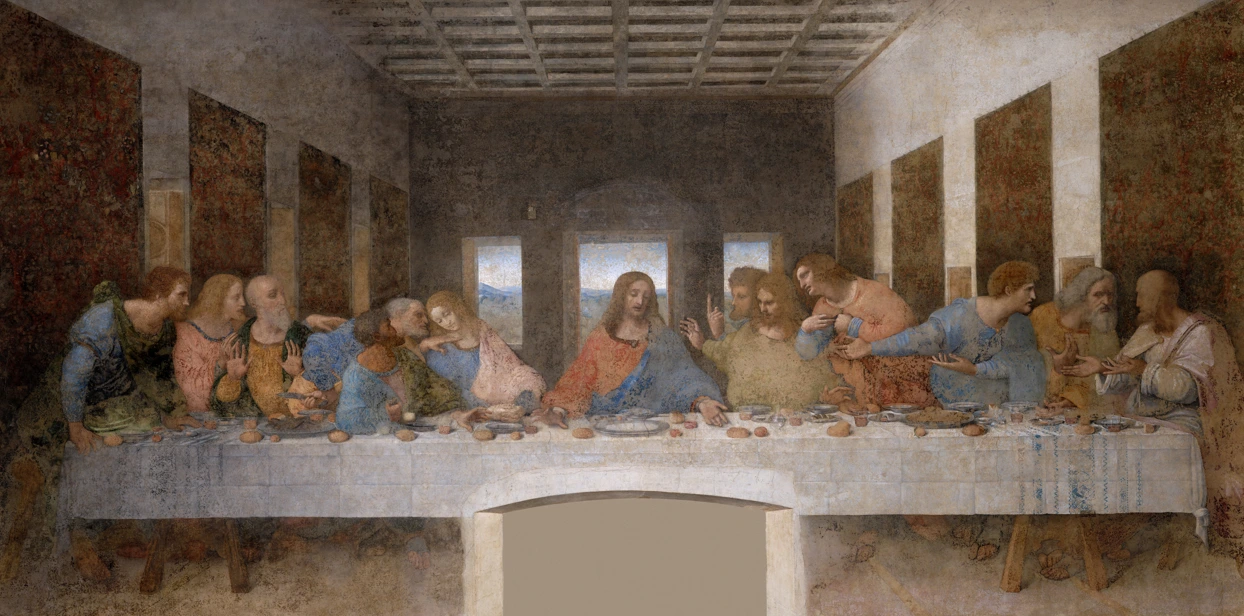
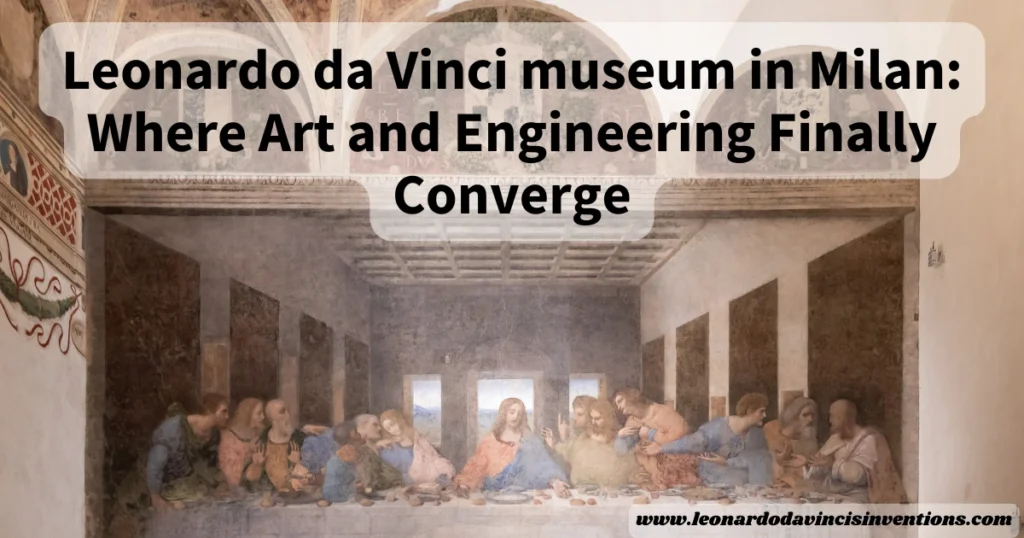
Leonardo threw that template out. He put Judas in the middle of the group, indistinguishable at first glance, clutching a small bag of silver — thirty pieces, the price of his betrayal — and knocking over a salt cellar with his elbow, a gesture that Renaissance viewers would have instantly read as a sign of broken trust.
Judas is hiding in plain sight. You have to look to find him. Leonardo made the viewer do the work.
And then there's the moment he chose to paint. Not the institution of the Eucharist. Not the prayer. Not the calm, symbolic supper of every previous version. Leonardo painted the exact second after Jesus says, "One of you will betray me."
Every apostle reacts — recoil, confusion, denial, anger, grief — each emotion mapped onto a specific face, a specific pair of hands. It's the most psychologically alive painting of the 15th century. You are not looking at a religious scene. You are looking at the instant a group of friends realizes their world is ending.
Where Is the Da Vinci Last Supper in Milan?
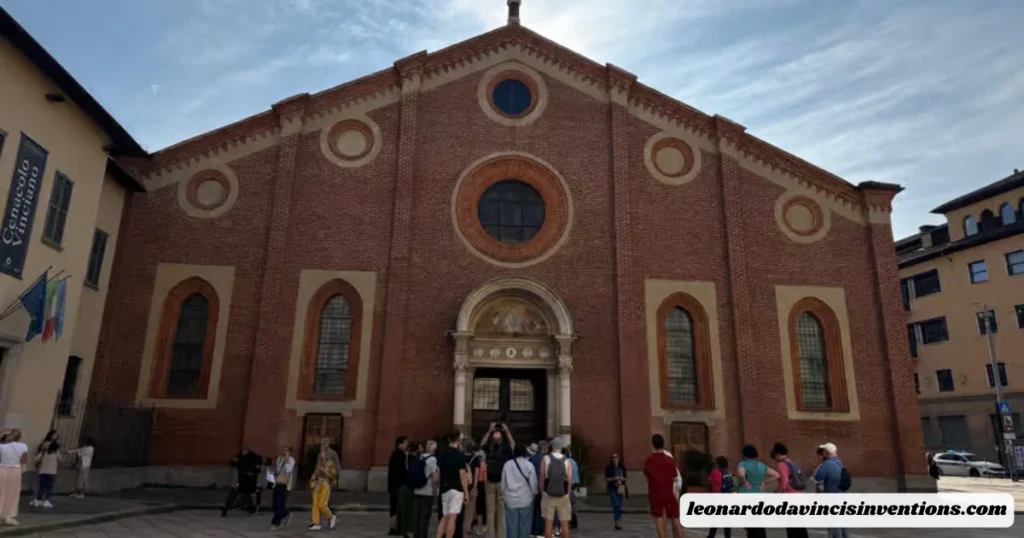
The painting lives in the refectory — the old monks' dining hall — of the Santa Maria delle Grazie convent, a short walk from the Cadorna metro station in central Milan. The address is Piazza Santa Maria delle Grazie, 2.
The church itself is a gem of Lombard Renaissance architecture, with a Bramante-designed apse that would be the pride of almost any other city on earth. In Milan, it's the building next door to the wall with the painting.
That location matters. Leonardo didn't paint the Last Supper for a museum; he painted it for the Dominican friars who ate their meals in this room. The idea was that when the monks sat down to their own silent suppers, Christ and the apostles would appear to be eating with them on a kind of painted extension of the hall.
The vanishing-point perspective — everything in the painting converges on Jesus's head — is calibrated to work from a specific standing position in the real room. This is site-specific art in the most literal sense.
You cannot understand the Last Supper anywhere else, because it was designed to exist only here.
Experience This in Milan
This isn’t just something you read about — it’s something you feel standing inside that room. Knowing what to look for before you arrive transforms 15 minutes into something that stays with you.
Explore Guided Last Supper Experiences In Milan >>What It Actually Feels Like to Stand in Front of It
People who have seen the Last Supper in Milan almost always describe the same sequence of feelings. The first is mild disorientation — the painting is much larger than expected, nearly 15 feet tall and 29 feet wide, and it covers an entire end wall.
The second is a kind of hush. Voices drop automatically. Even in a group of 30, there's an unspoken understanding that this is not a place for selfies and chatter, even though both are technically allowed. Something about the room makes people behave as if they've walked into a cathedral.
The third feeling is harder to name. The painting is damaged — visibly so. Centuries of restorations, many of them well-intentioned disasters, have left the surface patchy and ghostly. In some places, you can see almost nothing but a faint outline. In others, the color is eerily vivid.
And yet this fragility is exactly what makes the experience so different from seeing a reproduction. You are not looking at "the" Last Supper. You are looking at what is left of it. You are looking at survival.
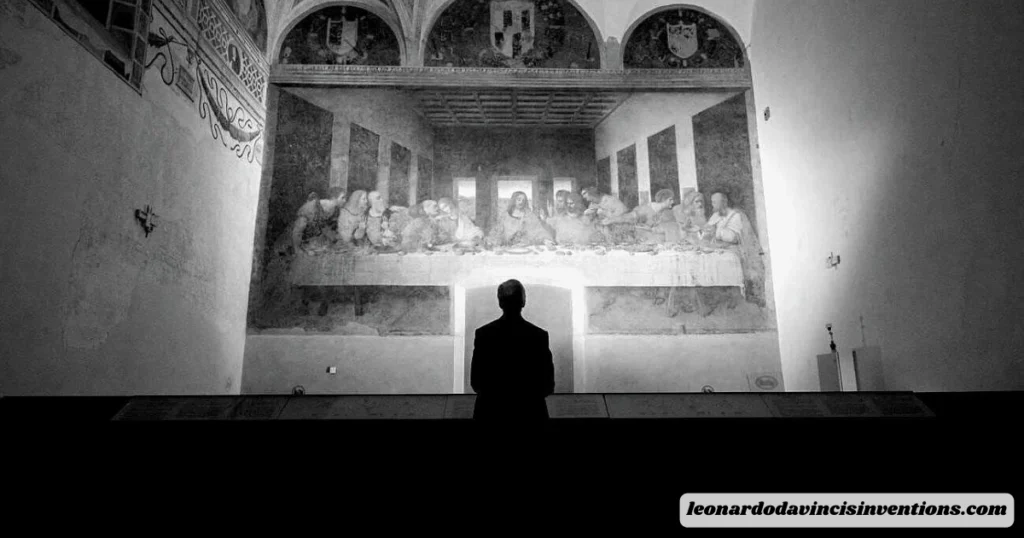
Then the 15 minutes end. A soft chime, a gesture from the guard, and you move through the second airlock into a small gift shop that feels, in the moment, almost comically ordinary.
People walk out dazed. Some step back out into the Milan sunshine and just stand there for a minute, recalibrating. It's a very short visit. It does not feel short.
It's completely different standing in front of it. See how small-group visits to the Last Supper work and why timing matters.
How to See the Last Supper in Milan Without Losing Your Mind
The practical question almost every traveler asks is the same: how to see the Last Supper in Milan when the official site is perpetually sold out?
There are really only three paths, and understanding the trade-offs between them is what separates travelers who actually get inside from travelers who leave disappointed.
The first path is to book directly through the official Vinciano. vivaticket portal the moment tickets release — typically three to four months in advance, on a set release day, at a set hour.
If you are flexible with dates, fast with a credit card, and willing to camp out on the website when the window opens, this is the cheapest option. It is also the most brutal; tickets for prime weekend slots evaporate in seconds.
The second path is to go with a licensed guided tour operator that holds pre-allocated blocks of tickets. These small-group visits bundle the entry slot with an expert guide who walks you through the painting's history, the symbolism, Leonardo's technique, and the details you would otherwise completely miss — the hand with the knife, the reflected window, the argument in the faces on the far left.
The cost is higher than a bare ticket, but you are paying for access and context, and both matter in a room you'll only stand in for 15 minutes.
The third path, the one most travelers end up on by accident, is to wait until the last minute and hope. This occasionally works — cancellations happen, and third-party resellers sometimes have leftover inventory — but it is by far the highest-stress option, and many visitors who try it end up writing rueful blog posts about the day they didn't get in.
How to Experience the Last Supper Without Missing the Details
Access is limited, and most visitors only get a few minutes inside. The difference is having the right context before you walk in.
- Skip-the-line timed entry
- Small-group guided access
- Expert explanation of key details
What to Know Before You Go
A few details can make or break your visit. The refectory is closed on Mondays — a detail that catches a surprising number of tourists off guard. Arrival time is non-negotiable; if you are late for your 15-minute slot, you simply lose it, and there is no "next available" group. Plan to arrive at least 20 minutes early.
Bags larger than a small purse must be stored in a locker. Large camera gear and tripods are not permitted, though phone photography without flash is generally fine.
The adjacent church of Santa Maria delle Grazie is free to enter and worth 20 minutes of your time. Bramante's apse and cloister are among the finest Renaissance architecture in Lombardy, and the atmosphere is an excellent cool-down from the intensity of the refectory visit.
One last note on expectations. You will not have the room to yourself. You will not get to stand two inches from the painting with a magnifying glass. You will not be allowed to linger past your slot.
What you get, instead, is 15 minutes in the same space Leonardo stood in while he worked, looking at the same wall the Dominicans looked at while they ate their soup in 1498. For most people, that is more than enough.
If you're already planning to visit, take a look at the current Last Supper experience options before availability runs out.
The Painting Everyone Has Seen and No One Has Really Seen
The Last Supper is the most reproduced religious painting in history — on mugs, posters, dorm-room walls, tattoo flash sheets, and the cover of a novel that sold 80 million copies.
And yet almost no one has really seen it, because reproductions cannot show you the scale, the damage, the light in the refectory, or the quiet strangeness of standing in front of something that has been dying slowly for more than five hundred years and is still, somehow, there.
That is why the tickets are so limited. And that is why, for the travelers who do manage to get inside, those 15 minutes tend to become one of the memories they come home with — not the Duomo, not the Galleria, not the aperitivo.
The room with the fading wall. The hush. The moment they finally understood why the world has been trying to keep this painting alive for half a millennium.
Travel Essentials for Visiting Milan for the First Time
Preparing for a visit to Milan often comes down to a few small details that can make long museum days, historic walking routes, and city exploration significantly more comfortable.
Comfortable Walking Shoes
Milan’s major landmarks are often best experienced on foot, with visitors covering long distances between museums, churches, and historic streets. Supportive shoes can make a full day of exploration far more comfortable → explore comfortable walking shoes for long city days
Portable Power Bank
Navigation, photography, and digital tickets can quickly drain battery life during a full day in the city. A compact power bank helps avoid interruptions, with many visitors choosing lightweight options → view reliable portable chargers
Secure Crossbody Bag
Busy areas near major attractions can require extra awareness. Many travelers prefer a compact crossbody bag worn in front to keep essentials accessible and secure →
Explore practical crossbody bags for travel
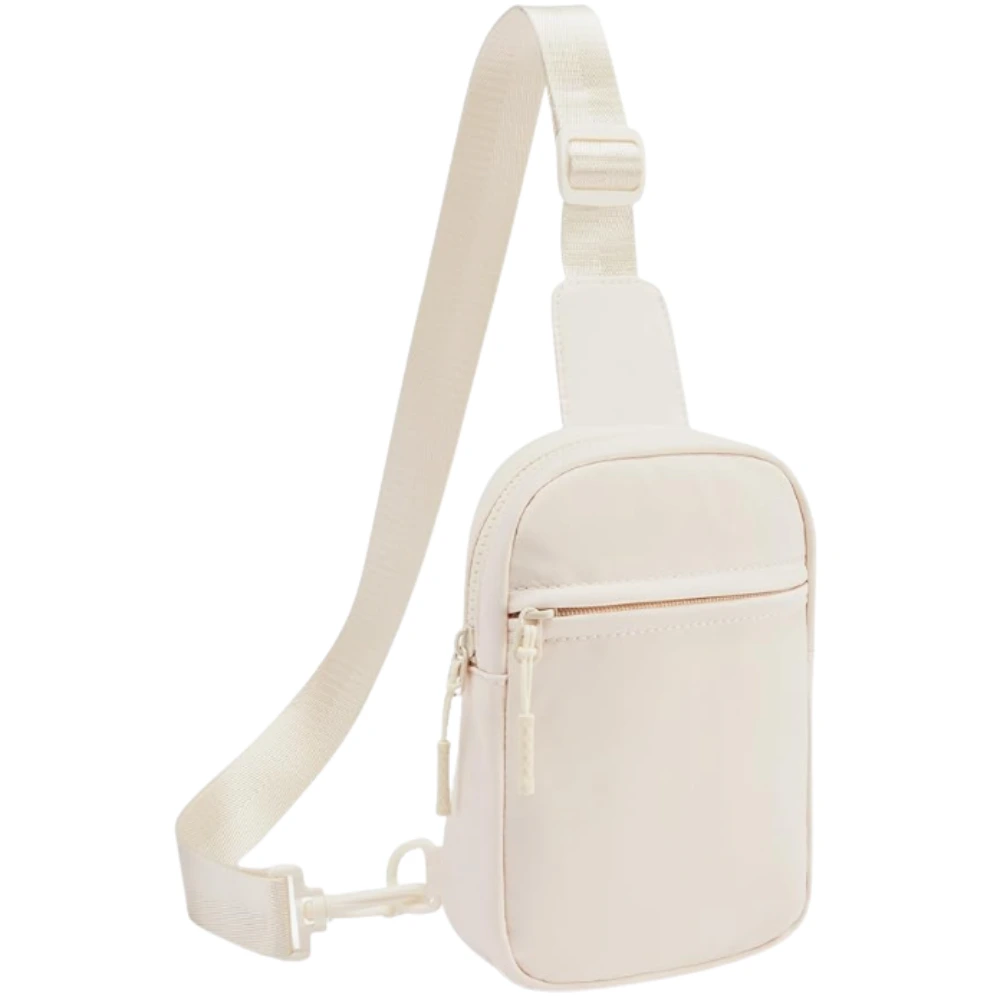
A compact option often preferred for full-day city travel.
FAQs about Leonardo da Vinci Last Supper Milan Tickets
Yes, you need a ticket to see the Last Supper in Milan, and advance reservations are mandatory. Entry is strictly controlled with timed slots, and visitors are only admitted in small groups for about 15 minutes to protect the painting.
The standard ticket to see the Last Supper costs about €15 for adults, with reduced tickets around €2 for ages 18–25 and free entry for some visitors under 18. Guided tours cost more but often include guaranteed access.
You should book the Last Supper tickets at least 2–4 months in advance, as official tickets are released in limited batches and sell out quickly. Waiting too long often means relying on guided tours or cancellations.
Yes, seeing the Last Supper in Milan is widely considered worth it because it is one of the most important Renaissance artworks, viewed in its original setting at Santa Maria delle Grazie, offering a unique historical and emotional experience.
Tickets are hard to get because access is strictly limited to small groups and short viewing times to preserve the fragile painting. High global demand combined with restricted daily capacity causes tickets to sell out months in advance.
Yes, there is a dress code because the painting is located in a former religious site. Visitors must wear modest clothing, covering shoulders and knees, and avoid sleeveless tops or short garments.
Related Post You May Like
Disclosure: This page may contain affiliate links. If you choose an experience through them, it helps support the site at no extra cost to you.
 Leonardo Bianchi is the founder of Leonardo da Vinci Inventions & Experiences, a cultural travel guide helping visitors explore Leonardo da Vinci’s art, inventions, and legacy across Italy and Paris.