
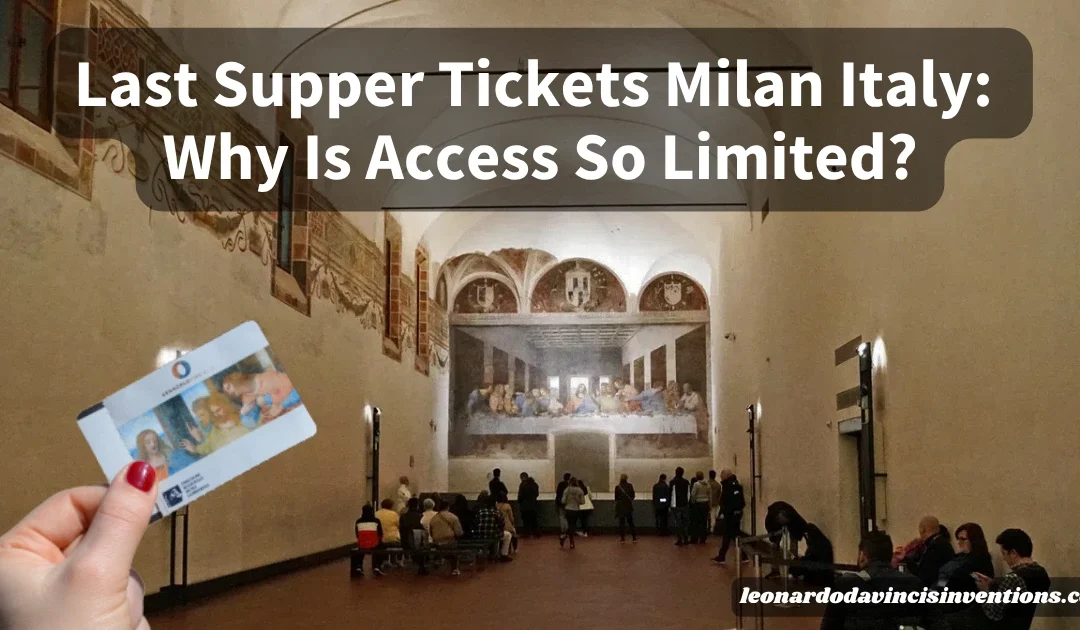
(Last updated: May 2026)
You can walk into the Louvre and stand in front of the Mona Lisa any day of the year. You can stroll into the Sistine Chapel with a general Vatican ticket.
But to stand in front of Leonardo da Vinci's Last Supper in Milan, you need something very different: a timed slot, booked weeks (sometimes months) in advance, inside a climate-controlled room that holds barely 30 people at a time. Fifteen minutes. Then you're politely ushered out.
Why is access to this single painting more tightly controlled than almost any other masterpiece on earth? The answer is part chemistry, part history, part accidental genius — and understanding it is the difference between seeing a faded fresco on a wall and witnessing what many art historians consider the most psychologically complex painting ever produced in the Western tradition.
If you're planning a trip to Milan, figuring out how to see the Last Supper in Milan is usually the first — and most frustrating — item on the list. Let's unpack why, what you're actually looking at, and how to make those fifteen minutes count.
Curious how this looks in real life? Explore guided Last Supper experiences in Milan →
A Painting That Was Dying the Moment Leonardo Finished It
To understand why tickets to see the Last Supper in Milan, Italy, are so scarce, you have to understand what Leonardo did wrong — magnificently, stubbornly wrong.
In 1495, when Duke Ludovico Sforza commissioned Leonardo to paint the refectory wall of the Dominican convent of Santa Maria delle Grazie, the accepted technique for a mural this size was buon fresco — pigment applied directly into wet plaster.
Fresco is brutal, unforgiving, and fast. You get one chance. Once the plaster dries, the color is locked in for centuries.
Leonardo hated that. He was a notorious perfectionist, a man who could spend a full morning painting a single eyelash and then scrape it off by lunch. Fresco didn't allow for second thoughts, and Leonardo was made of second thoughts.
So he invented his own technique. He sealed the dry wall with a ground of pitch, gesso, and mastic, and painted on top of it in tempera and oil — a method that let him layer, revise, and finesse his expressions for years.
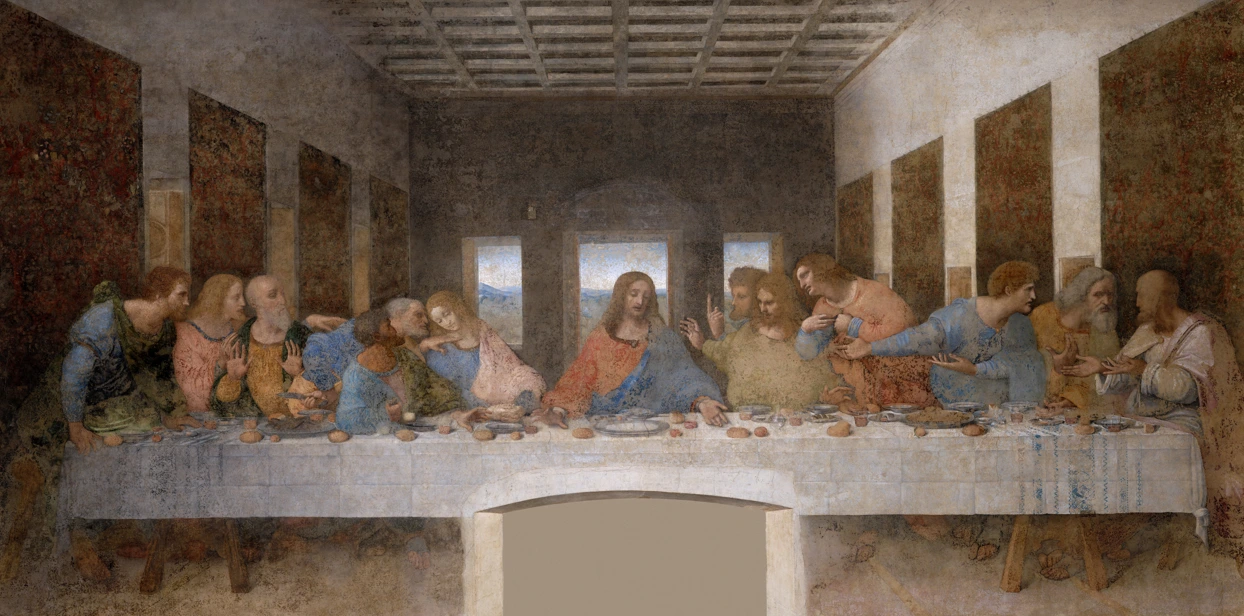
The results were breathtaking. The faces had a luminosity no fresco had ever achieved. Judas's shadowed panic, John's gentle sorrow, Thomas's accusatory finger already raised toward the sky — all rendered in painterly subtlety impossible in traditional fresco.
It also began to flake off the wall within 20 years.
By 1517, contemporaries were already reporting deterioration. Over the next five centuries, things got worse: Napoleon's troops stabled horses in the refectory, an 1800 flood soaked the lower third, a door was cut through Christ's feet in 1652, and in 1943 an Allied bomb destroyed the roof — the Last Supper survived only because monks had sandbagged it before the raid.
The Room That Keeps It Alive
This is the key insight most visitors miss: the strict access rules aren't a bureaucratic inconvenience. They're life support.
After the final, painstaking twenty-two-year restoration completed in 1999, the painting was placed under a tightly regulated microclimate. Humans are walking humidity machines. Every visitor exhales water vapor, sheds skin cells, and carries dust.
In a normal gallery, those contributions are negligible. In front of a 15th-century oil-and-tempera experiment clinging to a wall, they're catastrophic.
So the room operates as a filter. Visitors enter through a series of airlocks that dehumidify the air and strip particulates before anyone gets close to the painting.
Groups are capped at around 30 people. Viewing is capped at 15 minutes. Only about 1,300 people per day can enter. That's fewer than the Louvre admits in a single hour.
Multiply that by 365 days and subtract Mondays (when the site closes), and you get why Last Supper tickets last minute is a phrase that usually ends in disappointment. Demand dwarfs supply by roughly ten to one during high season.
Seeing this detail in person changes everything. Discover how visitors experience the Last Supper in Milan →
What Leonardo Actually Painted (It Isn't Dinner)
Every other Last Supper in Western art — and there are hundreds — depicts the institution of the Eucharist. Christ blesses the bread. Apostles look pious. It's a sacrament made visible.
Leonardo ignored that tradition entirely. He painted the moment immediately after Christ says, “One of you will betray me.”
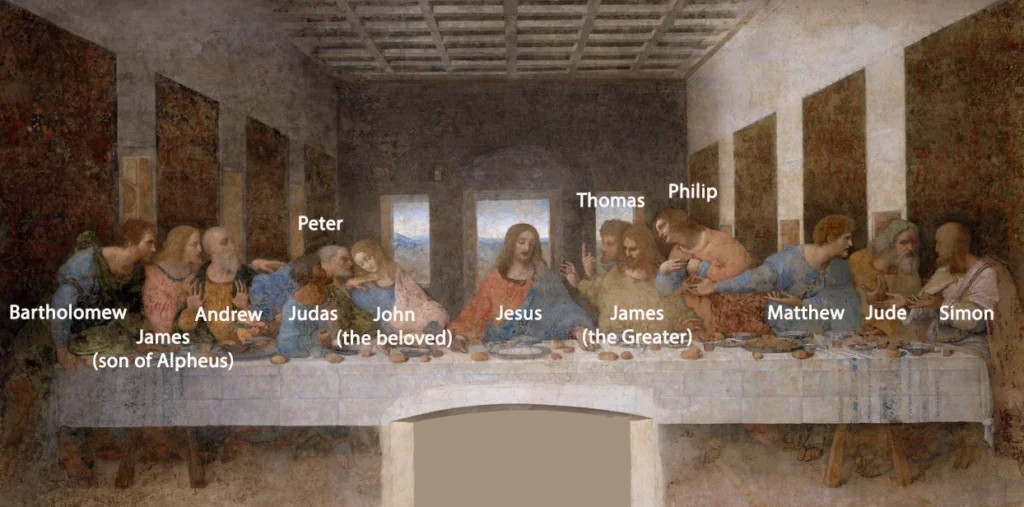
This is not a religious scene. It is a psychological shockwave, frozen mid-ripple. The apostles cluster into four groups of three — a deliberate trinitarian composition — and each group reacts differently.
Philip rises, hand to chest, pleading his innocence. James throws his arms wide in disbelief, nearly knocking Thomas backward. Peter leans forward with a knife, already hunting for the traitor. Judas recoils into the shadows, clutching a bag of silver, spilling the salt.
Christ sits at the exact center, hands open, calm — the only still point in a room full of motion. The perspective lines of the coffered ceiling, the tapestries, and the windows behind him all converge on his right temple. Your eye has nowhere else to go.
Leonardo didn't paint a dinner. He painted twelve different answers to a single unbearable sentence.
Where to See It: Santa Maria delle Grazie
The painting hangs where it has always hung — on the north wall of the refectory (the dining hall) of the Dominican convent attached to the church of Santa Maria delle Grazie. This is a Renaissance church in the Corso Magenta district of central Milan, roughly a ten-minute walk from the Duomo.
A small note for visitors who ask about the largest church in Milan, Italy: that title belongs to the Duomo di Milano, the colossal Gothic cathedral in the city center, not to Santa Maria delle Grazie.
The two are often confused because both appear on Milan itineraries, but they're different sites with different ticketing systems. The Duomo is a cathedral open to the public; Santa Maria delle Grazie is a working parish church that also houses one wall of the most protected painting in Italy.
Entry to the refectory itself is managed by the Italian Ministry of Culture. The authorized retailer that handles most direct ticket sales is Vivaticket — often searched as Vivaticket Last Supper — which releases slots in batches, typically about three months in advance.
The Last Supper tickets' official website releases sell out for weekends and holidays within minutes of going live, and for summer months within hours.
Three practical routes exist for securing access:
- Direct ministry slots via the official channel — cheapest, but requires calendar vigilance and flexibility on date and time.
- Combined museum passes that bundle entry with other Milan sites. These sometimes release when direct slots are gone.
- Guided small-group tours that hold pre-allocated slots for their groups. Typically, the most reliable for short-notice visitors.
Travelers looking specifically for Last Supper tickets without the guide option should know it exists, but it almost always sells out first because it's the cheapest tier. If direct entry isn't available when you check, a guided slot is usually the only remaining door into the room.
Experience This in Milan
This isn’t just something you read about — it’s something you feel standing inside that room. Knowing what to look for before you arrive transforms 15 minutes into something that stays with you.
Explore Guided Last Supper Experiences In Milan >>What It's Like in Person
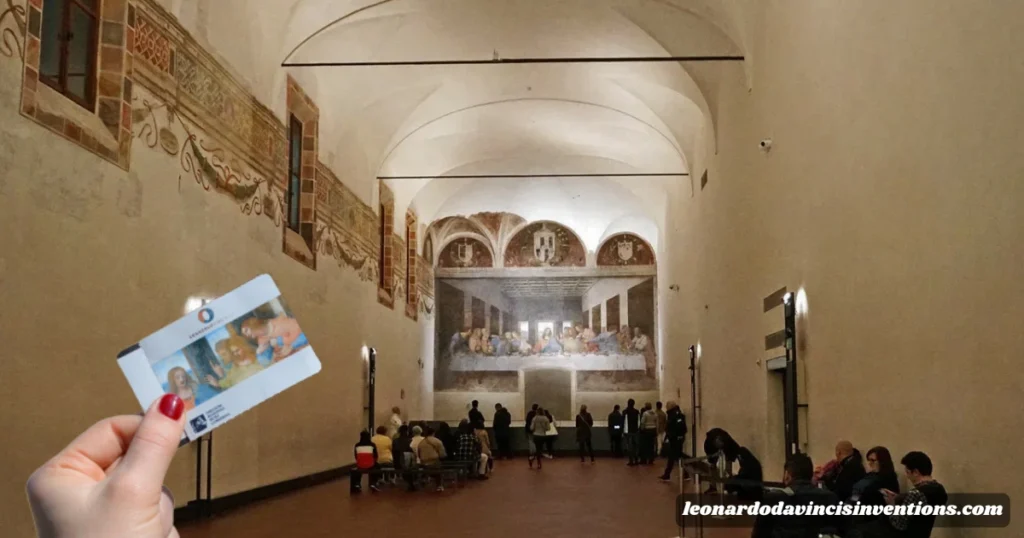
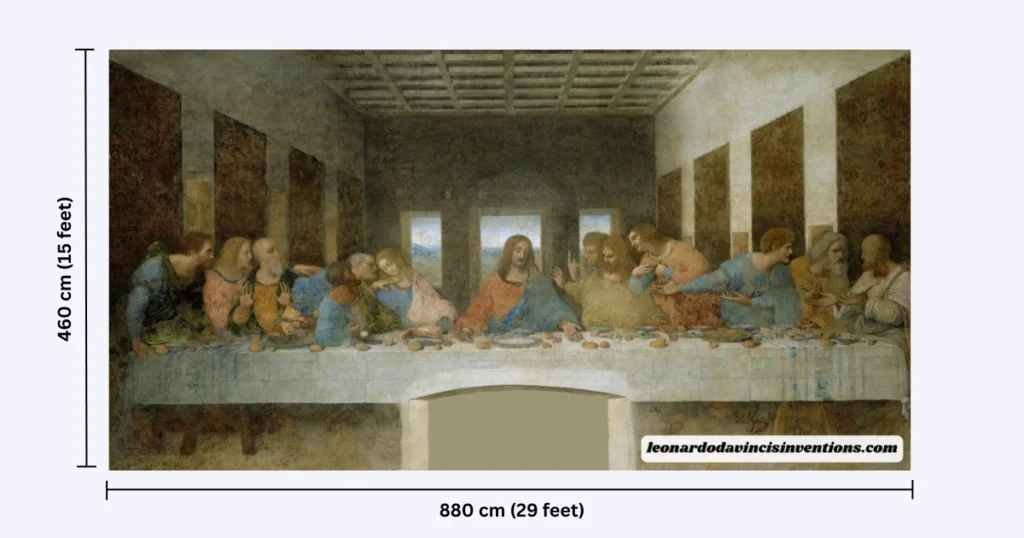
No reproduction prepares you for the scale. The painting is enormous — about fifteen feet tall, nearly thirty feet wide — and it occupies an entire end of a long rectangular hall that was once a working dining room.
Monks ate their silent meals here for three centuries, facing a wall that made their own table look like a muted echo of the one Leonardo painted.
When you step in, the first thing you notice is the silence. The airlock completely cuts off street noise. The lighting is deliberately low to protect the pigment, so your eyes take a moment to adjust.
Then the painting emerges — ghostly in places where centuries of damage have left it more suggestion than image, startlingly vivid in others where the 1999 restoration recovered passages thought lost forever.
Look at the tablecloth — the folds are rendered with such care you can almost feel the linen. Look at the glasses of wine, each casting its own tiny, accurate shadow.
Look at the hands: Leonardo painted twenty-six of them, and every single one is doing something different, saying something different, confessing or accusing or recoiling or reaching.
Then look at what isn't there. The feet of Christ, famously, are gone — destroyed when that doorway was cut through the wall in 1652. The lower edge of the painting is a scar. You are looking at an object that has survived what it shouldn't have.
Fifteen minutes pass faster than you'd think.
It's completely different standing in front of it. See how small-group visits to the Last Supper work →
How to Experience It Without Missing the Details
Here's the honest tradeoff most travel guides don't spell out: a quarter of an hour is not a lot of time to absorb a painting that took Leonardo four years to make and took restorers twenty-two years to stabilize.
Visitors who walk in cold — without knowing the story of the grouping, the perspective trick, the Judas-Peter dynamic, the symbolism of the spilled salt — typically spend the first five minutes just figuring out what they're looking at. That's a third of your time gone.
The travelers who came away most moved did one of two things: either they read deeply before arriving, or they went with a guide who could walk them straight to the details that matter.
A good guide points at the knife in Peter's hand and explains why it foreshadows the Garden of Gethsemane. A good guide notes the way the window behind Christ forms a halo without painting one. A good guide shows you Judas's face and lets you decide for yourself whether Leonardo made him a villain or a tragic figure.
How to Experience the Last Supper Without Missing the Details
Access is limited, and most visitors only get a few minutes inside. The difference is having the right context before you walk in.
- Skip-the-line timed entry
- Small-group guided access
- Expert explanation of key details
6 Practical Tips Before You Go
A few details that save visitors real grief:
- Arrive twenty minutes early. Latecomers are not admitted; the slot runs whether you're in the room or not. The airlock sequence takes about ten minutes.
- Bring photo ID. Names on the booking are checked against a document. If the ticket is in someone else's name, you will be turned away.
- No large bags. Anything bigger than a small purse has to go in the adjacent locker area, which adds time.
- Photos are technically allowed without flash, but rules tighten periodically. Assume no flash, no tripod, no video.
- The church itself is free to enter — worth ten minutes before or after, both for Bramante's tribune and for its own sake.
- Mondays and major Italian holidays are closed. Build your itinerary around that.
If you're flexible, the quietest slots tend to be the first of the morning (8:15 AM) and the last of the afternoon. Midday slots in summer are warm and crowded.
Why This Painting, Specifically, Keeps Pulling People to Milan
There is no shortage of Renaissance masterpieces in Italy. Florence alone could fill a month. So why does this one, half-ruined and rationed by the quarter-hour, draw a million visitors a year to a quiet convent in Milan?
Part of it is fame. Part of it is the Dan Brown effect. But the real pull, once you're standing in front of it, is that the painting does something no reproduction can.
It shows you a moment of human reaction — twelve different flavors of shock, grief, denial, anger, and fear — rendered by a man who spent his nights dissecting corpses to understand how muscles moved under skin. You are looking at Leonardo's understanding of what a face does when the ground gives way under it.
And because the painting is fading, you're also looking at something finite. It will not be here forever. The restoration took decades, not centuries.
That combination — psychological depth plus ticking clock — is why tickets to see the Last Supper in Milan behave the way they do. Supply is engineered scarcity in service of preservation, but demand is driven by the knowledge that this is a thing you have to go see now, because the version your grandchildren visit will be further gone than the one you walk into.
If you're already planning to visit, take a look at the current Last Supper experience options →
Final Thought
The limits around the Last Supper aren't a bug in the visitor experience — they're the whole reason there's still a visitor experience to have. Every rule, every sealed door, every fifteen-minute kitchen timer, exists so that one more generation gets to stand inside that silent refectory and watch twelve men react, forever, to one sentence.
Plan ahead. Book early. Know what you're looking at before you arrive. And when you walk out, blinking, back onto Corso Magenta, you'll understand why Milan built an entire ticketing infrastructure around a painting on a dying wall — and why it was worth it.
Travel Essentials for Visiting Milan for the First Time
Preparing for a visit to Milan often comes down to a few small details that can make long museum days, historic walking routes, and city exploration significantly more comfortable.
Comfortable Walking Shoes
Milan’s major landmarks are often best experienced on foot, with visitors covering long distances between museums, churches, and historic streets. Supportive shoes can make a full day of exploration far more comfortable → explore comfortable walking shoes for long city days
Portable Power Bank
Navigation, photography, and digital tickets can quickly drain battery life during a full day in the city. A compact power bank helps avoid interruptions, with many visitors choosing lightweight options → view reliable portable chargers
Secure Crossbody Bag
Busy areas near major attractions can require extra awareness. Many travelers prefer a compact crossbody bag worn in front to keep essentials accessible and secure →
Explore practical crossbody bags for travel
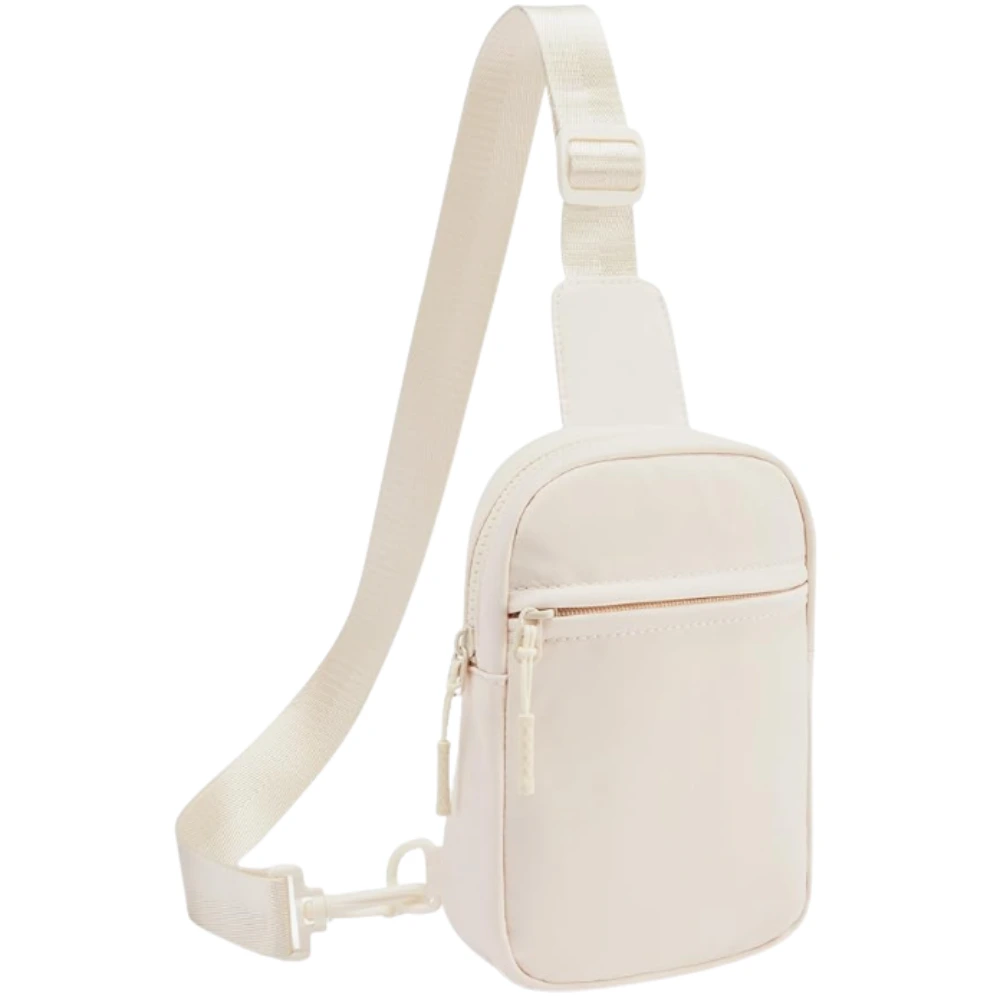
A compact option often preferred for full-day city travel.
FAQs about Last Supper Tickets in Milan, Italy
The best way to see The Last Supper in Milan is to book a timed-entry ticket in advance or join a small-group guided tour that guarantees access. Entry is strictly limited to short, scheduled visits, and guided tours help you understand key artistic details within the 15-minute viewing window.
No, you cannot simply turn up to see The Last Supper in Milan. All visitors must reserve a timed ticket in advance, as on-site availability is extremely limited and most slots sell out weeks or months ahead.
To get last-minute tickets for The Last Supper, your best option is to book a guided tour or a combo ticket, as these often include pre-reserved slots. Checking for cancellations on official platforms can also help, but availability is rare close to your visit date.
You should book The Last Supper tickets at least 2–3 months in advance, especially for peak travel seasons. Tickets are released in batches roughly every three months and often sell out within hours or days.
Tickets are hard to get because access is strictly limited to small groups for short visits to protect the fragile painting. Only a limited number of visitors can enter each day, and high global demand far exceeds available slots.
There is no strict formal dress code, but visitors should dress respectfully as the site is part of a historic religious complex. Modest clothing is recommended, and visitors must follow rules such as no large bags and compliance with security checks.
Related Post You May Like
Disclosure: This page may contain affiliate links. If you choose an experience through them, it helps support the site at no extra cost to you.
 Leonardo Bianchi is the founder of Leonardo da Vinci Inventions & Experiences, a cultural travel guide helping visitors explore Leonardo da Vinci’s art, inventions, and legacy across Italy and Paris.