
(Last updated: Sep 2026)
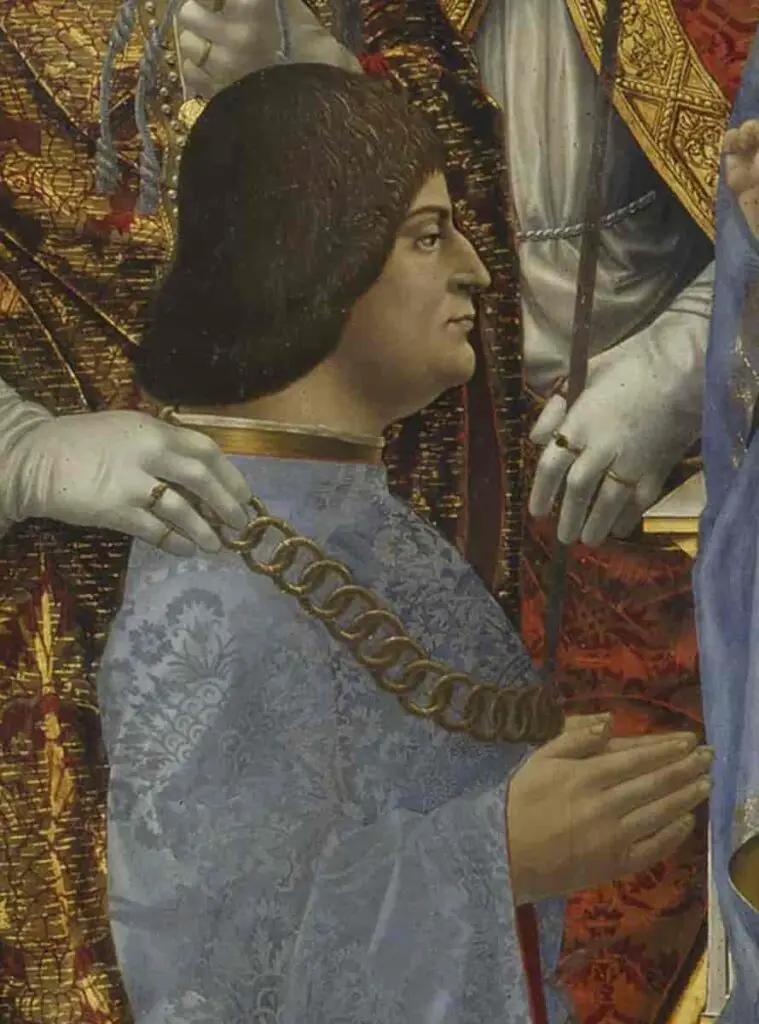
Ludovico Sforza ruled Renaissance Milan with equal parts ambition and vision, and without him, the world might never have seen some of Leonardo da Vinci's most famous work. He was a master strategist, an alliance builder, and one of the most fascinating power players of fifteenth-century Italy.
His court mattered because it became the stage where Leonardo transformed from a promising outsider into history's most celebrated Renaissance mind.
Ludovico's ambition, his rivalries, and his taste for spectacle explain why Milan still holds some of Leonardo's greatest treasures today, and why walking through the city now feels like stepping directly into their shared story.
This post is all about Ludovico Sforza, the Duke of Milan whose political ambition unknowingly changed art history forever.
Who Was Ludovico Sforza?
Ludovico Sforza, known as Ludovico il Moro, was the Duke of Milan from 1494 to 1499. A member of the powerful House of Sforza, he ruled through political cunning and cultural ambition. He is best remembered today as Leonardo da Vinci's most important early patron, commissioning The Last Supper and supporting Leonardo's work in Milan for nearly two decades.
Historical Background
Born Into the House of Sforza
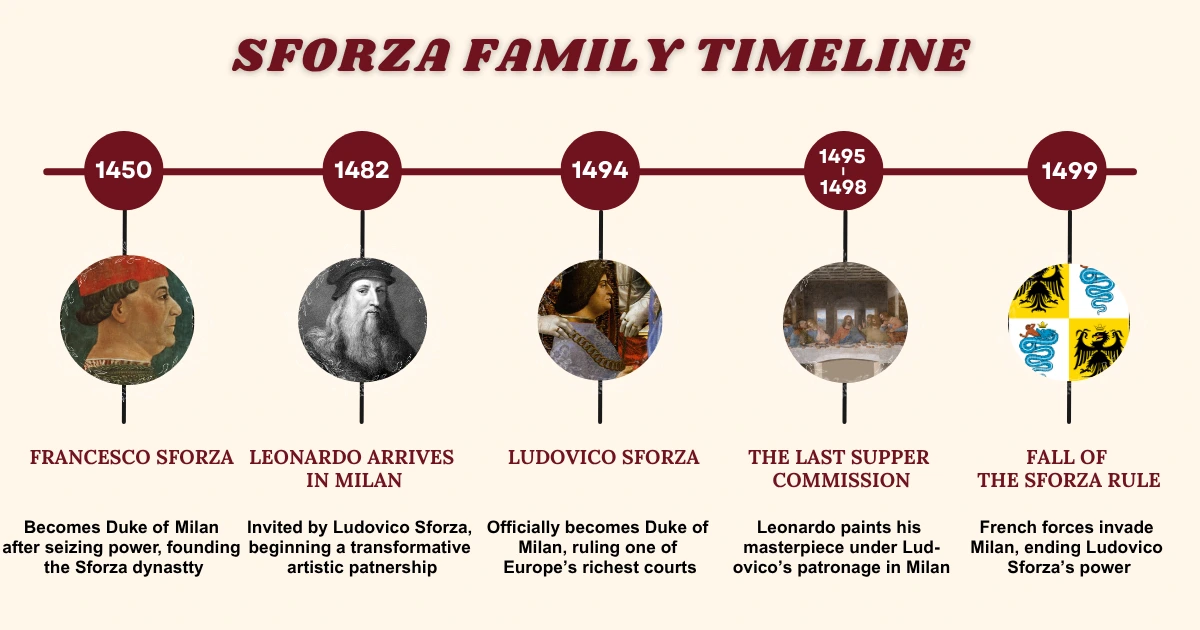
Ludovico Maria Sforza was born in 1452, the son of Francesco Sforza, the condottiero-turned-duke who had seized control of Milan and founded one of the most powerful ruling families in Italy.
Growing up inside this dynasty meant growing up inside a permanent negotiation. Every marriage, every alliance, and every gift was a move on a much larger board.
From an early age, Ludovico showed a talent for reading people. He was clever, patient, and comfortable operating in the shadows of power before stepping into the light himself. That patience would define his entire political career.
Rise to Power in Milan
Ludovico did not inherit the dukedom outright. He first ruled as regent for his young nephew, Gian Galeazzo Sforza, quietly consolidating influence while officially serving someone else's throne.
For over a decade, Ludovico controlled Milan's army, treasury, and foreign relations while his nephew held only the ceremonial title of duke, an arrangement that suited Ludovico's patient, behind-the-scenes style perfectly.
By 1494, following his nephew's death under circumstances that fueled rumors of poisoning at the time, Ludovico was formally recognized as Duke of Milan, a title historians often shorten to simply "Duke of Milan" or "Duke Sforza".
Whether or not the rumors held any truth, the timing certainly worked in Ludovico's favor, cementing power he had already been exercising in practice for years.
Marriage, Alliances, and Political Power
Ludovico's marriage to Beatrice d'Este connected him to another major northern Italian dynasty, the Este family of Ferrara, and helped stabilize his political standing.
Ludovico Sforza's wife was known for her intelligence, her sharp political instincts, and her role in shaping Milan's cultural life, often hosting scholars and artists alongside her husband.
Her early death in childbirth in 1497 struck Ludovico deeply, both personally and politically, and many historians point to her loss as the moment his judgment began to falter.
The broader political map of Italy in this period was anything but stable. Ludovico spent years maneuvering between rival powers, including tense relations with Naples and shifting alliances with the papacy.
Later, ambitious figures such as Cesare Borgia, the son of Pope Alexander VI, would carve out their own paths of conquest across central Italy, a reminder that Ludovico's Milan existed within a chessboard of competing dynasties, each willing to use marriage, money, or military force to expand its reach.
A Court Built on Ambition
Ludovico understood something that many rulers of his time missed: culture was power. A magnificent court signaled strength to rivals and allies alike.
He surrounded himself with scholars, architects, musicians, and artists, turning Milan into a rival to Florence under Lorenzo de Medici in terms of prestige and artistic output.
This same instinct for spectacle and legacy eventually drew a young, ambitious artist named Leonardo da Vinci to Milan.
Leonardo's Role and Influence
Leonardo da Vinci's Letter to Ludovico Sforza
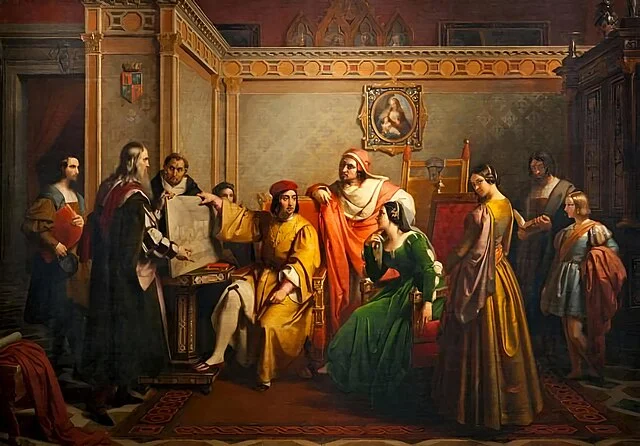
Around 1482, Leonardo da Vinci wrote directly to Ludovico Sforza in what has become one of the most famous job applications in history.
In the letter, Leonardo barely mentioned painting. Instead, he described his skills as a military engineer: portable bridges, cannons, armored vehicles, and siege equipment. Only near the end did he casually add that he could also paint and sculpt as well as anyone.
This letter reveals something important about both men. Ludovico Sforza needed a duke who looked powerful and technologically advanced, and who was constantly threatened by rivals such as Naples and, later, by ambitious figures such as Cesare Borgia.
Leonardo needed a patron wealthy and secure enough to fund years of experimentation. The match worked, and Leonardo entered Sforza's court soon after, remaining in Milan for roughly seventeen years.
During that time, he wasn't only painting. He designed weapons and fortifications, studied hydraulics for the region's canal systems, planned elaborate court festivals and pageants, and sketched early concepts for flying machines, all while slowly working on the commissions that would define his legacy.
Ludovico's willingness to fund this wide-ranging curiosity, rather than demanding constant output, is part of what allowed Leonardo's genius to develop so fully.
The Last Supper and the Sforza Court
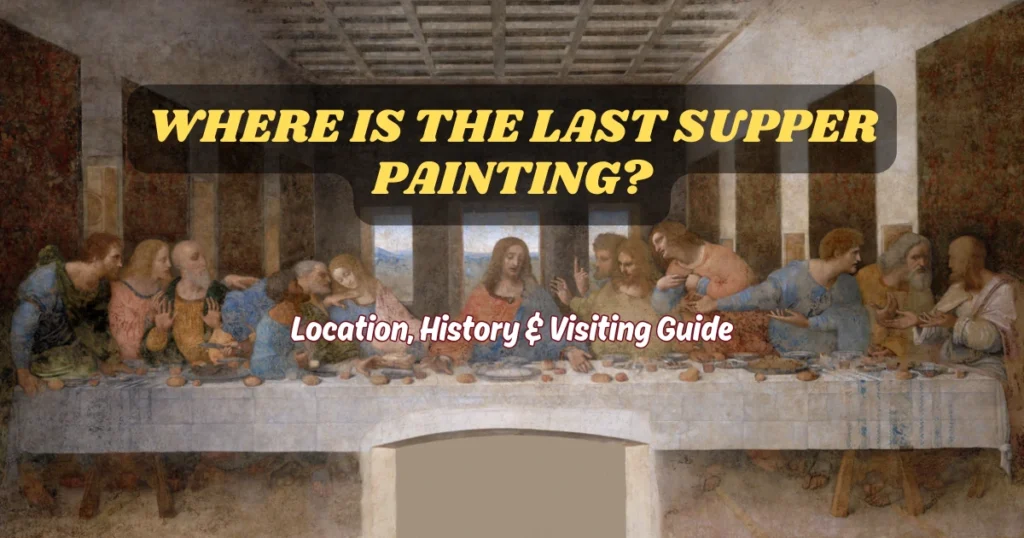
Leonardo's most iconic religious painting, The Last Supper, exists because of Ludovico Sforza's ambition. Ludovico commissioned the mural for the refectory wall of Santa Maria delle Grazie in Milan, a church closely tied to the Sforza family's dynastic legacy.
Rather than using the traditional fresco technique, which required painting quickly onto wet plaster, Leonardo experimented with a new method that allowed him to paint slowly, layer by layer, revising details as his ideas evolved.
It gave the piece extraordinary detail and emotional nuance, capturing the exact moment the apostles react to Christ's announcement of betrayal, but it also made the work fragile from the very beginning, a tension between innovation and preservation that still fascinates conservators today.
The painting itself carried political weight far beyond its religious subject. Santa Maria delle Grazie functioned as something close to a Sforza family chapel, and placing one of the era's most ambitious artworks inside its walls was Ludovico's way of tying his own legacy to something permanent.
He was, in effect, using Leonardo's talent to write the Sforza name into the fabric of the city itself.
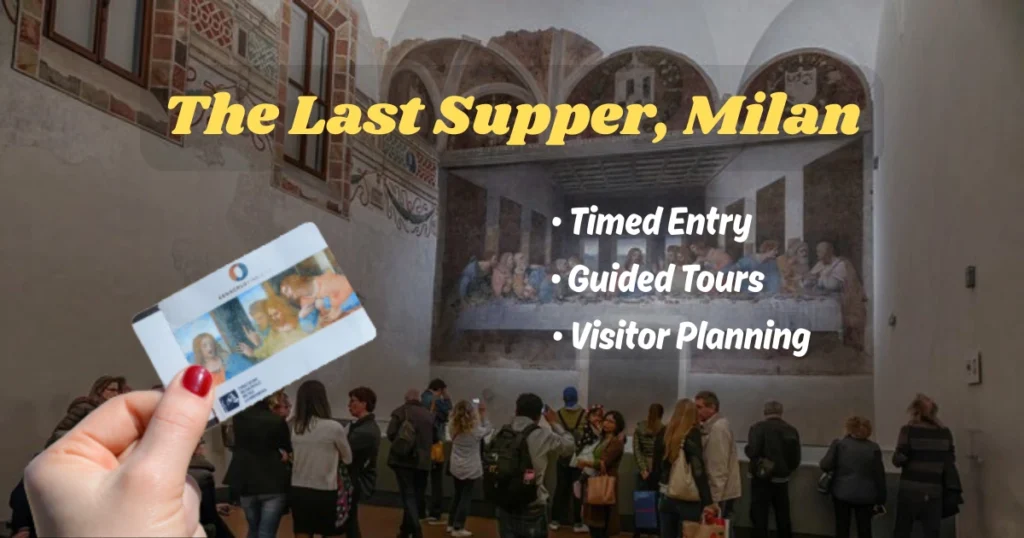
Visiting Santa Maria delle Grazie today means standing in the exact room where Sforza-era diners once shared meals beneath one of the most studied paintings in human history, and many travelers prefer to secure their viewing slot in advance through a guided Last Supper viewing experience, since access to the fresco is tightly limited and tickets are released months ahead.
Cecilia Gallerani and the Art of Power
Leonardo's portrait of Cecilia Gallerani, known as Lady with an Ermine, tells a quieter but equally revealing story about Ludovico's court. Cecilia was Ludovico's mistress, and the portrait doubled as a political statement, showcasing both her beauty and Ludovico's refined taste to visiting dignitaries.
The ermine itself was a clever symbol, referencing Ludovico's own honorary title from the Neapolitan royal court, Ermellino, while also alluding to purity and grace.
It is a small detail, but it captures how Leonardo used every commission at Sforza's court to blend artistry with strategic messaging, embedding layers of meaning that a sharp-eyed visitor at court would immediately understand.
It's worth noting how differently Ludovico's approach to patronage compared with other Renaissance courts of the period.
Where Lorenzo de Medici in Florence tended to cultivate a broad circle of artists and thinkers as a form of civic pride, Ludovico used individual commissions more surgically, aiming each one at a specific political message or relationship. Leonardo, adaptable as ever, thrived under both models across his career.
Inside the Sforza Court Experience
Guided walks through Sforza-era Milan typically combine three key layers of the story.
- The political rise of the House of Sforza and its rivalries
- Leonardo's engineering proposals and early Milanese commissions
- The surviving artworks tied directly to Ludovico's patronage
Visitors often note that seeing the castle and the fresco on the same day makes Ludovico's story click into place in a way that reading about it never quite does.
Where to Experience This Legacy Today
The Sforza Castle in Milan
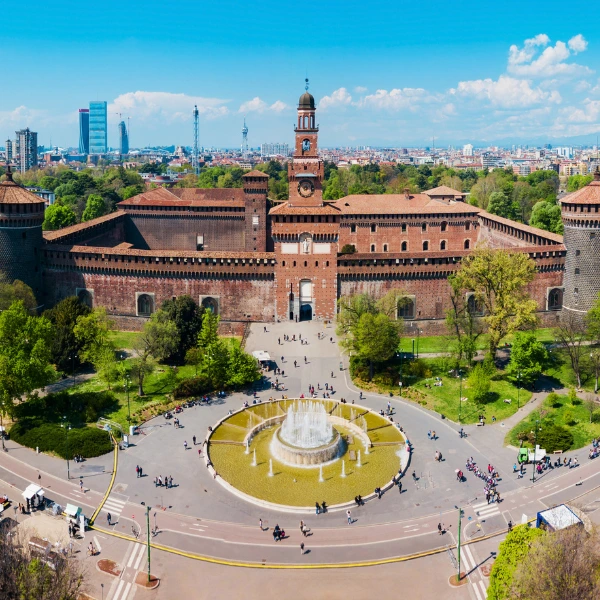
Castello Sforzesco, the fortress-turned-museum built by the Sforza dynasty, remains one of Milan's most striking landmarks.
Ludovico extensively expanded and decorated the castle, and Leonardo himself contributed interior decoration, including intricate ceiling frescoes in the Sala delle Asse, where painted tree branches interlace across the ceiling in a design that still draws art historians today.
Walking through its courtyards, it's easy to imagine the negotiations, celebrations, and quiet ambitions that once filled these halls. The castle now also houses several museum collections, ranging from ancient Egyptian artifacts to Michelangelo's final, unfinished sculpture.
Ludovico's own end came swiftly and without much grandeur. After French forces invaded Milan in 1499, he briefly reclaimed the city before being captured in 1500.
He spent his final years imprisoned in France, dying in 1508, a quiet close to a life defined by calculated ambition. Yet the city he shaped, and the artist he supported, outlasted every political maneuver he ever made.
Santa Maria delle Grazie and The Last Supper
The church and its adjoining refectory remain the single most direct connection to Ludovico's patronage of Leonardo. Because the fresco's environment is so carefully controlled, only a limited number of visitors are permitted inside at a time, which is why timed access matters so much for anyone hoping to see it in person.
Walking Through Ludovico's Milan
Beyond the two major landmarks, much of central Milan still echoes the Sforza era, from street layouts near the castle to smaller churches and civic buildings the family funded during its rise.
The Biblioteca Ambrosiana, though founded slightly after Ludovico's rule, also holds a significant collection of Leonardo's manuscripts and sketches, offering a direct look at the same restless curiosity that made him so valuable to the Sforza court in the first place.
Seeing these sites in sequence, rather than separately, tends to give the clearest sense of how tightly Ludovico's political story and Leonardo's artistic story were woven together. The castle shows the ambition. The church shows the art it funded. And the manuscripts show the mind that made it all possible.
Discover Leonardo’s Sforza Milan
Walk through Castello Sforzesco and uncover the people, politics, and places that shaped Leonardo’s years at the Sforza court
Explore Sforza MilanSforza Milan Walking Experience
A guided walk connecting Castello Sforzesco, the Sforza dynasty's history, and Leonardo's surviving commissions across the city.
- Small-group access to Castello Sforzesco's Sforza-era rooms
- Historical context on Ludovico's rise and the Sforza-Borgia rivalry
- Optional add-on entry to see The Last Supper nearby
Many travelers note that having a historian-led on-site narrative makes Ludovico's story far easier to follow than reading about it beforehand. Check availability for Castello Sforzesco
Understanding Ludovico Sforza changes how these places feel once you're standing inside them. The castle stops being just an old fortress, and the fresco stops being just a famous painting.
Both become physical evidence of a very specific, very human bet a duke once made on a young engineer with big ideas. Explore Milan Experiences
Exploring Leonardo da Vinci in Milan
Milan was the city where Ludovico Sforza gave Leonardo the freedom to become Leonardo. It's where military engineering sketches sat alongside portrait commissions, and where a single duke's ambition produced both a fortress and a masterpiece painted on a dining room wall.
For anyone tracing Leonardo's full story, Milan is the essential starting point.
Leonardo's life, of course, extended far beyond Ludovico's court. His path continued through Florence, where he trained as a young artist; through Venice, where he offered his engineering skills during wartime; and eventually to Rome and, finally, Paris, where he spent his final years under royal patronage.
Each city adds a different layer to understanding how Ludovico Sforza's Milan fits into the wider arc of Leonardo's genius.
Final Thoughts
This post was all about Ludovico Sforza, the Duke of Milan whose ambition, rivalries, and appetite for cultural prestige gave Leonardo da Vinci the stage he needed. Without Ludovico's patronage, there may have been no Last Supper, no Lady with an Ermine, and no Sforza court records preserving Leonardo's earliest engineering dreams.
It's a reminder of how deeply intertwined political ambition and artistic genius were during the Renaissance. Seeing these works in person, inside the same walls Ludovico once walked, offers a kind of understanding that no photograph or textbook page can fully replace.
Related Post You May Like
Disclosure: This page may contain affiliate links. If you book through them, we may earn a small commission at no extra cost to you. Learn more.
Free Leonardo Milan Travel Guide
Plan Your Leonardo Trip in Milan
A premium mini guidebook for smarter Milan planning, including the best ticket strategy, Leonardo map, and practical visitor advice.
Get the Free Guide
Download the guide and receive practical Milan planning tips by email.
Download the Free Guide >> Leonardo Bianchi is the founder of Leonardo da Vinci Inventions & Experiences, a cultural travel guide helping visitors explore Leonardo da Vinci’s art, inventions, and legacy across Italy and Paris.