
(Last updated: Aug 2026)
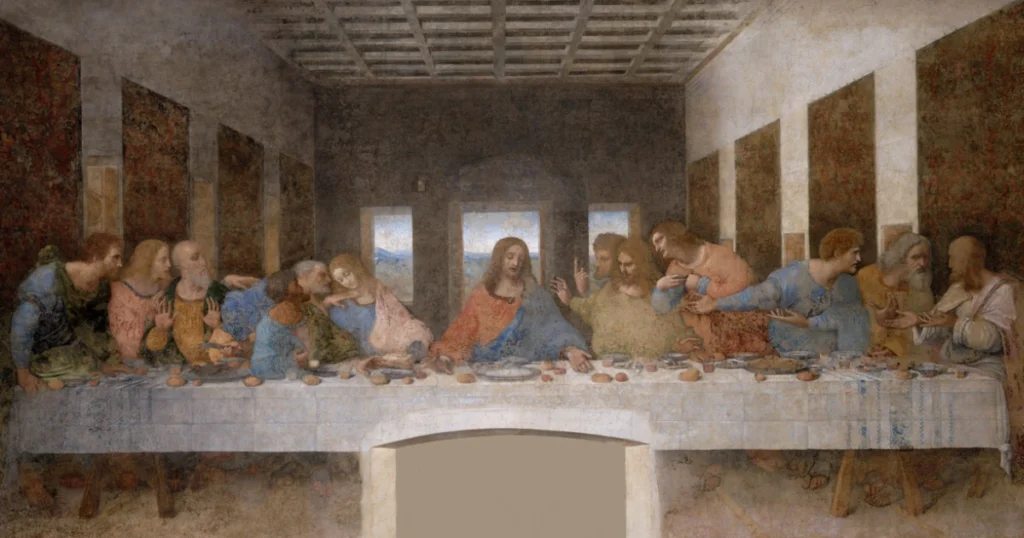
Where is the Last Supper painting? Leonardo da Vinci's masterpiece is located in Milan, Italy, inside the refectory (dining hall) of the convent attached to the church of Santa Maria delle Grazie.
It is not in a conventional art museum, and it is not a painting you can take off a wall — Leonardo painted it directly onto the plaster of the north wall between 1495 and 1497, and it has remained fixed to that same wall for more than 500 years.
Key Facts
| Location | Refectory of the Convent of Santa Maria delle Grazie, Milan, Italy |
| Created | 1495–1497 |
| Artist | Leonardo da Vinci |
| Technique | Tempera and oil on dry plaster (not a true fresco) |
| Approximate Size | 460 × 880 cm (approximately 15 × 29 feet) |
| Commissioned By | Ludovico Sforza, Duke of Milan |
| UNESCO Status | Inscribed as a UNESCO World Heritage Site in 1980, together with the church and convent |
| Visiting Information | Entry is by pre-booked, timed ticket only. Visitor numbers for each time slot are strictly limited. |
Visitor details, such as pricing, hours, and booking platforms, change periodically — always confirm the latest information on the official museum site before planning your visit.
Where Is the Last Supper Painting? A Room It Never Left
Most of Leonardo's famous works have spent centuries traveling — sold, seized, gifted, shipped across borders, hung in one royal collection after another.
The Mona Lisa alone has crossed the Alps, survived a museum theft, and now sits behind bulletproof glass in a building that didn't exist when Leonardo was alive.
The Last Supper has done none of that. It has never been anywhere else. It was painted onto a wall in a Dominican monastery in Milan, and short of the wall itself collapsing, it was never going anywhere.
That single fact — that this masterpiece is inseparable from its architecture — explains almost everything unusual about how you experience it today, from the fifteen-minute visit windows to the climate-controlled airlock you walk through before you're allowed to see it.
The Exact Location: Santa Maria delle Grazie, Milan
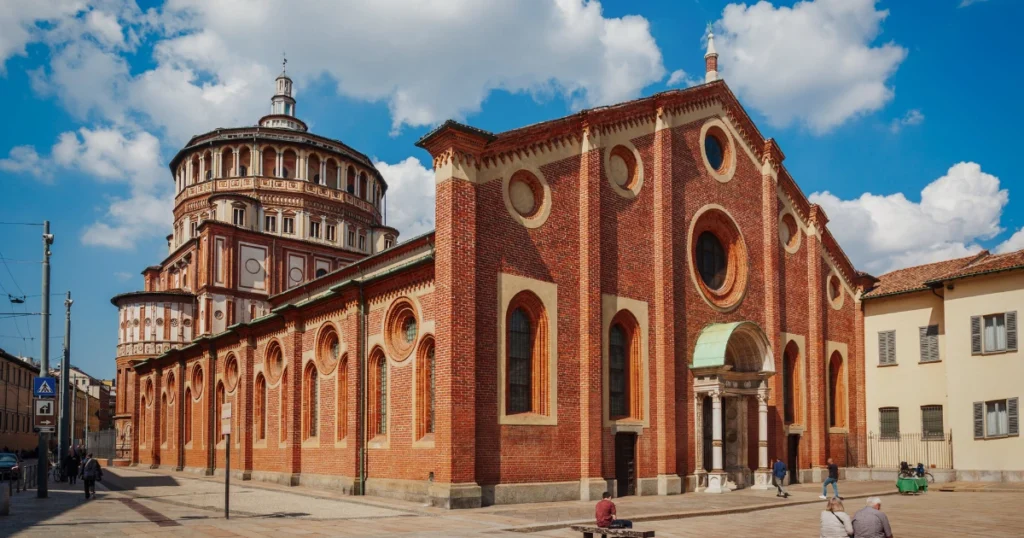
The painting is housed in a functioning religious complex in central Milan, not in a stand-alone gallery.
Santa Maria delle Grazie was founded in 1463 under the patronage of Francesco Sforza, Duke of Milan, and later expanded in the 1490s by his son Ludovico Sforza, who brought in the architect Donato Bramante to add the church's dome, apse, and cloisters.
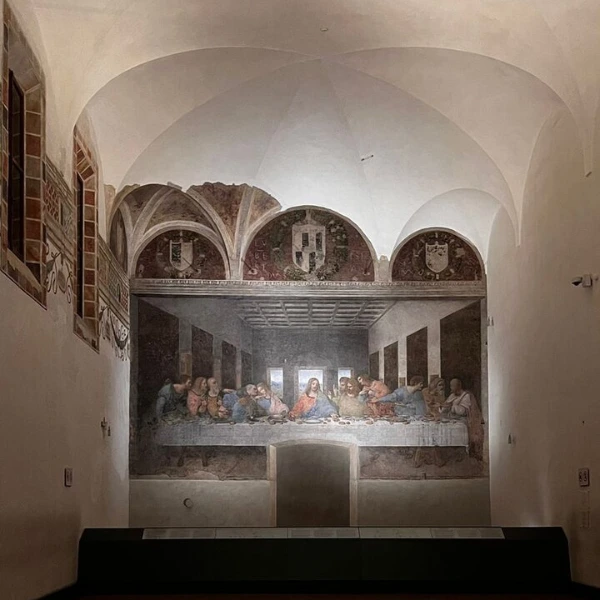
The refectory — the room where the Dominican friars ate their meals in silence — sits just off this complex, with its own separate entrance from the piazza outside.
This is where Leonardo painted The Last Supper on the refectory's north wall. It's important to understand that the painting is not inside the church itself.
Visitors sometimes assume that walking into the basilica of Santa Maria delle Grazie means they've seen the painting; in fact, the refectory is a distinct building with its own entrance, and viewing the fresco-like mural requires a separate ticket from visiting the church.
Why Is the Last Supper Painted on a Wall, Not a Canvas?
Here's where a common assumption falls apart. The Last Supper is frequently called a "fresco," but that's technically inaccurate.
True fresco painting requires the artist to apply pigment onto wet plaster (fresco means "fresh" in Italian), which chemically bonds the color to the wall as it dries — a fast, unforgiving technique that doesn't allow for revision.
Leonardo, characteristically, didn't want to be constrained by those rules. He wanted to work slowly, layer color the way he would on a wood panel, and make changes as he went. So he experimented with a different method: painting in tempera and oil directly onto dry plaster, sealed with a preparatory ground.
It gave him the control he wanted as an artist. It also meant the paint never properly bonded to the wall the way true fresco does — and the piece began deteriorating within Leonardo's own lifetime. Visitors as early as the 1500s noted that it looked worn.
How Big Is the Last Supper Painting?
The mural measures approximately 460 by 880 centimeters — roughly 15 feet tall and 29 feet wide.
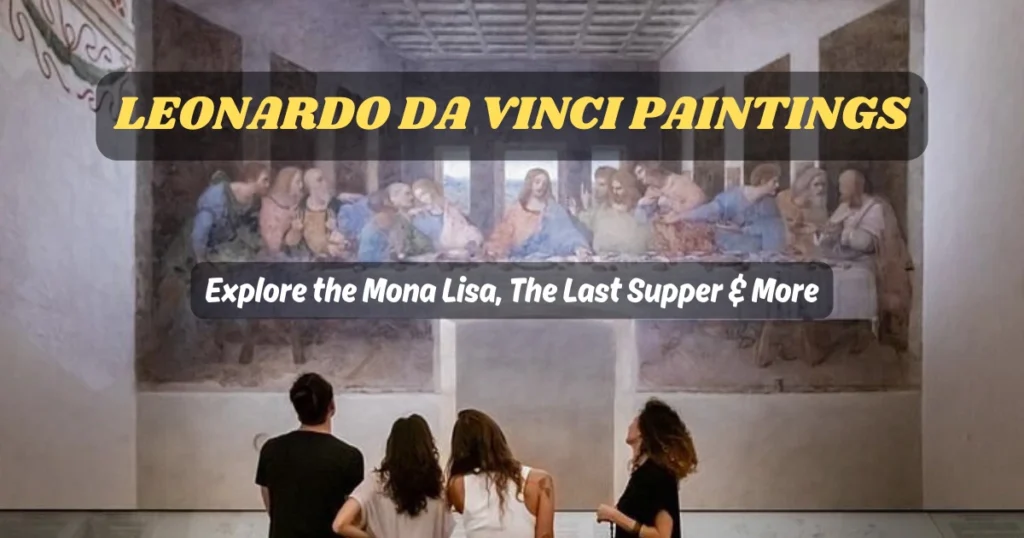
That scale matters in person in a way photographs don't convey: the thirteen figures are painted close to life-size, and Leonardo used the room's real architecture — its ceiling beams, its perspective lines — to make the painted room feel like a continuation of the refectory itself.
Diners in that hall, for the decades the painting was intact and clean, would have eaten their meals looking up at a fictive extension of their own dining room, with Christ and the apostles seated at the far end.
Why Is the Last Supper Painting Important?
Ludovico Sforza commissioned the work for the refectory as part of his broader project to transform Santa Maria delle Grazie into a Sforza family monument. But its importance goes well beyond the patron who paid for it.
According to UNESCO's official designation, The Last Supper is recognized as a work of exceptional universal value that helped usher in a new era in the history of painting — not for its subject matter, which was a common one for refectory decoration, but for how Leonardo handled it.
Rather than painting a static, formal tableau, Leonardo captured the specific moment Christ tells the apostles that one of them will betray him — and painted the psychological aftershock rippling down the table in real time.
Each apostle reacts differently: shock, denial, anger, quiet grief. That decision to paint a reaction rather than a pose is often cited by art historians as the painting's most influential innovation, and it shaped how narrative religious art was composed for generations afterward.
What Most People Misunderstand
The two most common misconceptions are worth stating plainly. First, it is not a fresco — it's a mixed tempera-and-oil technique on dry plaster, which is precisely why it has needed so much restoration.
Second, it is not displayed in a museum gallery the way most people picture "seeing a famous painting." There's no frame, no case, no ability to view it from multiple angles. You stand in the room it was painted for, at a fixed distance, for a strictly timed visit.
Why This Matters in Leonardo's Story
The Last Supper sits at a pivotal point in Leonardo's career. He was in his forties, working for the Sforza court in Milan, already known for unfinished projects and restless experimentation — the enormous bronze horse he'd been commissioned to sculpt for Ludovico Sforza never made it past a clay model.
The Last Supper is one of the few large-scale works from this Milanese period that he actually completed. That it survives at all, however damaged, makes it one of the clearest windows we have into how Leonardo thought about composition, gesture, and human psychology at the height of his powers.
How the Last Supper Survived — Restoration and Near-Destruction
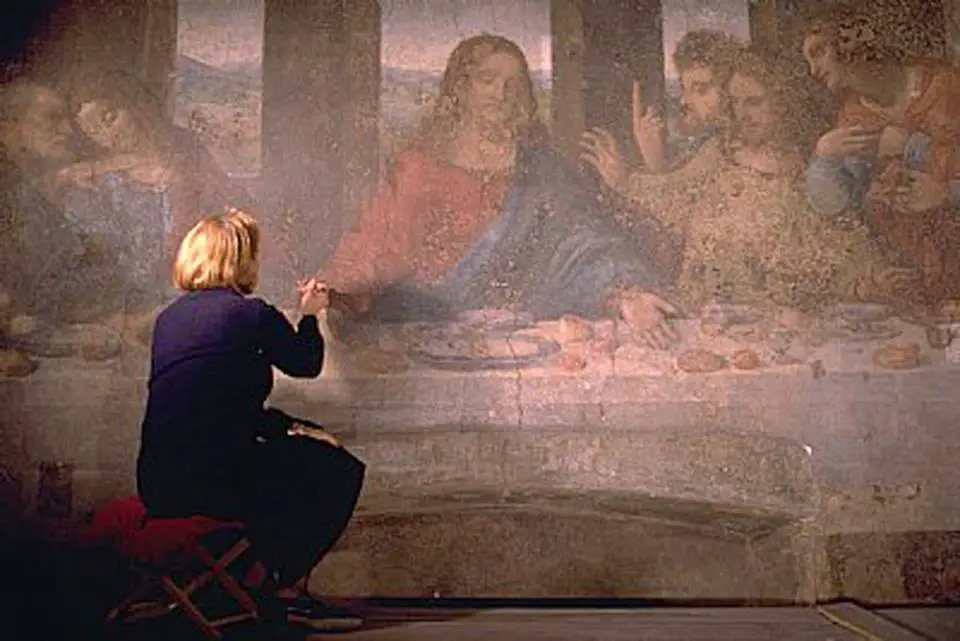
The painting's fragility isn't a footnote; it's central to its history. Because the tempera-and-oil technique never bonded properly to the plaster, flaking and discoloration began within decades of its completion, worsening over centuries due to humidity from an adjacent kitchen, well-meaning but damaging past restoration attempts, and general neglect.
Its closest brush with total loss came in August 1943, when Allied bombing during World War II struck the convent and destroyed much of the refectory. The wall bearing The Last Supper had been reinforced with sandbags and scaffolding beforehand, which helped it survive the blast, but the room around it was left roofless and exposed to the elements for months before it could be rebuilt.
The most significant restoration effort began in 1978, led by Italian restorer Pinin Brambilla Barcilon. Working under microscopes for over 21 years, her team painstakingly removed centuries of overpainting from earlier, damaging restoration attempts and stabilized what remained of Leonardo's original surface.
The project was completed in 1999. What visitors see today is not a pristine 15th-century painting — a large portion of Leonardo's original paint layer is gone — but it is the most accurate view of what remains of his hand that has existed since the 1600s.
Can You Still Visit the Original Painting?
Yes. This is the original mural Leonardo painted between 1495 and 1497, in its original location, viewed by visitors in person rather than as a reproduction. That authenticity — combined with its fragility — is exactly why access is so tightly controlled.
Planning a Visit: What You Need to Know Before You Go
Because the painting is irreplaceable and environmentally sensitive, visits to the painting differ from those at most museums. Access is by pre-booked, timed entry only, tickets are released in limited batches, and each viewing slot is brief.
This system exists specifically to protect the artwork's fragile surface from humidity and crowding — the same vulnerability that nearly destroyed it in the first place.
Because the museum updates pricing, opening hours, and the official booking process periodically, we won't list specific figures here that could become outdated.
Ready to Plan Your Visit?
Because The Last Supper has limited daily access, tickets often sell out early. Explore available tickets and guided tours.
Plan Your Last Supper VisitWhat to See Nearby: Milan's Leonardo Trail
Leonardo's time in Milan left more traces around Santa Maria delle Grazie than just the refectory. Across the street, the Vigna di Leonardo (Leonardo's Vineyard) at Casa degli Atellani marks the site of the vineyard Ludovico Sforza gave to Leonardo while he worked on The Last Supper — by tradition, Leonardo tended it himself in the evenings.
A short walk away, Milan's Duomo and the Castello Sforzesco — home to Leonardo's unfinished studies of the Sforza monument and the Sala delle Asse, a room he decorated with an intricate painted canopy of intertwined trees — round out a fuller picture of his years at the Sforza court.
FAQs for Where Is the Last Supper Painting?
In the refectory of the Convent of Santa Maria delle Grazie in Milan, Italy, a separate building from the church itself, with its own entrance.
Technically, neither in the strictest sense of "fresco." Leonardo used tempera and oil on dry plaster, a technique he devised to give himself more control than true fresco painting allows.
Yes. What's on view today is the original mural, restored between 1978 and 1999, not a copy or reproduction.
Visitor numbers per timed slot are strictly limited to protect the artwork's fragile surface, so demand regularly exceeds availability, especially in peak travel months.
A large Crucifixion fresco by Giovanni Donato da Montorfano, painted on the refectory's south wall — often overlooked by visitors focused on Leonardo's work.
Yes, significantly. Due to Leonardo's experimental technique, environmental damage, and a near-miss during a 1943 bombing raid, much of the original paint layer has been lost. The 1978–1999 restoration stabilized and clarified what remains.
Final Thoughts
Where is the Last Supper painting, in the end? Exactly where Leonardo left it — on a wall in a Milanese refectory, inseparable from the room, the light, and the community for which it was painted.
It's easy to think of famous paintings as objects that could, in theory, be anywhere — hung in this museum or that one, depending on where history happened to leave them. The Last Supper breaks that assumption.
Understanding that is really the starting point for understanding everything else about it — why it's fragile, why it's hard to book, and why standing in front of it still feels less like visiting a museum and more like stepping into the exact moment Leonardo left it in.
Related Post You May Like

Disclosure: This page may contain affiliate links. If you book through them, we may earn a small commission at no extra cost to you. Learn more.
Free Leonardo Milan Travel Guide
Plan Your Leonardo Trip in Milan
A premium mini guidebook for smarter Milan planning, including the best ticket strategy, Leonardo map, and practical visitor advice.
Get the Free Guide
Download the guide and receive practical Milan planning tips by email.
Download the Free Guide >> Leonardo Bianchi is the founder of Leonardo da Vinci Inventions & Experiences, a cultural travel guide helping visitors explore Leonardo da Vinci’s art, inventions, and legacy across Italy and Paris.