
(Last updated: Sep 2026)
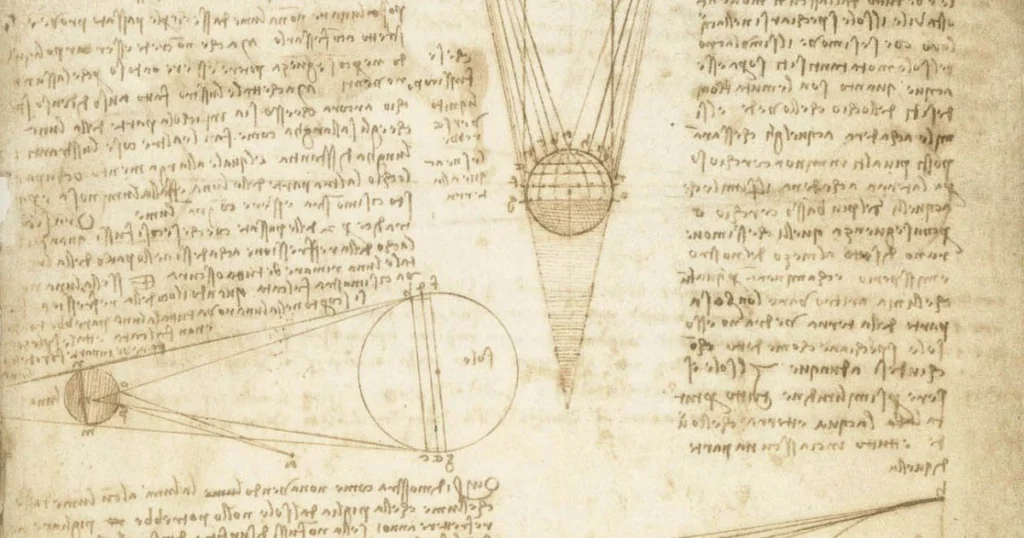
Da Vinci Codex Leicester is a 72-page manuscript that captures Leonardo da Vinci's private thoughts on water, geology, and the sky. It survives today as one of the most personal windows we have into a Renaissance mind that never stopped asking questions.
Beyond its record-breaking price tag, the Codex matters because it shows Leonardo working through problems in real time. He sketches an idea, crosses it out, argues with himself in the margin, and starts again.
That kind of raw, unfiltered thinking is rare in any historical archive, which is part of why the manuscript still pulls in scholars, collectors, and curious travelers more than five centuries later. Seeing pages from this codex, or standing in the city where Leonardo filled them, turns an abstract fact from a textbook into something you can actually picture.
What makes the notebook especially compelling is that Leonardo never intended it as a public document. There's no polish, no attempt to impress a patron, and no finished argument.
It's closer to a working diary of a scientist five hundred years ahead of the tools that could confirm his theories. That honesty is exactly what gives the Codex Leicester its lasting pull, both for historians trying to reconstruct how Leonardo actually thought and for travelers hoping to feel closer to that thinking in the cities where it happened.
This post is all about the da Vinci Codex Leicester, why Leonardo wrote it, what it actually says, and where you can get closer to his world today.
What is the Codex Leicester?
The Codex Leicester is a 72-page scientific notebook written by Leonardo da Vinci around 1504–1510. Filled with his mirror-script handwriting and detailed sketches, it explores water movement, geology, fossils, and astronomy. Now privately owned by Bill Gates, it is considered one of Leonardo's most significant surviving notebooks.
History of the Codex Leicester
A Notebook Born in Renaissance Milan
Leonardo compiled most of the Codex Leicester's loose sheets while he was based in and around Milan, in the years when he was juggling engineering commissions, anatomical studies, and his endless curiosity about how the natural world actually worked.
Rather than writing in a bound book from the start, he filled individual sheets and folded them into small bundles, which explains why the pages can be read in almost any order without losing their logic. Each entry stands largely on its own, a self-contained question followed by a sketch, a calculation, or an argument with himself in the margin.
It was one of roughly thirty similar notebooks he filled over his lifetime, and understanding the Codex Leicester means placing it alongside the rest of that body of work.
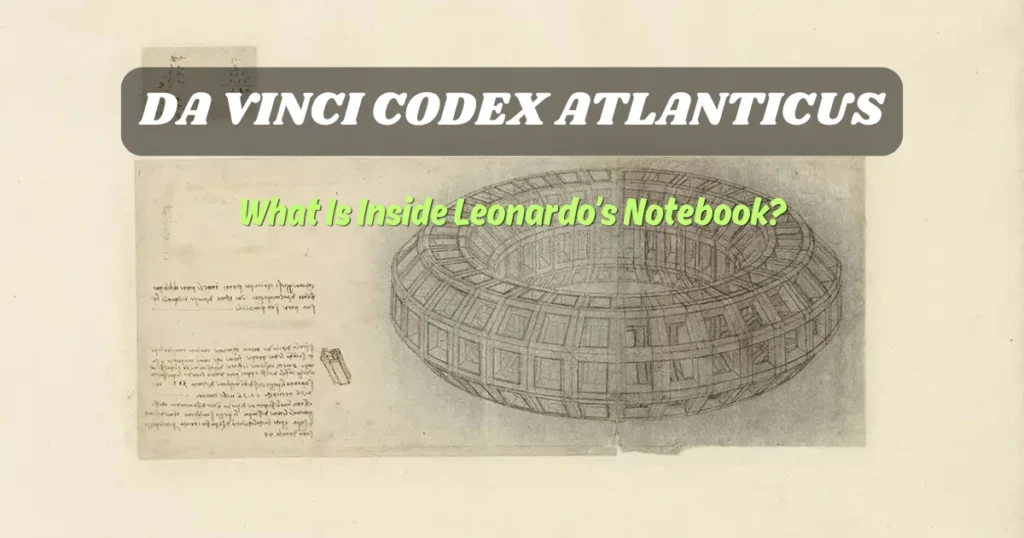
Alongside it sit other da Vinci codices worth knowing, including the vast Codex Atlanticus, a sprawling collection of over a thousand pages touching on everything from flight to fortification; the more compact Codex Arundel and Codex Forster, both held today in London collections; the two Madrid Codices, rediscovered in the National Library of Spain in the twentieth century after being misfiled for decades; and the tightly focused Codex on the Flight of Birds, a single-subject study of avian flight.
Together, these Leonardo da Vinci notebooks form one continuous record of a mind that documented almost everything it noticed, whether the subject was a bird's wing or the flow of a river.
From the Earl of Leicester to Armand Hammer
After Leonardo's death in 1519, his notebooks and da Vinci writings scattered among students, collectors, and estates across Europe, and the sheets that would become the Codex Leicester passed through several Italian hands before surfacing on the open market.
In 1717, English collector Thomas Coke acquired the manuscript while traveling in Italy. Coke later became the first Earl of Leicester, and the notebook took his family's name, remaining part of the Leicester estate's library at Holkham Hall in Norfolk for well over two centuries.
The manuscript finally left the Leicester family in 1980, when it was sold at Christie's in London to American industrialist Armand Hammer, chairman of Occidental Petroleum.
Hammer paid roughly $5.1 million for it, a record price for a manuscript at the time, and briefly renamed it the Codex Hammer during his period of ownership, before the original name was restored after his death.
The Gates Acquisition and a Record-Breaking Sale
In 1994, the manuscript returned to auction at Christie's in New York, where Bill Gates won it for $30,802,500, making it the most expensive manuscript ever sold, a record it still holds today.
Unlike most of Leonardo's surviving writings, which are held in European museums and libraries, the Codex Leicester is the only one in private hands, now known simply as part of the Gates Collection.
Gates has described the notebooks as a way to look directly into Leonardo's mind, and rather than keeping them locked away, he has repeatedly loaned pages to museums and funded digitization projects that allow anyone to study the notebooks' sketches online.
Inside the Pages: What the Codex Leicester Reveals
Where a narrow study like the Codex on the Flight of Birds zooms in on a single question, the Codex Leicester ranges freely across an entire range of natural phenomena.
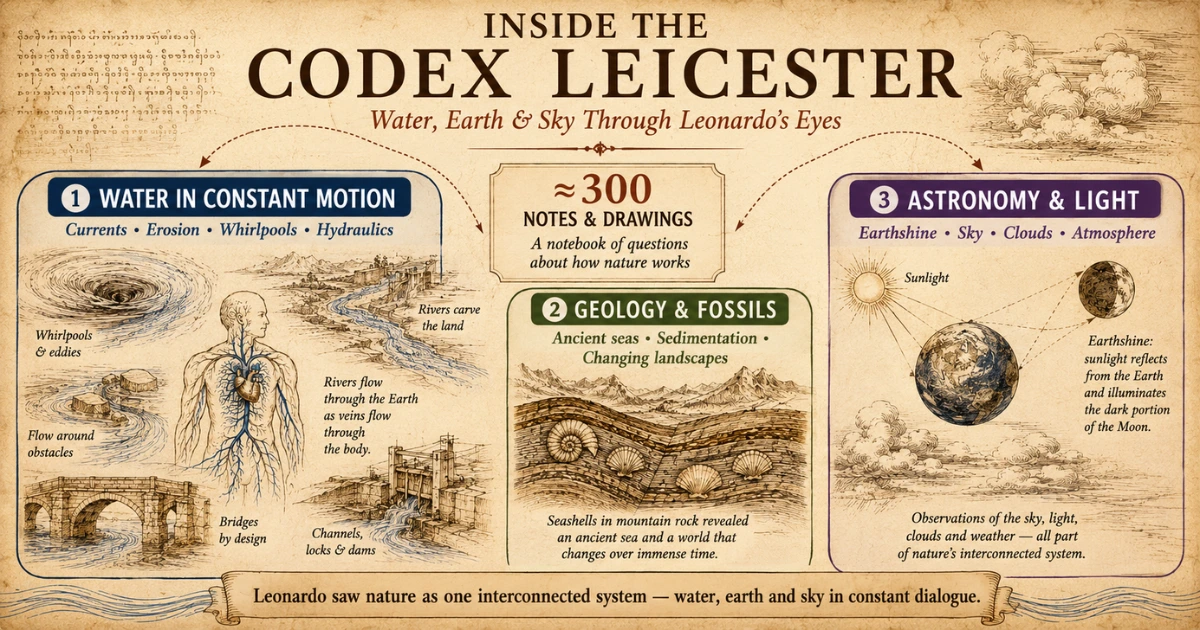
It's roughly 300 individual notes and drawings, written in chalk and brown ink, that circle back again and again to one obsession: how water moves and what that movement can teach us about everything else.
Reading through the notebook feels less like studying history and more like watching someone think out loud, which is exactly the kind of experience that draws people to trace Leonardo's footsteps through the streets where he actually lived and worked, an idea worth keeping in mind if you're already planning a trip through walking routes through Leonardo's Milan, since so many of the observations in this codex began as things he noticed on his daily walks around the city.
Water in Constant Motion
The central theme of the Codex Leicester is water: how rivers erode land, how currents form whirlpools, how water overcomes obstacles placed in its path, and how that behavior should inform the design of bridges and dams.
Leonardo sketches spiraling eddies with the same precision he brought to a human face, treating turbulence as something worth understanding rather than just depicting.
He writes about floods, about the way a river carves a valley over centuries, and about the mechanics of channels and locks, ideas he later put to direct use as an engineer for the city of Milan's canal system.
Perhaps most striking is the analogy Leonardo draws between water circulating through the earth and blood circulating through the human body, likening rivers to veins that carry a kind of planetary bloodstream.
It's a poetic image, but it's also a genuine attempt at systems thinking, and it anticipated the modern understanding of blood circulation, formally described by William Harvey, by more than a century.
Geology, Fossils, and an Ancient Earth
The notebook also documents Leonardo's studies of geology and fossils. He noticed seashells embedded in mountain rock far from any ocean and reasoned that the land itself must have changed dramatically over immense stretches of time.
Rather than accepting the popular explanation of his era, that such fossils were remnants of a single biblical flood, he argued that slow sedimentation and geological change over vast timescales were the more logical cause.
That conclusion put him well ahead of the scientific consensus of his own century and closer to how geologists think about the earth's history today.
Astronomy and the Nature of Light
Beyond water and rock, the Codex Leicester turns to the sky. Leonardo records observations on the color of the sky, the behavior of light, and the faint glow visible on the unlit portion of the moon.
He worked out an explanation rooted in sunlight bouncing off the Earth and back onto the moon's surface, a phenomenon now known as earthshine, arriving at the idea through careful observation decades before it became part of accepted astronomy.
Scattered throughout the same pages are notes on meteorology, cloud formation, and how moisture moves through the atmosphere, all treated as part of the same interconnected system as the water studies that dominate the rest of the notebook.
How to Experience the Codex Leicester Today
Digital Archives and Museum Loans
Because it remains in private ownership, the Codex Leicester isn't on permanent public display the way a museum piece would be.
Instead, high-resolution scans have been shared through digital partnerships, including a collaboration between the British Library and Google Arts & Culture, so anyone can page through the Leonardo da Vinci notebook sketches from a phone or laptop, zooming in on details that would be nearly impossible to see in person even with the original in front of you.
The physical pages themselves occasionally travel to major exhibitions marking milestones in Leonardo's life and work, including stops tied to the 500th anniversary of his death, giving visitors rare windows into the original pages of Leonardo da Vinci's notebooks up close rather than through a screen.
Because these loans are announced on a case-by-case basis rather than on a fixed schedule, the more dependable way to encounter Leonardo's actual handwriting in person is through the notebooks that are permanently housed in public collections, which brings the story back to Milan.
Walking Through Leonardo's Milan
Milan is where much of the thinking behind the Codex Leicester took shape, and the city still carries that history in a way few others do.
The Biblioteca Ambrosiana holds the Codex Atlanticus, Leonardo da Vinci's largest surviving collection of drawings and writings, and it remains open to the public, with rotating pages on display.
Nearby, Santa Maria delle Grazie, home to The Last Supper, and the Sforza Castle, where Leonardo worked as court engineer, round out a picture of the Milan that shaped his scientific curiosity and gave him the raw material for so many of the observations that ended up in his notebooks.
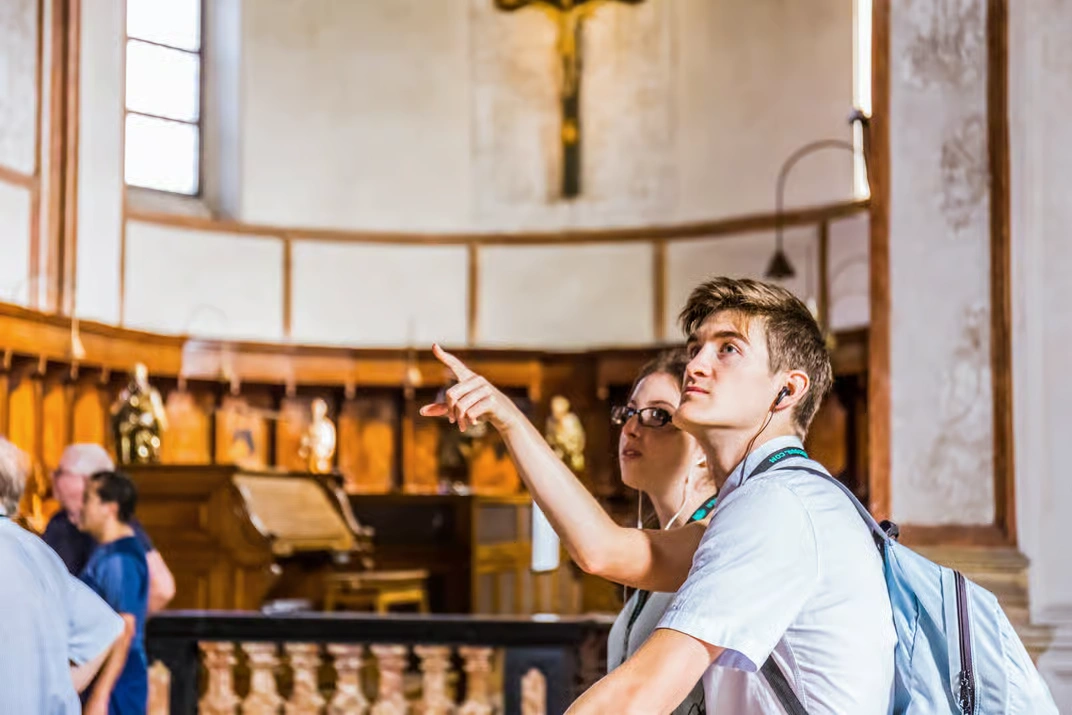
Walk Through Leonardo’s Milan
Explore Renaissance Milan with a guide and skip the line to see Leonardo’s The Last Supper, with stops at the Sforza Castle and historic city center
See Leonardo Milan ToursA Guided Walk Through Leonardo's Milan
A local guide connects the sites tied to Leonardo's engineering and scientific work, including the Biblioteca Ambrosiana's Codex Atlanticus.
- Small-group walking route through central Milan
- Stops at the Sforza Castle and Santa Maria delle Grazie
- Context on the notebooks Leonardo filled while living in the city
Visitors often note how much clearer Leonardo's scientific notebooks feel once they've stood in the places that inspired them. See the Milan walking tour
Exploring Leonardo da Vinci in Milan
Milan anchors the story of the Codex Leicester, but it's only one stop in a much longer trail. Leonardo split his working life across several Italian and French cities, and each one holds its own layer of his notebooks, drawings, and unfinished ideas, from early apprentice sketches to the polished paintings that made him famous.
From Milan, the trail naturally extends toward Florence, where Leonardo trained as a young artist and first began filling pages with studies of anatomy and mechanics, and Venice, where his engineering ideas found military use defending the city's waterways. Further afield, Rome, where he spent a restless few years under papal patronage, and Paris, his final home and resting place, complete the map of a life spent constantly observing, sketching, and writing.
Seeing Leonardo's World in Person
Reading about the Codex Leicester's ideas on water, fossils, and light is one thing. Standing in the city where Leonardo first noticed those patterns is another.
Milan still holds the streets, canals, and buildings that shaped the questions he asked in his notebook, and the Biblioteca Ambrosiana's public display of the Codex Atlanticus gives visitors a real, physical connection to his handwriting and sketches that no photograph fully replicates.
Seeing those pages up close tends to change how the Codex Leicester itself reads afterward. The mirror writing stops looking like a curiosity and starts looking like the handwriting of someone thinking quickly, privately, and without an audience in mind.
That shift, from knowing about Leonardo to actually sensing how his mind worked, is usually what stays with people longest after a trip.
For anyone planning a trip centered on that connection, a guided route through the city ties these details together without requiring hours of independent research, and it's worth booking ahead, since small-group slots fill quickly during peak travel months. Explore Leonardo's Milan
Final Thoughts
This post was all about the da Vinci Codex Leicester, a notebook that shows Leonardo working through the mechanics of water, rock, and light with the same curiosity he brought to his paintings.
It's a reminder that his genius wasn't confined to canvas; it lived just as strongly on loose sheets of paper covered in mirror writing, half-finished diagrams, and questions he never fully answered.
That restless mix of art and science is what the Renaissance was really built on, and the Codex Leicester is one of the clearest surviving records of it in Leonardo's own hand.
That kind of systematic curiosity helped define an entire era, and it's part of why seeing the places, and even the pages, connected to it in person still means something today. A photo of the Codex Leicester tells you what it says. Standing in Leonardo's Milan tells you why he was asking in the first place.
Related Post You May Like


Disclosure: This page may contain affiliate links. If you book through them, we may earn a small commission at no extra cost to you. Learn more.
Free Leonardo Milan Travel Guide
Plan Your Leonardo Trip in Milan
A premium mini guidebook for smarter Milan planning, including the best ticket strategy, Leonardo map, and practical visitor advice.
Get the Free Guide
Download the guide and receive practical Milan planning tips by email.
Download the Free Guide >> Leonardo Bianchi is the founder of Leonardo da Vinci Inventions & Experiences, a cultural travel guide helping visitors explore Leonardo da Vinci’s art, inventions, and legacy across Italy and Paris.