
(Last updated: May 2026)
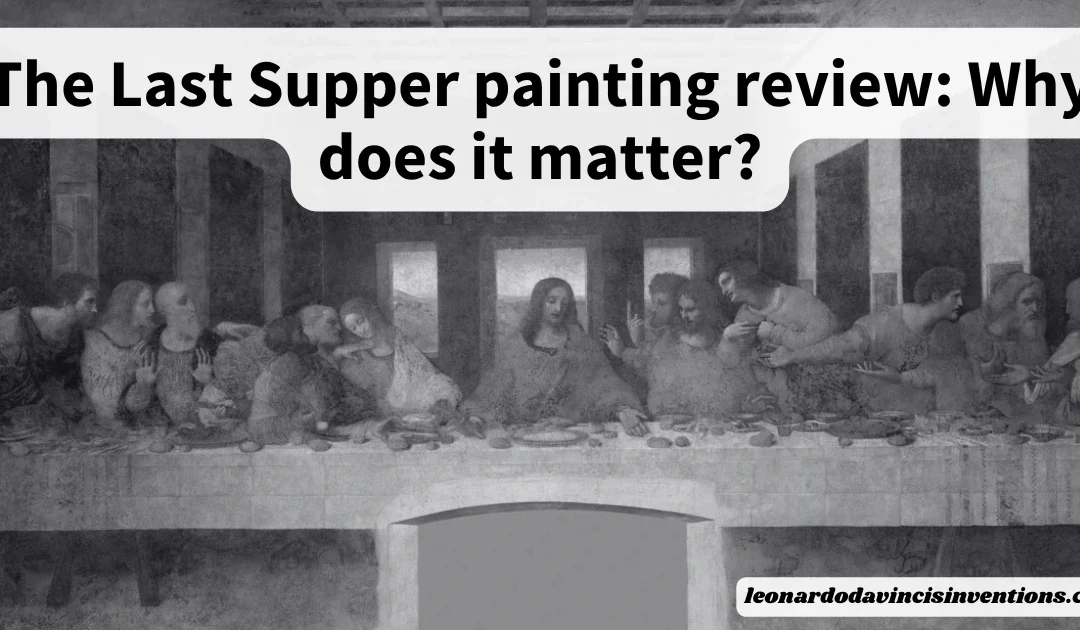
A complete last supper painting review reveals one of the most carefully planned, psychologically rich, and technically daring works ever produced — a mural that has shaped how billions of people visualize a single evening described in the New Testament.
Leonardo da Vinci began work on it around 1495 and finished roughly four years later, transforming the refectory wall of Santa Maria delle Grazie in Milan into a window onto a world of frozen drama.
Understanding this painting changes how you experience it in person. What reads at first as a religious scene dissolves, on closer inspection, into an intricate study of human emotion, architectural illusion, and symbolic geometry. Every detail — the bread, the hands, the groupings of figures, the light flooding in from a painted window — was placed with deliberate intent.
This post is all about the Last Supper painting review: its origins, its hidden layers of meaning, why it became a cultural landmark, and where and how to see it today.
What Is the Last Supper Painting?
The Artistic Genius Behind the Last Supper Painting
Leonardo was not the first artist to paint the Last Supper. Florentine predecessors like Ghirlandaio and Castagno had tackled the same subject, placing Judas in isolation on the near side of the table. Leonardo discarded that convention entirely.
A Revolutionary Approach to Composition
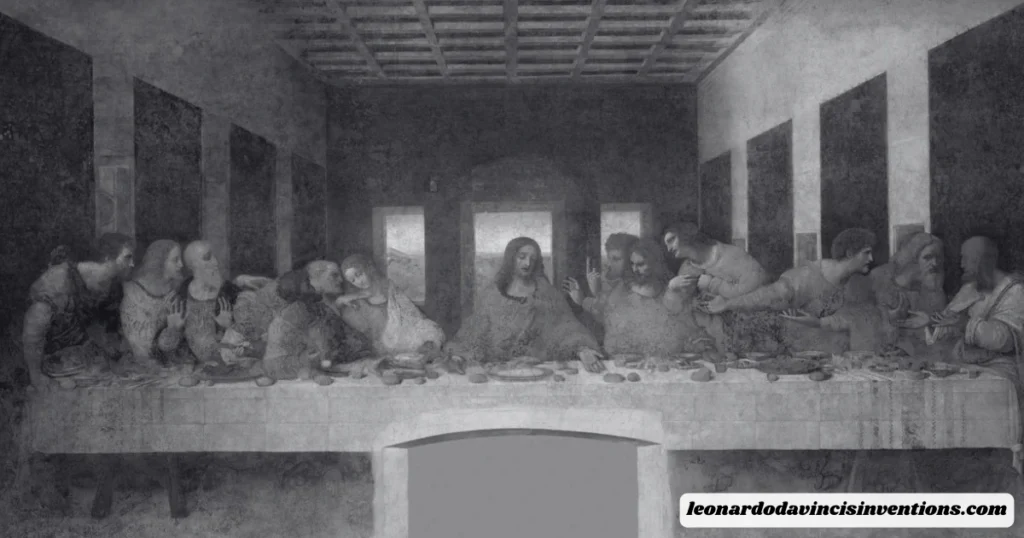
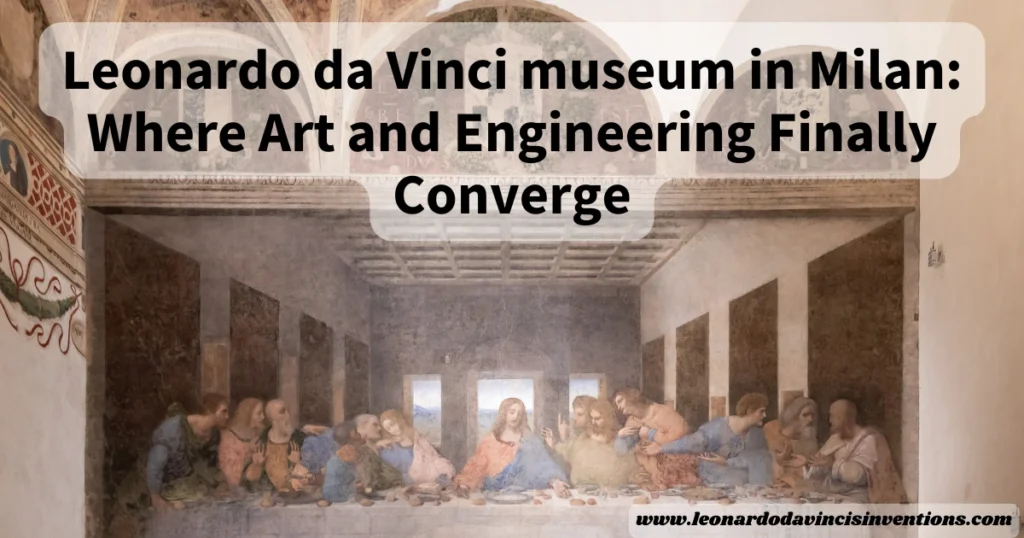
Instead of separating the traitor, Leonardo lined all thirteen figures along one side of a long table, facing the viewer. He then divided them into four groups of three, with Christ at the center—a mathematical harmony that echoes the Holy Trinity and the four Evangelists.
Each group reacts differently to Jesus's announcement: some lean away in horror, others press forward in protest, and one gestures theatrically toward heaven. The result is a single frozen moment that reads almost like a film still — charged, directional, and full of narrative tension.
The Technical Problem Leonardo Created for Himself
The Last Supper original painting is not, strictly speaking, a fresco. True fresco requires paint applied to wet plaster, which sets rapidly and demands extraordinary speed. Leonardo was a slow, meticulous experimenter. He chose instead to paint on dry plaster using tempera and oil — a decision that gave him time to rethink and revise, but one that would ultimately doom the work to early deterioration.
By the time a visitor named Antonio de Beatis described the painting in 1517 — while Leonardo was still alive — the surface was already peeling. The very ambition that made Leonardo extraordinary made his masterpiece fragile from the start.
Light, Perspective, and the Illusion of Space
The painted room in which the figures sit extends the real refectory with uncanny precision. Leonardo calculated the vanishing point — all perspective lines converge directly on Christ's right temple — so that a viewer standing in the original dining hall sees the painted space as a seamless continuation of the room.
He also included real windows on either side of the mural. They mirror actual windows in the refectory itself, so the painted light appears to come from the same source as the real light. It is an optical argument as much as a spiritual one: the divine figure is literally the point of convergence for everything the eye can see.
Why the Last Supper Painting Became Famous
The story behind the Last Supper painting is one of survival as much as artistry. The mural has been flooded, bombed, painted over, and subjected to five separate restoration campaigns. Each crisis paradoxically deepened the world's attachment to it.
From Refectory Wall to Global Icon
The painting's reputation began to spread through engravings almost immediately. Giovanni Pietro da Birago made a print of it around 1500, and copies proliferated across Europe long before most people could travel to Milan.
By the 18th century, the image was so widely reproduced that it had become the default mental picture of the Last Supper for the entire Western world — a status that popular culture from Andy Warhol to Dan Brown would later amplify.
This raises a genuinely interesting question: why is the Last Supper painting so famous compared to other Renaissance religious works of similar scale? Part of the answer is its narrative electricity. The other major Last Suppers freeze the scene in ritualized calm. Leonardo froze amid chaos.
Who Are the Disciples in the Last Supper Painting?
Leonardo identified the apostles through gesture, not label. Starting from Christ's left: Bartholomew, James the Less, and Andrew form the first group — all registering shock. Peter, Judas, and John are the central trio immediately flanking Jesus; Peter leans forward urgently, Judas pulls back clutching his money bag, and John appears to swoon.
To Christ's right: Thomas raises a questioning finger, James the Greater spreads his arms wide, and Philip presses his hands to his chest. The far right group — Matthew, Jude, and Simon — is engaged in a heated debate.
Leonardo is said to have spent weeks hunting for the right face for Judas — wandering Milan's prisons, reportedly — while the face of Christ defeated him repeatedly. An account survives of the monastery prior complaining about Leonardo's slowness, to which Leonardo supposedly replied that he was searching every day for a face wicked enough for Judas, and might have to use the prior's own.
Is the Last Supper Painting Accurate?
The question of historical accuracy is more layered than it first appears. Leonardo set the scene in a 15th-century Italian dining room, not a first-century Palestinian house. The food on the table — bread, wine, eel garnished with orange slices — reflects Milanese Renaissance cuisine, not a Passover seder. The figures wear robes that suggest antiquity but are draped with a sculptor's eye for volume and movement rather than archaeological fidelity.
Whether this matters depends on what you think the painting is for. Leonardo was not painting a documentary reconstruction. He was painting a human drama. The emotional truth he was reaching for — betrayal recognized, innocence declared, loyalty shattered — is fully achieved, regardless of the tablecloth.
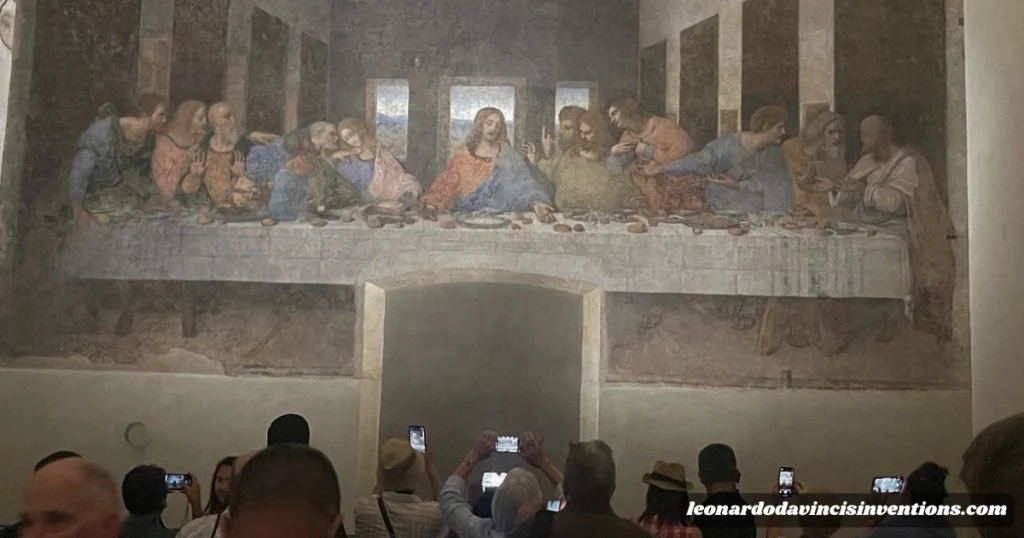
Seen in person, this carefully constructed illusion becomes far more convincing — the alignment of light, space, and perspective only fully reveals itself within the refectory.
Where to See the Last Supper Painting Today
The Last Supper remains where Leonardo painted it: on the north wall of the former refectory at Santa Maria delle Grazie, a UNESCO World Heritage Site in Milan. The convent and church alongside it were built in the late 15th century under the patronage of Ludovico Sforza, the Duke of Milan — the same patron who employed Leonardo.
The Viewing Experience
Access is tightly controlled. Groups of no more than 25 visitors enter through a series of humidity-regulating chambers before stepping into the refectory itself. The room is kept at a constant temperature and light. Visitors have approximately 15 minutes to view the painting.
What strikes most people immediately is the scale. At roughly 9 by 4.6 meters, the mural is far larger than reproductions suggest. The painted ceiling of the room continues the coffered ceiling of the refectory itself, and the figures — each apostle slightly larger than life-size — occupy the wall with a presence that photographs never convey.
On the opposite wall hangs Giovanni Donato Montorfano's Crucifixion, painted in true fresco in 1495. The contrast is instructive: Montorfano's work has faded but held, while Leonardo's more ambitious technique began failing almost immediately. You can see both the glory of Leonardo's vision and the cost of his method in the same room.
What the Restoration Revealed
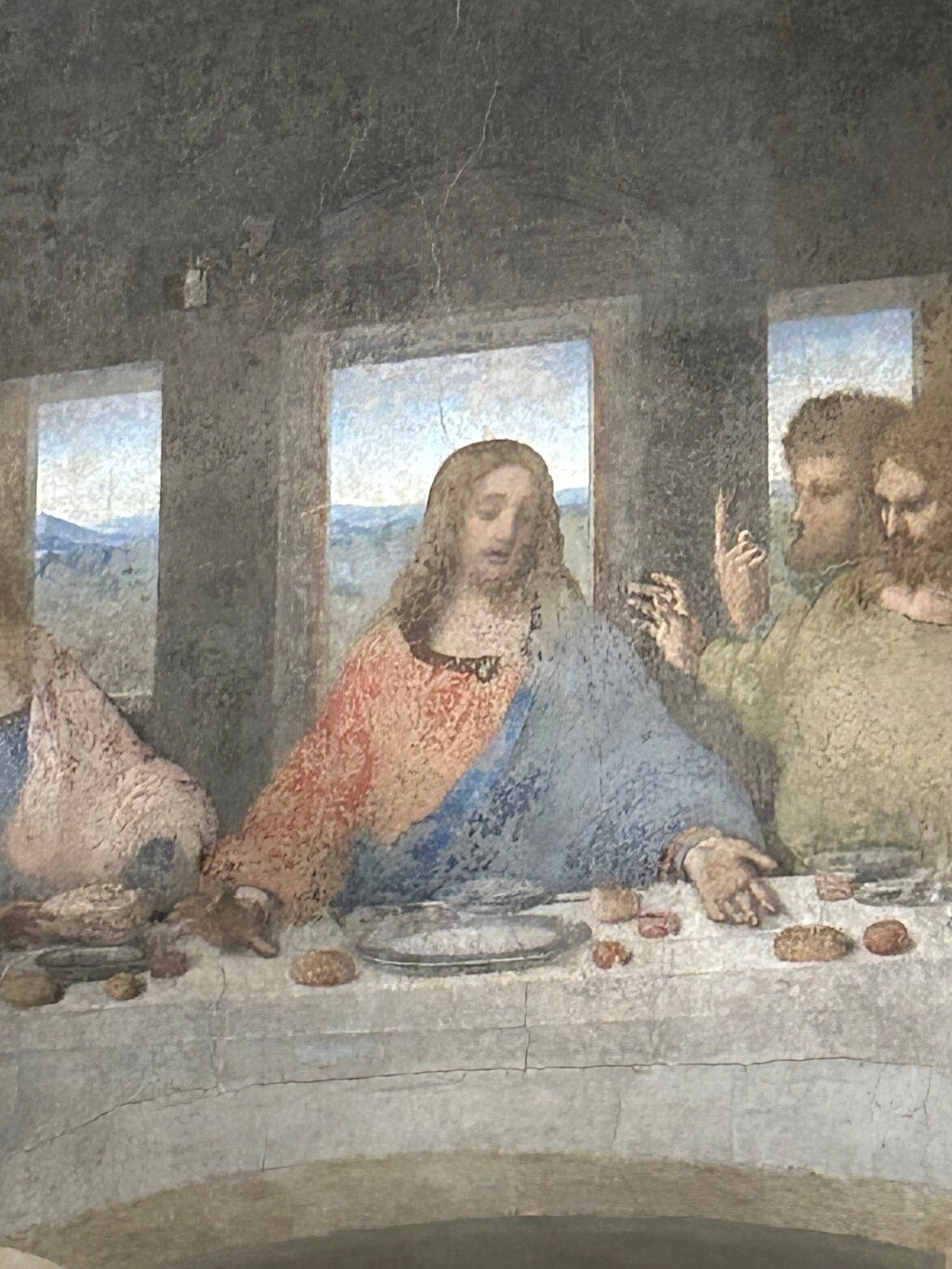
The most recent major restoration, completed in 1999 after 21 years of work, removed centuries of overpainting applied by earlier restorers who had made confident but inaccurate guesses about missing details. What emerged was a subtler, more damaged, but more authentic image: cooler in tone, with Thomas's raised finger clearly legible, and Judas's face less cartoonishly sinister than 18th-century restorers had made it.
Visitors who study the painting closely can identify the areas where the original surface survives — concentrated around the faces and hands of the central figures — versus the areas reconstructed with conservative, deliberately muted fill-ins. The restoration team chose visibility of damage over false wholeness.
Planning Your Visit to Santa Maria delle Grazie
Tickets sell out weeks or months in advance, particularly during peak season. The booking system allows reservations to be made online through the official Vivaticket platform, but demand routinely exceeds supply. Many visitors find that guided tour packages that include pre-booked entry are the most reliable way to guarantee access, particularly for travelers with a fixed schedule.
Experience the Last Supper — Milan Guided Entry Tour
A guided entry experience at Santa Maria delle Grazie combines reserved access to the refectory with informed commentary that brings the painting's narrative layers to life.
Exploring Leonardo da Vinci in Milan and Beyond
Milan is the natural base for anyone following Leonardo's trail. Beyond the Last Supper, the city holds the Pinacoteca Ambrosiana (which houses his Portrait of a Musician and the Codex Atlanticus), the Pinacoteca di Brera, and the Castello Sforzesco with its recently discovered Sala delle Asse ceiling. The Museo Nazionale della Scienza e della Tecnologia bears Leonardo's name and holds wooden models of his mechanical designs.
His influence extends across Italy and into France. In Florence, the Uffizi Gallery holds the unfinished Adoration of the Magi and the Annunciation. Venice's Gallerie dell'Accademia houses the Vitruvian Man. Rome's Vatican Pinacoteca houses St. Jerome in the Wilderness. And in Paris, the Louvre holds more Leonardo paintings than any other institution in the world, including the Virgin of the Rocks, St. John the Baptist, and, of course, the Mona Lisa.
Final Thoughts
This post was all about the Last Supper painting review — a work that repays every level of attention you bring to it. On the surface, it is a religious narrative.
Below that, it is a study in individual psychology, rendered at a scale and with a precision that no earlier artist had attempted. Below that, still, it is a meditation on loyalty, recognition, and the moment when everything changes — which is perhaps why it has never stopped feeling relevant.
What Leonardo achieved on that refectory wall in Milan between 1495 and 1498 was not simply a great painting. It was a new idea about what painting could do: that it could make you feel you were in the room, that it could show you thirteen people thinking thirteen different thoughts simultaneously, that it could use light and geometry to argue that a human face is the center of the universe.
Standing in front of it — in that temperature-controlled space, with 25 strangers, for fifteen minutes — is one of the rare moments when the gap between a reproduction and the real thing becomes impossible to ignore.
Travel Essentials for Visiting Milan for the First Time
Preparing for a visit to Milan often comes down to a few small details that can make long museum days, historic walking routes, and city exploration significantly more comfortable.
Secure Crossbody Bag
Busy areas near major attractions can require extra awareness. Many travelers prefer a compact crossbody bag worn in front to keep essentials accessible and secure → explore practical crossbody bags for travel
Portable Power Bank
Navigation, photography, and digital tickets can quickly drain battery life during a full day in the city. A compact power bank helps avoid interruptions, with many visitors choosing lightweight options → view reliable portable chargers
Comfortable Walking Shoes
Milan’s major landmarks are often best experienced on foot, with visitors covering long distances between museums, churches, and historic streets. Supportive shoes can make a full day of exploration far more comfortable →
Explore comfortable walking shoes for long city days

FAQs about the Last Supper painting review
Yes—especially for those interested in art, history, or Leonardo da Vinci. Seeing the mural in person is widely described as a powerful experience that feels very different from reproductions, thanks to its scale, atmosphere, and emotional intensity.
Leonardo’s sexuality is not definitively known. Many historians believe he may have been attracted to men, but there is no conclusive evidence, and he left little personal information about his private life.
The most controversial is generally considered to be Salvator Mundi, largely because of debates over its authenticity and extensive restoration, despite selling for a record price.
According to early accounts, Leonardo reportedly expressed regret, saying he had “offended God and men” by failing to fully realize his artistic potential, though the exact wording may not be historically certain.
Much of the controversy stems from modern interpretations and theories—especially claims about hidden symbols or figures (such as Mary Magdalene)—which art historians largely reject as misreadings of the composition.
The most expensive painting ever sold is Salvator Mundi, attributed to Leonardo da Vinci, which sold for about $450.3 million at auction in 2017.
Related Post You May Like


Disclosure: This page may contain affiliate links. If you choose an experience through them, it helps support the site at no extra cost to you.
 Leonardo Bianchi is the founder of Leonardo da Vinci Inventions & Experiences, a cultural travel guide helping visitors explore Leonardo da Vinci’s art, inventions, and legacy across Italy and Paris.