
(Last updated: Sep 2026)
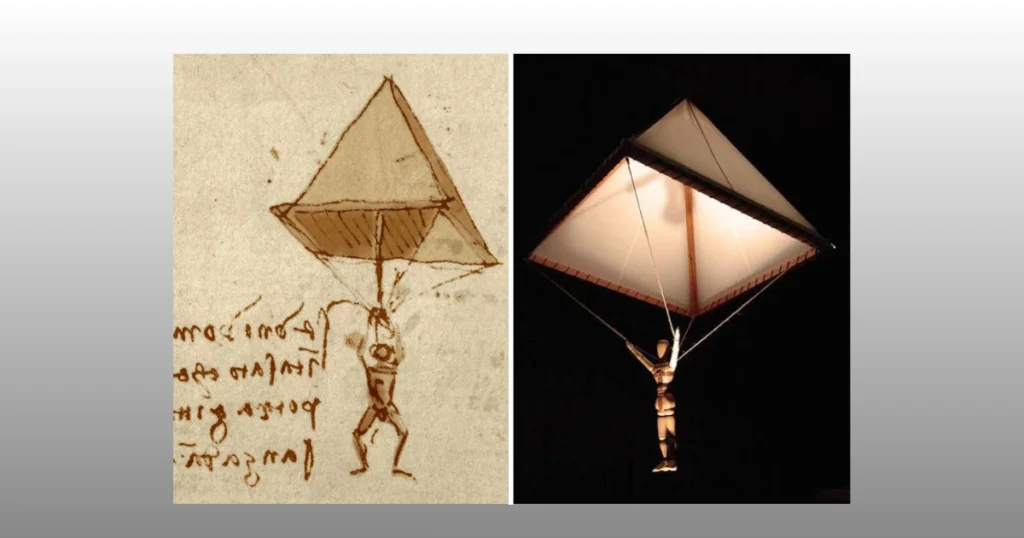
The Leonardo da Vinci parachute is one of the most astonishing engineering sketches to survive the Renaissance, a pyramid-shaped design drawn nearly 500 years before anyone dared to test it.
It appears on a single page, tucked among notes on weapons and water, almost as an afterthought. Yet that small sketch would go on to prove something remarkable: that a 15th-century mind could solve a problem of physics that the world wasn't ready to use for centuries.
What makes this drawing so compelling isn't just its age. It's the confidence behind it. Da Vinci didn't sketch a vague idea of "falling safely." He wrote exact proportions, described the exact fabric, and stated plainly that a man could jump from any height without injury.
For a traveler standing before the original manuscript today, that confidence still feels electric. Seeing the actual page — the ink, the geometry, the handwriting reversed and mirrored — turns a textbook fact into something personal, a direct link to a mind working through a problem five centuries ago.
This post is all about the Leonardo da Vinci parachute — how it was designed, how it actually works, and where you can still see the sketch and its legacy today.
What is the Leonardo da Vinci Parachute?
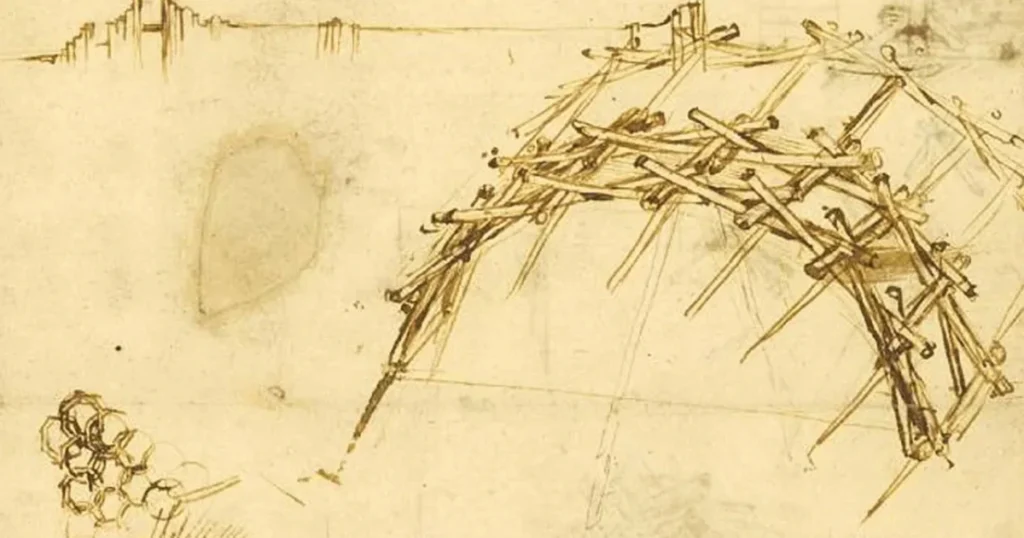
The Leonardo da Vinci parachute is a pyramid-shaped descent device sketched around 1485 in the Codex Atlanticus. Da Vinci described a wooden frame roughly 12 braccia wide, covered in linen, claiming a person could leap from great heights and land unharmed. It remained untested until 2000.
The Engineering Idea Behind the Leonardo da Vinci Parachute
Da Vinci's notebooks were rarely idle doodles. They were working documents, filled with calculations, material notes, and design logic.
The parachute sketch fits that pattern exactly, and understanding the idea behind it says a lot about how far ahead of his era he was thinking.
A Problem Born From Studying Birds and Air
Long before the parachute sketch, da Vinci had already spent years observing birds, wind, and falling objects. He filled pages with notes on how air resistance affects movement and how surface area affects the speed of a fall.
He watched kites circle above Florence, timed how leaves drifted compared to stones, and sketched wing joints in obsessive detail, treating flight as a puzzle with rules that could be measured rather than a mystery reserved for birds alone.
The parachute wasn't an isolated invention — it grew directly out of this broader obsession with flight, one that also produced his ornithopter and flying machine concepts. In his mind, a device that slowed a human fall and a device that lifted a human into the air were two sides of the same unsolved equation.
Why a Pyramid, Not a Dome
Modern parachutes are round because a dome captures air efficiently and stays stable. Da Vinci chose a pyramid, likely because it was easier to build with rigid wooden poles using Renaissance-era materials and tools.
He wasn't chasing elegance — he was solving for what could realistically be constructed and trusted with a person's life, given the technology available to him.
The Exact Measurements He Left Behind
What separates this sketch from a passing idea is its precision. Da Vinci specified the frame at roughly 12 braccia (about 7 meters) on each side, with linen stretched tightly across a wooden pyramid. He didn't just imagine a soft landing; he calculated a structure and stated, in his own words, that a man could throw himself from any height without danger.
That single sentence, written in his mirrored left-handed script, is what turns the sketch from an artistic flourish into an engineering claim — a testable, falsifiable statement of fact rather than a fantasy.
How It Compares to His Other Notebook Pages
The parachute sketch shares a page style with much of da Vinci's engineering work: a small drawing surrounded by dense handwritten notes, numbers, and sometimes unrelated doodles from the same session.
This layout matters for understanding him as a thinker. He rarely separated "art" from "engineering" the way modern disciplines do. A parachute sketch might sit near a study of water currents or a sketch of a smiling face, all treated as equally worthy of his attention and precision.
How the Leonardo da Vinci Parachute Works
Strip away the centuries of mythology, and the parachute's logic is simple physics — the same physics that keeps modern skydivers alive.
Trapping Air to Slow a Fall
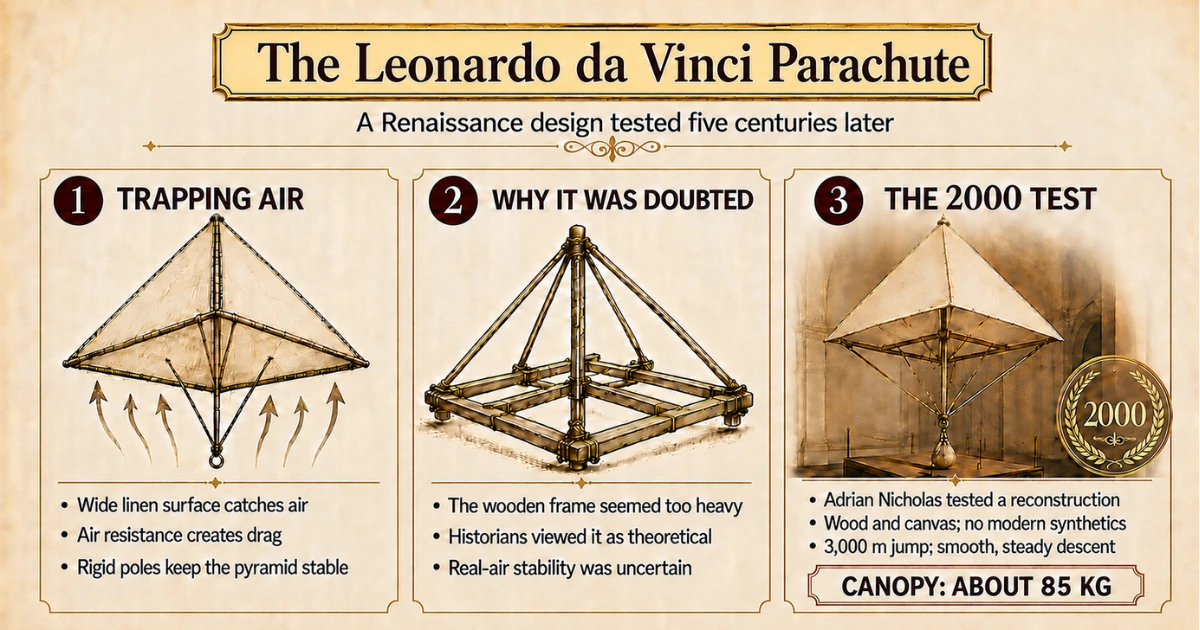
A falling body accelerates until air resistance builds enough force to balance gravity. Da Vinci's pyramid does exactly this: the wide linen surface traps air beneath it, creating drag that slows the descent long before the ground arrives. It's the same principle behind an umbrella catching wind, just scaled up and turned into a survival tool.
The wooden poles hold the fabric rigid, so instead of collapsing or flapping chaotically, the pyramid keeps a consistent shape that pushes against the air in a predictable way, which is exactly what allows a controlled, steady descent rather than a wild, tumbling one.
Why the Design Was Doubted for Centuries
Historians long assumed the design was purely theoretical — an interesting thought experiment rather than a workable object.
Many believed the rigid wooden frame would be too heavy and too clumsy to control in real air currents, especially compared to the flexible fabric canopies used in early modern parachuting.
The 2000 Test That Changed Everything
In the year 2000, British skydiver Adrian Nicholas built the parachute using only materials available in da Vinci's time — wood and canvas, no modern synthetics. He jumped from a hot air balloon at 3,000 meters. The parachute worked.
It descended smoothly and steadily, and Nicholas reported it gave a gentler ride than a modern parachute, only releasing it near the ground because the wooden frame's weight risked injury on landing.
What makes this test so significant isn't just that the design worked — it's how closely it matched da Vinci's original description.
Nicholas and his team deliberately avoided modern materials, using period-accurate wood joints and heavy canvas rather than lightweight synthetic fabric. The result weighed far more than a modern parachute, roughly 85 kilograms for the canopy alone, yet it still generated enough drag to bring a person down safely.
That detail matters because it rules out the idea that da Vinci got lucky with a rough concept. His proportions were close enough to correct that a faithful reconstruction, five centuries later, performed exactly as promised.
What the Test Didn't Prove
The successful jump doesn't mean da Vinci ever built or tested his own design. No historical record shows him or anyone in his lifetime attempting the leap.
The sketch remained purely theoretical for roughly 500 years, which is part of what makes the story so compelling to modern audiences: a design proven correct almost entirely on paper, long before anyone had reason or means to try it. That test transformed the sketch from a historical curiosity into a proven engineering solution.
If you want to trace this story from notebook to open sky, a guided walk through Milan's da Vinci archives often leads naturally into a closer look at the original manuscripts and models inspired by his flight sketches, which many visitors say adds real context before ever stepping inside a museum.
Where to See the Leonardo Parachute Design Today
The original sketch isn't sitting behind a velvet rope in a single obvious place. Like much of da Vinci's work, it lives inside a much larger collection, and tracking it down is part of the experience.
The Codex Atlanticus in Milan
The parachute drawing belongs to the Codex Atlanticus, a 12-volume collection of da Vinci's drawings and writings held at the Biblioteca Ambrosiana in Milan. Because the pages are fragile, they are rotated on display rather than shown permanently, so checking current exhibits before visiting is worthwhile.
Working Models and Replicas
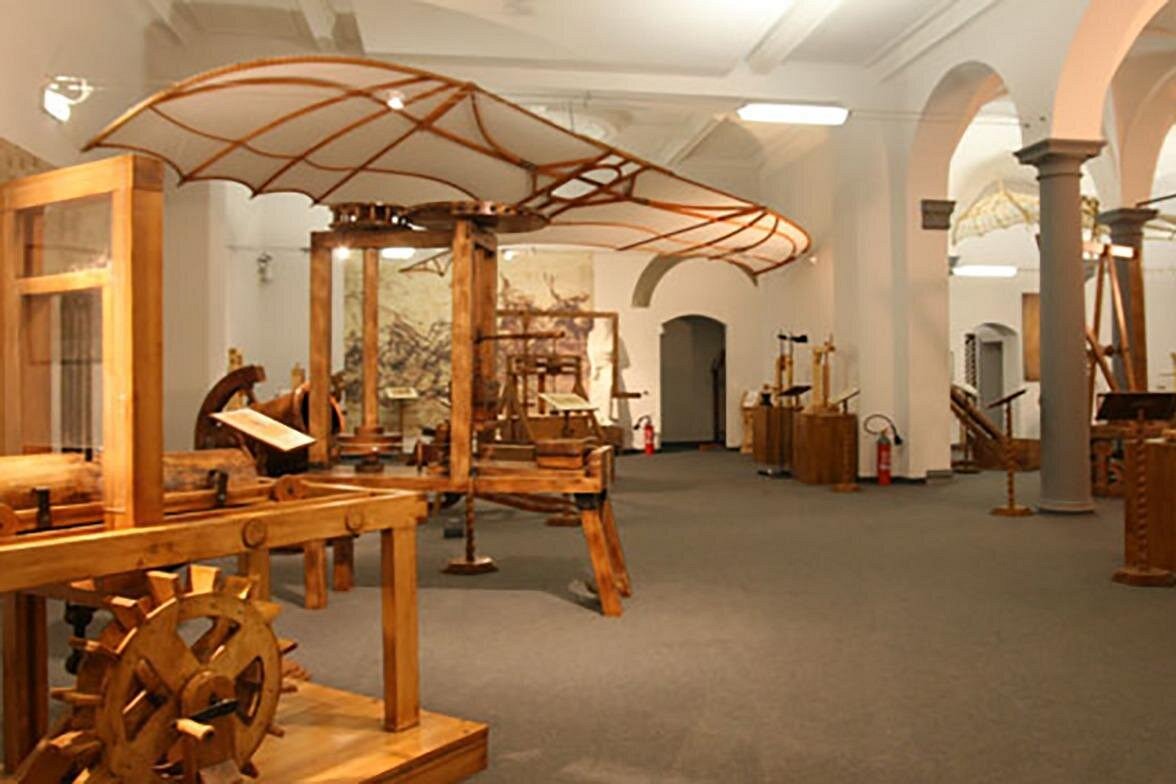
Several museums build physical models based on da Vinci's notes, since the original pages show sketches rather than finished machines. The Museo Nazionale della Scienza e della Tecnologia in Milan houses one of the most respected collections of these constructed models, including reconstructions of the parachute, the aerial screw, and the flying machine.
Walking past these models in sequence tells a visual story that the manuscript pages alone can't: sketch, calculation, and finally, a physical object you can walk around and study from every angle.
Why the Original Page Isn't Always on Display
Paper from the 1480s is fragile, and centuries of handling, ink fading, and even a past acid-based restoration attempt have made conservation a serious concern for the Codex Atlanticus.
Curators rotate which pages are exhibited to limit light exposure and physical stress, meaning the parachute sketch specifically isn't guaranteed to be on view during any single visit. This is one of the more practical reasons travelers benefit from checking exhibition calendars before planning a trip around one specific page.
Discover Leonardo Machines in Milan
See full-scale reconstructions of Leonardo’s inventions and discover the engineering ideas behind his designs
Explore da Vinci InventionsLeonardo da Vinci Museum Experience, Milan
A guided walk through reconstructed da Vinci inventions, including the parachute, the aerial screw, and the ornithopter, built directly from his original notebook sketches
- Hands-on models of flight and engineering designs
- Historical context explained alongside each invention
- Compact route suited to a single afternoon
Visitors often note how much clearer the sketches feel once they've seen the working models in person. See Details
Where the Design Fits Among His Other Flying Machines
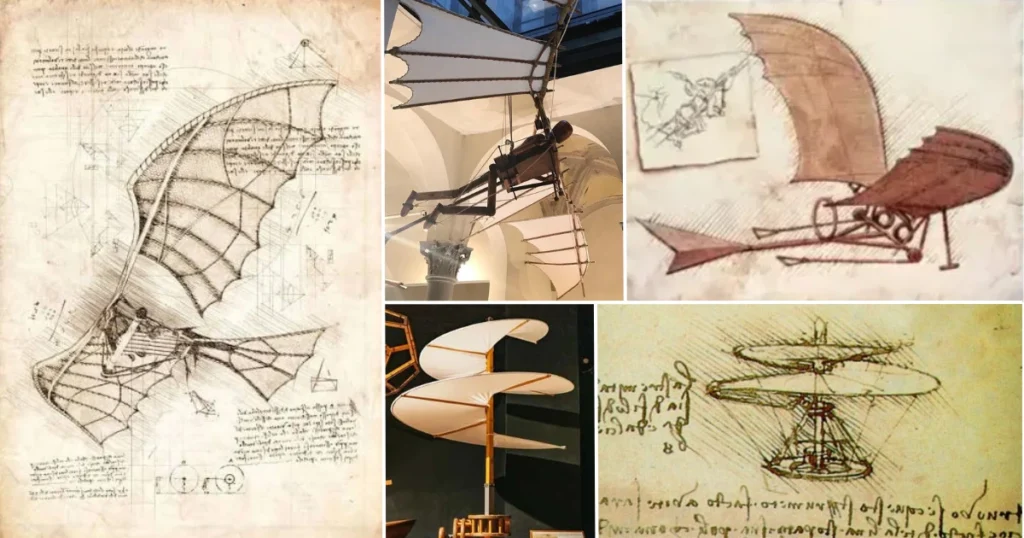
The parachute rarely stands alone in these collections. It's almost always displayed near the aerial screw — often called an early helicopter concept — and the ornithopter, a wing-flapping flying machine.
Seeing all three together makes it clear that da Vinci wasn't chasing a single invention. He was building an entire theory of flight, piece by piece, decades before anyone had the materials to test it.
Exploring Leonardo da Vinci in Milan
Milan is where much of da Vinci's engineering imagination took shape. He spent nearly two decades in the city under the patronage of Ludovico Sforza, producing not just the parachute sketch but also studies for canals, fortifications, and The Last Supper, painted just a short walk from where the Codex Atlanticus is now kept.
For anyone tracing da Vinci's full story, Milan connects naturally to his other major cities. Florence reflects his early training and youth; Rome reflects his later years and papal connections; Venice ties into his engineering consultations on city defenses; and Paris marks his final home and resting place.
Each city adds a distinct layer to the development of his ideas on flight and invention over the course of his lifetime.
Experiencing the Parachute's Legacy in Person
Reading about the Leonardo da Vinci parachute is one thing. Standing in front of the actual notebook page, or watching a full-scale wooden model up close, is a different kind of understanding entirely. The ink strokes, the reversed handwriting, the small calculations in the margins — these details don't come through in a photograph the same way they do in person.
At the Biblioteca Ambrosiana and the Museo Nazionale della Scienza e della Tecnologia, visitors see how the sketch fits into da Vinci's broader body of work on flight, mechanics, and observation of nature. It matters because it reframes the invention: not a lucky guess, but the product of years of studying air, birds, and falling objects.
For travelers planning a Milan itinerary centered on da Vinci's engineering legacy, a route through the Ambrosiana and the science museum tends to work well alongside a visit to see The Last Supper, since both are within easy reach of each other.
Many visitors plan half a day for the Codex Atlanticus and the invention models, leaving time afterward to walk to the Sforza Castle or the Duomo. Before booking anything, it's worth checking current rotation schedules for the Codex Atlanticus, since the fragile pages aren't always on display.
Final Thoughts
This post was all about the Leonardo da Vinci parachute — a sketch that sat quietly in a notebook for nearly 500 years before anyone proved it could actually work.
It's a small, almost modest drawing, yet it captures the essence of da Vinci's genius: patient observation, precise reasoning, and an unwillingness to separate art from engineering.
The Renaissance gave the world painters and architects, but da Vinci gave it something rarer — proof that imagination, backed by careful study, can outlast its own era. Seeing the parachute sketch in Milan, alongside the models it inspired, is a reminder that some of the best ideas simply need the right century to catch up to them.
Related Post You May Like

Disclosure: This page may contain affiliate links. If you book through them, we may earn a small commission at no extra cost to you. Learn more.
Free Leonardo Milan Travel Guide
Plan Your Leonardo Trip in Milan
A premium mini guidebook for smarter Milan planning, including the best ticket strategy, Leonardo map, and practical visitor advice.
Get the Free Guide
Download the guide and receive practical Milan planning tips by email.
Download the Free Guide >> Leonardo Bianchi is the founder of Leonardo da Vinci Inventions & Experiences, a cultural travel guide helping visitors explore Leonardo da Vinci’s art, inventions, and legacy across Italy and Paris.