
(Last updated: Sep 2026)
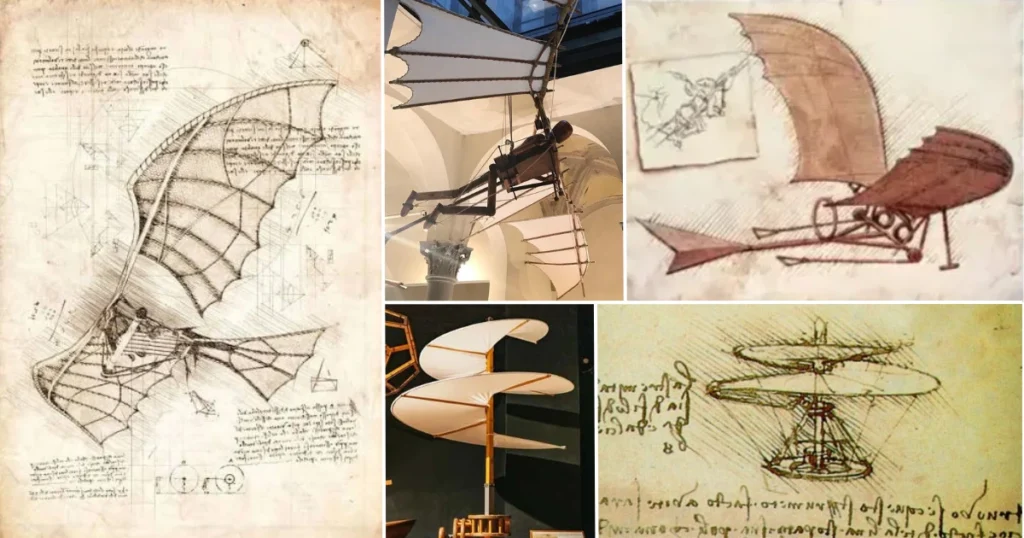
The da Vinci flying machine is one of the most fascinating engineering concepts ever sketched by a single mind. Long before airplanes existed, Leonardo da Vinci imagined how a human body could imitate a bird's wing and lift itself into the sky.
He never built a working aircraft, but his drawings reveal a level of mechanical thinking that was centuries ahead of his time.
His notebooks are full of hinges, pulleys, and wing joints that mimic muscle and bone. Understanding how these machines were designed helps explain why Leonardo is still remembered as the first true aviation engineer.
This post is all about the da Vinci flying machine, how it worked on paper, and why it still captivates travelers, engineers, and historians today.
What is the da Vinci Flying Machine?
The da Vinci flying machine refers to a series of flight devices sketched by Leonardo da Vinci between roughly 1485 and 1505, including an ornithopter with flapping wings and a helical "aerial screw." These designs were based on bird anatomy and mechanical principles, and though none flew, they represent the earliest serious engineering study of human flight.
The Engineering Idea Behind the Da Vinci Flying Machine
Leonardo did not begin with a blank sketchbook and pure imagination. He began with observation.
Years before he drew a single wing mechanism, he studied real birds in flight, watching how their feathers shifted with air pressure and how their wingtips curled during a turn. This research became the foundation for his aviation designs.
Studying Birds as the First Aircraft
Leonardo treated birds as living machines. He believed that if he could understand the exact mechanics of a wingbeat, he could reproduce it artificially.
This idea shaped nearly every Leonardo da Vinci flying machine sketch that followed, from small wing studies to full-body flight harnesses.
The Codex on the Flight of Birds
Much of this research is preserved in the Codex on the Flight of Birds, a small notebook Leonardo compiled around 1505.
It contains detailed notes on air resistance, wing curvature, and balance — essentially an early theory of aerodynamics, written more than 400 years before the Wright brothers.
From Biology to Blueprint
What makes this phase remarkable is the transition from biological observation to mechanical blueprint. Leonardo converted feathers into fabric, bone joints into wooden hinges, and muscle tension into pulley systems. It was one of the earliest examples of biomimicry in engineering history.
Many of these original sketches can be examined up close during a guided visit to Milan's historic archives, where Leonardo's flight notebooks are occasionally displayed alongside detailed explanations of his aerodynamic theories, an experience many travelers arrange through a Milan Leonardo da Vinci walking tour, which places the drawings in the context of the city where they were created.
How the Da Vinci Flying Machine Works
Leonardo experimented with more than one flight concept. Each design solved a slightly different problem, and together they show the range of his mechanical imagination.
The Ornithopter: Flight by Flapping Wings
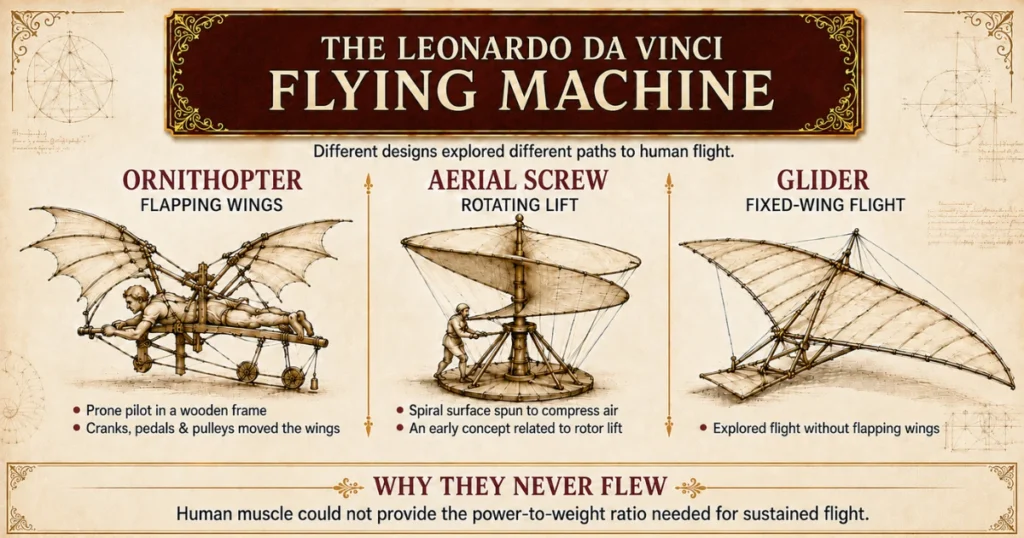
The most famous Leonardo da Vinci flying machine design is the ornithopter, a device meant to fly by flapping large wings, just like a bird. The pilot would lie face-down inside a wooden frame, using hand cranks, pedals, and pulleys to move the wings up and down. It was an ambitious attempt to replicate muscle-driven flight using human strength alone.
The Aerial Screw: An Early Helicopter Concept
Separately, Leonardo sketched a spiral-shaped device now nicknamed the aerial screw. The idea was that a screw-shaped surface, spun quickly enough, could compress air and generate lift, a concept that echoes the basic principle behind modern helicopter rotors.
It is one of the most frequently cited da Vinci aerial screw designs in aviation history books.
Why the Designs Never Flew
Neither the da Vinci glider concepts nor the ornithopter ever successfully left the ground. The core issue was power. Human muscles simply cannot generate the strength-to-weight ratio needed for sustained flapping flight.
Leonardo lacked lightweight engines, and his materials — wood, leather, and cord — could not withstand the required force. Still, his structural logic, including wing-joint articulation and weight distribution, reappeared centuries later in real glider design.
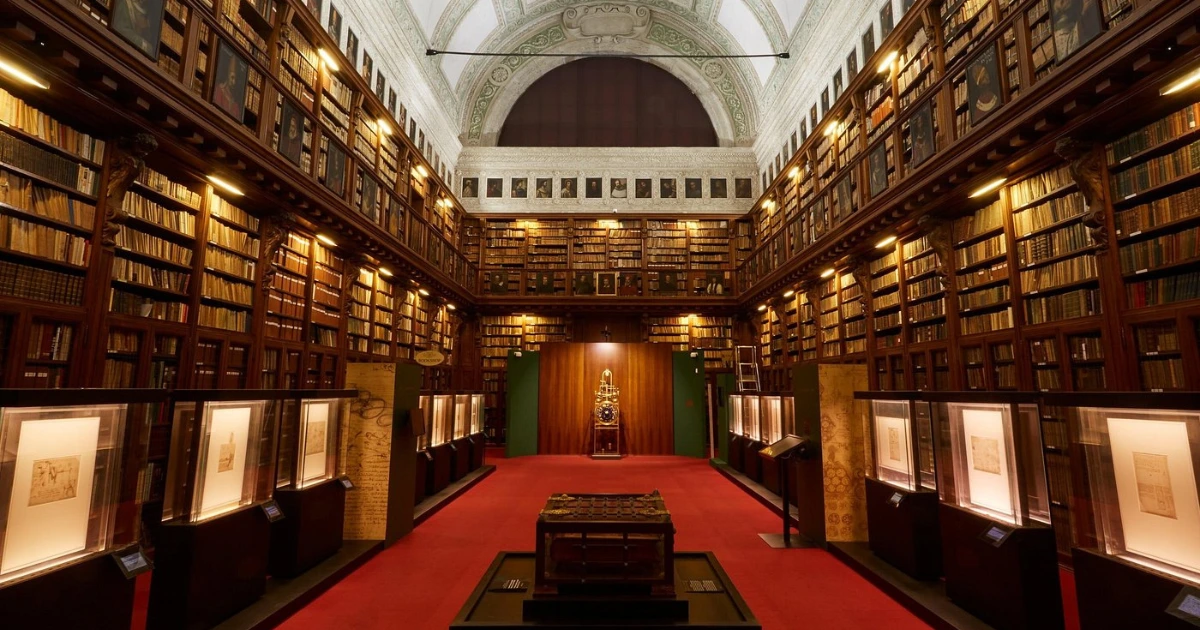
See the Codex Atlanticus
Step inside the Biblioteca Ambrosiana to see rotating sheets from Leonardo’s largest surviving notebook and explore its historic art collection.
See Codex Atlanticus TicketsSeeing Leonardo's Flight Sketches in Milan
A number of Leonardo's original flight-related manuscripts, including pages connected to the Codex Atlanticus, are held in Milan's Biblioteca Ambrosiana
- Rotating exhibitions of original notebook pages
- Detailed context on his engineering method
- Guided explanations of aerodynamic sketches
Visitors often note that seeing the handwriting and diagrams in person makes the engineering feel far more tangible than viewing reproductions. Explore Ambrosiana Library Access
Where to See the Da Vinci Flying Machine Today
Because the original devices were never built as full-scale aircraft, what survives are the drawings themselves, along with faithful wooden models constructed from Leonardo's measurements. Several institutions now preserve or reconstruct this material for the public.
Museo Nazionale della Scienza e della Tecnologia, Milan
This science museum in Milan houses one of the most complete collections of large-scale wooden models built directly from Leonardo's technical drawings, including flight devices, gear systems, and hydraulic machines. It is widely regarded as the best single stop for anyone researching da Vinci's inventions and flying-machine models in physical form.
Biblioteca Ambrosiana and the Codex Atlanticus
The Biblioteca Ambrosiana holds the Codex Atlanticus, the largest surviving collection of Leonardo's papers, including numerous flight studies. Pages are rotated periodically to protect the fragile paper, so availability varies by visit.
Biblioteca Reale, Turin
The original Codex on the Flight of Birds is preserved in Turin. While public display is limited due to conservation needs, its influence is evident throughout replica exhibitions across Italy, including detailed diagrams that explain Leonardo da Vinci's flight theory.
Exploring Leonardo da Vinci in Milan
Milan is where Leonardo spent nearly two decades in service of the Sforza court, and it remains the richest city for tracing his engineering mind. Beyond the flying machine sketches, the city holds his notebooks, mechanical studies, and even his famous mural, The Last Supper, all within a walkable historic core.
For travelers building a wider Renaissance itinerary, Leonardo's footprint extends well beyond Milan. His artistic training took shape in Florence; his scientific curiosity was documented in manuscripts now split between collections in Rome and Venice; and some of his most personal notebooks eventually traveled to Paris, where he spent his final years.
Following this trail, city by city, turns a single sketch of a flying machine into a much larger story about how one mind shaped the Renaissance.
Experiencing Leonardo's Flying Machine in Person
Reading about the ornithopter or the aerial screw is one thing. Standing in front of a full-scale wooden reconstruction, built to Leonardo's own proportions, is a very different kind of understanding.
The scale alone reframes the engineering problem: these wings are enormous, heavier than they look in a textbook illustration, and the mechanical linkages are far more intricate up close.
At the Museo Nazionale della Scienza e della Tecnologia, entire rooms are dedicated to reconstructed Leonardo machines, giving visitors a physical sense of how the pulleys, gears, and wing joints were meant to interact.
Many people who study Leonardo da Vinci's flying machine sketches beforehand say the visit reshapes how they read the original drawings afterward, since the mechanical logic becomes visible in three dimensions rather than as flat lines on parchment.
For travelers who want the historical context explained alongside the machines themselves, a guided Leonardo da Vinci museum and workshop experience in Milan walks through the flying machine models, the aerial screw, and related mechanical inventions in a single, well-organized visit.
Trust in this kind of experience comes from context, not spectacle. A knowledgeable guide can point out details easily missed on a solo visit, such as how a hinge angle mirrors a bird's wrist joint, or why a particular gear ratio would have been unworkable with 15th-century materials.
That kind of explanation turns a museum room into a genuine engineering lesson. Reserve a Leonardo da Vinci Experience in Milan
Final Thoughts
This post was all about the da Vinci flying machine, from the bird studies that inspired it to the ornithopter and aerial screw sketches that tried to translate biology into mechanics. None of these machines ever flew, but that was never really the point.
Leonardo's real achievement was proving that flight could be approached as a solvable engineering problem, centuries before anyone had the materials or power sources to solve it.
That is why his drawings of flying machines still resonate today. They capture the exact moment where curiosity turns into method, and where a Renaissance artist becomes one of history's first aerospace engineers.
Seeing his notebooks, models, and manuscripts in person, particularly in Milan, is the closest most people will ever get to standing inside that original moment of invention.
Related Post You May Like

Disclosure: This page may contain affiliate links. If you book through them, we may earn a small commission at no extra cost to you. Learn more.
Free Leonardo Milan Travel Guide
Plan Your Leonardo Trip in Milan
A premium mini guidebook for smarter Milan planning, including the best ticket strategy, Leonardo map, and practical visitor advice.
Get the Free Guide
Download the guide and receive practical Milan planning tips by email.
Download the Free Guide >> Leonardo Bianchi is the founder of Leonardo da Vinci Inventions & Experiences, a cultural travel guide helping visitors explore Leonardo da Vinci’s art, inventions, and legacy across Italy and Paris.