
(Last updated: May 2026)
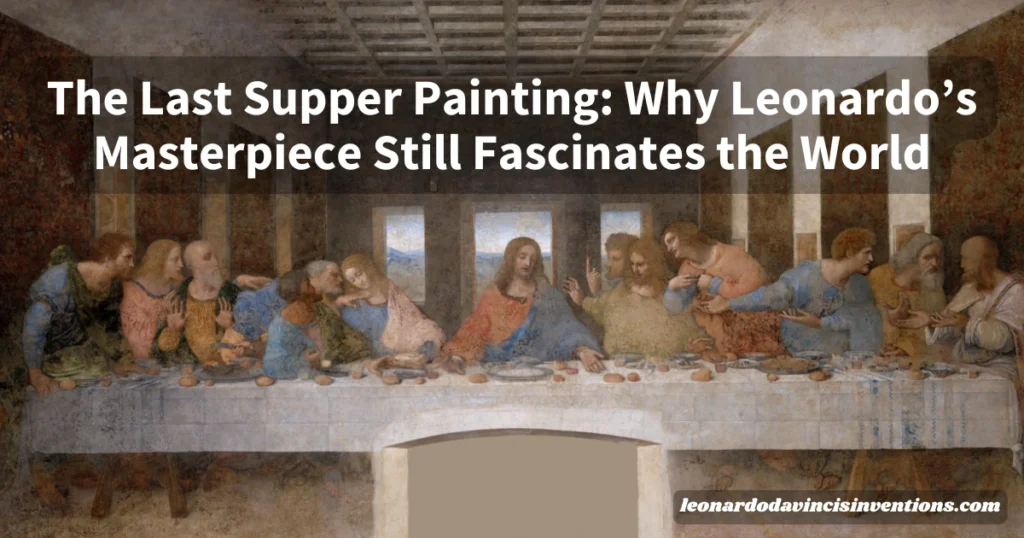
The Last Supper painting of Jesus and Judas is one of the most studied, debated, and quietly astonishing images in the history of Western art. Painted by Leonardo da Vinci between 1495 and 1498 on the refectory wall of Santa Maria delle Grazie in Milan, it captures a single moment — the instant Christ announces that one of his disciples will betray him — and transforms it into a theater of human emotion.
Understanding who Judas is in The Last Supper, and how Leonardo placed him among the twelve, changes the way you experience the painting entirely. It is not just a religious image. It is a masterclass in psychology, composition, and storytelling, engineered by a mind that saw the world differently from everyone around him.
This post is all about the Last Supper painting of Jesus and Judas — exploring the history, symbolism, hidden figures, and what you will feel standing in front of it in Milan.
What happened in the Last Supper painting of Jesus and Judas?
The Artistic Genius Behind the Last Supper Painting: Jesus and Judas
When Was the Last Supper Painted?
Leonardo began The Last Supper around 1495 at the commission of Ludovico Sforza, Duke of Milan. He completed it in 1498 — roughly three years of intermittent, obsessive work. He was not a fresco painter by habit. He experimented with tempera and oil directly on a dry plaster wall, a choice that made the painting extraordinarily expressive but also vulnerable to decay almost from the moment it was finished.
The surface began deteriorating within decades. What visitors see today is largely the result of careful, ongoing restoration — a palimpsest of the original brilliance, but still capable of taking your breath away.
Who Painted the Last Supper?
Leonardo da Vinci painted the Last Supper. That is a simple fact that carries enormous weight. By 1495, Leonardo was already celebrated across Italy as a painter, sculptor, military engineer, anatomist, and musician. He brought all of that knowledge to this single wall.
His anatomical studies informed the posture of every figure. His understanding of optics shaped the perspective. His fascination with how emotions register on the human face — documented obsessively in his notebooks — is visible in every apostle's reaction to Christ's announcement.
No other painter of the era would have thought to create a composition that was simultaneously a theological scene, a study of twelve distinct psychological states, and a spatial illusion that made the painted room feel continuous with the actual dining hall.
The Technical Choices That Changed Everything
Most Renaissance muralists painted in true fresco — applying pigment onto wet plaster, locking the color in permanently but forcing speed. Leonardo refused this constraint. He worked slowly, returning to a figure's face over multiple days, studying the expression and revising. The result is a level of emotional nuance that fresco painters could not achieve.
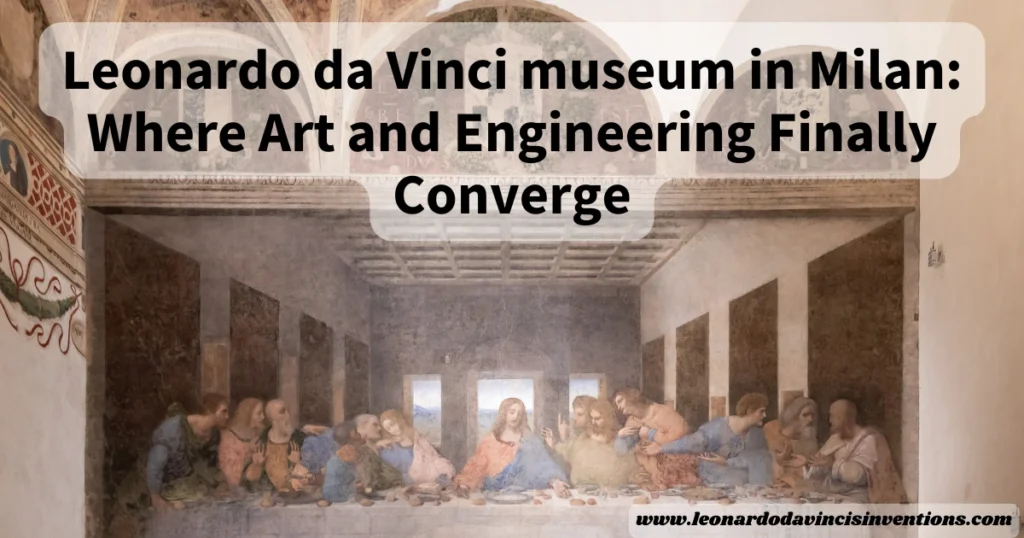
He also set the scene at eye level with the actual room. The painted table aligns with the real space. The painted light source mirrors the room's actual windows. Sitting in that refectory in 1498, a monk would have looked up from his own supper and seen, at the far end of the hall, a room that seemed to extend seamlessly from his own.
To fully appreciate how these technical choices shape the experience in real life, explore this Last Supper guided tour in Milan, where expert insight brings Leonardo’s perspective and composition to life inside the refectory.
Why the Last Supper Painting Became Famous
Which One Is Judas in the Last Supper Painting?
This is the question visitors ask most often. And the answer surprises most people.
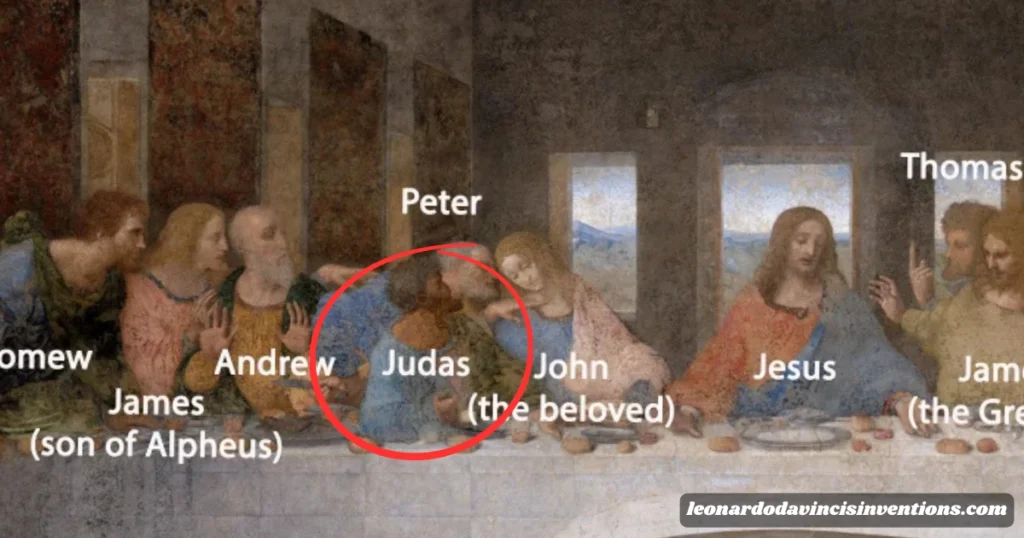
Judas is not isolated. He is not pushed to the margins or lit differently from the others. He sits at the same table, among the same group, facing the same direction as every other apostle. Leonardo made a deliberate choice: Judas belongs to the scene. He is one of the twelve. That is the point.
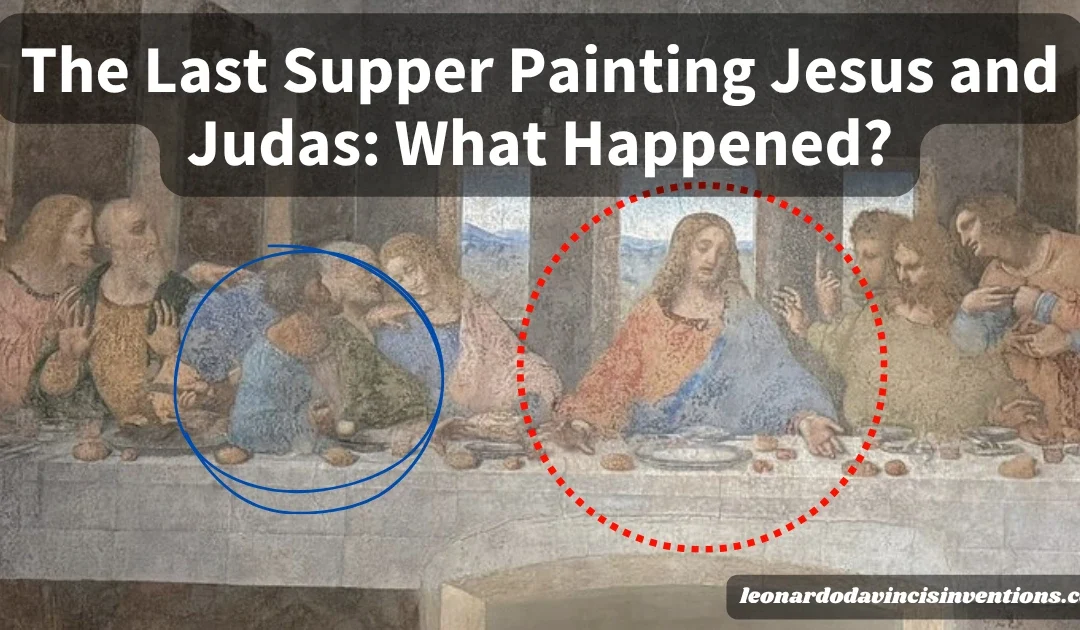
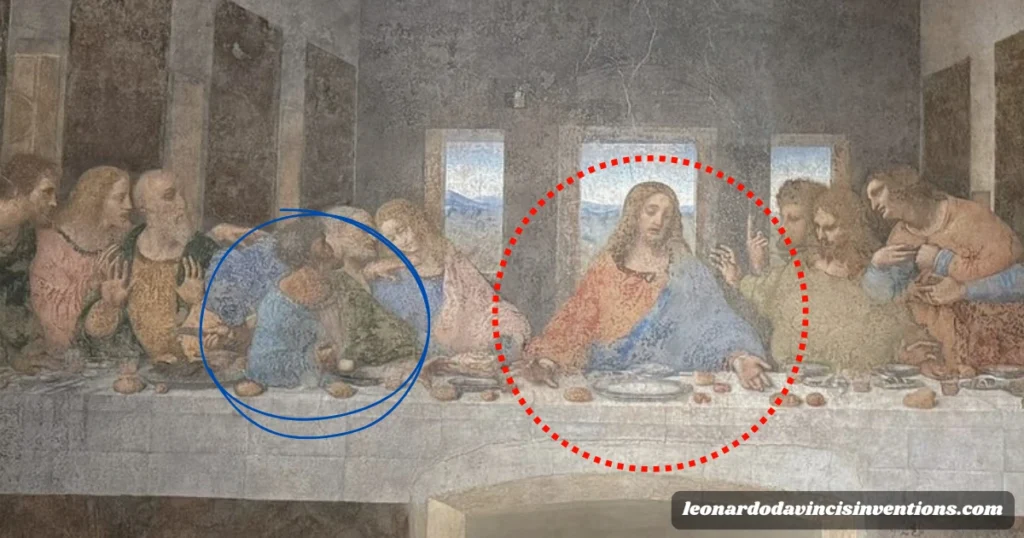
To identify Judas, look to the fourth figure from the left in the group of three to Christ's right. He is leaning slightly back, his face partially in shadow, his body turned away from the light. His right hand reaches toward the table at the same moment as Christ's — a visual echo of the Gospel of Matthew, in which Jesus says: "He who dips his hand in the dish with me will betray me."
In his left hand, Judas clutches a small bag. It is commonly understood to represent the thirty pieces of silver. His posture is closed, contracted, pulling inward — a contrast to the open, expansive gestures of the apostles around him.
Last Supper Painting: Who Is Who?
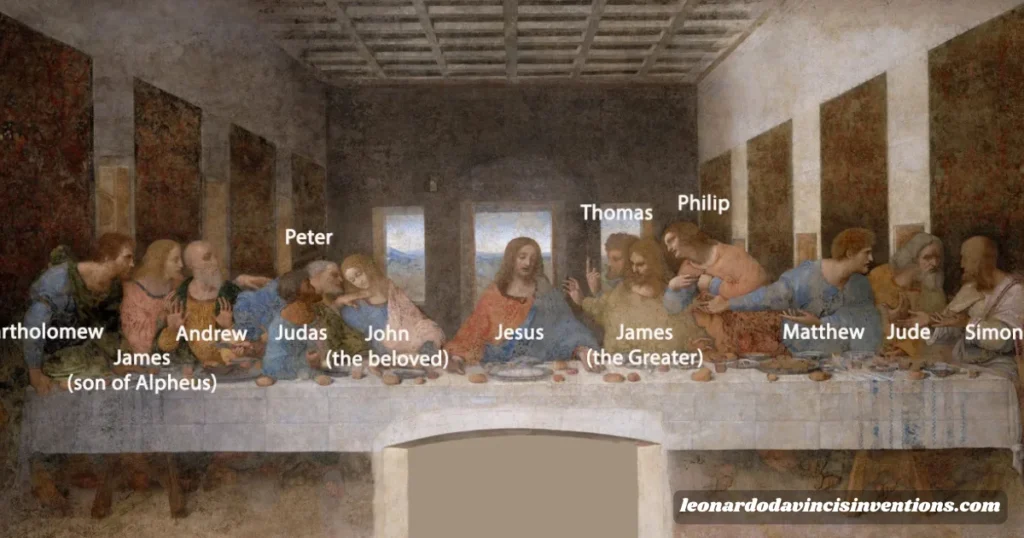
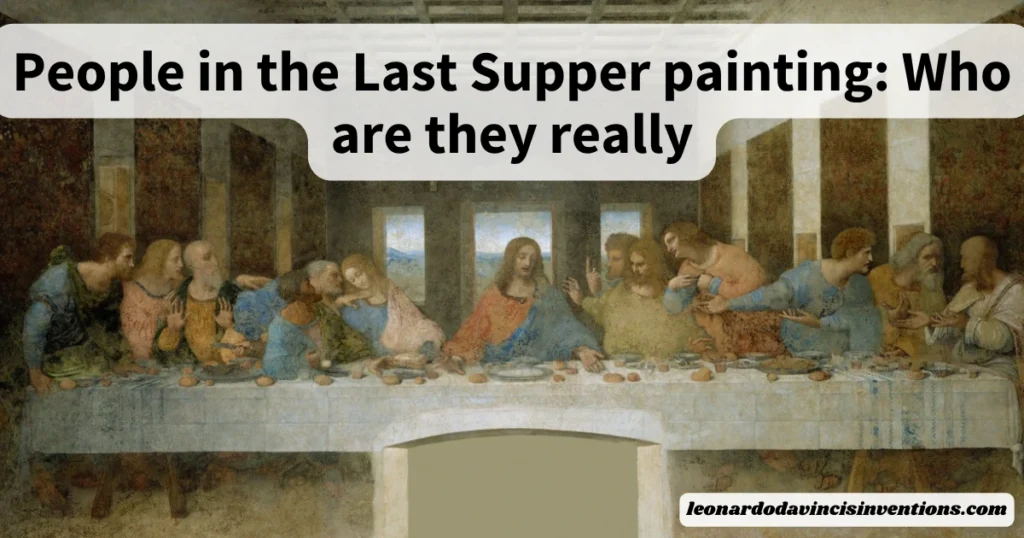
Leonardo structured the twelve apostles into four groups of three, arranged symmetrically on either side of Christ. The groupings are not arbitrary. Each trio responds as a unit to Christ's announcement, their gestures interlocking and amplifying each other.
From left to right: Bartholomew, James the Lesser, and Andrew form the first group — upright, startled, leaning in. Peter, Judas, and John follow — Peter gripping a knife, John turning away, Judas pulling back. Christ sits at the center.
Then Thomas, James the Greater, and Philip — hands raised, questioning, dismayed. Finally, Matthew, Jude Thaddaeus, and Simon — in animated debate at the far right.
John, the youngest apostle, sits immediately to Christ's left — noticeably soft-featured and composed, tilting away as if flinching from an unspoken knowledge. This figure has fueled centuries of speculation: is it a woman? Is it Mary Magdalene?
Most art historians are clear on this point. It is John, depicted in the feminized style common to young male figures in Italian Renaissance painting. But the question persists, and Leonardo — who rarely made anything by accident — may have been perfectly aware of the ambiguity he was creating.
The Last Supper Painting Meaning and Symbolism
The scene is drawn from the Gospel of John, chapter 13. Christ has just said: "Truly I tell you, one of you will betray me." What Leonardo captures is not the betrayal itself — it is the instant of the announcement. The tremor is moving through the table. Twelve men, each reacting differently, each revealing character.
The composition radiates outward from Christ. He is the calm at the center of a storm — hands open, palms down, a gesture that is both proclamation and surrender. The triangular shape of his figure, formed by his arms and head, gives him visual stability while everyone around him fractures into motion.
The window behind Christ forms a kind of halo — not a golden disc but a frame of light, architectural and real, tying the divine to the physical world in exactly the way Leonardo's mind worked.
Where to See the Last Supper Painting Today
Where Is the Last Supper Painting?
The original Last Supper by Leonardo da Vinci is located in Milan, Italy, in the refectory of the Convent of Santa Maria delle Grazie, on Piazza di Santa Maria delle Grazie. The church and the convent are UNESCO World Heritage Sites.
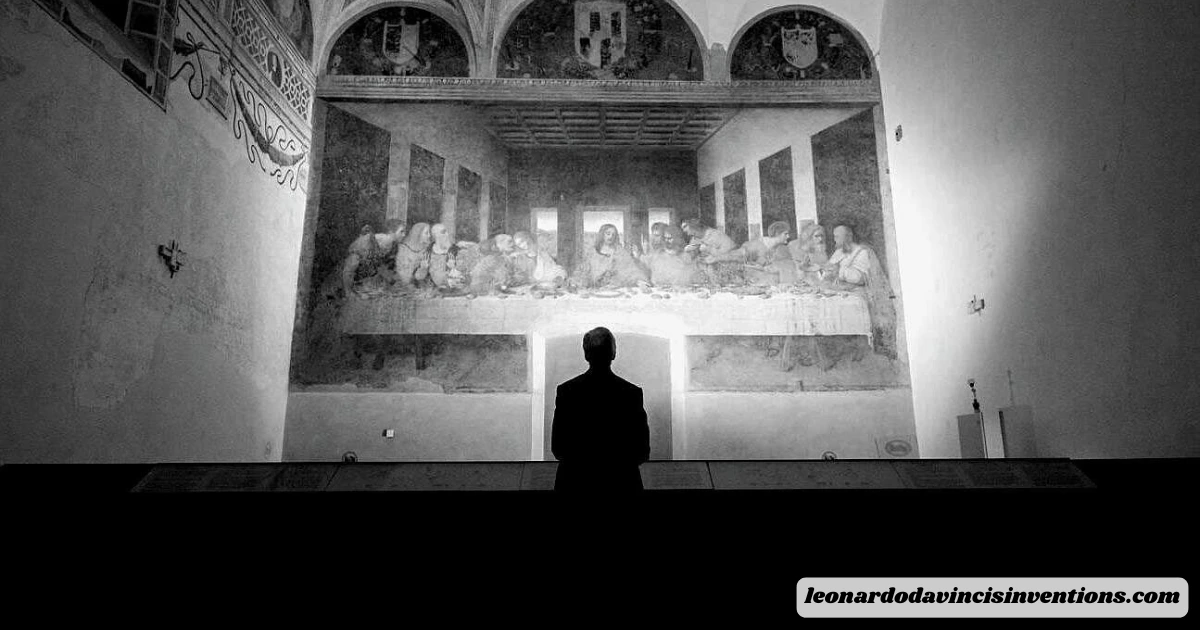
The painting has never been moved. It remains on the wall Leonardo painted it on, in the room it was painted for. That fact alone makes a visit different from standing in front of a panel painting in a gallery. You are standing in the space the painting was made to inhabit.
Entry is strictly controlled. Visitors pass through a series of climate-regulated chambers before entering the refectory. Groups are limited to approximately 25 people at a time. Maximum viewing time is 15 minutes. The room's humidity and temperature are maintained to protect the remaining original surface.
Planning Your Visit
Reservations are essential. Tickets through the official booking system (Vivaticket) sell out weeks — sometimes months — in advance, especially during peak travel seasons. The site is open Tuesday through Sunday, closed Mondays.
The viewing experience itself is brief by design. Fifteen minutes is not long. Many first-time visitors say they wish they had prepared more, knowing which figure is which, understanding the composition, and having context for what they are looking at before entering the room.
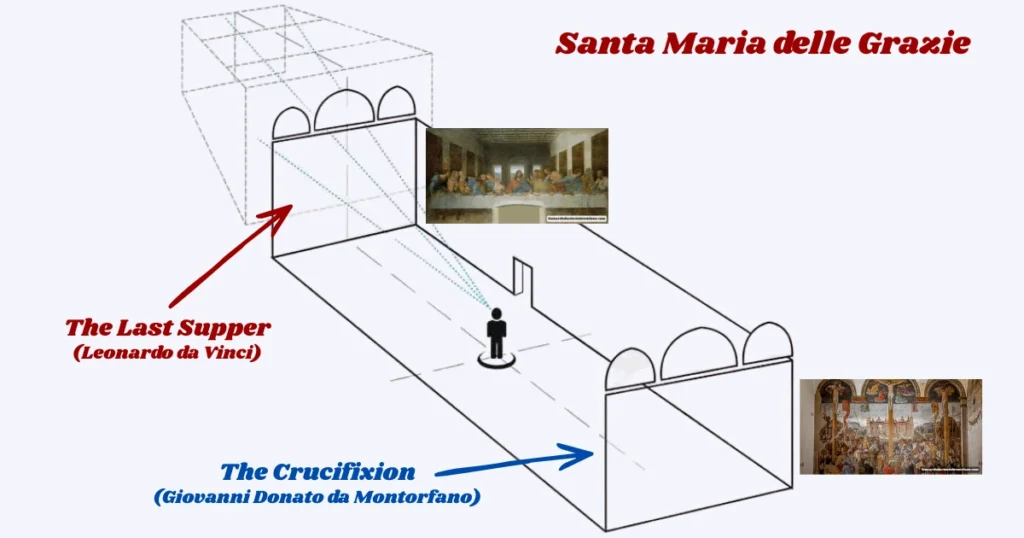
The refectory also contains a second large mural, The Crucifixion by Giovanni Donato da Montorfano, painted on the opposite wall in 1495 — the same year Leonardo began his work. Standing between the two paintings, with da Vinci at one end and Montorfano at the other, is a quietly extraordinary experience.
For travelers who want that context in place before they arrive, guided Last Supper tours in Milan with reserved entry and expert-led commentary are available and tend to be the most efficient way to ensure both access and understanding on the day of the visit.
Exploring Leonardo da Vinci in Milan
Milan was Leonardo's most productive city. He arrived around 1482 and spent nearly two decades working under the patronage of Ludovico Sforza. The Last Supper is the most visible legacy of that period, but it is not the only one.
The Museo Nazionale della Scienza e della Tecnologia Leonardo da Vinci in Milan houses the largest collection of models based on Leonardo's mechanical drawings — flying machines, hydraulic devices, war engines. It is a worthwhile companion visit to the Last Supper, offering a different angle on the same mind.
Travelers curious about Leonardo's wider work in Italy should also consider his connections to Florence, Venice, Rome, and Paris, where additional works and archives continue to reveal new dimensions of his genius.
How to Experience The Last Supper in Person
Seeing The Last Supper in person is not like seeing most great paintings. It is a pilgrimage to a specific room, a specific wall, a specific moment in 1498 frozen onto plaster. The 15 minutes you are given inside the refectory go quickly. What you carry matters.
Visitors who arrive knowing where Judas sits, why John's posture is significant, how Leonardo used light and architecture to make the painted room feel real — they leave with something different. Not just a photograph. An understanding.
Understanding Jesus and Judas in Milan
This guided visit begins at Santa Maria delle Grazie, where the story of the Dominican refectory and Milan’s Renaissance setting frames the painting. Visitors often note how precise, well-paced explanations prepare them to recognize the emotional contrast between Jesus and Judas the moment they enter. The result is a clearer reading of Leonardo’s most dramatic scene.
Final Thoughts
This post was all about The Last Supper painting, Jesus and Judas — the hidden symbolism, the placement of each apostle, the genius of Leonardo's composition, and why it still holds power more than five centuries after it was made.
Leonardo did not paint a scene. He painted a psychological moment. Every figure in that room — including Judas, including John, including the composed, quietly devastating Christ at the center — is doing something specific with their hands, their bodies, their eyes. He studied real faces for years to get those reactions right. He understood grief, guilt, denial, and disbelief not as abstract emotions but as visible forces that move through a human body. That understanding is encoded in the wall.
Seeing the original Last Supper painting in Milan is not a casual gallery visit. It is a brief, carefully rationed encounter with something made to last forever. Preparing for it — knowing where Judas sits, understanding why John looks the way he does, recognizing what Christ's hands mean — is the difference between seeing a damaged wall and reading a masterwork.
Travel Essentials for Visiting Milan for the First Time
Preparing for a visit to Milan often comes down to a few small details that can make long museum days, historic walking routes, and city exploration significantly more comfortable.
Comfortable Walking Shoes
Milan’s major landmarks are often best experienced on foot, with visitors covering long distances between museums, churches, and historic streets. Supportive shoes can make a full day of exploration far more comfortable → explore comfortable walking shoes for long city days
Portable Power Bank
Navigation, photography, and digital tickets can quickly drain battery life during a full day in the city. A compact power bank helps avoid interruptions, with many visitors choosing lightweight options → view reliable portable chargers
Lightweight Day Backpack
Carrying essentials like water, tickets, and small personal items becomes easier with a compact backpack designed for daily use. Many visitors prefer lightweight designs that balance comfort and accessibility →
see lightweight day backpacks for travel

FAQs about The Last Supper Painting of Jesus and Judas
Yes, Judas Iscariot is clearly depicted in Leonardo da Vinci’s The Last Supper. Unlike earlier artworks that isolate him, Leonardo places Judas among the apostles, shown in shadow, holding a small bag and reacting subtly to Jesus’ announcement of betrayal.
There is no confirmed historical record of Leonardo da Vinci having a lover, but many scholars suggest he had a close personal relationship with his assistant Salaì. However, this remains speculative and is still debated among historians.
Salvator Mundi is controversial mainly because of doubts about its authorship and heavy restoration. Some experts question whether it was fully painted by Leonardo, while others point to its damaged condition and later alterations as reasons for ongoing debate.
According to Renaissance biographer Giorgio Vasari, Leonardo da Vinci reportedly expressed regret before his death, saying he had not fulfilled his potential in art. Historians note that this account may be partly symbolic rather than fully factual.
In Christian theology, Jesus’ relationship with Judas is complex: Jesus is believed to have shown compassion even toward Judas, but Judas’ betrayal and subsequent actions are seen as part of a larger divine plan rather than a simple act of unforgiven sin.
Saying “oh jeez” is generally not considered a sin in most modern Christian perspectives, though some traditions discourage using sacred names casually. It is often viewed as a cultural expression rather than a deliberate act of disrespect.
Related Post You May Like
Disclosure: This page may contain affiliate links. If you choose an experience through them, it helps support the site at no extra cost to you.
 Leonardo Bianchi is the founder of Leonardo da Vinci Inventions & Experiences, a cultural travel guide helping visitors explore Leonardo da Vinci’s art, inventions, and legacy across Italy and Paris.