
(Last updated: Sep 2026)
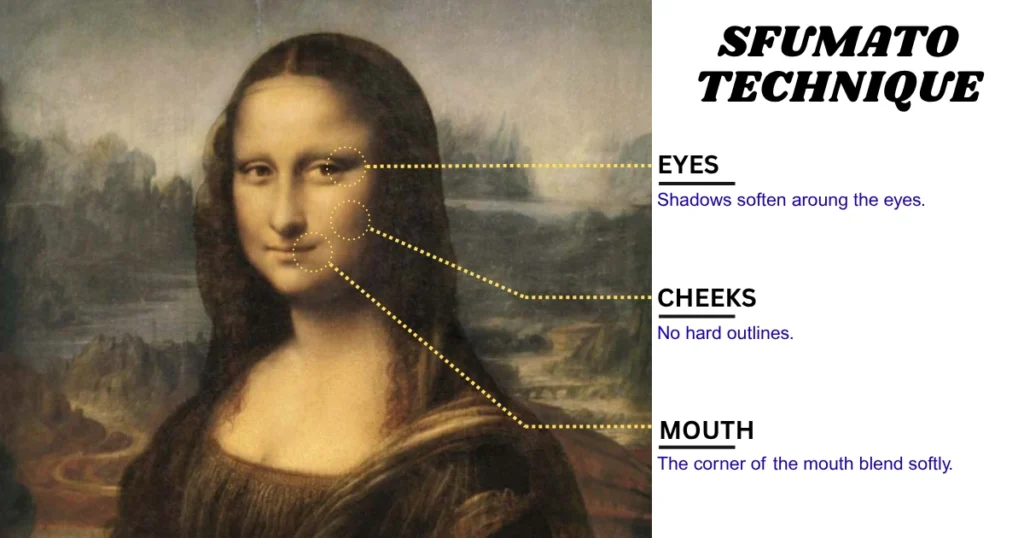
Leonardo da Vinci sfumato is the soft, smoky blending technique that gives his paintings their almost breathing quality. It's the reason the Mona Lisa's smile seems to shift depending on where you stand, and why the shadows in his work feel alive rather than drawn.
Understanding sfumato matters because it sits at the exact point where science and art meet. Leonardo studied optics, anatomy, and atmosphere, then used that research to make paint behave like real light, which is part of why his work still feels startlingly modern five centuries later.
Painters before him were mostly working from convention, repeating formulas for how a face or a landscape should be built. Leonardo instead treated his studio like a laboratory, and the paintings that emerged from it still puzzle art historians and delight ordinary visitors in equal measure.
For anyone planning a trip through Italy or France, recognizing sfumato transforms a quick glance at a famous painting into a genuine "how did he do that" moment in front of the canvas. It's the difference between walking past the Mona Lisa in a crowd and actually understanding why she's stopped people in their tracks for five hundred years.
This post is all about Leonardo da Vinci sfumato, what it means, how he built it, why it made him famous, and where you can still see it with your own eyes.
What Is Leonardo da Vinci Sfumato Technique?
Leonardo da Vinci sfumato is a painting technique that blends colors and tones so gradually there are no visible lines or edges. The word comes from the Italian "sfumare," meaning "to fade like smoke." Leonardo used it to soften transitions between light and shadow, creating depth and a lifelike sense of atmosphere in works like the Mona Lisa.
How Did Leonardo da Vinci Create Sfumato?
Sfumato didn't appear overnight, and it definitely wasn't a happy accident. It grew out of decades of Leonardo's obsessive study of how humans actually see the world, and how light behaves when it touches a surface.
By the time he painted the Mona Lisa, he had already spent years dissecting cadavers to understand muscle and bone, and studying how mist and distance change the color of a mountain range. Sfumato is really the product of all that research meeting a paintbrush.
His Study of Light and Optics
Leonardo filled notebooks with observations on optics and the human eye long before he applied any of it to canvas. He noticed that edges in nature are rarely crisp. Distance, air, and light soften them, and even up close, a shadow rarely has a hard boundary.
He treated painting like a science experiment, testing how far he could dissolve a line before a shape lost its form entirely. That research became the foundation of everything sfumato would later achieve, and it's a big part of why art historians consider him as much a scientist as a painter.
The Layering Process
Technically, sfumato relied on extremely thin, translucent layers of oil paint, sometimes only a few microns thick, applied one over another and left to dry between coats. Instead of blending wet paint with a brush as many painters do today, Leonardo built up tone gradually, almost like layering tinted glass over a photograph.
Conservators studying his panels with infrared and X-ray imaging have found dozens of these glazes stacked on top of each other in a single face, some so thin they're barely visible even under magnification. This patience is part of why so few of his paintings survive. He simply couldn't work fast, and many pieces were left unfinished.
How Does Sfumato Work in Practice?
In practice, sfumato works by removing the boundary the eye normally relies on to separate one shape from another. Where a typical painter draws a line to mark where a cheek ends and a shadow begins, Leonardo let one tone dissolve into the next over a series of barely perceptible steps.
The brain has nothing firm to grab onto, so it interprets the transition as depth and volume rather than a flat edge. This is also why sfumato photographs so poorly. A camera flattens the layers that give the technique its effect, which is exactly why standing in front of the real canvas matters so much.
Why Was Sfumato Revolutionary?
Before Leonardo, most Renaissance painters relied on defined outlines, a style called disegno, to give figures structure and clarity. It's how Botticelli's figures get their crisp, almost sculptural quality.
Sfumato broke that rule entirely, and audiences had never seen anything like it. Contemporaries reportedly struggled to describe what made Leonardo's faces feel so different, because the answer wasn't a new subject or a new color; it was the total absence of something they were used to seeing: the line itself.
How Did Leonardo Use Sfumato in the Mona Lisa?
In the Mona Lisa, Leonardo softened the corners of her mouth and eyes rather than defining them with hard lines. Because there's no crisp edge to lock onto, the human brain fills in the gap slightly differently depending on viewing angle and even whether you're looking at her directly or from the corner of your eye. That built-in ambiguity is a large part of why viewers have debated her expression for over five hundred years.
Why Does Sfumato Make the Mona Lisa Look So Real?
Skin, unlike stone or fabric, has no hard edges. It curves, catches light unevenly, and shifts in tone gradually across a cheek or a jawline. Sfumato mimics exactly that behavior, which is why the Mona Lisa's face reads as living tissue rather than painted surface, even from a distance behind glass.
Sfumato vs Chiaroscuro
People often confuse sfumato with chiaroscuro, and the two are related but not the same, as shown in the table below:
| Feature | Sfumato | Chiaroscuro |
|---|---|---|
| Main technique | Soft, gradual transitions between light and shadow | Strong contrast between light and dark |
| Visual effect | Hazy, blended, atmospheric | Dramatic, bold, three-dimensional |
| Edges | Softened or almost invisible | More clearly defined |
| Purpose | Creates subtle realism, depth, and natural transitions | Creates volume, depth, and dramatic emphasis |
| Famous association | Leonardo da Vinci | Many Renaissance and Baroque artists, especially Caravaggio |
| Key difference | Focuses on how light gradually becomes shadow | Focuses on the contrast between light and shadow |
| Leonardo's contribution | Achieved an exceptional level of subtlety that made sfumato closely associated with his work | Used chiaroscuro alongside other techniques, but did not invent it |
Sfumato's Influence on Later Artists
Sfumato reshaped how younger painters approached the human face. Raphael, who studied briefly alongside Leonardo's circle in Florence, softened his own edges after seeing the technique in person.
Correggio pushed the haze even further a generation later. Centuries later, portrait painters and even early photographers adopted the same underlying logic: soften the transition, and the subject feels more alive. Few single techniques have echoed this far through art history.
Which Leonardo Paintings Use Sfumato?
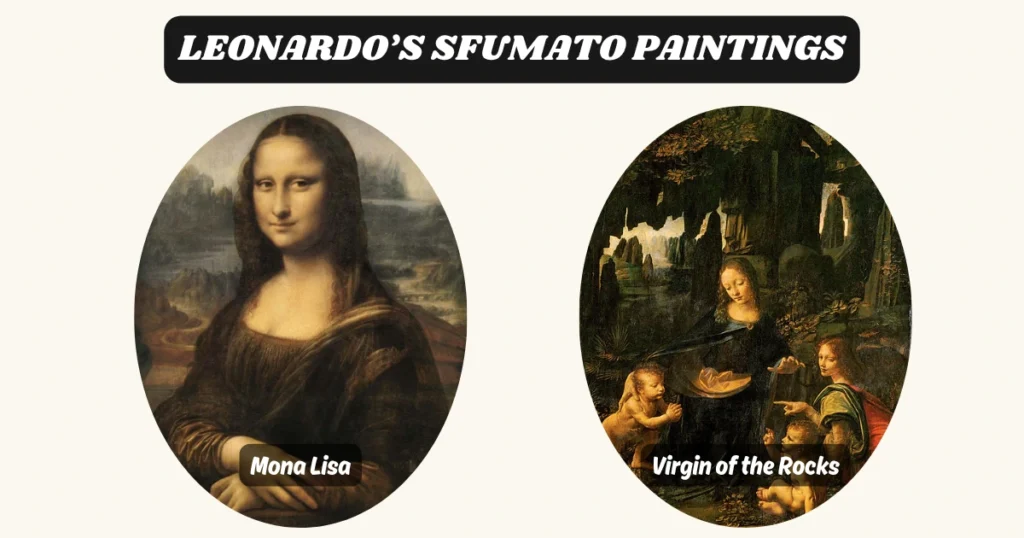
The Mona Lisa gets most of the attention, but sfumato appears in several of Leonardo's major works, each using the technique for a slightly different effect.
Mona Lisa
The most famous example, where sfumato shapes a single, ambiguous expression that has fueled centuries of interpretation. Leonardo is believed to have worked on the painting for years, possibly carrying it with him until his death, continuing to refine those same soft transitions rather than treating the piece as finished.
Virgin of the Rocks
Here sfumato does something different. Rather than shaping one face, it builds an entire rocky, mist-filled landscape that recedes convincingly into the distance.
The figures seem to exist in real, breathable air rather than floating on a flat backdrop, which was a genuine shock to audiences accustomed to flatter Gothic and early Renaissance backgrounds. Two versions of the painting survive, one in Paris and one in London, and comparing them side by side is one of the more rewarding ways to see the technique evolve.
For travelers curious to trace that comparison in person, a guided Louvre skip-the-line tour with an art historian is one practical way to see the brushwork up close without losing hours in the entry queue.
Other Sfumato-Influenced Works
Traces of the technique also appear in Leonardo's Lady with an Ermine, where the soft modeling around the sitter's hand is often cited as one of his most technically accomplished passages, and in later portrait studies from his workshop, where students attempted, with mixed success, to reproduce his layering method. None quite matched the patience it required, which is part of why so few true sfumato paintings exist outside Leonardo's own hand.
Where Can You See Leonardo's Sfumato Today?
Reproductions flatten sfumato almost completely, since the technique depends on subtle physical layers of paint reacting to the real light in the room. A poster or a phone screen can only approximate that. Seeing it in person, under gallery lighting, from a few different angles, is genuinely a different experience.
The Louvre, Paris
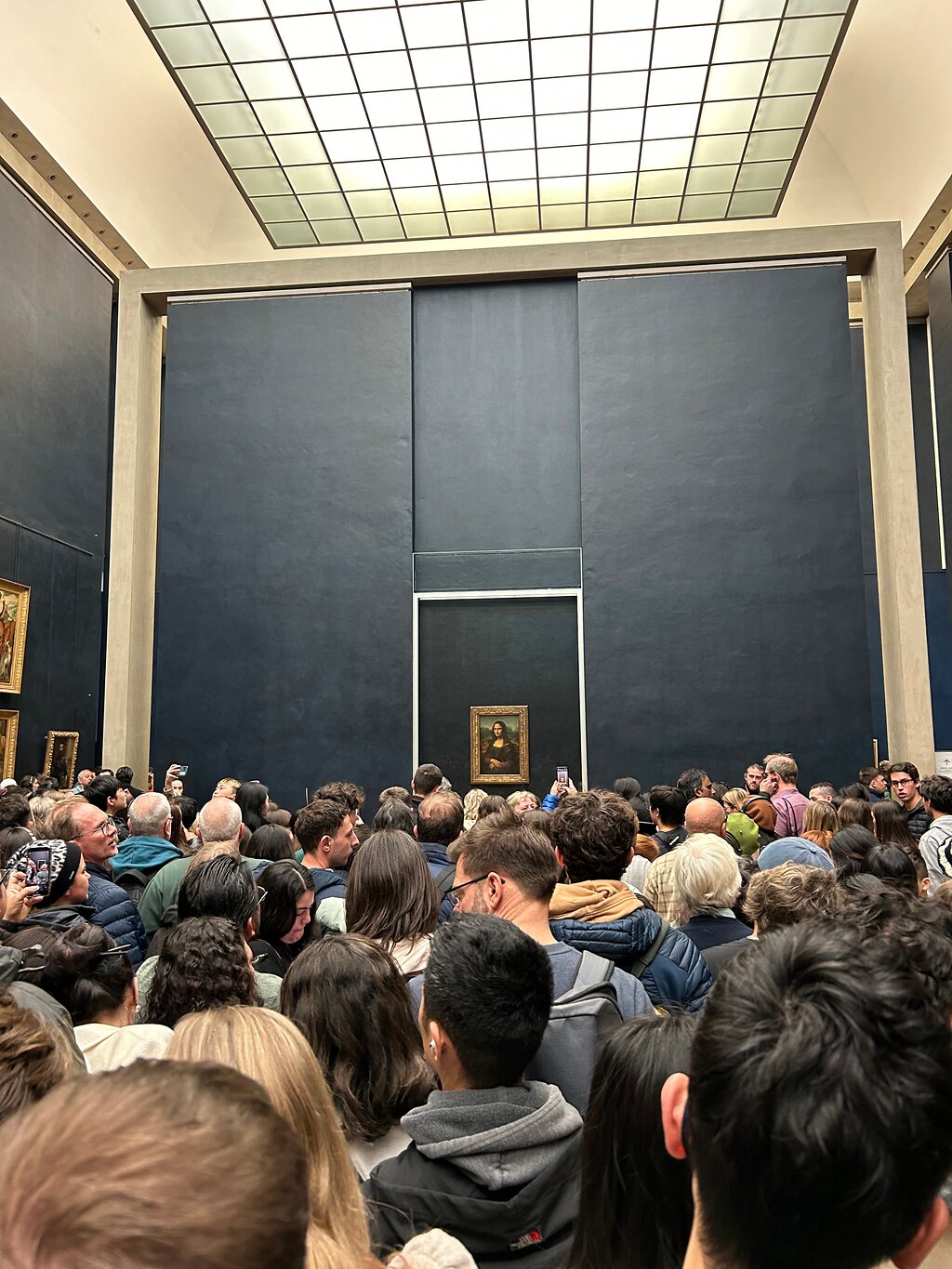
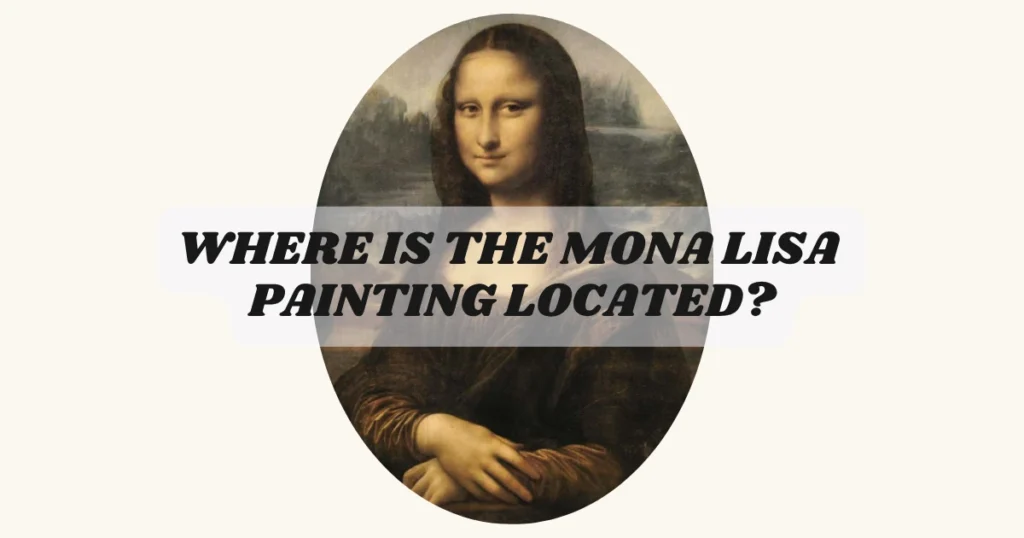
The Mona Lisa hangs in the Louvre's Salle des États, protected behind glass and viewed from a distance, but the soft transitions around her eyes and mouth are still visible if you know what you're looking for and take a moment to look past the crowd.
The Louvre also holds Leonardo's version of the Virgin of the Rocks just a short walk away, allowing visitors to study two major sfumato works in a single visit.
Ready to Plan Your Visit?
A small-group guided walk through the Louvre's Italian Renaissance galleries, tracing Leonardo's technique alongside his contemporaries
Check Louvre Tour AvailabilityNational Gallery, London
London's National Gallery holds the second version of the Virgin of the Rocks, painted with even more refined atmospheric blending than the Louvre's copy. Scholars still debate how much of this second version Leonardo painted himself versus his workshop, which only adds to the appeal of seeing it in person and forming your own impression.
Standing between reproductions of both versions, even just on a phone, makes the evolution of Leonardo's technique noticeably clearer.
Other Collections
Smaller sfumato-influenced works and studies attributed to Leonardo's workshop appear in collections including the Uffizi in Florence and the Ambrosiana in Milan, offering a quieter, less crowded way to study the technique's finer details without the density of the Louvre's crowds.
Experience Leonardo da Vinci's Sfumato in Person
Knowing how sfumato works changes the way a museum visit feels. Instead of glancing at a famous painting and moving on, you start noticing where the edges disappear, where the shadow seems to breathe, and why the whole surface feels unusually soft compared to everything hanging nearby.
The Louvre remains the essential stop, since it houses both the Mona Lisa and Leonardo's own Virgin of the Rocks under one roof, but the effect is strongest when someone can point out the transitions in real time rather than leaving you to search for them in a crowded room while a hundred other visitors jostle for the same view.
What you're actually looking for is subtle: the almost invisible seam where the shadow beside her nose fades into her cheek, or the way the rocky background in the Virgin of the Rocks loses definition the further it recedes. These are easy to miss on your own, especially in a room as busy as the Salle des États, but once someone points them out, they're impossible to unsee.
A well-timed, well-guided visit turns that search into something far more rewarding, and it's worth planning ahead given how quickly Louvre time slots fill, particularly during peak travel months.
Exploring Leonardo da Vinci in Paris
Paris holds the single most visited work of Leonardo's sfumato technique, but it's only one stop on a much larger trail. His scientific notebooks, engineering sketches, and other paintings are scattered across Italy and France, each city adding a different layer to the development of his ideas over a lifetime.
Leonardo himself moved through several of these cities, and his style visibly changed with each new patron and each new set of influences.
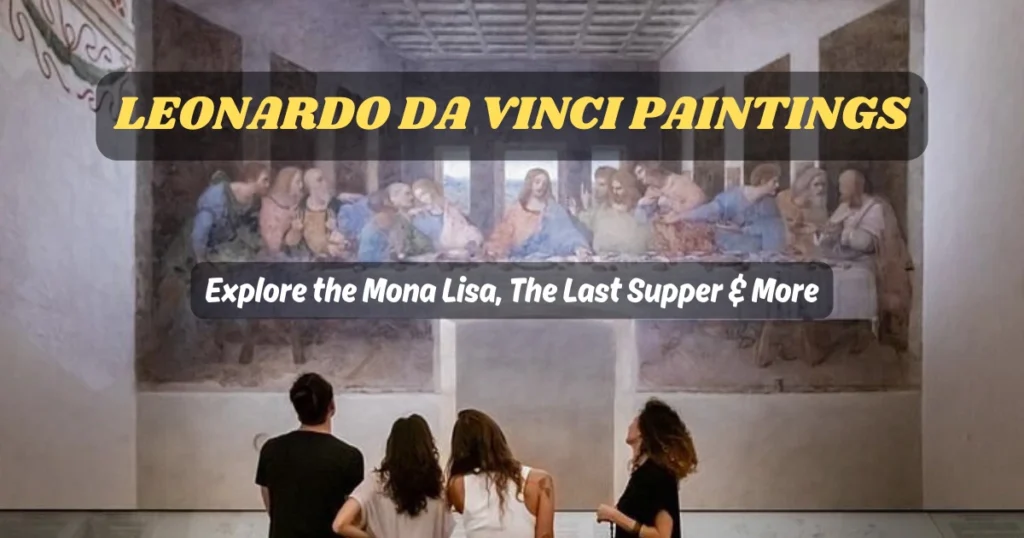
Travelers following that trail often continue on to Milan, where Leonardo spent nearly two decades in the Sforza court and painted the Last Supper, then to Florence, where he trained under Verrocchio and painted some of his earliest works.
From there, the trail often extends to Venice, where his engineering studies took on new relevance, and Rome, where his later years and influence continued to spread among a new generation of artists. Together with Paris, these five cities form the essential map of Leonardo's life and legacy, and visiting even two or three of them turns a single painting into a much fuller story.
Final Thoughts
This post was all about Leonardo da Vinci's sfumato, the quiet, patient technique that turned flat paint into something that seems to breathe. It's a reminder that Leonardo's genius wasn't only in imagination; it was in relentless observation, applied layer by layer until the line between science and art disappeared entirely.
That kind of innovation is exactly why the Renaissance still feels startling centuries later, and why art historians continue to study his methods with modern imaging technology today.
Seeing sfumato in a book or on a screen tells you what it looks like. Standing in front of the Mona Lisa or the Virgin of the Rocks, watching the shadows shift as you move around the room, tells you why it mattered enough to change art history.
Related Post You May Like
Disclosure: This page may contain affiliate links. If you book through them, we may earn a small commission at no extra cost to you. Learn more.
Free Leonardo Milan Travel Guide
Plan Your Leonardo Trip in Milan
A premium mini guidebook for smarter Milan planning, including the best ticket strategy, Leonardo map, and practical visitor advice.
Get the Free Guide
Download the guide and receive practical Milan planning tips by email.
Download the Free Guide >> Leonardo Bianchi is the founder of Leonardo da Vinci Inventions & Experiences, a cultural travel guide helping visitors explore Leonardo da Vinci’s art, inventions, and legacy across Italy and Paris.