
(Last updated: Sep 2026)
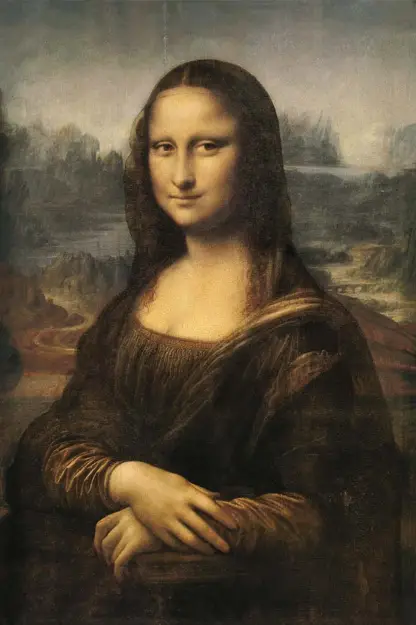
Where is the Mona Lisa painting located? Leonardo da Vinci's masterpiece hangs today inside the Louvre Museum in Paris, sealed behind protective glass in a room built specifically to hold it.
For more than 500 years, this modest wooden panel has outgrown its own frame, becoming a symbol of art itself. Its subject's quiet half-smile, Leonardo's revolutionary painting technique, and a dramatic twentieth-century theft all combined to turn a private Renaissance portrait into a global icon.
The painting has survived a royal collection, a revolution, a world war, an acid attack, and a theft that made international headlines, and it has come out the other side more famous each time.
Knowing where the Mona Lisa is located and understanding the story behind her journey there turns a quick glance through a crowd into a genuinely rewarding encounter with art history rather than a rushed photo taken from thirty feet away.
This post is all about where the Mona Lisa painting is located, how it got there, and what makes seeing it in person so different from seeing it in photos.
Where Is the Mona Lisa Painting Located?
The Mona Lisa painting is located in the Louvre Museum in Paris, France, inside the Salle des États. Leonardo da Vinci painted it between roughly 1503 and 1519, and the French state has owned it since the late eighteenth century. It remains the Louvre's single most visited artwork, seen by millions of travelers every year.
The Artistic Genius Behind the Mona Lisa
Who Painted the Mona Lisa
Leonardo da Vinci painted the Mona Lisa, working on it on and off for roughly sixteen years.
He was never only a painter. Leonardo was an engineer, an anatomist, a botanist, and an inventor, and all of that curiosity shows up in the painting. He studied how light falls across skin, how muscles shift under a smile, and how haze softens a distant landscape.
That research produced sfumato, his signature technique of blending tones so gradually that outlines seem to dissolve into shadow. It is the reason the Mona Lisa's expression still looks slightly different depending on where you stand.
Unlike most commissioned portraits of the period, Leonardo da Vinci's Mona Lisa painting wasn't handed over and forgotten. He carried it with him for years, reworking the glazes in thin, translucent layers until the transitions between light and shadow became almost imperceptible.
That obsessive layering is part of why conservators still study the panel today, and why it took Leonardo far longer to finish than most portraits of its size.
Where Was the Mona Lisa Painted
Leonardo most likely began the portrait in Florence around 1503, while living and working in the city that shaped his early career. He kept refining it as he moved between Florence and Milan, and continued adjusting it after 1516, when King Francis I invited him to France.
Leonardo spent his final years at the Clos Lucé manor near Amboise, and many historians believe he was still making small changes to the painting there. So while the Mona Lisa painting's history begins in Italy, its final brushstrokes belong to France, the country where it has remained ever since.
After Leonardo's death in 1519, King Francis I acquired the painting for the French royal collection, which is why it never returned to Italy. That single decision, made five centuries ago, is essentially why the Mona Lisa is located in Paris rather than Florence or Milan today.
Is Mona Lisa a Real Person
Yes. Most art historians identify the sitter as Lisa Gherardini, the wife of a Florentine silk merchant named Francesco del Giocondo.
That marriage is where two of the painting's names come from: "Mona Lisa" is a shortened, respectful form of "my lady Lisa," while the Italian title "La Gioconda" nods to her married name, Lisa del Giocondo.
Leonardo appears to have kept the unfinished portrait with him for years rather than delivering it to the family who commissioned it, which is part of why it eventually ended up in a royal, and later national, collection instead of a private home.
A small number of alternative theories exist, suggesting the portrait might blend Lisa Gherardini's likeness with idealized features or even a degree of self-portraiture, but these remain minority views.
The historical record, including tax documents and family correspondence from Renaissance Florence, still points most convincingly to Lisa del Giocondo as the woman behind the world's most famous smile.

Why the Mona Lisa Became Famous
When Was the Mona Lisa Stolen
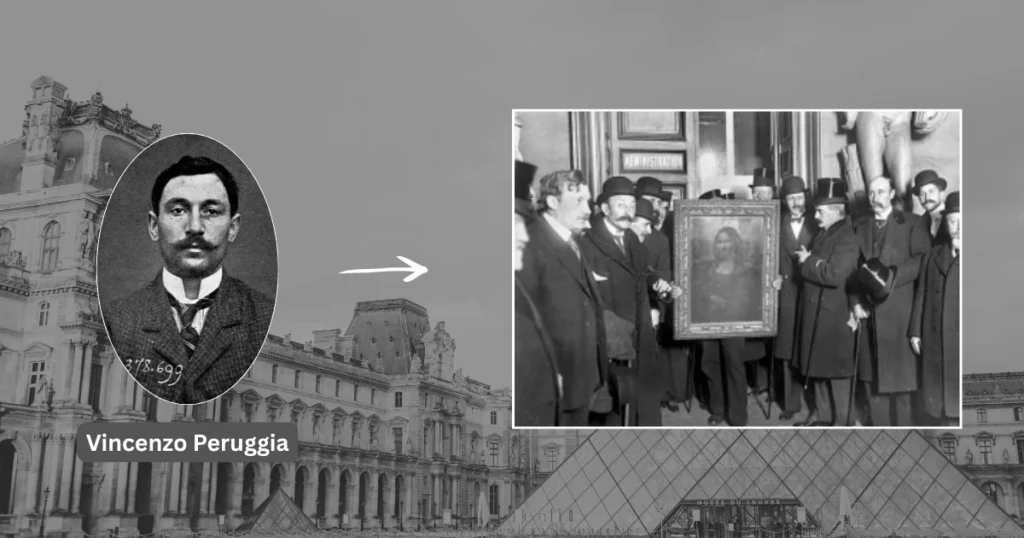
The Mona Lisa was stolen on August 21, 1911, by Vincenzo Peruggia, an Italian handyman who had worked inside the Louvre. He hid overnight inside the museum, lifted the painting off the wall, and simply walked out with it under his coat.
The theft made front-page news worldwide, and the empty space on the museum wall drew more visitors than the painting itself ever had.
Peruggia kept the Mona Lisa hidden in his Paris apartment for two years before he was caught trying to sell it in Florence. When it returned to the Louvre in 1914, it came back as one of the most famous objects on the planet.
The story behind when the Mona Lisa was stolen still shapes how it's displayed today. The current glass enclosure, controlled lighting, and roped viewing distance all trace back, in part, to the lessons the Louvre learned from 1911.
What began as a security failure ended up rewriting how the world's most valuable paintings are protected.
Why Is the Mona Lisa So Expensive
In 1962, the Mona Lisa was insured for a museum tour at a value of roughly $100 million, an amount that would be closer to $900 million today.
The Louvre ultimately decided the painting was too valuable and too fragile to insure at all, which is one reason it almost never travels. For comparison, Leonardo's Salvator Mundi sold at auction in 2017 for around $450 million, and it is still considered less historically significant than the Mona Lisa.
Rarity, condition, and unmatched cultural weight are what make an original Mona Lisa painting effectively priceless. There is essentially no way to put a modern price tag on it, since the Louvre has made clear it will never be sold, and no comparable Leonardo panel of similar historical significance has ever come to market to set a benchmark.
Mona Lisa Painting Size and Details
One of the biggest surprises for first-time visitors is the Mona Lisa painting size. The portrait measures only about 77 by 53 centimeters, roughly the size of a large cereal box, and it is painted in oil on a poplar wood panel rather than canvas.
Leonardo left the sitter without visible eyebrows or eyelashes, a detail some historians attribute to fading pigment and others to shifting beauty standards of the period. The soft, smoky transitions around her eyes and mouth are what give the portrait its famously shifting expression.
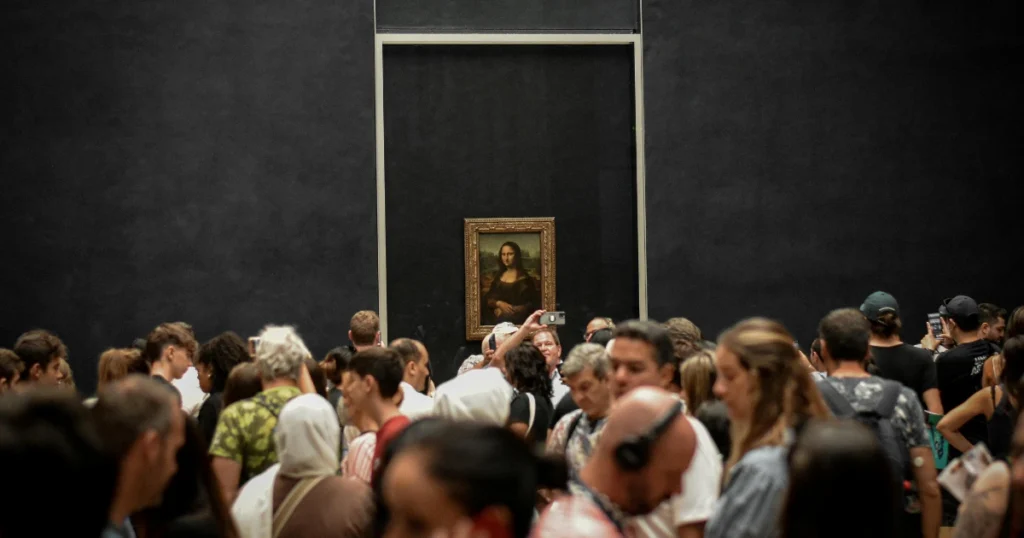
That modest scale is part of what surprises visitors most. Many arrive expecting a wall-sized centerpiece and instead find a portrait roughly the size of a laptop screen, hung at a distance for preservation, with a crowd several rows deep between them and the panel.
Understanding the real Mona Lisa painting size ahead of time helps set expectations and, in a strange way, makes the encounter feel more intimate rather than disappointing.
Where to See the Mona Lisa Today
Where Is the Louvre Museum
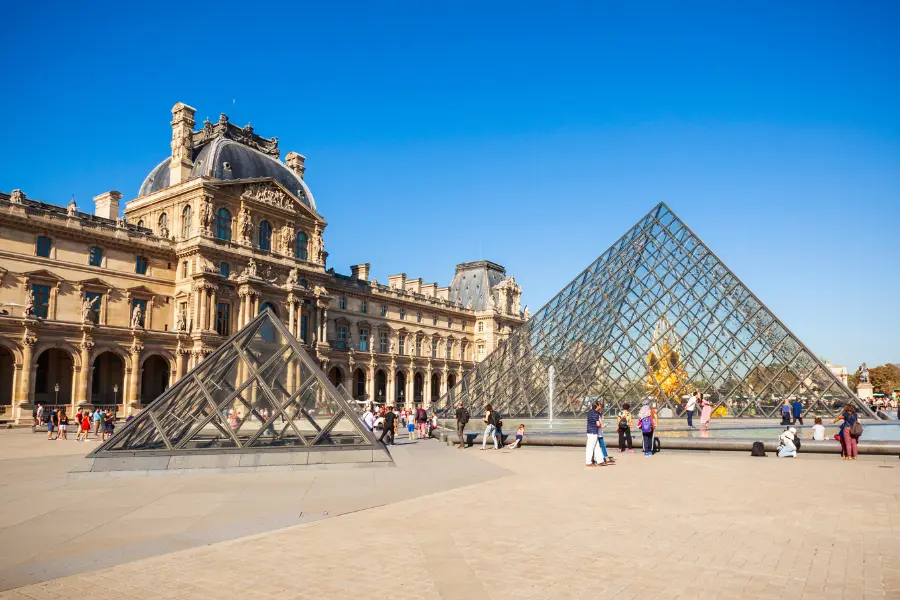
The Louvre Museum sits on the Right Bank of the Seine River in the first arrondissement of Paris, in a former royal palace that once housed French kings. Its glass Pyramid entrance, added in the 1980s, has become almost as recognizable as the artworks inside.
As the largest art museum in the world, the Louvre holds work spanning thousands of years, but visitor traffic consistently peaks in one place: the room holding the Mona Lisa.
Understanding where the Louvre Museum sits within Paris, and roughly how large it is, helps explain why so many visitors underestimate how much walking, and how much waiting, a Mona Lisa visit actually involves.
Because that single room can get crowded fast, many travelers plan their Louvre visit around a timed-entry Louvre ticket with skip-the-line access, which simply removes the guesswork of when the queues will be shortest.
How to See the Original Mona Lisa Painting
To see the original Mona Lisa painting, you'll need a ticket into the Louvre itself, then a short walk through the Denon Wing toward the Salle des États. The painting is displayed behind reinforced, climate-controlled glass, set back from a roped barrier that keeps the crowd at a respectful distance.
Visitors often note that the room feels smaller and busier than expected, since so many people are trying to see one relatively compact painting at once. Arriving early in the day, or later in the afternoon, tends to make the experience noticeably calmer.
Other Leonardo Works Worth Seeking Out
The Mona Lisa is famous, but it's far from Leonardo's only surviving masterpiece.
Lady with an Ermine, one of his most striking portraits, hangs in the National Museum in Kraków, Poland. Salvator Mundi, a depiction of Christ that became the most expensive painting ever sold at auction, has a far more uncertain public location today.
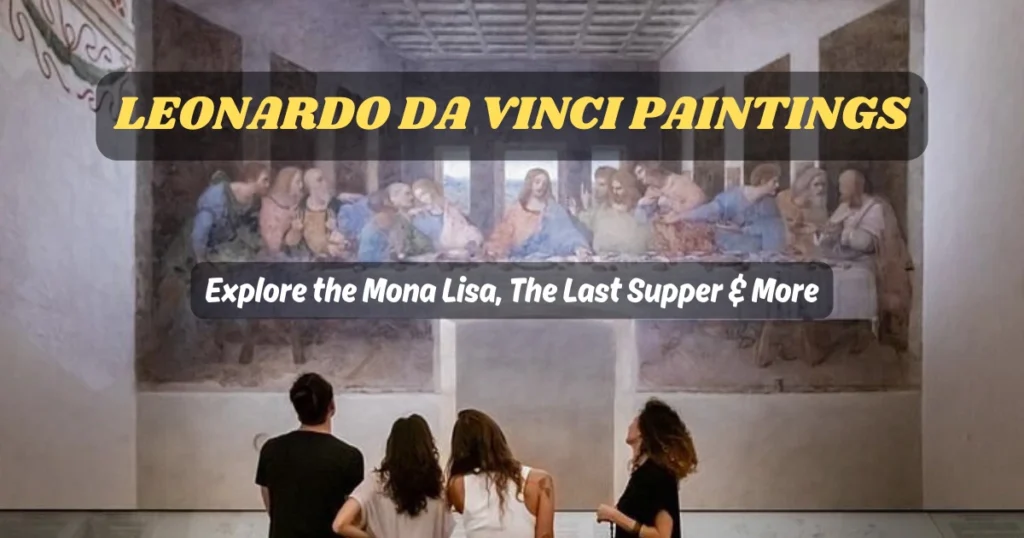
And in Milan, Leonardo's mural The Last Supper still covers the wall of a monastery refectory, painted directly onto plaster rather than a movable panel. Seeing any of these works in person adds context to why the Mona Lisa, despite its small size, became the artist's defining achievement.
Each surviving piece shows a different side of Leonardo: the court portraitist in Lady with an Ermine, the religious painter in Salvator Mundi, the muralist in The Last Supper, but the Mona Lisa is the one where all of those skills converge, which is a large part of why it outgrew every other work in his catalog.
Exploring the Mona Lisa in Paris
Reading about the Mona Lisa is one thing. Standing in the Salle des États, watching the crowd shift and the light change across that famous smile, is an entirely different experience.
The Louvre rewards a bit of planning, since the museum is enormous and the Mona Lisa is only one stop among thousands of works.
Many first-time visitors pair their trip through the Denon Wing with a broader route past French and Italian masterpieces, using the Mona Lisa as an anchor point for the rest of the visit.
Ready to Plan Your Visit?
A small-group, expert-led walk through the Louvre's highlights, timed to reach the Mona Lisa without the longest queues
Check Louvre Tour AvailabilityWhether it's a self-guided visit with a timed ticket or a guided walk through the galleries, seeing the Mona Lisa in person remains one of the most talked-about moments of any trip to Paris, precisely because no photograph fully captures the texture, scale, or quiet presence of the actual panel.
Exploring Leonardo da Vinci in Paris and Beyond
Paris holds the Mona Lisa, but Leonardo's story stretches across several Italian and European cities, and following it can turn a single museum visit into a much richer trip. In Florence, you can walk the streets where Leonardo trained and where the Mona Lisa's story likely began.
In Milan, The Last Supper and the Sforza court fill in the middle of his career, while Venice's collections add further context on Renaissance art more broadly. Rome connects Leonardo to the wider circle of artists working under papal patronage during the same era.
Together, Milan, Florence, Venice, Rome, and Paris form a loose map of Leonardo's life and legacy. Travelers building a Renaissance-focused itinerary often use the Mona Lisa in Paris as one stop among several, pairing it with Leonardo sites in Italy to understand how one artist's ideas moved across an entire continent.
Final Thoughts
This post was all about where the Mona Lisa painting is located, and why that small panel in the Louvre carries so much historical weight.
Leonardo's blend of scientific curiosity and artistic patience produced a portrait that still feels unfinished in the best sense, always slightly out of reach, always inviting another look.
Five centuries after it was started, it remains a shorthand for the entire Renaissance, a period when art, science, and observation were treated as parts of the same pursuit.
No reproduction quite replicates standing in front of the original, watching the sfumato shift as you move, surrounded by a room full of people having the same reaction you are.
That gap between seeing a photo and seeing the painting is exactly why so many travelers plan their trip to Paris around it, and why a visit to the Louvre still feels like a genuine encounter with history rather than just another stop on an itinerary.
Related Post You May Like


Disclosure: This page may contain affiliate links. If you book through them, we may earn a small commission at no extra cost to you. Learn more.
Free Leonardo Milan Travel Guide
Plan Your Leonardo Trip in Milan
A premium mini guidebook for smarter Milan planning, including the best ticket strategy, Leonardo map, and practical visitor advice.
Get the Free Guide
Download the guide and receive practical Milan planning tips by email.
Download the Free Guide >> Leonardo Bianchi is the founder of Leonardo da Vinci Inventions & Experiences, a cultural travel guide helping visitors explore Leonardo da Vinci’s art, inventions, and legacy across Italy and Paris.