
(Last updated: Sep 2026)
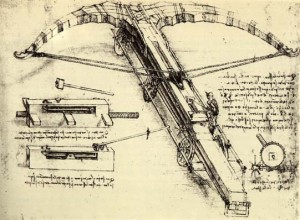
The Leonardo da Vinci crossbow is one of the most astonishing weapons ever imagined on paper. Long before tanks, machine guns, or automatic rifles existed, a single Renaissance artist sketched a war machine so large it needed wheels just to move.
This wasn't a toy or a hobbyist's doodle — it was a serious military proposal, drawn with the same precision Leonardo used for his anatomical studies and flying machines.
Understanding this design matters because it reveals a side of Leonardo that most people never see in art museums. He wasn't only a painter of quiet smiles and holy suppers — he was an engineer obsessed with mechanics, force, and the physics of destruction.
Seeing his war machines in person, whether as full-scale models or original manuscript pages, adds a completely different dimension to a Renaissance trip. It shifts Leonardo from "the man who painted the Mona Lisa" to "the man who tried to reinvent warfare."
This post is all about the Leonardo da Vinci crossbow — how it was designed, how it was supposed to work, and where you can still encounter it today.
What is the Leonardo da Vinci crossbow?
The Leonardo da Vinci crossbow, also called the giant crossbow or automatic crossbow, is a design for an enormous siege weapon sketched by Leonardo around the early 1480s. In his drawings, it was estimated at 24 meters wide and combined a massive bow arm, a wheeled platform, and a hammer-triggered release mechanism. It was never built in his lifetime.
The Engineering Idea Behind the Leonardo da Vinci Crossbow
A Renaissance Vision for Total War
Leonardo sketched his giant crossbow ballista while trying to win the patronage of Ludovico Sforza, the Duke of Milan. In a now-famous letter, Leonardo listed his skills mostly as a military engineer, not a painter — he described bridges, cannons, armored vehicles, and siege weapons long before he mentioned art.
The da Vinci crossbow fits perfectly into this list. It was meant to demonstrate that he could design weapons capable of frightening an enemy army before a single shot was fired.
Scaling Up: From Hand Weapon to Siege Machine
Regular crossbows were personal weapons, small enough for a single soldier to carry and aim. Leonardo's idea was radically different — take the same basic mechanics and scale them up to the size of a small building.
The design for an enormous crossbow appears in the Codex Atlanticus, a bound collection of Leonardo's technical drawings now held in Milan. On that page, a tiny human figure stands next to the machine, deliberately drawn in to show just how massive the weapon truly was.
Inspiration from Ancient Siege Weapons
Leonardo didn't invent the concept of a giant crossbow ballista from nothing. Ancient Greek and Roman armies had used large torsion-powered siege engines for centuries.
What made Leonardo's engineering inventions different was the level of mechanical detail — gear systems, tension calculations, and mobility features that ancient engineers never documented with such precision. This is part of why historians still study the drawing today: it's less a weapon blueprint and more a masterclass in mechanical thinking.
Many travelers who study Leonardo's technical drawings become curious to see full-scale reconstructions in person, and a guided walking tour through Milan's Leonardo-related sites often offers exactly the kind of hands-on context that a book or photo simply can't capture.
How the Leonardo da Vinci Crossbow Works
The Massive Bow Arms and Tension System
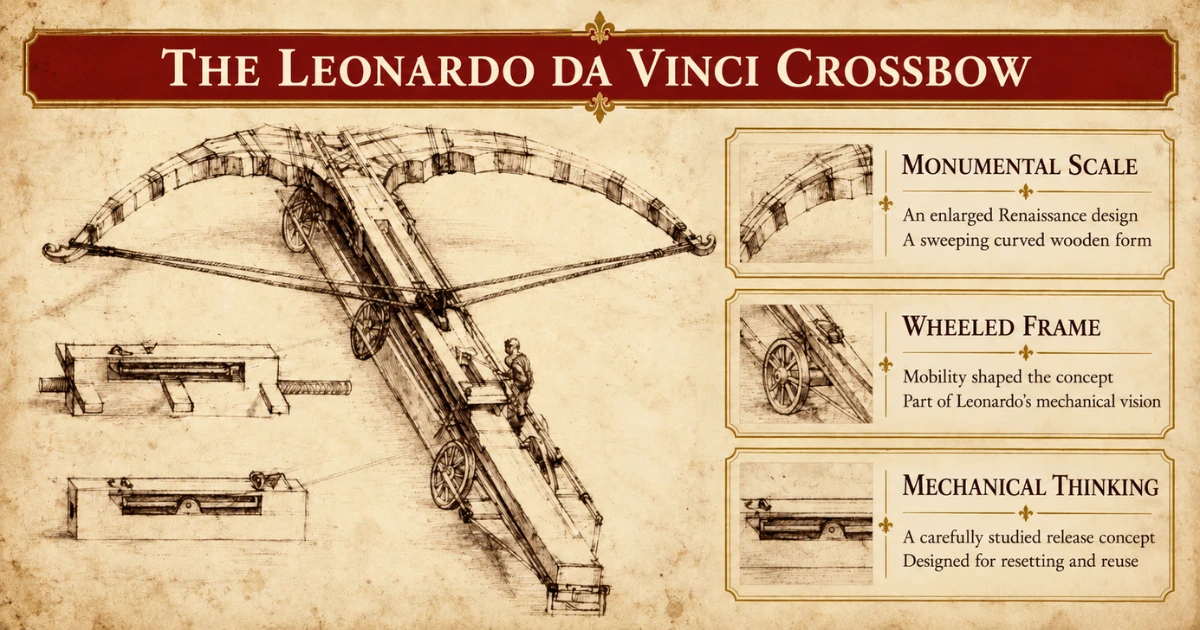
At the heart of the design sits an enormous curved bow arm, built from flexible wood, designed to store an extraordinary amount of tension energy. When drawn back, the arms would bend inward, storing force the way a much smaller crossbow does — just at a scale capable of launching massive projectiles or stones toward enemy fortifications.
The Wheeled Platform and Mobility
Unlike fixed siege towers, Leonardo's giant crossbow sat on a wheeled frame. This detail is what separates it from a simple oversized weapon and turns it into a genuine machine of war. Soldiers could theoretically reposition it during a siege, something static ballistas of the ancient world struggled to do.
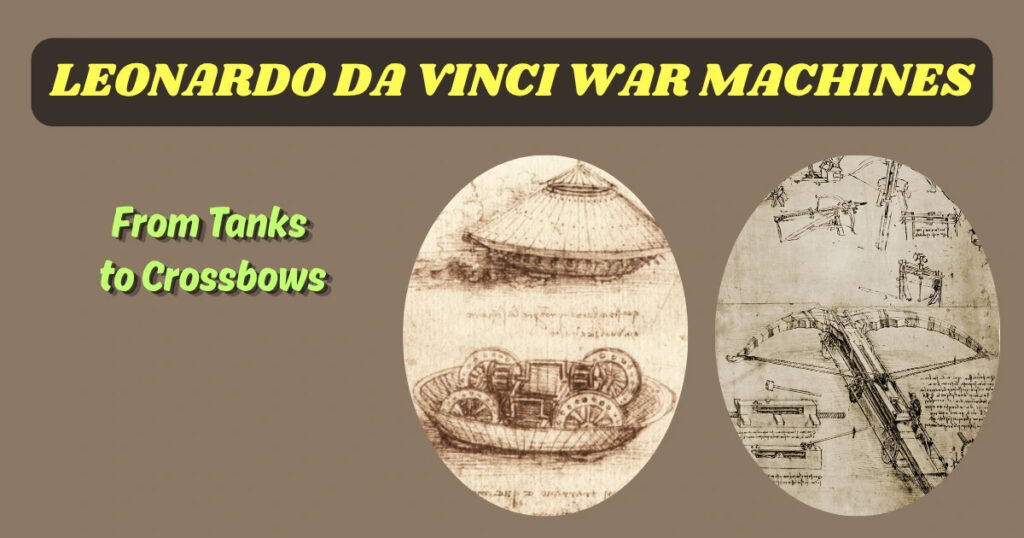
Some historians even draw a loose line between this mobility concept and Leonardo's other famous project, the Leonardo da Vinci tank — another wheeled war machine designed around the same period, built to protect soldiers while they advanced.
The Trigger Mechanism
Perhaps the cleverest part of the design is the trigger. A single operator would strike a large mallet against a release mechanism, which then freed the enormous tension stored in the bow arms.
Because the entire mechanism could be reset and reloaded, some researchers have loosely compared its rapid-reload concept to Leonardo's other invention, a multi-barreled rapid-fire crossbow capable of firing several bolts before requiring manual reloading.
Neither of these was quite a "Leonardo da Vinci machine gun" in the modern sense, but both show the same goal: increasing the rate and volume of firepower on a Renaissance battlefield.
Discover Leonardo War Machines in Milan
See full-scale reconstructions of Leonardo’s inventions and discover the engineering ideas behind his designs
Explore Leonardo Crossbow DesignsLeonardo's War Machines, Up Close
A guided visit through Milan's Leonardo-focused exhibits brings the giant crossbow's mechanics to life in three dimensions.
- Full-scale working models built from Leonardo's original sketches
- Context on his tank, rapid-fire crossbow, and other war machines
- Interactive displays suited to visitors of any age
Visitors often note how much clearer the engineering becomes once they see the scale in person. View available Milan experiences
Where to See the Leonardo da Vinci Crossbow Today
The Codex Atlanticus in Milan
The original sketch of the giant crossbow is preserved in the Codex Atlanticus, housed at the Biblioteca Ambrosiana in Milan. Pages from the codex are rotated on display to protect the fragile paper, so what's visible changes throughout the year.
Still, being in the same room as the actual document Leonardo drew on is a very different experience than seeing it printed in a textbook.
Leonardo3 Museum's Physical Reconstructions
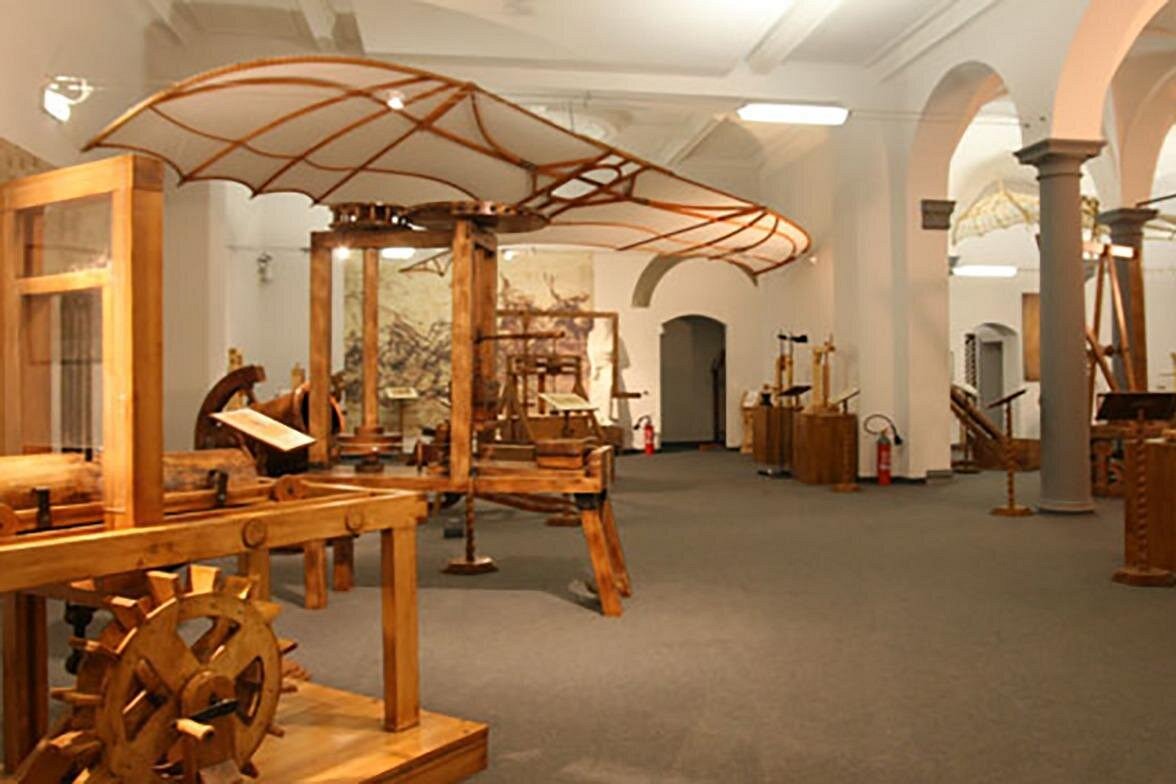
For a clearer sense of how the machine would actually have functioned, the Leonardo3 Museum in Milan has built full-scale physical reconstructions based directly on his notebook measurements.
Standing next to a real wooden model — rather than just a page of sketches — makes the sheer scale of the design click in a way that no photograph can replicate.
Experiencing Leonardo's War Machines in Milan
Reading about the Leonardo da Vinci crossbow machine is one thing. Standing in front of a full-scale wooden reconstruction, close enough to see the joints, the wheel axles, and the trigger hammer, is another experience entirely.
Milan is where this happens. The city that once hosted Leonardo as a military engineer for Ludovico Sforza now houses the manuscripts, models, and museums that keep this side of his career alive.
A visit typically starts with the Codex Atlanticus pages at the Biblioteca Ambrosiana, then moves on to hands-on reconstructions at Leonardo3, where the crossbow sits alongside his tank, flying machines, and other war designs.
Seeing these pieces side by side helps explain why Leonardo pitched himself to the Duke of Milan primarily as a military engineer rather than a painter — the sheer range of his mechanical thinking becomes obvious once you're standing among the models rather than reading a list of inventions.
Trust in this kind of visit usually comes down to guidance. A knowledgeable local guide can point out details in the mechanism that are easy to miss on your own, and can place the crossbow in the context of the rest of Leonardo's engineering work. Explore Leonardo da Vinci Experiences in Milan
Exploring Leonardo da Vinci in Milan
Milan is only one stop on the broader trail of Leonardo da Vinci's life and work. His engineering inventions were sketched here, but his art and legacy stretch across Italy and into France.
Florence holds the workshop roots of his early training, while Rome and the Vatican connect to the political world in which he later worked. Each city adds a different layer to understanding how his mind moved between art and machinery.
For travelers building a full Leonardo-focused itinerary, it's worth exploring his connections in Milan, Florence, Venice, Rome, and even Paris, where his final years and the later influence of The Last Supper tie into the broader story of the Renaissance.
Final Thoughts
This post was all about the Leonardo da Vinci crossbow, the giant war machine that shows a very different side of a man best known for his paintings. Long before he perfected the expression on the Mona Lisa's face, Leonardo was sketching mobile siege weapons, wheeled tanks, and rapid-fire crossbows meant to reshape Renaissance warfare.
That range is part of what makes Leonardo's genius so hard to categorize. He treated a war machine with the same careful mechanical logic he applied to the human body or a flying wing.
Seeing his sketches — or better yet, a full-scale reconstruction — in person is a reminder that the Renaissance wasn't only about beauty. It was also about invention, force, and the relentless human drive to build something no one had built before.
Related Post You May Like
Disclosure: This page may contain affiliate links. If you book through them, we may earn a small commission at no extra cost to you. Learn more.
Free Leonardo Milan Travel Guide
Plan Your Leonardo Trip in Milan
A premium mini guidebook for smarter Milan planning, including the best ticket strategy, Leonardo map, and practical visitor advice.
Get the Free Guide
Download the guide and receive practical Milan planning tips by email.
Download the Free Guide >> Leonardo Bianchi is the founder of Leonardo da Vinci Inventions & Experiences, a cultural travel guide helping visitors explore Leonardo da Vinci’s art, inventions, and legacy across Italy and Paris.