Salvator Mundi is a masterpiece that has fascinated and puzzled art enthusiasts worldwide. This painting, attributed to Leonardo da Vinci, portrays Christ with his right hand raised in blessing and a crystal orb in his left hand.
Salvator Mundi’s iconic status skyrocketed when it was sold for $450.3 million at Christie’s auction in 2017, becoming the most expensive painting ever sold.
For those questioning the painting’s sky-high price and authenticity, this article will unravel the mystery of its attribution and restoration.
Salvator Mundi’s journey includes its rediscovery, extensive restoration, and controversial sale, which have contributed to its title as the world’s most controversial painting.
You will gain insight into the controversies and history surrounding this enigmatic artwork.
Art historians and enthusiasts alike ponder the symbolism captured in Salvator Mundi. The painting’s eschatological themes and religious iconography provoke discussion on its deeper meanings.
Exploring the historical context and its secrets reveals why Salvator Mundi remains a captivating subject for debate and admiration today.
Historical Overview
Leonardo da Vinci’s Salvator Mundi painting
Leonardo da Vinci’s “Salvator Mundi” is a painting with a rich and complex history. Its journey and the mysteries surrounding its creation and ownership have intrigued historians and art lovers.
Creation and Artist
“Salvator Mundi,” which means “Savior of the World,” is attributed to the legendary artist Leonardo da Vinci.
The painting, created around 1500, depicts Jesus holding a crystal orb, symbolizing his role as a savior. Leonardo’s signature style shines through the detailed rendering of textures and Jesus’s serene expression.
Though Leonardian, debates continue about whether the master himself painted it entirely or if it involved contributions from his workshop, a common practice during the Renaissance.
This painting exemplifies the artist’s talent in capturing divine serenity and depth, making it one of the most debated artworks globally. It has been a subject of extensive analysis and study, highlighting its importance in art history.
Provenance and Ownership
The painting has had a turbulent ownership history, adding to its allure and controversy.
Rediscovered in 2005, “Salvator Mundi” was initially bought at a small auction in New Orleans despite being heavily overpainted and in poor condition.
Art collectors and experts debated its authenticity until it was restored and authenticated as a da Vinci work, significantly increasing its value. In 2017, it made headlines when it sold at auction for a record Salvator Mundi price of $450.3 million, making it the most expensive painting ever sold.
The current owner is believed to be Mohammed bin Salman, the Crown Prince of Saudi Arabia, though its exact location remains uncertain. This ownership history reflects the painting’s complex journey through time and the intrigue it has sparked.
Artistic Significance
Detailed face and soft edges highlight the Salvator Mundi’s artistic significance
The Salvator Mundi painting, attributed to Leonardo da Vinci, holds a unique place in art history for its intricate composition and masterful techniques. Its symbolism and style offer deep insights into the artistic vision and the period during which it was created.
Composition and Subject
The composition of the Salvator Mundi centers on a serene figure of Christ, depicted as the Savior of the World, which is what “Salvator Mundi” translates to.
Christ’s right hand is raised in blessing, while his left holds a transparent orb, possibly symbolizing the cosmos. The figure’s calm expression and divine gesture are typical of Leonardo da Vinci’s mastery of portraying subtle human emotions.
Da Vinci’s attention to detail is evident in the intricate curls of Christ’s hair and the delicate rendering of his robes. The painting’s symmetrical balance and light guide the viewer’s eyes toward the focal point, his face and hands.
This compositional structure enhances the viewer’s engagement and reflects the spiritual significance inherent in the subject matter.
Style and Techniques
Leonardo da Vinci’s Salvator Mundi showcases his unparalleled techniques, such as sfumato, which softens the transitions between colors, creating a lifelike quality. The muted color palette aligns with the Renaissance ideals of harmony and balance, emphasizing the spiritual over the earthly.
The translucent quality of Christ’s orb is achieved through layers of thin glazes, a hallmark of da Vinci’s style. This technique adds depth and realism, underscoring his innovative approach to painting.
The contrast between the detailed rendering of Christ’s face and the softer edges of the surrounding elements enhances the portrait’s focal impact. This combination of style and technique highlights why the painting is considered a significant work of art today.
Controversies
The Salvator Mundi painting has sparked significant debates over its authenticity and the perplexing details surrounding its sales and auctions. These controversies have captivated the art world and the general public alike.
Authenticity Debates
The main contention is whether Leonardo da Vinci truly crafted the Salvator Mundi. Some experts assert it is a genuine work by Leonardo, while others argue it could be a product of his workshop or the work of a skilled later artist.
This disagreement arises partly because the painting’s restoration efforts have been significantly retouched. The actual authorship is critical because it impacts the painting’s monetary and historical value.
Many analysts scrutinize the painting’s techniques, comparing them with known Leonardo works to ascertain its authenticity. This continual debate underscores the complexity and intrigue surrounding Leonardo da Vinci’s Salvator Mundi.
Sale and Auction History
The Salvator Mundi has a contentious sale history, further fueling its notoriety. Initially bought for under $10,000 in 2005, it was sold at auction in 2017 for a staggering $450 million, cementing its place as the most expensive painting ever sold.
This dramatic increase has raised eyebrows regarding the dynamics of the art market and the motivations behind its purchase. The painting’s provenance has been questioned, with disputes over its ownership and legal proceedings involving prominent figures such as Russian billionaire Dmitry Rybolovlev.
Speculation about its buyer, Saudi Arabia’s Mohammed bin Salman, added another layer of mystery and intrigue to its already complex tale.
Conservation and Restoration
Dianne Modestini, an art conservator, restored Leonardo da Vinci’s ‘Salvator Mundi
Leonardo da Vinci’s masterpiece Salvator Mundi has undergone significant conservation and restoration efforts to preserve its historical and artistic value. Detailed condition reports and thoughtful restoration efforts have been crucial in maintaining the integrity of this iconic artwork.
Condition Reports
Over the years, experts have meticulously documented the condition of the Salvator Mundi painting. Condition reports provide a comprehensive understanding of the artwork’s state, detailing areas of damage and previous restoration attempts.
These reports typically highlight issues such as paint loss, surface scratches, and areas where the original layers have deteriorated.
Maintaining an up-to-date record is crucial for a painting of this significance. The reports help us understand the current state and guide future conservation efforts.
Leonardo da Vinci’s Salvator Mundi requires careful monitoring to preserve its historical and aesthetic qualities for future generations.
Restoration Efforts
The restoration of Leonardo da Vinci’s Salvator Mundi has involved many complex processes to address areas of damage and wear. Skilled conservators like Dianne Modestini have played key roles in these efforts.
Modestini worked intensively to clean and restore the painting, which had been overpainted and was in poor condition. Restorers carefully removed varnish and non-original paint layers to reveal Leonardo da Vinci’s underlying artistry.
Challenges included matching the original pigments and ensuring that any added elements did not alter the original composition. The successful restoration of the Salvator Mundi painting has secured its structural integrity and enhanced its appreciation, influencing factors like its historical significance and awe-inspiring price.
Cultural Impact
Salvator Mundi was sold at a Christie’s auction for $450.3 million in 2017
The Salvator Mundi by Leonardo da Vinci has left a profound mark on literature, media, and public exhibitions. Its mysterious history and astonishing auction price have sparked significant global interest.
In Literature and Media
Numerous books and documentaries have explored the Salvator Mundi painting. Authors often explore its mysterious provenance and the debate surrounding its attribution to Leonardo da Vinci.
This intrigue is fueled by the painting’s record-breaking sale at Christie’s auction house in 2017 for a staggering $450.3 million, which made headlines worldwide.
Documentaries delve into the complexities of the painting’s history and authenticity, raising questions about Salvator Mundi’s true origins and meaning. The painting’s elusive history and the controversy over its authenticity captivate audiences, making it a frequent topic in both scholarly and popular media.
Public Exhibitions and Displays
Due to its private ownership, public exhibitions of the Salvator Mundi are rare. The painting’s limited public display adds to its allure, as enthusiasts worldwide eagerly seek opportunities to see it. When it is like during the previews before the auction, the events attract significant attention.
Speculation about its future public appearances continues, especially given its acquisition by the Saudi Crown Prince Mohammed bin Salman.
The painting’s significance as a portrayal of Jesus resonates deeply, drawing religious and art scholars alike. Although the Salvator Mundi is often out of view, its mystique ensures it remains a central figure in global art discussions.
Final Thoughts
Salvator Mundi holds a unique position in art history. It merges spiritual depth with artistic mastery.
The work reflects Gian Lorenzo Bernini‘s focus on salvation, with Christ depicted raising his hand in blessing. This sculpture can be seen at Rome’s Leonardo Da Vinci-Fiumicino Airport, emphasizing its significance even in contemporary settings.
Bernini’s version, distinct from the famous painting attributed to Leonardo da Vinci, showcases the diversity in artistic interpretation. The da Vinci painting sold for a record $450 million, adding to its allure by sparking debate and appreciation in the art world.
Key Takeaways: Salvator Mundi exemplifies profound religious and artistic themes. Understanding its history enriches one’s appreciation of these masterpieces. Visiting exhibitions and online resources can provide valuable insights for those interested in exploring Bernini and da Vinci further.
FAQs about Salvator Mundi
Who bought Salvator Mundi for $450 million?
Salvator Mundi was sold at auction in 2017 for about $450.3 million to Saudi Prince Badr bin Abdullah Al Saud. However, reports indicate he likely acted on behalf of Saudi Crown Prince Mohammed bin Salman or Abu Dhabi’s Department of Culture and Tourism.
Why is Salvator Mundi so controversial?
The painting is controversial due to doubts about whether it was fully painted by Leonardo da Vinci, its heavy restoration, and its poor original condition. Critics also question how a damaged and debated work could achieve such a record-breaking price.
What is so special about Salvator Mundi?
Salvator Mundi is believed to be one of the very few surviving paintings by Leonardo da Vinci, making it extremely rare. It depicts Christ holding a crystal orb symbolizing the universe and became famous after being rediscovered and authenticated in the 21st century.
Is Mona Lisa worth $1 billion?
The Mona Lisa is not officially for sale, but it is considered priceless. It was insured for $100 million in 1962, which is equivalent to over $1 billion today when adjusted for inflation.
Who is the richest painter in the world?
There is no single definitive “richest painter,” but historically, modern artists like Pablo Picasso and Andy Warhol generated enormous wealth through their works. However, Leonardo da Vinci’s paintings—especially Salvator Mundi—have reached the highest prices ever at auction.
What is the #1 most expensive painting in the world?
The most expensive painting ever sold is Salvator Mundi by Leonardo da Vinci, which fetched approximately $450.3 million at a Christie’s auction in 2017.
The Last Supper painting is one of the most recognized and deeply studied works of art in human history. Created by Leonardo da Vinci in late 15th-century Milan, it captures a single, charged moment from the Gospel of John with a psychological precision that no painting before it had achieved.
What makes this work so extraordinary is not just its subject. It is the way Leonardo approached storytelling through paint — building tension, capturing emotion, and using geometry and light in ways that feel almost theatrical. Standing in front of it today, even in its weathered state, visitors often describe the experience as quietly overwhelming.
The painting has survived wars, floods, and centuries of neglect. It has been reproduced millions of times. And yet nothing compares to seeing the original, preserved in the refectory of Santa Maria delle Grazie in Milan. The scale alone — nearly nine meters wide — changes how you understand it completely.
Historically, the da Vinci Last Supper marks a turning point in Western art. It helped define what the High Renaissance would become: a period in which human emotion, narrative depth, and scientific observation merged into something entirely new. Understanding this painting means understanding that moment in history.
This post is all about The Last Supper painting — its origins, its meaning, and how you can experience it in person today.
What Is The Last Supper Painting?
The Last Supper painting is a monumental mural by Leonardo da Vinci, painted between approximately 1495 and 1498 on a wall of the refectory at Santa Maria delle Grazie in Milan, Italy. It depicts the moment Jesus announces that one of his apostles will betray him, capturing twelve distinct emotional reactions in a single, unified scene.
The Artistic Genius Behind The Last Supper Painting
Leonardo da Vinci received the commission from Ludovico Sforza, the Duke of Milan, sometime around 1495. The work was meant for the dining hall — or refectory — of the Dominican convent attached to Santa Maria delle Grazie. It was intended to inspire the monks who ate there daily. What Leonardo delivered went far beyond a devotional image.
Leonardo’s Experimental Technique
One of the most important facts about the Last Supper painting is that Leonardo did not use the traditional fresco technique. Fresco requires painting quickly onto wet plaster, which did not suit Leonardo’s slow, methodical process. Instead, he applied tempera and oil-based paint directly onto a dry plaster wall that had been coated with a special sealant.
This gave him more time to revise and layer. But it also made the painting extremely vulnerable to moisture and temperature changes. The deterioration began within decades of its completion. That fragility is part of the reason the work feels so precious today — seeing it is a kind of privilege.
Renaissance Innovation in Composition
The genius of the da Vinci Last Supper lies in its composition. The apostles are arranged in four groups of three on either side of Christ, who sits alone at the center. The architectural lines of the room — the ceiling, the tapestries, the windows — all converge toward Jesus in a single vanishing point. Your eye has no choice but to rest on him.
At the same time, every figure is doing something different. Each one reacts to the announcement of betrayal in a way that reflects his individual character. Leonardo studied human expression obsessively. He reportedly visited the city’s jails and streets to observe extreme emotional states, using those observations to build the faces you see on the wall.
Jesus and his 12 Apostles in the Last Supper Painting
From left to right:
– Bartholomew: referred to as Nathaniel
– James, son of Alphaeus: Spent three years witnessing the teachings of Jesus
– Andrew: The first disciple to be called to follow Jesus
– Peter: His name means ‘rock,’ denied Jesus thrice but repented.
– Judas Iscariot: Betrayed Jesus
– John the Beloved: The youngest disciple and Jesus’ favorite
– Jesus
– Thomas: Doubted Jesus after His resurrection
– James the Greater: The first disciple to be martyred
– Philip: A disciple from the city of Bethsaida
– Matthew: Once a tax collector before becoming a disciple
– Jude Thaddeus: Often shown with a flame around his head
– Simon the Zealot: One of the most obscure apostles
Where Is Judas in The Last Supper Painting?
Many visitors ask: Where is Judas in the Last Supper painting? Unlike earlier depictions, where Judas was often isolated on the opposite side of the table, Leonardo places him among the other apostles. He sits third from the left — slightly recoiled, gripping a small bag (believed to represent the thirty pieces of silver), his face cast in subtle shadow.
This placement was revolutionary. It created psychological ambiguity rather than simple moral labeling. It forced the viewer to look closer, to read the figures more carefully. That demand for active looking is part of what makes the painting feel so modern.
Why The Last Supper Painting Became Famous
The original Last Supper painting became famous during Leonardo’s own lifetime. Visitors traveled to Milan specifically to see it. The writer Luca Pacioli, Leonardo’s friend and collaborator, described the work in 1498 as already incomparable. Its fame never really faded — even as the paint began to deteriorate.
Historical Events That Shaped Its Survival
The painting has survived remarkable hardships. In 1652, a doorway was cut through the wall directly below it, removing the feet of several figures. In World War II, the building was bombed, and the roof collapsed — but the wall bearing the painting was protected by sandbags and somehow held. Napoleon’s troops once used the refectory as a stable. Moisture, salt, and pollution have all taken their toll.
What we see today is in many ways a composite: layers of different restoration efforts, some more careful than others. A major restoration completed in 1999 took twenty-two years and aimed to remove as many of the damaging overpaints as possible, bringing the surviving original pigment back into view.
Cultural Impact Across Centuries
The Leonardo da Vinci painting The Last Supper has influenced art, theology, and popular culture in ways almost impossible to measure. Countless artists have copied, parodied, and reinterpreted it.
It has appeared in novels, films, and political cartoons. Dan Brown’s The Da Vinci Code brought global attention to questions about the figures depicted — including the ongoing debate about the Last Supper Mary Magdalene theory, which suggests the figure to Christ’s right may not be the apostle John but Mary Magdalene herself.
Most art historians reject this interpretation. But the fact that the painting can still generate such debate, centuries after its creation, speaks to how deeply it continues to engage the imagination.
Why It Still Matters Today
Why is the Last Supper painting important? Because it changed the rules. Before Leonardo, sacred scenes were largely symbolic and hieratic. After him, they became psychological and human.
The apostles are not icons. They are individuals, caught in a moment of shock, confusion, and grief. That shift — from symbol to person — is one of the defining contributions of the High Renaissance to Western culture.
Where to See The Last Supper Painting Today
The Last Supper painting in Milan is housed in the refectory of Santa Maria delle Grazie, a UNESCO World Heritage Site. The address is Piazza di Santa Maria delle Grazie 2, in the Magenta district of central Milan. It is easily accessible by metro, tram, or on foot from most of the city’s main neighborhoods.
The Last Supper Painting Location and Visitor Experience
Visiting the Last Supper is unlike visiting most museums. Access is tightly controlled. Groups of approximately 30 visitors are admitted at a time for a 15-minute viewing session. You pass through a series of climate-controlled chambers before entering the refectory itself — a precaution designed to stabilize temperature and humidity and protect what remains of the paint.
The room is quiet. The lighting is carefully managed. And then there it is — the entire north wall, covered by Leonardo’s figures, looking back at you across five hundred years. Many visitors find it genuinely emotional. The scale is the first surprise. The detail is the second. The condition — damaged, yes, but still astonishingly present — is the third.
On the opposite wall hangs a large Crucifixion fresco by Giovanni Donato da Montorfano, painted in 1495. It provides a fascinating contrast: traditional fresco technique versus Leonardo’s experimental approach, both in the same room.
Last Supper Tickets and Planning Your Visit
Last Supper tickets must be booked in advance — often weeks or months ahead, especially during peak tourist season. Walk-up availability is extremely rare. Tickets can be purchased through the official booking system or from authorized tour operators offering entrance-only access, skip-the-line options, or fully guided experiences.
A guided tour is particularly valuable here. The painting rewards context. Understanding why Leonardo placed each figure where he did, what the original colors may have looked like before centuries of damage, and how the room functioned in monastic life — all of this deepens what you see.
Many visitors choose an entrance-only ticket for flexibility, while others prefer a guided tour for deeper historical context. If you plan to see this work in person, it helps to compare ticket types before your visit — availability goes quickly, especially in spring and summer.
Nearby Leonardo Works and the Milan Museum Experience
The Last Supper is the centerpiece of any Leonardo-focused trip to Milan, but the city has more to offer. The Pinacoteca Ambrosiana holds Leonardo’s Portrait of a Musician as well as the Codex Atlanticus — a bound collection of Leonardo’s drawings and notes that represents the largest surviving collection of his written work.
The Castello Sforzesco, once home to the Sforza court that Leonardo served, contains another late Leonardo fresco in the Sala delle Asse.
Milan was Leonardo’s city for nearly two decades. Walking its streets with that in mind changes the experience entirely. The city is not just a backdrop to the painting. It is part of the story.
Exploring Leonardo da Vinci in Milan
Milan holds more of Leonardo’s legacy than perhaps any other city in the world. He arrived here around 1482, seeking patronage from Ludovico Sforza, and stayed for nearly two decades. During that time, he painted, engineered, designed festivals, and filled notebook after notebook with ideas that were centuries ahead of their time.
The city still bears the marks of his presence. From the refectory of Santa Maria delle Grazie to the grand halls of the Castello Sforzesco, from the quiet rooms of the Ambrosiana to the outdoor canal systems he helped redesign, Milan offers a layered and deeply rewarding Leonardo trail.
Explore more of his world through our guides below:
This post was all about The Last Supper painting — and the more you look at it, the more it gives back. It is a painting about betrayal and loyalty, about the fragility of a moment, and about the capacity of a single human mind to hold all of that complexity in paint.
Leonardo was not simply illustrating a scripture passage. He was thinking it through, asking questions about line, color, and shadow that no text could fully answer.
Renaissance Milan was a city alive with ambition — artistic, political, and scientific. Leonardo sat at the center of it all, working on inventions, paintings, and ideas simultaneously, never fully satisfied, always reaching.
The Last Supper painting is the most public evidence we have of that restlessness. It asks you to look carefully, to stay longer than you planned, and to leave with more questions than you arrived with. In that sense, it is the most Leonardesque thing Leonardo ever made.
FAQs about The Last Supper Painting
Where is the real Last Supper painting?
The real Last Supper by Leonardo da Vinci is located in the refectory (dining hall) of the Convent of Santa Maria delle Grazie in Milan, Italy, where it was originally painted on the wall in the late 15th century.
Who are the 13 people in The Last Supper?
The painting shows Jesus Christ and his twelve apostles: Bartholomew, James (son of Alphaeus), Andrew, Judas Iscariot, Peter, John, Thomas, James (son of Zebedee), Philip, Matthew, Jude Thaddeus, and Simon the Zealot. Together, they form the 13 figures seated at the table.
What is the story behind The Last Supper painting?
The painting depicts the biblical moment when Jesus announces that one of his apostles will betray him, capturing each disciple’s emotional reactions. Leonardo portrays this dramatic scene from the Gospel of John with remarkable realism, perspective, and human expression.
Can you visit the Last Supper painting?
Yes, you can visit The Last Supper in Milan, but access is strictly limited to protect the fragile mural. Visitors must book tickets in advance, and viewing is typically restricted to small groups for short time slots.
Where is Mary Magdalene in The Last Supper?
Mary Magdalene is not depicted in Leonardo’s Last Supper. The figure often mistaken for her is actually John the Apostle, traditionally shown as a youthful, beardless man seated next to Jesus.
What did Da Vinci say on his deathbed?
A commonly reported account states that Leonardo da Vinci said, “I have offended God and mankind because my work did not reach the quality it should have,” expressing regret about his unfinished work.
Why is the Mona Lisa so famous? It’s one of the most asked questions in all of art history — and the answer is more interesting than you’d think.
Leonardo da Vinci started painting the Mona Lisa around 1503. But he wasn’t just painting a person’s face — he was creating something that made people think and feel in a totally new way. Over 500 years later, people still can’t stop talking about it.
So why is it so famous? A few big reasons: Leonardo was a genius ahead of his time, the painting has a wild and dramatic history, and there’s something about it that just sticks with people. To really understand it, you need to look at who made it, what happened to it, and why it still matters today.
This little painting has been stolen, copied, made fun of, and studied to death — and it’s still drawing millions of visitors to the Louvre museum in Paris every year.
This post is all about why is the Mona Lisa so famous — exploring the artistic genius behind it, the historical events that propelled it to global celebrity, and why it remains the most recognized painting on earth.
Why Is the Mona Lisa So Famous?
The Mona Lisa is famous for Leonardo da Vinci’s groundbreaking painting techniques, its mysterious expression, and its dramatic history. Painted between 1503 and 1519, the portrait introduced the sfumato technique and psychological depth. Its 1911 theft transformed it into a global cultural icon.
The Artistic Genius Behind the Mona Lisa
To understand what makes the Mona Lisa so special, you first need to understand how different it was from everything else at the time. Back in the early 1500s, portraits were stiff and formal — basically just fancy photos of rich people. Leonardo threw all those rules out the window.
Leonardo’s Revolutionary Technique: Sfumato and the Veil of Atmosphere
Leonardo’s secret weapon was a technique called sfumato — an Italian word meaning “smoke.” Instead of drawing sharp lines between light and shadow, he blended them so gradually that the edges almost disappear.
That’s why the Mona Lisa’s smile looks different depending on where your eyes are focused. Glance at her eyes, and she seems to be smiling. Look directly at her mouth, and the smile fades. It’s basically an optical illusion painted in oil.
No artist had ever pulled this off before. It made the face feel alive rather than flat.
When did Leonardo paint the Mona Lisa?
Most experts believe he worked on it from around 1503 to 1517 — and possibly kept working on it until he died. That’s over a decade spent on one painting.
The Subject: Is Mona Lisa a Real Person?
Yes — she was a real person. Her name was Lisa Gherardini, a woman from Florence whose husband, Francesco del Giocondo, likely commissioned the portrait around 1503. That’s also why the painting is called La Gioconda in Italy and La Joconde in France.
Lisa was an ordinary merchant’s wife — but Leonardo turned her into something that feels timeless and almost mysterious.
The background behind her is also deliberately strange. The landscape with its winding roads and misty mountains doesn’t look like any real place. Leonardo painted an imaginary world — one that exists only in the mind.
Renaissance Innovation and the Transformation of Portraiture
Before the Mona Lisa, portrait subjects were almost always painted from the side. Leonardo did something bold: he turned her to face you, folded her hands in view, and had her look directly into your eyes. It felt like you were in the same room as a real person, not just staring at a flat image.
Why the Mona Lisa Became the Most Famous Painting in the World
The stolenMona Lisa — Left: Vincenzo Peruggia (1911). Right: the recovered painting after its discovery in Florence (1913).
Being a great painting isn’t enough to become the most famous painting on earth. The Mona Lisa also had some seriously wild things happen to it throughout history.
The Mona Lisa Stolen: The 1911 Heist That Made Her a Celebrity
In August 1911, a man named Vincenzo Peruggia — an Italian handyman who had worked at the Louvre — hid inside the museum overnight, grabbed the painting off the wall, tucked it under his coat, and walked out.
The next day, the empty wall drew bigger crowds than the painting ever had. The theft was front-page news worldwide for two years. Even Pablo Picasso was brought in for questioning.
When Peruggia was finally caught in Florence in 1913 trying to sell it, the painting’s return to Paris in 1914 was treated like a national celebration. Before the theft, it was famous. After the theft, it was a legend. Getting stolen was basically the best thing that ever happened to its reputation.
How Big Is the Mona Lisa Painting? The Paradox of a Small Giant
Here’s something that surprises almost every visitor: the Mona Lisa is tiny. It measures about 77 cm × 53 cm — roughly the size of a large hardcover book.
After seeing it on posters, t-shirts, and coffee mugs your whole life, you’d expect it to fill an entire wall. It doesn’t. And weirdly, that smallness makes it feel even more special — like something rare and private that Leonardo made just for one person to see up close.
How Much Is the Mona Lisa Painting Worth?
The honest answer: priceless. France government legally owns it, and it will never be sold. The last time anyone put a number on it was in 1962, when it was insured for $100 million for a trip to America, which would be around $1 billion today.
No one can really put a price on it. It’s too important, too irreplaceable, and too tied to French national identity to ever be treated like a normal object for sale.
Mona Lisa in the Louvre: Visiting Leonardo’s Masterpiece Today
Mona Lisa artwork, Louvre Museum, Paris
The Mona Lisa lives in Room 711 (Salle des États) in the Louvre’s Denon Wing in Paris. It hangs on its own wall behind bulletproof glass, with a velvet rope keeping the crowd back. There’s nothing else quite like standing in front of it.
The Louvre Experience: What to Expect
About 9 million people visit the Louvre every year, and a huge chunk of them are there specifically for the Mona Lisa. The room gets packed. You’ll notice the weird contrast between how small the painting actually is and the enormous circus of cameras, guards, and spotlights surrounding it.
Pro tip: arrive right when the museum opens at 9 AM, go straight to the Denon Wing, and get there before the tour groups flood in. Even five quiet minutes with the painting feels completely different from fighting through a crowd.
Also, don’t forget to turn around. The massive painting directly behind you, Wedding at Cana by Veronese, is spectacular, and almost nobody looks at it.
Nearby Leonardo Works and Related Masterpieces
Just a short walk away in the same wing, you’ll find two more Leonardo paintings: The Virgin of the Rocks and Saint John the Baptist. These rooms are far less crowded and give you a much more relaxed chance to experience Leonardo’s genius.
Some art historians actually think The Virgin of the Rocks is Leonardo’s most technically perfect work. It’s worth slowing down for.
Visitor Tips for a Meaningful Museum Experience
Book tickets online in advance — walk-up queues can run over an hour.
The Louvre is closed on Tuesdays.
Try visiting on a Wednesday or Friday evening — the museum stays open until 9:45 PM, and the crowds thin out noticeably. The evening lighting in the galleries feels completely different, and you’ll have a much more relaxed experience.
Exploring Leonardo da Vinci in Paris
Leonardo wasn’t born in Paris and didn’t paint the Mona Lisa there — but Paris is where his story ends. In 1516, the French King Francis I personally invited Leonardo to come live in France. Leonardo spent his final three years at the Château du Clos Lucé in Amboise, and he likely brought the Mona Lisa with him.
If you want to follow Leonardo’s trail beyond the Louvre, the Musée des Arts et Métiers in Paris has fascinating displays connected to Renaissance science and engineering. And if you can take a day trip to the Loire Valley, the Château du Clos Lucé has a whole park dedicated to life-size models of Leonardo’s inventions.
Leonardo died in 1519 in France — reportedly in the arms of King Francis I himself. Exploring these places connects you to the full story of his life, from his beginnings in Florence to his final days in the French countryside.
Experience Leonardo’s Legacy in Person
Just showing up at the Louvre is one thing. Actually understanding what you’re looking at is another. Knowing about sfumato, who Lisa Gherardini was, and the crazy theft in 1911 changes the whole experience — it goes from “cool, I saw it” to genuinely feeling connected to something 500 years old.
Guided tours at the Louvre are worth considering. A good guide can point out technical details you’d never notice on your own, and help you make sense of the collection as a whole rather than just ticking off the famous ones.
Explore Leonardo’s Legacy by City
If the Mona Lisa sparked questions about Leonardo’s methods and influences, exploring his story through place can add clarity. The Leonardo Travel Hub connects key cities—Florence, Milan, and Vinci—so you can see how his art, studies, and Renaissance world fit together across Italy.
Optional experiences • No extra cost • Supports this site
For a bigger adventure, guided multi-day tours connecting Paris, Florence, and Milan let you follow Leonardo’s actual life journey — from where he grew up to where he worked to where he died. Many visitors choose guided museum experiences to better understand Leonardo da Vinci’s extraordinary genius.
Final Thoughts
This post is all about why the Mona Lisa is so famous — and the answer comes down to a perfect storm: one of history’s greatest artists, a technique nobody had used before, a real woman turned into a timeless mystery, a dramatic theft, and hundreds of years of the whole world paying attention.
Leonardo didn’t keep working on this painting because he had to. He kept working on it because he couldn’t stop. Every tiny adjustment to the smile, the light, the landscape — it was all part of his obsession with understanding how people see and feel.
The result is a painting that seems to change every time you look at it. It doesn’t just show you a face — it makes you think about what it means to be looked at, and what it means to really see someone. Standing in front of it at the Louvre, even in a crowd, you’re joining a conversation that’s been going on for 500 years.
FAQ: Why Is the Mona Lisa So Famous
What are 5 interesting facts about the Mona Lisa?
The Mona Lisa has many fascinating facts. First, it was painted by Leonardo da Vinci around 1503–1519 on a poplar wood panel, not canvas. Second, the portrait is believed to depict Lisa del Giocondo, a Florentine woman. Third, the painting became globally famous after it was stolen from the Louvre in 1911 and recovered in 1914. Fourth, it is relatively small—about 77 × 53 cm (30 × 21 inches). Fifth, it holds the highest insurance valuation ever for a painting, estimated at about $100 million in 1962.
What is the real story behind Mona Lisa?
The Mona Lisa is widely believed to depict Lisa del Giocondo, the wife of a wealthy Florentine silk merchant, Francesco del Giocondo. The portrait was likely commissioned around 1503 in Florence, possibly to celebrate the family’s new home or the birth of their child. However, Leonardo da Vinci never delivered the painting to the family and instead kept refining it for years before bringing it with him to France later in his life.
What is so special about Mona Lisa?
The Mona Lisa is famous for its mysterious smile, innovative painting techniques, and lifelike realism. Leonardo used a technique called sfumato, which softly blends colors and shadows to create subtle transitions around the eyes and mouth. This technique makes the expression appear to change as viewers view the painting, contributing to its enduring intrigue and artistic importance.
What is the #1 most famous painting in the world?
The Mona Lisa is widely considered the most famous painting in the world. Art historians describe it as the most visited, most written about, and most recognized artwork ever created. Today, it attracts millions of visitors each year to the Louvre Museum in Paris and has become a global symbol of Renaissance art.
Why did Leonardo da Vinci never finish the Mona Lisa?
Leonardo da Vinci likely never finished the Mona Lisa because he continually refined and experimented with it over many years. Historical accounts suggest he worked on it intermittently and may have continued adjusting details until around 1516–1517. Some historians also believe health problems later in life, including possible paralysis in his right hand, prevented him from completing the work.
Who owns Mona Lisa?
The Mona Lisa is owned by the French government and is part of France’s national art collection. After Leonardo da Vinci’s death in 1519, the painting was acquired by King Francis I of France. Today, it is permanently displayed at the Louvre Museum in Paris, where it remains one of the most visited artworks in the world.
Related Post You May Like
Disclosure: This page may contain affiliate links. If you choose an experience through them, it helps support the site at no extra cost to you.
Leonardo da Vinci flying machine has captivated the imagination of historians and aviation enthusiasts. Despite his drawings and designs, the machine was never capable of flight.
Da Vinci created several designs that showed his deep interest in human flight. His most notable idea was the ornithopter, which aimed to mimic the flapping of bird wings. Still, these designs required materials and technologies not available in his time, ultimately preventing their realization.
The mystery of the flying machine continues to intrigue people today. By examining historical records and expert analyses, you can gain a clearer insight into da Vinci’s unfulfilled dream of flight.
His innovative spirit and vision paved the way for future inventors, leaving a lasting impact on aviation.
The Concept of Leonardo da Vinci Flying Machine
Leonardo da Vinci Glider
Leonardo da Vinci was a visionary thinker known for his inventive genius.
His flying machines, especially the ornithopter, highlighted his understanding of animal flight and his determination to mimic it. Though unsuccessful, these inventions paved the way for future aviation developments.
Understanding the Ornithopter Design
The ornithopter is one of Leonardo da Vinci’s most intriguing designs. It was inspired by birds’ flight and involved wings that flap like birds’.
Da Vinci’s sketches showed a meticulous design that harnesses human power and aerodynamic principles. The wings were to be controlled by a system of pulleys and levers, allowing the pilot to simulate the flapping motion.
This design illustrated his profound interest in human flight and his desire to replicate nature’s flying efficiency. His notes reflect a deep understanding of motion and mechanics, although the machine was ultimately non-functional due to the limitations of human strength.
Early Flying Machines: Da Vinci’s Inventions
Leonardo da Vinci’s contributions to early flying machines showcased his remarkable creativity and insight. Among his numerous designs, the ornithopter stands out, but he also explored other concepts.
These included a helicopter-like device with a helical rotor intended to lift off through rotational force. Although visionary, Leonardo da Vinci’s flying machine was not feasible at the time due to the lack of suitable materials and propulsion technologies.
Despite their impracticality, his designs are celebrated for their imaginative engineering and lasting impact on aviation.
The Evolution of Da Vinci Flying Machines
Over time, Da Vinci’s flying machines evolved with increasingly complex designs. He went from simple sketches to more advanced concepts, hoping to achieve sustained human flight.
Each design iteration incorporated feedback from previous models and experiments. Leonardo da Vinci’s flying machine reflected observations of nature and mechanical innovation.
Da Vinci’s machines never took to the skies, but they laid the foundation for subsequent inventors. His work inspired others to continue exploring the dream of flight and made significant contributions to the history of aviation technology.
Leonardo da Vinci’s Approach to Aviation
Leonardo da Vinci Helicopter
Leonardo da Vinci’s approach to aviation was groundbreaking. He blended art and science in a way that set the foundation for future innovators.
His sketches and observations on bird flight translated into detailed designs for mechanical flight.
Leonardo da Vinci and Flight: A Visionary’s Perspective
Leonardo da Vinci viewed flight as a symbol of freedom and limitless human potential. His fascination with birds and their ability to soar inspired him to study their anatomy in great detail.
Leonardo created detailed drawings to capture the mechanics of wing motion. This meticulous research was both artistic and scientific, aimed at replicating avian flight through mechanical means.
His vision extended beyond sketches, reflecting a deep understanding of how nature can guide technological advances.
The Role of Leonardo da Vinci’s Flying Machine Sketches
Leonardo da Vinci’s sketches of flying machines, often called ornithopters, featured large wings that flapped like a bird’s.
These sketches explored various forms, including a helicopter-like device with a screw-shaped rotor. Though they were never built or tested during Leonardo’s lifetime, these designs illustrated his forward-thinking approach to human flight.
Leonardo’s sketches demonstrated his ability to envision machines centuries ahead of his time, influencing later aviation concepts.
Analyzing the Leonardo da Vinci Plane Design
The Leonardo da Vinci plane design showcased his engineering brilliance by attempting to mimic the complex dynamics of bird flight. His designs featured a lightweight frame combined with firm, yet flexible, wing surfaces.
Despite advances in aerodynamic understanding, the technology of the era couldn’t realize such sophisticated designs. While the machine was theoretical, it represented a crucial step in the history of aviation.
His work demonstrated an early understanding of the principles underlying lift and propulsion, which are fundamental to modern aviation engineering.
The Mechanics Behind the Flying Machine
Leonardo da Vinci’s flying machine, an ornithopter, is one of his most famous inventions. This impressive design uses human muscle power to mimic the flapping of bird wings, showcasing Leonardo’s innovative approach to aerodynamics and mechanics.
How to Make a Leonardo da Vinci Flying Machine Model
Building a model of the da Vinci flying machine provides insight into the mechanics Leonardo envisioned. The model often requires lightweight materials, such as wood or plastic, to simulate the rod-and-pulley system that powered the original design.
Simplified versions focus on the large wings essential to its operation. These wings are connected via cranks and levers, allowing flapping motion. Enthusiasts can find kits online or at hobby stores that include detailed assembly instructions, enabling a hands-on experience with one of history’s earliest flying machines.
The Science of the Da Vinci Airplane
The science behind Leonardo da Vinci’s airplane centers on the principles of lift and propulsion.
Leonardo’s sketches detail ornithopters that aim to achieve flight by flapping their wings, much like birds. His designs, such as the flying machine, explored methods to harness human power to create lift.
By translating muscle movement into mechanical action through a series of gears and pulleys, Leonardo sought to replicate birds’ flight. Although his machines never took flight, they laid the foundation for future aviation developments.
Insights from Leonardo da Vinci’s Flying Machine Drawings
Leonardo da Vinci’s drawings of flying machines show his remarkable understanding of flight. His sketches often included detailed annotations on wing shape and movement.
These plans reveal Leonardo’s belief in human flight and his desire to emulate the natural grace of birds. The drawings depict keen observation of bird anatomy, focusing on elements such as adjustable, contorted wings adapted to different phases of flight.
His meticulous attention to detail is a testament to his genius and inspires artists and engineers.
Leonardo da Vinci’s Innovative Landing Gear Design
Leonardo da Vinci Landing Gear
Leonardo da Vinci’s landing gear design, part of his broader exploration of flight, introduced the concept of retractable landing gear for aircraft.
This remarkable invention demonstrated his forward-thinking approach to aviation safety, enabling a more controlled landing by allowing the mechanism to be retracted or deployed as needed.
Historical Context and Impact of da Vinci Flying Machine
Leonardo da Vinci’s flying machine was a groundbreaking concept for its time, showcasing his deep interest in human flight and mechanical innovation. This section examines the invention of the flying machine, its feasibility, and its impact on modern aviation.
When Was the Flying Machine Invented by Leonardo da Vinci?
Leonardo da Vinci began exploring the idea of flight during his stay in Milan in the late 15th century. His fascination with aviation is evident in his collection of sketches and notes.
The most notable of these is the ornithopter, a concept that attempted to mimic the flapping of bird wings. The da Vinci flying machine inventions included around 500 sketches, demonstrating his dedication to understanding the mechanics of flight.
His designs featured intricate systems of pulleys, gears, and wings that reflect his innovative approach to human flight. Though these machines did not achieve liftoff, they inspired future generations of inventors to pursue the dream of air travel.
Did Leonardo da Vinci’s Flying Machine Work?
Despite Leonardo’s ingenious designs, the flying machine never achieved flight. The materials available at the time were unsuitable for building a functional aircraft.
Da Vinci’s models required a strong yet lightweight frame, which technology couldn’t provide at the time. His interest in bird anatomy and aerodynamics was crucial in guiding his ideas; however, the practical limitations of his era were insurmountable.
Though his machines remained grounded, Leonardo da Vinci’s concepts of flying machines laid the foundation for future innovations in aerodynamics and engineering.
The Legacy of Leonardo da Vinci’s Inventions in Aviation
Leonardo’s work had a profound impact on aviation history. His sketches and theories inspired countless inventors and engineers in the following centuries.
The aerial screw, regarded as an early form of the helicopter, showcases his forward-thinking approach. Many believe his ideas influenced later aviation pioneers, including those who developed the first successful aircraft.
Da Vinci’s work on flying machines emphasized creativity and scientific inquiry, underlining the importance of innovation in technological development. Today, his contributions are celebrated as pivotal steps toward realizing human flight, a testament to his enduring influence on aviation.
Where Leonardo’s Dream of Flight Took Shape
Leonardo’s aviation studies were not isolated ideas but part of the vibrant scientific culture of Renaissance Italy. Today, his flying machine models, notebooks, and engineering experiments can be explored in museums and historic cities where his fascination with flight first unfolded.
Explore Leonardo’s Aviation Legacy in Italy
Leonardo’s flying machine designs were shaped by the Renaissance cities where he observed nature and refined his mechanical studies. Discover the places where his notebooks, flight experiments, and reconstructed models can still be experienced today.
Optional experiences • No extra cost • Supports this site
Modern Interpretations of Leonardo da Vinci Flying Machine
Leonardo da Vinci was ahead of his time with his visionary ideas on flight. Although his flying machines never took off during his lifetime, they have influenced modern aviation technologies and inspired countless innovations.
The Influence of Leonardo da Vinci’s Flying Machine on Contemporary Aviation
Leonardo da Vinci’s designs for flying machines, such as the ornithopter, have inspired imagination and innovation in aviation.
His meticulous studies of bird movement informed his sketches, which demonstrate a profound understanding of aerodynamics —a fundamental concept in modern flight.
Though his designs were not practical during his time, they laid the groundwork for future developments.
Today, scientists and engineers look to his work for inspiration in developing new flying technologies. Some projects, such as modern flying cars, draw inspiration from da Vinci’s ideas.
His influence is evident in various experimental aircraft that mimic birds’ flapping motion to achieve flight.
What Was Leonardo da Vinci’s Flying Machine Called?
The ornithopter is Leonardo da Vinci’s most famous design for a flying machine. This device was meant to be powered by human strength.
Leonardo envisioned a machine that could imitate the flight of birds through flapping wings. While his ornithopter did not become a working model, it captured his curiosity about flight.
Leonardo da Vinci created approximately 500 drawings and sketches that detailed his theories on aviation. These designs played a critical role in the early stages of aerodynamics.
The ornithopter, in particular, left a lasting legacy symbolizing human ambition to conquer the skies.
The Ingenious Design of Leonardo da Vinci’s Parachute
Leonardo da Vinci Parachute
Leonardo da Vinci’s parachute design, created around 1485, featured a pyramid shape that allowed a person to descend safely from great heights. Although it was never tested during his lifetime, modern experiments have demonstrated that his concept was remarkably effective, underscoring his visionary understanding of aerodynamics.
Final Thoughts
Leonardo da Vinci Flying Machine holds a unique place in aviation history. His inventive designs and curious sketches reveal a mind dedicated to understanding flight, even though the technology of his time was not advanced enough to bring his concepts to life.
Many of Leonardo’s ideas were not practically feasible, but his work has inspired countless inventors and engineers. His flying machine, mainly the Grande Nibbio, showcased an imaginative approach to mimicking bird flight through mechanical means.
There have been debates on whether Leonardo’s designs could ever work. Some believe that with modern materials, his concepts might take flight. However, experts often argue that his machines were more akin to art than to practical engineering.
Key Takeaways:
Leonardo’s flying machine was too advanced for his time.
His visionary ideas paved the way for future innovations in aviation.
Leonardo da Vinci’s legacy continues to inspire exploration in various fields.
Although his flying machine never left the ground, the ideas behind it still live on in Renaissance workshops, museums, and reconstructed models across Italy. Exploring these spaces offers a deeper context into how Leonardo studied motion, mechanics, and the natural world.
FAQs about Leonardo da Vinci Flying Machine
Did Leonardo da Vinci create a flying machine?
Yes, Leonardo da Vinci designed several flying machines in the late 15th century, including the ornithopter (a flapping-wing aircraft) and the aerial screw (an early helicopter concept). His designs were based on careful observation of birds and represented some of the earliest serious studies of human flight.
Who invented the flying machine?
There is no single inventor of the flying machine, as many early thinkers contributed ideas over centuries. However, Leonardo da Vinci was one of the first to systematically study flight and design detailed machines, while the first successful powered airplane was later built by the Wright brothers in 1903.
What is Da Vinci’s most famous invention?
Leonardo da Vinci’s most famous invention is widely considered to be his flying machine, inspired by the mechanics of bird flight. It reflects his deep interest in aviation and remains one of his most iconic and influential designs.
What machines did Da Vinci invent?
Leonardo designed many machines, including the parachute, aerial screw (helicopter concept), armored vehicle (tank), self-propelled cart, and hydraulic devices. Although most were never built, his concepts were far ahead of their time and influenced later engineering developments.
Did Da Vinci actually build his inventions?
Most of Leonardo da Vinci’s inventions were never built during his lifetime. His ideas remained in notebooks as sketches and plans, and many could not be realized due to the technological limitations of the Renaissance.
Did Da Vinci invent the helicopter?
Leonardo da Vinci did not invent a working helicopter, but he designed the “aerial screw,” an early concept of vertical flight that is often considered a precursor to modern helicopters. His design showed how a rotating spiral could be lifted into the air, though it was never successfully built.
Disclosure: This page may contain affiliate links. If you choose an experience through them, it helps support the site at no extra cost to you.
Da Vinci War Machines captivate the imagination with their blend of artistry and engineering. Leonardo da Vinci, known for his genius and creativity, designed several innovative machines that pushed the boundaries of warfare during the Renaissance.
His inventions, such as the armored car and the giant crossbow, demonstrate his understanding of science and battle psychology.
Leonardo’s creations reflect a keen foresight into military technology and tactics.
The armored car is considered a forerunner of the modern tank. It can move in any direction while carrying heavy weaponry. This machine was designed for practical purposes and psychological impact, aiming to intimidate and scatter enemy forces.
His machines reveal the unique intersection between art and technology that characterized da Vinci’s work.
These inventions represent his engineering prowess and ability to anticipate future developments in warfare.
Visit information about Leonardo da Vinci’s role as a military engineer to explore his remarkable contributions further, including his machine gun concept and its potential influence on future weapons.
Leonardo da Vinci: The Inventor
The statue of Leonardo da Vinci
Leonardo da Vinci exhibited an extraordinary talent for designing innovative machines. His work extended beyond painting, as he crafted numerous inventions that showcased his genius.
Among his most notable creations is the Leonardo da Vinci Armored Car, an early tank concept designed for military use.
Da Vinci’s interest in flight led him to design the Da Vinci Flying Machine. Although it never took flight, his sketches displayed a deep understanding of aerodynamics.
This machine featured wings and a structure reminiscent of modern-day gliders.
His military designs included the Leonardo da Vinci Machine Gun Design and the 33-barreled organ—both aimed to improve the fire rate of artillery, making them precursors to rapid-fire weapons.
Leonardo also explored engineering with his Da Vinci Giant Crossbow, a massive weapon that launched large projectiles. This design combined artistry with functionality and was intended to intimidate opponents with its size.
While some of his designs remained concepts, they played a crucial role in the evolution of engineering.
Da Vinci’s imaginative machines, such as his tank, have fascinated historians and engineers alike. They embody the transition between art and science during the Renaissance.
His work demonstrated an exceptional ability to envision machines well before their time.
Leonardo da Vinci remains a central figure in the history of engineering innovation, from his flying machines to his wartime inventions.
Engineering Principles Behind the Machines
Leonardo da Vinci’s war machines combined innovative engineering with forward-thinking design concepts. They demonstrated a deep understanding of motion and materials and integrated advanced mechanical principles for their time.
Kinetics and Ballistics
Da Vinci’s war machines showcased advanced principles of kinetics and ballistics.
His multi-barreled cannon, known as the machine gun design, enabled rapid firing, reflecting a keen understanding of projectile motion and force distribution.
The design of his cannons considered the impact and trajectory of projectiles, emphasizing precise angles for optimal range and accuracy.
His giant crossbow also integrated these principles, using tension and release to propel large projectiles.
This focus on motion dynamics illustrates how Leonardo’s designs influenced modern ballistics, providing a foundation for future advancements in military engineering.
Materials and Construction Techniques
Leonardo’s machines were noteworthy for their innovative use of materials and construction techniques.
His armored vehicle, often called the Leonardo da Vinci armored car, was circular in design, with reinforced plating, and offered both offensive and defensive capabilities.
He carefully selected materials to ensure durability and functionality, often opting for wood and metal to balance weight and strength.
In addition, his Giant Crossbow showcased his ability to combine traditional materials with novel engineering approaches.
These techniques underscore Leonardo’s ability to merge practicality with creativity in his war machines.
The Military Engineer
Da Vinci’s Role as a Military Engineer
Beyond the artistic realm, Leonardo da Vinci held an equally fascinating role as a military engineer. His knack for creative innovation translated well into this field, allowing him to conceptualize devices and mechanisms far ahead of his time.
While serving various patrons, including Ludovico Sforza, the Duke of Milan, and Cesare Borgia, he developed a series of designs for military machinery and fortifications.
One might imagine that a creative mind like Leonardo’s would be at odds with the grim realities of war. However, he ingeniously combined his artistic abilities with his scientific knowledge to conceive mechanisms of defense and assault.
He worked to enhance fortifications, improve weaponry, and even devise plans to divert rivers to impede enemy advances.
The Context of War During Da Vinci’s Lifetime
The context of war during Leonardo’s lifetime played a significant role in shaping his inventions.
The Italian Wars, a series of violent conflicts involving the major powers of Western Europe, were underway. This meant a constant demand for new, efficient ways to address threats and attackers.
These were turbulent times, and leaders sought to gain the upper hand by investing in advanced warfare technology.
Leonardo’s forward-thinking ideas and inventions made him a valuable asset in these endeavors. His designs were not just solutions to problems of his time; they were visionary ideas that far surpassed the capabilities of the era in which he lived.
Why Did Leonardo Da Vinci Make Weapons?
Leonardo da Vinci was, at heart, a man of peace who once wrote that he was ‘sorry to be the cause of death.’
So why did he design weapons? A significant reason was practicality.
During his lifetime, designing military machinery was a financially lucrative endeavor. Patrons sought out Leonardo for his innovative mind, and he needed their patronage to fund his research and other works.
Furthermore, despite his misgivings about warfare, Leonardo understood that war was a reality of his time. By designing weapons, he could contribute in ways that might help end conflicts more quickly and potentially save lives.
Ultimately, his role as a military engineer showcases the dichotomy of a man who, on the one hand, created some of the world’s most beautiful art and, on the other, designed instruments of war.
This contrast contributes to the enduring fascination with Leonardo da Vinci, the true Renaissance Man.
Da Vinci Military Inventions
Giant Crossbow
Leonardo da Vinci Giant Crossbow Design
The Giant Crossbow was one of Leonardo’s most visually stunning war machine designs. This massive siege engine, spanning 27 yards, was intended to hurl large stones or flaming bombs at enemy fortifications.
Although it’s unclear if the giant crossbow was ever built, its design is a testament to da Vinci’s creativity and understanding of mechanics and leverage.
Armored Car
Leonardo da Vinci Tank Design
Leonardo also envisioned what can be seen as a precursor to the modern tank – da Vinci’s Armored Car.
This design featured a circular platform on wheels, encased in a protective shell, and equipped with light cannons. The armored car was intended to intimidate and scatter enemy forces while keeping its occupants safe.
Catapult
Leonardo da Vici Catapult Design
The da Vinci Catapult, a design attributed to the renowned Renaissance polymath Leonardo da Vinci, is a compelling example of his innovative approach to warfare machinery.
This machine, a model of ingenuity and practical design, was created to catapult or hurl projectiles at enemy fortifications.
Machine Gun
Da Vinci Machine Gun Drawing
Leonardo da Vinci’s Machine Gun, also known as the 33-barrelled organ, is one of his most inventive military designs.
This early concept of rapid-fire artillery featured 33 small-caliber guns arranged in three rows of 11. One row could be fired while the other two were cooling and being reloaded, providing a consistent barrage of firepower against enemy lines.
Da Vinci’s War Machines in Context
Leonardo da Vinci’s war machines highlight his remarkable blend of art and science. His designs reflect the technological capabilities of his time and his visionary ideas, which influenced future innovations.
Comparative Military Technology of the Era
Military technology rapidly evolved during the Renaissance. Armies primarily relied on traditional weapons, such as swords and cannons.
Yet, Leonardo was already thinking ahead with his innovative designs.
His armored car concept, often called the Leonardo da Vinci tank, revolutionized protective warfare. It was intended to move in all directions while shielding soldiers.
Compared to existing military strategies, da Vinci’s ideas were ahead of his time.
His designs were often not built because the era’s technology couldn’t support them.
Instead of relying on available materials and techniques, he pushed boundaries, dreaming of a future in which machinery could decide battles.
This approach set da Vinci apart as a thinker who was not bound by his period’s limitations.
Influence on Modern Warfare
Da Vinci’s ideas have left a lasting impact on modern military engineering.
The concept of an armored vehicle influenced later designs, like those seen in World War I.
Although the da Vinci tank was never built, its embodied principles became foundational for future tanks and similar war machines.
While his flying machine designs never literally took off, they have intrigued engineers and inventors for centuries.
His ability to combine imagination with practicality remains evident in the development of new technologies today, making him an enduring figure in military innovation.
Reconstruction and Testing of His Inventions
Da Vinci Tank Model (2005), Amboise, France
Reconstructing Leonardo da Vinci’s war machines provides essential insights into their functional capabilities and historical significance. These projects and exhibitions have highlighted his innovative designs, such as the Leonardo da Vinci tank and flying machine.
Initiatives and Exhibitions
Initiatives to reconstruct Da Vinci war machines have taken place worldwide.
Various museums and institutions have converted his sketches into full-scale models.
The Museum of Boulder, for instance, showcases more than 75 such inventions from his illustrations and writings.
These exhibitions allow visitors to see and interact with creations such as Leonardo da Vinci’s armored car.
Events often present Leonardo da Vinci’s weapons in action through live demonstrations of his machine gun design.
These initiatives help people appreciate the ingenuity and skill needed to transform sketches into operational models.
Opportunities for hands-on exploration allow the public to engage directly with the mechanics of these historical designs.
Findings and Historical Accuracy
Efforts to bring Leonardo da Vinci’s war machines to life reveal his creations’ potential and limitations.
Scholars and engineers study how the da Vinci tank might have functioned in real-life battle scenarios and assess whether the designs were feasible with the technology available.
Reconstructed models help researchers evaluate the accuracy of Leonardo da Vinci’s sketches and understand how designs could have affected Renaissance warfare.
For instance, the size of da Vinci’s giant crossbow poses questions about construction and practicality in a historical context.
Testing these reconstructions highlights his work’s brilliance and offers insights into engineering challenges faced during the Renaissance.
Final Thoughts
Da Vinci War Machines illustrate a unique blend of artistry and engineering. His designs often looked ahead of their time, showcasing creativity and ambition. Among his creations were the 33-barreled organ and an innovative tank that attempted to alter warfare.
While some machines may have been designed to fail, they still represent significant strides in military technology.
Understanding how these machines influenced future technologies is essential in grasping Da Vinci’s lasting impact on art and engineering.
FAQs about da Vinci War Machines
What war machines did Leonardo da Vinci invent?
Leonardo da Vinci designed a wide range of war machines, including the armored vehicle (an early tank), giant crossbow, multi-barrel cannon (a 33-barrel organ), and scythed chariot. He also sketched advanced weapons, such as rapid-fire guns and siege devices, many intended to improve battlefield efficiency and intimidate opponents.
How many of Leonardo’s war machines are there?
There is no exact number, but Leonardo created dozens of designs for war machines across hundreds of notebook pages. Museums today display selected models—often around 5–10 key machines—while his manuscripts contain many more concepts ranging from cannons to defensive systems.
What were Da Vinci’s most famous inventions?
Leonardo’s most famous inventions include the aerial screw (an early helicopter), the parachute, the armored vehicle, and the multi-barrel cannon. Although many were never built, they demonstrated ideas far ahead of Renaissance technology and influenced later engineering developments.
Did Leonardo da Vinci create machines?
Yes, Leonardo da Vinci designed numerous machines across the fields of military, engineering, and science. His notebooks contain detailed sketches of devices such as war machines, flying machines, and hydraulic systems, showing how they could function even if many were never constructed.
What was unique about Leonardo’s war machines?
Leonardo’s war machines were unique because they combined mechanical innovation with strategic thinking, focusing on mobility, multi-directional attack, and psychological impact. Many designs, such as the tank and the giant crossbow, were not only meant to defeat enemies but also to intimidate them on the battlefield.
Did Da Vinci invent a gun?
Leonardo did not invent the gun itself, which already existed, but he designed improved firearms such as multi-barrelled cannons and conceptual rapid-fire weapons. He also explored advanced ideas, such as a steam-powered cannon (Architonnerre), demonstrating his efforts to enhance existing weapon technology.
Leonardo da Vinci mechanical inventions show his incredible talent as an inventor and engineer during the Renaissance period.
Known for his remarkable creativity, Leonardo designed a variety of groundbreaking machines, including flying machines, war devices, and hydraulic pumps, which demonstrated his advanced understanding of mechanics.
Many of Leonardo’s drawings and sketches featured revolutionary ideas that influenced the development of modern technology.
For example, his concepts of flying machines and complex gear systems highlight his ability to imagine and design complex mechanisms. While some of these inventions, such as the helicopter, remained theoretical, they paved the way for future innovations in aviation and machinery.
Leonardo da Vinci’s mechanical inventions continue to captivate enthusiasts and scholars alike. His work inspires curiosity and discussion, reflecting his deep well of knowledge and imagination.
Leonardo da Vinci and the Renaissance
Leonardo da Vinci played a pivotal role in the Renaissance, fusing art with science through his innovative ideas. His inventions and artworks epitomized the era’s spirit of discovery and human potential.
The Role of Invention during the Renaissance
Inventors like Leonardo da Vinci made significant contributions to technological progress during the Renaissance.
This period valued creative thinking and exploration, leading to groundbreaking inventions that combined science and artistry.
Da Vinci’s machines, such as his designs for flying devices and war equipment, highlighted this innovative spirit.
The ornithopter, a machine that mimicked birds to achieve human flight, and the armored vehicle, or “tank,” with a rotating turret, were visionary in concept. These ideas remain influential, demonstrating how invention fostered innovation in both the military and engineering.
Leonardo’s Path to Innovation
Leonardo’s path to innovation reflects his curiosity and diverse talents.
His notebooks, filled with invention sketches, including the mechanical knight, a humanoid robot, and scuba gear for underwater exploration, showcase his forward-thinking approach.
These sketches also illustrate his grasp of engineering challenges and his efforts to overcome them.
Da Vinci’s inventions were not always realized in his lifetime, but they laid the foundation for future technologies.
His analytical methods and artistic skills merged, allowing him to visualize concepts that modern engineers and scientists still admire today.
His work exemplified the Renaissance man’s ability to transcend disciplines, leaving a legacy that merges imagination with technological advancement.
Leonardo da Vinci Mechanical Inventions
Leonardo da Vinci’s mechanical inventions showcase his remarkable range and creativity. His designs went beyond simple novelty, aiming to solve real-world problems.
These creations, from the self-propelled vehicle to the intricate mechanical knight, highlight his innovative approach to mechanics and engineering.
Leonardo da Vinci Car
Leonardo da Vinci’s self-propelled car design (left) and its 3D model (right)
Leonardo created one of the earliest concepts for a self-propelled vehicle. His wooden cart used tightly coiled springs for propulsion, with a steering system to guide it.
This invention is often regarded as one of da Vinci’s significant technological anticipations. Although the technology of his time could not build it, modern reconstructions have demonstrated its potential to function as intended.
These mirrors were crucial for observing stars and planets during the Renaissance, advancing the field of astronomy.
The machine used a crank and a series of gears to move a grinding stone over the surface of glass, ensuring precision and consistency. This innovation showcases Leonardo’s expertise in both optics and mechanical processes.
Leonardo’s Perpetual Motion Machine
Da Vinci perpetual motion design
Leonardo explored the idea of perpetual motion by designing various machines that appeared to operate endlessly without an energy source.
His sketches show intricate systems of weights and levers. Despite his efforts, he understood that achieving perpetual motion was impossible due to the principles of energy conservation.
These designs reflect his curiosity and ambition to challenge conventional ideas.
He incorporated this into various pieces of machinery to reduce friction and improve efficiency.
This small yet powerful invention is crucial in modern machinery, from bicycles to cars. Leonardo’s insight into minimizing mechanical resistance showcases his forward-thinking engineering skills.
Cam Hammer
Leonardo da Vinci cam hammer
The cam hammer, designed by Leonardo, automated hammering metal, revolutionizing metalworking.
This device used a camshaft to repeatedly lift and drop a hammer, increasing efficiency in forging.
Leonardo foreshadowed the industrial advances centuries later by introducing mechanization to such an essential activity.
Mechanical Knight
Leonardo da Vinci Mechanical Knight
Leonardo da Vinci’s mechanical knight, often regarded as one of his most intriguing creations, demonstrated early robotics.
The knight could sit, wave its arms, and move its head, mimicking human actions.
Powered by a series of pulleys and gears, it illustrated Leonardo’s mastery of anatomy and mechanical systems. This invention is a testament to his interest in robotics and automation.
FAQs about Leonardo da Vinci Mechanical Inventions
What machines did Leonardo da Vinci invent?
Leonardo da Vinci designed a wide variety of machines, including flying machines, the aerial screw (an early helicopter), a parachute, an armored vehicle (a tank), a self-propelled cart, a mechanical knight, and hydraulic devices. Many of these were conceptual designs recorded in his notebooks and demonstrated advanced mechanical thinking for his time.
What was da Vinci’s most important invention?
There is no single agreed “most important” invention, but many historians consider his flying machine concepts to be his most influential. These designs represented one of the earliest scientific studies of flight and helped lay the groundwork for modern aviation.
Was Leonardo da Vinci a mechanical engineer?
Leonardo da Vinci was not formally trained as a mechanical engineer, but he worked extensively as an engineer and applied advanced mechanical principles such as gears, pulleys, and leverage in his designs. His work across military, civil, and mechanical engineering makes him one of the earliest multidisciplinary engineers in history.
Did da Vinci invent the blender?
No, Leonardo da Vinci did not invent the blender. Blenders are modern electrical appliances developed in the 20th century. While Leonardo designed many mechanical devices, none resemble a modern blender or food processor. (No credible historical evidence supports this claim.)
Did da Vinci invent robots?
Leonardo da Vinci did not invent robots in the modern sense, but he designed a mechanical knight (automaton) around 1495. This device used gears and pulleys to mimic human movement, making it one of the earliest known concepts of a humanoid machine.
Did Da Vinci invent a machine gun?
Leonardo da Vinci did not invent a modern machine gun, but he designed multi-barreled weapons, such as the “33-barreled organ,” which allowed rapid successive firing. These designs were early attempts to increase firing speed, but were not automatic weapons like modern machine guns.
Leonardo Bianchi is the founder of Leonardo da Vinci Inventions & Experiences, a travel and research guide exploring where to experience Leonardo’s art, engineering, and legacy across Italy and Paris.

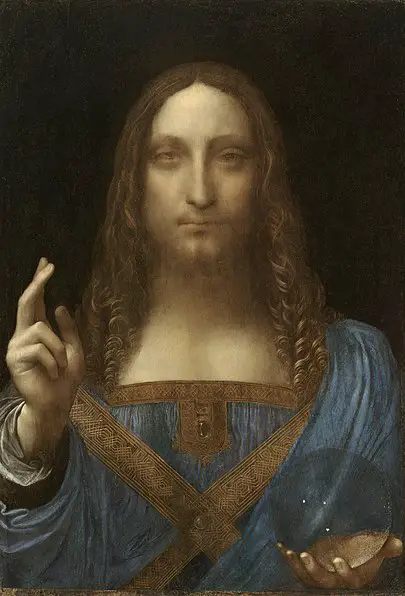
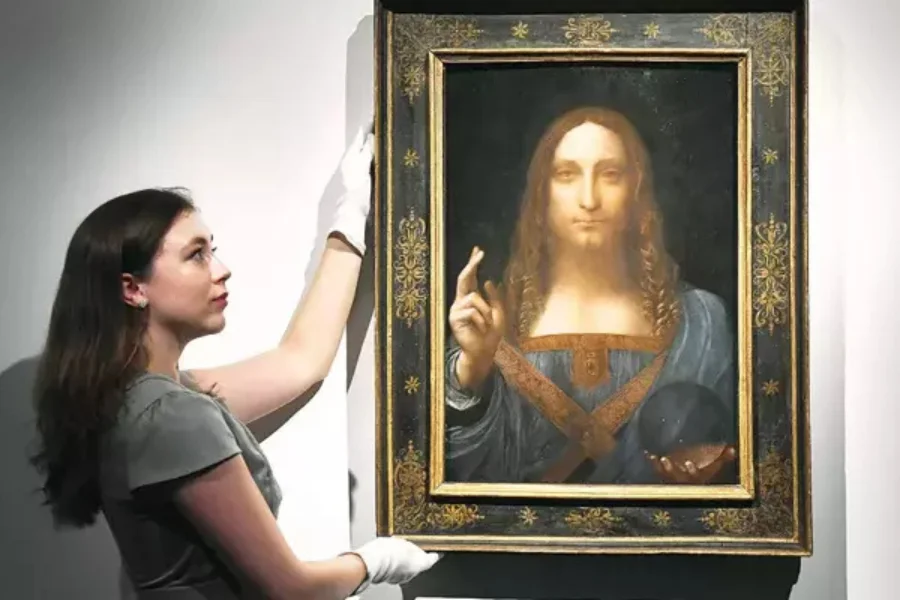
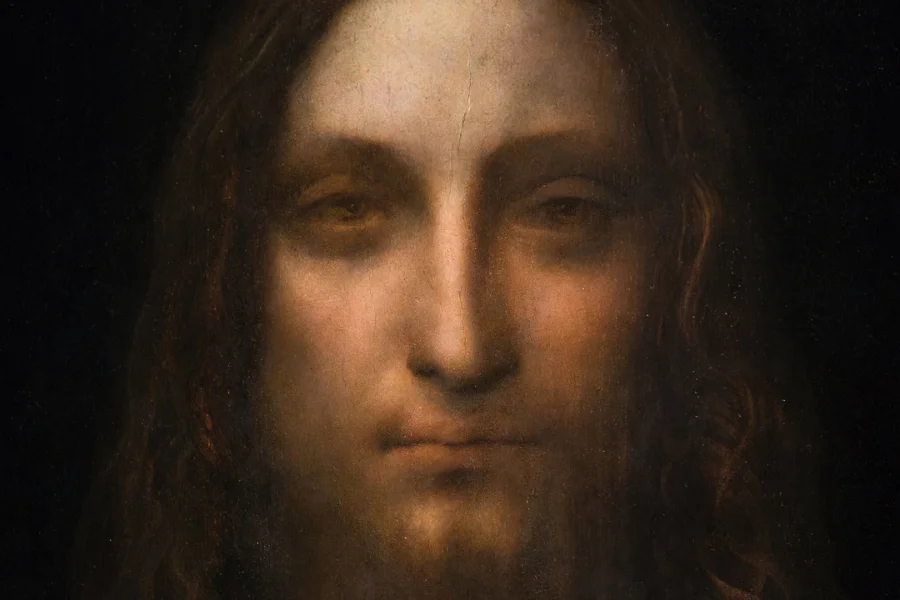
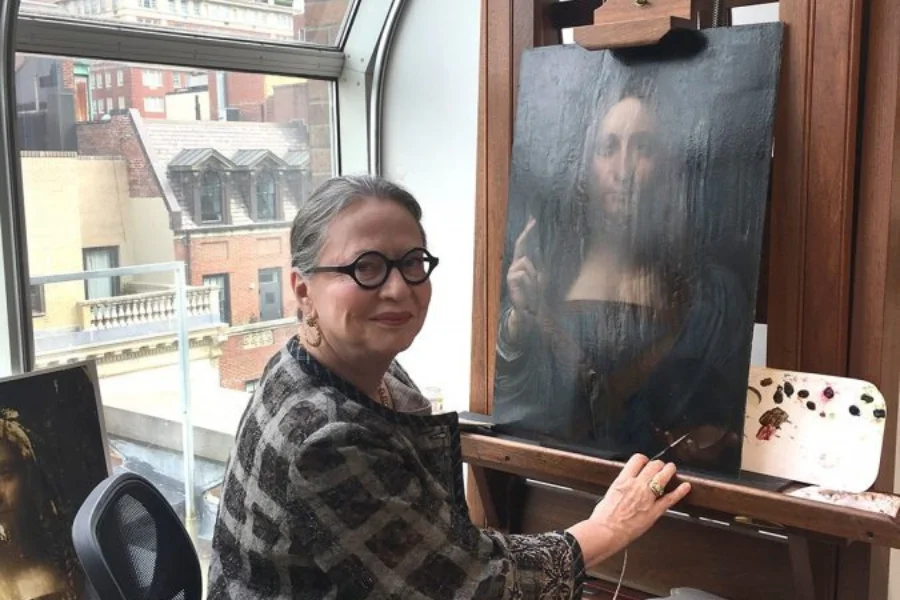
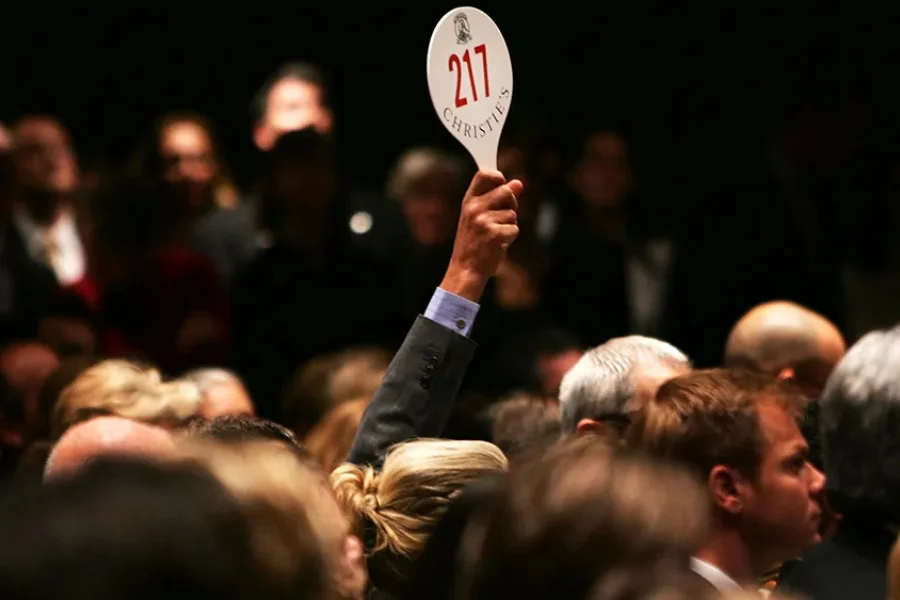
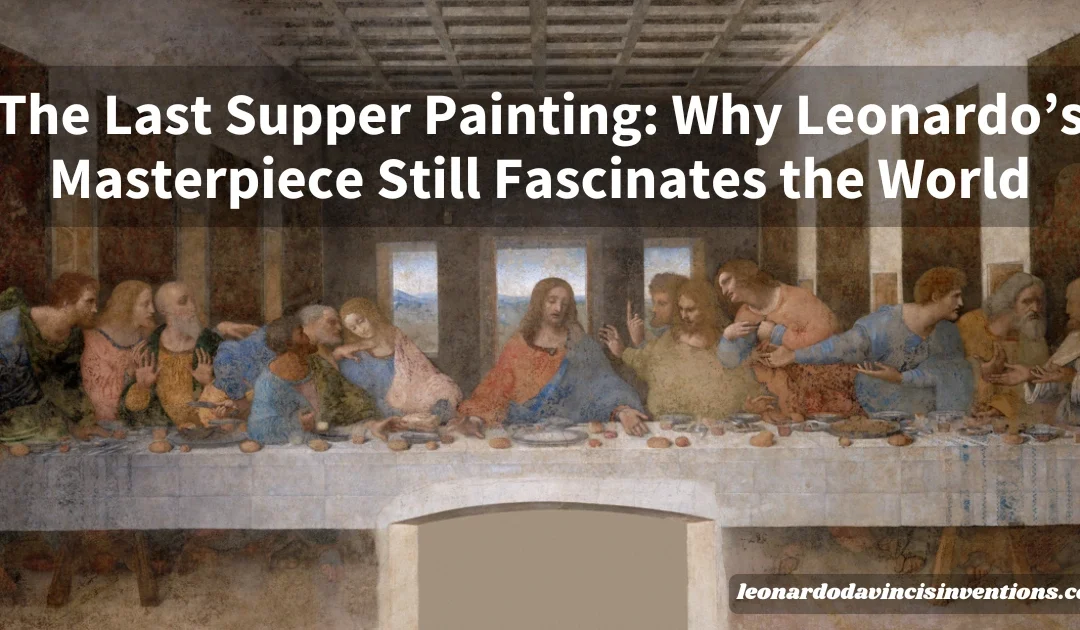
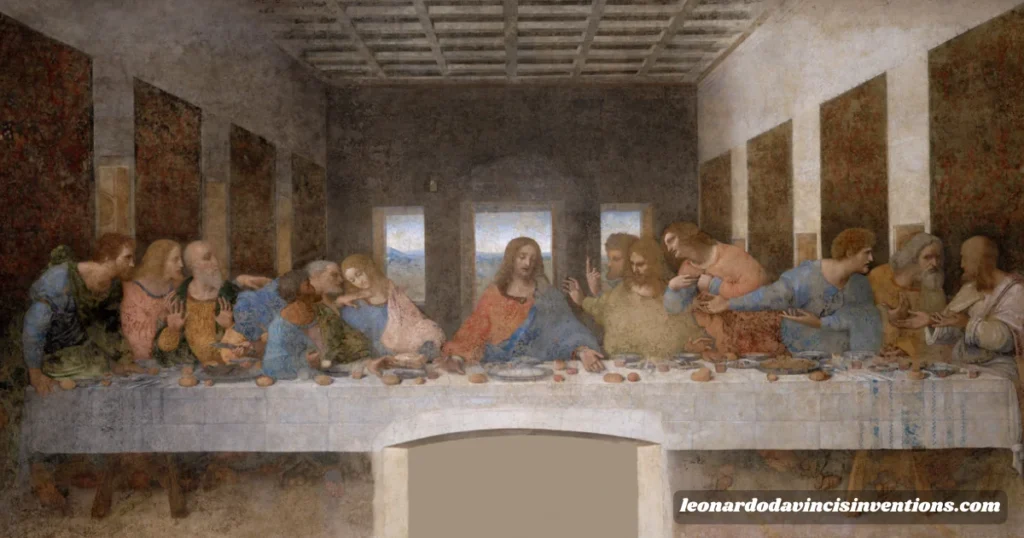
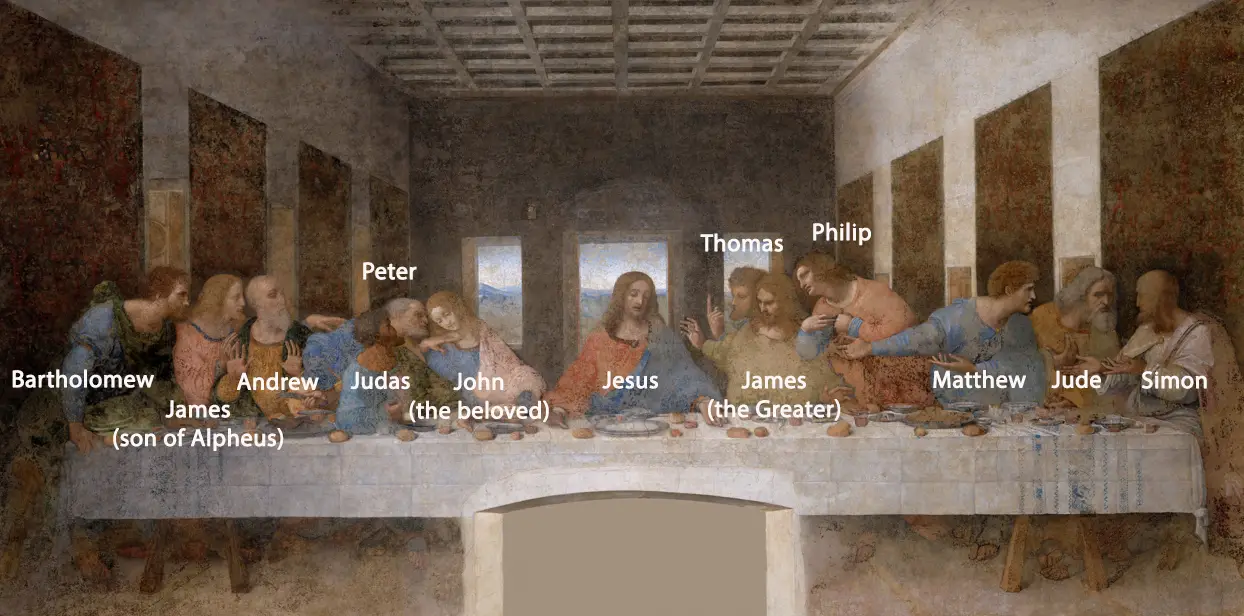
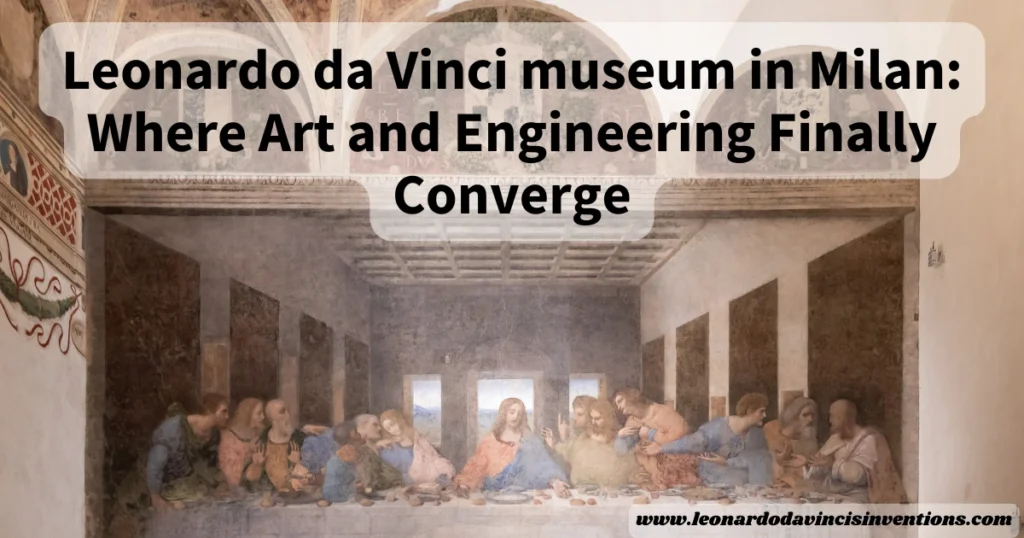

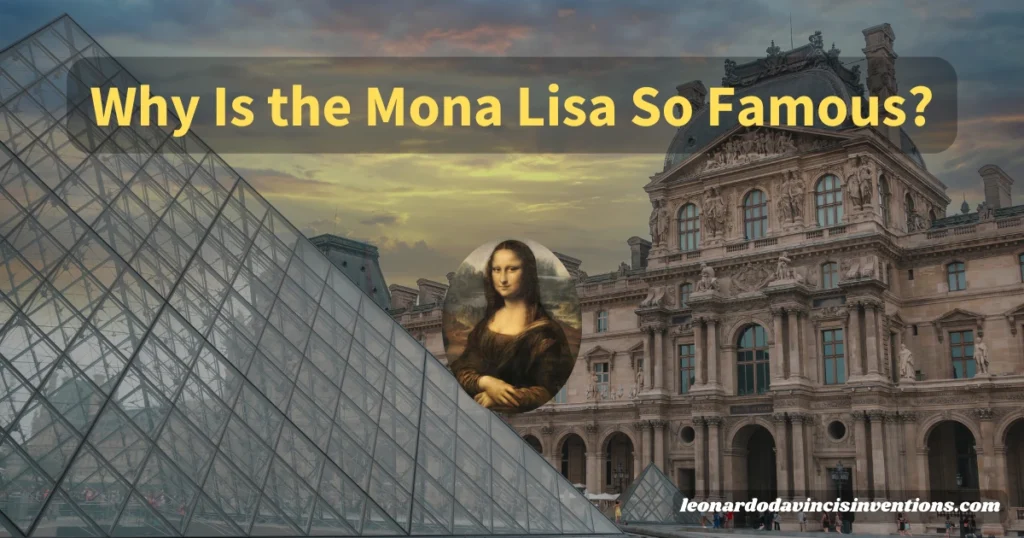


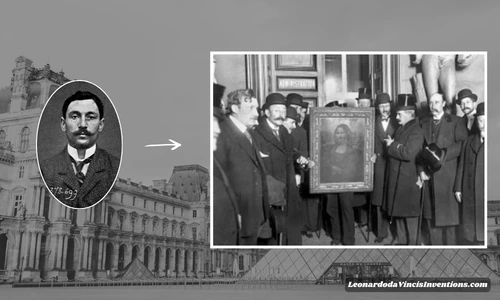
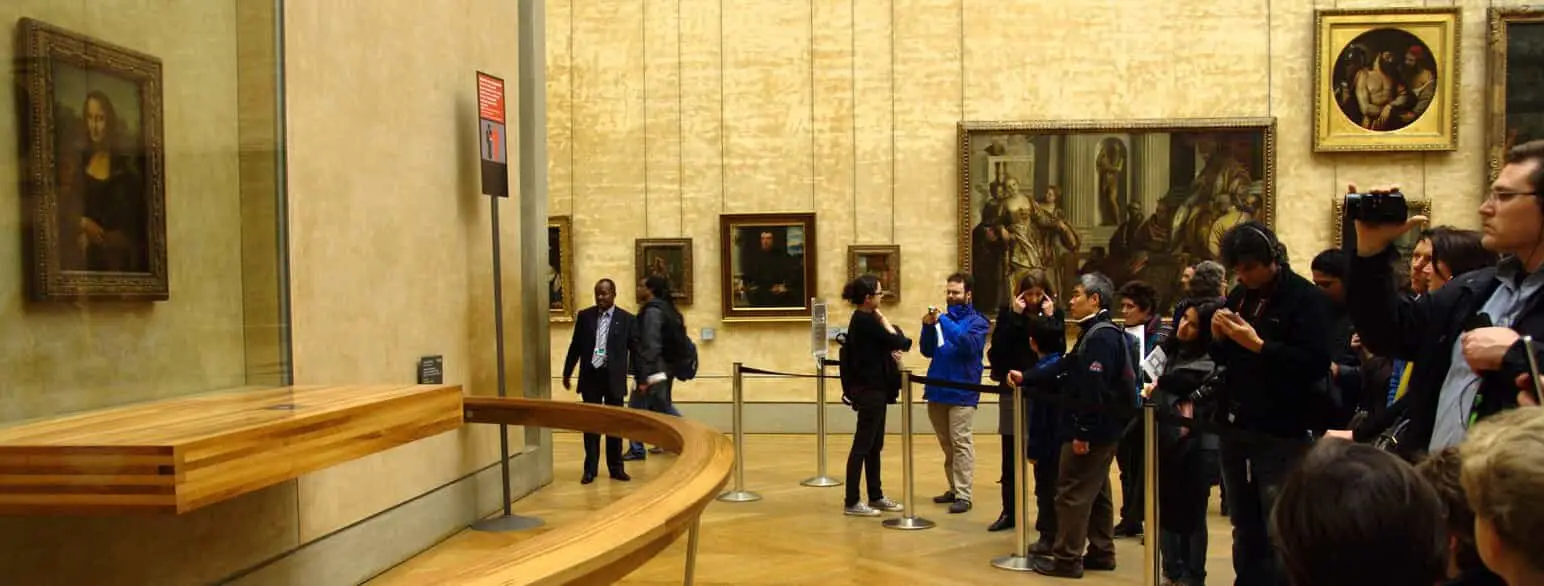
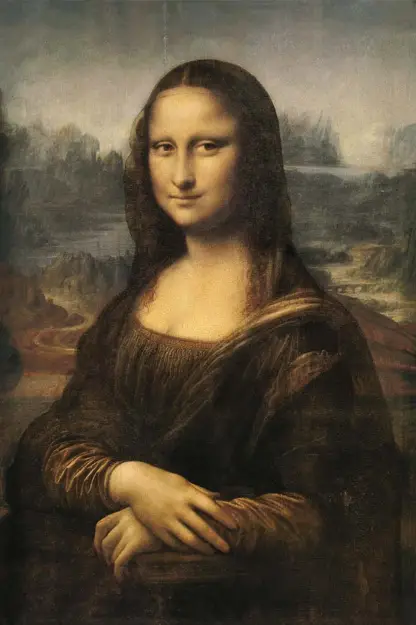

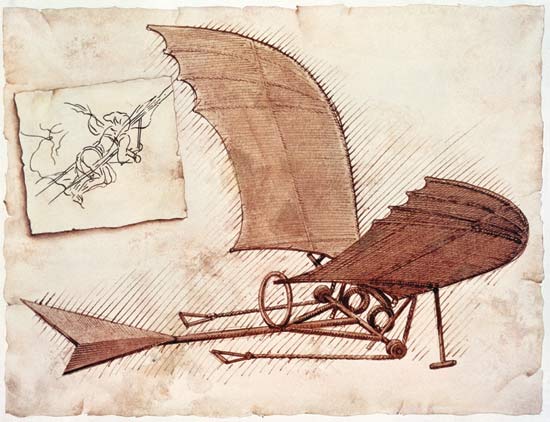
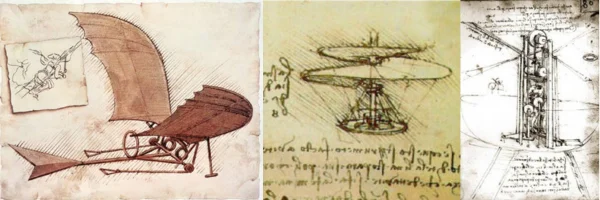
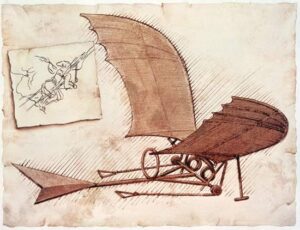
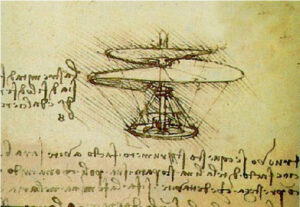
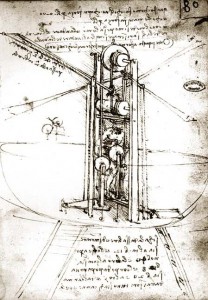
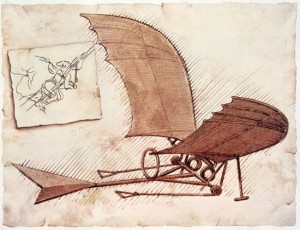
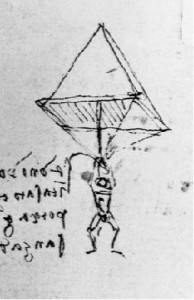
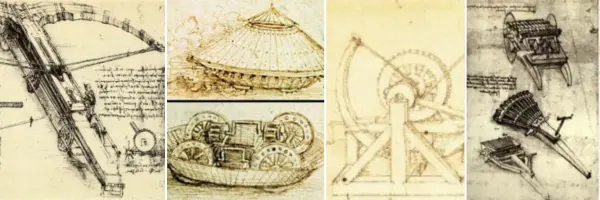

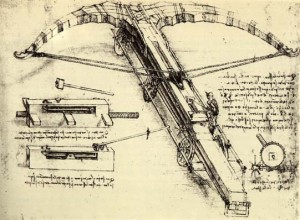
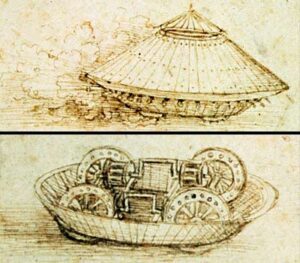
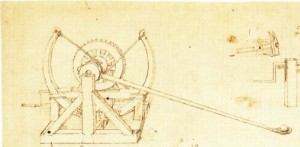
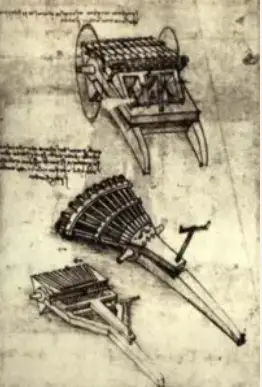

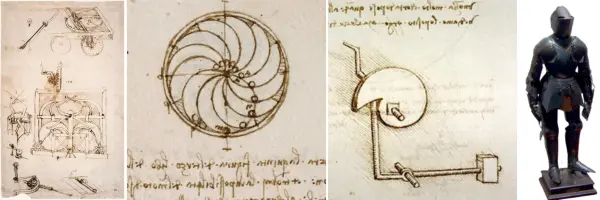
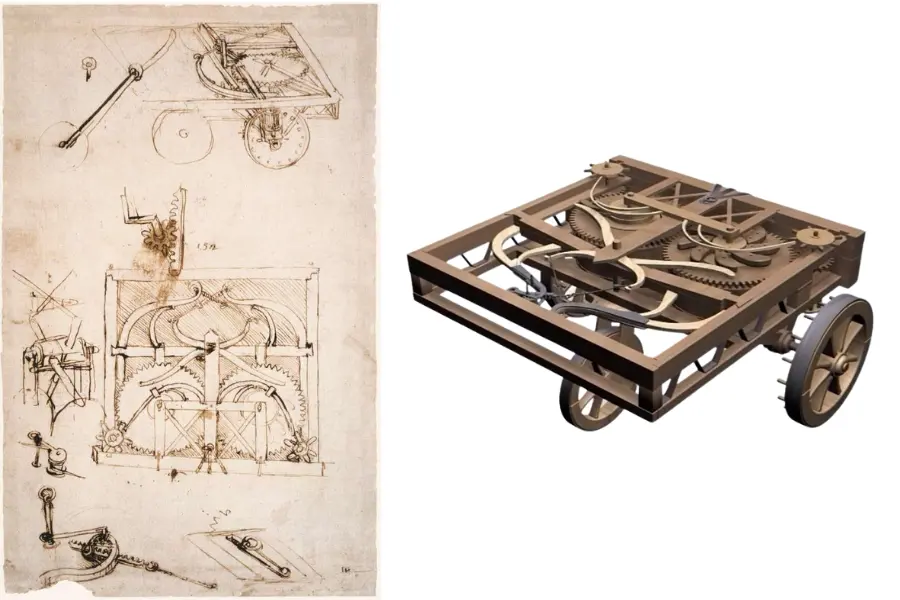
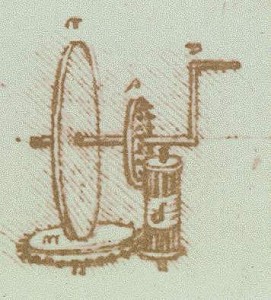
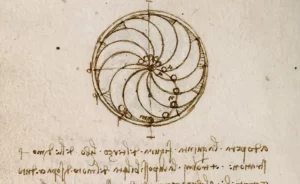
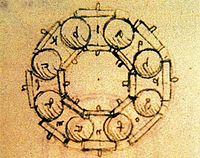
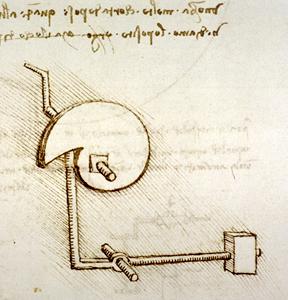
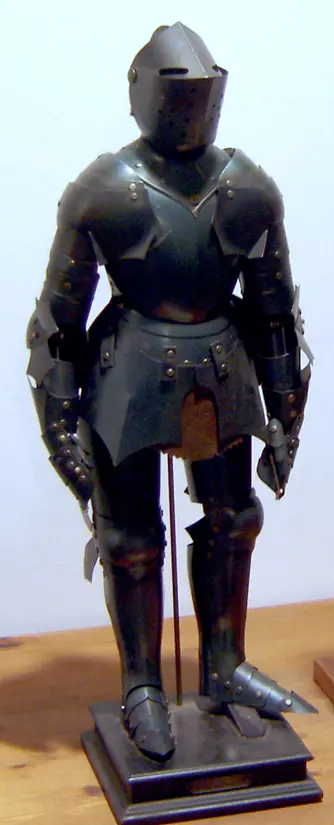
 Leonardo Bianchi is the founder of Leonardo da Vinci Inventions & Experiences, a travel and research guide exploring where to experience Leonardo’s art, engineering, and legacy across Italy and Paris.