Leonardo da Vinci diving suit is a captivating illustration of his boundless imagination and inventiveness.
This suit, designed in the 16th century, was intended to allow underwater sabotage by enabling men to cut holes in enemy ship hulls. However, due to a lack of funding, the concept never got past the blueprint stage.
For those intrigued by historical inventions, the details of da Vinci's design offer a fascinating glimpse into early ideas of underwater exploration.
The suit included a leather outfit with a mask featuring cane tubes, ropes, and weapons. Though it was never built, this vision highlighted da Vinci's ability to envision technology far beyond his time.
Interest in da Vinci's works often centers on his art, yet his engineering feats reveal an equally significant aspect of his genius.
Exploring his inventions, such as the diving suit, allows us to appreciate his contributions to art and science. The intersection of creativity and practicality in his designs reminds us of the endless possibilities imagined by one of history's greatest minds.
The Concept of the Leonardo da Vinci Diving Suit
Leonardo da Vinci's diving suits were among his many inventive ideas. His conceptual designs, which reflected his innovative spirit, aimed to equip people with tools for underwater exploration and military use.
Overview of Leonardo da Vinci's Inventions Diving Suit
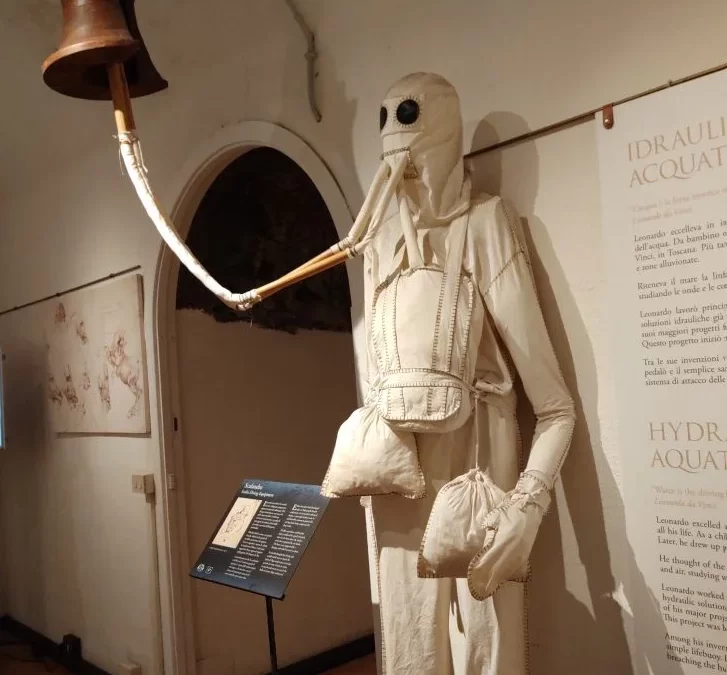
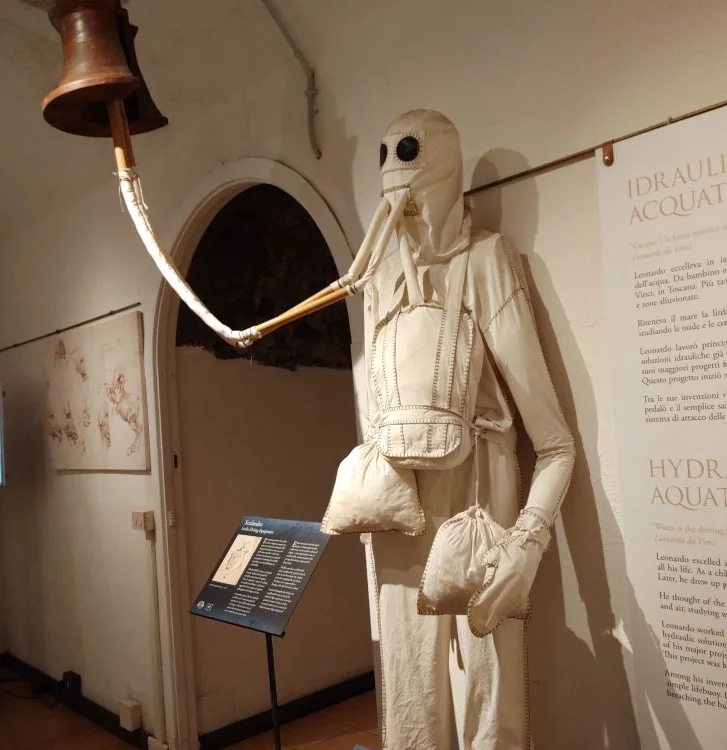
The Leonardo da Vinci diving suit featured a leather body and a bag-like head mask. Da Vinci included breathing tubes connected to a floating device above the water. This design reveals his understanding of the underwater air-supply needs.
The suit's drawing shows advanced thinking for his time, with the intricate details reflecting da Vinci's desire to push the boundaries of technology.
Modern assessments highlight how his suits, though never built during his life, were precursors to later diving equipment.
The Purpose Behind the Da Vinci Diving Suit
Da Vinci's idea for the diving suit was primarily military. He envisioned using it to sabotage enemy ships by cutting holes in their hulls from below the waterline. The diving suit designed by Leonardo da Vinci was not only a piece of engineering but also a strategic tool in naval warfare.
His suit also suggests curiosity about human capabilities underwater. By designing suits that enabled extended underwater stays, Leonardo explored ways humans could interact with and manipulate the environment below the surface.
Historical Context of Diving Gear in the Renaissance
During the Renaissance, diving gear was rudimentary and lacked the sophistication of Leonardo’s ideas. Most diving attempts relied on simple tools like ropes and weights.
The da Vinci diving suit concept was groundbreaking. It proposed a new approach to underwater exploration before modern scuba gear existed.
His work shows a shift in the Renaissance mindset towards innovation and scientific exploration. Though the suit was never realized in his lifetime, it remains a testament to his visionary approach and understanding of engineering principles.
When Was the Diving Suit Invented?
Leonardo da Vinci Diving Suit Sketch
The development of diving suits traces back to Leonardo da Vinci's inventive vision. His ideas sparked innovations, influencing subsequent designs. Key elements of his sketches remain relevant today.
Timeline of Leonardo da Vinci's Diving Suit Development
Leonardo da Vinci began conceptualizing his diving suit around 1485 in Venice. He envisioned it as a tool for military strategy, aiming to protect the city by sending men underwater to sabotage enemy ships.
This Leonardo da Vinci diving suit invention featured a leather outfit with a bag-like mask and breathing tubes designed to reach the surface and supply air.
Though plans existed, there is little evidence that he constructed the suit. Despite this, his sketches offered a foundation for imagining human exploration beneath the waves and inspired future inventors.
Comparison with Other Historical Diving Suits
Da Vinci's inventions set a precedent for other diving suits that emerged centuries later. In 1602, Jerónimo de Ayanz y Beaumont developed another early model.
Compared to later suits, da Vinci's design lacked the practicality and safety of more advanced suits, such as those designed in the 18th and 19th centuries.
The introduction of metal helmets and air pumps significantly improved divers' experience and safety. This evolution demonstrates an important advancement in diving technology, while da Vinci’s early concepts laid the groundwork for these improvements.
The Influence of Da Vinci's Design on Modern Diving Gear
Leonardo da Vinci's scuba suit ideas laid the groundwork for future advancements in underwater exploration. Many of the design elements he envisioned underpin modern innovations in diving gear.
For instance, his use of air supply mechanisms predated and influenced the development of scuba technology.
Features of the Leonardo da Vinci Underwater Diving Suit
The Leonardo da Vinci underwater diving suit is an innovative creation that reflects his genius in tackling the challenges of underwater exploration. This invention features unique design elements, thoughtful material selection, and intriguing functionality.
Unique Design Elements of the Diving Suit Leonardo da Vinci Created
Leonardo da Vinci's diving suit stands out due to its remarkable design. The suit included a bag-like mask covering the diver's head, allowing them to see and breathe easily. Attached to this mask were cane tubes resembling modern snorkels. These tubes provided a means of breathing while submerged.
The suit's design was purposeful, targeting naval warfare and utility in defending against invaders. The conceptual elements highlight da Vinci's foresight and inventive approach, offering unique insights into his thinking.
Materials and Construction of the Leonardo da Vinci Scuba Gear
The diving suit was made using readily available materials of the time. It is comprised of leather, a durable and flexible choice well-suited to crafting the main body of the suit. Leather's natural properties offered some protection against underwater elements and allowed for necessary movement.
Additionally, the air tubes were crafted from cane, a lightweight, breathable material. These elements show a balance between innovation and practicality. Da Vinci's choice of materials reflects an understanding of their properties and how they could work together to form an effective diving suit.
Analyzing the Functionality of the Diving Suit
Examining the functionality reveals a well-thought-out strategy for underwater operations. Thanks to its clever air-supply system, the suit was designed to allow divers to remain submerged for extended periods. By enabling divers to breathe underwater, da Vinci envisioned using the suit for strategic military maneuvers.
While the da Vinci diving suit was never built to its full potential, the design demonstrates how it might have performed effectively in its intended role. Its concept hints at a multifunctional tool that could have changed the way we approach marine conflict.
Did Leonardo da Vinci's Diving Suit Work?
Leonardo da Vinci's diving suit, designed in the 16th century, intrigues historians and engineers alike. This section explores whether this invention could function as intended and why it garnered such interest.
Testing the Theories: Did the Da Vinci Diving Suit Function?
Leonardo da Vinci's diving suit was likely not tested during his lifetime. He created designs for a leather suit equipped with a breathing tube. This tube provided an air supply from the surface for underwater activities. However, there is no evidence that the suit was ever constructed or used.
Without records or prototypes, it's unclear if the design truly worked. Today, historians speculate about its potential practicality and effectiveness for underwater endeavors.
Expert Opinions on the Effectiveness of Leonardo's Design
Experts agree that Leonardo’s design was ahead of his time. The diving suit's concept included a buoyancy control system, which still influences modern scuba gear.
However, some argue that limitations in materials and technology during Leonardo's era would have made his suit impractical. Many reinforce that, while the idea was genius, it couldn't succeed back then due to insufficient resources and poor execution.
Modern Interpretations of the Leonardo da Vinci Diving Suit Facts
Today's researchers often analyze Leonardo da Vinci's diving suit design to understand its historical context and potential use. His suit inspires modern submariners and historians, who appreciate its visionary aspects.
The design also continues to captivate artists and innovators, reinforcing themes of creativity and exploration. These studies highlight how Leonardo’s ideas inspired developments in underwater exploration technologies despite being purely theoretical in his time.
Artistic Representations of the Diving Suit
Leonardo da Vinci, a master of blending art and innovation, designed a unique diving suit. These designs are not just historical artifacts but an artistic testament to his genius, influencing the evolution of visual art and diving technology.
The Leonardo da Vinci Diving Suit Drawing: A Closer Look
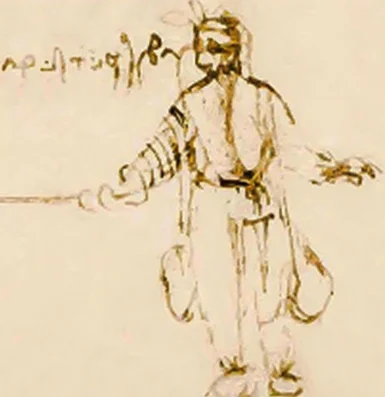
The Leonardo da Vinci diving suit drawing showcases his foresight and creativity. In it, da Vinci depicts a suit made from waterproof leather with breathing tubes.
This artwork highlights his ability to combine aesthetic appeal with practical engineering solutions. Da Vinci’s attention to detail is evident in the representation of the suit's components, which are clearly illustrated to reveal their function and potential use underwater.
Insights from the Leonardo da Vinci Diving Suit Sketches
The diving suit sketches provide critical insights into Leonardo da Vinci's inventions, such as the diving suit. His designs included large pockets, a component meant to address buoyancy issues.
It reflects his complex problem-solving approach, aiming to adapt human anatomy for undersea exploration.
The sketches serve as an educational tool, showing da Vinci’s ingenious methods and foresight in envisioning solutions for underwater navigation that were way ahead of their time.
The Impact of Da Vinci's Diving Suit Design on Art and Science
Da Vinci's diving suit design transcends mere invention; it had a lasting impact on art and science. The da Vinci scuba suit design fundamentally influenced future depictions of diving apparatuses.
Artists and designers drew inspiration from his innovative approach, which married form and function.
His designs laid the groundwork for modern diving technology, showcasing da Vinci’s role as a pioneer who bridged creativity and functionality, inspiring both fields for centuries.
Final Thoughts
Leonardo da Vinci's diving suit is a fascinating insight into his innovative mind. It was designed for military purposes and showcased Leonardo's attention to engineering and human capability.
While it was never built in his lifetime, his sketches offer a glimpse into potential advancements in diving technology.
The suit featured a leather design with a bag-like head mask. It included attached cane tubes for air supply, indicating Leonardo's understanding of the need for breathable air underwater.
While deemed impractical at the time, this early conceptualization paved the way for future developments in scuba gear.
Despite its impracticalities, such as the challenge of rebreathing exhaled air, Leonardo's idea was ahead of his time. Today’s diving suits have evolved significantly, yet they still echo the spirit of exploration that da Vinci's design embodied.
Key Takeaways: Leonardo da Vinci's diving suit reflects his forward-thinking approach. While not feasible in his era, his ideas laid the groundwork for future innovations in diving technology. This early dive into underwater exploration remains a testament to his genius and curiosity.
FAQs about Leonardo da Vinci Diving Suit
Did Leonardo da Vinci invent the diving suit?
Leonardo da Vinci did not invent the modern diving suit, but he designed one of the earliest known concepts in the early 1500s. His sketches depict a leather suit with a mask and breathing tubes connected to a floating air supply, enabling divers to remain underwater for military purposes.
What is the 120 rule in diving?
The “120 rule” in diving is a guideline used by recreational divers, stating that the sum of a diver’s depth (in feet) and bottom time (in minutes) should not exceed 120 to reduce the risk of decompression sickness. However, it is a simplified rule and not a substitute for official dive tables or dive computers.
What did Da Vinci say before he died?
There is no fully verified record of Leonardo da Vinci’s exact last words, but a commonly attributed quote suggests he regretted not accomplishing more, saying he had “offended God and mankind” by not fulfilling his potential. This account comes from later historical sources rather than direct evidence.
Did a diver survive 30 minutes without oxygen?
In normal conditions, humans cannot survive 30 minutes without oxygen; brain damage typically begins within minutes. However, rare cases of extended survival have occurred in extremely cold water, where low temperatures can slow metabolism and temporarily protect the brain.
What is Da Vinci's greatest invention?
There is no single “greatest” invention, but Leonardo da Vinci’s flying machine designs are often considered his most famous. These early attempts to achieve human flight demonstrated an advanced understanding of aerodynamics and inspired future developments in aviation.
Who invented a diving suit?
The first practical diving suits were developed centuries after Leonardo, with early versions created in the 18th century and later improved by inventors like Karl Heinrich Klingert and Augustus Siebe, who helped establish modern diving equipment.
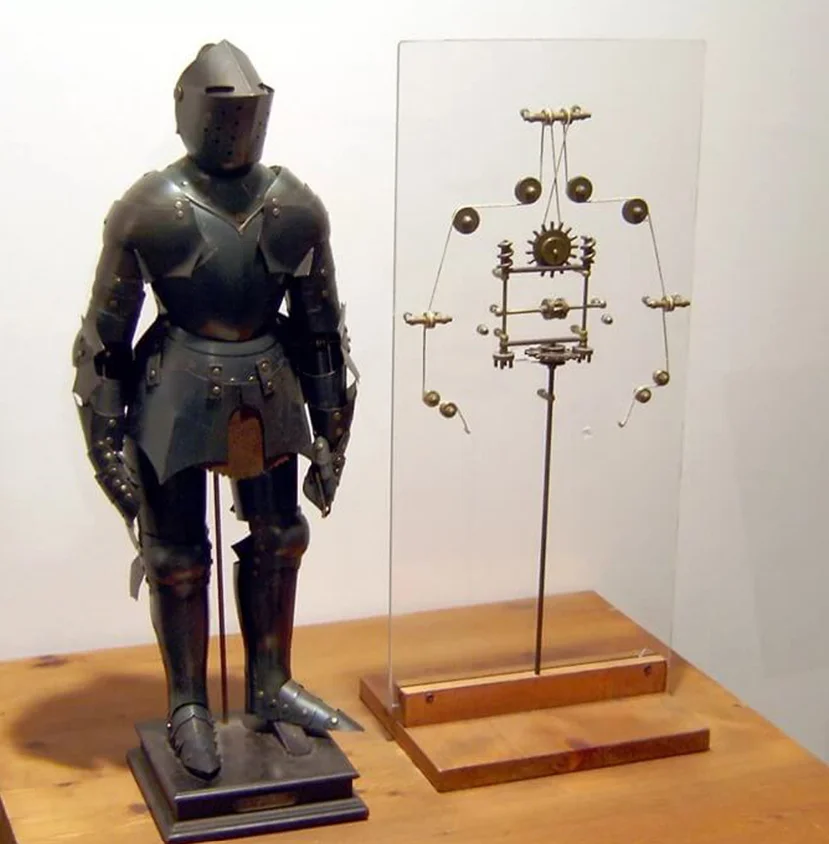
Leonardo da Vinci Robotic Knight stood as a fantastic feat of engineering during the Renaissance. This humanoid automaton, designed in the late 15th century, showcased Leonardo's visionary mind and deep understanding of mechanics.
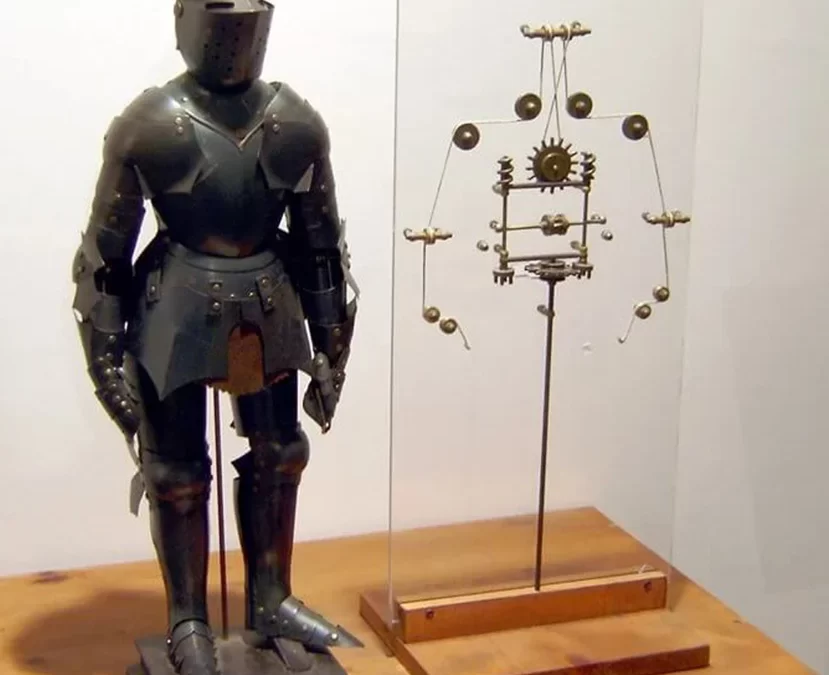
The Robotic Knight could perform human-like motions, such as moving its arms and sitting down, employing a complex system of gears and pulleys.
For modern enthusiasts, the Robotic Knight remains a fascinating study of early robotics and mechanical design. Its creation involved a German suit of armor filled with an intricate cable and pulley system that allowed it to mimic human movements.
Leonardo's invention highlights his genius and influences today's technology in robotics and automation.
Historical Context of Leonardo da Vinci Robotic Knight
The development of the Leonardo da Vinci Robotic Knight showcases the innovative spirit of the Renaissance and the budding exploration of robotic technology during that time.
Groundbreaking inventions and a surge in scientific curiosity marked this era.
Leonardo da Vinci’s Era
Leonardo da Vinci lived during the Italian Renaissance, a period of creativity and new ideas spanning the 14th to the 17th century. This era was characterized by significant advancements in art, science, and technology.
Da Vinci was a central figure in this movement, known for his vast range of interests and talents.
During this time, da Vinci explored various mechanical concepts, including the Leonardo da Vinci Robot Knight, a humanoid machine designed around 1495. This design demonstrated his understanding of mechanics and motion and reflected the era's fascination with machines and automation.
Advent of Renaissance Robotics
The Renaissance laid the groundwork for modern technology, with figures like Leonardo leading the way.
Da Vinci's interest in mechanics and engineering led to the creation of the Robotic Knight. He designed this automaton using a complex system of gears, pulleys, and cables—an innovation for its time.
This mechanical knight could stand, sit, and raise its visor, capturing the imagination of future inventors.
Although it is uncertain whether the knight was ever built, the designs highlight the era's adventurous spirit in exploring new technologies.
The Robotic Knight, created by Leonardo da Vinci, is one of his most fascinating inventions. It blends art with mechanical ingenuity and showcases Leonardo's ability to think ahead of his time.
Design and Inspiration
Leonardo da Vinci robotic knight was a remarkable feat of design. Constructed in the late 15th century, this automaton was housed in a German-style armor suit. The design involved a series of complex gears, pulleys, and cables.
These components allowed the knight to perform various movements, such as sitting, standing, and even moving its arms.
The inspiration for the robot knight came from Leonardo's deep interest in the human body and mechanics.
His studies in anatomy greatly influenced the robot's motion mechanics, simulating human actions with impressive accuracy.
This creation was not merely a display piece; it represented Leonardo's vision of what machines could achieve, mirroring the human form and movement.
Leonardo's ability to interlace art with engineering laid a foundation for future developments in robotics.
Mechanical Engineering Feats
The mechanical engineering behind Leonardo da Vinci robotic knight was truly ahead of its time.
Using basic principles of physics and mechanics, Leonardo created a humanoid automaton that could mimic human gestures.
The internal structure comprised sophisticated gear systems, allowing a range of motion not seen before in mechanical creations.
This invention highlighted Leonardo's genius in combining artistic vision with technical prowess. The engineering principles seen in the knight influenced later developments in automation and robotics.
His work on this device exemplifies his trailblazing ideas, paving the way for future engineers and inventors.
Functionality and Characteristics
Leonardo da Vinci robotic knight was a groundbreaking invention that showcased his genius in mechanical design and automation. Thanks to its sophisticated system of pulleys and gears, the robotic knight could perform human-like motions.
Simulated Anatomy
Leonardo da Vinci robot knight was engineered to mimic the functions of a human body. It could sit, stand, move its arms, and even tilt its head.
This creation was largely possible due to Leonardo’s innovative use of anatomy, which allowed the knight to mimic human motions. The internal structure included complex systems of cables and pulleys resembling muscles and tendons.
His meticulous study of human anatomy heavily influenced his design. Each joint and limb of the da Vinci robot knight was carefully crafted to allow fluid movement.
Through these designs, Leonardo demonstrated his vision of human-machine interaction, blending mechanical engineering with biological insight to form a mechanical knight that remains a topic of fascination.
Innovative Mechanisms
Leonardo's robot showed innovation through its mechanisms, which used gears and pulleys to bring the knight to life.
This mechanical setup powered the knight's arms in a lateral embrace, simulating human motion. Leonardo da Vinci's mechanical genius is evident in his ability to incorporate flexible neck movement into the knight’s design.
By integrating these components, Leonardo da Vinci robots were far ahead of their time, paving the way for later advancements in robotics.
The robotic knight was not merely a mechanical marvel but also an embodiment of da Vinci's forward-thinking approach, showcasing how art, science, and technology could merge.
Cultural and Historical Impact
The Leonardo da Vinci Robotic Knight is a notable creation that has significantly influenced the development of robotics and left a lasting mark on popular culture. It demonstrates Leonardo's foresight in mechanical engineering.
Influence on Modern Robotics
Leonardo da Vinci's mechanical knight, designed in 1495, represents a pivotal moment in the history of robotics. This early robot knight featured a complex system of gears and pulleys, allowing it to mimic human movements.
It has inspired contemporary engineers and roboticists, offering a glimpse into automated machines long before the technology was feasible.
This invention highlights how Renaissance innovations laid the groundwork for future developments.
It is considered a precursor to modern robotic designs, embodying principles that continue to influence today’s robotic engineering.
Inventors often return to da Vinci’s work for inspiration, examining the balance of form and function he achieved.
The combination of creativity and technology in the robotic knight exemplifies the timelessness of Leonardo da Vinci's vision of robotics.
Representation in Popular Culture
The da Vinci robotic knight is featured prominently in various forms of media, and its story captivates audiences across generations.
This Leonardo da Vinci robot has appeared in documentaries, books, and exhibitions, educating the public about its unique design and functionality.
It brings magic to historical explorations of da Vinci’s life, merging the fantastical with the factual.
In popular culture, the robot knight Leonardo da Vinci is an emblem of the Renaissance period.
It showcases the intersection of art and science that defines Leonardo's legacy.
By influencing storytellers and artists, the knight perpetuates Leonardo da Vinci’s revolutionary ideas, underscoring his lasting impact on technology and culture.
Preservation and Study
The preservation of Leonardo da Vinci robotic knight involves physical restoration efforts and various exhibitions showcasing this remarkable invention. These activities contribute to maintaining the knight's historical significance and advancing its understanding and appreciation among audiences.
Restoration Efforts
The study and restoration of Leonardo da Vinci robotic knight require meticulous attention to detail.
Efforts focus on preserving mechanical integrity and historical accuracy.
Historians and engineers collaborate to ensure the reconstruction aligns with da Vinci’s original sketches. The Codex Madrid, for example, captures essential insights into the knight's mechanism.
Preservation involves analyzing materials and techniques from the Renaissance to maintain authenticity.
Teams use non-invasive methods to study and restore the gears and pulley systems without damaging them. These careful routines help maintain the knight's condition for future generations.
Exhibitions and Displays
Exhibitions are crucial in showcasing Leonardo da Vinci's robotic knight to the public.
Museums worldwide, such as the Leonardo3 Museum, offer visitors opportunities to explore the intricacies of the knight's design.
These displays often use interactive models and digital reconstructions, allowing visitors to experience the knight's functionality visually and physically.
Special exhibitions sometimes feature the knight alongside da Vinci's other innovations, such as the self-propelled cart and the armored car.
Such presentations highlight Leonardo's ingenuity and emphasize how advanced his thinking was for his time. These events help enhance public interest and deepen appreciation for Leonardo's inventions.
Closing Remarks
Leonardo da Vinci Robotic Knight is a testament to his incredible vision and inventive spirit. This creation, designed in the late 15th century, highlights da Vinci's deep understanding of mechanics and anatomy.
His work paved the way for future developments in robotics.
The Robotic Knight was envisioned to move with the help of gears and pulleys, depicting Leonardo's innovative mastery over mechanical devices. This invention displayed his foresight, anticipating advancements that would captivate minds centuries later.
Leonardo was well ahead of his time in his fascination with human and machine movement. His designs merged artistry with engineering, emphasizing the importance of interdisciplinary thinking.
Key Takeaways:
Leonardo da Vinci's Robotic Knight is a prime example of early robotics.
His designs have inspired many modern-day engineers and artists.
Leonardo's contributions to mechanical inventions continue influencing and inspiring, showcasing how art and engineering can interconnect seamlessly.
Frequently Asked Questions
Leonardo da Vinci pioneered in many fields, including robotics and engineering. His work laid the foundation for several inventions that inspired future technologies.
Did Leonardo da Vinci invent the robotic knight?
Yes, Leonardo da Vinci designed the Robotic Knight. It was a suit of armor filled with gears and pulleys. This mechanical figure could move its arms, sit, and even lift its visor, making it one of the earliest concepts of a robot.
Did Leonardo da Vinci make a robot lion?
Leonardo also designed a mechanical lion. This marvel could reportedly walk and open its chest to reveal a bouquet of lilies, showcasing his inventive genius and love for automata.
How accurate is the Da Vinci robot?
The da Vinci Surgical System's accuracy is generally reported to be within 1.02 mm, making it an exact tool for various surgical procedures.
This robotic system enhances the surgeon's ability to perform complex, minimally invasive surgeries by reducing hand tremors and improving dexterity, ultimately leading to better surgical outcomes.
What war machines did Leonardo da Vinci invent?
Leonardo da Vinci designed several war machines, including a tank and a large crossbow. His innovative and intricate designs show his skill as an engineer and inventor.
What was Leonardo da Vinci's most significant invention?
Identifying Leonardo's most significant invention is challenging, as he contributed to many areas. His designs, like the flying machine and the self-propelled cart, were groundbreaking, and each showcased his diverse talents.
Did Leonardo da Vinci have a wife?
No, Leonardo da Vinci did not marry. He dedicated his life to art and science, spending much time on various projects and studies.
Did da Vinci invent the blender?
No, Leonardo da Vinci did not invent the blender. This household appliance was developed much later, though he did design many other inventive devices.
Did da Vinci invent the diving suit?
Leonardo designed a diving suit intended for underwater exploration. It included a breathing tube and bag, foreshadowing modern scuba gear.
Who was the first person to invent a robot?
Leonardo da Vinci is often credited with creating one of the first robotic concepts, his Robotic Knight design, an early exploration into mechanical automation.
Did da Vinci design a tank?
Yes, Leonardo designed an early version of a tank. The design included a covered vehicle with weaponry, a precursor to modern armored vehicles. His vision was centuries ahead of its time.
World War I started in 1914, marking the beginning of a global conflict that involved many of the world's great powers.
The war officially began on July 28, 1914, when Austria-Hungary declared war on Serbia.
This assassination set off a chain reaction among alliances and countries, pulling nations into a war that would last until 1918.
You're not alone if you have ever wondered how a single event led to a war of such magnitude. This blog post aims to unravel the complexities of the start of World War I and help you understand how political alliances and national tensions contributed to its outbreak.
The assassination of Archduke Franz Ferdinand was a key moment, setting off a series of declarations that expanded into a worldwide battle. This conflict pitted countries such as Germany, Austria-Hungary, France, and the United Kingdom against one another.
The details of each nation's participation in the war reveal fascinating insights into the political climate of the early 20th century.
Understanding the Timeline of World War I
World War I was a global conflict that reshaped many countries. It involved multiple key events and dates that marked significant moments in history. These elements help paint a clear picture of how the war unfolded and its impact.
When Did World War One Start?
World War I, also known as the Great War, began on July 28, 1914. The immediate trigger was the assassination of Archduke Franz Ferdinand of Austria, but deeper issues like nationalism and alliances played a role. When Austria-Hungary declared war on Serbia, it set off a chain reaction.
Countries across Europe quickly took sides, leading to a large-scale war until 1918.
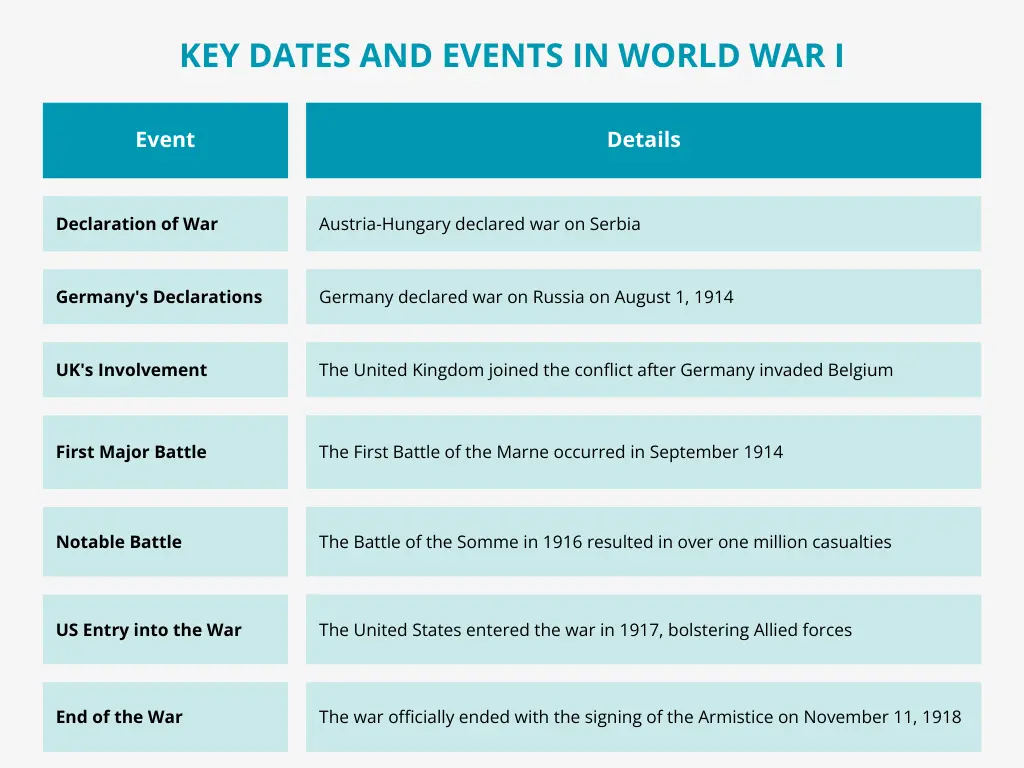
Key Dates and Events in World War I
Table 1 outlines several key events that defined World War I.
World War I Dates: A Comprehensive Overview
World War I lasted four years, from 1914 to 1918, and was marked by some of the bloodiest battles in history. The end of the war, on November 11, 1918, marked the beginning of a worldwide push for peace and diplomacy.
Many countries involved in World War I were also part of World War II, as unresolved issues and new challenges arose.
The First World War changed political landscapes and societies. Its aftermath paved the way for significant changes in national borders and the creation of new nations. This war's timeline offers insight into the complexities and impact of global conflict.
The Causes of World War I
A complex web of alliances, national tensions, and significant events marked World War I. These causes intertwined to create the backdrop for a devastating conflict that reshaped the world.
Why Did World War 1 Start?
The beginning of World War I, or the Great War, on July 28, 1914, can be traced back to a mix of political, military, and social tensions. Nationalism played a key role as countries sought to assert their superiority and independence.
This was particularly true in Europe, where the balance of power was fragile.
Economic rivalries and competition for colonies fueled the fire. Industrialized nations were eager to expand their empires and influence, creating friction.
The opposing ambitions of these nations set the stage for conflict.
The Role of Alliances and Tensions
Alliances played a significant part in escalating regional disputes into a full-scale war.
The Central Powers: Germany, Austria-Hungary, and Italy,
The Allies: Britain, France, and Russia.
These alliances were meant to deter aggression, but instead, they created a situation in which a conflict involving one country could quickly draw in its allies. This interconnectedness made localized conflicts more dangerous.
Tensions in the Balkans, known as the "Powder Keg of Europe," were particularly explosive. Austria-Hungary and Russia's desire for greater regional influence heightened the risk of confrontation. This rivalry contributed significantly to the onset of hostilities.
The Impact of the Assassination of Archduke Ferdinand
The assassination of Archduke Franz Ferdinand of Austria-Hungary on June 28, 1914, is often seen as the immediate catalyst for World War I. Gavrilo Princip, a Bosnian Serb nationalist, assassinated with the hope of promoting Slavic independence.
Austria-Hungary's response was swift and aggressive. They issued an ultimatum to Serbia, and when Serbia's response was seen as unsatisfactory, Austria-Hungary declared war, prompting Russia to mobilize in support of Serbia.
This assassination triggered a series of events that led the major powers into a spiraling conflict. The alliances and ambitions of these powers quickly fueled the flames of war, sparking a global conflict that lasted over 4 years.
Major Players in World War I
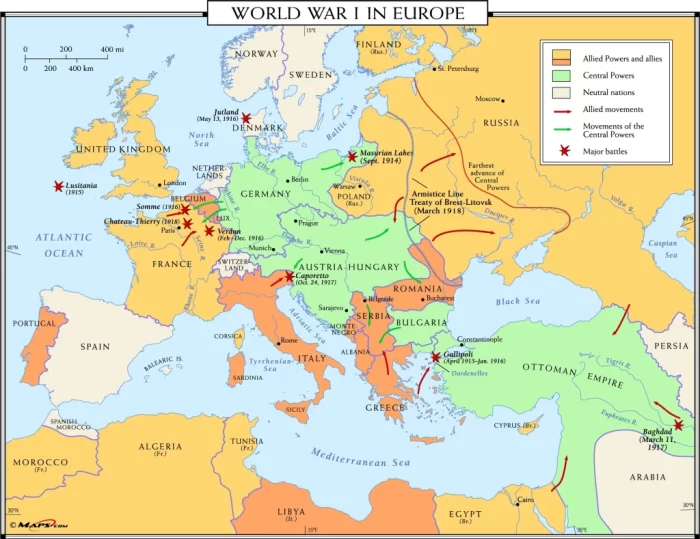
Map of World War I (the Central Powers vs. Allied Powers)
World War I was a significant global conflict involving many countries and alliances. Key players emerged from two main sides: the Central Powers and the Allies, each led by influential figures and nations.
Who Were the Key Countries Involved?
Several countries played critical roles during World War I. The Central Powers, led primarily by Germany, Austria-Hungary, and the Ottoman Empire, formed a formidable coalition against their adversaries.
On the other side, the Allies included major players such as the United Kingdom, France, Russia, and the United States.
Other nations, like Italy and Japan, joined the Allies, contributing military and economic resources. Their involvement transformed regional conflicts into a full-scale global war.
The tensions arising from these alliances and rivalries eventually set the stage for another major conflict, World War II, in the years that followed.
World War I: The Central Powers vs. the Allies
The Central Powers and the Allies were the two main alliances during World War I.
The Central Powers comprised Germany, Austria-Hungary, and the Ottoman Empire. Mutual defense agreements and shared interests bound these nations.
In contrast, the Allies, initially formed by the Triple Entente, consisted of France, Russia, and the United Kingdom. Over time, this alliance expanded to include Italy, Japan, and the United States.
The combination of resources, manpower, and tactics eventually led the Allies to overcome their opponents, solidifying their dominance by the end of World War I.
Who Was President During World War I?
Woodrow Wilson served as President of the United States during World War I. Elected in 1912, his administration maintained a neutral stance as the war erupted in Europe.
However, the sinking of the Lusitania and other factors prompted him to enter the war in 1917, leading the United States to join the Allies.
Wilson's leadership was crucial in shaping the post-war landscape. He outlined his vision for peace in his famous Fourteen Points, which emphasized self-determination and the formation of a League of Nations.
His efforts aimed to prevent future conflicts, though his vision was not fully realized until after World War II. His presidency left a lasting impact on international relations and the role of the United States in global affairs.
The Course of the War
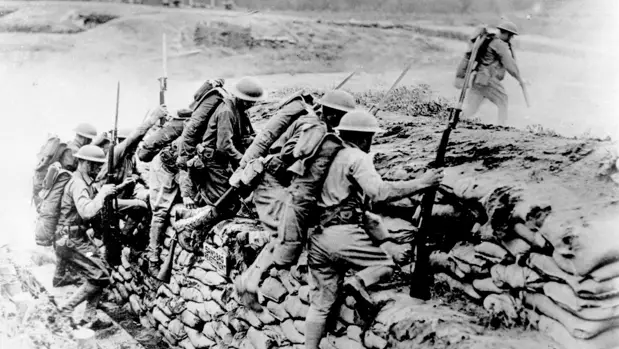
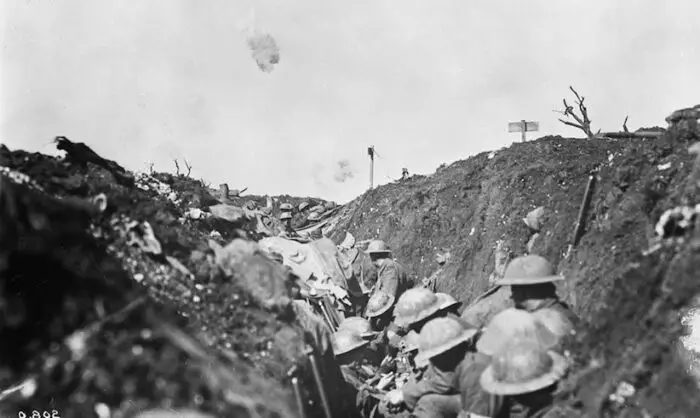
The Battle of the Somme, one of the trench combat, 1916
World War I involved massive shifts in warfare tactics and battles on multiple fronts, setting the stage for World War II. Technological advances changed how the war was fought and impacted the countries involved.
WWI Warfare: Tactics and Technology
World War I showcased new military tactics and technologies that transformed combat. Trench warfare became a defining feature, with long, narrow trenches where soldiers sought protection from enemy fire. This static form of combat resulted in high casualties.
Machine guns, artillery, and gas attacks were standard, leading to devastating battlefield conditions. Tanks were introduced later in the war, providing a way to overcome trench defenses.
The war also saw the significant use of airplanes for reconnaissance and combat, marking the beginning of aerial warfare.
Naval warfare also played a critical role: submarines, particularly German U-boats, disrupted supply lines, impacting the war's course.
Communication technology improved, with radio and telegraphs enhancing coordination among troops.
These innovations in tactics and technology played a central role in shaping the outcomes of the First World War.
World War I: The Great War on Multiple Fronts
World War I was fought mainly across Europe but also in other regions. The Western Front in France and Belgium saw some of the war's heaviest fighting, with trench lines stretching for miles.
Battles such as the Somme and Verdun became synonymous with the brutal stalemate experienced by forces on both sides.
On the Eastern Front, the conflict between Germany and Russia was marked by fluid movement and significant territorial changes. The war extended to the Middle East, where the Ottoman Empire faced British-led forces.
The Italian Front and the Balkan Front further complicated the military landscape.
The global nature of the conflict meant that many nations outside of Europe, such as the United States, eventually joined the war, shifting the balance of power.
This involvement led to diverse strategies and battlegrounds across continents, making World War I a global conflict that affected numerous countries.
World War II: How It Followed World War I
World War I laid the foundation for World War II, often considered a continuation of unresolved issues from the earlier conflict.
The harsh terms of the Treaty of Versailles, which ended the First World War, imposed heavy reparations and territorial losses on Germany. This generated significant resentment and economic hardship, contributing to the rise of Adolf Hitler and the Nazi Party.
The geopolitical landscape changed drastically with the dissolution of empires such as Austria-Hungary and the Ottoman Empire. The League of Nations was formed to prevent future wars, but failed in this mission due to its lack of enforcement power.
These post-war conditions and new political ideologies played a direct role in the onset of World War II. The end of the First World War did not bring lasting peace but set the stage for another devastating conflict 20 years later.
The Outcome of World War I
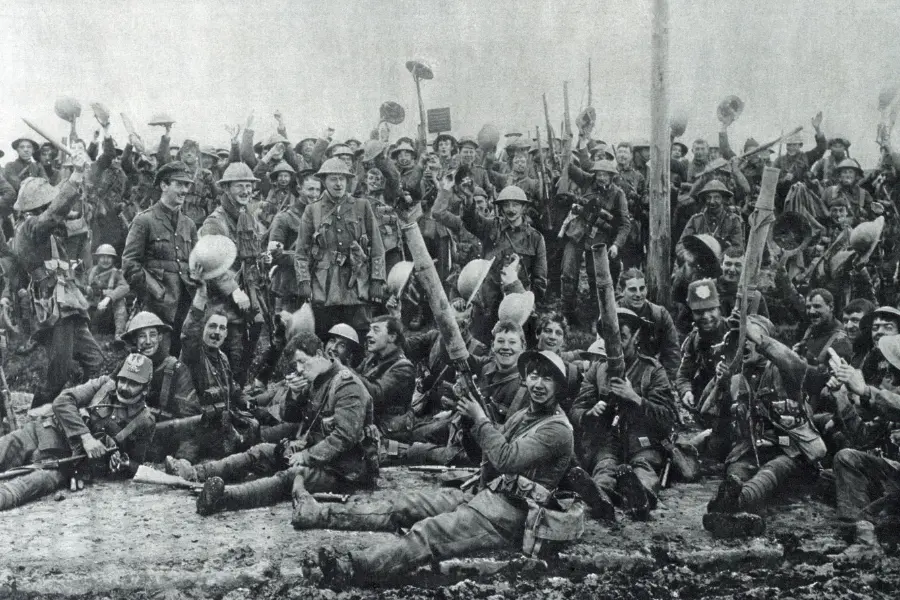
The Allied Powers' soldiers celebrated the end of World War I (1918)
World War I significantly impacted global politics, economies, and societies. These changes influenced future conflicts, including World War II, and shaped the modern world.
Who Won World War 1?
The Allied Powers, which included France, the United Kingdom, and the United States, emerged victorious from World War I.
They fought against the Central Powers, which included Germany, Austria-Hungary, and the Ottoman Empire. The armistice signed on November 11, 1918, marked the formal end of the conflict.
The Allies faced extensive economic and social challenges despite their victory due to war-related devastation.
The victory was not only military but also diplomatic. The Allies secured agreements and treaties that would dictate post-war terms.
While the Central Powers were defeated, the conflict left much of Europe in ruins, leading to shifts in territorial boundaries and political structures.
The Treaty of Versailles and Its Consequences
The Treaty of Versailles, signed in 1919, was a key outcome following World War I. It imposed harsh penalties and reparations on Germany, including large territorial losses, military restrictions, and substantial financial reparations.
The treaty aimed to prevent German aggression, but the strict conditions created economic hardship and resentment within Germany.
This discontent later fueled the rise of Adolf Hitler and the Nazi Party, contributing to the outbreak of World War II.
Many historians argue that the treaty's punitive measures set the stage for future conflict. Although it was intended to maintain peace, the treaty's ramifications were long-lasting and complex, influencing the political landscape for decades.
World War I Summary: Lessons Learned
WWI, often called the "Great War," taught valuable lessons about warfare and diplomacy. It highlighted the devastating potential of modern weapons such as tanks and airplanes.
Strategies evolved to incorporate new technologies like machine guns and chemical weapons, changing how wars were fought.
Politically, the war encouraged the formation of international bodies designed to foster peace, such as the League of Nations. However, the league struggled to be effective, leading to changes in the establishment of the United Nations after World War II.
The conflict emphasized the need for diplomacy and cooperation to avoid such widespread destruction in the future. Understanding the consequences of the First World War remains crucial for preventing similar global conflicts.
The Legacy of World War I
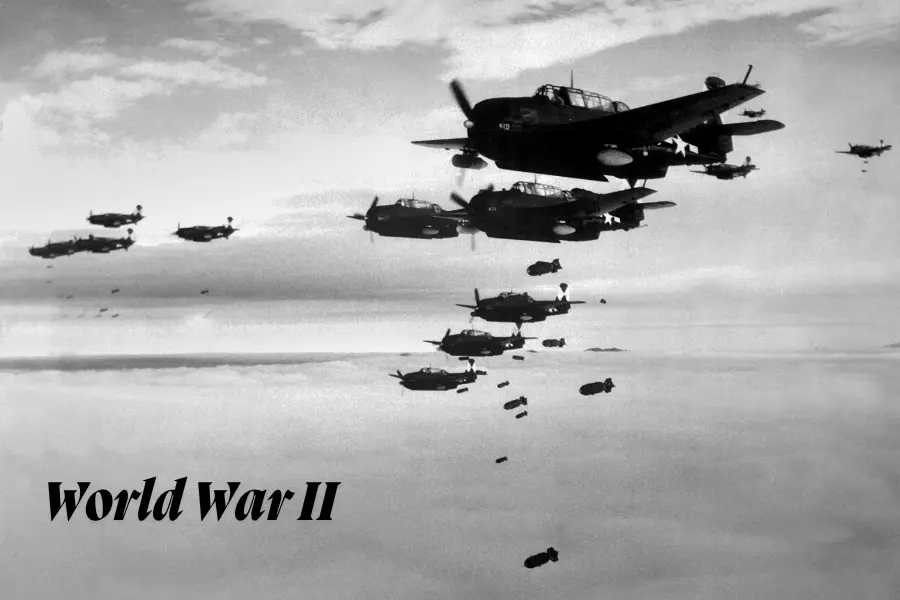
The results of World War I had a direct impact on the events that led to World War II (1939-1945)
World War I left a lasting impact on the world. It transformed military strategies and technologies, setting the stage for future conflicts. The aftermath of the war is still commemorated worldwide through various memorials.
How World War I Shaped Modern Warfare
World War I introduced several innovations in warfare, marking a significant shift in military tactics and technologies. Trench warfare became a defining feature, with soldiers enduring harsh conditions on the front lines.
Tanks and airplanes were used for the first time, changing the dynamics of ground and aerial combat. This war also saw the introduction of chemical weapons, which had devastating effects on soldiers and prompted later bans.
Communication technology advanced, too, with wireless equipment and improved intelligence methods. These developments during World War I laid the groundwork for military tactics in future conflicts, including in World War II.
The Influence of World War I on World War II
The outcome of World War I directly influenced the events leading to World War II. The Treaty of Versailles, which ended the First World War, imposed harsh penalties on Germany, including significant territorial losses and reparations.
These conditions fueled economic hardship and political instability in Germany, creating fertile ground for the rise of Adolf Hitler and the Nazi Party. The grievances over the treaty's terms were a driving force behind Germany's militarization and expansionist policies.
Moreover, the geopolitical landscape was altered, creating new state borders and European tensions. This redrawing of maps and the unresolved conflicts from World War I were key in creating the circumstances that led to World War II.
Remembering the First World War: Commemorations and Memorials
In the years following World War I, many countries built monuments and memorials honoring those who served and lost their lives. The annual observance of Armistice Day on November 11, marking the end of World War I, is a primary example of these commemorations.
Countries like the United Kingdom and France host solemn ceremonies to remember the sacrifices made by their soldiers.
Museums and memorials worldwide preserve artifacts and stories from the war. These sites ensure that the lessons and legacy of World War I remain a part of public consciousness, reminding current and future generations of the war's enduring impact.
Closing Remarks
World War I marked a pivotal moment in global history. The conflict lasted from 1914 to 1918 and involved major world powers divided into the Allies and the Central Powers. The assassination of Archduke Franz Ferdinand in 1914 triggered a chain of events that led to the outbreak of the war.
The war’s impact was profound, leading to significant political shifts and laying the groundwork for future conflicts.
Key battles, such as the Battle of the Somme and Verdun, highlighted the brutal nature of trench warfare. The aftermath reshaped national borders and introduced technological advances in warfare.
Key Takeaways:
World War I began in July 1914.
It involved extensive alliances and modern warfare techniques.
The war concluded in November 1918, impacting future international relations.
As the world looked to recover and rebuild, many lessons were learned that would influence the geopolitical landscape in the years ahead.
Frequently Asked Questions
World War I was a complex conflict triggered by various factors. Primary causes include political alliances, territorial disputes, and the assassination of Archduke Franz Ferdinand. The war ended with significant consequences for the countries involved.
What caused World War 1 using main?
World War I began due to political, military, and nationalistic tensions. The assassination of Archduke Franz Ferdinand was a significant catalyst, alongside longstanding rivalries between major European powers. Complex alliances and treaties also played a critical role.
Why did Germany start WWII?
Germany's involvement in World War II was primarily driven by Adolf Hitler's aggressive expansionist policies and the desire to overturn the Treaty of Versailles. Hitler sought to establish German dominance in Europe, leading to the invasion of Poland in 1939, which triggered World War II.
Why was Germany blamed for WW1?
Germany was mainly held responsible for World War I primarily because it supported Austria-Hungary after the assassination of Archduke Franz Ferdinand. The Treaty of Versailles, imposed on Germany after the war, stipulated harsh reparations and accountability due to its role in escalating the conflict.
What turned World War 1?
The United States' entry into the war in 1917 marked a turning point. The additional resources and manpower provided by the U.S. bolstered the Allies, leading to their eventual victory. Technological advancements and strategic innovations also shifted the tide in favor of the Allies.
Who was assassinated to start WW1?
The assassination of Archduke Franz Ferdinand of Austria-Hungary on June 28, 1914, served as the immediate trigger for World War I. He was killed by Gavrilo Princip, a Bosnian Serb nationalist, setting off a chain of events that led to the Great War.
How was WW1 won?
The Allied Powers won World War I after several key victories and the successful blockade of the Central Powers' resources. The armistice signed on November 11, 1918, marked the end of hostilities, as the Allies pushed the Central Powers back after years of stalemate.
Which country suffered the most casualties during WWI?
Russia suffered the most military and civilian casualties during World War I, with millions of soldiers and civilians dead or wounded. The country's heavy losses resulted from several major battles on the Eastern Front and internal strife that led to the Russian Revolution.
What country started WW1?
The conflict started when Austria-Hungary declared war on Serbia in response to the assassination of Archduke Franz Ferdinand. Austria-Hungary's actions, backed by Germany, sparked a wider war involving multiple European powers due to pre-existing alliances.
Would World War I have happened without the assassination?
While the assassination of Archduke Franz Ferdinand was the immediate trigger, tensions in Europe were already high. The intricate web of alliances and rivalries might have eventually led to war even without the assassination, but it was a decisive event that escalated those tensions.
Why did the US get involved in WWI?
The United States entered World War I for several reasons. These included Germany's unrestricted submarine warfare, which threatened American ships. The discovery of the Zimmermann Telegram was also a factor. Germany tried to ally with Mexico against the United States in this telegram. American entry into the war in 1917 significantly bolstered the Allied effort.
Leonardo da Vinci swing bridge showcases his brilliance in blending art and engineering.
This unique invention was designed to pivot, allowing bridges to be retracted to prevent enemy crossings while also enabling friendly passage.
By exploring da Vinci’s ingenuity, you can appreciate how his designs for a movable bridge addressed both functional and strategic needs at the time.
The da Vinci swing bridge represents a fascinating example of innovation for those intrigued by historical engineering marvels.
This bridge used a series of winches and wheels, showcasing the advanced thinking that da Vinci applied to solving practical problems. Da Vinci's Revolving Bridge further illustrates his contributions to military strategy by enabling quick, effective transport across water obstacles.
Through this exploration, one gains insight into da Vinci’s versatility. His ability to design for civilian and military purposes highlights his invaluable contributions to civil engineering.
The swing bridge is just one example of how his mechanical ideas inspire innovation today.
Overview of the Leonardo da Vinci Swing Bridge
Leonardo da Vinci designed the swing bridge to combine practicality and innovation.
It served civilian and military purposes, providing quick and strategic access across waterways while keeping enemies at bay. Key aspects include its functional use and historical significance in engineering.
The Concept Behind the Swing Bridge
The Leonardo da Vinci swing bridge was crafted with versatility in mind.
Intended for tactical advantages, it allowed travelers and soldiers to cross rivers swiftly.
What made it distinct was its ability to swing open and retract to prevent enemy access. This design showcased da Vinci's brilliance in engineering, blending simplicity with strategic depth.
The structure used wooden beams interlocked to provide strength and flexibility. This engineering feat reflected da Vinci's understanding of physics and mechanics, enabling the bridge to support significant weight while remaining operationally efficient.
Such concepts demonstrated how innovative design approaches could solve practical problems of the time.
Historical Context of Leonardo da Vinci's Designs
During Leonardo’s era, the need for movable bridges was essential, particularly in times of conflict.
The Leonardo da Vinci bridge was developed under the patronage of powerful leaders like Cesare Borgia, who sought effective solutions for military campaigns.
Da Vinci's designs were not just architectural marvels but also tools of war.
His bridges, including the swing and revolving bridges, were pioneering in their time and laid the groundwork for modern movable bridges.
Through these designs, da Vinci provided insights into how to build a Leonardo da Vinci bridge using practical yet advanced techniques that have inspired engineers for generations.
How the Leonardo da Vinci Swing Bridge Works
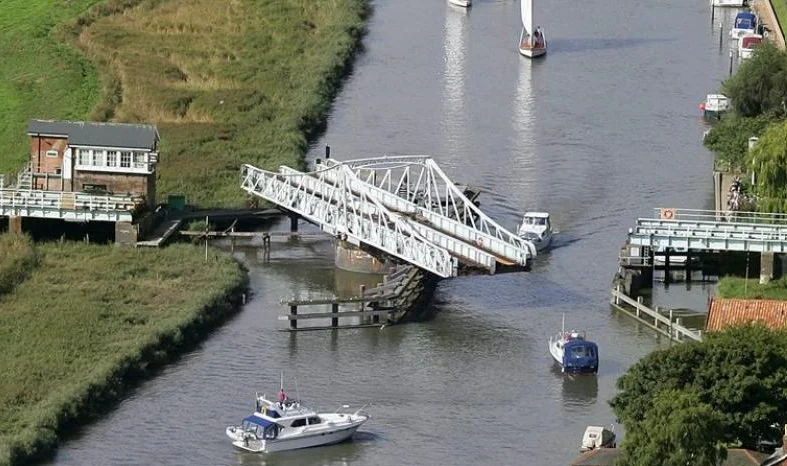
Modern use of a swing bridge
The Leonardo da Vinci swing bridge represents an ingenious feat of engineering. Its design allows for practical use and strategic defense, providing insights into da Vinci's brilliance.
Mechanics of the Swing Bridge Design
The swing bridge is a masterpiece of engineering. Its central pivot allows it to turn 360 degrees.
This pivot is fixed on one bank, enabling the bridge to rotate quickly. Ropes and pulleys complement this mechanism, helping move the bridge smoothly.
Despite its size, a single person could maneuver the swinging bridge, illustrating da Vinci's clever use of force distribution.
Crafted to be functional and defensive, the bridge was initially designed for military purposes.
It could span rivers or trenches and then be swung aside to prevent enemy crossings. This design's simplicity and adaptability highlight da Vinci's innovative approach to construction in the 15th century.
Advantages of the Swing Mechanism
The swing mechanism provided several advantages.
First, it offered rapid deployment and retraction, making it ideal for military operations. Soldiers could cross and secure strategic points quickly without needing a permanent bridge.
Additionally, the revolving nature of the da Vinci bridge allowed it to be moved to prevent enemy access.
This strategic advantage meant that it functioned not only as a passage but also as a deterrent.
The design also reflects da Vinci's broader philosophy of harmonizing design with natural forces.
The way forces interlocked and provided stability showcases his understanding of engineering principles.
This combination of practicality and innovation makes the Leonardo da Vinci swing bridge a standout in the history of engineering.
Applications of the Leonardo da Vinci Swing Bridge
The Leonardo da Vinci Swing Bridge, a marvel of engineering, was not just a concept but a practical solution for various scenarios.
It combined innovation and functionality, allowing for military and civilian applications throughout history.
Historical Uses in Warfare
Leonardo da Vinci designed the swing bridge with military purposes in mind.
Mobility was crucial for armies during his time, especially when crossing rivers or canals. The revolving bridge enabled troops to cross bodies of water swiftly, facilitating strategic deployments and retreats.
The da Vinci Bridge could rotate 90 degrees, using a system of winches and wheels, to allow or block boats' passage.
This function made it a defensive asset, providing a tactical advantage by controlling access to certain areas.
Modern Interpretations and Uses
Today, the Leonardo da Vinci Swing Bridge concept continues to inspire modern engineering projects.
Its design principles are used in educational settings to demonstrate the ingenious application of levers and balance. The self-supporting bridge exemplifies how ancient techniques can influence modern architecture and mechanical design.
Contemporary designers have adapted these principles to create structures requiring quick assembly or temporary setups.
This bridge's ability to facilitate smooth water traffic control has been mirrored in several current canal and river management projects.
The da Vinci Swing Bridge remains a testament to Leonardo da Vinci's forward-thinking approach and its lasting relevance in modern engineering.
Final Thoughts
Leonardo da Vinci's swing bridge is a testament to his innovative spirit and engineering mastery.
Designed for functionality, the bridge could swing open to allow ships to pass, showcasing its practicality during his time.
His design demonstrates a blend of creativity and functionality. The swing bridge concept involved rotating the bridge to make way for boats, highlighting da Vinci's forward-thinking approach.
The simplicity and efficiency of da Vinci's design continue to capture interest.
This bridge wasn't just about mechanics; it was an example of harmonious design and utility working together.
Leonardo's contributions go beyond art; his work, like the swing bridge, underscores his broad impact in engineering and design.
Key Takeaways: Leonardo da Vinci's swing bridge illustrates an incredible fusion of creativity and practicality, inspiring future innovators.
FAQs about Leonardo da Vinci Swing Bridge
What is special about Da Vinci's bridge?
Leonardo da Vinci’s bridge designs are special because they were innovative, portable, and based on advanced engineering principles. His movable bridges—such as the swing and revolving bridges—could rotate or be quickly assembled, allowing armies to cross waterways efficiently while maintaining mobility and strategic advantage.
Who invented the swing bridge?
Swing bridges, as a general concept, evolved over time and were not invented by a single person. However, Leonardo da Vinci designed an early rotating (swing) bridge concept in the 15th century, showing one of the earliest detailed ideas of a movable bridge operated by mechanical systems.
What was the theory of the Da Vinci bridge?
The theory behind Da Vinci’s bridge designs was based on mobility, mechanical advantage, and structural efficiency. His swing bridge used pivot points, winches, and wheels to rotate the structure, allowing it to open for boats or close for crossing, demonstrating an early understanding of dynamic infrastructure systems.
Did Leonardo da Vinci invent the revolving bridge?
Leonardo da Vinci did not invent movable bridges in their entirety, but he designed a revolutionary version of a revolving bridge. His design used ropes, pulleys, and counterweights so the bridge could swing into position quickly and be transported easily by soldiers.
Who invented the Da Vinci bridge?
The Da Vinci bridge was designed by Leonardo da Vinci himself in the late 15th century, while he was working as a military engineer. He created several bridge concepts—including self-supporting and movable bridges—for use in warfare and infrastructure projects.
Did Da Vinci ever build his bridge?
There is no evidence that Leonardo da Vinci’s original bridge designs were built during his lifetime. However, modern engineers have successfully constructed models and real-world versions based on his designs, proving that his concepts were structurally sound.
Da Vinci mechanical drum is one of Leonardo da Vinci’s lesser-known civil inventions. It exemplifies his innovative spirit and continues to captivate and inspire us today.
5 questions about the da Vinci Mechanical Drum
What is a mechanical drum?
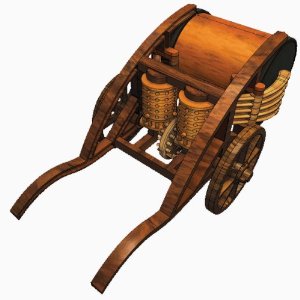
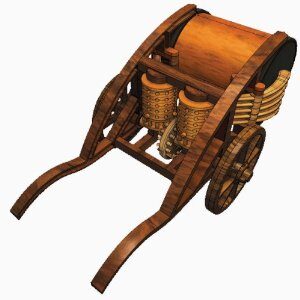
A mechanical drum, also known as a drum machine or automated drum, is a barrel-shaped device invented by Leonardo da Vinci in the late 15th century. When activated, it consists of hammers and beaters that strike its surface to produce a variety of rhythmic sounds.
Who invented the mechanical drum?
Leonardo da Vinci invented the mechanical drum in the late 15th century.
How does a mechanical drum work?
The mechanical drum rotates when a crank is turned or a mechanism is activated. The hammers and beaters attached to its surface strike it as it rotates, creating a musical beat and producing rhythmic sounds.
What was the purpose of the mechanical drum?
The mechanical drum provided a means of creating rhythmic sounds and musical beats. It allowed for the production of consistent, repetitive drumming patterns without human intervention.
What was the significance of da Vinci mechanical drum?
Leonardo da Vinci mechanical drum was a remarkable invention of its time, showcasing his ingenuity and creativity. It paved the way for the development of later drum machines and automated musical devices, leaving a lasting impact on music technology.
The importance and Relevance of da Vinci Mechanical Drum inventions
Technological Advancement
Da Vinci mechanical drum represented a significant leap forward in technological innovation during the Renaissance period. It demonstrated da Vinci's mechanical ingenuity and ability to bridge the gap between art and engineering.
The creation of a machine capable of producing a rhythmic beat with precision was a testament to his understanding of mechanics and acoustics.
Musical Experimentation
The mechanical drum paved the way for musical experimentation and composition. It served as an early precursor to modern drum machines and sequencers, enabling the creation of rhythmic patterns and beats.
This invention laid the foundation for exploring the possibilities of automating musical production and inspiring future musicians and composers.
Influence on Modern Music
Da Vinci mechanical drum is a historical precedent for contemporary drum machines and electronic music production. Today, drum machines are widely used in various musical genres, enabling musicians to create complex rhythmic patterns with ease.
The influence of the mechanical drum is evident in the development of electronic music, where programmed beats and synthesized sounds have become fundamental elements of composition.
Cross-Disciplinary Inspiration
Da Vinci mechanical drum exemplifies his multidisciplinary approach to innovation. It highlights the interplay between art, science, and engineering, a characteristic that has become increasingly relevant in today's world.
The drum's design and functioning demonstrate da Vinci's ability to merge his anatomy, mechanics, and acoustics knowledge, showcasing the importance of interdisciplinary collaboration in solving complex problems.
Leonardo da Vinci mechanical drum is a testament to his visionary mind and innovative spirit. Its significance extends beyond its historical context, inspiring modern advancements in music production and demonstrating the power of interdisciplinary thinking.
By recognizing the importance of da Vinci's civil invention, we pay homage to a genius who continues to shape and influence our world, even centuries after his time.
FAQs about Leonardo da Vinci Mechanical Drum
Did Da Vinci's flying machine work?
Leonardo da Vinci’s flying machine did not work successfully in practice. His designs relied on human-powered flapping wings, but modern analysis shows that a person could not generate enough power to lift the machine off the ground, making it impractical with Renaissance technology.
What is the Da Vinci mechanism?
The “Da Vinci mechanism” generally refers to Leonardo’s use of gears, pulleys, cranks, and cam systems to convert motion and automate tasks. These mechanical principles appear across his inventions, including clocks, carts, and devices such as the mechanical drum, demonstrating an early understanding of engineering and automation.
What is Da Vinci's most famous invention?
Leonardo da Vinci’s most famous invention is often considered his flying machine, inspired by the movement of birds. His detailed studies of flight and innovative designs made it one of the earliest serious attempts to achieve human flight.
What were some of Da Vinci's mechanical designs?
Leonardo created many mechanical designs, including the self-propelled cart (an early automobile), mechanical drum, hydraulic devices, cranes, and automated machines. These inventions demonstrate his ability to combine art, physics, and engineering into functional concepts.
How does da Vinci's machine work?
Many of Da Vinci’s machines work by converting motion using mechanical linkages such as gears, springs, and cranks. For example, his mechanical drum uses wheel movement to drive internal mechanisms that trigger drumsticks in a programmed rhythm, illustrating early automation.
Why is the flying machine so good?
Leonardo’s flying machine is considered “good” because it was far ahead of its time, based on careful observation of birds and early aerodynamic thinking. Although it could not function with the materials and power available, it laid conceptual foundations for later aviation developments.
The Leonardo da Vinci machine gun is a fascinating example of Renaissance-era ingenuity and foresight. You may find yourself intrigued by the idea of a famous artist contributing to weapons development.
This article will explore how Leonardo da Vinci's imaginative designs paved the way for future advancements in weaponry.
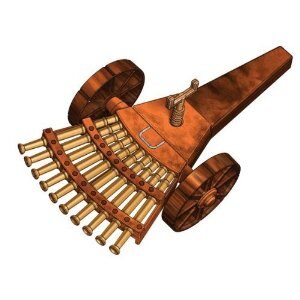
Leonardo's machine gun, also known as the 33-barreled organ, was a unique prototype designed to address the slow reloading time of traditional firearms. Arranging multiple barrels in a fan shape enabled rapid successive firing, which was groundbreaking for its time.
Though never built, Leonardo's design was a precursor to modern automatic firearms.
Beyond just the machine gun, this inventive mind conceived various other war machines, including armored cars and giant crossbows. His work as a military engineer demonstrated his unparalleled ability to merge art with practical technology applications.
History and innovation enthusiasts will appreciate how his ideas influence the design of contemporary weapon systems.
Leonardo da Vinci Machine Gun: Historical Context
Leonardo da Vinci's inventive genius during the Renaissance led to many groundbreaking ideas. His concepts for military technology, such as the machine gun, showcased his imaginative approach to warfare.
Invention during the Renaissance
During the Renaissance, Leonardo da Vinci emerged as one of the most influential figures in art, science, and engineering. His ideas often included significant technological advancements.
The Leonardo da Vinci machine gun is a prime example of his foresight in modern weaponry. Developed in the 15th century, it proposed a rotating barrel system allowing continuous firing without reloading delays. This idea laid the groundwork for future advancements in artillery.
The Renaissance period was marked by a desire to explore new ideas, and da Vinci's work reflected this spirit of innovation and curiosity. His visionary designs were not limited to weapons but also included concepts like the Leonardo da Vinci flying machine and the much-discussed Leonardo da Vinci tank.
Leonardo da Vinci's Military Designs
Leonardo da Vinci's military designs were ahead of their time, encompassing a range of da Vinci war machines. His work demonstrated a deep understanding of engineering principles, which he applied to create innovative solutions for military challenges.
Among his creations, the Leonardo da Vinci machine gun stood out for its unique approach. Featuring a 33-barreled organ gun, it aimed to improve firing rates and efficiency.
While these designs were revolutionary, they remained conceptual during his lifetime. This fascination with engineering extended beyond weapons, influencing later inventors and paving the way for future advancements in military technology.
Design and Mechanisms
Leonardo da Vinci's machine gun showcases his remarkable ability to envision complex mechanical systems. This innovation foreshadowed the evolution of modern artillery and highlighted his forward-thinking approach to weaponry.
Technical Specifications
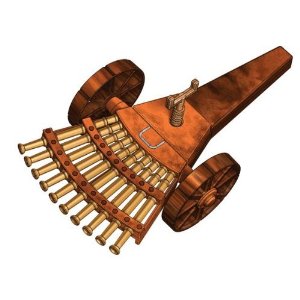
The da Vinci machine gun, often compared to the 33-barrel organ, was a marvel of engineering for its time. It featured multiple small-caliber barrels arranged in a fan shape, allowing for simultaneous firing. This design increased the rate of shots and offered a wide spread of bullets.
A crucial feature was its mobility. The gun's carriage had wheels, enabling easy movement on the battlefield.
Leonardo's sketches detailed loading mechanisms and the elevation adjustments necessary for aiming. The concept was to overwhelm enemies with a barrage of firepower, a strategy that still resonates in modern artillery systems.
Innovations in Weaponry
Leonardo's design was ahead of its time in terms of military technology. His war machines, like this machine gun, were part of a broader vision that included other ingenious inventions such as the Leonardo da Vinci tank and the parachute Leonardo da Vinci.
These devices underscore his understanding of the dynamics of war and defense mechanisms.
The concept of rapid-fire artillery, which was not fully realized until centuries later, highlights Leonardo's pioneering thought. His machine gun laid the groundwork for future developments in weaponry.
Artistic Representation
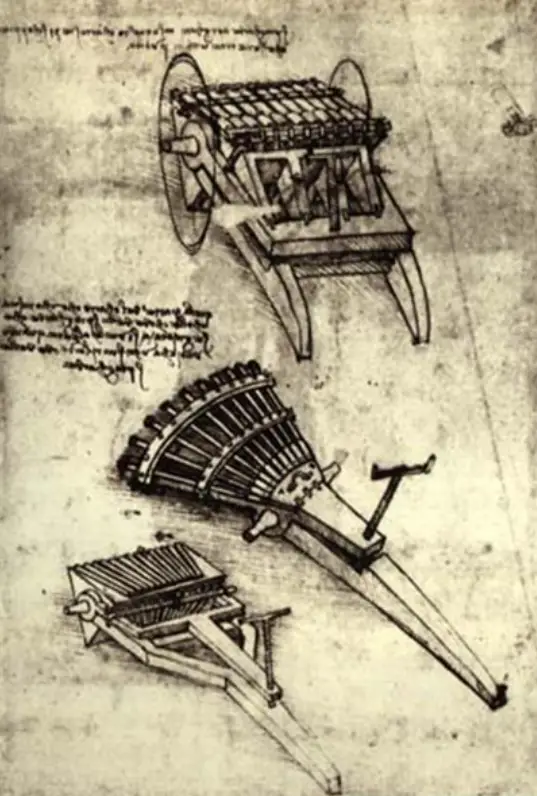
Leonardo da Vinci Machine Gun Drawing
Leonardo da Vinci's machine gun exemplifies his visionary art, blending mechanics and aesthetics. His sketches reflect his innovative approach to engineering and showcase early ideas that predate modern firearms.
Sketches in the Codex Atlanticus
In the Codex Atlanticus, Leonardo da Vinci created detailed designs for multiple-barrel machine guns. This collection of drawings, part of the Biblioteca Ambrosiana in Milan, includes a 33-barreled organ gun resembling organ pipes aligned together. These sketches highlight his artistic finesse and his ability to envision warfare technology.
Da Vinci focused on machine guns and explored other military inventions, such as the Leonardo da Vinci cannon and various war machines. His designs were intended to improve firing rates in conflict situations.
Though his machine gun concept was never built, it paved the way for modern engineering discussions.
Leonardo’s work exhibits a seamless fusion of art and science. His drawings stand as artistic representations that reveal his unique perspective on innovation. This blend of creativity and engineering showcases da Vinci's profound impact on art and technology.
Reproduction and Models
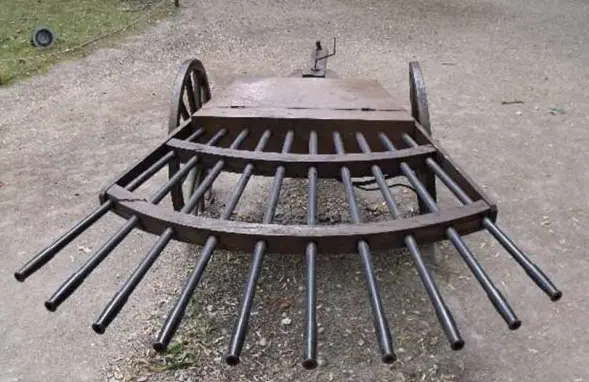
Da Vinci Machine Gun-Real Model, Château in Amboise, France
Recreating Leonardo da Vinci's machine gun involves understanding and adapting his original designs for modern construction. This task appeals to history enthusiasts and engineers who appreciate da Vinci's ingenuity.
Contemporary Reconstructions
Leonardo da Vinci's machine gun, sometimes called a rapid-fire crossbow, was detailed in his famous notebook, the Codex Atlanticus. Enthusiasts and historians have recreated this design to explore its practicality. The machine gun aimed to fire multiple shots rapidly, an idea unique to da Vinci's time.
Producing this machine includes using materials and methods that mirror the 16th-century vision.
The Leonardo3 Museum provides insights into these machines by displaying digital and physical models.
Their exhibits allow visitors to interact with da Vinci's concepts, including crossbow designs andflying machines. Building these models deepens our appreciation for his inventive genius and showcases how his ideas, such as the Leonardo da Vinci machine gun, remain significant engineering advancements.
Final Thoughts
Leonardo da Vinci's machine gun designs showcase his remarkable foresight and creativity in the field of weapon innovation. His concept of a multi-barreled weapon addressed the slow reloading times of early firearms.
Several of his designs, like the 33-barreled organ gun, can be seen as prototypes for modern artillery.
Leonardo's innovative use of multiple cannons firing in succession demonstrated his deep understanding of battlefield needs.
Despite their potential, these designs mainly remained theoretical due to technological and resource constraints. However, his ideas did influence later generations.
Key Takeaways: Leonardo da Vinci's ideas on machine guns were ahead of his time, laying the groundwork for future advancements in rapid-fire weaponry. His inventive spirit continues to inspire engineers and inventors today.
FAQs about Leonardo da Vinci machine gun
Did Leonardo da Vinci make a machine gun?
Leonardo da Vinci did not create a true modern machine gun, but he designed a “33-barreled organ”, a multi-barreled weapon that could fire in rapid succession. It used rows of small cannons on a rotating platform to allow continuous firing and cooling, making it a precursor to modern machine guns.
Who invented the first machine gun?
The first true machine gun is generally credited to Hiram Maxim, who invented the Maxim gun in 1884. Unlike earlier designs, it was fully automatic, using recoil energy to reload and fire continuously without manual operation.
What weapons did Leonardo da Vinci invent?
Leonardo designed numerous weapons, including the 33-barreled organ gun, armored vehicles (tanks), a giant crossbow, and improved cannons. His focus was on increasing firepower, mobility, and battlefield efficiency through innovative mechanical designs.
Did Da Vinci design war machines?
Yes, Leonardo da Vinci created many designs for war machines in his notebooks. These included artillery systems, defensive vehicles, and siege weapons, showing his role as a military engineer who applied scientific thinking to warfare.
What is Da Vinci's greatest invention?
There is no single “greatest” invention, but some of Leonardo’s most famous designs include the aerial screw (early helicopter), armored vehicle, and multi-barrel gun. These stand out because they introduced ideas far ahead of the technology of his time.
Did Da Vinci invent anything?
Leonardo da Vinci did not mass-produce inventions, but he created hundreds of innovative designs and concepts across engineering, anatomy, and science. Many were never built, yet they influenced later technological developments and demonstrate his extraordinary creativity.
Leonardo Bianchi is the founder of Leonardo da Vinci Inventions & Experiences, a cultural travel guide helping visitors explore Leonardo da Vinci’s art, inventions, and legacy across Italy and Paris.
Planning Milan?
See The Last Supper Without Missing the Details
Tickets are limited and visits are short. Start with the Milan guide before choosing your Last Supper experience.
If you're visiting Milan for Leonardo da Vinci, these are the experiences most travelers prioritize first — especially when tickets are limited and time is short.
This site is built for travelers who want more than surface-level sightseeing — helping you plan smarter visits around Leonardo da Vinci’s art, museums, and cities across Italy and Europe.

 Leonardo Bianchi is the founder of Leonardo da Vinci Inventions & Experiences, a cultural travel guide helping visitors explore Leonardo da Vinci’s art, inventions, and legacy across Italy and Paris.