Da Vinci Codex Atlanticus is the largest surviving collection of drawings and writings by Leonardo da Vinci, a breathtaking archive spanning more than 40 years of one man’s relentless curiosity. Assembled across 1,119 folios, this extraordinary codex touches on everything from flying machines and hydraulics to anatomy, botany, and mathematics.
What makes the Codex Atlanticus so fascinating is not just what it contains — it is what it reveals. Here you see Leonardo not as a finished genius posing for posterity, but as a working mind in motion. Pages of the Leonardo Codex Atlanticus show calculations crossed out and restarted, sketches layered over sketches, and ideas pursued, then abandoned, then revisited years later.
Historically, the da Vinci Codex matters because it survived at all. After Leonardo’s death in 1519, his notebooks were scattered across Europe. The artist and sculptor Pompeo Leoni painstakingly gathered hundreds of loose sheets during the late 16th century and mounted them onto large folios — that act of preservation gave us the Codex Atlanticus as we know it today.
For anyone planning a cultural trip to Milan, understanding the Codex Atlanticus makes a museum visit much richer. You are not simply looking at old paper. You are standing before the most complete record of a Renaissance mind that history has preserved.
This post is all about the da Vinci Codex Atlanticus — where it came from, what it contains, and where you can see it in person today.
What Is the Da Vinci Codex Atlanticus?
Da Vinci Codex Atlanticus is a 12-volume collection of 1,119 sheets containing drawings, diagrams, and writings by Leonardo da Vinci, compiled between roughly 1478 and 1519. It is housed at the Biblioteca Ambrosiana in Milan and is the largest single collection of Leonardo’s manuscripts. The name refers to the large atlas-sized format of the folios.
The Engineering Idea Behind the Da Vinci Codex Atlanticus
Leonardo’s Design Concept
Leonardo da Vinci never intended the Codex Atlanticus to be a book. He was not writing for readers. He was thinking on paper, and the codex is the closest we will ever get to watching that happen in real time.
The sheets of the Leonardo da Vinci Codex Atlanticus span an enormous range of subjects. On one page, you might find a detailed sketch of a canal lock mechanism. Turn the folio, and there is a study of light refraction, or a note about water currents, or a drawing of a mechanical wing. Leonardo worked across disciplines the way most people change subjects in conversation — naturally, fluidly, and with relentless energy.
What unified all of this was a single engineering philosophy: observe nature, extract its principles, and apply them through design. Leonardo believed that flight was possible because birds existed. He believed machines could replicate the motion of water because he had studied currents for years. The codex is the record of that belief system made visible.
Renaissance Engineering Principles
To understand the Codex Atlanticus, it helps to understand the Renaissance world it came from. In Leonardo’s lifetime, the boundaries between art, science, and engineering did not exist. A painter was expected to understand geometry. An architect was expected to understand hydraulics. A court engineer was expected to design weapons, festivals, and aqueducts with equal skill.
Leonardo worked within this tradition — and pushed far beyond it. The Codex Atlanticus, in the Ambrosiana Collection, contains his studies of gear mechanisms, water-lifting devices, and fortification designs commissioned by patrons such as Ludovico Sforza in Milan and later by Cesare Borgia. These were real engineering projects, not theoretical exercises.
But it also contains pages that had no immediate patron and no practical deadline. Pages where Leonardo simply wondered. His studies of bird flight, wave motion, and the proportions of the human skull appear alongside military commission sketches, with no clear sense of priority. Everything interested him equally.
Why the Idea Mattered
The pages of the Codex da Vinci challenged the boundaries of what a Renaissance mind was supposed to think about. Leonardo was not simply cataloguing inventions. He was building a private scientific method decades before Francis Bacon formalized one.
Many of his ideas — including a rudimentary helicopter concept, a solar energy concentrator, and studies of plate tectonics — would not be revisited by science for centuries. The Codex Hammer and Codex Leicester, two other famous Leonardo manuscripts, share this quality of radical foresight. But the Codex Atlanticus is the largest and most varied, making it the most complete portrait of Leonardo’s restless mind.
How the Codex Atlanticus Works as a Document
Codex Atlanticus, folio 16, shows Leonardo’s sketches of a cart equipped with instruments for measuring distance, either in miles or by steps
Mechanical Design and Structure
The physical structure of the Codex Atlanticus book is worth understanding before you visit. What Pompeo Leoni assembled in the late 1500s was not a conventional manuscript. He took hundreds of loose Leonardo sheets — some tiny, some large — and mounted or pasted them onto 65 enormous folios, each the size of an atlas page. This is where the name comes from: Atlanticus, meaning atlas-sized.
For centuries, the collection remained in this bound form. In the 1960s and 1970s, the Biblioteca Ambrosiana undertook a careful restoration that separated the original Leonardo sheets from Leoni’s mounts, allowing scholars to study each page independently for the first time. The result was the 12-volume arrangement that visitors can research today.
If you want to explore the collection without traveling to Milan, the Codex Atlanticus is partially available online through digital archives, including the Biblioteca Ambrosiana’s digitization projects. But seeing a reproduction, however high quality, is genuinely different from encountering the originals.
Structural Principles of the Collection
One of the most striking things about the codex is the sheer variety of its contents. Scholars have identified studies related to at least forty separate subjects across the 1,119 sheets. These include urban planning designs for a new city that Leonardo proposed to Ludovico Sforza, mechanical clock components, studies of the flight of swallows, calculations for casting a giant equestrian statue, and notes on the behaviour of water in motion.
Codex atlanticus, page 132, for example, contains one of Leonardo’s famous studies of a flying machine—a design for an ornithopter, or flapping-wing aircraft, based on his observations of birds. The drawing is precise, annotated in Leonardo’s characteristic mirror writing, and reveals a mind working through an engineering problem with genuine seriousness.
The Codex Arundel, held at the British Library in London, is a related manuscript containing similar hydraulic and mechanical studies. Comparing the two gives scholars a fuller picture of how Leonardo’s ideas evolved across different periods and locations of his career.
Why the Idea Still Matters Today
The Leonardo da Vinci and the Secrets of the Codex Atlanticus is a phrase researchers and documentary makers return to repeatedly — and for good reason. The codex is not simply a historical document. It is a mirror held up to the gap between imagination and execution.
Many of Leonardo’s designs were not built in his lifetime because the materials and manufacturing precision required did not yet exist. His concepts for ball bearings, for instance, anticipated the industrial age by three hundred years. His hydraulic studies influenced engineers working on Milanese canals for generations after his death.
The Codex Atlanticus Salai — a reference sometimes used for pages associated with Leonardo’s pupil and companion, Gian Giacomo Caprotti — reminds us that these ideas circulated within Leonardo’s workshop and influenced the next generation of Renaissance artists and craftspeople.
The Codex Leicester, now owned by Bill Gates and occasionally displayed publicly, covers Leonardo’s water studies in detail. But the Codex Atlanticus casts a far wider net, making it the essential document for anyone serious about understanding Leonardo as an engineer rather than simply as a painter.
Where to See the Da Vinci Codex Atlanticus Today
The Biblioteca Ambrosiana in Milan, Italy
The Biblioteca Ambrosiana in Milan
The permanent home of the Codex Atlanticus is the Biblioteca Ambrosiana in central Milan — one of the oldest libraries in Europe, founded in 1609 by Cardinal Federico Borromeo. The library is located on Piazza Pio XI, a short walk from the Piazza del Duomo and the famous Galleria Vittorio Emanuele II shopping arcade.
The Ambrosiana houses the codex in its Pinacoteca, the art gallery attached to the library. A selection of the most significant pages is rotated for public display, so visitors can see original Leonardo sheets in an intimate rather than overwhelming setting. The Codex Atlanticus Ambrosiana display is one of the most quietly astonishing experiences available to anyone interested in the Renaissance.
Unlike some of the more crowded Leonardo attractions in Italy, the Ambrosiana rewards those who take their time. The gallery also holds Raphael’s famous cartoon for the School of Athens and other Renaissance masterpieces, making it a destination worthy of a dedicated half-day visit.
Modern Reconstructions and Exhibitions
For visitors who want to see Leonardo’s engineering ideas brought to life, Milan offers several complementary experiences. The Museo Nazionale della Scienza e della Tecnologia Leonardo da Vinci — the National Museum of Science and Technology — holds one of the world’s largest collections of models based on Leonardo’s drawings. Many of these reconstructions draw directly from Codex Atlanticus sketches.
The museum’s Leonardo galleries allow visitors to move from the two-dimensional sketches of the codex to three-dimensional wooden and metal models of the machines Leonardo envisioned. It is an enormously effective way to understand what Leonardo was actually trying to build — and how remarkably close some of his concepts came to working.
Visitor Experience and City Context
Milan is one of the great cities of Leonardo. Beyond the Ambrosiana and the Science Museum, the city holds The Last Supper — Leonardo’s monumental mural at Santa Maria delle Grazie — as well as the Castello Sforzesco, where Leonardo worked for Ludovico Sforza, and which now houses several collections related to Leonardo.
Planning a visit to see the Codex Atlanticus alongside The Last Supper and the Science Museum makes for one of the most complete Leonardo experiences available anywhere in the world. Each site reveals a different dimension of the same extraordinary mind.
Many visitors choose an entrance-only ticket to the Ambrosiana for flexibility, while others prefer a guided tour that places the Codex Atlanticus in its full historical and artistic context. If you are planning to see Leonardo’s work in Milan, comparing ticket and tour options before your visit can make a significant difference to how much you take away from the experience.
Milan is where Leonardo spent some of the most productive years of his life — roughly from 1482 to 1499, and again from 1506 to 1513. The city shaped his engineering career, secured his patronage from Ludovico Sforza, and provided the setting for The Last Supper. It also became the permanent home of the Codex Atlanticus. For anyone serious about tracing Leonardo’s life through place, Milan is the essential starting point.
Beyond the Codex Atlanticus and the sites mentioned above, Milan rewards deeper exploration. The Castello Sforzesco and its collections, the church of Santa Maria delle Grazie, and the lesser-known Vineyard of Leonardo in the Casa degli Atellani all offer connections to Leonardo that most tourists miss entirely.
Planning a few days around these sites, with the Ambrosiana as an anchor, creates one of the most rewarding cultural travel experiences Italy has to offer.
For more on Leonardo’s world across Italy and Europe, explore these related guides on leonardodavincisinventions.com:
This post was all about the Da Vinci Codex Atlanticus — and what it reveals is something that no biography of Leonardo can quite capture. Biographies tell you what he did and when he did it. The codex shows you how he thought. That difference is enormous.
What strikes most visitors to the Ambrosiana is not the grandeur of the collection but its intimacy. These are working pages. The ink is faded, but the urgency is still there — in the density of the annotations, the overlapping sketches, the corrections and revisions. Leonardo was not performing a genius for posterity. He was chasing ideas because he could not help himself.
The Renaissance produced extraordinary art and thought, but the Codex Atlanticus stands slightly apart from the rest of that inheritance. It is not a finished work. It is a mind in motion, preserved by accident and held together by the determination of people who recognised its value across five centuries.
To stand before its pages in Milan is to understand, in a way that no reproduction can fully convey, why Leonardo da Vinci remains the most fascinating figure the Renaissance produced — and perhaps the most fascinating the Western world has ever known.
FAQs about da Vinci Codex Atlanticus
Why was the Da Vinci Codex called Atlanticus?
The Codex Atlanticus was named after its large paper format, which resembled that of atlases. The term “Atlanticus” refers to these oversized sheets rather than any connection to the Atlantic Ocean.
Can you see the Codex Atlanticus?
Yes, parts of the Codex Atlanticus can be seen at the Biblioteca Ambrosiana in Milan, where selected pages are displayed in rotating exhibitions. Additionally, the entire codex has been digitized and is available online for public viewing.
Is the codex owned by Bill Gates?
No, the Codex Atlanticus is not owned by Bill Gates. It is preserved at the Biblioteca Ambrosiana in Milan. Bill Gates owns a different Leonardo manuscript called the Codex Leicester, which he purchased in 1994.
Which country banned The Da Vinci Code?
Several countries restricted or banned The Da Vinci Code, including Lebanon, where it was officially banned for its religious content, which was considered offensive to Christianity.
Why is The Da Vinci Code controversial?
The Da Vinci Code is controversial because it presents fictional claims about Jesus Christ, including ideas about his marriage and hidden bloodline, which contradict traditional Christian beliefs. Many religious groups criticized it for blurring fiction with historical and theological claims.
Who was the descendant of Jesus in The Da Vinci Code?
In The Da Vinci Code, the character Sophie Neveu is revealed to be a descendant of Jesus Christ and Mary Magdalene, forming a central element of the novel’s fictional storyline.
Museo Nazionale Scienza e Tecnologia Leonardo da Vinci in Milan, Italy
(Last updated: May 2026)
Leonardo da Vinci museums are among the most visited and most celebrated cultural destinations in the world — places where the full scope of one of history’s greatest minds comes into focus, not just through paintings, but through drawings, manuscripts, reconstructed machines, and the living memory of the cities that shaped him.
Leonardo was born in Tuscany in 1452 and spent his life moving between Florence, Milan, Venice, Rome, and finally France. Every city left its mark on him. Every city still carries his mark in return. The museums and institutions that now preserve his legacy are not simply art galleries. They are archives of a restless, insatiable curiosity that touched almost every field of human knowledge.
For travelers interested in Renaissance history, art, and science, following Leonardo across Italy and Europe is one of the richest cultural tourism journeys. Understanding which museums hold what, and why each collection matters, transforms a tourist visit into a genuine encounter with the Renaissance mind.
This post is all about Leonardo da Vinci museums — where they are, what they hold, and how to make the most of a visit to each one.
What Are Leonardo da Vinci Museums?
Leonardo da Vinci museums preserve his paintings, drawings, notebooks, and inventions. From major galleries like the Louvre and Uffizi to sites like the Museo Leonardiano, they showcase his genius across art, science, and engineering in multiple countries.
Leonardo da Vinci museums list
Here is a clear overview of the most important Leonardo da Vinci museums across Europe, including what you can see at each location.
Planning Your Leonardo Museum Itinerary
Planning to visit? Use this quick guide to avoid crowds and choose the right Leonardo experience. (Some sites, especially The Last Supper, require advance booking — planning ahead makes all the difference.)
Museum / Site
Location
What to See
Best For
Booking Needed
Best Time
Louvre Museum
Paris, France
Mona Lisa, a major Leonardo painting
First-time visitors, iconic art
Recommended
Early morning (opening hours)
Uffizi Gallery
Florence, Italy
Annunciation, Adoration of the Magi
Art lovers, Renaissance beginners
Recommended
Early morning or late afternoon
Museo Leonardiano
Vinci, Italy
Invention models, Leonardo’s birthplace
Families, invention enthusiasts
Not required
Mid-morning, weekdays
Santa Maria delle Grazie (Last Supper)
Milan, Italy
The Last Supper mural
Serious art travelers
Required (book weeks ahead)
Early morning
Museo Nazionale della Scienza e della Tecnologia
Milan, Italy
Machine models, engineering exhibits
Students, tech enthusiasts
Not required
Weekday mornings
Biblioteca Ambrosiana / Pinacoteca Ambrosiana
Milan, Italy
Codex Atlanticus, Portrait of a Musician
Scholars, history enthusiasts
Not required
Quiet weekday afternoons
Gallerie dell’Accademia
Venice, Italy
Vitruvian Man (rare display)
Advanced art lovers
Recommended
Early morning
Vatican Museums
Rome, Italy
Drawings, Renaissance collections
Cultural travelers
Recommended
Early morning or late entry
Castel Sant’Angelo Museum
Rome, Italy
Renaissance artifacts, historical context
History lovers
Not required
Late afternoon
Leonardo Interactive Museums
Florence, Rome, Milan
Hands-on models, inventions
Families, casual visitors
Not required
Midday (less crowded)
Château du Clos Lucé
Amboise, France
Leonardo’s home, invention models
Cultural travelers
Not required
Morning or early afternoon
Royal Collection Trust
Windsor, England
Anatomical drawings, manuscripts
Scholars, specialists
Limited access
Check exhibition schedules
Each of these museums offers a different perspective on Leonardo’s genius — from original masterpieces to interactive engineering experiences.
Why Leonardo da Vinci Museums Matter
Château du Clos Luce in Amboise, France
Leonardo da Vinci left behind fewer than twenty completed paintings. But he also left behind thousands of pages of notebooks — drawings of machines, studies of anatomy, observations about water, light, geology, and flight. No single museum holds everything. Understanding his legacy means understanding how it is scattered, and why.
His notebooks were never intended for publication. After his death in 1519, they passed through many hands before eventually being dispersed across collections in Milan, Windsor, Paris, Turin, and beyond. His paintings followed a similarly complex path. Some went to the French royal collection. Others remained in Italy. A few crossed the Atlantic.
The Renaissance Context Behind the Collections
To understand why Leonardo’s works ended up where they did, you need to understand the political world of the Renaissance. Leonardo worked under powerful patrons: Lorenzo de’ Medici in Florence, Ludovico Sforza in Milan, Cesare Borgia, the papacy in Rome, and finally King Francis I of France.
Each patron commissioned works and, in some cases, claimed or received them. When Ludovico Sforza fell from power in 1499, Leonardo left Milan, taking his notebooks but leaving behind The Last Supper, painted directly on the wall of a monastery dining hall, and unable to be moved.
Francis I of France invited Leonardo to spend his final years at the Château du Clos Luce in Amboise. Leonardo brought several of his most important paintings with him — including the Mona Lisa — which is why the Louvre in Paris now holds the largest single collection of his paintings in the world.
Original Works Versus Experience Museums
There are two broad types of the Leonardo museum.
Museum Type
Focus
What You See
Examples
Original Works Museums
Preserve authentic works created or touched by Leonardo
Leonardo da Vinci Museum of Science and Technology (Milan), museums in Rome and Florence
Both types are valuable. Original works give you direct contact with Leonardo’s hand. Experiencing museums deepens your understanding of his thinking and inventions.
How Institutions Preserve His Legacy
Preserving Leonardo’s works is an enormous ongoing task. The Last Supper in Milan underwent a major restoration lasting over twenty years, completed in 1999. Infrared reflectography and other modern imaging techniques have revealed underdrawings in his paintings that are invisible to the naked eye.
His notebooks are now largely digitized and accessible online through institutions like the Royal Collection Trust at Windsor and the Biblioteca Ambrosiana. But visiting the physical collections still offers something digital access cannot: the scale, the texture, and the presence of objects that Leonardo held in his hands.
Leonardo da Vinci Museum Florence: Where His Journey Began
Florence is the starting point for any Leonardo museum itinerary. It is where he trained, where he produced his earliest works, and where the great Uffizi Gallery now holds some of his most important early paintings.
The Uffizi Gallery
The Uffizi is one of the world’s great art museums, and for Leonardo travelers, it holds three works of extraordinary significance. The Annunciation, painted around 1472, is one of his earliest surviving paintings and shows the influence of his training under Verrocchio.
The unfinished Adoration of the Magi, begun in 1481, reveals Leonardo’s compositional process more clearly than almost any other work — the underdrawing is visible through the thin layers of paint, showing how he worked out complex arrangements of figures before committing to color.
The third Uffizi work is a red chalk self-portrait drawing attributed to Leonardo. Whether or not it is truly a self-portrait remains debated, but it is one of the most recognizable images of the Renaissance artist.
The Museo Leonardiano in Vinci
About an hour’s drive west of Florence, the small hilltop town of Vinci is Leonardo’s birthplace. The Museo Leonardiano spans two buildings in the historic center and houses a remarkable collection of models based on his notebook drawings — flying machines, hydraulic devices, weapons, and engineering tools.
Nearby, in the hamlet of Anchiano, Leonardo’s childhood home has been preserved and is open to visitors. It is a simple stone farmhouse with restored interiors and a short exhibition about his early life. The combination of the museum and the birthplace makes Vinci an essential stop on any Leonardo itinerary.
Interactive Leonardo Experiences in Florence
Several private museums and exhibition spaces in Florence offer the Leonardo da Vinci experience in an accessible, hands-on format. These are particularly popular with families and students. They present reconstructed models of his machines alongside reproductions of his drawings and notebooks, allowing visitors to understand the engineering logic behind his inventions.
These are not collections of original works, but they serve a genuine educational purpose — and they are often less crowded than the Uffizi, making them a good complement to a morning in the major galleries.
Leonardo da Vinci Museum Milan: The Heart of His Mature Work
Santa Maria delle Grazie in Milan, Italy
Milan is where Leonardo spent the most productive years of his career. He arrived around 1482 and stayed until 1499, nearly two decades during which he produced The Last Supper, Lady with an Ermine, Portrait of a Musician, and thousands of pages of notebook drawings. No city outside Paris holds more of his work.
Santa Maria delle Grazie and The Last Supper
The refectory of Santa Maria delle Grazie is the single most important Leonardo site in Milan. The Last Supper covers the entire north wall of the room and remains one of the most emotionally powerful images in Western art, even after centuries of damage and restoration.
Visits must be booked in advance — often months ahead during peak season. Only groups of about 30 visitors are admitted at a time, for a 15-minute timed slot. The experience is brief but unforgettable.
The scale of the painting, which you cannot appreciate in photographs, is striking. And the restored colors — uncovered during the 1978-1999 restoration — are far more subtle and beautiful than the dark, deteriorated image most people know from reproductions.
Our dedicated article on Leonardo’s Last Supper museum experience covers the full history of the work, the restoration process, and detailed practical guidance for booking a visit.
The Museo Nazionale della Scienza e della Tecnologia
The Leonardo da Vinci Museum of Science and Technology (Museo Nazionale della Scienza e della Tecnologia) in Milan is Italy’s largest science and technology museum, and its Leonardo wing is a highlight for many visitors. It holds an extensive collection of wooden models built from his notebook drawings, grouped by theme: flying machines, hydraulics, civil engineering, military weapons, and more.
The museum also holds original pages from the Codex Atlanticus — Leonardo’s largest surviving collection of drawings and notes, now held in the Biblioteca Ambrosiana — on periodic display. The science and technology museum provides context that pure art galleries cannot: it explains not just what Leonardo drew, but why, and how his ideas relate to the history of technology.
The Pinacoteca Ambrosiana and the Codex Atlanticus
The Biblioteca Ambrosiana in Milan holds the Codex Atlanticus, a twelve-volume collection of Leonardo’s drawings and notes assembled in the late sixteenth century. It is the largest surviving collection of his manuscript material — over a thousand folios covering topics from mathematics to botany to military engineering.
The adjacent Pinacoteca Ambrosiana gallery holds Portrait of a Musician, one of the few male portraits Leonardo painted and one of his finest surviving works from the Milan period. Together, the Ambrosiana complex offers both the intimate scale of a single great portrait and the vast scope of the notebooks.
Da Vinci Museum Italy and Beyond
Leonardo’s legacy extends well beyond Florence and Milan. His paintings are scattered across Europe, and dedicated exhibitions and institutions in Rome, Venice, Paris, and elsewhere continue to expand the cultural geography of his world.
The Louvre, Paris
The Louvre holds more Leonardo paintings than any other institution in the world: the Mona Lisa, The Virgin of the Rocks, Saint John the Baptist, La Belle Ferronniere, and Saint Anne. For any serious Leonardo traveler, a morning in the Louver’s Denon Wing is an essential experience.
The Mona Lisa hangs in the Salle des Etats, behind bulletproof glass, drawing enormous crowds. To see it well, arrive when the museum opens and go directly to the room before the crowds build. The other Leonardo paintings in the same wing are often less crowded and equally rewarding — Saint John the Baptist in particular is one of his most mysterious and accomplished works.
Paris also offers a related pilgrimage for those who want to understand Leonardo’s final years: Amboise, in the Loire Valley, where the Chateau du Clos Luce preserves his last residence and the gardens where he walked during his years in the service of Francis I.
Leonardo da Vinci in Rome
Leonardo spent two years in Rome between 1513 and 1516, working under the patronage of Giuliano de’ Medici and living in the Belvedere of the Vatican. No major painting survives from this period, but the Vatican Museums hold drawings and documentation related to his stay.
The Museo Nazionale di Castel Sant’Angelo holds material related to his contemporaries and the artistic culture of Rome during his lifetime. And several private Leonardo experience museums in Rome offer the interactive da Vinci museum format, with reconstructed machines and educational exhibitions.
Leonardo da Vinci Museum Venice, and the Vitruvian Man
Venice holds one of Leonardo’s most iconic drawings: the Vitruvian Man, dating from around 1490. The drawing — a figure inscribed in both a circle and a square, illustrating the proportions of the ideal human body as described by the ancient Roman architect Vitruvius — is held in the Gallerie dell’Accademia in Venice.
The Vitruvian Man is rarely on public display because of its fragility. It is shown only occasionally, for short periods, under carefully controlled conditions. When it does appear, the queue to see it is long. Our article on the Vitruvian Man and the Gallerie dell’Accademia covers when and how to see it, and explains the significance of the drawing in Leonardo’s scientific thinking.
Leonardo da Vinci Experience: Practical Travel Guide
Planning a Leonardo-focused trip requires some thought. His works are spread across multiple cities in multiple countries, and the most important sites — particularly The Last Supper in Milan — require advance booking. But the rewards are extraordinary.
Planning Your Leonardo Museum Itinerary
This quick guide shows where to go, what to see, and when to visit each site—helping you plan your trip efficiently and avoid common travel mistakes.
Some of the most popular Leonardo sites require advance booking or timed entry. Exploring each destination in detail will help you choose the right experience and make the most of your visit.
Guided Tours and Specialist Experiences
Guided tours add significant value to Leonardo museum visits, particularly at sites like The Last Supper and the Uffizi. Expert guides can explain the historical context, the technical details of Leonardo’s methods, and the stories of the people and events depicted in the paintings.
Many operators now offer specialist Renaissance art tours that combine multiple Leonardo sites across a single itinerary. These often include access to lesser-visited collections — notebook exhibitions, drawings in private or institutional collections, and architectural sites associated with his patrons.
The Leonardo da Vinci experience museum format — with its interactive models and digital presentations — is ideal for visitors with children or for those new to Renaissance history who want context before tackling the major art galleries.
Best Museums in Milan for Renaissance Art
Milan offers more than Leonardo. A dedicated Renaissance art visit to the city might combine the Last Supper and the Ambrosiana with the Pinacoteca di Brera — which holds major works by Raphael, Caravaggio, and Bramante — and the Castello Sforzesco, whose museums include Leonardo-era artifacts and drawings.
The Castello Sforzesco was the seat of Ludovico Sforza’s court, where Leonardo worked for nearly two decades. Walking through its rooms gives a vivid sense of the political and artistic world in which he operated.
Final Thoughts
This post was all about Leonardo da Vinci museums across Italy, France, and beyond — tracing the path of a genius whose curiosity took him from a farmhouse in Tuscany to the court of the French king, and whose legacy now fills the greatest institutions of the Western world.
What makes Leonardo so endlessly compelling is the breadth of his interests and the depth of his insight. He was not simply a great painter. He was a scientist, an engineer, a philosopher, and an observer of everything.
The museums that preserve his work — from the Louvre to the Museo Leonardiano in Vinci — do not just hold objects. They hold evidence of one of the most extraordinary minds in human history.
FAQs about The Leonardo da Vinci Museums
How many Leonardo da Vinci museums are there in Rome?
Rome has three main museums/exhibitions dedicated to Leonardo da Vinci, all located in the city center. These include the exhibition at Palazzo della Cancelleria, the Leonardo da Vinci Experience near the Vatican, and the museum in Piazza del Popolo.
Which Leonardo da Vinci museum is best?
The “best” Leonardo museum depends on your interests, but many visitors favor the Palazzo della Cancelleria exhibition (Mostra di Leonardo) because it features many interactive models, holograms, and educational displays. It offers one of the most comprehensive and immersive experiences of Leonardo’s inventions.
Does Leonardo da Vinci have a museum?
Yes, there are multiple museums dedicated to Leonardo da Vinci across Italy, including Rome, Florence, Milan, and his birthplace, Vinci. These museums typically focus on models of his inventions, scientific studies, and reproductions of his works rather than original paintings.
Where is the museum of Da Vinci?
Leonardo da Vinci museums are located in several key cities, including Rome (multiple interactive museums), Florence/Vinci (his birthplace, home to the Museo Leonardiano), and Milan (home to the National Museum of Science and Technology dedicated to him). Each location highlights different aspects of his life and work, including inventions, art, and engineering.
Which museum has the most Da Vinci?
The Museo Nazionale della Scienza e della Tecnologia Leonardo da Vinci in Milan is considered the largest Leonardo-focused museum, with thousands of objects and extensive exhibits dedicated to his scientific and technological contributions.
Which museums are a must-see in Rome?
Some of the must-see museums in Rome include the Vatican Museums (home to world-famous art collections), the Borghese Gallery (Renaissance and Baroque masterpieces), the Capitoline Museums (ancient Roman art and history), and the Leonardo da Vinci museums (interactive experiences of his inventions). These institutions together offer a comprehensive view of Rome’s artistic and historical heritage.
Leonardo da Vinci artworks represent some of the most extraordinary achievements in the entire history of human creativity. Painted across five decades of restless genius, they still astonish us today — not just for their beauty, but for the questions they raise about nature, science, and what it means to be human.
Leonardo was more than a painter. He was an engineer, anatomist, botanist, and philosopher. His paintings carry the weight of all that curiosity. Every brushstroke reflects a mind that refused to separate art from science, or imagination from observation.
For historians and travelers, his works offer a unique window into the Renaissance — a period when Florence and Milan became the creative capitals of the Western world. Understanding these paintings enriches every visit to the great museums and cities where they now live.
This post is all about Leonardo da Vinci artworks — their history, techniques, locations, and enduring legacy.
What are Leonardo da Vinci artworks?
Leonardo da Vinci artworks comprise paintings, drawings, and unfinished works produced by the Italian Renaissance master between approximately 1472 and 1517. Fewer than twenty paintings are reliably attributed to him today. Each one reflects his extraordinary blend of artistic skill, scientific observation, and philosophical depth. The Mona Lisa and The Last Supper are the most recognized examples.
Leonardo da Vinci Paintings in Historical Context
To understand Leonardo’s paintings, you need to understand the world he lived in. He was born in 1452 in Vinci, a small Tuscan hill town near Florence. He grew up during one of the most intellectually explosive eras in European history.
The Italian Renaissance was a cultural revolution. Scholars, artists, and thinkers were rediscovering the works of ancient Greece and Rome. Wealthy patrons — like the Medici family in Florence — were funding art, architecture, and philosophy on a grand scale.
Leonardo entered this world as an apprentice to Andrea del Verrocchio, one of Florence’s leading artists. He quickly surpassed his teacher.
Early Florence and the Apprentice Years
Leonardo’s earliest known works date from his time in Verrocchio’s workshop in the 1470s. The Baptism of Christ, largely painted by Verrocchio, contains one of Leonardo’s first contributions: the angel on the left. Even at that early stage, his figure had a softness and depth that set it apart from the rest of the painting.
Works like The Annunciation and Ginevra de’ Benci also date from this period. They already show his fascination with light falling on fabric, on skin, and on the subtle expressions of the human face.
The Milan Years and New Ambitions
In 1482, Leonardo moved to Milan and entered the service of Ludovico Sforza, the powerful Duke of Milan. This period produced some of his greatest works.
It was in Milan that he painted Lady with an Ermine — a portrait of Cecilia Gallerani, the Duke’s young mistress — and began work on The Last Supper, the monumental mural that still covers the refectory wall of Santa Maria delle Grazie.
Milan gave Leonardo stability, access to resources, and a platform for his most ambitious ideas. He also began filling his famous notebooks, connecting his artistic observations to studies in anatomy, geology, and hydraulics.
The Final Florentine Period and the Mona Lisa
Leonardo returned to Florence in 1500. It was almost certainly during this second Florentine period that he began the Mona Lisa, the painting that would eventually become the most recognized painting in the world.
He also began The Adoration of the Magi — though he never finished it — and continued developing his ideas about composition, movement, and the depiction of emotion.
His unfinished works are as fascinating as his completed ones. They reveal his working process: the way he built up layers of underdrawing before applying paint, and how he constantly revised and refined.
Leonardo da Vinci Painting Style and the Sfumato Technique
Mona Lisa
What makes da Vinci artwork instantly recognizable? Part of the answer lies in a technique he developed and perfected over his lifetime: sfumato.
What Is Sfumato?
Sfumato comes from the Italian word for smoke. It refers to Leonardo’s method of blending colors and tones so gradually that there are no sharp edges — forms seem to emerge from shadow the way objects do in real life, or in haze.
Traditional Renaissance painting often used clear outlines to define forms. Leonardo abandoned this approach. He understood that the human eye never sees a perfectly sharp edge in nature. By blurring the transitions between light and shadow, he created a sense of depth and atmosphere that had never been achieved before.
The sfumato technique is most visible in the Mona Lisa — in the softness of her smile, the way her cheeks fade into shadow, and the hazy landscape behind her.
Chiaroscuro and the Mastery of Light
Alongside sfumato, Leonardo used chiaroscuro — the dramatic contrast of light and dark — to give his figures a three-dimensional presence. His figures seem to exist in real space rather than just on a flat surface.
This approach influenced virtually every painter who came after him, from Raphael to Rembrandt.
Composition and Psychological Depth
Leonardo’s compositions are never accidental. In The Last Supper, he arranged the twelve apostles into four groups of three, with Christ at the center — creating perfect symmetry while also capturing the psychological explosion of the moment when Jesus announces his betrayal.
He was also a master of expression. He spent years studying human anatomy specifically to understand how muscles create facial expressions. His figures don’t just stand there — they feel something, and viewers feel it too.
Exploring Leonardo’s painting style in depth reveals a lifetime of experimentation. Our detailed article on da Vinci’s painting style and sfumato technique explores these methods further, with comparisons across his major works.
Leonardo da Vinci’s Most Famous Paintings
The Last Supper
Fewer than twenty paintings are reliably attributed to Leonardo. Each one is a landmark. Together, they form one of the most important bodies of work in the history of art.
The Mona Lisa
The Mona Lisa is, quite simply, the most famous painting in the world. It hangs in the Louvre in Paris behind bulletproof glass, drawing millions of visitors every year.
Painted between approximately 1503 and 1519, it depicts a woman — almost certainly Lisa Gherardini, wife of a Florentese merchant — against a hazy, dreamlike landscape. The genius of the painting lies in its ambiguity: the famous smile that seems to shift depending on where you look, and the eyes that appear to follow you around the room.
Our dedicated article on the Mona Lisa explores its history, the mystery of its subject, and why it became an icon.
The Last Supper
The Last Supper is not a panel painting but a large mural covering the end wall of a dining hall in Milan. Leonardo painted it between 1495 and 1498 using an experimental technique — applying tempera and oil to a dry plaster wall rather than the traditional fresco method of painting on wet plaster.
That experiment was also a problem. The paint began to deteriorate within decades. What we see today is the result of centuries of damage, retouching, and restoration. Yet even in its imperfect state, it remains one of the most powerful images ever created.
Our article on The Last Supper covers its full history, including the recent restoration work and how to visit it today.
Other Essential Works
Beyond these two icons, Leonardo’s catalogue includes works of equal sophistication. Lady with an Ermine, painted around 1489, is a portrait of extraordinary intimacy — the subject gazes sideways as if interrupted mid-thought, and the ermine she holds seems almost alive.
The Virgin of the Rocks exists in two versions — one in the Louvre and one in the National Gallery in London — and demonstrates Leonardo’s mastery of geological landscape and divine light.
Salvator Mundi, sold at auction in 2017 for $450 million, depicts Christ as Savior of the World and remains one of the most debated attributions in art history.
Each of these works has its own dedicated article exploring its history, attribution, and significance. Together, they form a complete picture of Leonardo da Vinci paintings in order of his artistic development.
Where to Experience Leonardo da Vinci Artworks
The Louvre Museum, Paris
One of the great pleasures of Leonardo’s legacy is that his works are spread across some of the world’s most compelling cities. Visiting them is not just an art pilgrimage — it is a journey through the heart of the Renaissance.
Florence: The Birthplace of Leonardo’s Art
Florence is where Leonardo began. The Uffizi Gallery holds some of his earliest surviving works, including The Annunciation, Ginevra de’ Benci (on loan from Washington), and the unfinished Adoration of the Magi — one of the most revealing works in his entire catalogue because it shows his underdrawing and compositional process in full.
Beyond the Uffizi, Florence itself is a living Leonardo museum. The streets, churches, and palaces he knew as a young man are largely intact. The town of Vinci, about an hour from Florence, houses the Museo Nazionale del Bargello’s collection of Leonardo-related material and the house where he was born.
Milan: Home of The Last Supper
Milan is essential for any serious Leonardo traveler. The Last Supper can be seen at Santa Maria delle Grazie — though visits must be booked months in advance, as only small groups are admitted at a time to protect the fragile mural.
The Pinacoteca Ambrosiana holds Portrait of a Musician, and the Castello Sforzesco contains drawings and artifacts from Leonardo’s years at the Sforza court. The Museo Nazionale della Scienza e della Tecnologia in Milan also holds reconstructed models of his engineering inventions.
Paris, London, and Washington, D.C.
The Louvre in Paris holds the largest single collection of Leonardo paintings: the Mona Lisa, The Virgin of the Rocks, Saint John the Baptist, La Belle Ferronnière, and Saint Anne. A single morning in the Leonardo rooms of the Louvre is an extraordinary Leonardo exhibition in its own right.
The National Gallery in London holds the second version of The Virgin of the Rocks, as well as the recently restored Virgin of the Rocks, among the finest examples of his work in any public collection.
Ginevra de’ Benci is the only Leonardo painting on permanent display in the Americas, at the National Gallery of Art in Washington, D.C.
How to Experience Leonardo’s World in Person
Seeing a Leonardo da Vinci painting in a photograph is one thing. Standing in front of one is entirely another. The scale, the texture, and above all, the light — the way he made darkness and brightness coexist — cannot be replicated on a screen.
Planning a Leonardo Museum Visit
If you are planning a trip focused on Renaissance sites and Leonardo museums, some practical advice: book tickets for The Last Supper in Milan as far in advance as possible — popular slots sell out months in advance. The Louvre is best visited on a weekday morning to avoid crowds around the Mona Lisa, though even then, the room can still be busy.
Florence’s Uffizi Gallery requires advance booking during peak season (April through October). The city of Vinci itself is often overlooked, but a half-day visit to see the Museo Leonardiano and Leonardo’s birthplace in Anchiano is one of the most rewarding experiences for anyone deeply interested in his life.
Guided Tours and Cultural Experiences
Guided tours of Leonardo’s world — whether in Florence, Milan, or Paris — offer context that self-guided visits often miss. Expert guides can explain the technical details of sfumato, the political circumstances behind individual commissions, and the stories of the people Leonardo portrayed.
Many tour operators now offer specialist Renaissance art tours focused specifically on Leonardo, combining visits to multiple museums and historical sites across northern Italy. These itineraries often include access to lesser-known Leonardo drawings and manuscripts held in private or institutional collections.
Beyond the Paintings: Notebooks and Drawings
Leonardo’s paintings are only part of his legacy. His notebooks — thousands of pages of drawings, observations, and inventions, including the iconic Vitruvian Man — are held in collections across Europe, including the Biblioteca Ambrosiana in Milan, the Royal Collection at Windsor Castle, and the Institut de France in Paris.
Exhibitions drawing on these notebooks appear regularly in major cities. They offer a remarkable window into his thought process, showing how his scientific investigations and artistic work constantly informed one another. Checking museum websites for upcoming Leonardo exhibitions before you travel is well worth the effort.
Final Thoughts
This post was all about Leonardo da Vinci artworks — the paintings, the techniques, the history, and the enduring fascination they inspire. There is no other body of work quite like it in the history of art.
Leonardo painted very few pictures in his lifetime, yet each one seems inexhaustible. Scholars have spent centuries studying the Mona Lisa and The Last Supper, and new discoveries — new interpretations of the sfumato technique, new analyses of his underdrawings using infrared reflectography — continue to emerge.
What makes Leonardo da Vinci so endlessly fascinating is the scale of his ambition. He was not content to be a great painter. He wanted to understand everything — the movement of water, the structure of the human body, the mechanics of flight, the nature of light itself.
His paintings are where that ambition took its most concentrated and beautiful form. Visiting them, in the great museums and Renaissance cities where they have found their permanent homes, is one of the most rewarding experiences that cultural travel can offer.
FAQs about Leonardo da Vinci Artworks
What is Leonardo da Vinci’s most famous piece?
Leonardo da Vinci’s most famous piece is the Mona Lisa, widely regarded as the most famous painting in the world. Its mysterious expression, innovative techniques, and global recognition have made it an enduring cultural icon displayed at the Louvre in Paris.
What artworks did Leonardo da Vinci make?
Leonardo created a small but influential body of work, including paintings, drawings, and studies. His most notable artworks include the Mona Lisa, The Last Supper, the Vitruvian Man, the Lady with an Ermine, and the Virgin of the Rocks, as well as many scientific sketches in his notebooks.
Who bought the $450 million painting?
The painting Salvator Mundi, attributed to Leonardo da Vinci, was sold in 2017 for about $450 million to a buyer linked to Saudi Arabia, widely reported as acting on behalf of the Saudi crown prince. It remains the most expensive painting ever sold at auction.
What are the top 3 most famous paintings?
The three most famous paintings by Leonardo da Vinci are generally considered to be the Mona Lisa, The Last Supper, and The Virgin of the Rocks. These works represent his mastery of composition, technique, and psychological depth during the Renaissance.
Was Leonardo da Vinci LGBTQ?
There is no definitive proof of Leonardo da Vinci’s sexuality, but historical records show he was accused of sodomy in 1476, though the case was dismissed. Because he never married and left little personal evidence, historians continue to debate his private life.
What is Da Vinci’s most valuable painting?
Leonardo da Vinci’s most valuable painting is Salvator Mundi, which sold for approximately $450 million in 2017, setting the world record for the highest price ever paid for a painting at auction.
Museo Nazionale Scienza e Tecnologia Leonardo da Vinci in Milan, Italy
(Last updated: May 2026)
The inventions of Leonardo da Vinci represent one of the most extraordinary leaps of human imagination in recorded history. Born in Tuscany in 1452, Leonardo filled thousands of notebook pages with designs for machines, structures, and devices that would not be realized for centuries.
His sketches described flying machines, armored vehicles, hydraulic systems, and robotic figures — all imagined during a time when most of Europe still relied on hand tools and animal labor.
Leonardo fascinates historians and travelers alike because he defied easy classification. He was a painter, sculptor, architect, musician, mathematician, and engineer — all at once.
His notebooks, scattered across the libraries and museums of Europe, reveal a mind that never stopped asking questions. Understanding his inventions means understanding the Renaissance itself: a moment when human curiosity about the natural world seemed to have no limits.
This post is all about the inventions of Leonardo da Vinci — tracing the ideas, machines, engineering principles, and cultural legacy that continue to inspire engineers, artists, and travelers around the world.
What Are the Inventions of Leonardo da Vinci?
The inventions of Leonardo da Vinci are a collection of mechanical, civil, and military designs recorded in his private notebooks between roughly 1478 and 1519. They include flying machines, early automotive concepts, hydraulic engineering solutions, and war machines — ideas that were centuries ahead of their time and continue to influence modern science and engineering.
Leonardo da Vinci and the Renaissance: The World That Shaped His Inventions
Leonardo was born at a remarkable moment. The Italian Renaissance was transforming European thinking about art, science, and the natural world.
Cities like Florence, Milan, and Venice were centers of wealth and patronage, and powerful rulers competed to attract the best minds of the age. Leonardo benefited directly from this environment.
He trained as a painter in Florence under the master Andrea del Verrocchio. But from the beginning, Leonardo’s curiosity extended far beyond the canvas.
He studied anatomy, geology, botany, and mechanics with the same intensity he brought to painting. His notebooks — written in his famous mirror script — document a lifelong habit of observation and experimentation.
Understanding this historical context is essential for anyone visiting Leonardo exhibitions or Renaissance museums. His inventions did not appear from nowhere. They were the product of a culture that celebrated inquiry, combined with a personal genius that could not be contained by any single discipline.
Leonardo’s Notebooks: The Source of His Inventions
Leonardo’s sketches of inventions survive in approximately 7,200 pages of manuscript material, spread across institutions in Italy, France, England, and Spain. Collections such as the Codex Atlanticus in Milan and the Windsor Collection in England preserve designs for everything from canal locks to flying machines.
These notebooks were never published during his lifetime. Many remained unknown for centuries. It was only as scholars began cataloguing and studying them in the 19th and 20th centuries that the full scale of his inventive genius became clear.
Today, Leonardo da Vinci‘s inventions list searches reflect a global curiosity about what exactly this one man imagined.
Leonardo’s Patrons and the Demand for Innovation
Much of Leonardo’s engineering work was commissioned. Ludovico Sforza, Duke of Milan, employed Leonardo from around 1482 to 1499.
Leonardo’s famous letter of introduction to the Duke outlined his skills as a military engineer — designing war machines, fortifications, and siege weapons — before mentioning his abilities as a painter almost as an afterthought.
This context explains why so many of Leonardo’s inventions fall into the categories of military and civil engineering. His patrons needed practical solutions: better weapons, stronger city walls, more efficient waterways. Leonardo delivered designs — though many were never built.
Leonardo da Vinci Civil Inventions: Engineering the Renaissance World
Da Vinci Bridge design
Leonardo’s ideas in civil engineering were deeply practical. He thought carefully about cities, water, infrastructure, and transportation. Many of his concepts anticipated developments that would not be realized for hundreds of years.
Leonardo da Vinci Canal Lock and Hydraulic Engineering
Water management was one of Leonardo’s great obsessions. He designed improvements to canals and irrigation systems for the plains of Lombardy in northern Italy. His concept for the canal lock — a device that allows boats to move between sections of water at different levels — helped transform inland navigation.
Leonardo studied water with the eye of both a scientist and an artist. His drawings of rivers, whirlpools, and flood patterns are extraordinarily accurate. His hydraulic work influenced canal construction across Europe and remains a touchstone of early civil engineering.
Da Vinci Bridge and the Swing Bridge
Leonardo designed at least two remarkable bridge concepts. His self-supporting bridge — a design requiring no nails, bolts, or adhesives — uses interlocking wooden beams to create a stable structure. A full-scale version of the design was built in Norway in 2001, proving its engineering soundness five centuries after Leonardo sketched it.
Leonardo da Vinci’s swing bridge concept offered military commanders a portable crossing that could be quickly assembled and disassembled. These designs demonstrate his ability to think about infrastructure as a strategic and logistical challenge, not merely a construction problem.
The Ideal City: Urban Planning Ahead of Its Time
After a devastating plague swept Milan in the 1480s, Leonardo proposed a radical redesign of the city. His ideal city concept introduced the idea of separating pedestrian and vehicular traffic across multiple levels—an idea central to modern urban planning. He also proposed underground canals for waste removal, anticipating modern sewage systems by centuries.
These urban ideas were never realized during his lifetime. But they reflect the same systematic thinking that characterized all of Leonardo’s work: observe the problem carefully, understand its causes, then design a solution that addresses the root, not just the symptom.
Leonardo da Vinci Flying Machine: Dreaming of Human Flight
Leonardo da Vinci Aerial Screw design
Perhaps nothing captures the imagination more than Leonardo’s obsession with flight. He studied birds for decades, filling pages with careful observations of wing anatomy, feather structure, and the mechanics of lift. His flying machine concepts represent some of the most visionary engineering of the Renaissance.
Leonardo da Vinci Glider and the Ornithopter
Leonardo’s most famous flying machine designs include the ornithopter — a device with flapping wings powered by human muscle. He sketched dozens of versions, experimenting with different wing shapes and mechanical linkages. While human-powered ornithopters would not achieve true flight, Leonardo’s analysis of aerodynamics was remarkably sophisticated.
His glider concept, by contrast, recognized that fixed wings could generate lift without flapping. This insight anticipated the principles of modern gliding and fixed-wing aircraft. The Leonardo da Vinci glider designs show an understanding of airflow over curved surfaces that would not be formalized in physics for another three centuries.
Leonardo da Vinci Helicopter: The Aerial Screw
One of Leonardo’s most iconic sketches depicts what he called the aerial screw — a device with a large helical rotor designed to compress air and achieve vertical lift. This concept directly anticipates the principle of the modern helicopter, though Leonardo’s version could not have worked with the materials and power sources available in the 15th century.
The aerial screw remains one of the most recognized images from his notebooks. Replicas appear in science museums worldwide, and the design is frequently cited as evidence of Leonardo’s extraordinary capacity to visualize physical principles before the science existed to explain them.
Leonardo da Vinci Parachute and Landing Gear
Leonardo also sketched a pyramidal parachute design, describing a linen canopy large enough to slow a person’s descent from any height. Modern testing of replicas has confirmed that the design is aerodynamically sound.
Even more remarkably, he also designed a form of Da Vinci landing gear — a shock-absorbing structure intended for an aerial vehicle. The fact that he considered the problem of landing, not just of flight, demonstrates the systematic completeness of his engineering thinking.
Leonardo da Vinci Mechanical Inventions: The Machine Age Before Its Time
Leonardo da Vinci Car Design
Beyond civil engineering and flight, Leonardo designed a remarkable range of mechanical devices. Many of these anticipated industrial technologies by centuries. His understanding of gears, bearings, cams, and springs was far ahead of his time.
Leonardo da Vinci Car: The Self-Propelled Cart
Leonardo designed what many historians consider the world’s first self-propelled vehicle — a cart driven by coiled spring mechanisms and steerable using a rudimentary steering system. The Leonardo da Vinci car was not designed to carry passengers; it was likely intended as a prop for theatrical performances at the Sforza court.
A working reconstruction was built by researchers at the Museo Nazionale della Scienza e della Tecnologia in Milan in 2004, confirming that the design functions as intended. The cart is widely cited as an ancestor of the modern automobile.
Da Vinci Ball Bearing, Cam Hammer, and the Mirror Grinding Machine
Leonardo’s mechanical notebooks include early descriptions of ball bearings — devices that reduce friction between moving parts. These are now fundamental components in almost every motor and machine in the modern world. His understanding of friction and rotational mechanics was centuries ahead of the formal physics of the time.
His cam hammer design used rotating cams to repeatedly lift and drop a hammer head, anticipating automated manufacturing. The Leonardo Mirror Grinding Machine — designed to grind concave mirrors with mechanical precision — represents an early vision of factory automation. These designs answer the question of what da Vinci invented in ways that continue to surprise even professional engineers.
Leonardo da Vinci Mechanical Drum and Robotic Knight
Da Vinci also designed musical automatons and mechanical performers. Leonardo da Vinci’s mechanical drum used cams to create programmable rhythmic patterns — an early form of mechanical music sequencing.
Most astonishing of all is the Leonardo da Vinci robotic knight — a suit of armor animated by internal cables and pulleys, capable of sitting, standing, and moving its arms. Reconstructions suggest it was built for court entertainment. It is considered one of history’s first humanoid robots.
These designs illustrate how Leonardo’s interests in art, engineering, and entertainment were inseparable. For him, a mechanical drummer and a flying machine were simply different expressions of the same curiosity about how the world moves.
Da Vinci War Machines: Engineering for the Battlefield
Leonardo da Vinci Tank
War was a constant reality of Renaissance Italy. City-states fought each other for territory, influence, and survival. Engineers who could design better weapons and defenses were enormously valuable. Leonardo offered his military engineering skills to multiple patrons, and his notebooks contain some of his most dramatic designs.
Leonardo da Vinci Tank and Armored Vehicle
Among the most famous of his war machines is the Leonardo da Vinci tank — a covered, armored vehicle shaped like a turtle shell, armed with cannons on all sides, and powered by men turning cranks inside. The design anticipated the armored fighting vehicle by more than four centuries.
Historians have noted an apparent flaw in the gear design: the wheels would turn in opposite directions, preventing the gear from turning. Some scholars believe this was intentional — a deliberate sabotage to prevent the design from being used. Whether accidental or deliberate, the design’s conceptual ambition is extraordinary.
Leonardo da Vinci Crossbow, Catapult, and Multi-Barrel Gun
Leonardo designed massive crossbows on wheeled platforms, capable of firing projectiles with enormous force. He also sketched improved catapult designs with adjustable firing mechanisms. These siege weapons reflected the military needs of Renaissance rulers, who defended walled cities and attacked fortifications.
Leonardo da Vinci machine gun design — technically a multi-barrelled organ gun — placed multiple barrels in a fan arrangement, allowing one group to fire while others were reloaded. This concept of continuous fire anticipated the principle of the modern machine gun. These designs show Leonardo thinking systematically about the problem of sustained firepower.
Leonardo da Vinci Diving Suit: War Beneath the Waves
One of Leonardo’s most unusual military designs is his diving suit — a leather suit with a bag for air storage and breathing tubes, intended to allow a diver to approach enemy ships underwater and damage them from below. The suit was designed for use in Venice, whose lagoon setting made underwater sabotage a plausible military tactic.
The design is technically credible, and its military purpose is clear. It represents Leonardo’s willingness to think across all dimensions of the battlefield — land, air, and water.
Where to Experience Leonardo’s Legacy
The Uffizi Gallery in Florence, Italy — Renaissance masterpieces shaped by powerful artistic patronage.
Leonardo’s life and work touched several major European cities, each of which preserves a different aspect of his genius. For travelers interested in Renaissance history, following Leonardo’s trail is one of the most rewarding journeys Italy and France offer.
Florence: Where Leonardo Began
Florence is where Leonardo grew up and trained. The Uffizi Gallery houses some of his early paintings, including the Annunciation and the unfinished Adoration of the Magi. The Museo Nazionale del Bargello contains sculptural works from his early Florentine period.
The city itself is a Renaissance museum. Walking through the historic center — a UNESCO World Heritage Site — means moving through the same streets where Leonardo encountered the art, ideas, and patrons that shaped his early career.
Milan: The Heart of Leonardo’s Engineering Work
Milan is arguably the most important city for understanding Leonardo, the engineer and inventor. He lived and worked there from approximately 1482 to 1499 and again from 1506 to 1513.
The Museo Nazionale della Scienza e della Tecnologia Leonardo da Vinci is the world’s largest Leonardo museum, housing an extraordinary collection of models based on his notebook drawings — including reconstructions of the aerial screw, the armored vehicle, the robotic knight, and dozens of other machines.
The Castello Sforzesco, where Leonardo worked under Ludovico Sforza, still stands and contains frescoes connected to his studio. And in the nearby refectory of Santa Maria delle Grazie, visitors can view The Last Supper — one of the most important paintings in the world — in its original location.
Vinci and Paris: Birthplace and Final Home
The hilltop town of Vinci, in Tuscany, is Leonardo’s birthplace and the site of the Museo Leonardiano — a dedicated Leonardo museum spread across two historic buildings. The museum offers a comprehensive introduction to his life, art, and inventions, and the surrounding countryside recalls the Tuscan landscape that appears in many of his paintings.
Leonardo spent his final years in France, at the Château du Clos Lucé near Amboise, at the invitation of King Francis I. The château has been preserved as a museum and includes a park with large-scale models of Leonardo’s machines. The nearby Château d’Amboise, where Leonardo is buried, completes the journey.
Experience Leonardo’s World in Person
Reading about Leonardo’s inventions is one thing. Seeing reconstructed models, handling interactive exhibits, and walking through the spaces where he worked is something altogether different. Several dedicated Leonardo museums and Renaissance cities offer exceptional experiences for curious travelers.
Dedicated Leonardo Museums
The Museo Nazionale della Scienza e della Tecnologia in Milan is the premier destination for Leonardo’s legacy in mechanical and engineering. The Leonardo da Vinci galleries present over 130 models based on his drawings, accompanied by original facsimile pages from his notebooks. The museum also offers educational programs and guided tours in multiple languages.
The Museo Leonardiano in Vinci presents the full arc of his life, from his birth in the Tuscan hills to his final years in France. For visitors who want to understand Leonardo the man as well as the inventor, Vinci is an essential destination.
Renaissance Cities and Cultural Tours
Florence, Milan, Venice, and the Loire Valley in France all form part of the broader Leonardo travel circuit. Guided tours focusing on Renaissance art and engineering are available in each of these cities, ranging from half-day museum visits to multi-day itineraries covering the full geography of his life.
Many tours combine visits to Leonardo sites with broader Renaissance history — the Uffizi, the Duomo, the Sforza Castle, the Loire châteaux — providing rich context for understanding why Leonardo emerged from this particular time and place.
Interactive Exhibitions and Traveling Shows
In recent years, large-scale traveling exhibitions dedicated to Leonardo da Vinci have toured major cities in Europe, North America, and Asia. These exhibitions typically combine facsimile notebook pages, reconstructed machine models, and immersive digital displays to bring his work to new audiences.
Planning to explore Leonardo da Vinci’s world in 2026?
Whether visiting a permanent museum in Milan or a traveling exhibition in your home city, engaging with Leonardo’s inventions in three dimensions transforms the experience of his genius from historical fact into something viscerally present.
Final Thoughts
This post is all about the inventions of Leonardo da Vinci across four major domains: civil engineering, flight, mechanical design, and military technology. Across all of these fields, a consistent pattern emerges: Leonardo observed the natural world with exceptional precision, identified underlying principles, and translated those principles into practical designs that anticipated technologies by centuries.
His legacy is not merely historical. Leonardo da Vinci’s inventions used today — from ball bearings to parachutes, from hydraulic engineering to the concept of the armored vehicle — remind us that the gap between imagination and reality is, in the end, a matter of time and materials. Leonardo had the imagination. The world eventually caught up with the materials.
FAQs about The Inventions of Leonardo da Vinci
What are the major inventions of Leonardo da Vinci?
Leonardo da Vinci’s major inventions include flying machines such as the ornithopter and the aerial screw (an early helicopter concept), the parachute, an armored vehicle (a tank), a diving suit, and mechanical devices such as a robot and a self-propelled cart. Most existed only as sketches, but many have been successfully reconstructed from his detailed notebook designs.
Was Leonardo da Vinci LGBTQ?
There is no conclusive evidence about Leonardo da Vinci’s sexuality, though many historians suggest he may have been gay. In 1476, he was accused of sodomy in Florence, but the charges were dropped due to insufficient evidence. Since he never married and left little personal documentation, his private life continues to be debated by scholars.
What is the most famous thing Leonardo da Vinci did?
Leonardo da Vinci is most famous for painting the Mona Lisa and The Last Supper, two of the most influential artworks in history. Beyond art, he is also celebrated for his scientific studies and inventive designs, which helped define the ideal of the Renaissance “universal genius.”
Did Da Vinci invent the gun?
Leonardo da Vinci did not invent the gun, which already existed in Europe before his time. However, he designed advanced military devices such as multi-barreled cannons and other weapons that improved firing efficiency, showing his innovative approach to warfare technology.
What was the most important invention?
There is no single “most important” invention, but Leonardo’s flying machine concepts—especially the aerial screw (helicopter-like design)—are often considered the most influential. These ideas anticipated modern aviation principles centuries before they became technologically possible.
What was da Vinci’s IQ?
Leonardo da Vinci’s IQ is unknown, as modern intelligence testing did not exist during his lifetime. Some estimates suggest it may have been extremely high, often cited as 180–220, but these figures are not scientifically verifiable and should be viewed as informal guesses rather than factual measurements.
The Leonardo da Vinci life story is one of the most extraordinary personal histories ever recorded — a journey from an obscure hillside village in Tuscany to the grandest courts of Renaissance Europe, driven entirely by the force of one restless, endlessly curious mind.
Few figures in history have crossed so many boundaries. Leonardo was a painter who changed how we see the human face, an engineer who sketched machines that would not exist for centuries, an anatomist who studied the body with a surgeon’s precision, and a naturalist who filled thousands of notebook pages with questions the world was not yet ready to answer.
For historians and travelers alike, Leonardo remains fascinating precisely because he refused to stay in one lane. Understanding his life doesn’t just deepen appreciation for a painting or an invention — it transforms a visit to Florence, Milan, or Paris into something far more meaningful.
This post is all about Leonardo da Vinci life story, from his earliest years in the rolling hills of Tuscany to his final days in the Loire Valley of France.
What is Leonardo da Vinci life story?
The Leonardo da Vinci life story spans from his birth in Vinci, Tuscany, in 1452 to his death in France in 1519. It tells the story of a Renaissance polymath whose achievements in painting, science, anatomy, and engineering transformed European intellectual history.
Leonardo da Vinci Biography: From Village Boy to Renaissance Master
To understand the man, you have to start with the circumstances that shaped him. Leonardo’s story begins not in a palace or a university, but in a small farmhouse.
When and Where Was Leonardo da Vinci Born?
Leonardo was born on April 15, 1452, in or near the town of Vinci, a small hilltop settlement in the Florentine Republic of Tuscany. His full name at birth was Lionardo di ser Piero da Vinci — literally, “Leonardo, son of Ser Piero, from Vinci.”
He was the illegitimate son of a Florentine notary, Piero da Vinci, and a young peasant woman, Caterina. Because of his birth status, Leonardo was legally barred from following his father into the notarial profession — a restriction that, in an ironic twist of fate, may have freed him to pursue everything else.
He spent his earliest years in the countryside of Vinci, surrounded by the olive groves, vineyards, and limestone hills that would later appear as backgrounds in his paintings. That early immersion in the natural world left a lifelong mark.
Leonardo da Vinci Education: Learning Without a University
Leonardo received no formal university education — a fact that sets him apart from almost every other great Renaissance thinker. He never studied Latin as a young man, which cut him off from much of the scholarly literature of his day. He later taught himself Latin in his forties, driven by sheer determination.
What he did receive, around age 14, was an apprenticeship in the workshop of Andrea del Verrocchio in Florence — one of the finest artistic workshops in Europe. There, alongside painters, sculptors, goldsmiths, and engineers, Leonardo learned not just to paint but to observe. He studied optics, anatomy, mechanics, and metallurgy, all under one roof.
His early notebooks show a mind absorbing everything simultaneously, never separating art from science, never treating beauty and function as opposites.
Leonardo da Vinci Family: Wife, Children, and Personal Life
Leonardo never married. He had no known wife, no children, and left very little written record of his personal emotional life. Some historians, including Walter Isaacson in his definitive Leonardo da Vinci biography, suggest he was almost certainly gay — a fact that carried serious legal risks in Renaissance Florence.
He was deeply close to several students and apprentices over the decades, most famously a young man named Gian Giacomo Caprotti, whom Leonardo nicknamed “Salaì” — meaning “little devil” — and who appears in several of his paintings.
Despite the mysteries of his personal life, Leonardo’s family connections to Vinci remained strong. He maintained contact with his father and half-siblings, and legal disputes over inheritance would follow him even in his later years.
Leonardo da Vinci Facts: The Life Behind the Legend
The Death of Leonardo da Vinci (1818) by Jean-Auguste-Dominique Ingres depicts Leonardo da Vinci’s death, with King Francis I supporting the dying master at his bedside.
The broad outlines of Leonardo’s career are well known. But the specific details of how he moved through the world — the cities he lived in, the patrons he served, the projects he abandoned — reveal a life of constant motion and perpetual reinvention.
Where Did Leonardo da Vinci Live?
Leonardo lived in several major Italian cities across his lifetime. After his apprenticeship in Florence, he moved to Milan around 1482, where he spent approximately seventeen years in the service of Ludovico Sforza, the powerful Duke of Milan. It was in Milan that he painted The Last Supper and compiled much of his scientific work.
After French forces invaded Milan in 1499, Leonardo became a wanderer. He returned briefly to Florence, traveled to Venice, worked for a short time as a cartographer and military engineer for the military commander Cesare Borgia, and eventually settled again in Florence around 1503, the period during which he almost certainly began the Mona Lisa.
In 1513, he moved to Rome at the invitation of Giuliano de’ Medici. His final years were spent in France, at the Château du Clos Lucé near Amboise, as a guest of King Francis I.
What Was Leonardo da Vinci Famous For?
Leonardo is famous for an astonishing range of achievements. In painting, his most celebrated works are the Mona Lisa, now housed in the Louvre in Paris, and The Last Supper, a mural painted on the wall of a Milan convent. In engineering, he filled his notebooks with designs for flying machines, armored vehicles, hydraulic pumps, and solar power concentrators — most of which were never built in his lifetime.
He also made significant contributions to anatomy, geology, optics, hydrodynamics, botany, and cartography. He has been described as the ultimate “Renaissance man” — a phrase that, in his case, is not an exaggeration.
Leonardo da Vinci Death: How Did He Die?
Leonardo da Vinci died on May 2, 1519, at the Château du Clos Lucé in Amboise, France. He was 67 years old. The cause of death is generally believed to have been a stroke, though the historical record is not entirely certain.
According to legend — one that appears in Giorgio Vasari’s 16th-century biography — King Francis I was at Leonardo’s bedside when he died and cradled the old master’s head in his arms. Whether or not this is literally true, it captures something real: by the end of his life, Leonardo was not a forgotten craftsman but a figure of immense prestige, honored by one of Europe’s most powerful monarchs.
He was buried in the Collegiate Church of Saint-Florentin in Amboise, France, though the exact location of his remains has been the subject of ongoing historical debate.
Leonardo da Vinci Quotes: Windows Into a Remarkable Mind
Leonardo’s notebooks contain thousands of observations, diagrams, and reflections. Many of his written remarks have endured as some of the most quoted lines in the history of human thought.
What His Words Reveal About His Philosophy
Leonardo’s quotes consistently return to a few themes: the primacy of direct observation over received authority, the unity of art and science, and the inexhaustible complexity of the natural world. He famously wrote that a painter who does not doubt himself is nearly always wrong — a striking statement of intellectual humility from a man of supreme talent.
He also wrote extensively about time, comparing it to a river, and about the foolishness of those who pursue wealth at the expense of knowledge.
How His Notebooks Preserve His Thinking
Leonardo wrote in a distinctive mirror script — right to left across the page, readable only when held up to a mirror. Whether this was for secrecy, left-handedness, or simple habit remains debated. What is certain is that his notebooks, scattered across European libraries after his death, represent one of the greatest intellectual archives ever created.
Walter Isaacson’s biography, Leonardo da Vinci, published in 2017, draws extensively on these notebooks to reconstruct how Leonardo actually thought — not just what he produced.
How Did Leonardo da Vinci Contribute to the Renaissance?
The Renaissance was a period of profound cultural and intellectual transformation across Europe, roughly spanning the 14th through the 16th centuries. It was defined by a renewed interest in classical antiquity, an elevation of the individual human intellect, and a dramatic expansion of artistic and scientific ambition.
Leonardo’s Artistic Innovations
In painting, Leonardo introduced and perfected techniques that redefined European art for generations. His development of sfumato — a method of blending tones so subtly that outlines dissolve into soft shadows — gave his figures a psychological depth and atmospheric reality that no painter before him had achieved.
The Mona Lisa remains the most studied painting in the world precisely because of this technique. The subject’s ambiguous expression, the hazy landscape behind her, the almost imperceptible smile — all are products of Leonardo’s mastery of light, shadow, and observation.
Leonardo’s Scientific Legacy
Leonardo’s scientific contributions were equally transformative, even though most of his research remained unpublished in his lifetime. His anatomical drawings, produced after dissecting more than thirty human corpses, were the most accurate representations of the human body that had ever been made. His studies of water flow, geological formations, and the mechanics of flight anticipate discoveries that would not be formalized for another century or two.
He embodied the Renaissance belief that the careful study of the natural world was both a moral and intellectual duty — that observation itself was a form of wisdom.
Where to Experience Leonardo’s Legacy
One of the most rewarding ways to encounter Leonardo da Vinci’s genius is to visit the places where he actually lived and worked. Across Europe, museums, historical sites, and Renaissance cities preserve his paintings, his notebooks, and the environments that shaped him.
Each of these cities offers a different window into Leonardo’s world — Florence for his artistic formation, Milan for his scientific and engineering work, Paris for his greatest painting, and Vinci for the origins of the man himself.
Experience Leonardo’s World in Person
Castello Sforzesco in Milan, a historic site connected to Leonardo’s work, offers a memorable Leonardo da Vinci experience.
Visiting a museum is one thing. Experiencing Leonardo’s world means going further — tracing his path through multiple cities, standing in the actual spaces where he worked, and approaching his notebooks and paintings with the context to understand what you are seeing.
Leonardo Museums and Permanent Collections
Beyond the major institutions already mentioned, smaller Leonardo museums and collections exist across Italy and Europe. The Castello Sforzesco in Milan, where Leonardo worked for years under Ludovico Sforza, contains frescoes attributed to him. The Royal Collection in Windsor holds the largest collection of Leonardo’s drawings outside of Italy.
Many of these collections now offer digital access as well, allowing you to study his anatomical drawings or engineering sketches in extraordinary detail from anywhere in the world.
Renaissance Cities as Living Museums
Florence and Milan are not simply cities with Leonardo-related museums — they are themselves Renaissance environments. Walking through the historic center of Florence, passing the Baptistery, the Cathedral, and the Piazza della Signoria, is to move through spaces that Leonardo knew intimately. The same is true of Milan’s historic center, with its canals (some of which Leonardo helped design) and its dense concentration of Renaissance architecture.
Guided Tours and Leonardo-Themed Itineraries
Specialized guided tours now exist for travelers who want to follow Leonardo’s life in sequence — beginning in Vinci, moving to Florence, then north to Milan, and finally to France. These itineraries combine art history, scientific history, and cultural travel in a way that no single museum visit can replicate.
Booking in advance is essential for sites like The Last Supper in Milan, which limits visitors to small groups for timed entry, often weeks or months in advance.
Final Thoughts on the Leonardo da Vinci Life Story
This post was all about Leonardo da Vinci life story in its full sweep — from the olive-scented hills of Vinci to the royal estates of the French Loire Valley, from the bustling workshops of Florence to the grand courts of Milan. What emerges is the portrait of a man who never stopped questioning, never stopped observing, and never stopped filling pages with ideas that the world was not yet ready to use.
Leonardo’s contribution to the Renaissance was not simply a matter of producing great paintings or clever inventions. He modeled a way of being in the world — curious, patient, humble before the complexity of nature, and convinced that art and science are not opposites but two expressions of the same desire to understand. That combination of qualities is what makes his story feel so alive and so relevant five centuries after his death.
FAQs about Leonardo da Vinci Life Story
What is the story of Leonardo da Vinci?
The story of Leonardo da Vinci follows the life of a Renaissance polymath born in 1452 in the small Tuscan town of Vinci, Italy. Over his lifetime, he became one of history’s most influential figures, working as a painter, scientist, engineer, and inventor. Leonardo created masterpieces such as The Mona Lisa and The Last Supper, while filling thousands of notebook pages with studies of anatomy, engineering, and nature that anticipated scientific discoveries centuries later.
What did Leonardo do as a kid?
As a child growing up in the countryside near Vinci, Leonardo spent much of his time observing nature, which sparked his lifelong curiosity about how the world works. Around the age of 14, he moved to Florence and became an apprentice in the workshop of the artist Andrea del Verrocchio, where he learned painting, sculpture, and technical skills that shaped his future career.
Why was Da Vinci’s grave destroyed?
Leonardo da Vinci was originally buried in the Church of Saint-Florentin in Amboise, France. During the French Revolution in the late 18th century, the church was heavily damaged and eventually demolished, which led to the destruction and disturbance of many graves, including Leonardo’s. Later remains believed to belong to him were reburied in the nearby Chapel of Saint-Hubert at Château d’Amboise.
What did Da Vinci say before he died?
According to Renaissance writer Giorgio Vasari, Leonardo expressed regret near the end of his life, saying he had not accomplished as much as he hoped. A commonly cited version of his final sentiment is that he had “offended God and mankind by doing so little with his life,” reflecting his perfectionism and the many projects he left unfinished.
Is Leonardo da Vinci LGBTQ?
There is no definitive historical proof about Leonardo da Vinci’s sexuality, but many historians believe he may have been gay. In 1476, he was anonymously accused of sodomy in Florence along with several other men, though the case was dismissed due to lack of evidence. Because Leonardo never married and wrote little about his personal life, scholars continue to debate the topic.
Is Mona Lisa worth $1 billion?
The Mona Lisa does not have an official market price because it belongs to the French government and is considered priceless. However, the painting was insured for $100 million during a U.S. exhibition in 1962; adjusted for inflation today, that figure would be roughly equivalent to hundreds of millions of dollars, leading some estimates to suggest it could exceed $1 billion if it were ever sold.
Disclosure: This page may contain affiliate links. If you choose an experience through them, it helps support the site at no extra cost to you.
Leonardo da Vinci is one of the most remarkable human beings who ever lived. Born in 15th-century Italy, he became a painter, engineer, anatomist, architect, musician, and philosopher — all in a single lifetime. His curiosity had no boundaries, and his notebooks still astonish scientists and artists more than five hundred years after his death.
Few historical figures continue to fascinate the world as much as Leonardo does. Historians study him to understand the Renaissance. Scientists trace modern ideas in engineering, hydrology, and anatomy back to his sketches.
Millions of travelers visit Florence, Milan, and Paris every year specifically to stand before his paintings. He was both deeply of his time and impossibly ahead of it.
Understanding Leonardo enriches far more than a history lesson. When you walk into the Uffizi Gallery in Florence or the Louvre in Paris, knowing the story behind the work changes everything.
This post is all about Leonardo da Vinci. His paintings become windows into one of history’s most original minds, and the cities he lived in still reflect his presence in their streets, churches, and museums.
Leonardo da Vinci Biography
To understand Leonardo, you first need to understand where and when he was born. He arrived in a world that was changing rapidly.
The Renaissance was reshaping European culture, reviving classical learning, and placing human experience at the center of art and science. Leonardo would become its greatest expression.
Leonardo da Vinci’s Childhood and Early Years
Leonardo was born on April 15, 1452, in the small Tuscan town of Vinci, near Florence. He was the illegitimate son of a Florentine notary, Ser Piero da Vinci, and a peasant woman, Caterina.
Growing up outside the formal structures of Florentine society actually gave him freedom. He was not destined for law or the Church, so he could follow his curiosity wherever it led.
Around the age of fourteen, Leonardo moved to Florence and entered the workshop of Andrea del Verrocchio, one of the leading artists of the day. There, he learned painting, sculpture, and mechanical arts.
His childhood curiosity — observing water, birds, rocks, and light — never left him. Those early years in the Tuscan countryside became the foundation for a lifetime of investigation.
Explore further: our detailed article on Leonardo da Vinci’s childhood and early life covers this formative period in full.
Leonardo’s Career Across Florence and Milan
By his late twenties, Leonardo had established himself as a remarkable painter in Florence. Yet he was restless.
In 1482, he moved to Milan to serve Ludovico Sforza, the city’s powerful ruler. He spent nearly twenty years there, working as a painter, military engineer, set designer for court entertainments, and architect. It was in Milan that he painted The Last Supper, one of the most famous works in the history of Western art.
After Milan fell to French forces in 1499, Leonardo traveled to Venice, back to Florence, to Rome — before finally spending his last years in France, under the protection of King Francis I. He died at Amboise on May 2, 1519, having filled more than five thousand pages of notebooks with drawings, scientific observations, and engineering designs.
Leonardo da Vinci Quotes and Philosophy
Leonardo left behind a rich record of his thinking in his notebooks. He believed that knowledge begins with the senses — with looking, measuring, and questioning. He was deeply skeptical of knowledge derived solely from books, preferring what he called saper vedere — knowing how to see.
“Learning never exhausts the mind.” — Leonardo da Vinci
This approach made him both a supreme artist and a genuine scientist, centuries before those disciplines formally separated. Our dedicated article on his most compelling quotes and philosophical ideas brings his mind to life.
Leonardo da Vinci Inventions
Leonardo da Vinci Bridge
No aspect of Leonardo’s genius surprises modern readers more than his engineering imagination. His notebooks contain designs for machines that would not be built for centuries. He was not merely a dreamer — he understood mechanics, materials, and physics with astonishing precision.
Flying Machines and Aerial Studies
Leonardo was obsessed with flight. He spent years studying birds, analyzing the mechanics of their wings in hundreds of detailed drawings. From these observations, he designed ornithopters — machines with flapping wings powered by human effort — and even conceived an early version of a hang glider and a spiral-shaped aerial screw that foreshadowed the modern helicopter.
None of these machines was ever built in his lifetime. The materials of the fifteenth century could not support his visions. But his scientific reasoning was sound, and engineers who have studied his drawings confirm that several of his designs would function with modern materials.
Explore further: our article on Leonardo da Vinci’s flying machine inventions covers these concepts in full detail.
His engineering vision extended to peaceful projects as well. He designed canals, irrigation systems, and movable dams for the city of Milan. He studied the flow of water with scientific rigor, producing drawings of currents, vortices, and waves that remain accurate enough for use in fluid dynamics research today.
Anatomy and the Science of the Human Body
Leonardo was one of the first people in history to systematically dissect the human body and record his findings. He performed over thirty dissections and produced anatomical drawings of the heart, brain, skeleton, and muscles that would not be surpassed for more than a century.
His anatomical work bridges art and science perfectly. He studied the body to paint it better, but his curiosity carried him far beyond artistic needs into genuine medical discovery. His anatomical notebooks remain among the most significant documents in the history of science.
Leonardo da Vinci Artworks
The Last Supper by Leonardo da Vinci, painted 1495–1498, Santa Maria delle Grazie, Milan
As extraordinary as his scientific work was, Leonardo is best known as a painter. He produced a relatively small number of finished works — fewer than twenty paintings are widely attributed to him — but their influence on Western art is immeasurable. Every painting is a study in light, shadow, psychology, and technical mastery.
The Mona Lisa — The Most Famous Painting in the World
The Mona Lisa is the single most visited painting on Earth. Displayed in the Louvre in Paris, it draws millions of visitors every year. Painted between approximately 1503 and 1519, the portrait is remarkable for its psychological depth and for the sfumato technique Leonardo used to blur the edges of light and shadow.
The identity of the portrait’s subject has been debated for centuries, though most scholars now agree she is Lisa Gherardini, the wife of a Florentine merchant. The painting’s enduring mystery — the ambiguous smile, the imaginary landscape behind the figure — has made it a cultural symbol far beyond the art world.
Explore further: our in-depth article on the Mona Lisa covers its history, technique, and meaning.
The Last Supper and Leonardo’s Religious Works
Painted between 1495 and 1498 on the wall of a refectory in Milan, The Last Supper is one of the most studied religious paintings in existence. It depicts the moment described in the Gospel of John when Jesus announces that one of his disciples will betray him. Each apostle reacts differently, and Leonardo captures twelve distinct human responses to a single devastating piece of news.
Leonardo experimented with tempera on plaster rather than traditional fresco, a choice that gave him flexibility to revise his work but led to early deterioration. It has been restored multiple times over the centuries and remains one of Europe’s great artistic pilgrimages.
Other Famous Paintings and Drawings
Beyond the two most famous works, Leonardo’s other paintings reveal the full range of his artistic vision. Lady with an Ermine, painted around 1489 in Milan, is considered one of the finest portraits of the Renaissance. Virgin of the Rocks, which exists in two versions held in Paris and London, demonstrates his mastery of atmospheric perspective and symbolic religious imagery.
His Vitruvian Man — technically a drawing rather than a painting — has become one of the most recognized images in human culture, representing the Renaissance ideal of proportion and the relationship between the human body and geometry.
Leonardo’s life took him across Italy and finally to France, and the places he lived still hold traces of his presence. If you want to experience his work beyond a screen, these are the cities and Leonardo museums that matter most.
The Uffizi Gallery holds early works and drawings. The town of Vinci, thirty kilometers away, houses the Museo Leonardiano and the preserved landscape of Leonardo’s childhood.
The refectory of Santa Maria delle Grazie contains The Last Supper. The Museo Nazionale della Scienza e della Tecnologia displays reconstructions of his inventions.
The Louvre houses the Mona Lisa, Virgin of the Rocks, and several other Leonardo works, making it the world’s richest collection of his paintings.
Vinci
The town of Leonardo’s birth is in Tuscany. The Museo Leonardiano offers an immersive look at his life, models of his inventions, and the countryside that shaped his imagination.
Amboise
The Château du Clos Lucé, where Leonardo spent his final years, is now a museum and park with full-scale models of his inventions set in the gardens he once walked.
Leonardo da Vinci Museums and Permanent Collections
Several institutions worldwide hold Leonardo’s drawings and manuscripts. The Royal Collection Trust in Windsor, England, holds over six hundred of his anatomical and scientific drawings. The Biblioteca Ambrosiana in Milan houses the Codex Atlanticus — 1,119 pages of notes on science, engineering, and art — the largest collection of his writings in a single volume.
The Château du Clos Lucé in Amboise combines historical atmosphere with accessible scientific display, making it one of the most evocative Leonardo museums in the world.
Renaissance Sites and Leonardo Exhibitions
Beyond permanent collections, major Leonardo exhibitions travel internationally and frequently feature rarely seen drawings and manuscripts on loan from royal and private collections. Traveling through Renaissance Italy — visiting Florence, Siena, Pisa, and Milan — places Leonardo’s life in its full geographical context.
The landscapes he painted in the background of his portraits are not imaginary. Many of them are still visible today in Tuscany and the Lombard plain, barely changed from the fifteenth century.
Experience Leonardo’s World in Person
Reading about Leonardo is one thing. Standing in the spaces he inhabited is another. The cities and sites connected to his life offer some of the richest cultural travel experiences in Europe, accessible to anyone with curiosity and a willingness to look closely.
Visiting the Louvre and Milan’s Greatest Sites
The Louvre in Paris dedicates an entire wing to Italian Renaissance painting, and Leonardo’s works anchor the collection. Timed entry to the Mona Lisa room is strongly recommended, as crowds can be substantial.
Many visitors find that the lesser-known Leonardo works nearby — the Virgin of the Rocks and Saint John the Baptist — are easier to appreciate up close and no less extraordinary.
In Milan, visits to The Last Supper require advance reservations. Entry is timed and limited to small groups, creating an unusually contemplative viewing experience.
Combining this with a visit to the nearby Castello Sforzesco — where Leonardo worked for years under Ludovico Sforza — rounds out a full day in Leonardo’s Milan.
Guided Tours and Renaissance Itineraries
Guided tours focused specifically on Leonardo’s life and legacy are available in Florence, Milan, and the Amboise region of France. These tours combine art history, architectural context, and scientific biography in a way that independent visits often cannot match.
A multi-city Renaissance itinerary connecting Vinci, Florence, Milan, and Amboise creates a complete journey through Leonardo’s life — from the Tuscan hillside where he was born to the French château where he died. Few cultural travel routes in Europe offer such a concentrated encounter with a single extraordinary mind.
Interactive Science Museums and Invention Displays
For visitors traveling with families or younger audiences, science museums dedicated to Leonardo’s inventions offer a more hands-on experience.
The Museo Nazionale della Scienza e della Tecnologia in Milan and the Museo Leonardiano in Vinci both display three-dimensional reconstructions of his machines built from his original drawings.
These displays make the abstract concrete. Standing next to a full-scale model of his aerial screw or armored vehicle brings the notebook sketches to life, changing how you read the drawings afterward.
Final Thoughts
This post was all about Leonardo da Vinci as a complete human being — not just a famous painter, but a scientist, engineer, anatomist, philosopher, and tireless observer of the natural world. His life spans the full arc of the Italian Renaissance, and his notebooks represent one of the most remarkable records of human intellectual curiosity ever assembled.
What makes Leonardo endlessly fascinating is the unity of his vision. For him, art and science were not separate disciplines — they were two ways of pursuing the same goal: understanding the world exactly as it is.
His famous paintings were scientific investigations as much as aesthetic achievements. His engineering drawings were poetic in their precision. That synthesis is what makes him feel modern, even five centuries later.
Whether you come to Leonardo through the Mona Lisa, through his flying machine sketches, or through a visit to the sunlit hills of Tuscany where he was born, the encounter tends to be the same. You leave feeling that the world is more interesting, more layered, and more full of possibility than it seemed before.
That is the gift Leonardo da Vinci continues to offer anyone who takes the time to look.
FAQs about da Vinci
What was da Vinci famous for?
Leonardo da Vinci was famous as a Renaissance polymath—especially for his masterpieces like the Mona Lisa and The Last Supper, as well as his groundbreaking work in anatomy, engineering, and scientific observation. His notebooks combined art and science, making him one of history’s most influential thinkers.
How many hours a day did da Vinci sleep?
Leonardo da Vinci is often said to have followed a polyphasic sleep cycle, sleeping only about 1.5 to 2 hours per day in short naps. However, this claim is debated and not historically confirmed, though it remains a popular theory about his productivity.
What are 5 facts about da Vinci?
Leonardo da Vinci was born in 1452 in Italy, created iconic works like the Mona Lisa, filled thousands of pages with scientific notes and sketches, studied anatomy through dissection, and designed early concepts for machines such as helicopters and tanks.
Did Machiavelli meet Leonardo da Vinci?
There is historical evidence that Leonardo da Vinci and Niccolò Machiavelli were connected through their work with Cesare Borgia around 1502, suggesting they likely met or interacted during this period of military and political activity in Italy.
What was da Vinci’s IQ?
Leonardo da Vinci’s exact IQ is unknown because IQ testing did not exist in his time. Some modern estimates suggest it could have been extremely high, but these are speculative and not scientifically verifiable.
What were Leonardo da Vinci’s last words?
Leonardo da Vinci is often reported to have said, “I have offended God and mankind because my work did not reach the quality it should have.” However, historians note that such last words may not be fully reliable or verified.
Leonardo Bianchi is the founder of Leonardo da Vinci Inventions & Experiences, a travel and research guide exploring where to experience Leonardo’s art, engineering, and legacy across Italy and Paris.

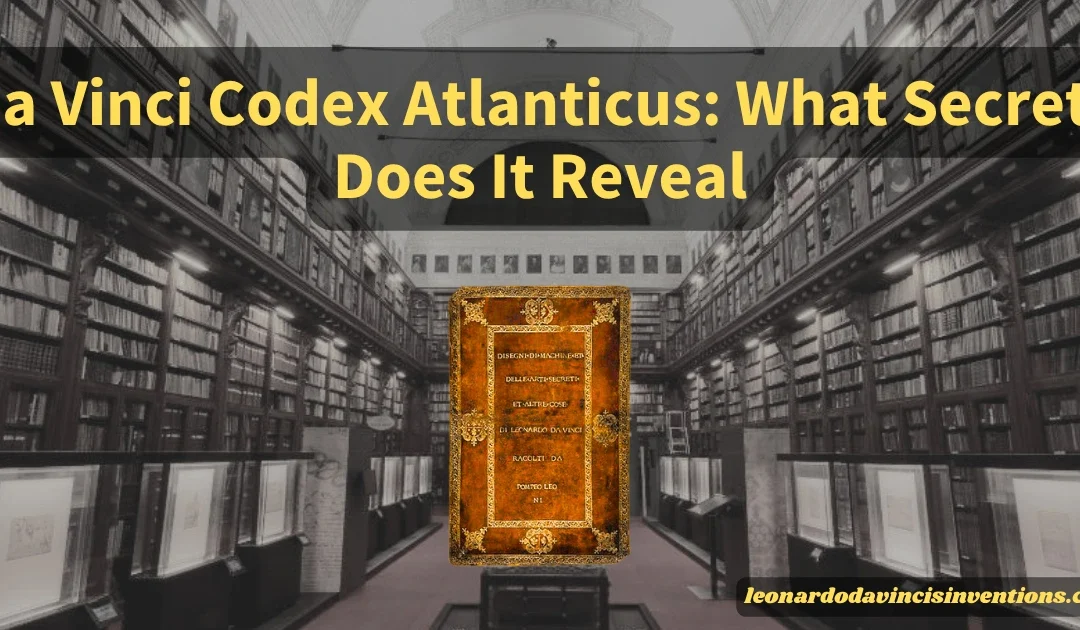
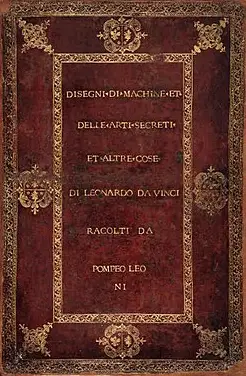
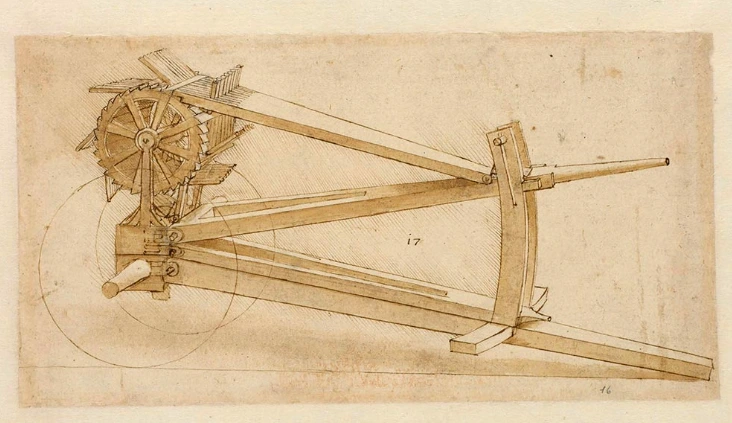
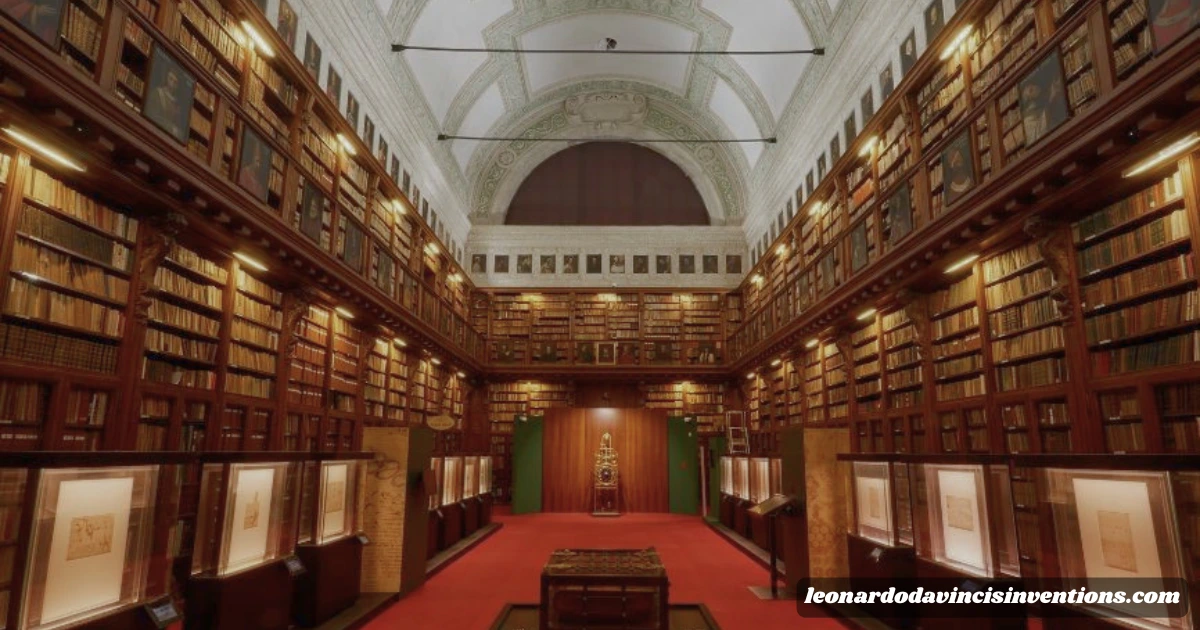
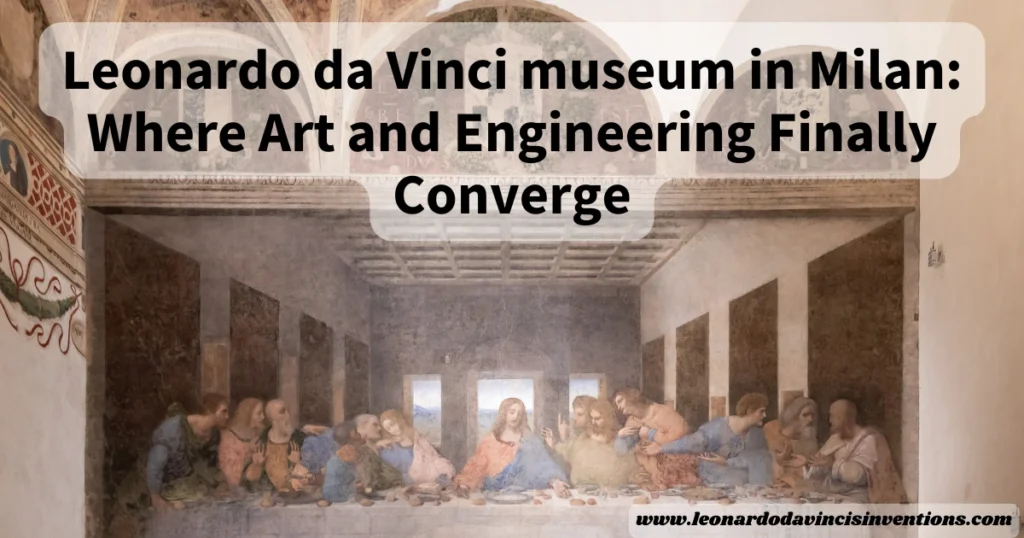

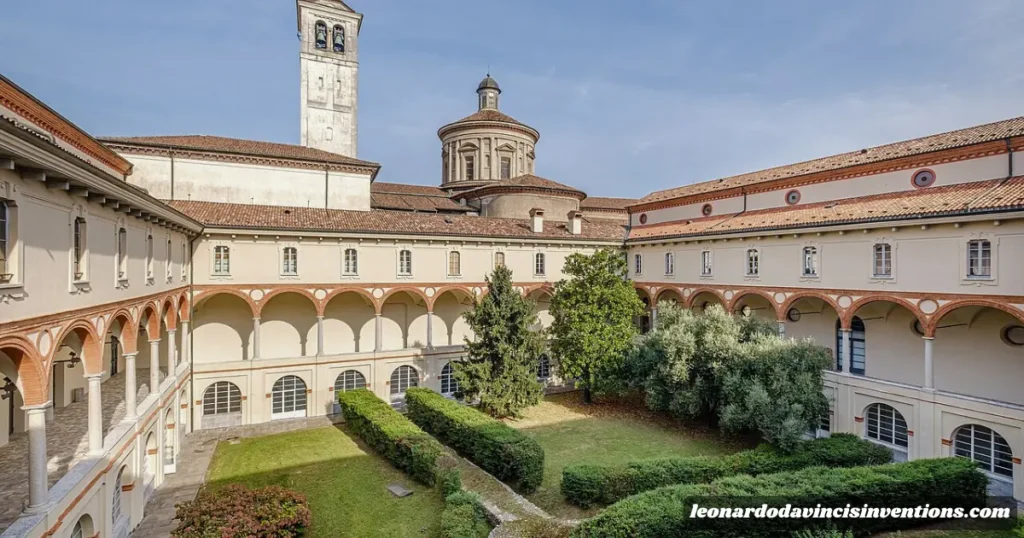
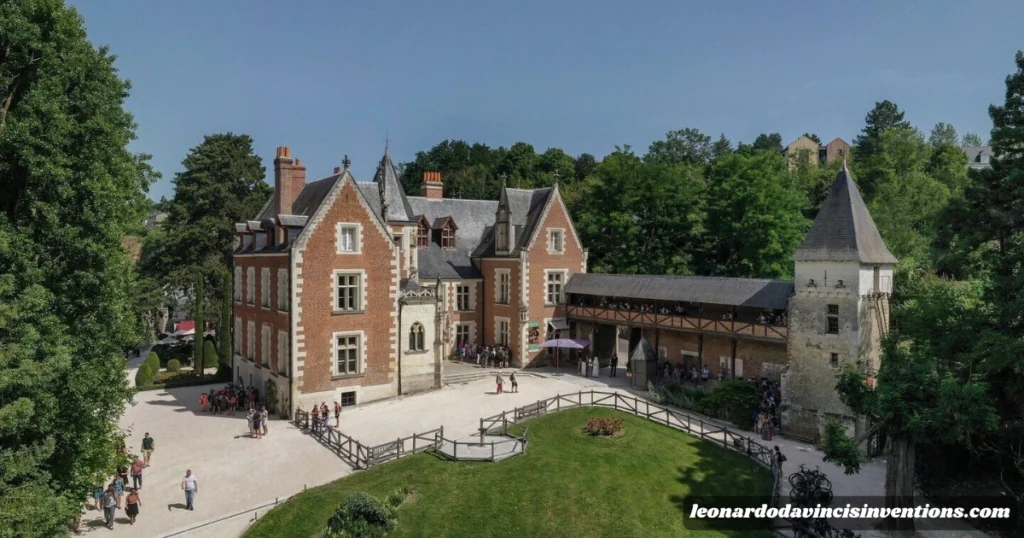
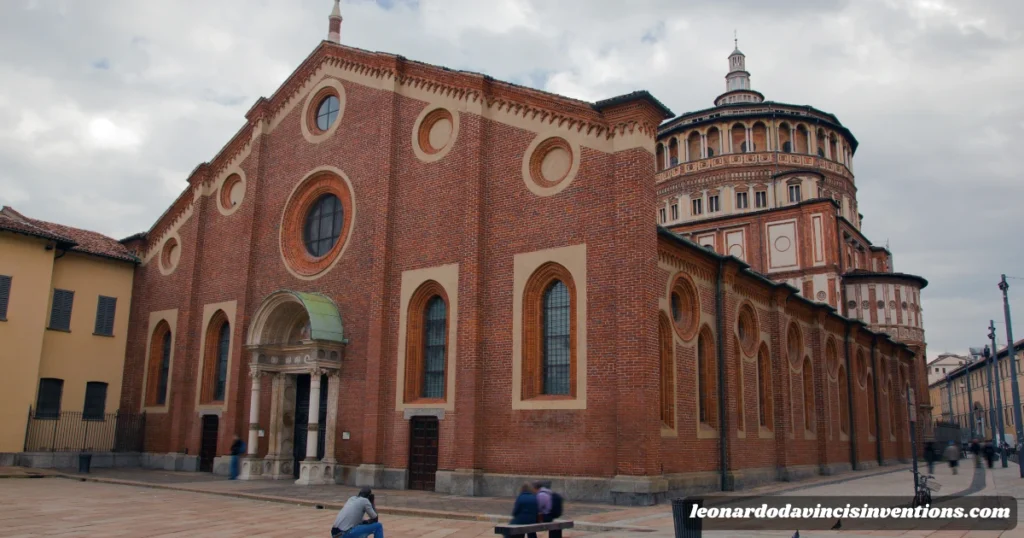

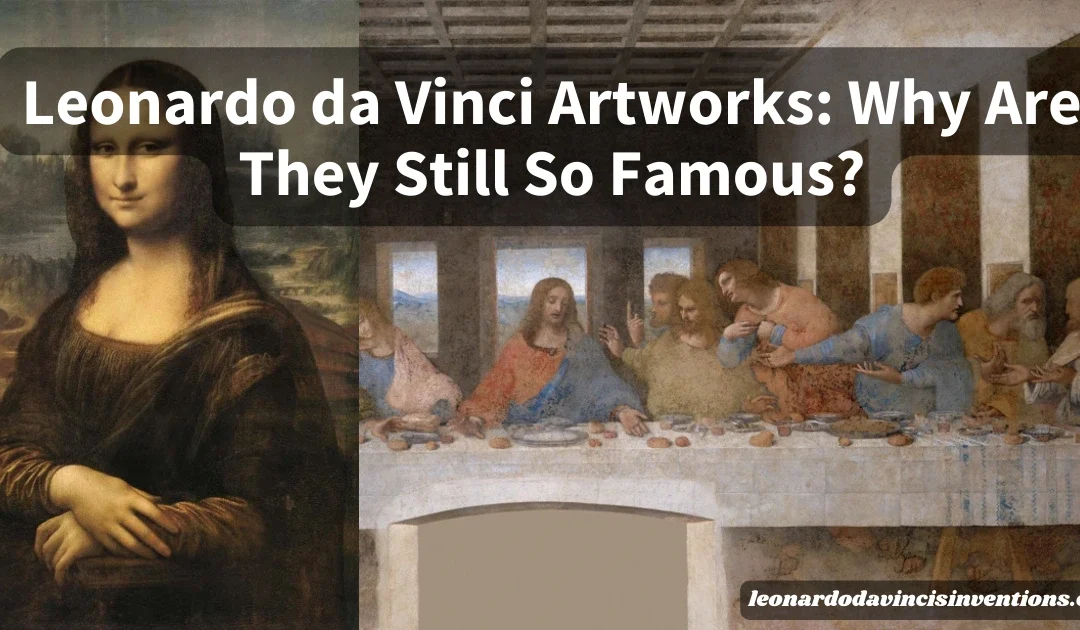
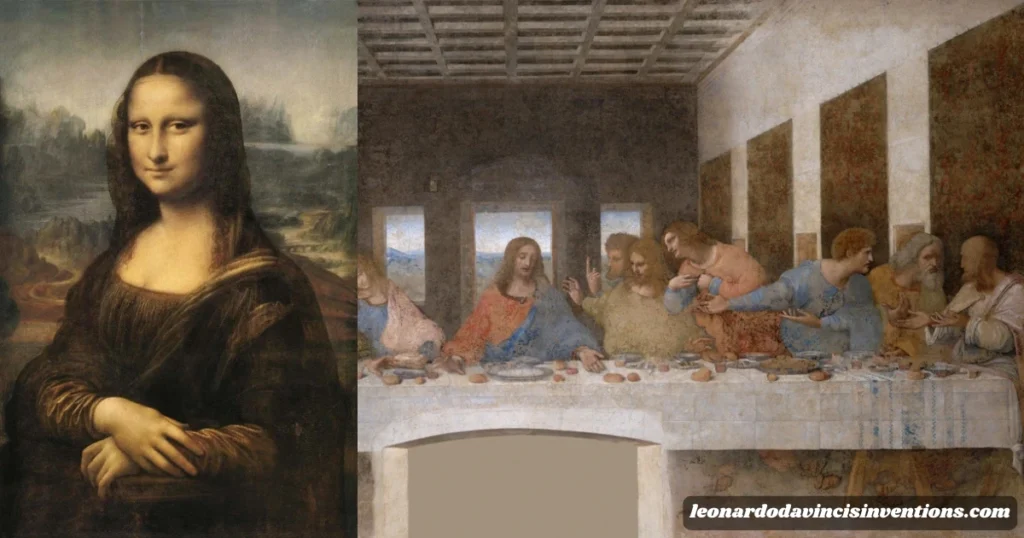
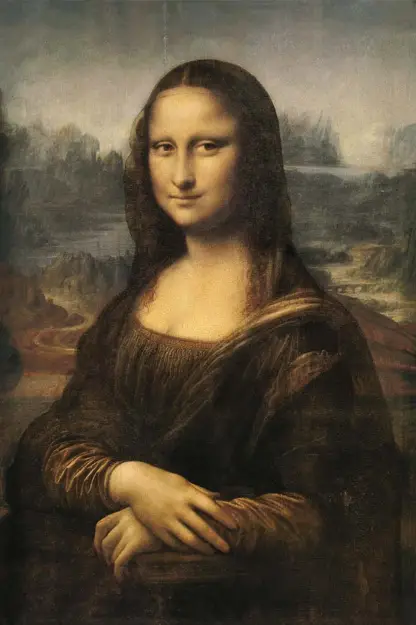
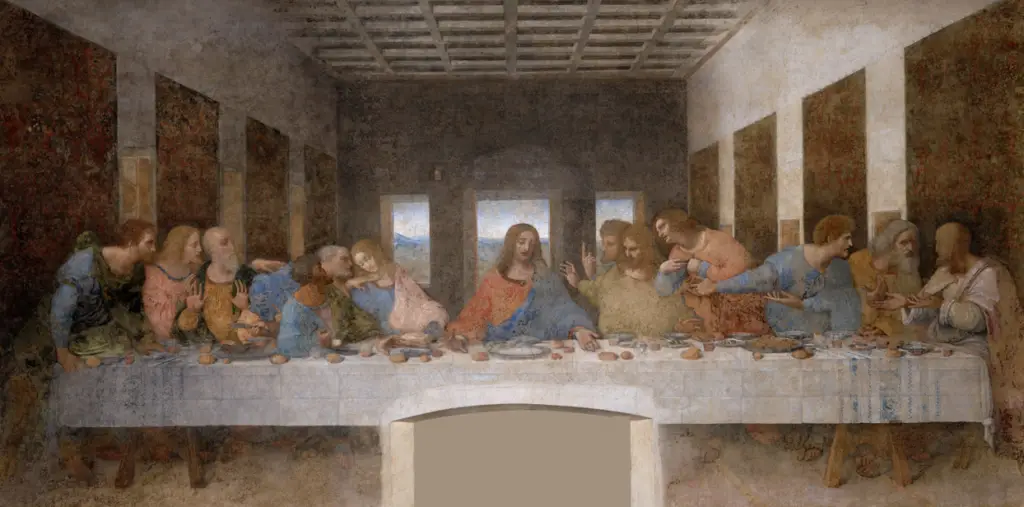
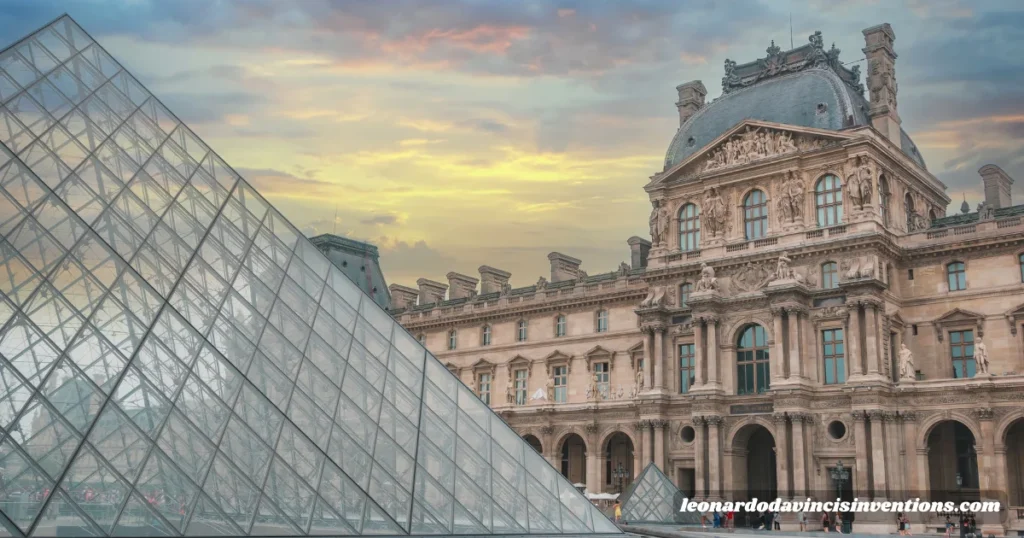
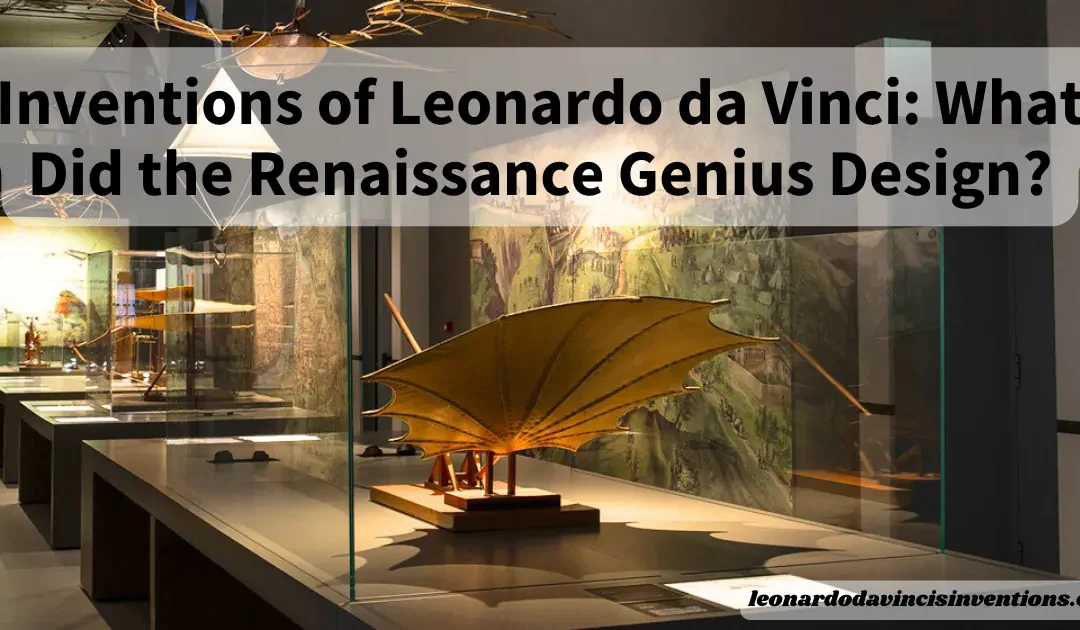
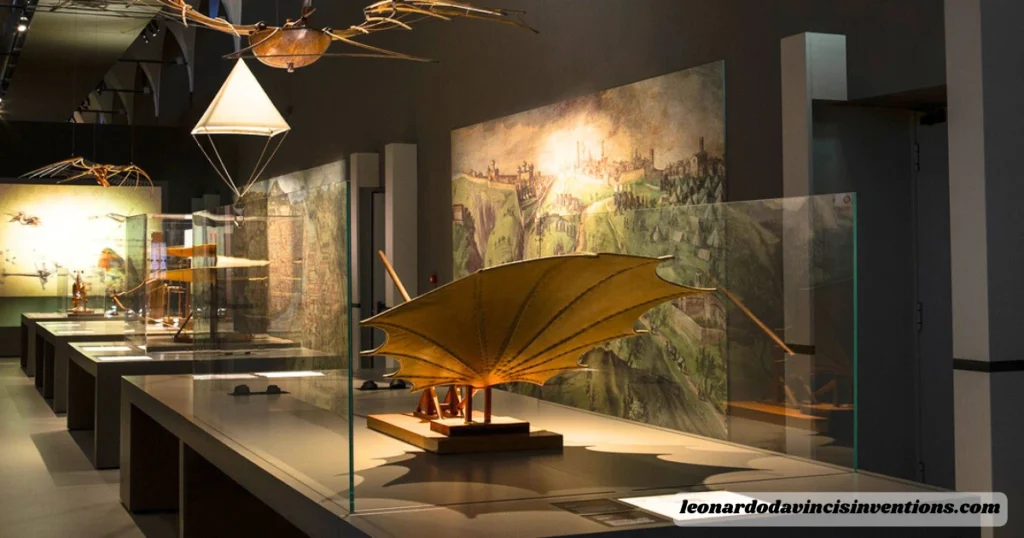
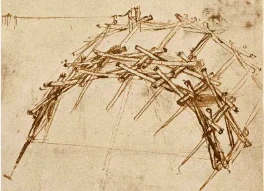
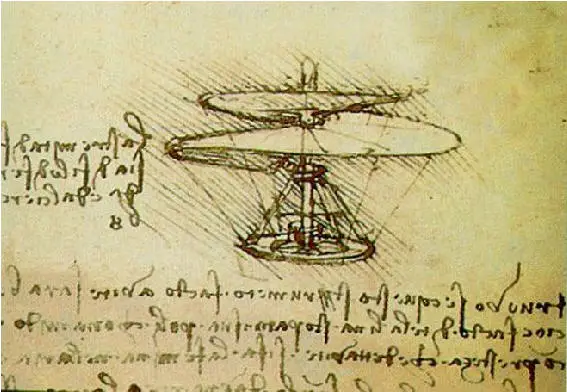
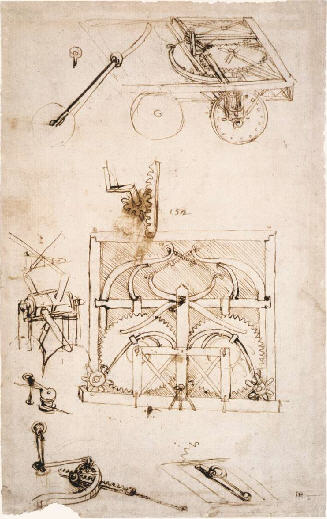
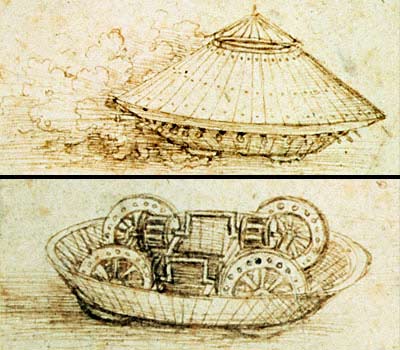
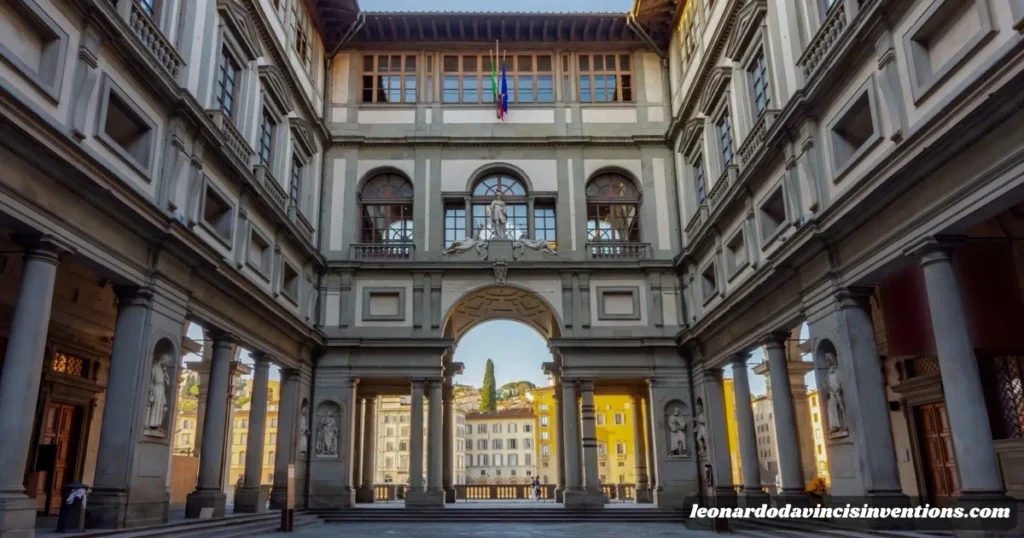

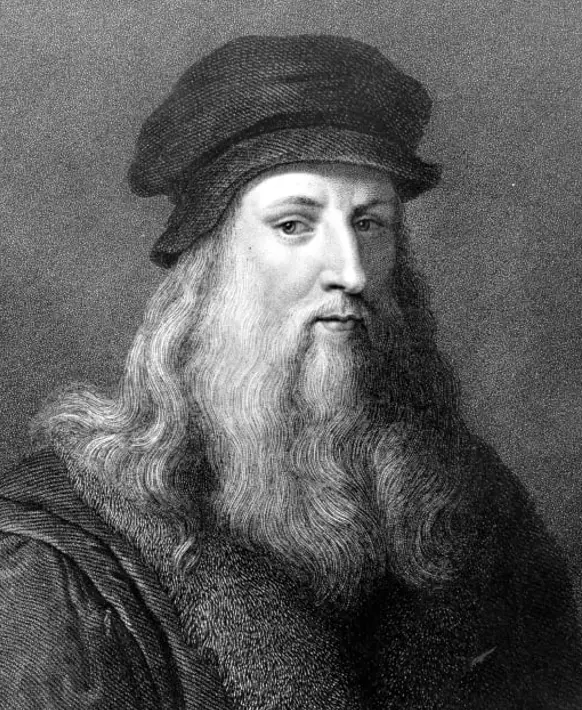
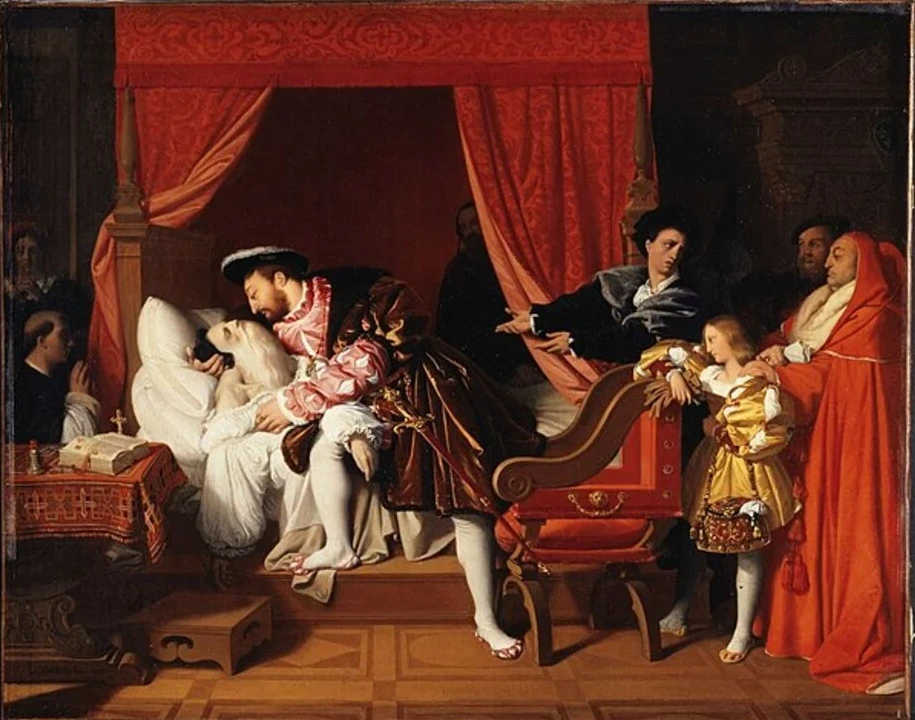

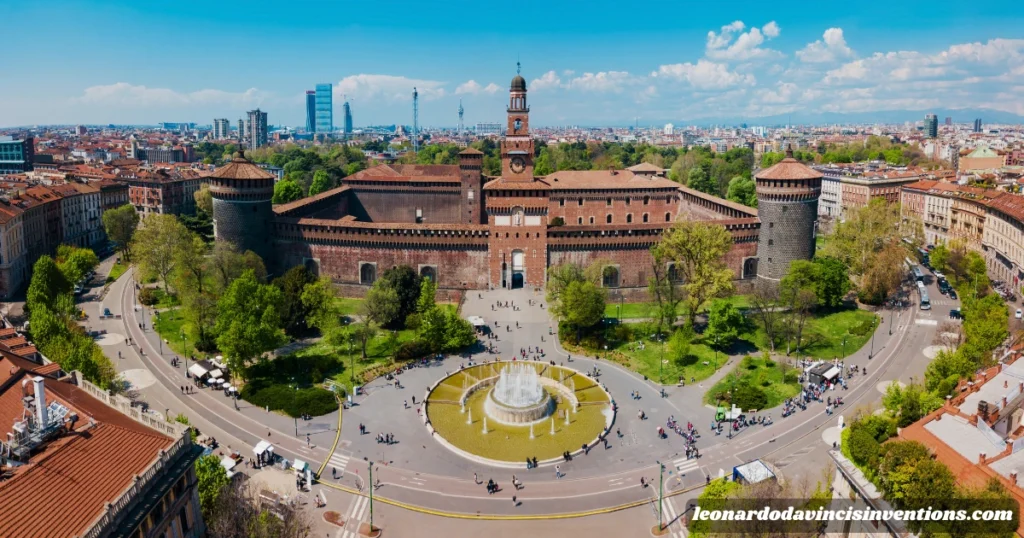
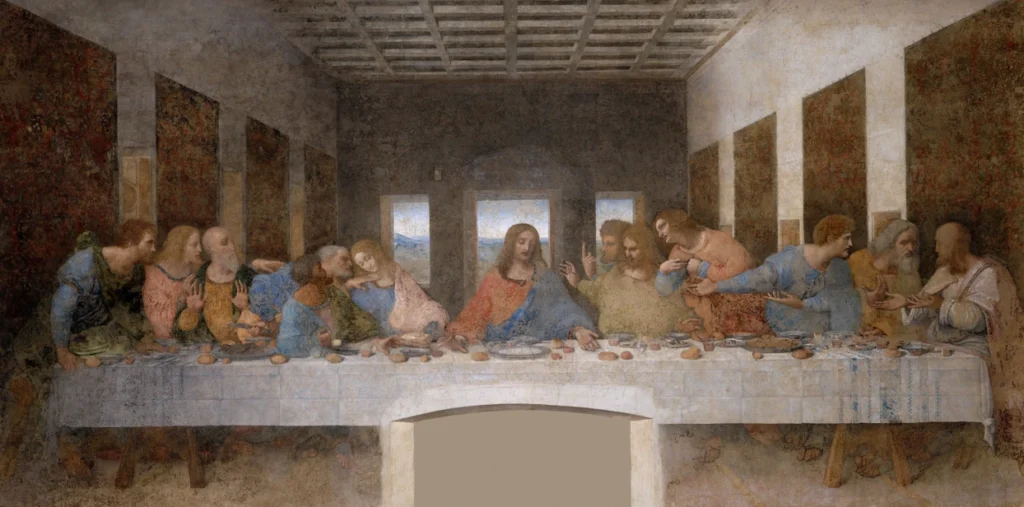
 Leonardo Bianchi is the founder of Leonardo da Vinci Inventions & Experiences, a travel and research guide exploring where to experience Leonardo’s art, engineering, and legacy across Italy and Paris.