Modern tanks are a crucial component of military strength and technological advancements. When deciding which modern tank is the best today, various factors such as firepower, protection, and mobility should be considered.
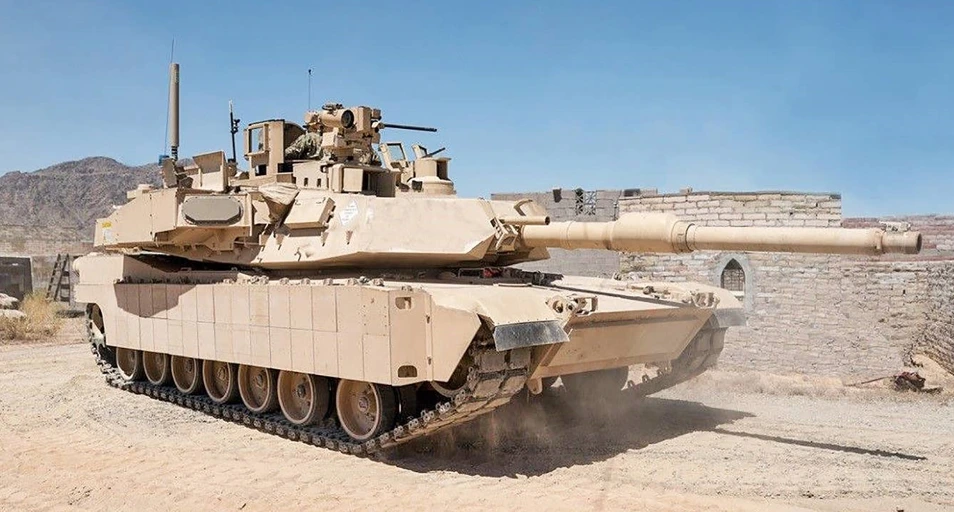
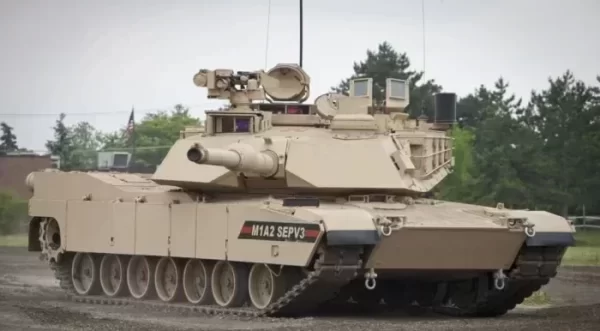
The Abrams M1A2 SepV3 has advanced features like improved communication systems and active protection capabilities.
Tanks such as the German KF51 Panther and the Russian T-14 Armata also rank among the top contenders in today’s military landscape.
Each of these machines showcases impressive engineering and battlefield readiness. These tanks represent the pinnacle of modern military technology, making it worthwhile to explore the features that set them apart.
If you are interested in military technology, this article will explain why these tanks lead the field. The article will clearly understand which modern tanks dominate today’s battlefields by examining their strengths.
Evolution and Role of Modern Tanks
Modern tanks have transformed significantly over the years, serving crucial roles on the battlefield. They reflect advancements in technology and military strategy, impacting how conflicts are managed and won.
Historical Development
The evolution of modern tanks began with the Mark I tank, which debuted during World War I. Early tanks emphasized armored protection and mechanized movement across rough terrains.
As technology advanced, WWII saw tanks becoming faster and more powerful.
Today’s modern-day tanks have enhanced firepower and sophisticated targeting systems. They incorporate lightweight materials, increasing mobility without sacrificing defense.
Prominent tanks such as the M1 Abrams from the United States and the Leopard 2 from Germany showcase these innovations.
Tanks have evolved from slow-moving war machines to rapid-response units capable of striking with precision.
Contemporary Use
Today, modern battle tanks play a pivotal role in military operations. They are crucial for ground assaults, providing robust firepower and protection for troops.
For example, modern US tanks, like the M1 Abrams, are known for their combat effectiveness and versatility in diverse environments.
Modern tanks are not just about power; they integrate advanced technologies such as GPS navigation and automated control systems. Nations like Russia and China continuously develop sophisticated models to maintain strategic advantages.
As warfare evolves, the role of modern tanks adapts, proving their integral presence in both offensive and defensive strategies on the battlefield.
Design and Technology
Modern tanks focus on operational efficiency, such as protection and firepower
Modern tanks are a marvel of engineering. They combine advanced materials and cutting-edge technology to dominate the battlefield.
These machines focus on superior protection, adequate firepower, agility, and crew comfort to ensure peak operational efficiency.
Armor Systems
Modern military tanks utilize composite armor that enhances protection while minimizing weight. This armor often consists of layered materials like ceramics, steel, and Kevlar, designed to absorb and deflect projectiles.
Reactive armor adds a layer of safety by exploding outward to neutralize incoming threats. Advances in modern us tanks demonstrate exceptional armor systems, such as the M1 Abrams, which uses depleted uranium for enhanced defense levels.
Weaponry
Cutting-edge weaponry in modern tanks underscores their strategic value. These tanks typically feature a main gun, often a smoothbore cannon, capable of firing armor-piercing rounds and guided missiles.
These firepower capabilities are complemented by machine guns for infantry defense. The Leopard 2A7, a prime example of modern German tanks, showcases a highly effective Rheinmetall 120mm gun optimized for various operations.
Mobility and Power
Modern-day tanks require potent engines to ensure quick maneuverability and strategic advantage. Turbine and diesel engines are standard, offering a blend of speed and reliability.
With advanced suspension systems, these tanks maintain stability over rough terrain. Russian modern tanks like the T-14 Armata are known for their mobility and speed, showcasing improvements in engines and transmission systems for optimal performance.
Crew Comfort and Support Systems
Modern tanks integrate ergonomic designs and technology for improved crew comfort. Climate control, padded seats, and advanced communication systems enhance the operational environment.
Systems like night vision, GPS, and automated tracking allow crews to remain effective during missions. The advancements in Japanese modern tanks, such as the Type 10, highlight innovations in crew-centric systems, ensuring efficiency and comfort during extended operations.
Notable Modern Tanks
US M1A2 SEP v3 Abrams tank
Modern tanks have become a crucial element in military strategy across various nations. Each country boasts unique designs with advanced technology, enhancing their capabilities on the battlefield.
Main Battle Tanks by Country
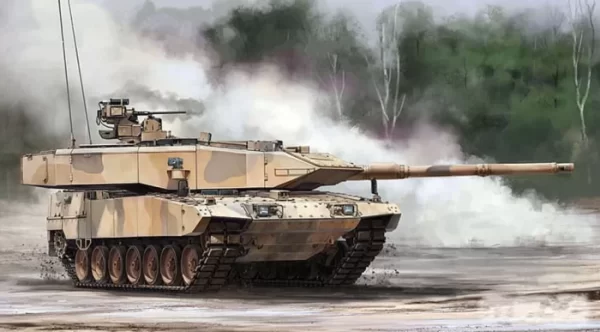
German Leopard 2A7 tank
German modern tanks are led by the Leopard 2, renowned for its powerful 120mm smoothbore cannon and excellent mobility. The United States fields the M1A2 Abrams, famous for its durable armor and advanced electronics.
Russian modern tanks, like the T-14 Armata, feature innovative technology such as an unmanned turret and active protection systems.
French modern tanks include the Leclerc, which is valued for its speed and digital fire control systems. Japan’s Type 10 offers versatile performance tailored for its varied terrain.
The Leopard vs. Abrams
The Leopard 2 and the M1 Abrams are often compared due to their prominence in western armies.
The Leopard 2 emphasizes mobility and range with efficient fuel consumption. Its advanced thermal sights allow precision targeting.
The M1 Abrams focuses on strong defense, equipped with composite armor and powerful turbine engines. It excels in firepower and protection but is heavier and consumes more fuel.
Both tanks use sophisticated targeting systems, making them formidable players in modern warfare.
Table 1. Comparison between Leopard 2 and Abrams tanks
Features
Leopard 2 (Germany)
Abrams (USA)
Nickname
Swift Predator
Ironclad Juggernaut
Manufacturer
Germany
United States
Main Gun
120mm smoothbore gun
120mm smoothbore gun
Special Focus
Speed, Agility, and High-Tech Firepower
Superior Armor and Survivability
Mobility
Superior – thanks to a powerful multi-fuel engine and advanced suspension system
High – but not specifically highlighted in comparison to Leopard 2
Advanced Tech
Digital fire control systems, advanced optics, and sophisticated thermal imaging system
Advanced fire control system, sensors, and targeting system
Armor
Not specified
Advanced composite armor (Chobham armor)
Survivability
Not specifically highlighted
High – designed to withstand high-explosive anti-tank (HEAT) rounds and kinetic energy penetrators
Ability to Engage Targets
High accuracy in various combat conditions
Accurate in both day and night conditions, can track and engage moving targets while on the move
Terrain Versatility
Can traverse challenging terrain at high speeds
Not specified
Innovative Designs
Modern tank designs push boundaries with technology like artificial intelligence and stealth capability.
The PL-01 from Poland showcases a futuristic design with modular armor and an infrared suppression system. Such innovations aim to enhance survivability and adaptability in diverse combat environments.
The Most Dangerous Tanks in the World
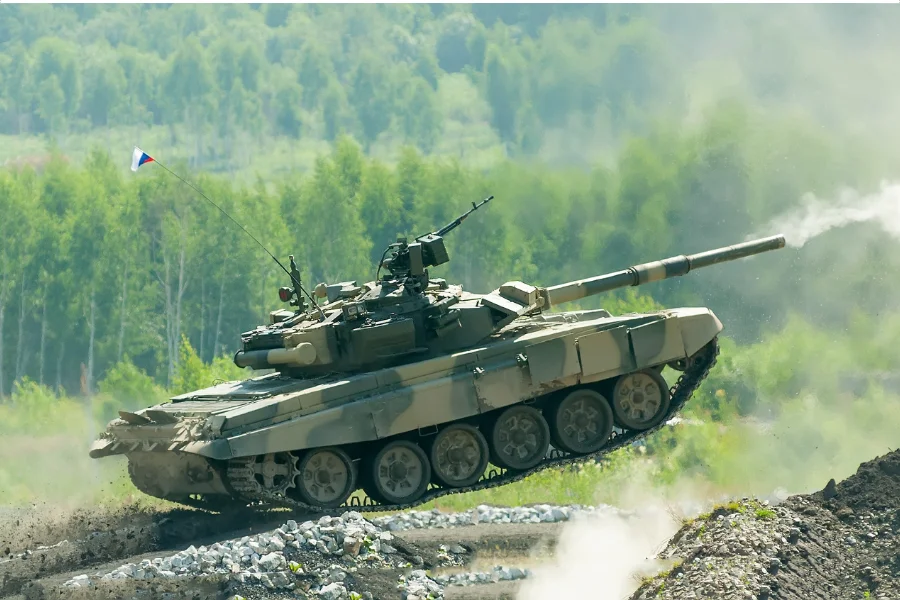
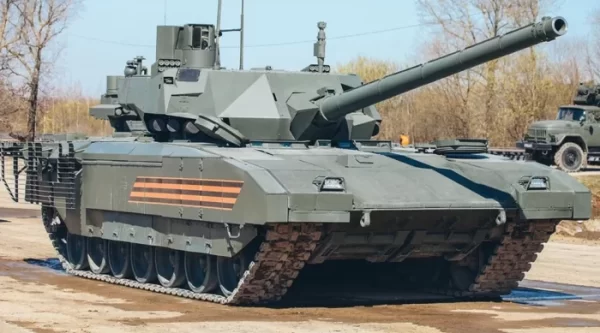
Russian T-14 Armata tank
Formidable tanks with a reputation for dominance include the T-14 Armata, which is known for its cutting-edge tech and protection systems.
The M1A2 Abrams holds a prominent place due to its impressive combat record.
The Leopard 2’s versatility and robust defensive features make it a fearsome opponent. Tanks like these define military might and technological progression in modern warfare.
Advancements in Tank Technology
Modern tanks continue to evolve with new technologies that enhance their capabilities on the battlefield. Two significant areas of advancement include active protection systems and the integration of unmanned ground vehicles.
Active Protection Systems
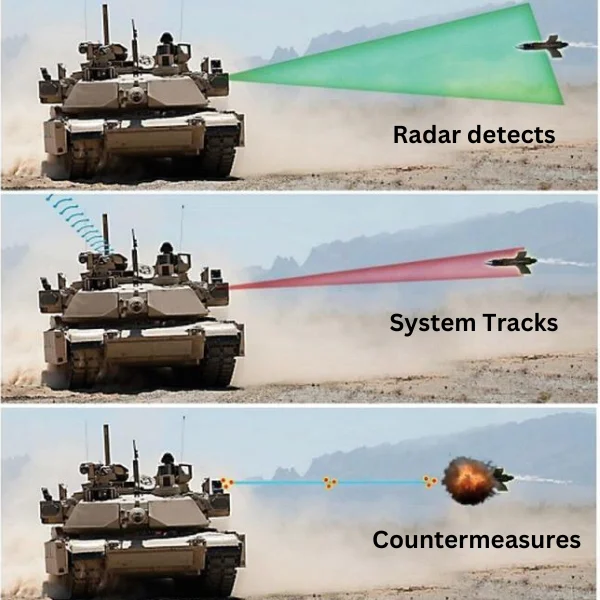
How to deal with an incoming threat by the Trophy APS system
Active protection systems (APS) safeguard modern tanks against incoming threats. These systems detect, track, and neutralize projectiles such as anti-tank missiles and rockets before they can cause harm.
For example, the Israeli Trophy system uses radar and sensors to identify threats and counterattacks by launching small projectiles to intercept them.
US modern tanks like the M1 Abrams are adopting such technologies, significantly increasing their survivability. Russian modern tanks, notably the T-14 Armata, also feature advanced APS capabilities.
This technology is a game-changer, providing extra defense layers and adapting to various war environments.
Unmanned Ground Vehicles Integration
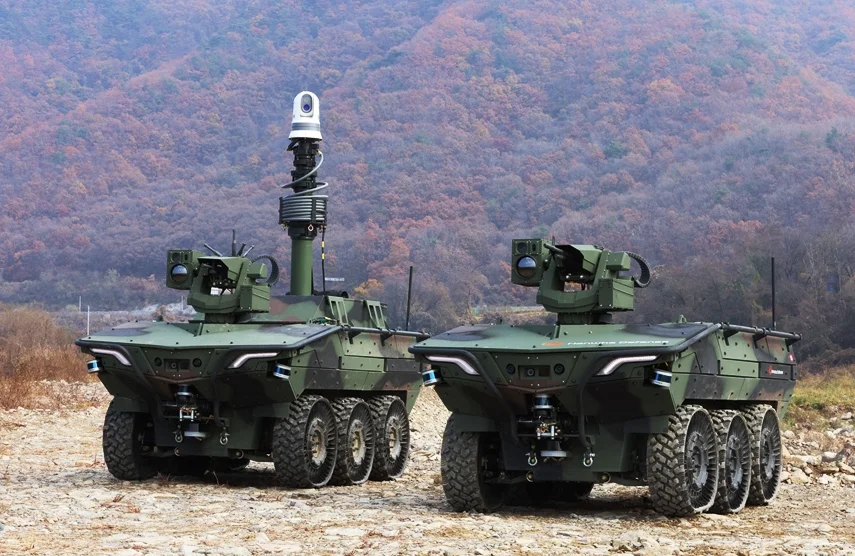
Arion-SMET UGV for supporting infantry operations such as transporting munition and weapons by US Army
Integrating unmanned ground vehicles (UGVs) with modern main battle tanks transforms operational scenarios. UGVs can perform various tasks, including reconnaissance, logistics support, and active conflict engagement.
By working alongside modern military tanks, UGVs help reduce the risk to human soldiers, allowing remote operations in dangerous zones.
Modern US tanks, for instance, are increasingly tested for compatibility with UGVs, expanding their tactical options on the battlefield. The military potential of UGVs is vast, ranging from resupply missions to combat support, and represents a future step in automating and enhancing tank warfare capabilities.
Comparative Analysis
Modern tanks vary significantly in design and capability, depending on country-specific needs and technological advancements. Key issues include tank-to-tank interactions and how defense budgets shape these innovations.
Tank Versus Tank Comparisons
A few models often come to mind when comparing tanks: the M1A2 Abrams, Leopard 2, and the T-14 Armata.
The M1A2 Abrams is a modern US tank known for its armor and advanced fire control systems. German modern tanks like the Leopard 2 are recognized for their precision engineering and versatility on the battlefield.
Russian modern tanks like the T-14 Armata feature advanced technology like unmanned turrets and heavy armor.
Modern Japanese tanks, like the Type 10, offer agility and cutting-edge electronics, making them suitable for maneuver warfare. Each tank model has its strengths: firepower, armor, or mobility. The choice often depends on the operational needs and strategy of the military using them.
Global Defense Spending
Global defense spending plays a significant role in the design and deployment of these tanks.
Countries with large budgets, such as the United States, Germany, and Russia, can afford experimental technologies for their modern military tanks.
Germany’s Leopard 2 is another example of a tank benefiting from a robust defense budget.
In contrast, countries with lower budgets may focus on upgrading existing models rather than developing new ones. While some nations field the most modern tanks, others rely on older but improved versions.
Final Thoughts
Modern tanks play a crucial role in military strategy today. Known for their advanced technology and robust design, these machines combine firepower, armor, and mobility to become powerful assets on the battlefield.
Several tanks are noted for their excellence. For example, the Leopard 2 is highly regarded in Europe for its ability to combat high-tech opponents and balance speed and protection.
The M1A2C Abrams from the U.S. boasts better armor, improved mobility, and superior fire control systems. Its main gun can penetrate most armor types, making it a formidable adversary.
Different regions have their favorites. The Merkava V is preferred in Israel for its adaptability to local challenges. Meanwhile, Russian field models like the T-14 Armata and T-90M emphasize cutting-edge features and versatility.
Key Takeaways: Modern tanks, like the K2 Black Panther from Korea, integrate technology and performance to address diverse military needs. Rapid advancements suggest continued evolution in tank design and capability.
Frequently Asked Questions
Modern tanks vary widely in design and capabilities. This section explores various aspects of current military tanks, including comparisons and advancements.
What is the most modern tank?
The most modern tanks include the T-14 Armata and the M1A2 SEP V3 Abrams. These tanks feature advanced technology, such as upgraded armor and improved targeting systems. They represent the forefront of tank innovation today.
What is the best modern tank today?
Opinions on the best modern tank vary, but the M1A2C Abrams is often highlighted for its mobility and armor. Another contender is the Challenger 2, which is known for its combat experience. These tanks are widely recognized in military circles for their effectiveness.
Is T-90 better than Abrams?
The T-90 is less expensive and lighter, offering specific advantages in different terrains. However, the Abrams are noted for their superior armor and firepower. Each tank has unique strengths, making them suitable for other roles.
Are there any 4th gen tanks?
Fourth-generation tanks include the T-14 Armata. This tank features cutting-edge technologies like unmanned turrets, and it is a step up from previous generations with advanced automation and protection.
What is the top 1 tank in the world?
Currently, the M1A2 Abrams is often regarded as the top tank globally. Its robust design and combat performance set high standards and remain a prominent choice for many armed forces.
Has the US ever lost an Abrams tank?
The US has lost Abrams tanks in combat, though such losses are relatively rare. Situations in conflict zones have led to damage or destruction. These losses often result from anti-tank missiles or IEDs.
Why is the Abrams tank so good?
The Abrams tank is praised for its strong armor and firepower. Its advanced electronics and mobility make it versatile in various terrains. The tank’s reliability and continuous upgrades contribute to its excellence.
How many Abrams has Ukraine lost?
Ukraine has not operated Abrams tanks extensively, so verifiable loss data is limited. However, current military engagements and aid might alter their usage and potential losses in the future.
What country has the best tank?
Countries like the United States and Russia maintain some of the best tanks, such as the M1A2 Abrams and T-14 Armata. These tanks showcase superior military technology. The diverse strengths of these models make them highly regarded internationally.
Is America making a new tank?
Yes, America is working on developing new tank models. These projects aim to integrate future-ready technologies.
Continued research and development ensure that American tanks remain competitive globally.
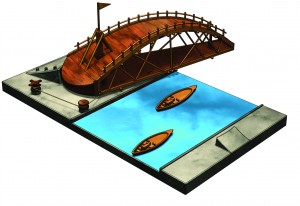
Leonardo da Vinci swing bridge showcases his brilliance in blending art and engineering.
This unique invention was designed to pivot, allowing bridges to be retracted to prevent enemy crossings while also enabling friendly passage.
By exploring da Vinci’s ingenuity, you can appreciate how his designs for a movable bridge addressed both functional and strategic needs at the time.
The da Vinci swing bridge represents a fascinating example of innovation for those intrigued by historical engineering marvels.
This bridge used a series of winches and wheels, showcasing the advanced thinking that da Vinci applied to solving practical problems. Da Vinci's Revolving Bridge further illustrates his contributions to military strategy by enabling quick, effective transport across water obstacles.
Through this exploration, one gains insight into da Vinci’s versatility. His ability to design for civilian and military purposes highlights his invaluable contributions to civil engineering.
The swing bridge is just one example of how his mechanical ideas inspire innovation today.
Overview of the Leonardo da Vinci Swing Bridge
Leonardo da Vinci designed the swing bridge to combine practicality and innovation.
It served civilian and military purposes, providing quick and strategic access across waterways while keeping enemies at bay. Key aspects include its functional use and historical significance in engineering.
The Concept Behind the Swing Bridge
The Leonardo da Vinci swing bridge was crafted with versatility in mind.
Intended for tactical advantages, it allowed travelers and soldiers to cross rivers swiftly.
What made it distinct was its ability to swing open and retract to prevent enemy access. This design showcased da Vinci's brilliance in engineering, blending simplicity with strategic depth.
The structure used wooden beams interlocked to provide strength and flexibility. This engineering feat reflected da Vinci's understanding of physics and mechanics, enabling the bridge to support significant weight while remaining operationally efficient.
Such concepts demonstrated how innovative design approaches could solve practical problems of the time.
Historical Context of Leonardo da Vinci's Designs
During Leonardo’s era, the need for movable bridges was essential, particularly in times of conflict.
The Leonardo da Vinci bridge was developed under the patronage of powerful leaders like Cesare Borgia, who sought effective solutions for military campaigns.
Da Vinci's designs were not just architectural marvels but also tools of war.
His bridges, including the swing and revolving bridges, were pioneering in their time and laid the groundwork for modern movable bridges.
Through these designs, da Vinci provided insights into how to build a Leonardo da Vinci bridge using practical yet advanced techniques that have inspired engineers for generations.
How the Leonardo da Vinci Swing Bridge Works
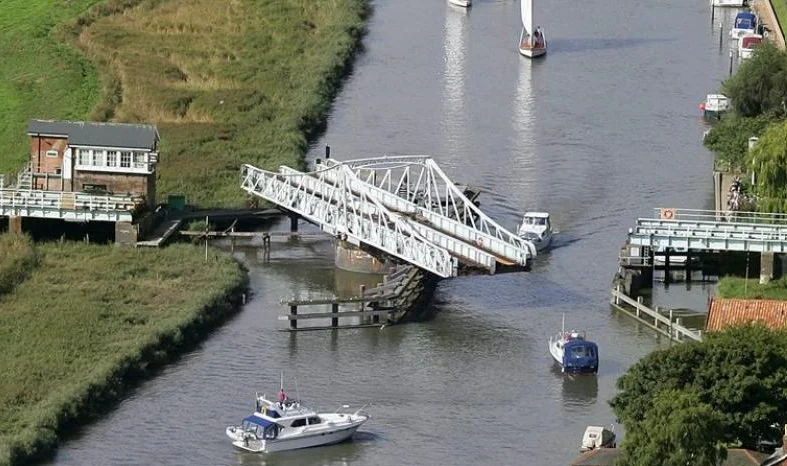
Modern use of a swing bridge
The Leonardo da Vinci swing bridge represents an ingenious feat of engineering. Its design allows for practical use and strategic defense, providing insights into da Vinci's brilliance.
Mechanics of the Swing Bridge Design
The swing bridge is a masterpiece of engineering. Its central pivot allows it to turn 360 degrees.
This pivot is fixed on one bank, enabling the bridge to rotate quickly. Ropes and pulleys complement this mechanism, helping move the bridge smoothly.
Despite its size, a single person could maneuver the swinging bridge, illustrating da Vinci's clever use of force distribution.
Crafted to be functional and defensive, the bridge was initially designed for military purposes.
It could span rivers or trenches and then be swung aside to prevent enemy crossings. This design's simplicity and adaptability highlight da Vinci's innovative approach to construction in the 15th century.
Advantages of the Swing Mechanism
The swing mechanism provided several advantages.
First, it offered rapid deployment and retraction, making it ideal for military operations. Soldiers could cross and secure strategic points quickly without needing a permanent bridge.
Additionally, the revolving nature of the da Vinci bridge allowed it to be moved to prevent enemy access.
This strategic advantage meant that it functioned not only as a passage but also as a deterrent.
The design also reflects da Vinci's broader philosophy of harmonizing design with natural forces.
The way forces interlocked and provided stability showcases his understanding of engineering principles.
This combination of practicality and innovation makes the Leonardo da Vinci swing bridge a standout in the history of engineering.
Applications of the Leonardo da Vinci Swing Bridge
The Leonardo da Vinci Swing Bridge, a marvel of engineering, was not just a concept but a practical solution for various scenarios.
It combined innovation and functionality, allowing for military and civilian applications throughout history.
Historical Uses in Warfare
Leonardo da Vinci designed the swing bridge with military purposes in mind.
Mobility was crucial for armies during his time, especially when crossing rivers or canals. The revolving bridge enabled troops to cross bodies of water swiftly, facilitating strategic deployments and retreats.
The da Vinci Bridge could rotate 90 degrees, using a system of winches and wheels, to allow or block boats' passage.
This function made it a defensive asset, providing a tactical advantage by controlling access to certain areas.
Modern Interpretations and Uses
Today, the Leonardo da Vinci Swing Bridge concept continues to inspire modern engineering projects.
Its design principles are used in educational settings to demonstrate the ingenious application of levers and balance. The self-supporting bridge exemplifies how ancient techniques can influence modern architecture and mechanical design.
Contemporary designers have adapted these principles to create structures requiring quick assembly or temporary setups.
This bridge's ability to facilitate smooth water traffic control has been mirrored in several current canal and river management projects.
The da Vinci Swing Bridge remains a testament to Leonardo da Vinci's forward-thinking approach and its lasting relevance in modern engineering.
Final Thoughts
Leonardo da Vinci's swing bridge is a testament to his innovative spirit and engineering mastery.
Designed for functionality, the bridge could swing open to allow ships to pass, showcasing its practicality during his time.
His design demonstrates a blend of creativity and functionality. The swing bridge concept involved rotating the bridge to make way for boats, highlighting da Vinci's forward-thinking approach.
The simplicity and efficiency of da Vinci's design continue to capture interest.
This bridge wasn't just about mechanics; it was an example of harmonious design and utility working together.
Leonardo's contributions go beyond art; his work, like the swing bridge, underscores his broad impact in engineering and design.
Key Takeaways: Leonardo da Vinci's swing bridge illustrates an incredible fusion of creativity and practicality, inspiring future innovators.
FAQs about Leonardo da Vinci Swing Bridge
What is special about Da Vinci's bridge?
Leonardo da Vinci’s bridge designs are special because they were innovative, portable, and based on advanced engineering principles. His movable bridges—such as the swing and revolving bridges—could rotate or be quickly assembled, allowing armies to cross waterways efficiently while maintaining mobility and strategic advantage.
Who invented the swing bridge?
Swing bridges, as a general concept, evolved over time and were not invented by a single person. However, Leonardo da Vinci designed an early rotating (swing) bridge concept in the 15th century, showing one of the earliest detailed ideas of a movable bridge operated by mechanical systems.
What was the theory of the Da Vinci bridge?
The theory behind Da Vinci’s bridge designs was based on mobility, mechanical advantage, and structural efficiency. His swing bridge used pivot points, winches, and wheels to rotate the structure, allowing it to open for boats or close for crossing, demonstrating an early understanding of dynamic infrastructure systems.
Did Leonardo da Vinci invent the revolving bridge?
Leonardo da Vinci did not invent movable bridges in their entirety, but he designed a revolutionary version of a revolving bridge. His design used ropes, pulleys, and counterweights so the bridge could swing into position quickly and be transported easily by soldiers.
Who invented the Da Vinci bridge?
The Da Vinci bridge was designed by Leonardo da Vinci himself in the late 15th century, while he was working as a military engineer. He created several bridge concepts—including self-supporting and movable bridges—for use in warfare and infrastructure projects.
Did Da Vinci ever build his bridge?
There is no evidence that Leonardo da Vinci’s original bridge designs were built during his lifetime. However, modern engineers have successfully constructed models and real-world versions based on his designs, proving that his concepts were structurally sound.
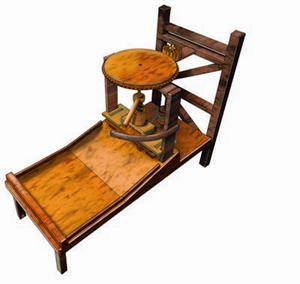
Da Vinci Printing Press combines Leonardo da Vinci’s genius with the revolutionary printing press.
You’ll find your answers here if you’re curious about the surprising connection between this Renaissance icon and the printing revolution. Dive into this exploration to uncover how Leonardo’s inventive mind contributed to advancing the efficiency of printing technology.
Leonardo da Vinci, known for his vast array of inventions, did not invent the printing press. However, he studied and modified the Gutenberg printing press to enhance efficiency.
Leonardo’s adjustments to the printing press highlight his ability to innovate existing technology, showing his significant impact beyond art and science.
Examining da Vinci’s work on the printing press reveals the depth of his interest in practical inventions. Understanding how his ideas improved the press enables a greater appreciation of his diverse talents.
Leonardo da Vinci’s Influence on Printing
Leonardo da Vinci was surrounded by a world bursting with new ideas, especially in printing, which helped spread knowledge.
Although he did not invent the printing press, his era influenced typesetting and bookmaking methods. His work also significantly shaped how books were created and consumed during the Renaissance.
Early Printing Technology
When Leonardo da Vinci was alive, the Gutenberg printing press revolutionized the way books were made.
This invention allowed books to be printed quickly and in large numbers, spreading education and ideas faster than before. Leonardo, a man of epochal change, benefited from this, even though he was not directly involved in developing the Da Vinci printing press.
Advancements in Typography
Leonardo had a keen eye for design and detail. Even though he did not create new types of fonts, he influenced advancements in typography. His sketches show a fascination with how letters were formed and arranged.
This interest in lettering contributed to developing more aesthetically pleasing and readable typefaces, which became more common as printing methods advanced through the Renaissance.
Renaissance Impact on Printing
The Renaissance period saw an explosion of learning, which the printing press made possible. Leonardo’s vast body of work and numerous paintings inspired printed materials rich in detail and artistic value.
Printing became a tool for spreading Leonardo’s and other artists’ work, allowing more people to engage with their ideas—this broader access to information led to changes in how knowledge was shared and consumed during the time.
Design and Mechanism
The Da Vinci Printing Press showcases unique design features that distinguish it from earlier models like the Gutenberg Press. This section highlights Leonardo’s creative adaptations and how they are compared to existing technology.
Innovations in Press Design
Leonardo da Vinci imagined a press system incorporating mechanical precision and ease of use. His design involved a screw mechanism that used levers and gears to apply pressure, allowing for more consistent printing results.
This method improved the efficiency of printing operations, making it possible to print more pages in a shorter time. Leonardo’s focus on mechanical efficiency set his designs apart, showcasing his ability to enhance existing technologies like the Gutenberg Printing Press.
Da Vinci’s Press Modifications
Da Vinci’s printing press introduced modifications aimed at increasing print quality. By adjusting the alignment and pressure of the type bed and platen, his design ensured an even ink distribution, which was vital for producing clearer and more consistent images and text.
Leonardo also experimented with different materials, suggesting stronger woods and metals to enhance durability. These refinements showcased his understanding of art and engineering, bridging the gap between the two disciplines through creative innovation.
Comparison to Gutenberg’s Press
When comparing the Gutenberg Press to the Da Vinci Printing Press, one can see apparent differences in design approach. Gutenberg’s press was a groundbreaking invention in its own right, using a screw press concept adapted from wine and olive presses.
However, Leonardo’s design was more advanced mechanically. His use of multiple gear systems and precise engineering streamlined the printing process and improved output quality.
While Gutenberg laid the groundwork, Da Vinci’s enhancements paved the way for more efficient and reliable printing methods.
Cultural and Educational Significance
The Da Vinci Printing Press profoundly impacted the spreading of knowledge, shaping literature and leaving a lasting legacy in scholarly publishing. Its influence extended far beyond just technological advances.
Spread of Knowledge
The Da Vinci Printing Press played a pivotal role in increasing the accessibility of information. With the mass production of books, knowledge became available to a broader audience. This democratization of learning broke the barriers set by the elite who previously controlled information.
Books and manuscripts could be shared across Europe, fostering an environment ripe for intellectual growth. Comparably, the Gutenberg Printing Press also contributed significantly to the spread of learning by enabling the mass distribution of texts, thereby empowering education and learning.
Influence on Literature
The invention of the Da Vinci Printing Press allowed authors to reach new audiences. It enabled the creation and dissemination of different literary forms, influencing how stories and ideas were shared. As a result, literary culture flourished, producing diverse works.
Authors could now gain recognition beyond their local areas. This recognition expanded the literary world, allowing more voices and stories to be heard and preserved, consequently shaping the literary landscape of the era.
Its platform for writers is akin to how modern-day publishing enables widespread access to literary works.
Legacy in Scholarly Printing
The Da Vinci Printing Press laid the groundwork for the future of scholarly publishing. It established a precedent for accurate and reliable text reproduction crucial for scientific and academic communities.
This advancement ensured that ideas could be preserved and built upon over time. Scholarly texts and research reached a broader audience, which is crucial for developing various academic fields.
Today, the printing traditions that began with innovations like Leonardo da Vinci’s influence on printing technology continue to play a key role in disseminating academic knowledge.
Frequently Asked Questions
The printing press’s legacy is rich with questions about its inventors and legacy. Although not an inventor of the printing press, Leonardo da Vinci contributed significantly to inventions and innovation.
Did Leonardo da Vinci use the printing press?
Leonardo da Vinci did not actively use the printing press for his works. Instead, he focused on creating designs and drawings in his notebooks, which documented his ideas and inventions.
Who actually invented the printing press?
Johannes Gutenberg is credited with inventing the printing press around 1440. His invention revolutionized the reproduction of books and other printed materials, making them more accessible to the public.
What inventions did Da Vinci invent?
Leonardo da Vinci was a prolific inventor. His notable designs include the flying machine, an early version of the helicopter, and the armored vehicle. These inventions highlight his forward-thinking approach and his impact on future technological advancements.
Did any of Da Vinci’s machines work?
Many of Da Vinci’s machines were conceptual designs and were never built during his lifetime. However, some of his inventions, such as his mechanical devices, have been constructed in modern times and shown to work effectively.
Was the printing press used for art?
Yes, the printing press played a significant role in art distribution. Artists and publishers used it to reproduce and disseminate illustrations, contributing to spreading artistic styles and techniques across Europe.
Who made the first printing press in the Renaissance?
Johannes Gutenberg invented the first printing press in the Renaissance. His press introduced movable type to Europe, laying the foundation for the mass production of books and written materials.
Why is the printing press so important?
The printing press is crucial because it democratized knowledge. Making books more affordable and widely available paved the way for spreading literacy and sharing ideas, fueling movements like the Renaissance and the Enlightenment.
Who invented the printing press in the 14th century?
The invention of the printing press is attributed to Johannes Gutenberg in the mid-15th century, not the 14th century. His work in Mainz, Germany, started a new era in information dissemination.
What are some fun facts about the printing press?
Fun facts about the printing press include that it drastically reduced the cost of books, enabling the spread of literacy. Gutenberg’s Bible, one of the first significant books printed, symbolizes this transformative historical period.
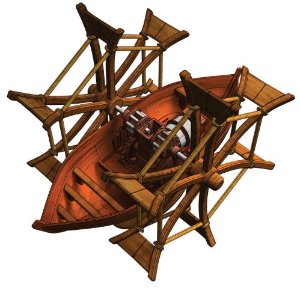
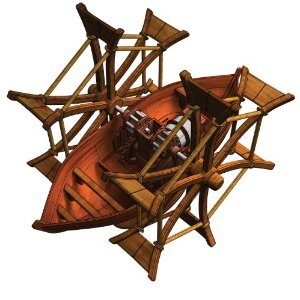
Da Vinci paddle boat designs were ahead of their time, showcasing Leonardo da Vinci's genius in engineering. These creations allowed boats to move faster and be easier to steer than others of the era.
Designed with rotating paddles operated by the sailors, these boats demonstrated the brilliance of utilizing human power for efficient travel.
For those curious about historical innovations, exploring da Vinci's paddle boat offers a fascinating glimpse into the inventor's mind. His work influenced various transportation methods we see today, revealing how imagination and engineering come together to solve practical problems.
The mechanics of the paddle boat, driven by the sailors’ efforts, highlight da Vinci's talent for merging art and science.
The design utilized a system where the paddles were powered by either hand or foot. This not only made the vessel more manageable but also increased its speed on water compared to traditional boats of the time.
Leonardo da Vinci's Innovations
Leonardo da Vinci's ideas have left a lasting impact on engineering and design, showcasing his genius and creativity. His concepts, such as the paddlewheel boat, were pioneering for their time and provided a foundation for future inventions.
The historical context of these innovations reveals how advanced his thinking was compared to his contemporaries.
Influence on Engineering and Design
Leonardo da Vinci Paddle Boat is a testament to his forward-thinking in engineering. His designs, including the paddle wheel boat, introduced new concepts in mechanics.
These ideas influenced not only his era but also modern engineering practices.
The paddle wheel mechanism he imagined is considered a precursor to later vessels, like the paddle steamer, which emerged hundreds of years after his time.
The importance of these designs lies in their detailed execution without modern technology. He was ahead of his time, thinking beyond what was possible in the 15th century.
Models and drawings from his notebook show his approach to creating a vessel powered by human effort rather than wind—a revolutionary navigation idea.
Historical Context of the Da Vinci Paddle Boat
In Leonardo's time, the predominant modes of water transport relied heavily on sails. The concept of a machine that did not depend on the wind, like the da Vinci paddle boat, introduced a novel way to harness human power.
His vision involved sailors using pedals to move a paddle wheel, making the boat move forward.
This concept is reflected in models and kits like the one from the Academy Da Vinci Paddle Boat, showcasing his design brilliance.
Although these innovations never materialized in his lifetime, they laid the groundwork for future developments in naval technology and highlighted the breadth of his creative genius.
Design Specifications of the Paddle Boat
The Leonardo da Vinci Paddle Boat is an innovative creation highlighting intricate mechanical systems and thoughtful design. This design includes detailed features and construction techniques that were revolutionary for their time.
Mechanics of Paddle Wheel Function
In Da Vinci's design, a mechanical spring system drives the paddle wheel. This mechanism uses a combination of gears and pedals to move the wheels.
The paddles are attached to large wheel-shaped structures which rotate, enabling the boat to glide through water.
The Da Vinci Paddleboat requires no external power source, relying solely on its internal system. Thus, it demonstrates its ingenuity in efficiently utilizing human power.
This foundational approach set the stage for future paddle wheel boats and steamers developments.
Materials and Construction Techniques
Leonardo da Vinci used wood and metal to construct his paddle boat.
Wood provided structural integrity, while metal components like springs and gears enabled movement.
These da Vinci paddle boat parts were carefully designed to work harmoniously, ensuring durability and performance.
Modern reproductions, such as the Academy Da Vinci Paddle Boat, show how easily the boat can be assembled without tools or glue, emphasizing its clever design.
Da Vinci’s construction methods highlight his forward-thinking approach to creating machinery that was both practical and straightforward to construct.
Impact and Legacy
The Leonardo da Vinci Paddle Boat has significantly influenced maritime technology and education. Examining its contributions and educational use can help one better understand its lasting impact.
Contributions to Modern Maritime Engineering
Leonardo da Vinci's innovative design of the paddle-wheel boat laid the groundwork for future developments in marine propulsion.
While the paddle steamer eventually became popular in the 19th century, da Vinci's earlier concepts showed propulsion potential using a paddle wheel system.
His vision led to further research and inventions in marine engineering. Da Vinci's paddle mechanisms inspired modern developments in boat design.
This exploration also reinforced the idea that alternative propulsion methods could be both practical and efficient long before the age of steam engines.
Educational Implications and Replicas
The da Vinci paddle boat has been recreated in educational settings, demonstrating the historical significance of da Vinci's inventions.
These models often come with detailed guides, allowing learners to understand how early engineering concepts have influenced modern designs.
Studying these replicas enhances one's understanding of Leonardo da Vinci's innovative mind. It illustrates how his forward-thinking ideas continue to inspire students and spark curiosity about the foundations of technology.
Frequently Asked Questions
The Da Vinci paddle boat features an innovative design with mechanics based on Leonardo da Vinci's concepts. The information provided will cover how it works, how it's powered, and other intriguing details about these unique boats.
How does a Da Vinci paddle boat work?
The Da Vinci paddle boat uses paddle wheels powered by a mechanical spring and pedals.
When the pedals are moved, they engage the mechanism, turning the paddle wheels and propelling the boat forward.
This design showcases da Vinci's ingenious approach to combining simple mechanisms for movement.
What is the difference between a pedal boat and a paddle boat?
A pedal boat is typically powered by pedals pushed by the rider's feet, similar to a bicycle. Meanwhile, a paddle boat relies on paddles that may be operated manually or powered by a mechanical system. The Da Vinci paddle boat uses a combination of paddles and mechanical springs for motion.
What is a paddle boat crossword clue with 6 letters?
In crosswords, "paddle boat" often results in the answer "gondola," which fits in six letters. However, the correct answer may vary based on the specific puzzle and context.
Who invented the paddlewheel boat?
A single individual did not invent the paddlewheel boat.
While Leonardo da Vinci designed concepts for paddle boats around 1490, paddlewheel technology became more widely used in the 18th and 19th centuries, notably in steamboats.
Can you flip a paddle boat?
Paddle boats can be stable, but like any small watercraft, they can be flipped if they experience uneven weight distribution or rough water.
Although not common, safety precautions should still be taken to prevent accidents.
How is a paddle boat powered?
Paddle boats can be powered in various ways, including by manual labor (such as pedaling) or mechanical methods like springs or motors. The Da Vinci paddle boat uses a mechanical spring and pedal system.
How does a paddle boat operate?
A paddle boat operates by rotating paddles through the water, providing thrust to move the ship.
Individuals can manually operate it using foot pedals or a mechanical system, as in some historical designs, such as the Da Vinci paddle boat.
How do you control a paddle boat?
Control of a paddle boat is generally achieved using a rudder or a steering mechanism.
In pedal-powered paddle boats, turning the rudder by hand directs the boat, while adjustments to paddle speed can also help with navigation.
How does a paddle boat float?
Paddle boats float due to buoyancy provided by their design and materials.
They often have a wide, stable hull that helps displace enough water to keep the boat afloat, allowing it to carry weight efficiently on the water's surface.
How does a paddle boat steer?
Steering a paddle boat usually involves using a rudder. The operator adjusts the rudder to change direction, often using a handle or a wheel.
The boat's movement is controlled by changing the direction of the paddles or varying their speed.
Da Vinci mechanical drum is one of Leonardo da Vinci’s lesser-known civil inventions. It exemplifies his innovative spirit and continues to captivate and inspire us today.
5 questions about the da Vinci Mechanical Drum
What is a mechanical drum?
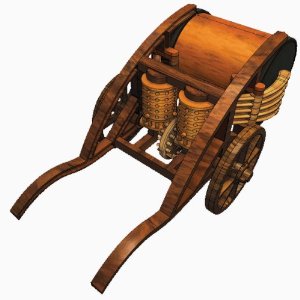
A mechanical drum, also known as a drum machine or automated drum, is a barrel-shaped device invented by Leonardo da Vinci in the late 15th century. When activated, it consists of hammers and beaters that strike its surface to produce a variety of rhythmic sounds.
Who invented the mechanical drum?
Leonardo da Vinci invented the mechanical drum in the late 15th century.
How does a mechanical drum work?
The mechanical drum rotates when a crank is turned or a mechanism is activated. The hammers and beaters attached to its surface strike it as it rotates, creating a musical beat and producing rhythmic sounds.
What was the purpose of the mechanical drum?
The mechanical drum provided a means of creating rhythmic sounds and musical beats. It allowed for the production of consistent, repetitive drumming patterns without human intervention.
What was the significance of da Vinci mechanical drum?
Leonardo da Vinci mechanical drum was a remarkable invention of its time, showcasing his ingenuity and creativity. It paved the way for the development of later drum machines and automated musical devices, leaving a lasting impact on music technology.
The importance and Relevance of da Vinci Mechanical Drum inventions
Technological Advancement
Da Vinci mechanical drum represented a significant leap forward in technological innovation during the Renaissance period. It demonstrated da Vinci's mechanical ingenuity and ability to bridge the gap between art and engineering.
The creation of a machine capable of producing a rhythmic beat with precision was a testament to his understanding of mechanics and acoustics.
Musical Experimentation
The mechanical drum paved the way for musical experimentation and composition. It served as an early precursor to modern drum machines and sequencers, enabling the creation of rhythmic patterns and beats.
This invention laid the foundation for exploring the possibilities of automating musical production and inspiring future musicians and composers.
Influence on Modern Music
Da Vinci mechanical drum is a historical precedent for contemporary drum machines and electronic music production. Today, drum machines are widely used in various musical genres, enabling musicians to create complex rhythmic patterns with ease.
The influence of the mechanical drum is evident in the development of electronic music, where programmed beats and synthesized sounds have become fundamental elements of composition.
Cross-Disciplinary Inspiration
Da Vinci mechanical drum exemplifies his multidisciplinary approach to innovation. It highlights the interplay between art, science, and engineering, a characteristic that has become increasingly relevant in today's world.
The drum's design and functioning demonstrate da Vinci's ability to merge his anatomy, mechanics, and acoustics knowledge, showcasing the importance of interdisciplinary collaboration in solving complex problems.
Leonardo da Vinci mechanical drum is a testament to his visionary mind and innovative spirit. Its significance extends beyond its historical context, inspiring modern advancements in music production and demonstrating the power of interdisciplinary thinking.
By recognizing the importance of da Vinci's civil invention, we pay homage to a genius who continues to shape and influence our world, even centuries after his time.
FAQs about Leonardo da Vinci Mechanical Drum
Did Da Vinci's flying machine work?
Leonardo da Vinci’s flying machine did not work successfully in practice. His designs relied on human-powered flapping wings, but modern analysis shows that a person could not generate enough power to lift the machine off the ground, making it impractical with Renaissance technology.
What is the Da Vinci mechanism?
The “Da Vinci mechanism” generally refers to Leonardo’s use of gears, pulleys, cranks, and cam systems to convert motion and automate tasks. These mechanical principles appear across his inventions, including clocks, carts, and devices such as the mechanical drum, demonstrating an early understanding of engineering and automation.
What is Da Vinci's most famous invention?
Leonardo da Vinci’s most famous invention is often considered his flying machine, inspired by the movement of birds. His detailed studies of flight and innovative designs made it one of the earliest serious attempts to achieve human flight.
What were some of Da Vinci's mechanical designs?
Leonardo created many mechanical designs, including the self-propelled cart (an early automobile), mechanical drum, hydraulic devices, cranes, and automated machines. These inventions demonstrate his ability to combine art, physics, and engineering into functional concepts.
How does da Vinci's machine work?
Many of Da Vinci’s machines work by converting motion using mechanical linkages such as gears, springs, and cranks. For example, his mechanical drum uses wheel movement to drive internal mechanisms that trigger drumsticks in a programmed rhythm, illustrating early automation.
Why is the flying machine so good?
Leonardo’s flying machine is considered “good” because it was far ahead of its time, based on careful observation of birds and early aerodynamic thinking. Although it could not function with the materials and power available, it laid conceptual foundations for later aviation developments.
Leonardo Bianchi is the founder of Leonardo da Vinci Inventions & Experiences, a cultural travel guide helping visitors explore Leonardo da Vinci’s art, inventions, and legacy across Italy and Paris.
Planning Milan?
See The Last Supper Without Missing the Details
Tickets are limited and visits are short. Start with the Milan guide before choosing your Last Supper experience.
If you're visiting Milan for Leonardo da Vinci, these are the experiences most travelers prioritize first — especially when tickets are limited and time is short.
This site is built for travelers who want more than surface-level sightseeing — helping you plan smarter visits around Leonardo da Vinci’s art, museums, and cities across Italy and Europe.

 Leonardo Bianchi is the founder of Leonardo da Vinci Inventions & Experiences, a cultural travel guide helping visitors explore Leonardo da Vinci’s art, inventions, and legacy across Italy and Paris.