
(Last updated: Sep 2026)
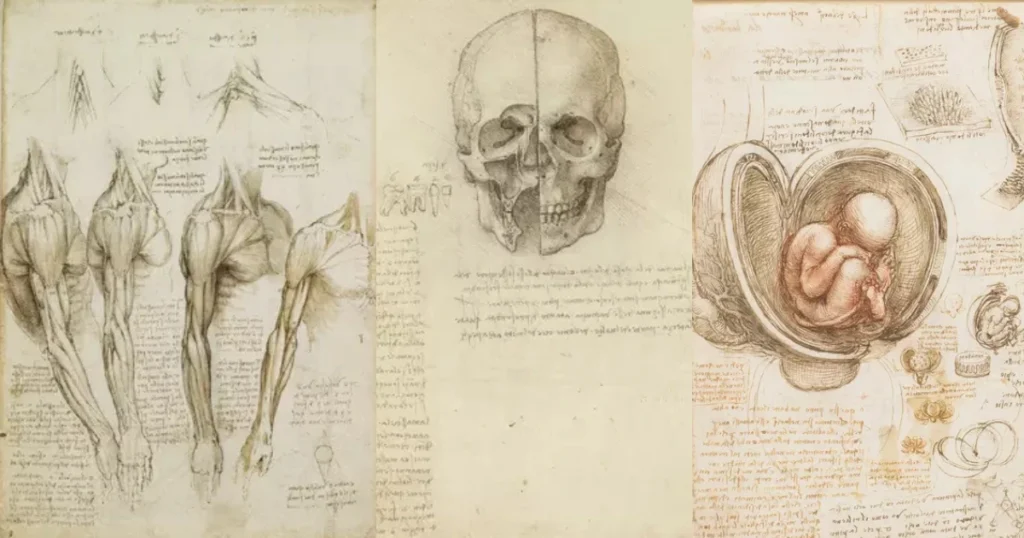
Leonardo da Vinci's anatomical drawings changed the way people looked at the human body forever. They are not simple sketches. They are the record of a mind that refused to separate art from science.
Long before medical schools had proper diagrams, Leonardo was dissecting bodies by candlelight and drawing what he found with a precision that still impresses anatomists today.
His anatomy sketches sit exactly where Renaissance art meets early scientific inquiry, and that mix is what makes them so compelling for anyone who wants to understand not just what Leonardo painted, but how he saw the world beneath the skin.
Most people know Leonardo as the painter of the Mona Lisa and The Last Supper. Far fewer know that he also produced one of the most advanced bodies of medical research in the entire Renaissance, without any formal medical training, and that it was kept almost entirely private during his lifetime.
That gap between his fame as an artist and his near-invisibility as an anatomist is part of what makes this story worth telling.
This post is all about Leonardo da Vinci's anatomical drawings — what they reveal about his genius, why they became so influential, and where you can experience this remarkable body of work in person today.
What are Leonardo da Vinci's anatomical drawings?
Leonardo da Vinci's anatomical drawings comprise roughly 240 detailed studies of the human form, created between about 1485 and 1513 and based on his own dissections. They cover bones, muscles, organs, and the nervous system with a level of accuracy that would not be matched in printed medical texts for centuries.
The Artistic Genius Behind Leonardo da Vinci's Anatomical Drawings
Leonardo's anatomy work began as an artist's problem. To paint the human body correctly, he believed he first had to understand what was happening underneath it. That single idea pulled him far past what any other Renaissance painter attempted.
Where Art Met the Dissection Table
Leonardo's curiosity about anatomy began early, when his teacher, Andrea del Verrocchio, encouraged his students to study the body's structure. As Leonardo's reputation grew, he gained access to real dissections, first at the Santa Maria Nuova hospital in Florence, later in Milan, and eventually in Rome.
Over his lifetime, he is believed to have personally dissected around 30 human bodies, along with numerous animal specimens he used for comparison.
What set Leonardo apart was not just the dissections themselves. It was his refusal to draw from memory or convention.
He worked directly from the body in front of him, sketching muscles from multiple angles, rotating limbs to show them in three dimensions on a flat page, and labeling everything in his distinctive mirror-writing, which he wrote right to left.
Comparing Human and Animal Anatomy
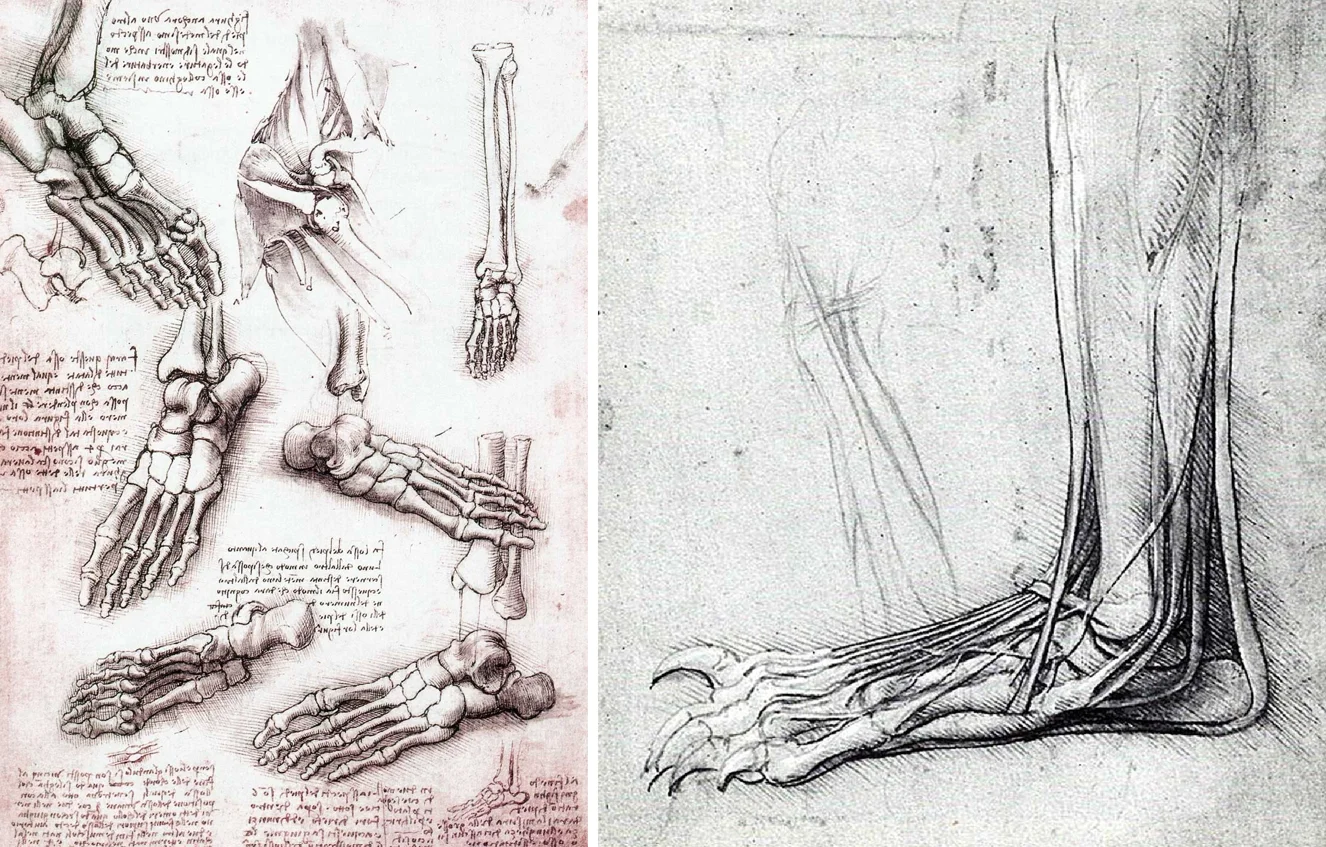
Leonardo's anatomy sketches were not limited to humans. He also dissected animals, including bears, horses, cows, birds, and frogs, and used the resulting data to compare structures across species.
A well-known example is his study of a bear's paw, where he mapped the bones and tendons of the foot with the same rigor he applied to the human foot.
For an artist who spent years preparing a monumental equestrian statue, this comparative approach was not a side interest. It was central to his understanding of movement and mechanics in any living body, human or otherwise.
The Notebooks That Captured a Universe of Detail
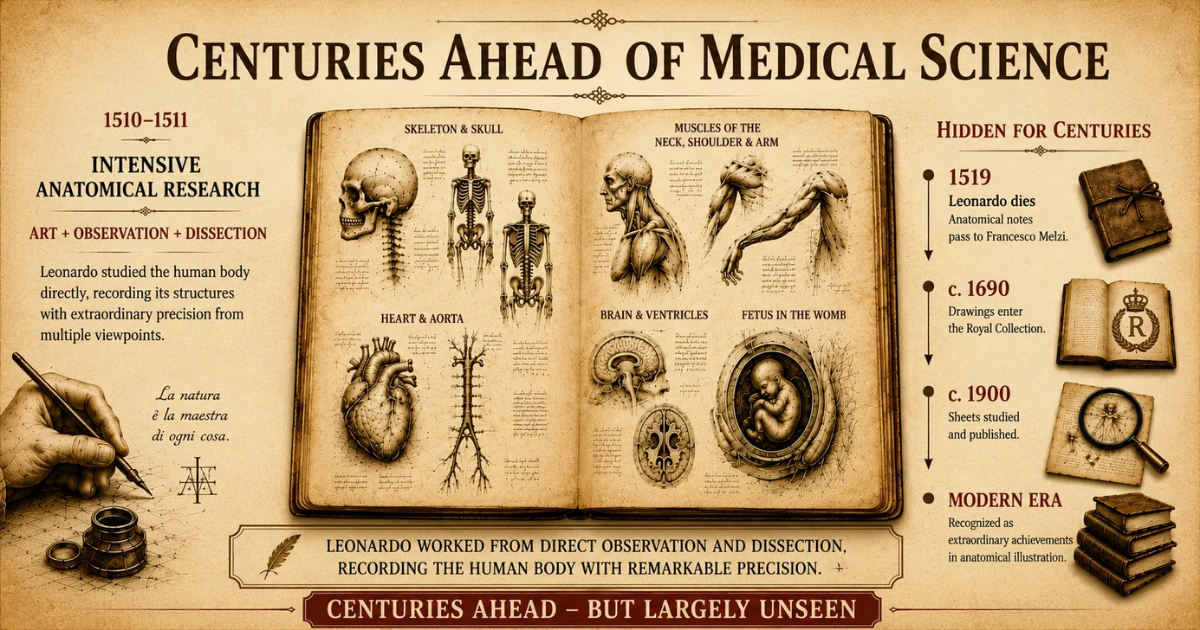
Leonardo's anatomical studies live inside his wider notebooks, thousands of pages covering everything from flight to hydraulics to human anatomy drawings. His most concentrated body of anatomical work is known today as Anatomical Manuscript A, eighteen sheets packed with more than 240 individual drawings and over 13,000 words of notes, produced during the winter of 1510 to 1511.
These da Vinci notebooks were never meant to be casual sketchbooks. Leonardo intended to publish an illustrated treatise on human anatomy, complete with detailed plates and explanatory text. It would have been one of the most important anatomy books of its era.
Curious what a working session with Leonardo might have looked like? A close look at a facsimile edition of his anatomical notebooks shows just how methodical his process really was, and browsing one is a good way to understand his working style before seeing the originals in person, such as a guided visit to the collection where many of these pages are held, which puts that same page-by-page detail directly in front of you.
Why Leonardo da Vinci's Anatomical Drawings Became Famous
Leonardo da Vinci's anatomy drawings did not become famous during his lifetime. In fact, almost nobody saw them. Their fame is a much later story, and it says as much about how ideas travel through history as it does about Leonardo himself.
Centuries Ahead of Medical Science
During the winter of 1510–1511, Leonardo collaborated with Marcantonio della Torre. Together, they planned an illustrated anatomy textbook combining Leonardo’s detailed drawings with della Torre’s anatomical expertise.
Leonardo may have dissected as many as 20 bodies during that collaboration alone, and his drawings from this period cover bones, muscle groups, and the mechanics of movement in extraordinary detail.
The partnership ended suddenly when della Torre died of plague in 1511, and Leonardo's planned treatise was never finished. But the discoveries kept coming.
He used molten wax to map the shape of the brain's ventricles. He built a glass model of the aorta to study how blood moved through it. He described a case of liver cirrhosis and narrowed arteries in an elderly patient, among the first accurate clinical descriptions of these conditions in medical history.
He also produced one of the most beautiful and scientifically informed studies of a fetus inside the womb ever drawn up to that point. Some of his conclusions were centuries ahead of anything published on human anatomy.
He argued that the heart, not the liver, was the true center of the blood system. He identified the coronary sinuses roughly 200 years before they were formally named, and his description of how blood moves through the heart came startlingly close to the theory of circulation that William Harvey would not publish until more than a century later.
Rediscovery and Influence on Modern Anatomy
When Leonardo died in 1519, his anatomical notes were passed to his student Francesco Melzi and remained unpublished.
Decades later, the sculptor Pompeo Leoni bound the anatomical pages into an album along with hundreds of other drawings. That album entered the Royal Collection by around 1690, most likely acquired during the reign of Charles II.
For roughly two centuries after that, Leonardo's research on human anatomy remained largely unseen and unstudied. It was not until around 1900 that the sheets were separated from the album, properly examined, and eventually published.
By then, the anatomical discoveries Leonardo had made 400 years earlier were confirmed as remarkably accurate, and his method of drawing the body from multiple angles influenced how anatomical illustration developed for generations of artists, scientists, and medical students who came after him.
It is worth pausing to consider what that timeline actually means. Andreas Vesalius, often credited as the father of modern human anatomy, published his landmark work decades after Leonardo's death, without ever seeing Leonardo's drawings.
The two men reached strikingly similar conclusions independently, which says less about influence and more about how far ahead Leonardo's direct, dissection-based method really was. His anatomy sketches were not simply early. They were correct, at a time when almost nothing else written about the body was.
Where to See Leonardo da Vinci's Anatomical Drawings Today
This is where the story gets a little more complicated than most travel guides let on, and it is worth understanding before you plan a trip around seeing them.
The Royal Collection at Windsor Castle
Almost all of Leonardo's surviving anatomical drawings are held today in the Royal Library at Windsor Castle, part of the Royal Collection.
This single archive is considered the most complete and important group of Leonardo drawings anywhere in the world, holding around 550 sheets by Leonardo in total, with the anatomical material forming one of its most significant clusters: studies of the human body, the heart, muscles, the skeleton, fetal development, and his broader scientific method of observation.
Exhibitions, Loans, and Why They're Rarely on Permanent Display
Here is the travel caveat that matters most. Leonardo's drawings are extremely sensitive to light damage, so the Royal Collection does not keep them on permanent public display.
Instead, they are normally stored securely at Windsor and brought out periodically for exhibitions at the King's Galleries in London and Edinburgh, or lent to major museums around the world.
That means the honest question to ask before visiting is not "how do I get to Windsor Castle to see Leonardo's drawings," since they are not usually on view there.
The better question is where Leonardo da Vinci's anatomical drawings are currently on view, since past exhibitions such as Leonardo da Vinci: Anatomist and Leonardo da Vinci: The Mechanics of Man have toured to London, Edinburgh, and beyond.
Checking current exhibition listings before a trip will save you a disappointing visit and, more often than not, point you toward an even richer one. When the drawings are not touring, London still offers a way in.
The King's Gallery at Buckingham Palace regularly rotates highlights from the Royal Collection, and Leonardo material appears there periodically alongside other treasures.
It is worth checking the Royal Collection Trust's own listings directly, since exhibition schedules shift with conservation needs and loan agreements that are decided well in advance.

Explore Windsor Castle & the Royal Collection
Visit Windsor Castle and discover its connection to Leonardo’s remarkable drawings
See Windsor Castle ToursWindsor Castle and the Royal Collection
A guided visit to Windsor Castle covers the State Apartments and grounds where Leonardo's drawings have historically been housed.
- Skip-the-line entry to the castle grounds
- Access to St George's Chapel at Windsor Castle
- Context on the Royal Collection's history and holdings
Many visitors find it easier to combine this with a London day trip rather than plan it separately. Check Windsor Castle visit details
Experiencing Leonardo's Legacy Near Windsor and London
Knowing the history is one thing. Standing in the rooms connected to that history is another. Even when the anatomical drawings themselves are not on display, the Royal Library building that houses them is open to the public, and they give a real sense of the setting in which these pages have lived for more than 300 years.
A day trip from London to Windsor typically covers the castle's St George's Chapel and the surrounding grounds, giving useful context for understanding how Leonardo's work ended up in a royal archive in the first place.
Visitors often note that pairing the trip with a stop at whichever London gallery currently holds a Leonardo exhibition rounds out the experience far better than seeing either location alone.
If a Leonardo-focused exhibition happens to be running during your visit, seeing the original sheets, mirror-written notes and all, is a genuinely different experience from looking at reproductions. The scale, the ink, and the sheer density of information on each page are easy to underestimate until you are standing in front of one.
For most travelers, the practical approach is to treat Windsor and London as a single trip rather than two separate errands. Spend the morning at the castle taking in the architecture and the setting where these pages have been kept safe for centuries, then head back into London for whichever gallery or museum currently has Leonardo material on loan. It turns a single sight into a fuller day built around one thread of history.
Before booking anything, it's worth confirming the current opening times and exhibition schedules directly with the Royal Collection Trust, as access varies with conservation needs and touring schedules. See Windsor Castle Tour Options
Exploring Leonardo da Vinci in London and Beyond
Windsor is only one stop in a much wider trail. Leonardo's life and work are spread across several European cities, each holding a different piece of the story.
London and Windsor cover the anatomical archive, but the fuller picture takes shape once you connect it to the places where Leonardo actually lived and worked.
Milan is where Leonardo spent decades in the service of the Sforza court and where much of his mechanical and scientific thinking developed. Florence holds the roots of his artistic training and his early access to dissections at Santa Maria Nuova.
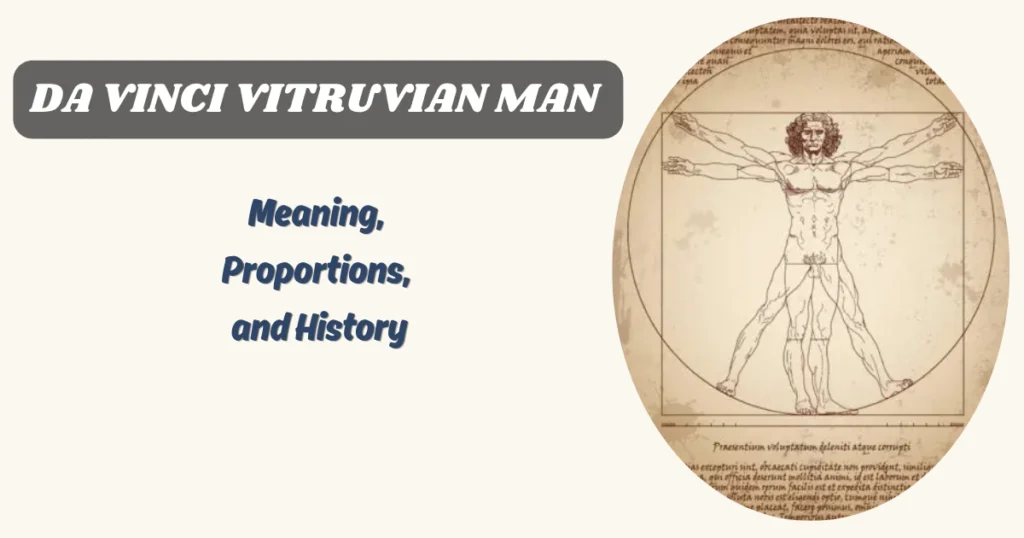
Venice holds the Vitruvian Man, Leonardo's famous study of human proportion, which pairs naturally with the anatomical drawings, even though it is kept separately in a different collection.
Rome gave Leonardo his final period of anatomical access at the Santo Spirito hospital, and Paris is where he spent his last years and where the Louvre now holds several of his most famous paintings.
Together, these cities form a natural route for anyone creating a Leonardo da Vinci travel itinerary centered on his art, science, and notebooks.
Final Thoughts
This post was all about Leonardo da Vinci's anatomical drawings, and what stands out most is how far ahead of his time he really was.
Leonardo treated the human body the way he treated everything else in nature: as something worth observing directly, drawing precisely, and questioning without end.
His anatomical sketches were never just illustrations. They were an attempt to understand life itself, centuries before the tools existed to confirm most of what he found.
That is part of why seeing these drawings in person, whenever the opportunity comes around, means something different from viewing them in a book or on a screen.
The Renaissance produced plenty of remarkable art, but Leonardo's anatomical work is one of the rare places where that art and real scientific discovery sit on the very same page.
Related Post You May Like
Disclosure: This page may contain affiliate links. If you book through them, we may earn a small commission at no extra cost to you. Learn more.
Free Leonardo Milan Travel Guide
Plan Your Leonardo Trip in Milan
A premium mini guidebook for smarter Milan planning, including the best ticket strategy, Leonardo map, and practical visitor advice.
Get the Free Guide
Download the guide and receive practical Milan planning tips by email.
Download the Free Guide >> Leonardo Bianchi is the founder of Leonardo da Vinci Inventions & Experiences, a cultural travel guide helping visitors explore Leonardo da Vinci’s art, inventions, and legacy across Italy and Paris.