Comparison of Medieval Food vs. Renaissance Food showing the shift from humble, survival-based meals in a dim medieval kitchen to lavish, art-filled banquets of the Renaissance (conceptual illustration)
The food of the Renaissance era truly diverged from the simple, limited diets of medieval times. Suddenly, culinary exploration and social dining became the norm.
The biggest changes? New World ingredients like tomatoes and chocolate, the rise of sugar as a sweetener, and meals transforming from basic sustenance into elaborate displays of wealth and status.
During the Renaissance, food evolved into an art form and a status symbol, rather than just a means of survival. The growing middle class began to acquire spices and cooking techniques that were once reserved for the nobility.
The medieval period was characterized by the Catholic Church’s rules for modest eating and a rigid feudal system that limited most people’s food choices to a bleak range. Then came the Renaissance, and suddenly, luxury and experimentation were in style.
This revolution touched everything—what proteins people ate, how bread marked social class, and how fresh produce from faraway places changed daily meals. Dining turned into a cultural event, not just a necessity.
The Transformation of Meat and Protein in Renaissance Era Food
https://youtu.be/15N69PnXsc4?si=YybkPbiVe6kdbMnu
Renaissance cooks began to move away from salted, preserved meats. Fresh preparations and exotic game birds stole the spotlight at noble tables.
Roasted peacock and swan became showpieces. Fresh fish started to replace salted versions, especially for those who could afford it.
From Preserved Pork to Fresh Roasted Meat: A Culinary Revolution
Medieval diets leaned heavily on preserved pork, bacon, and salted meats. That was mostly because storage options were limited.
With the Renaissance came better preservation and supply chains. Suddenly, cooks could serve fresh roasted meat much more often.
Fresh roasts became the stars of Renaissance banquets. Wealthy families flaunted their status with elaborate dishes of beef, veal, and mutton.
These new dishes required skilled cooks and the latest techniques. Improved ovens and equipment enabled the development of more flavorful and visually appealing presentations.
Exotic Game Birds Replace Medieval Staples: Peacock, Swan, and Pheasant on Noble Tables
The nobility ditched simple chicken and duck for dramatic game birds. Peacock, swan, and pheasant became must-haves for aristocratic feasts.
Cooks would re-feather peacocks after roasting them, turning dinner into a visual spectacle. Swans and cranes made appearances at the grandest banquets.
Pheasant and partridge were more practical but still impressive. They tasted great and were easier for kitchen staff to manage.
Hosting exotic game birds showcased artistry and wealth. It was all about making a statement—look at what I can hunt, look at what I can serve.
The Rise of Fresh Fish vs. Salted Fish: Cod, Salmon, and Sturgeon
Medieval tables were loaded with salted cod and herring. As transport improved, fresh fish became the new favorite for those who could get it.
Salmon gained popularity for its rich flavor and attractive appearance on the table. Sturgeon, especially its caviar, became a delicacy among the wealthy.
Fresh trout and pike showed up often at noble feasts. Coastal folks enjoyed oysters, mussels, and other shellfish. Sometimes, even porpoise and whale made an appearance at the most lavish spreads.
Preparing fresh fish took real skill. Renaissance cooks experimented with sauces and new methods to bring out the best in these premium proteins.
Wild Game and Unusual Proteins: Venison, Boar, and Even Dormice
Venison and wild boar were top prizes for Renaissance hunters. Serving these meats showed off your access to hunting grounds and noble connections.
Some tables even featured dormice, hedgehogs, or beavers. That might sound strange now, but back then, it was all about culinary adventure and trying something new.
Rabbit and hare were a bit more common and bridged the gap between everyday and exotic. Middle-class kitchens often included these wild proteins in their meals.
Turkey Arrives: How New World Poultry Changed Renaissance Era Food Forever
Turkey changed everything after Spanish explorers brought it back from the Americas. This large bird provided ample meat for growing households.
Its size made it perfect for grand presentations. Renaissance cooks developed new methods for preparing turkey, distinct from traditional European poultry recipes.
Turkey’s arrival kicked off a global culinary exchange. It effectively summarized how Renaissance-era food culture began to evolve as exploration introduced new flavors and ideas.
Bread, Grains, and the Social Hierarchy of Renaissance Era Food
Bread wasn’t just food anymore—it became a marker of social status. The type of grain, how it was prepared, and the final bread all said a lot about who you were.
White Bread vs. Brown Bread: Manchet, Rye, and the Class Divide
Meanwhile, the lower classes ate rye and mixed-grain breads. Darker, more nutritious, but definitely not a status symbol. The way bread was ground and baked mattered for both nutrition and social standing.
The Pasta Revolution: Tagliatelle, Ravioli, and Tortellini Enter European Cuisine
Tagliatelle, ravioli, and tortellini emerged as sophisticated new grain dishes. Italian cooks crafted these pastas to highlight their culinary skills and ingredients.
Making these pastas took refined flour and real technique. Noble households hired skilled cooks to create filled pastas with cheese and roasted meats.
The pasta craze spread from Italy through trade. Wealthy merchants brought these dishes to other courts, turning wheat into edible art.
Barley, Oats, and Millet: Medieval Porridge Gives Way to Renaissance Refinement
Barley, oats, and millet have been elevated from basic porridge to fancier dishes. Gruel was out, and seasoned, textured grain sides were in.
Cooks started adding vegetables like onions and garlic to these grains. The result? More complex recipes and a move away from just boiling everything.
The upper classes treated these grains as side dishes, not main courses. It’s a testament to how Renaissance cuisine elevated even humble ingredients.
Rice and Wheat Flour: Luxury Grains That Defined Renaissance Era Food
Rice arrived in the Mediterranean region via the trade route as a highly valued exotic luxury. The wealthy used it in sweet dishes and elaborate sides, setting it apart from everyday wheat.
Wheat flour quality mattered more than almost anything else. The whitest, finest flour produced the best breads and pastries for noble tables.
Processing and transporting these grains is costly. Serving them showed off wealth and access to trade.
How Bread Quality Signaled Status: From Black Bread to Aristocratic Manchet
Black bread sat at the bottom of the social ladder. Made from coarse grains, it was basic fuel for laborers and peasants who couldn’t afford better.
Aristocratic manchet needed skilled bakers and pricey ingredients. It went hand in hand with fine meats, such as venison, at feasts—luxury foods working together to showcase status.
Fresh Produce and New World Ingredients Transform Renaissance Era Food
New ingredients from the Americas began to appear during the Renaissance, disrupting traditional European fruit and vegetable varieties. Root vegetables remained important, but tomatoes and potatoes gradually made their way into kitchens, changing the culinary landscape.
Root Vegetables vs. Leafy Greens: Turnips, Carrots, and the Food Hierarchy
Root vegetables were everywhere. Turnips kept peasants going, while carrots gained favor with wealthier folks for their sweetness and color.
Parsnips and rutabagas helped people survive winter. These veggies stored well, making them indispensable during the cold months.
Leafy greens, such as cabbage, lettuce, and watercress, hold a distinct place in the food hierarchy. Cabbage was for the masses, often pickled into sauerkraut to extend its shelf life.
Preparation styles split along class lines. Peasants boiled roots into thick stews with the odd scrap of bacon, while the rich enjoyed fancy versions spiced up with exotic seasonings.
Seasonal Produce and Preserved Fruits: Apples, Pears, and Candied Delicacies
Fresh fruit eating followed the seasons during the Renaissance. Apples and pears filled autumn baskets, giving people crucial vitamins before winter set in.
People used preservation techniques to transform seasonal abundance into treats that could be enjoyed throughout the year. Wealthy households made candied fruits with imported sugar, transforming everyday apples into prized sweets.
Preservation Method
Common Fruits
Cherries, oranges, and lemons
Dried
Apples, pears, plums
All classes
Candied
Cherries, oranges, lemons
Wealthy only
In syrup
Peaches, pears
Upper class
Seasonal produce included strawberries, cherries, and early summer berries. These delicate fruits showed up fresh at wealthy feasts, but only for a short time each year.
Grapes played two roles—people ate them fresh and used them for wine. Both white and red grapes thrived in Mediterranean regions, fueling local economies.
The Arrival of Tomatoes and Potatoes: Exotic Foods That Changed Everything
Tomatoes appeared in Europe in the mid-16th century, but most folks saw them as decorative oddities. Wealthy Europeans cultivated these unusual plants in their gardens, not in their kitchens.
Potatoes also met with skepticism, despite being a nutritious food. Farmers in Europe stuck to familiar roots, such as turnips and parsnips, instead of these new tubers.
Change came slowly through the late Renaissance. Italian cooks started using tomatoes in sauces, laying the groundwork for what we call modern cuisine.
Spanish and Portuguese explorers brought these foods through their trade networks. Still, it took generations for people to embrace them truly.
Mediterranean Flavors: Artichokes, Fennel, and Fresh Herbs in Renaissance Cooking
Artichokes gained significant value in Italian Renaissance kitchens. Wealthy tables featured these Mediterranean vegetables, accompanied by olive oil and fresh herbs.
Fennel is offered in both bulb and seed form for cooking. Cooks used the bulbs as vegetables and ground the seeds into spice for roasted meats.
Fresh herbs like basil, rosemary, thyme, and sage brought simple ingredients to life. Monastery and castle gardens across Europe grew these herbs.
Italian cooks in the Renaissance combined herbs to enhance, rather than mask, natural flavors. That approach stood out in comparison to medieval cooking, which relied heavily on imported spices.
Mediterranean cooking styles spread north through trade. French and English kitchens gradually adopted Italian methods of preparing vegetables and herbs.
Beans, Peas, and Legumes: From Peasant Staples to Refined Renaissance Era Food
Beans and peas crossed class lines in the Renaissance. Poor families relied on these protein-rich foods, while the wealthy incorporated them into elaborate dishes.
Fava beans led the way in early Renaissance gardens, long before American varieties arrived. When people combined these hardy beans with grains, they got a solid protein boost.
Lentils and chickpeas frequently appeared in Mediterranean kitchens. Cooks flavored them with olive oil, garlic, and fresh herbs instead of just boiling them plain.
How people prepared legumes said more about class than the ingredients themselves. Peasants made basic porridge from dried peas, while aristocrats enjoyed them with pricey spices and bits of roasted meat.
Gardeners grew fresh peas as a luxury springtime treat. Wealthy tables across Europe celebrated these tender pods as a sign of seasonal plenty.
Frequently Asked Questions
Renaissance food differed from medieval meals due to the introduction of new ingredients, such as sugar and tomatoes, as well as more sophisticated cooking and presentation techniques. People enjoyed a greater variety and developed dining habits that showcased both their nutritional needs and social status.
What food did they eat during the Renaissance?
Renaissance folks ate bread, meat, and vegetables as staple foods. The wealthy went all out with exotic spices, sugar, and fancy dishes at banquets.
Exploration brought in new foods. Tomatoes, peppers, and chocolate arrived in the New World from the Old World in the 16th century.
The middle class got access to better ingredients than before. They could afford improved cooking and more variety than medieval peasants ever dreamed of.
What did people in the Renaissance eat for breakfast?
Breakfast in the Renaissance was usually simple. Most people ate bread, porridge, or leftovers from the day before.
The wealthy might add cheese, eggs, or a bit of meat. Breakfast wasn’t the main meal—people didn’t fuss over it.
The big meal happened at midday. Evening meals were lighter, especially compared to lunch.
What was the most common food eaten in medieval times?
Bread was the backbone of the medieval diet. Porridge from grains was another staple for most families.
Vegetables like cabbage, onions, and turnips appeared frequently. The peasants and commoners were often limited to a monotonous and unappetizing diet.
Meat is too expensive for most people, so only the wealthy can afford to eat it regularly. Commoners might get pork, chicken, or fish when they could.
What was Leonardo da Vinci's favorite food?
Leonardo da Vinci liked simple, light meals that wouldn’t slow him down. He ate vegetables, fruit, and usually skipped heavy meat dishes.
Records say he enjoyed minestrone and fresh bread. Da Vinci thought that overeating dulled the mind and hurt creativity.
He appreciated a glass of wine with meals, but only in moderation. His eating habits matched Renaissance ideas about balance and self-control.
What did people drink in the Renaissance?
Water wasn’t always safe, so people turned to ale, beer, and wine. Alcoholic drinks were safer than questionable water sources.
The wealthy enjoyed imported wines and special drinks. Sugar became more widely available and was used to sweeten beverages.
People drank milk fresh when they could get it. Herbal teas and fruit juices were also on the menu, if they were lucky.
What did food look like in the 1500s?
Food presentation became much fancier during the 1500s. The Renaissance introduced haute cuisine, characterized by more intricate preparations and elaborate displays.
Wealthy families often took pride in presenting their meals in elaborate and decorative ways. Sugar sculptures and ornate pastries typically sat at the center of the table as eye-catching centerpieces.
The colors on the plate started to pop more, thanks to the addition of new spices and ingredients. Tomatoes and peppers arrived, adding reds that people hadn't seen before.
Formal dinners typically consisted of several courses, served one after another. Hosts arranged each dish to impress their guests and show off a bit—maybe even a lot—of wealth and taste.
Da Vinci bridge calculations stand out as some of history’s most elegant solutions to challenging structural engineering problems.
These mathematical principles behind Leonardo's self-supporting design still guide engineers today, especially when they're working on earthquake-resistant structures, portable military bridges, or sustainable projects that rely on compression forces instead of expensive materials or permanent fasteners.
MIT studies confirmed the structural soundness of his 500-year-old equations. Norway even built a pedestrian bridge using these same ideas, demonstrating that da Vinci's approach to load distribution and geometric stability remains adequate for modern infrastructure needs.
Architects and engineers continue to rely on Leonardo's compression-only calculations for structures that require seismic resilience, support heavy loads without the use of fasteners, or rapid deployment.
His grasp of how interlocking members share weight through geometry has inspired emergency bridges and modular construction systems alike.
How Da Vinci Bridge Calculations Define Structural Integrity Through Compression-Only Architecture
Conceptual illustration of da Vinci’s compression-only arch, showing thrust line alignment and geometric load distribution.
Da Vinci bridge calculations demonstrate how compression-only structures achieve stability by carefully positioning the thrust line and utilizing friction lock mechanisms.
The design avoids tensile stresses and stays structurally feasible through mathematical relationships that govern arch geometry and load distribution.
Understanding the Compression-Only Arch and Thrust Line Within Masonry Depth
The compression-only arch sits at the heart of da Vinci’s method. Engineers must keep the thrust line within the masonry depth to prevent tensile failures. That takes careful calculation of the arch’s curvature and loading.
Modern analysis shows Leonardo understood thrust-line theory instinctively. The Golden Horn bridge design uses geometric ideas that wouldn’t become mainstream for centuries.
Key thrust line requirements:
Stays within the middle third of the arch depth
Doesn’t exceed masonry compression limits
Needs a continuous load path from the crown to the abutments
The flattened parabolic arch brings its own set of challenges. Engineers use trigonometric layout methods—basically echoing da Vinci’s sketches—to calculate thrust line deviation.
Calculating Lateral Thrust and Abutment Stability for Single-Span Masonry Arch Designs
Lateral thrust calculations show the horizontal forces sent to the bridge abutments. With a single-span masonry arch, these forces concentrate at two main points. Engineers figure out thrust magnitude from the arch’s geometry and loading.
Abutment stability calls for massive foundations to resist overturning moments. The span-to-rise ratio matters—a flatter arch pushes out more horizontal force.
Critical stability factors:
Foundation bearing capacity on actual soils
Abutment massing for thrust resistance
Safety factor against sliding and overturning
Modern feasibility studies look at 16th-century methods. Stone ashlar blocks require precise cutting to achieve the parabolic profile without the use of centering falsework.
Bearing Capacity and Foundation Settlement Testing in 16th-Century Construction Feasibility
Foundation settlement testing highlights key constraints for building the bridge. Engineers analyze bearing capacity using techniques available in 1502. The massive abutments need deep foundations to transfer loads safely.
Settlement tolerance calculations indicate the acceptable range of differential movement between supports. Modern studies use dimensional similitude to test foundations at smaller scales.
Foundation requirements include:
Pile foundations reaching bedrock
Raft foundations to spread out loads
Settlement monitoring during construction
A 240-meter span creates huge foundation loads for the 16th century. Bearing capacity analysis helps determine if old construction methods could handle the job.
Keystone Action and Friction Lock Mechanisms in Self-Supporting Bridge Design
Keystone action spreads loads through the arch crown, while friction lock mechanisms keep the structure together. The self-supporting design eliminates the need for mechanical fasteners by relying on the geometric interlocking of pieces.
Each stone block relies on friction and interlock, rather than mortar joints. This needs precise piece length optimization for equilibrium. The self-supporting bridge concept shows advanced force transfer ideas.
Friction lock principles:
Adjacent blocks interlock mechanically
Compression forces trigger frictional resistance
No tensile connections needed for stability
Modern replicas using glulam wood confirm these friction mechanisms. Engineers test 3D-printed models to verify whether geometry alone can transfer loads.
Load Paths and Stress Concentration Analysis for Flattened Parabolic Arch Geometry
Load paths in the flattened parabolic arch lead to complex stress patterns. Engineers examine stress concentration where the geometry changes. The arch rib carries the main loads, while the spandrel areas handle secondary forces.
Dynamic response calculations cover wind stability and seismic resilience. Compression-only structures offer redundancy through several load transfer paths.
Critical analysis points:
Max stress at quarter-span points
Load spread through arch depth
Stability under live loads and environmental forces
Modern structural analysis confirms the design's feasibility with computational tools Leonardo never had. The math behind arch behavior backs up his intuitive engineering.
Why Modern Engineering Still Relies on Da Vinci Bridge Calculations for Seismic Resilience
Conceptual illustration showing how da Vinci’s compression-only bridge structure distributes seismic forces through thrust lines and spread footings, demonstrating earthquake-resistant stability rooted in geometric design.
Da Vinci bridge calculations provide key insights for earthquake-resistant design, utilizing compression-only structures and spread footings that effectively distribute seismic forces. The Leonardo da Vinci Golden Horn Bridge exemplifies structural principles that engineers continue to use in addressing seismic challenges.
Seismic Stability and Dynamic Response in Compression-Only Structures
Compression-only arch structures handle earthquake forces with geometric stability, in addition to material strength. The thrust line remains within the masonry depth during earthquakes, preventing tensile failures that can damage regular bridges.
Engineers study da Vinci’s flattened arch to see how compression forces move during ground motion. The parabolic shape channels lateral thrust to spread foundations, dodging stress points that often fail first in quakes.
Modern seismic codes use these ideas for unreinforced masonry. Compression-only systems offer redundancy that steel and concrete bridges often lack.
Abutment Massing and Overturning Resistance Through Splayed Foundation Design
Leonardo’s abutment stability calculations explain how massive foundations stop overturning in earthquakes. The splayed foundation boosts bearing capacity and lowers the center of gravity.
Today’s engineers use similar abutment massing for seismic zones. The foundation shape spreads loads over a larger area of soil, reducing settlement risks. This is especially useful for bridges on soft soils that are prone to liquefaction.
Key Foundation Principles:
Wider width-to-height ratios
Lower center of gravity
Better soil bearing spread
Less overturning moment
Settlement Tolerance and Factor of Safety in Leonardo da Vinci Golden Horn Bridge Analysis
The MIT study found impressive settlement tolerance in da Vinci’s design. Engineers tested the foundation's movement by separating the support platforms until the bridge finally collapsed.
Modern bridge codes use these settlement ideas with higher safety factors. The compression-only structure adapts to uneven settlement through its geometry, rather than material failure.
Load paths shift automatically when foundations settle unevenly. This self-adjusting behavior gives seismic resilience that rigid structures can’t match.
3D-Printed Scale Model Testing and Dimensional Similitude at 1:500 Scale
Researchers built 3D-printed blocks at a 1:500 scale to check da Vinci’s structural math. The 126-block model showed how scaling laws affect compression arch behavior under seismic loading.
Dimensional similitude testing reveals how proportions impact seismic performance. Engineers use these scaling rules for modern compression arches in earthquake zones.
The friction lock between blocks creates distributed stiffness; no mortar is needed. This allows the bridge to flex during earthquakes while maintaining its integrity.
Wind Stability and Load Distribution Under Live Loads Using Period Methods
Da Vinci’s construction methods addressed wind stability through geometric proportions and intelligent load distribution. The span-to-rise ratio naturally resists wind without extra bracing.
Modern engineers look at these old methods to trace load paths in compression structures. Wind forces move through the arch rib and spandrel fill, not just at connection points.
Load Distribution Features:
Keystone action spreads wind loads sideways
Spandrel fill adds mass damping
Arch rib geometry channels forces to the foundations
Deck-arch interaction creates composite behavior
The self-supporting design skips fatigue-prone connections that usually fail under repeated wind loads.
How Da Vinci Bridge Calculations Inspire Contemporary Construction From Norway's Glulam Arch to Modular Systems
Da Vinci bridge calculations highlight compression-only arch principles that modern engineers use with glulam construction, 3D-printed scale models, and modular systems. These calculations guide everything from piece length optimization to foundation settlement testing in current bridge design.
Glulam Parabolic Arch Design and Steel-Reinforced Deck in Norway: Replica Applications
The Norway bridge project from 2001 brings Leonardo’s thrust line calculations to life in a glulam parabolic arch. Engineers used laminated wood beams for the flattened arch, sticking to the original compression-only principles.
The steel-reinforced deck spreads live loads across the arch rib. This deck-arch interaction gives redundancy, much like Leonardo’s stone block distribution would have done.
Key specifications:
Main span: 40 meters
Total length: 109 meters
Material: Glulam timber with steel reinforcement
Construction cost: 12 million Norwegian kroner
Modern glulam lets engineers fine-tune the span-to-rise ratio. They can calculate the exact thrust line position within the wood depth, ensuring the bridge remains stable under dynamic loads.
Friction and Interlock Principles in 3D-Printed Blocks for Modern Testing
The 1:500 scale model had 126 individual pieces. These relied entirely on friction and interlock mechanisms.
The 3D-printed model demonstrated that mortar versus dry joints calculations remain valid after 500 years. Each block transfers loads through direct contact, without the use of adhesives or fasteners.
Testing parameters:
Scale ratio: 1:500
Block count: 126 pieces
Assembly time: 6 hours printing
Load capacity: Verified under foundation movement
Dimensional similitude laws show that Leonardo's contact calculations scale accurately. The friction lock and interlocking wood design principles remain effective with modern materials and methods.
Piece Length Optimization and Trigonometric Layout for Self-Supporting Wood Variants
Leonardo's trigonometric layout calculations help determine the best beam lengths for structural efficiency.
Modern engineers utilize these optimization formulas to design self-supporting bridge variants using standard lumber.
The geometric relationships between beam angles and contact points follow strict math rules. Each piece must hit specific load paths to maintain steady keystone action throughout the bridge.
Builders today often use 2x6 lumber or larger timbers, adhering closely to Leonardo's original proportions. The trigonometric layout maintains a solid bearing capacity at every connection.
Critical measurements:
Beam angle calculations
Contact surface optimization
Load transfer points
Assembly sequence planning
Deck-Arch Interaction and Spandrel Fill Considerations in Modern Analogs
Modern modular bridge systems use Leonardo's spandrel fill calculations to optimize load distribution. The deck-arch interaction creates composite behavior, which increases stiffness and seismic resilience.
Bailey-style military bridges employ similar concepts for rapid setup. These systems depend on calculated load paths that distribute weight through compression members.
Engineers need to consider how deck and arch components settle differently. Spandrel areas give important lateral stability under wind and dynamic loads.
Centering vs. No-Centering Construction and Ship Clearance Requirements for Navigational Channels
Leonardo's no-centering construction approach cuts out the need for temporary falsework. That reduces project costs and construction headaches.
Modern applications include emergency bridge builds, where centering is just not practical. The Golden Horn bridge design required 43 meters of ship clearance, a standard still used for navigational channels.
Contemporary bridge designers use these clearance numbers for commercial shipping needs. Foundation settlement testing backs up Leonardo's abutment stability calculations, even without centering support.
The structure reaches its full load capacity immediately after keystone placement, ensuring navigational access is available right away.
Frequently Asked Questions
Engineers and students often have questions about da Vinci bridge calculations and load-bearing formulas. These calculations help determine structural capacity, efficiency ratings, and safety factors for bridge designs.
How do you calculate how much a bridge can hold?
Bridge load capacity calculations figure out the maximum weight a structure can safely support. Engineers look at the materials, dimensions, and design of each bridge component.
The basic formula uses the bridge's cross-sectional area, material strength, and safety factors. For da Vinci's self-supporting bridge, calculations focus on compression forces rather than tension.
Engineers multiply the material's compressive strength by the effective cross-sectional area. Then they add a safety factor—usually between 2 and 4—to make sure the bridge won't fail if overloaded.
Load distribution patterns also affect capacity. Da Vinci's bridge design utilizes interlocking beams to distribute weight evenly across the entire structure.
What is the Davinci method of bridge?
The Da Vinci bridge method uses interlocking wooden beams that support each other through compression. No fasteners, nails, or mortar hold the pieces together.
Each beam locks into place with the others using precise angles and weight distribution. The structure remains intact thanks to the friction between its parts.
This creates a self-supporting bridge that depends entirely on compression. The interlocking mechanism spreads loads across all the members.
Military engineers preferred this method because it enabled quick construction without the need for specialized tools. Soldiers could make crossings with local timber and basic carpentry skills.
What is the bridge formula?
The bridge formula calculates the maximum weight allowed on vehicle axles based on axle spacing. Federal regulations use this to protect bridges from overloading.
The formula: W = 500 × (LN/(N-1) + 12N + 36). W is max weight in pounds, L is axle spacing in feet, N is the number of axles.
This helps figure out safe vehicle weights for existing bridges. It prevents damage from trucks that go over design load limits.
For structural analysis, engineers use different formulas for different bridge types. Beam bridges utilize moment and shear calculations, while arch bridges focus on compression.
What is the formula for calculating bridge efficiency?
Bridge efficiency is the ratio of functional load capacity to total structural weight. The formula: Efficiency = (Live Load Capacity ÷ Dead Load) × 100%.
Higher efficiency ratios mean better design. Most modern bridges have a coefficient of friction between 0.3 and 0.8, depending on the span and materials used.
Da Vinci's bridge achieves high efficiency due to its self-supporting geometry. The design eliminates unnecessary material while maintaining strength through compression.
Material use affects efficiency a lot. Bridges that use less material but hold more weight score higher.
What is the formula for load calculation?
Total load refers to the sum of dead loads and live loads acting on the bridge. The formula: Total Load = Dead Load + Live Load + Environmental Loads.
Dead loads are the bridge's own weight and permanent fixtures. Live loads include traffic, pedestrians, and any temporary loads.
Environmental loads cover wind, snow, and seismic forces. Engineers add these up using combination factors from building codes.
For Da Vinci bridges, compression-only analysis simplifies load calculations. The entire structure transfers loads through compression, rather than complicated bending moments.
Is 10 or 20 psf dead load?
Dead load values depend significantly on the materials used and the construction method employed in building the bridge. You’ll usually see dead loads anywhere from 10 to 150 pounds per square foot (psf).
If you’re working with lightweight timber, consider using 10-15 psf. Concrete bridge decks? Those usually call for 50-75 psf in your calculations.
Steel beam bridges typically fall within the 20-40 psf range, although this depends on the size of the members. Material density and the thickness of everything will affect that number.
Engineers figure out dead loads by multiplying the density of the material by its thickness. Wood weighs approximately 35-50 pounds per cubic foot, while concrete weighs about 150 pounds per cubic foot.
The da Vinci-Broen pedestrian bridge spans the E18 highway in Ås, Norway; built 1997–2001 and inaugurated by Queen Sonja.
The da Vinci bridge has captured the imagination of engineers and history buffs for centuries. Leonardo's ambitious 1502 design would have stretched 919 feet across the Golden Horn in Istanbul—about ten times longer than most bridges.
Recent MIT research shows that Leonardo's 500-year-old bridge design would have actually worked if built with the materials and methods available in his day.
The MIT engineers built detailed models and found that his engineering concepts still stand up to scrutiny.
Leonardo's rejected bridge idea later found new life in Norway. His self-supporting design is a masterclass in Renaissance innovation, and honestly, anyone can try building a working model themselves.
The da Vinci Bridge in Real Life: From Leonardo's 1502 Sketch to Modern Reality
Leonardo da Vinci’s 1502 proposal for a single-span stone bridge across Istanbul’s Golden Horn, featuring a flattened parabolic arch designed for compression-only support and clearance for ship passage (conceptual illustration).
Leonardo's 1502 bridge proposal for Sultan Bayezid II sat on the shelf for centuries. Modern engineers eventually proved it was totally doable.
His flattened arch design later inspired a Norwegian pedestrian bridge and got the stamp of approval from MIT researchers.
Leonardo's Letter to Sultan Bayezid II and the Golden Horn Design Proposal
In 1502, Leonardo da Vinci sketched what could've been the world’s longest bridge, spanning 280 meters across Istanbul’s Golden Horn. He sent this bold plan to Sultan Bayezid II during diplomatic talks between Italy and the Ottomans.
Leonardo tackled the tricky Haliç inlet with a single-span solution—no supports in the water, just one big leap. His letter described a stone bridge connecting the old city to the north side.
He designed it so ships could pass beneath and impress the Ottoman capital. Leonardo clearly understood both engineering and politics.
The Flattened Arch Concept: Revolutionary Compression-Only Structure
Leonardo used a flattened parabolic arch, so the bridge handled all loads through compression. That meant no need for cables or other tension elements—perfect for the stonework of the 16th century.
The keystone shape made it a deck-arch bridge. Compared to old-school semicircular arches, his design was lower but still strong. The abutments pushed back against the outward forces from the arch.
Key structural features included:
Single-span masonry idea
All compression load paths
Wind resistance built in
Flexible shape for earthquakes
Engineering Ambitions: The 280-Meter Span and Site Challenges
The 280-meter span would’ve smashed records for the time. Leonardo sized it to fit the Golden Horn’s wide gap and busy waterways.
Soft soils and earthquakes made the site challenging. Leonardo’s flexible arch and careful foundation design mitigated these risks.
He left enough clearance for tall-masted ships. That detail shaped the bridge’s whole structure—he really thought it through.
Why the Original da Vinci Bridge in Real Life Was Never Built
The bridge was never built in Leonardo’s lifetime, mostly due to politics and money. The Ottomans liked the idea but never took action.
Building a 280-meter stone span back then would have cost a fortune. Quarrying, hauling, and skilled labor just weren’t in the budget.
Shifting political winds between Italy and the Ottomans helped sink the project.
MIT Proves da Vinci Bridge Design: The 3D-Printed Scale Model Validation
MIT engineers put da Vinci’s wild bridge idea to the test with 3D-printed models. They stuck to period-appropriate materials and techniques.
Norway’s da Vinci Bridge, a pedestrian overpass opened in 2001, borrows from the 1502 sketch but uses laminated wood and steel. You’ll find it in Ås, crossing the E18 highway.
The Vebjørn Sand Leonardo Bridge Project made the da Vinci bridge a reality in Norway, opting for glulam construction. Queen Sonja opened the bridge in 2001, finally bringing Leonardo’s vision to life.
The Norway Realization: da Vinci Bridge in Real Life as a National Landmark
Norwegian artist Vebjørn Sand and the Norwegian Public Roads Administration teamed up to make da Vinci’s bridge happen. In 2001, the Ås pedestrian bridge turned Leonardo’s 1502 idea into a real glulam structure.
Vebjørn Sand and the Leonardo Bridge Project Vision
In 1996, Vebjørn Sand stumbled across Leonardo’s bridge sketch and saw a chance to build it for real. He pitched the idea to the Norwegian Public Roads Administration—why not make the world’s first da Vinci bridge?
Norwegian officials liked the idea because they valued art in public spaces. Sometimes, the stars align.
The Ås, Norway Pedestrian Bridge: Bringing the da Vinci-Broen to Life
The da Vinci-Broen crosses the E18 highway in Ås, about 20 kilometers from Oslo. Construction started in 1997, and Queen Sonja officially opened it in 2001.
This pedestrian bridge is 109 meters long and has a 40-meter main span. It uses three parabolic arches—one in the middle for the walkway and two on the sides for stability.
The project cost around 13 million kroner. Locals went from calling it “Norway’s ugliest bridge” to praising its Renaissance-inspired elegance.
Modern Materials: Glulam da Vinci Bridge Construction
The Norwegian bridge swapped Leonardo’s stone for laminated wood, or glulam. Moelven Laminated Group, known for the 1994 Winter Olympics wooden roof, supplied the timber.
Steel adds extra strength but doesn’t mess with the look. Builders use cranes to put up big prefabricated sections.
Construction Materials:
Glued laminated timber (glulam)
Steel reinforcement
Prefabricated timber sections
This approach showed that Leonardo’s compression-only structure also works with modern, sustainable materials.
Shorter Modern Realization vs. Original Span
Leonardo’s original plan called for a 240-meter span over the Haliç inlet. The Norwegian version shrunk it to a 40-meter span, just right for the E18 highway.
MIT researchers built a 3D-printed scale model and found Leonardo’s design would have worked at full scale, even with 16th-century stone.
The modern, smaller version proves that the old engineering still holds up when you adapt it.
Da Vinci Bridge in Real Life Norway: Iconic Design Brought to Life Centuries Later
The Norwegian bridge shows that Renaissance engineering isn’t just for history books. Leonardo’s flattened arch and compression tricks also work for modern foot traffic.
The design has drawn global attention—think New York Times, Wired, and others. It’s proof that old ideas can spark new, sustainable solutions.
The bridge is both a practical crossing and a work of art. Norway has a new landmark, and Leonardo finally gets his due.
Building Your Own Self-Supporting da Vinci Bridge: Educational Models and Activities
Making your self-supporting da Vinci bridge is a fun way to learn about Renaissance engineering. Projects range from popsicle-stick challenges to full-on museum exhibits—Leonardo’s ideas are surprisingly hands-on.
The Self-Supporting da Vinci Bridge Concept: No Fasteners Required
The self-supporting bridge relies on compression and tension between interlocked wood pieces. It does not use nails, screws, glue, or rope—just clever geometry.
Leonardo’s 1502–1503 Golden Horn proposal used this principle. The bridge holds itself up through careful placement and balance.
Modern models use the same compression-only setup. Students can make sturdy bridges from nothing but sticks. The keystone shape spreads the load across the whole span.
Popsicle-Stick Bridge Activity: Hands-On Learning for Students
Engineering activities for kids often involve building Da Vinci bridges with craft sticks and some physics. These projects include experimenting with stability and load paths.
Materials needed:
Wooden craft sticks or popsicle sticks
No adhesives or fasteners
Flat building surface
Students learn by locking sticks together to make a stable bridge. The step-by-step process teaches geometry and basic engineering.
It usually takes a few tries to get it right. That trial and error is half the fun—and it really drives home how clever Leonardo’s design was.
Step 1: Arrange your base sticks.
Place four popsicle sticks on a flat surface, parallel and evenly spaced. In your guide, these are shown with the orange side up and the blue side down to help visualize orientation.
Step 2: Lift the base.
Gently lift the parallel sticks slightly off the surface. This begins creating the arch shape and allows weaving to start smoothly.
Step 3: Insert two cross sticks.
Weave two black popsicle sticks from the right side through the lifted structure. These sticks secure the base together and form the first layer of crossing.
Step 4: Lift again.
Carefully lift the structure higher to create space and tension for the next set of sticks. This helps stabilize the early framework.
Step 5: Add two more parallel sticks.
Place two additional popsicle sticks on top, parallel to the original base sticks, with the same orange side up and blue side down. This starts creating the layered arch.
Step 6: Weave in two more cross sticks.
From the right side again, insert two more black sticks, weaving them through the new parallel sticks. By this point, the structure should start to hold itself — this is the self-supporting stage.
Repeat and extend.
Repeat Steps 5 and 6 as often as you want to extend the bridge. Each additional layer makes it longer and stronger.
Test and fine-tune.
Once your bridge stands on its own, carefully test it by placing small objects on top. Watch how the forces distribute and adjust if needed. Try different lengths or angles to explore how the design changes.
Tips:
Use smooth, sturdy sticks for better stability and easier weaving.
Move slowly and gently when lifting or weaving to avoid collapse.
Challenge yourself using pencils, chopsticks, or dowels for a different style!
Scouts Program Worksheets and Lesson Plans for Bridge Building
Scout programs bring the construction of the Da Vinci Bridge into STEM classes. These activities connect historical engineering with what kids learn today.
Lesson plans provide background on Leonardo's Golden Horn bridge idea. Students then investigate how the design might have worked with the technology and materials of the 1500s.
Program components:
Historical context lessons
Hands-on building activities
Engineering principle discussions
Real-world applications
Worksheets walk students through building the bridge step by step. They sneak in physics concepts along the way.
These programs show how art and engineering blend in Leonardo's work. It's honestly a pretty clever way to make old ideas feel fresh.
Museum Exhibits and Educational Demos: Experiencing Renaissance Engineering
Museums worldwide have set up interactive da Vinci bridge exhibits so visitors can try building real models and see for themselves how Leonardo's ideas actually hold up.
Some museums use big models made from laminated wood or steel-reinforced timber. People even get to walk across bridges built using da Vinci's principles—how cool is that?
Educational demos show how the Ås, Norway, pedestrian bridge made Leonardo's vision real. The Vebjørn Sand Leonardo Bridge Project turned the old Golden Horn design into something you can experience today.
DIY da Vinci Bridge Models: From Classroom to Kitchen Table
Anyone at home can build da Vinci bridges with simple materials and a few basic tools. You only need wooden sticks and patience to figure out the interlocking trick.
Building at the kitchen table turns bridge engineering into a family project. These self-supporting models make it easy to see how sustainable design inspired modern architecture.
Using thicker sticks gives you a sturdier bridge that can withstand more building sessions. Most folks start with small bridges before trying out longer spans using da Vinci's compression-only ideas.
Frequently Asked Questions
Leonardo da Vinci's bridge designs are still blowing minds today. His self-supporting bridge and Golden Horn proposal show a deep understanding of structural forces and how to make things strong and beautiful.
What is special about the Da Vinci Bridge?
The Da Vinci bridge stands out for its self-supporting design—no nails, glue, or rope are needed. Thanks to compression forces and careful geometry, it stays up.
Leonardo's Golden Horn bridge would have been 919 feet long, ten times longer than other bridges of the time.
The design used a single flattened arch so ships could pass below. Leonardo added splayed abutments for stability against earthquakes and sideways movement.
Did Leonardo da Vinci build a bridge?
Leonardo never actually built his famous bridge designs. In 1502, he proposed the Golden Horn bridge to Sultan Bayezid II of the Ottoman Empire.
The Sultan turned down Leonardo's complicated plans, so the bridge was never built. MIT engineers later constructed a scale model that proved the design would have worked.
His self-supporting bridge stayed on paper during his lifetime. The idea only existed in his sketches and notes.
What bridge took 14 years to build?
No specific bridge is mentioned in the search results as taking 14 years to build. The first bridge across the Golden Horn—where Leonardo wanted to build it—didn't go up until 1845.
That bridge lasted about 18 years before being replaced. Today, the Galata Bridge is the main crossing for cars and people.
Is Da Vinci's bridge design still used today?
In 2001, Norway built a pedestrian bridge inspired by Leonardo's 1502 design. Modern builders used steel and wood instead of stone.
Da Vinci's self-supporting bridge is still handy for quick, temporary structures. The basic ideas continue to appear in engineering classes and workshops.
Full-scale stone versions aren't practical now. Lighter, stronger materials have made old-school masonry bridges outdated for most uses.
What is the theory of the Davinci Bridge?
Leonardo dreamed up the self-supporting bridge in the late 1400s for military needs. The whole idea works because wooden beams push against each other in a specific geometric pattern.
Each piece locks into place based on how you position it and spread the weight. The last keystone piece holds everything together using nothing but compression.
MIT researchers figured out that shape matters most for stability. Leonardo's work shows that engineering and art aren't separate—they feed off each other.
What is the oldest covered bridge in the United States?
The search results don't say much about the oldest covered bridge in the United States. It's a bit of a tangent, since the primary focus here is Leonardo da Vinci's bridge designs and engineering approach.
Everything available digs into Leonardo's bridge ideas and how researchers have tried them out in modern times.
Conceptual image of the Leonardo da Vinci Bridge Design
Leonardo da Vinci's bridge design continues to captivate architects, even after 500 years have passed.
Da Vinci's bridge design continues to fascinate engineers, sparking projects from Norway to research at places like MIT.
Back in 1502, the inventor proposed his ambitious bridge for the Ottoman Empire. He introduced engineering ideas that were, frankly, centuries ahead of their time.
The design had a single, flattened arch spanning 280 meters. That would have made it the longest bridge in the world at the time.
The Genesis of Revolutionary Design (Rising Action)
Leonardo da Vinci's bridge design emerged from military needs and bold ambition. He challenged old-school engineering with geometric principles and self-supporting structures.
In 1502, Sultan Bayezid II set an extraordinary challenge for Renaissance engineers. He wanted a bridge to span the Golden Horn, linking Istanbul and Galata across a tricky waterway.
The task was daunting. Bridges then needed many piers and semi-circular arches, but the Golden Horn's width and ship traffic demanded something new.
Leonardo's answer was so futuristic it got rejected. He pitched a single-span bridge, 240 meters long—ten times longer than bridges of his day.
Leonardo's Golden Horn Bridge Proposal for Istanbul
The Golden Horn bridge proposal showcased its double-curvature arch. Unlike the usual arches, this flattened design allowed ships to pass and spanned huge distances.
He described it as "as tall as a building," letting ships sail underneath. The bridge would have linked two continents using a gravity-based masonry system—no typical supports needed.
From Military Engineer to Architectural Visionary Under Cesare Borgia
Working as a military engineer for Cesare Borgia shaped Leonardo's bridge ideas. He devised emergency bridges for troops, prioritizing speed and stability.
His revolving bridge was meant for fast troop movement across water. These temporary bridges had to be portable and tough enough for battle.
Military needs drove him to get creative. He designed bridges that could be assembled without special tools or permanent foundations, which led to his self-supporting arch ideas.
The Self-Supporting Arch That Defied Convention
Leonardo's self-supporting bridge was a real departure from the norm. It required no nails, ropes, or fasteners, yet remained stable thanks to its interlocking parts.
The system balanced compression and tension. Each wooden beam supported the others through careful geometry, spreading the weight across the entire structure.
Key features of the self-supporting arch:
Interlocking wooden beams
No mechanical fasteners needed
Gets stronger under load
Quick to put up and take down
Geometric Principles That Changed Bridge Construction Forever
Leonardo's bridge sketches introduced math concepts that wouldn't be formalized for centuries. He just seemed to "get" three-dimensional equilibrium and used it to build stable structures from pure geometry.
Modern computational analysis reveals that Leonardo employed design principles that were not developed until 400 years after his time. His approach to weight distribution made his bridges stronger as the load increased.
He placed the keystone and shaped the arch with an understanding of forces that structural engineers wouldn't fully document until much later.
The Ingenious Mechanics Behind Leonardo's Vision (Climax)
Da Vinci Self-Supporting Bridge Design
Leonardo da Vinci's bridge design shook up structural engineering. He utilized compression, interlocking geometry, and gravity-supported masonry—eliminating the need for fasteners. The flattened arch distributes weight through a double-curvature system, striking a balance between strength and style.
How Compression and Tension Forces Create Structural Stability
Leonardo understood how arches handle compression and tension. His design pushed the weight down through the stone blocks, causing them to press against each other.
The flattened arch made the bridge stable by turning vertical loads into horizontal thrusts. Each stone transferred its weight to its neighbors through compression.
Key Force Distribution:
Vertical loads from the deck
Horizontal thrust at the arch supports
Compression between stone joints
Minimal tension stress throughout
The geometry made sure no single block took too much weight. The arch shape spreads the load evenly.
The Interlocking Structure with No Nails, Ropes, or Fasteners
The interlocking structure skipped nails, ropes, or fasteners. Leonardo made each stone fit its neighbors like a 3D puzzle.
Physical contact and geometric constraints held it all together. Stones couldn't move because the others blocked them from every angle.
Assembly Requirements:
Temporary wood scaffolding
Precisely cut stones
Place stones from supports toward the center
Insert the final keystone to finish
The self-supporting bridge dodged problems with failing fasteners. Stone-to-stone contact made connections that could last for centuries.
Weight Distribution Through the Flattened Arch Design
The flattened arch spreads loads across a wide span, not just a few points. That reduced stress on each part.
Leonardo's arch rose just enough for sailboats but spanned the Golden Horn's 280 meters. The shallow curve sent loads efficiently to the foundations.
Old-school semicircular arches would have required numerous piers in the water. The flattened shape eliminated those issues, thanks to improved weight distribution.
Gravity-Supported Masonry and the Critical Keystone Placement
Gravity-supported masonry depended on the keystone at the top. That final wedge-shaped stone locked everything in place.
MIT researchers found that squeezing in the keystone put the whole arch under compression. That initial stress held it all together.
Before the keystone, wooden scaffolding supported the stones. Once the keystone was in, removing the supports tested whether the geometry alone could keep the arch standing.
Balance and Ingenuity in the Double-Curvature Arch System
The double-curvature arch really showed Leonardo's knack for problem-solving. The arch curved vertically and horizontally to handle different forces.
Vertical curves were designed to handle the weight from traffic and the bridge itself. Horizontal curves helped prevent sideways collapse during earthquakes or strong winds.
Leonardo's plan for Sultan Bayezid II even had splayed abutments—wider foundations for more stability. That was a smart move for earthquake-prone Istanbul.
From Renaissance Era Dreams to Modern Architectural Reality (Falling Action & Resolution)
Da Vinci bridge, the town of Ås, Norway
Leonardo da Vinci's bridge design began as a 16th-century dream but evolved into a proven engineering achievement. Today, modern research and bridges around the world show his lasting impact on design.
Why the Emergency Bridge for Troops in Times of War Was Never Built
Leonardo da Vinci conceived his famous bridge in 1502 for Sultan Bayezid II, aiming to span the Golden Horn near Istanbul. The design would have set a record at 280 meters.
Politics got in the way. Leonardo was working for Cesare Borgia as a military engineer. His emergency bridge idea didn't use nails, ropes, or fasteners—perfect for quick troop movements in wartime.
The Sultan ultimately rejected Leonardo's radical design. Why? Well, there were a few reasons:
Scale concerns: The bridge was 10 times longer than anything else back then
Unproven technology: The self-supporting arch seemed too risky
Construction complexity: Nobody really knew how to build something that big with the tools they had
Political instability: Ongoing wars made giant projects tough to pull off
So, Leonardo's bold flattened arch design stayed on paper for centuries.
MIT Proves the Temporary Structure Could Have Worked
Recent MIT researchers showed that Leonardo's bridge design was structurally sound through hands-on testing. Graduate student Karly Bast and her team built a 1:500 scale model using 126 3D-printed blocks.
The gravity-supported masonry design relied entirely on compression and tension forces. No mortar or fasteners held the structure together.
The team placed the keystone, and the bridge stood securely in place. The model even withstood simulated earthquake conditions.
Leonardo had added spread footings for extra stability, demonstrating his understanding of the region's seismic risks. The research showed that geometric principles and weight distribution enabled the design to be constructed using Renaissance-era materials and methods.
Norway's Pedestrian Bridge Brings Leonardo's Vision to Life
Modern engineers have built bridges inspired by Leonardo's ideas, though they use steel and concrete instead of stone. A pedestrian bridge in Norway shows how his interlocking structure principles work in real life.
The Norwegian bridge proves Leonardo's basic design works. Still, modern materials can't really test whether his original stone masonry would have held up with the tools of his time.
How Modern Architects Apply Leonardo da Vinci Bridge Design Principles
Contemporary architects utilize Leonardo's concepts of structural stability in large-scale projects. His knack for balance and ingenuity in self-supporting structures continues to influence bridge engineering today.
Some key principles that stick around include:
Double-curvature arch designs for spanning big distances
Load distribution through compression, not tension
Earthquake-resistant foundations
Single-span solutions for tricky landscapes
Modern architectural marvels, such as the Sydney Harbor Bridge, borrow ideas from Renaissance-era innovations.
The Lasting Legacy of the Self-Supporting Bridge in Contemporary Engineering
Leonardo's self-supporting bridge concept demonstrates how Renaissance thinking continues to influence engineering. His grasp of structural forces developed long before he received formal engineering education.
Contemporary bridge designers still look to his creative approaches for tough spans. The idea that geometric principles can create stable structures without the need for complicated fasteners remains relevant.
Frequently Asked Questions
Leonardo da Vinci's bridge design utilizes self-supporting wooden beams that interlock without the use of nails, glue, or mortar. The structure relies on compression forces and geometric principles that engineers continue to study.
Did Leonardo da Vinci design a bridge?
Leonardo da Vinci designed a groundbreaking bridge in 1502 for Sultan Bayezid II of the Ottoman Empire. The bridge was meant to span the Golden Horn in Istanbul.
His design would have created the world's longest bridge at 280 meters. That was ten times longer than most bridges of that time.
The Sultan rejected the idea because it seemed too ambitious for the technology available at the time. Leonardo's sketches remained hidden until they were rediscovered by researchers in 1952.
What is the Davinci method of bridge?
The Da Vinci bridge method uses interlocking wooden beams that support each other through compression. No fasteners, nails, or mortar hold the pieces together.
Each beam locks into place with the others thanks to careful angles and weight distribution. The structure creates sufficient friction between its parts to maintain stability.
This design enables soldiers or builders to assemble bridges quickly using local timber. The bridge can handle heavy loads without special tools or permanent foundations.
What is the science behind the Da Vinci bridge?
The science focuses on compression-only forces and load distribution through geometric design. Weight from above pushes down on the interlocked beams, making them grip each other more tightly.
The flattened arch shape spreads loads more efficiently than traditional semicircular designs. This geometry converts all forces into manageable compression, rather than tension.
MIT engineers tested a 1:500 scale model using 126 blocks to prove the concept works. Their research confirmed the bridge would have been structurally sound using Renaissance materials.
What is the history of the Da Vinci Bridge?
Leonardo designed the self-supporting bridge in the late 15th century for military uses. The design was part of his larger body of engineering work during the Renaissance.
He proposed the bridge to the Ottoman Empire in 1502 as a permanent crossing. The ambitious 280-meter span would have been a marvel of engineering for its time.
After centuries of being forgotten, Norway built the first major bridge using da Vinci's design in 2001. This pedestrian bridge near Oslo proved his engineering concepts could work in practice.
How strong is Da Vinci's bridge design?
MIT testing demonstrated that Leonardo's bridge design can withstand normal loads and accommodate foundation movement. The compression-only structure stays stable even during simulated earthquakes.
The interlocking beam system spreads weight evenly across the whole structure. No single piece carries too much load, so there aren't obvious failure points.
The design's strength stems from its geometry, not from fancy materials. Builders can use simple wood or stone to make surprisingly strong spans.
Is Da Vinci's bridge design still used today?
Da Vinci's bridge design continues to appear in the work of modern engineers and architects. You can spot his compression-only ideas in some earthquake-resistant structures today.
Military engineers often use similar self-supporting concepts for emergency bridges. These temporary crossings are quick to set up and don't require special hardware or a permanent installation.
Schools and educational programs worldwide utilize this design for STEM challenges. Students build models from simple materials, gaining a fundamental understanding of structural principles and how loads are transferred through a bridge.
Da Vinci's bridge design still fascinates engineers and architects, even after five centuries have passed since Leonardo first sketched his bold ideas.
When the Renaissance master proposed his ambitious bridge for the Ottoman Empire in 1502, he laid out engineering principles that were far ahead of their time.
Modern research suggests that Leonardo's self-supporting bridge design would have been feasible using materials available in the 16th century. Its core concepts continue to inspiresustainable construction and inventive engineering solutions today.
MIT engineers recently demonstrated the structural soundness of Leonardo's vision. Contemporary architects continue to weave their design philosophy into eco-friendly projects.
The bridge's elegant balance of form and function shows how Leonardo's engineering genius crosses historical boundaries. From earthquake-resistant structures to 3D-printed components, his 500-year-old innovations continue to shape modern construction.
The lasting relevance of da Vinci bridge design lies in its blend of artistic beauty and practical engineering. Leonardo's approach to solving complex structural challenges—utilizing compression, geometry, and material efficiency—still offers valuable lessons for today's engineers.
The Timeless Engineering Principles Behind Da Vinci Bridge Design
Golden Horn in Istanbul
Da Vinci's bridge design showcases revolutionary engineering ideas that remain surprisingly fresh. The structure relies on compression-only forces, earthquake-resistant foundations, and clever arch geometry, which modern engineers continue to study.
Self-Supporting Structure Without Fasteners or Mortar
The self-supporting bridge design relies solely on compression to maintain its integrity. No nails, glue, or permanent joints hold the wooden beams in place.
The bridge depends on interlocking members that create friction between parts. Each beam fits into place through calculated angles and weight distribution.
This woven design enables the structure to withstand heavy loads without requiring external fasteners. MIT engineers tested this idea with a 1:500 scale model using 126 blocks.
Their research showed that gravity-supported masonry construction would have worked back in 1502. Inserting the keystone creates the final compression lock, which stabilizes the entire span.
Modern emergency bridges still use similar principles. Military teams can deploy bridges quickly without specialized hardware or adhesives.
Flattened Arch Innovation in Modern Bridge Engineering
Leonardo's flattened arch concept stood out from the usual Renaissance semicircular arches. Most masonry bridges of that time required 10 or more piers for long spans.
His single massive arch would have stretched 280 meters without intermediate supports. The parabolic arch shape spreads loads more efficiently than traditional designs.
This geometry enables greater spans while maintaining stability through the power of geometry, rather than relying solely on material strength. Contemporary bridge engineers see this principle in modern cable-stayed and suspension bridges.
The flattened profile reduces material needs and maximizes span. Current bridges crossing expansive waterways still use similar load distribution ideas.
The design gave 43 meters of vertical clearance for ships passing underneath. That kind of height planning still matters today when designing bridges for shipping channels.
Earthquake Resistance Through Spread Footings
The bridge featured abutments that splayed outward on both sides, kind of like a subway rider widening their stance for balance. These spread footings enhance stability against lateral movement and foundation settlement.
Leonardo noticed the seismic activity in the Golden Horn region and incorporated earthquake-resistant features. The splayed foundation spreads horizontal forces more effectively than vertical supports can.
MIT tests confirmed this seismic stability with foundation movement simulations. Researchers moved the bridge platforms apart to mimic earthquake conditions.
The structure flexed slightly but remained intact until it was pushed to the point of extreme displacement. Modern bridge foundations in earthquake-prone areas continue to employ the principles of spread footing.
Engineers know that foundation design is key to a bridge's resilience during earthquakes.
Load Distribution and Compression Forces
The bridge transfers all its structural loads through compression forces rather than tension. This eliminates the need for materials strong in tension, allowing builders to use stone for a 280-meter span.
The arch shape naturally channels weight toward the foundations. Each block helps stabilize the whole structure by directing loads downward and outward.
Structural analysis shows how the geometry prevents bending and shear forces that usually lead to bridge failures. The arch turns all loads into manageable compression stresses.
Modern masonry and concrete arch bridges still use these load distribution tricks. Engineers know that innovative geometry can avoid nasty stress concentrations.
Portable and Emergency Military Applications
Leonardo designed this military bridge for quick deployment across rivers or streams. The interlocking design allows builders to assemble it quickly, with no need for special tools or permanent installation.
Soldiers could use local timber and basic carpentry skills. No mortar mixing or fastener installation slows down construction during military operations.
Modern military engineering continues to value portable bridge designs for emergencies. The self-supporting concept enables temporary crossings that can withstand heavy loads without requiring permanent foundations.
STEM challenges and Boy Scout projects demonstrate how simple materials, such as craft sticks, can be used to create working models. This hands-on approach makes the design handy for emergency response and temporary infrastructure.
Modern Applications and Educational Value of Da Vinci Bridge Design
Da Vinci Bridge, the town Ås, Norway
Da Vinci bridge design has earned real-world validation through MIT's rigorous testing. It has been showcased in Norway as a pedestrian bridge and serves as a creative STEM education tool worldwide.
The design has grabbed international media attention and sparked a network of bridge projects that demonstrate Leonardo's lasting engineering principles.
Graduate student Karly Bast, along with Professor John Ochsendorf and undergraduate Michelle Xie, built a detailed 1:500-scale model using 3D printing.
The team spent six hours printing all 126 blocks for their 32-inch model. They used no fasteners or mortar, relying only on compression forces—just as Leonardo intended.
Key findings from the MIT study:
The bridge stayed stable under normal loads
It held up to foundation movement and seismic activity
The power of geometry made the self-supporting structure possible
Leonardo's design was "well thought out" and showed his grasp of structural engineering
The team shared their results at the International Association for Shell and Spatial Structures conference in Barcelona. Their work also showed up on PBS NOVA, bringing Leonardo's engineering brilliance to a broader audience.
The Norway Bridge: From Sketch to Reality After 500 Years
Five hundred years after Leonardo's death, his vision came to life when Norway finished a pedestrian bridge based on his design in 2001. Artist Vebjørn Sand led the Da Vinci Bridge Project, building a 109-meter structure near Ås, Norway.
The Norwegian bridge crosses European route E18 with a 40-meter main span. Built from laminated wood instead of stone, it required modern materials to achieve the ambitious scale Leonardo had envisioned.
Construction method: Prefabricated sections put together by crane
This project showed that Leonardo's flattened arch design could work as intended. It has inspired further applications of his engineering principles in today's construction.
STEM Challenge and Educational Demonstrations
The self-supporting bridge has become a favorite hands-on learning tool in engineering education and STEM programs. Students build scale models using simple materials, such as craft sticks, garden canes, or construction lumber, to grasp fundamental structural principles.
Educational demos focus on the bridge's core concepts: compression-only forces, interlocking members, and geometric stability. The project demonstrates to students that design—rather than fancy materials or connections—brings strength.
Common educational materials:
Craft sticks or popsicle sticks for small models
2x6 lumber for larger demos
Logs with notches for outdoor camp builds
Garden canes for lightweight classroom versions
Boy Scout groups and engineering camps often use the Da Vinci Bridge as a pioneering project. The DIY construction allows students to experience the same principles that Leonardo applied to his original 1502 design for Sultan Bayezid II.
Global Public Art Project and International Bridge Network
Leonardo's bridge concept has sparked several international installations as part of a growing global public art network. Projects have emerged in various locations, from Antarctica to Greenland, each adapting the design to local conditions and materials.
Notable installations include ice sculptures in Queen Maud Land, Antarctica, and temporary bridges in Copenhagen during the COP15 climate conferences. These projects show the universal appeal of Leonardo's engineering ideas across cultures and environments.
The international bridge network emphasizes the use of local materials and artisans, staying true to Leonardo's practical approach. Each installation serves as both an art and an engineering demo, proving how Renaissance innovation still matters in modern design challenges.
Media Recognition and International Attention
Major news outlets have featured the Da Vinci bridge design, bringing Leonardo's engineering legacy to global audiences.
The Wall Street Journal, National Geographic, and The Guardian have all published articles about the bridge's significance.
Some publications have even called it one of the "five coolest bridges on Earth," acknowledging its historical significance and its surprising modern relevance.
Media coverage highlights:
Engineering feasibility and structural innovation
Historical significance of Leonardo's Universal Genius
Modern applications in education and public art
Integration of art and engineering principles
This widespread attention has sparked renewed interest in Leonardo's engineering notebooks and manuscripts.
The coverage shows that fancy technology isn't always necessary for groundbreaking design concepts.
Why Leonardo's Renaissance Engineering Genius Matters in the 21st Century
Test of Leonardo da Vinci's bridge design
Leonardo da Vinci's engineering principles still shape modern construction. He understood structural geometry and compression forces on a level that remains impressive even now.
His blend of artistic vision and mathematical precision offers valuable lessons for designers seeking sustainable solutions.
Historical Significance and Lost Knowledge Rediscovered
Renaissance engineering marked a time when scientific observation merged with hands-on construction.
Leonardo's bridge design, proposed in 1502 to Sultan Bayezid II for the Golden Horn in Istanbul, remained forgotten for 400 years until it was rediscovered in 1952.
The proposal would have created the world's longest bridge span at 280 meters, with a 240-meter main section. That was ten times longer than the bridges of its day.
MIT engineers Karly Bast and John Ochsendorf demonstrated that a self-supporting bridge could be constructed using only compression forces and interlocking members.
Form and Stability Relationship in Contemporary Design
The flattened arch geometry shows how structural form influences stability, with no modern fasteners or mortar required.
Leonardo's pressed bow arch distributes loads through pure compression, cutting out tension forces that often cause failure.
Engineers today study his parabolic arch ideas for earthquake-resistant structures.
The bridge's method of handling lateral sway and foundation movement—utilizing spread footings and abutments that splay outward—still offers valuable insights for seismic zones.
MIT's 1:500 scale model, which utilized 126 blocks, confirmed the design's structural integrity.
The keystone insertion method and load distribution patterns show how Renaissance engineers understood compression-only structures.
Art and Engineering Integration for Modern Designers
Leonardo erased the line between artistic vision and technical execution. His notebook drawings in Manuscript L show how aesthetics can actually boost structural performance.
The geometric power in his designs reminds modern architects that structure is the architecture.
This philosophy inspires bridge designers who seek elegant solutions that are both functional and aesthetically pleasing.
Modern engineering still references Leonardo's mathematical precision in structural analyses.
His blend of rational analysis and wild imagination provides a model for innovation.
From Classical Masonry to Modern Construction Techniques
The masonry bridge concept, featuring thousands of stone blocks, embodies timeless principles that align with today's materials.
Leonardo envisioned stone construction, but modern versions utilize steel and concrete, while retaining his geometric principles.
Norway's 2001 project used laminated wood and glued laminated timber—a cool update. The 40-meter main span pedestrian bridge cost 12 million Norwegian kroner and was built with prefabricated sections assembled by crane.
Contemporary masonry techniques still utilize Leonardo's principles of compression forces and interlocking members for earthquake-resistant construction—no mortar is needed.
Inspiring Future Generations Through Renaissance Innovation
Educational programs around the world use the da Vinci bridge design for STEM challenges and engineering demos.
Students build models with craft sticks, garden canes, and construction lumber to learn about structural deformation and load capacity.
This simple yet sophisticated approach shows that fancy technology isn't always needed for innovation.
That message encourages young engineers to think creatively about sustainable construction and utilize local materials.
Leonardo's work feels more relevant today than during the Renaissance, inspiring climate change awareness projects and international bridge networks that teach engineering through hands-on learning.
Frequently Asked Questions
Leonardo da Vinci's bridge design utilizes self-supporting wooden beams that interlock without the need for nails, glue, or rope.
The structure relies on compression forces and weight distribution to stay stable and strong.
What is the Davinci method of bridge?
The Da Vinci bridge method uses interlocking wooden beams that support each other through compression.
No fasteners, nails, or mortar hold the pieces together.
Each beam locks into place with the others. The weight of the structure holds everything together.
This creates a self-supporting bridge that can be built relatively quickly.
How did Da Vinci design his bridge?
Da Vinci created his self-supporting bridge design in the late 15th century for military use.
He drew the plans as part of his engineering work during the Renaissance.
The design uses wooden logs arranged in a pattern. Each piece fits with the others to make a stable crossing.
Da Vinci created detailed sketches illustrating how the beams should be connected.
What is the theory of the Davinci Bridge?
The theory behind the Da Vinci bridge centers on compression and load distribution.
Weight from above pushes down on the interlocked beams, causing them to grip each other more tightly.
The interlocking mechanism distributes weight evenly across the structure.
This prevents any single beam from carrying too much load. The more weight you add, the stronger the connection gets.
What is the principle of the Da Vinci bridge?
The primary principle is that all forces are transferred through compression only.
The beams press against each other to create stability, so you don't need external binding materials.
Gravity pulls the structure down, but the interlocking design redirects these forces.
The beams support each other in a balanced system, and each piece depends on the others to stay in place.
What are the disadvantages of the Da Vinci bridge?
Modern materials and building methods offer better choices for bridges.
Today's designs offer numerous options for lighter and stronger bridges.
The Da Vinci bridge requires precise alignment for all its components.
If one beam shifts or fails, the whole structure might collapse. The design also requires specific types of wood and careful preparation of the materials.
What is the rule of 7 in bridge?
The rule of 7 is commonly applied in card games and competitive bridge. It has nothing to do with Da Vinci's physical bridge design.
Da Vinci's bridge works on engineering principles. His wooden bridge relies on compression forces and how the weight spreads out, not on any card game strategy.
Leonardo Bianchi is the founder of Leonardo da Vinci Inventions & Experiences, a cultural travel guide helping visitors explore Leonardo da Vinci’s art, inventions, and legacy across Italy and Paris.
Planning Milan?
See The Last Supper Without Missing the Details
Tickets are limited and visits are short. Start with the Milan guide before choosing your Last Supper experience.
If you're visiting Milan for Leonardo da Vinci, these are the experiences most travelers prioritize first — especially when tickets are limited and time is short.
This site is built for travelers who want more than surface-level sightseeing — helping you plan smarter visits around Leonardo da Vinci’s art, museums, and cities across Italy and Europe.


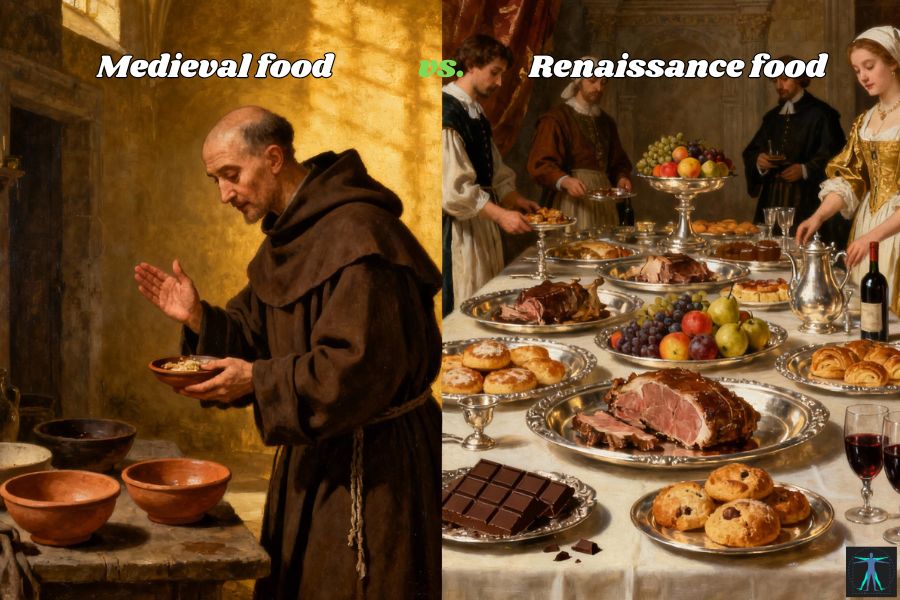
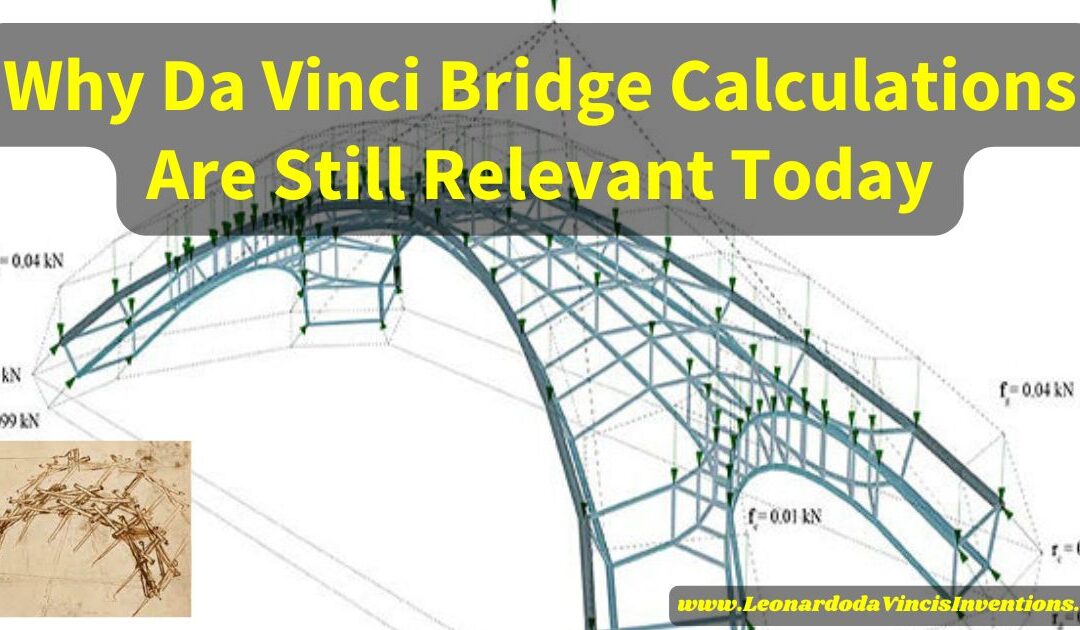
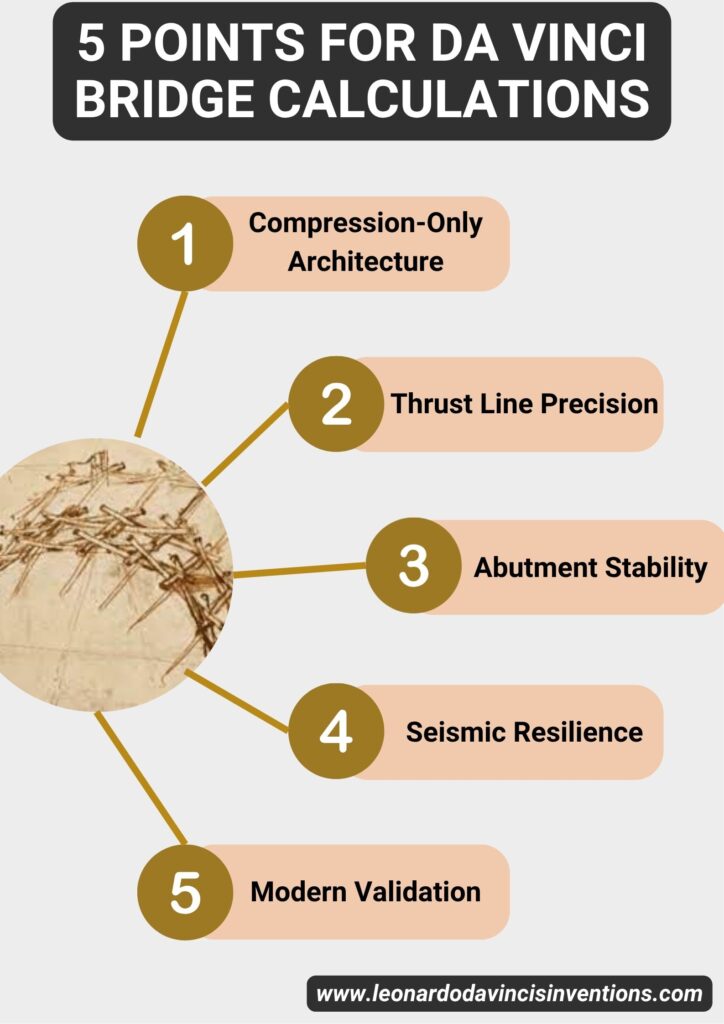
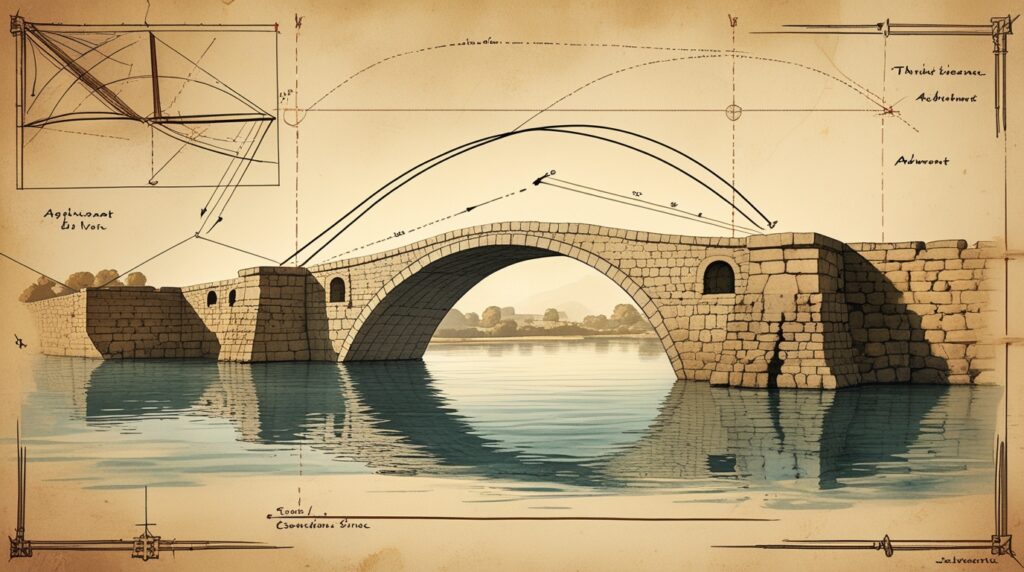
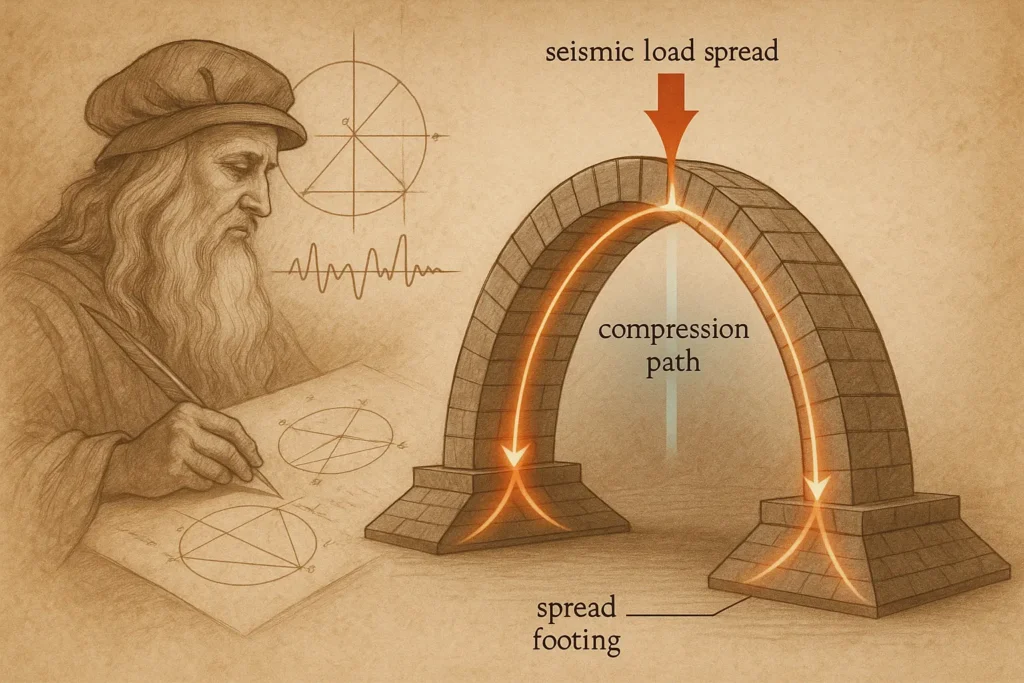
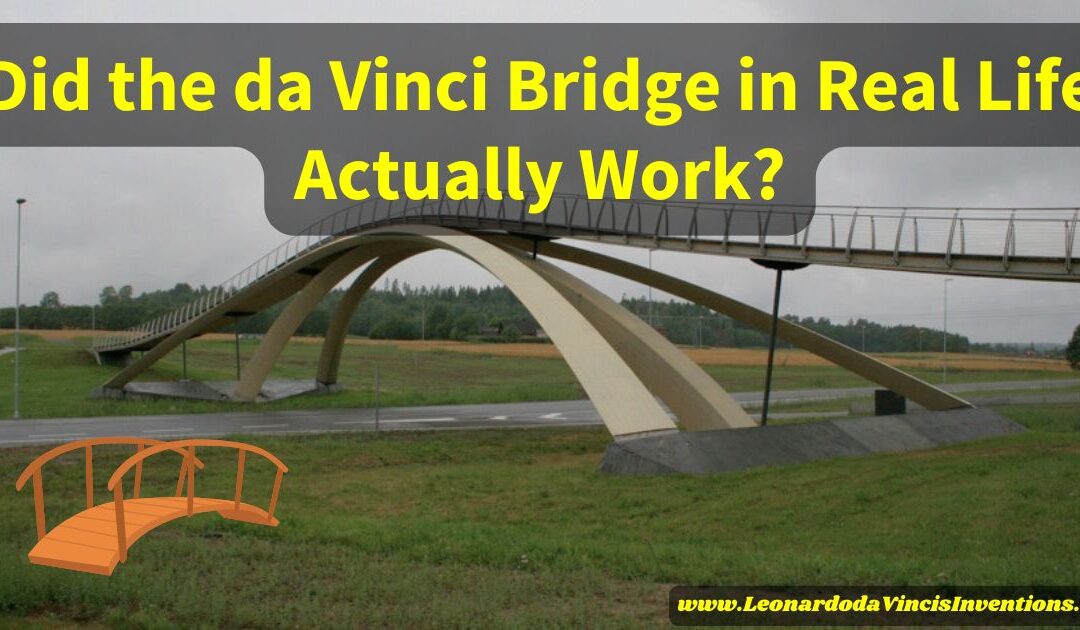
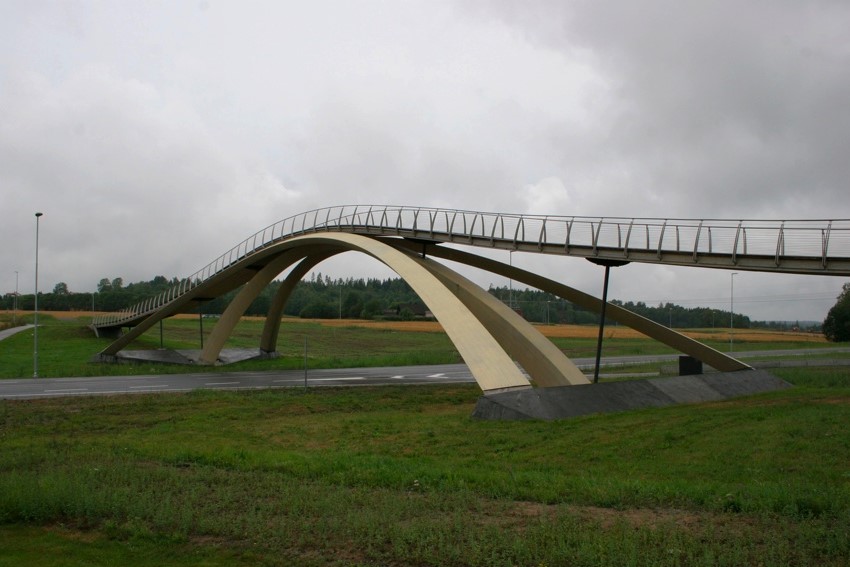
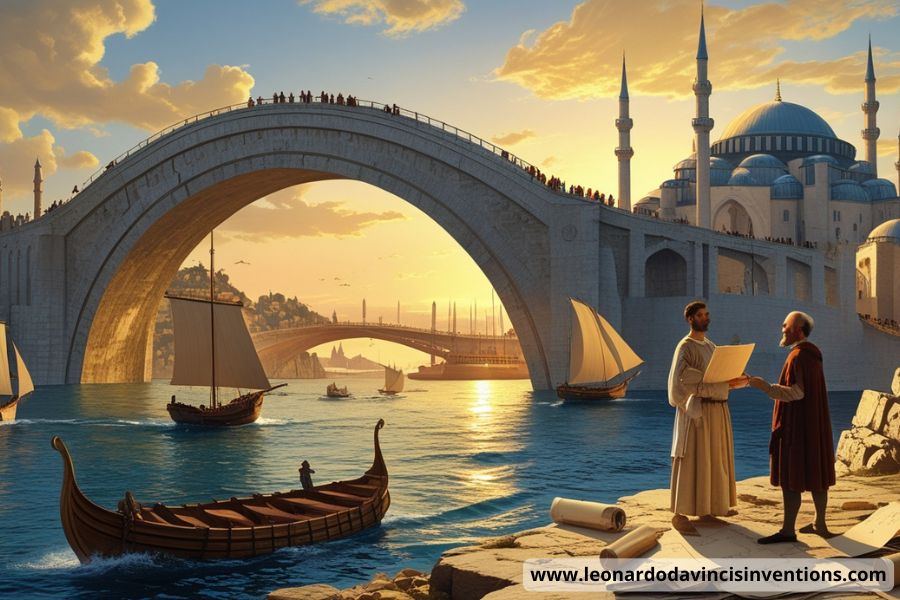

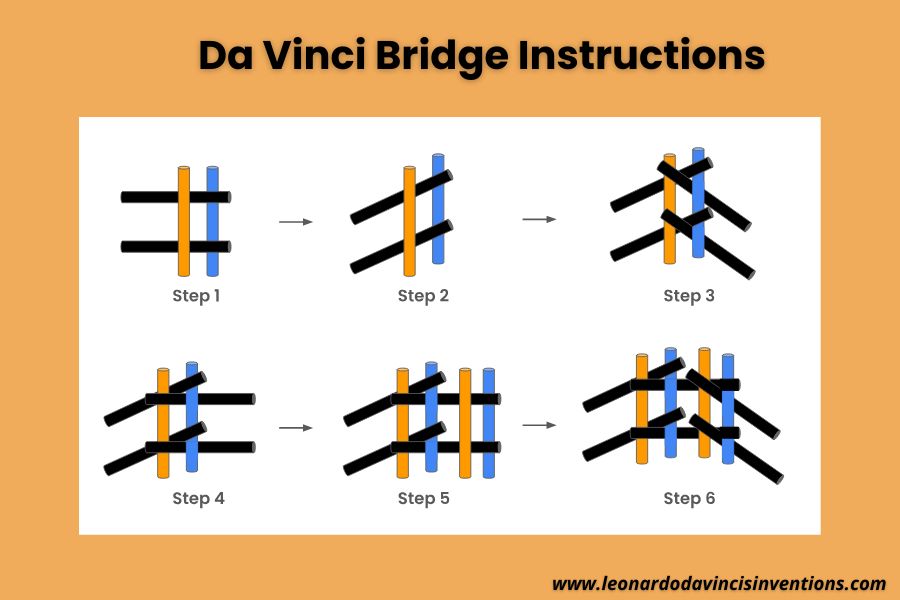
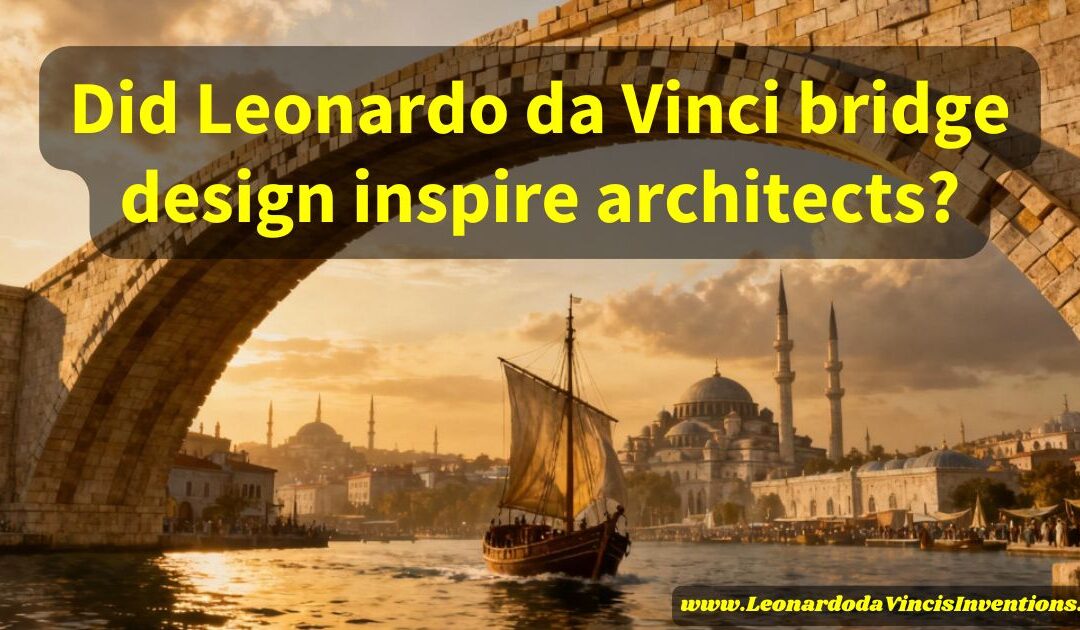
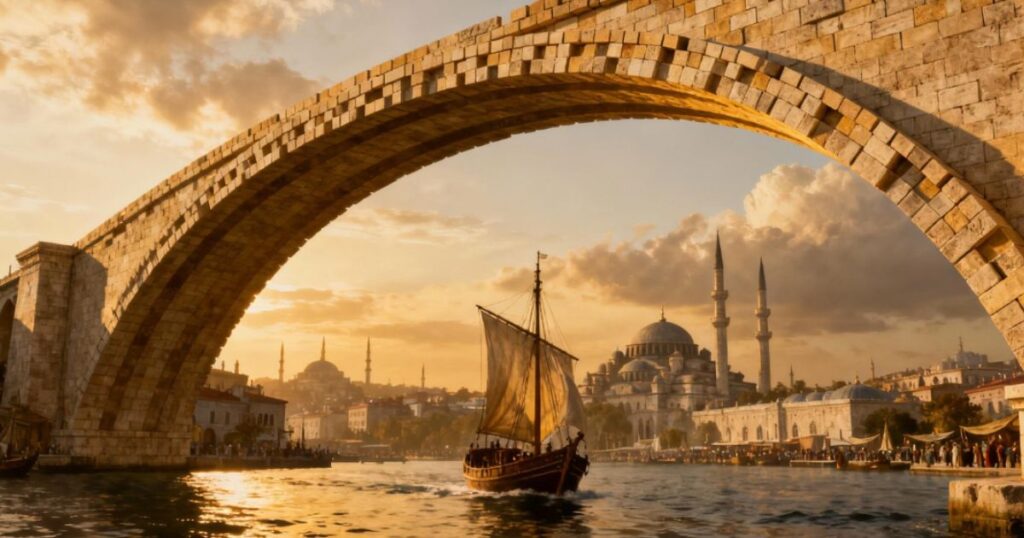
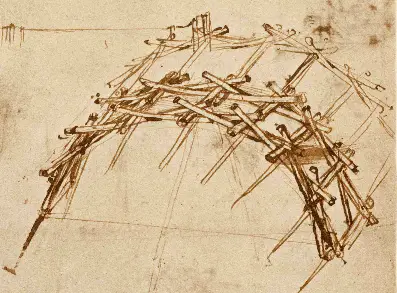
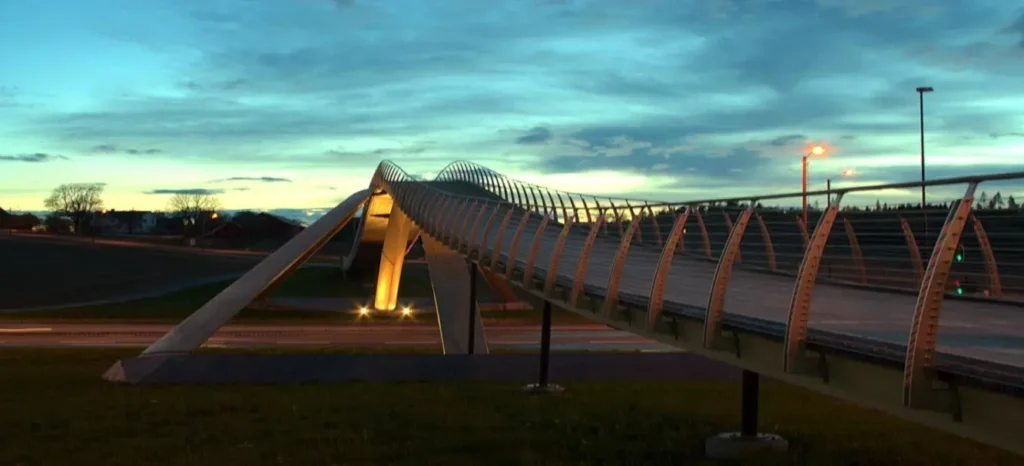
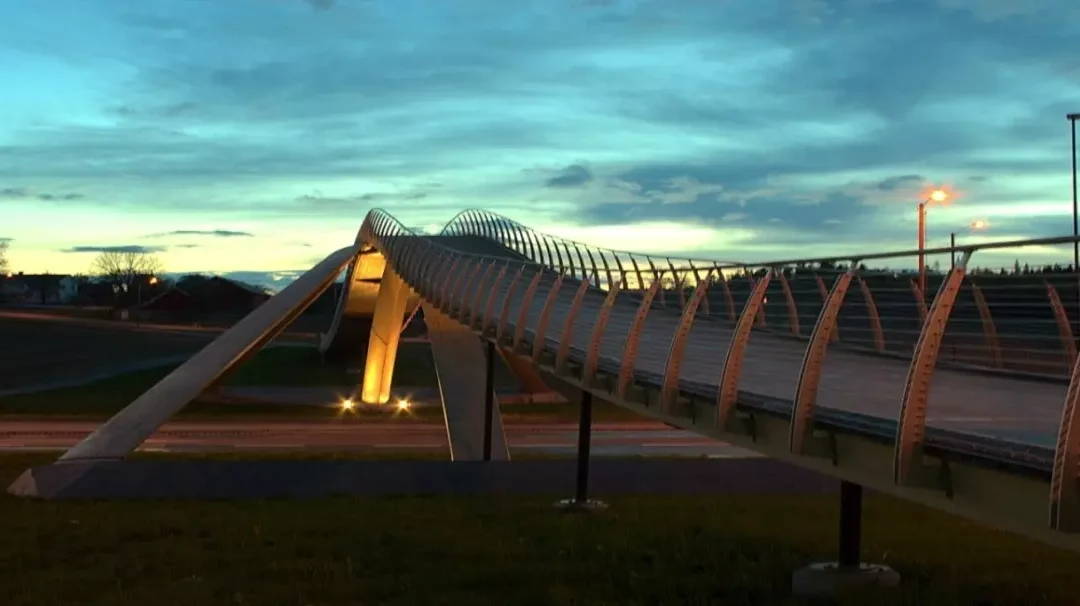
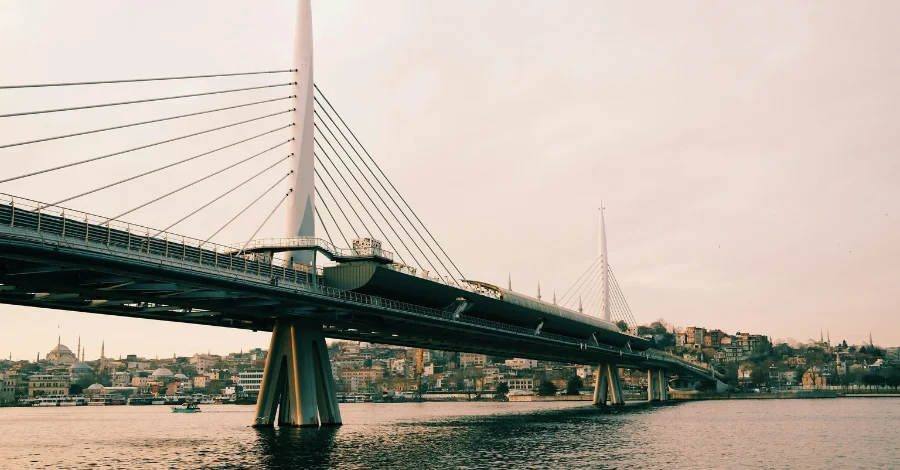
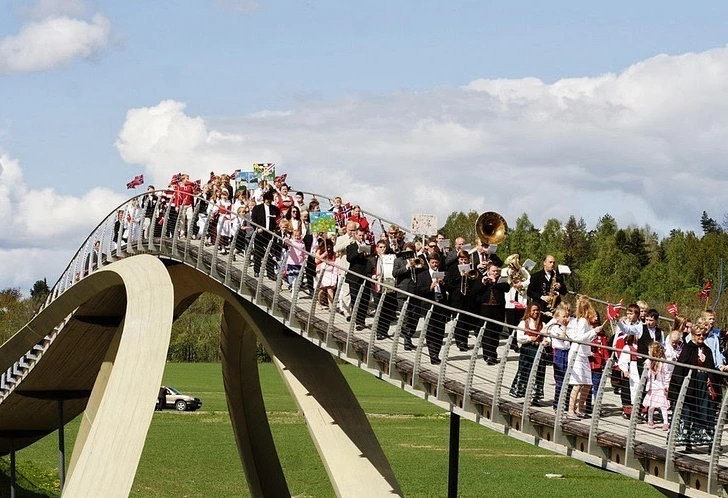
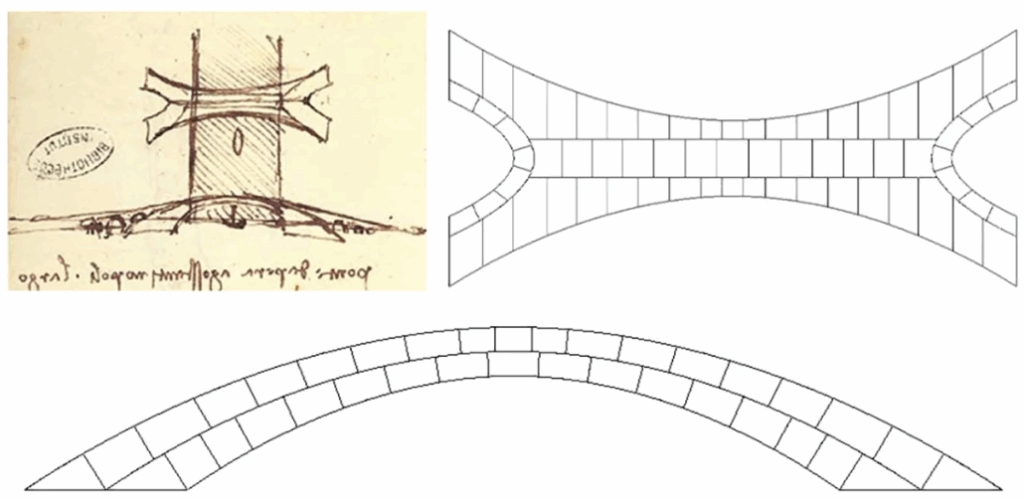
 Leonardo Bianchi is the founder of Leonardo da Vinci Inventions & Experiences, a cultural travel guide helping visitors explore Leonardo da Vinci’s art, inventions, and legacy across Italy and Paris.