Leonardo da Vinci toy models are replicas of his inventions that you can assemble yourself. With these models, you could build your collection of inventions from possibly the smartest human that has ever lived.
Da Vinci War Machines captivate the imagination with their blend of artistry and engineering. Leonardo da Vinci, known for his genius and creativity, designed several innovative machines that pushed the boundaries of warfare during the Renaissance.
His inventions, such as the armored car and the giant crossbow, demonstrate his understanding of science and battle psychology.
Leonardo's creations reflect a keen foresight into military technology and tactics.
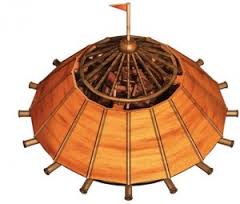
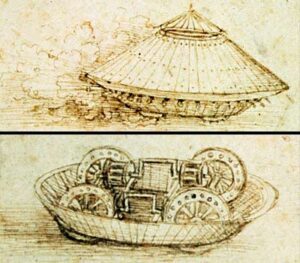
The armored car is considered a forerunner of the modern tank. It can move in any direction while carrying heavy weaponry. This machine was designed for practical purposes and psychological impact, aiming to intimidate and scatter enemy forces.
His machines reveal the unique intersection between art and technology that characterized da Vinci’s work.
These inventions represent his engineering prowess and ability to anticipate future developments in warfare.
Visit information about Leonardo da Vinci's role as a military engineer to explore his remarkable contributions further, including his machine gun concept and its potential influence on future weapons.
Leonardo da Vinci: The Inventor
The statue of Leonardo da Vinci
Leonardo da Vinci exhibited an extraordinary talent for designing innovative machines. His work extended beyond painting, as he crafted numerous inventions that showcased his genius.
Among his most notable creations is the Leonardo da Vinci Armored Car, an early tank concept designed for military use.
Da Vinci's interest in flight led him to design the Da Vinci Flying Machine. Although it never took flight, his sketches displayed a deep understanding of aerodynamics.
This machine featured wings and a structure reminiscent of modern-day gliders.
His military designs included the Leonardo da Vinci Machine Gun Design and the 33-barreled organ—both aimed to improve the fire rate of artillery, making them precursors to rapid-fire weapons.
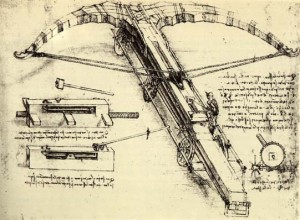
Leonardo also explored engineering with his Da Vinci Giant Crossbow, a massive weapon that launched large projectiles. This design combined artistry with functionality and was intended to intimidate opponents with its size.
While some of his designs remained concepts, they played a crucial role in the evolution of engineering.
Da Vinci's imaginative machines, such as his tank, have fascinated historians and engineers alike. They embody the transition between art and science during the Renaissance.
His work demonstrated an exceptional ability to envision machines well before their time.
Leonardo da Vinci remains a central figure in the history of engineering innovation, from his flying machines to his wartime inventions.
Engineering Principles Behind the Machines
Leonardo da Vinci's war machines combined innovative engineering with forward-thinking design concepts. They demonstrated a deep understanding of motion and materials and integrated advanced mechanical principles for their time.
Kinetics and Ballistics
Da Vinci's war machines showcased advanced principles of kinetics and ballistics.
His multi-barreled cannon, known as the machine gun design, enabled rapid firing, reflecting a keen understanding of projectile motion and force distribution.
The design of his cannons considered the impact and trajectory of projectiles, emphasizing precise angles for optimal range and accuracy.
His giant crossbow also integrated these principles, using tension and release to propel large projectiles.
This focus on motion dynamics illustrates how Leonardo's designs influenced modern ballistics, providing a foundation for future advancements in military engineering.
Materials and Construction Techniques
Leonardo's machines were noteworthy for their innovative use of materials and construction techniques.
His armored vehicle, often called the Leonardo da Vinci armored car, was circular in design, with reinforced plating, and offered both offensive and defensive capabilities.
He carefully selected materials to ensure durability and functionality, often opting for wood and metal to balance weight and strength.
In addition, his Giant Crossbow showcased his ability to combine traditional materials with novel engineering approaches.
These techniques underscore Leonardo's ability to merge practicality with creativity in his war machines.
The Military Engineer
Da Vinci’s Role as a Military Engineer
Beyond the artistic realm, Leonardo da Vinci held an equally fascinating role as a military engineer. His knack for creative innovation translated well into this field, allowing him to conceptualize devices and mechanisms far ahead of his time.
While serving various patrons, including Ludovico Sforza, the Duke of Milan, and Cesare Borgia, he developed a series of designs for military machinery and fortifications.
One might imagine that a creative mind like Leonardo’s would be at odds with the grim realities of war. However, he ingeniously combined his artistic abilities with his scientific knowledge to conceive mechanisms of defense and assault.
He worked to enhance fortifications, improve weaponry, and even devise plans to divert rivers to impede enemy advances.
The Context of War During Da Vinci’s Lifetime
The context of war during Leonardo’s lifetime played a significant role in shaping his inventions.
The Italian Wars, a series of violent conflicts involving the major powers of Western Europe, were underway. This meant a constant demand for new, efficient ways to address threats and attackers.
These were turbulent times, and leaders sought to gain the upper hand by investing in advanced warfare technology.
Leonardo's forward-thinking ideas and inventions made him a valuable asset in these endeavors. His designs were not just solutions to problems of his time; they were visionary ideas that far surpassed the capabilities of the era in which he lived.
Why Did Leonardo Da Vinci Make Weapons?
Leonardo da Vinci was, at heart, a man of peace who once wrote that he was ‘sorry to be the cause of death.’
So why did he design weapons? A significant reason was practicality.
During his lifetime, designing military machinery was a financially lucrative endeavor. Patrons sought out Leonardo for his innovative mind, and he needed their patronage to fund his research and other works.
Furthermore, despite his misgivings about warfare, Leonardo understood that war was a reality of his time. By designing weapons, he could contribute in ways that might help end conflicts more quickly and potentially save lives.
Ultimately, his role as a military engineer showcases the dichotomy of a man who, on the one hand, created some of the world’s most beautiful art and, on the other, designed instruments of war.
This contrast contributes to the enduring fascination with Leonardo da Vinci, the true Renaissance Man.
Da Vinci Military Inventions
Giant Crossbow
Leonardo da Vinci Giant Crossbow Design
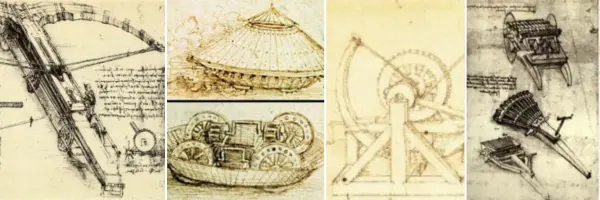
The Giant Crossbow was one of Leonardo’s most visually stunning war machine designs. This massive siege engine, spanning 27 yards, was intended to hurl large stones or flaming bombs at enemy fortifications.
Although it’s unclear if the giant crossbow was ever built, its design is a testament to da Vinci’s creativity and understanding of mechanics and leverage.
Armored Car
Leonardo da Vinci Tank Design
Leonardo also envisioned what can be seen as a precursor to the modern tank – da Vinci’s Armored Car.
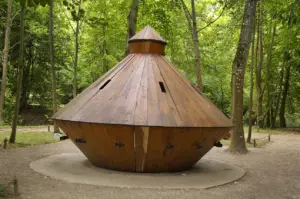
This design featured a circular platform on wheels, encased in a protective shell, and equipped with light cannons. The armored car was intended to intimidate and scatter enemy forces while keeping its occupants safe.
Catapult
Leonardo da Vici Catapult Design
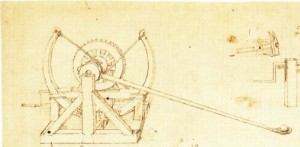
The da Vinci Catapult, a design attributed to the renowned Renaissance polymath Leonardo da Vinci, is a compelling example of his innovative approach to warfare machinery.
This machine, a model of ingenuity and practical design, was created to catapult or hurl projectiles at enemy fortifications.
Machine Gun
Da Vinci Machine Gun Drawing
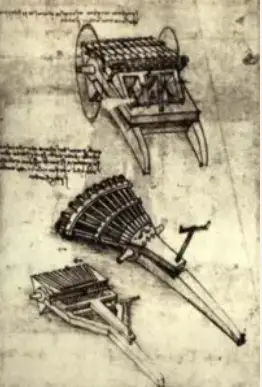
Leonardo da Vinci’s Machine Gun, also known as the 33-barrelled organ, is one of his most inventive military designs.
This early concept of rapid-fire artillery featured 33 small-caliber guns arranged in three rows of 11. One row could be fired while the other two were cooling and being reloaded, providing a consistent barrage of firepower against enemy lines.
Da Vinci's War Machines in Context
Leonardo da Vinci's war machines highlight his remarkable blend of art and science. His designs reflect the technological capabilities of his time and his visionary ideas, which influenced future innovations.
Comparative Military Technology of the Era
Military technology rapidly evolved during the Renaissance. Armies primarily relied on traditional weapons, such as swords and cannons.
Yet, Leonardo was already thinking ahead with his innovative designs.
His armored car concept, often called the Leonardo da Vinci tank, revolutionized protective warfare. It was intended to move in all directions while shielding soldiers.
Compared to existing military strategies, da Vinci’s ideas were ahead of his time.
His designs were often not built because the era's technology couldn't support them.
Instead of relying on available materials and techniques, he pushed boundaries, dreaming of a future in which machinery could decide battles.
This approach set da Vinci apart as a thinker who was not bound by his period’s limitations.
Influence on Modern Warfare
Da Vinci’s ideas have left a lasting impact on modern military engineering.
The concept of an armored vehicle influenced later designs, like those seen in World War I.
Although the da Vinci tank was never built, its embodied principles became foundational for future tanks and similar war machines.
While his flying machine designs never literally took off, they have intrigued engineers and inventors for centuries.
His ability to combine imagination with practicality remains evident in the development of new technologies today, making him an enduring figure in military innovation.
Reconstruction and Testing of His Inventions
Da Vinci Tank Model (2005), Amboise, France
Reconstructing Leonardo da Vinci's war machines provides essential insights into their functional capabilities and historical significance. These projects and exhibitions have highlighted his innovative designs, such as the Leonardo da Vinci tank and flying machine.
Initiatives and Exhibitions
Initiatives to reconstruct Da Vinci war machines have taken place worldwide.
Various museums and institutions have converted his sketches into full-scale models.
The Museum of Boulder, for instance, showcases more than 75 such inventions from his illustrations and writings.
These exhibitions allow visitors to see and interact with creations such as Leonardo da Vinci's armored car.
Events often present Leonardo da Vinci's weapons in action through live demonstrations of his machine gun design.
These initiatives help people appreciate the ingenuity and skill needed to transform sketches into operational models.
Opportunities for hands-on exploration allow the public to engage directly with the mechanics of these historical designs.
Findings and Historical Accuracy
Efforts to bring Leonardo da Vinci's war machines to life reveal his creations' potential and limitations.
Scholars and engineers study how the da Vinci tank might have functioned in real-life battle scenarios and assess whether the designs were feasible with the technology available.
Reconstructed models help researchers evaluate the accuracy of Leonardo da Vinci’s sketches and understand how designs could have affected Renaissance warfare.
For instance, the size of da Vinci's giant crossbow poses questions about construction and practicality in a historical context.
Testing these reconstructions highlights his work's brilliance and offers insights into engineering challenges faced during the Renaissance.
Final Thoughts
Da Vinci War Machines illustrate a unique blend of artistry and engineering. His designs often looked ahead of their time, showcasing creativity and ambition. Among his creations were the 33-barreled organ and an innovative tank that attempted to alter warfare.
While some machines may have been designed to fail, they still represent significant strides in military technology.
Understanding how these machines influenced future technologies is essential in grasping Da Vinci's lasting impact on art and engineering.
FAQs about da Vinci War Machines
What war machines did Leonardo da Vinci invent?
Leonardo da Vinci designed a wide range of war machines, including the armored vehicle (an early tank), giant crossbow, multi-barrel cannon (a 33-barrel organ), and scythed chariot. He also sketched advanced weapons, such as rapid-fire guns and siege devices, many intended to improve battlefield efficiency and intimidate opponents.
How many of Leonardo's war machines are there?
There is no exact number, but Leonardo created dozens of designs for war machines across hundreds of notebook pages. Museums today display selected models—often around 5–10 key machines—while his manuscripts contain many more concepts ranging from cannons to defensive systems.
What were Da Vinci's most famous inventions?
Leonardo’s most famous inventions include the aerial screw (an early helicopter), the parachute, the armored vehicle, and the multi-barrel cannon. Although many were never built, they demonstrated ideas far ahead of Renaissance technology and influenced later engineering developments.
Did Leonardo da Vinci create machines?
Yes, Leonardo da Vinci designed numerous machines across the fields of military, engineering, and science. His notebooks contain detailed sketches of devices such as war machines, flying machines, and hydraulic systems, showing how they could function even if many were never constructed.
What was unique about Leonardo's war machines?
Leonardo’s war machines were unique because they combined mechanical innovation with strategic thinking, focusing on mobility, multi-directional attack, and psychological impact. Many designs, such as the tank and the giant crossbow, were not only meant to defeat enemies but also to intimidate them on the battlefield.
Did Da Vinci invent a gun?
Leonardo did not invent the gun itself, which already existed, but he designed improved firearms such as multi-barrelled cannons and conceptual rapid-fire weapons. He also explored advanced ideas, such as a steam-powered cannon (Architonnerre), demonstrating his efforts to enhance existing weapon technology.
Leonardo da Vinci mechanical inventions show his incredible talent as an inventor and engineer during the Renaissance period.
Known for his remarkable creativity, Leonardo designed a variety of groundbreaking machines, including flying machines, war devices, and hydraulic pumps, which demonstrated his advanced understanding of mechanics.
Many of Leonardo's drawings and sketches featured revolutionary ideas that influenced the development of modern technology.
For example, his concepts of flying machines and complex gear systems highlight his ability to imagine and design complex mechanisms. While some of these inventions, such as the helicopter, remained theoretical, they paved the way for future innovations in aviation and machinery.
Leonardo da Vinci's mechanical inventions continue to captivate enthusiasts and scholars alike. His work inspires curiosity and discussion, reflecting his deep well of knowledge and imagination.
Leonardo da Vinci and the Renaissance
Leonardo da Vinci played a pivotal role in the Renaissance, fusing art with science through his innovative ideas. His inventions and artworks epitomized the era's spirit of discovery and human potential.
The Role of Invention during the Renaissance
Inventors like Leonardo da Vinci made significant contributions to technological progress during the Renaissance.
This period valued creative thinking and exploration, leading to groundbreaking inventions that combined science and artistry.
Da Vinci's machines, such as his designs for flying devices and war equipment, highlighted this innovative spirit.
The ornithopter, a machine that mimicked birds to achieve human flight, and the armored vehicle, or "tank," with a rotating turret, were visionary in concept. These ideas remain influential, demonstrating how invention fostered innovation in both the military and engineering.
Leonardo's Path to Innovation
Leonardo's path to innovation reflects his curiosity and diverse talents.
His notebooks, filled with invention sketches, including the mechanical knight, a humanoid robot, and scuba gear for underwater exploration, showcase his forward-thinking approach.
These sketches also illustrate his grasp of engineering challenges and his efforts to overcome them.
Da Vinci's inventions were not always realized in his lifetime, but they laid the foundation for future technologies.
His analytical methods and artistic skills merged, allowing him to visualize concepts that modern engineers and scientists still admire today.
His work exemplified the Renaissance man's ability to transcend disciplines, leaving a legacy that merges imagination with technological advancement.
Leonardo da Vinci Mechanical Inventions
Leonardo da Vinci's mechanical inventions showcase his remarkable range and creativity. His designs went beyond simple novelty, aiming to solve real-world problems.
These creations, from the self-propelled vehicle to the intricate mechanical knight, highlight his innovative approach to mechanics and engineering.
Leonardo da Vinci Car
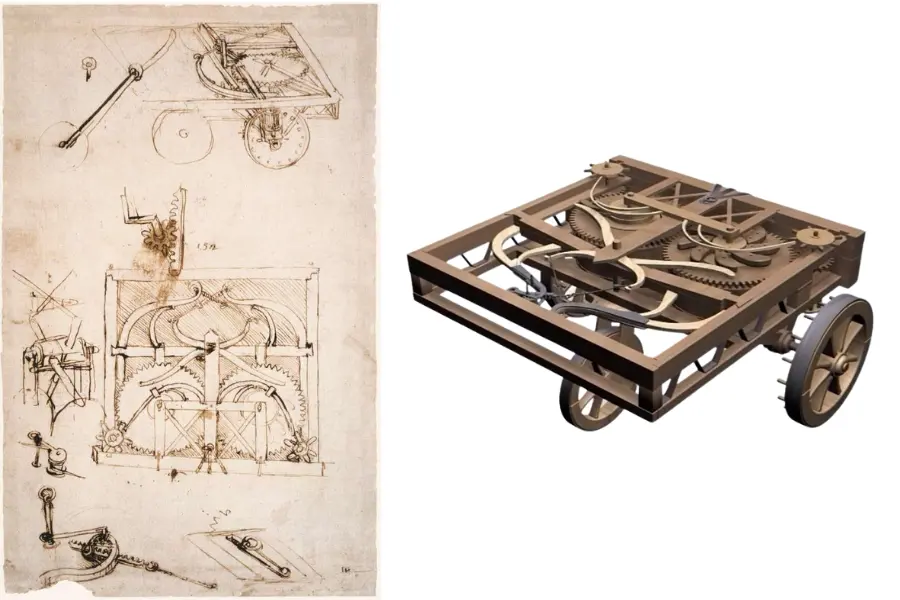
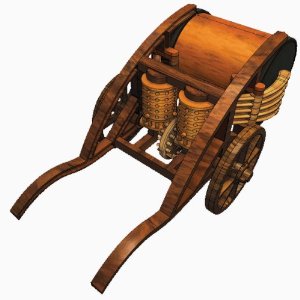
Leonardo da Vinci’s self-propelled car design (left) and its 3D model (right)
Leonardo created one of the earliest concepts for a self-propelled vehicle. His wooden cart used tightly coiled springs for propulsion, with a steering system to guide it.
This invention is often regarded as one of da Vinci's significant technological anticipations. Although the technology of his time could not build it, modern reconstructions have demonstrated its potential to function as intended.
These mirrors were crucial for observing stars and planets during the Renaissance, advancing the field of astronomy.
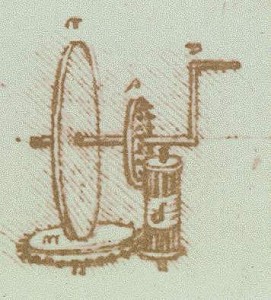
The machine used a crank and a series of gears to move a grinding stone over the surface of glass, ensuring precision and consistency. This innovation showcases Leonardo's expertise in both optics and mechanical processes.
Leonardo's Perpetual Motion Machine
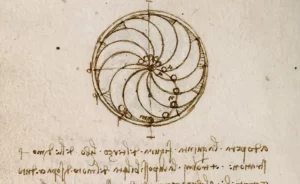
Da Vinci perpetual motion design
Leonardo explored the idea of perpetual motion by designing various machines that appeared to operate endlessly without an energy source.
His sketches show intricate systems of weights and levers. Despite his efforts, he understood that achieving perpetual motion was impossible due to the principles of energy conservation.
These designs reflect his curiosity and ambition to challenge conventional ideas.
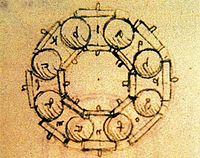
He incorporated this into various pieces of machinery to reduce friction and improve efficiency.
This small yet powerful invention is crucial in modern machinery, from bicycles to cars. Leonardo's insight into minimizing mechanical resistance showcases his forward-thinking engineering skills.
Cam Hammer
Leonardo da Vinci cam hammer
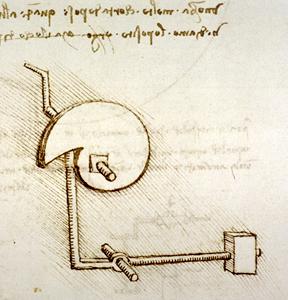
The cam hammer, designed by Leonardo, automated hammering metal, revolutionizing metalworking.
This device used a camshaft to repeatedly lift and drop a hammer, increasing efficiency in forging.
Leonardo foreshadowed the industrial advances centuries later by introducing mechanization to such an essential activity.
Mechanical Knight
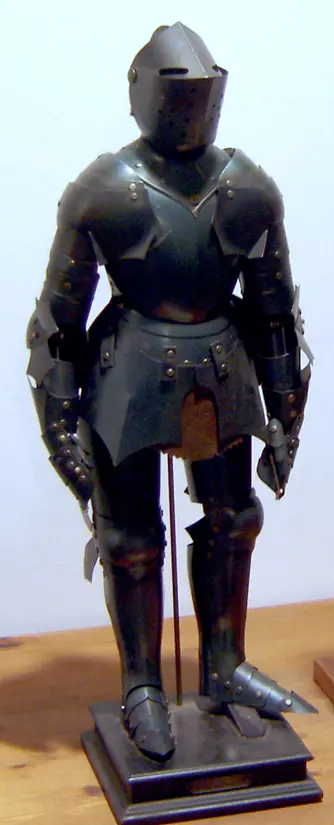
Leonardo da Vinci Mechanical Knight
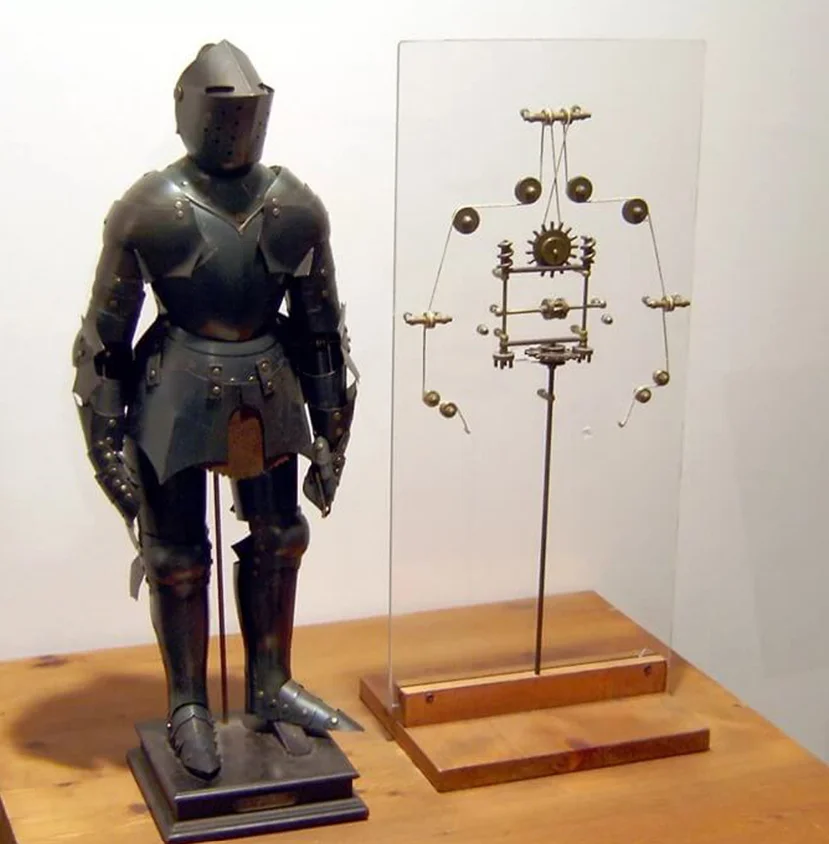
Leonardo da Vinci's mechanical knight, often regarded as one of his most intriguing creations, demonstrated early robotics.
The knight could sit, wave its arms, and move its head, mimicking human actions.
Powered by a series of pulleys and gears, it illustrated Leonardo’s mastery of anatomy and mechanical systems. This invention is a testament to his interest in robotics and automation.
FAQs about Leonardo da Vinci Mechanical Inventions
What machines did Leonardo da Vinci invent?
Leonardo da Vinci designed a wide variety of machines, including flying machines, the aerial screw (an early helicopter), a parachute, an armored vehicle (a tank), a self-propelled cart, a mechanical knight, and hydraulic devices. Many of these were conceptual designs recorded in his notebooks and demonstrated advanced mechanical thinking for his time.
What was da Vinci's most important invention?
There is no single agreed “most important” invention, but many historians consider his flying machine concepts to be his most influential. These designs represented one of the earliest scientific studies of flight and helped lay the groundwork for modern aviation.
Was Leonardo da Vinci a mechanical engineer?
Leonardo da Vinci was not formally trained as a mechanical engineer, but he worked extensively as an engineer and applied advanced mechanical principles such as gears, pulleys, and leverage in his designs. His work across military, civil, and mechanical engineering makes him one of the earliest multidisciplinary engineers in history.
Did da Vinci invent the blender?
No, Leonardo da Vinci did not invent the blender. Blenders are modern electrical appliances developed in the 20th century. While Leonardo designed many mechanical devices, none resemble a modern blender or food processor. (No credible historical evidence supports this claim.)
Did da Vinci invent robots?
Leonardo da Vinci did not invent robots in the modern sense, but he designed a mechanical knight (automaton) around 1495. This device used gears and pulleys to mimic human movement, making it one of the earliest known concepts of a humanoid machine.
Did Da Vinci invent a machine gun?
Leonardo da Vinci did not invent a modern machine gun, but he designed multi-barreled weapons, such as the “33-barreled organ,” which allowed rapid successive firing. These designs were early attempts to increase firing speed, but were not automatic weapons like modern machine guns.
Leonardo da Vinci Civil Inventions showcase the genius mind of one of history's greatest thinkers. His civil engineering innovations were theoretical and practical solutions to real-world challenges.
His designs, such as the canal lock and swing bridge, demonstrate his ability to blend artistry with engineering.
If you want to understand the breadth of da Vinci's contributions, you will appreciate his groundbreaking work in hydraulic engineering.
You will explore da Vinci’s vision, which was centuries ahead of its time.
His concepts, including those for a self supporting bridge and water pump, reveal his keen eye for efficiency and functionality.
Overview of Leonardo da Vinci's Civil Engineering Contributions
Leonardo da Vinci civil engineering inventions were ahead of their time and continue to inspire modern designs.
His innovative ideas, like the da Vinci bridge and water management systems, paved the way for future breakthroughs.
What Was Leonardo da Vinci Famous For?
Leonardo da Vinci was renowned not only as an artist but also as a pioneering engineer.
His civil engineering contributions included designing a canal lock system to manage water levels and a swing bridge for strategic military use.
Da Vinci's approach to engineering blended art and science, reflecting his belief in harmonizing functionality with aesthetics.
His sketches reveal plans for a water pump and rudimentary crane, tools that he hoped would increase efficiency in construction and agriculture.
Leonardo also conceptualized urban planning ideas, envisioning cities with better sanitation and transport systems. His relentless curiosity led him to imagine machines that seemed futuristic to his contemporaries.
His designs for movable bridges influenced modern movable bridge technology.
Leonardo's vision for a more efficient waterway management system laid the foundation for current water infrastructure engineering.
His plans highlighted the importance of effective resource management in urban development.
Today's engineers continue to draw inspiration from his blend of art and functionality, which remains relevant in designing sustainable and innovative solutions.
Detailed Exploration of Key Civil Inventions
Leonardo da Vinci is renowned for his vast array of inventions, many of which demonstrate creativity and technical skill. Many of these designs remained visionary concepts during his lifetime and continue to inspire engineers today.
Leonardo da Vinci Canal Lock
Leonardo da Vinci Canal Lock
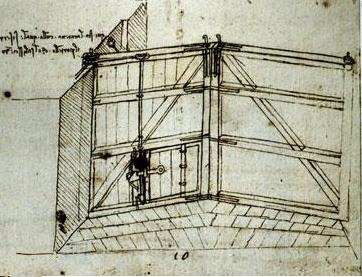
Leonardo da Vinci created an innovative canal lock system, contributing significantly to the development of waterways.
His design included a mitered lock gate to control water flow and enable ships to navigate varying water levels. This concept is seen in modern lock systems, showing his far-reaching impact.
His work in civil engineering, such as this lock system, allowed for more efficient trade routes and improved regional connectivity.
Leonardo Self-Supporting Bridge
Da Vinci Self Supporting Bridge
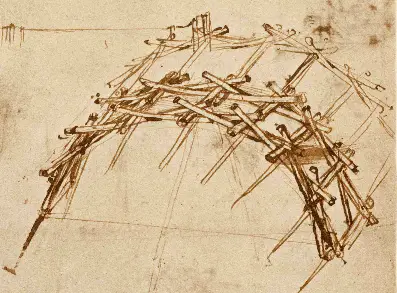
The self-supporting bridge designed by Leonardo was unique due to its simplicity and strength.
Construction materials are interlocked through clever geometry and do not require fasteners. This is an example of Leonardo's inventions that still mesmerizes engineers.
These bridges were practical for military campaigns or temporary crossings, reflecting his understanding of practical engineering and architecture.
Leonardo da Vinci Robotic Knight
Leonardo da Vinci Robotic Knight
Leonardo da Vinci imagined a robotic knight, a marvel of mechanical design for his era.
This automaton could sit, wave, and move its head and arms, highlighting Leonardo's talent in mechanical engineering.
Although not directly related to civil structures, it shows his interest in human-machine interfaces and early steps in robotics.
Leonardo da Vinci Diving Suit
Leonardo da Vinci Diving Suit
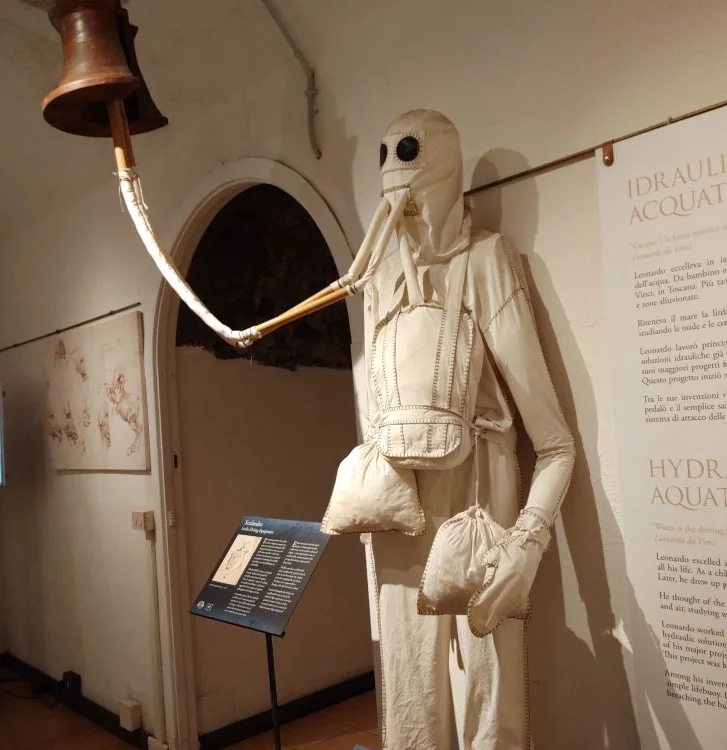
Leonardo's diving suit was intended for underwater warfare.
Made from leather, it featured breathing tubes to the surface, allowing stealthy naval maneuvers.
While it was never constructed in his time, his idea prefigured modern diving technology and illustrates how his inventive mind sought novel solutions across varied fields.
Da Vinci Mechanical Drum
Leonardo da Vinci Mechanical Drum
The mechanical drum, another of da Vinci's inventions, was designed as a self-playing instrument.
The drum used gears and levers to create music without human intervention. This design displays his mechanics and automation skills, precursors to modern automated machinery.
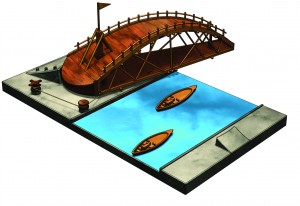
Leonardo da Vinci Swing Bridge
Leonardo da Vinci Swing Bridge Model
Leonardo's swing bridge concept was elegant in its simplicity and functionality.
Controlled by a central pivot, the structure could open to allow the passage of larger ships.
His ideas on such movable designs show an understanding of transportation needs and highlight why he is famous for combining practicality with innovation in his civil projects.
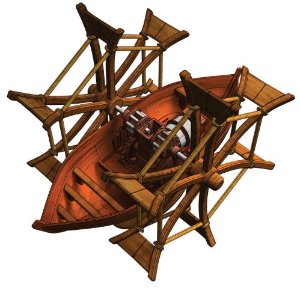
Da Vinci Paddle Boat
Leonardo da Vinci Paddle Boat Model
Leonardo envisioned a paddle boat powered by hand cranks, facilitating smooth navigation in calm waters.
This invention showcases his interest in human-powered vehicles and fits well within his exploration of efficient transportation methods that anticipated future watercraft.
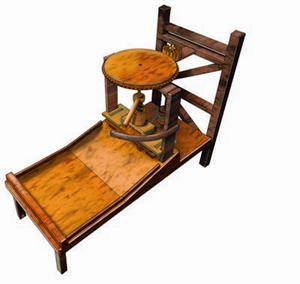
Da Vinci Printing Press
Leonardo da Vinci Printing Press Model
Leonardo da Vinci designed a printing press that improved upon existing models, aiming for greater efficiency.
While its impact was less dramatic than that of Leonardo da Vinci's other inventions, it reflected his desire to enhance tools for spreading knowledge.
This aligns with his broader pursuit of advancing technology across different disciplines.
The Influence of Leonardo's Civil Inventions Today
Leonardo da Vinci's civil inventions continue to shape today's engineering and architectural fields. His imaginative designs have inspired modern innovations and paved the way for scientific exploration.
Modern Applications of Da Vinci's Concepts
Leonardo da Vinci's inventions list includes remarkable designs that continue to influence contemporary engineering.
His idea for a 240-meter single-span bridge for the Ottoman Empire showcases his foresight in civil engineering.
While the original bridge was not built, modern engineers have drawn inspiration from its design principles, influencing bridges worldwide.
Da Vinci's inventions, such as water systems and mechanical devices, have been adapted and advanced in today's technology.
With a focus on functionality and innovation, these concepts have driven advancements in machinery and infrastructure.
His work on canal designs also reflects principles used in modern hydraulic engineering today.
Leonardo da Vinci's Scientific Discoveries
Leonardo da Vinci's scientific discoveries went beyond art and engineering, impacting multiple fields.
His detailed studies of mechanics and motion have served as a basis for further exploration in physics and engineering disciplines.
Leonardo's keen observations and sketchbooks reveal a deep interest in mechanical devices, such as the helicopter, which have evolved into real-world applications.
While Leonardo da Vinci did not invent every modern device, his innovations laid the foundation for many modern devices.
For instance, his exploration of flying machines provided conceptual groundwork that fascinates aeronautical engineers today.
His endeavors in civil inventions reflect a blend of art and science that continues to captivate experts and drive scientific advancements.
Final Thoughts
Leonardo da Vinci Civil Inventions are a testament to his incredible vision and creativity.
His designs, like the self-supporting bridge and canal systems, showcase innovative solutions ahead of their time.
Leonardo's work in civil engineering illustrates his deep understanding of mechanics and materials.
Notable Achievements:
Self-Supporting Bridge: This showcased his skills in creating structures without additional support.
Canal and Locks System: Designed to control water flow and improve transportation, exemplifying his integration of engineering and practicality.
His inventions often combined art and science, pushing the boundaries of what was possible during the Renaissance.
Leonardo's ability to conceptualize and draw detailed plans marks him as a pioneer in the field.
Key Takeaways: Leonardo da Vinci’s civil inventions demonstrate his genius, blending technical skill with artistic insight.
His legacy in this area remains influential, as engineers and inventors still draw upon his pioneering work today.
FAQs about Leonardo da Vinci Civil Inventions
What inventions did Leonardo da Vinci make?
Leonardo da Vinci designed a wide range of inventions across engineering, military, and civil fields, including flying machines, bridges, hydraulic pumps, canals, parachutes, and early armored vehicles. His notebooks contain thousands of sketches of ideas for water-powered machines, systems for lifting heavy loads, and designs to improve transportation and urban infrastructure.
Was Leonardo da Vinci LGBTQ?
There is no definitive proof of Leonardo da Vinci’s sexuality, but historical records show he was accused of sodomy in 1476; the charges were dismissed due to lack of evidence. Because he never married and left few personal writings about his private life, historians continue to debate the subject.
Was Leonardo da Vinci a civil engineer?
Leonardo da Vinci was not formally trained as a civil engineer, but he worked extensively in engineering roles and applied many civil engineering principles. He designed bridges, canals, and urban water systems, and was employed by rulers to solve infrastructure and military engineering problems, effectively acting as an early civil engineer.
What civil engineering projects did Leonardo create designs for?
Leonardo designed bridges, canal systems, and large-scale water management projects, including a plan to divert the Arno River in Italy. He also developed ideas for harbor cleaning systems, flood control, and machines to excavate tunnels and transport materials—key concepts in modern civil engineering.
Did Da Vinci invent the gun?
Leonardo da Vinci did not invent the gun, as firearms already existed before his time. However, he improved and reimagined weapons, designing advanced concepts such as multi-barrel cannons, rapid-fire devices, and early versions of firearms that aimed to increase efficiency and firepower.
Who invented more than 100 inventions?
Leonardo da Vinci is widely credited with conceptualizing more than 100 inventions through his detailed notebooks. While many were never built during his lifetime, his designs—ranging from engineering machines to flight concepts—demonstrate his extraordinary creativity and influence on future technological development.
Leonardo da Vinci's canal lock innovation was a pivotal moment in engineering. This is the solution if you've ever wondered how ships travel smoothly across different water levels without a hitch.
Leonardo da Vinci revolutionized water navigation with his design of the miter gate.
By manipulating water levels, his canal lock allowed boats to move seamlessly through waterways of varying heights.
His ingenuity is still reflected in modern structures, such as the locks of the Panama and Suez Canals.
Many regard Leonardo's design as a remarkable engineering achievement. His unique approach significantly improved water navigation and laid the foundation for future innovations in civil engineering.
Modern canal locks continue to benefit from his innovative thinking, proving the timelessness of his work.
When you think of Leonardo da Vinci, your mind likely wanders to his remarkable contributions to the art world, including masterpieces like The Last Supper and the Mona Lisa.
But what if we told you that da Vinci's genius extended beyond his paintbrush, significantly shaping a critical piece of our modern navigation system: the Canal Lock?
In this article, we examine the distinctive features that make our waterways navigable and the profound impact of Leonardo da Vinci's designs on their development.
Leonardo da Vinci's Contributions to Engineering
Leonardo da Vinci played a crucial role in engineering during the Renaissance. His work on hydraulic systems, particularly his design of canal locks, showcased his innovative thinking and technical expertise.
The Renaissance Context
During the Renaissance, a period marked by cultural awakening, Leonardo da Vinci emerged as a pivotal figure in engineering. He was a polymath who excelled in both art and scientific exploration.
His work went beyond traditional boundaries, combining his knowledge of anatomy, physics, and mechanics.
His art often overshadows Leonardo's engineering innovations. One of his significant contributions was developing the miter lock design.
This invention enabled better water-level management, assisting boats navigating waterways with varying depths.
Advancements in Hydraulic Engineering
Leonardo made pioneering advancements in hydraulic engineering. His designs of canal locks were particularly noteworthy.
He developed innovative mechanisms that enhanced the efficiency and safety of water transport systems.
The Da Vinci canal lock system revolutionized waterway navigation. These locks had specific dimensions crafted to manage water flow and vessel movement.
By understanding the principles of water dynamics, Leonardo provided practical solutions that still influence modern engineering.
His work on the canals of Milan involved intricate designs that aided irrigation and flood control.
This blend of art and engineering demonstrated his ability to foresee and solve real-world problems through innovative solutions. His contributions laid the foundation for the principles that drive engineering today.
Where Leonardo Tested Water Ideas in Milan
Leonardo’s canal work wasn’t abstract theory—it was shaped by the real waterways and practical needs of Renaissance Milan. Seeing how canals fit into the city’s landscape can help explain why his lock ideas mattered, and how engineering, trade, and daily life intersected in one place.
The Canal Lock System
Leonardo da Vinci played a crucial role in advancing canal lock technology. This system featured several innovations that improved transportation and commerce, enabling boats to navigate varying water levels quickly.
Early Canal Lock Designs
Early canal locks emerged in the 14th century, primarily in regions like the Netherlands. These initial designs featured guillotine locks with gates at both ends.
These locks functioned by raising and lowering their gates vertically. Guillotine locks laid the groundwork for more advanced mechanisms.
These early locks enabled boats to navigate canals of varying heights by controlling water levels. Their designs were fundamental yet pivotal in shaping future innovations, including Leonardo's.
Da Vinci's Innovations
Leonardo da Vinci introduced a double miter lock in the 15th century. This design used water pressure to keep the gates tightly shut and is recognized for its efficiency.
This innovation significantly reduced the effort needed to operate the locks.
His approach replaced the cumbersome older portcullis-style gates. By simplifying the mechanism, canal navigation became more practical.
His contributions are a key part of the history of canal engineering.
Impact on Transportation and Commerce
The innovations introduced by Leonardo da Vinci had a profound impact on transportation and commerce. Da Vinci's canal lock simplified the movement of goods and people, thereby boosting trade between distant regions.
This transformation enabled more efficient travel and significantly contributed to Europe's economic growth.
The ability to transport larger volumes of goods through canals also enhanced trade routes, making logistics more reliable and efficient. Da Vinci's advancements laid the groundwork for future developments in waterway engineering.
Architectural and Artistic Aspects
Leonardo da Vinci's canal lock is a marvel of both engineering and art. He created a harmonious balance of efficient and visually engaging architecture by integrating form with function.
Integration with the Surrounding Environment
Da Vinci's canal lock design emphasized harmony with the environment. He placed significant importance on aligning the lock with the natural landscape and existing infrastructure.
It required careful planning to ensure it fit naturally into its surroundings without disrupting existing waterways.
The Leonardo da Vinci canal lock exemplifies this through its smooth transitions and materials that blend seamlessly with the natural surroundings.
This design approach preserved the environment and enhanced the area's aesthetic value, showcasing Leonardo's holistic view of engineering and nature.
Aesthetic Considerations in Functionality
Functionality and beauty coexisted gracefully in Leonardo's designs. The canal lock's dimensions and structure were not merely about practicality but also about creating something visually pleasing.
Da Vinci incorporated elegant lines and symmetrical shapes, making the mechanisms functional and beautiful.
In his miter lock design, the curvature and proportions of the gates added an artistic touch, showing his dedication to aesthetics even in mechanical designs.
The miter lock, used in the Panama and Suez canals, still retains this blend of practicality and beauty, underscoring the timelessness of Leonardo's creations.
Decoding the Mechanics of Canal Locks
Before we delve into Leonardo's impact, it's crucial to grasp the mechanics of the canal lock. But what exactly are canal locks, and how do they work?
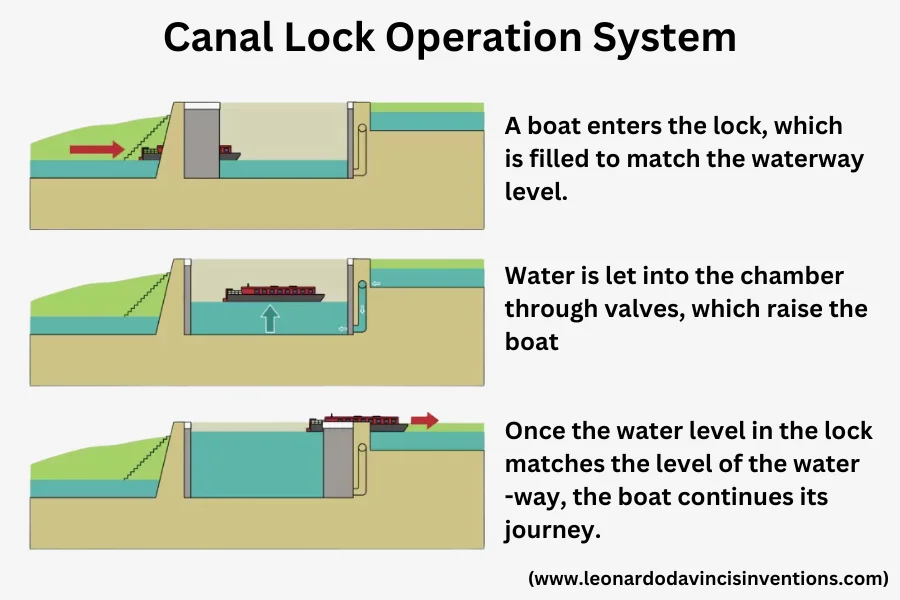
Canal Lock Operation System
A canal lock is a water-filled chambers that serve as an elevator for boats. They allow vessels to traverse changes in water levels in our rivers and canals. The process may sound complicated, but it follows a basic yet ingenious step-by-step principle:
A boat enters the lock, which is filled to match the waterway level from which the ship is coming.
The gates close behind the boat, sealing it within the chamber.
If the boat moves upstream, water is admitted to the chamber through valves, raising the water level. If it goes downstream, water is released from the chamber, lowering the chamber's level.
Once the water level in the lock matches the level of the waterway the boat is moving to, the gates at the other end of the lock open, and the ship continues its journey.
The Birth of Canal Locks
The Maiden Lock and Its Conception
The first lock dates back to the 3rd century BC in Ancient Greece, at Palaipaphos (modern Kouklia). It was a simple yet effective design, using a single gate and a sluice system.
Who invented the canal lock? When was the canal lock invented?
In 983 AD in China, an engineer named Chiao Wei-Yo introduced a novel idea.
His concept involved positioning two barriers a short distance apart.
This arrangement created a calm water pond or basin between the two barriers.
The water in this pond could be filled or emptied at will, offering complete control over its level.
Despite the water's one-way flow, his design allowed boats to travel both upstream and downstream.
Leonardo da Vinci's Revolutionary Canal Lock Design
Leonardo da Vinci, the renowned polymath, was an artist and an innovative inventor. One area where his inventive genius shone was in the design and development of canal locks.
Distinguishing Leonardo's Canal Lock from Predecessors
Da Vinci's canal lock design was distinctly different from those that came before. It showcased his unique ability to analyze problems and develop more efficient solutions.
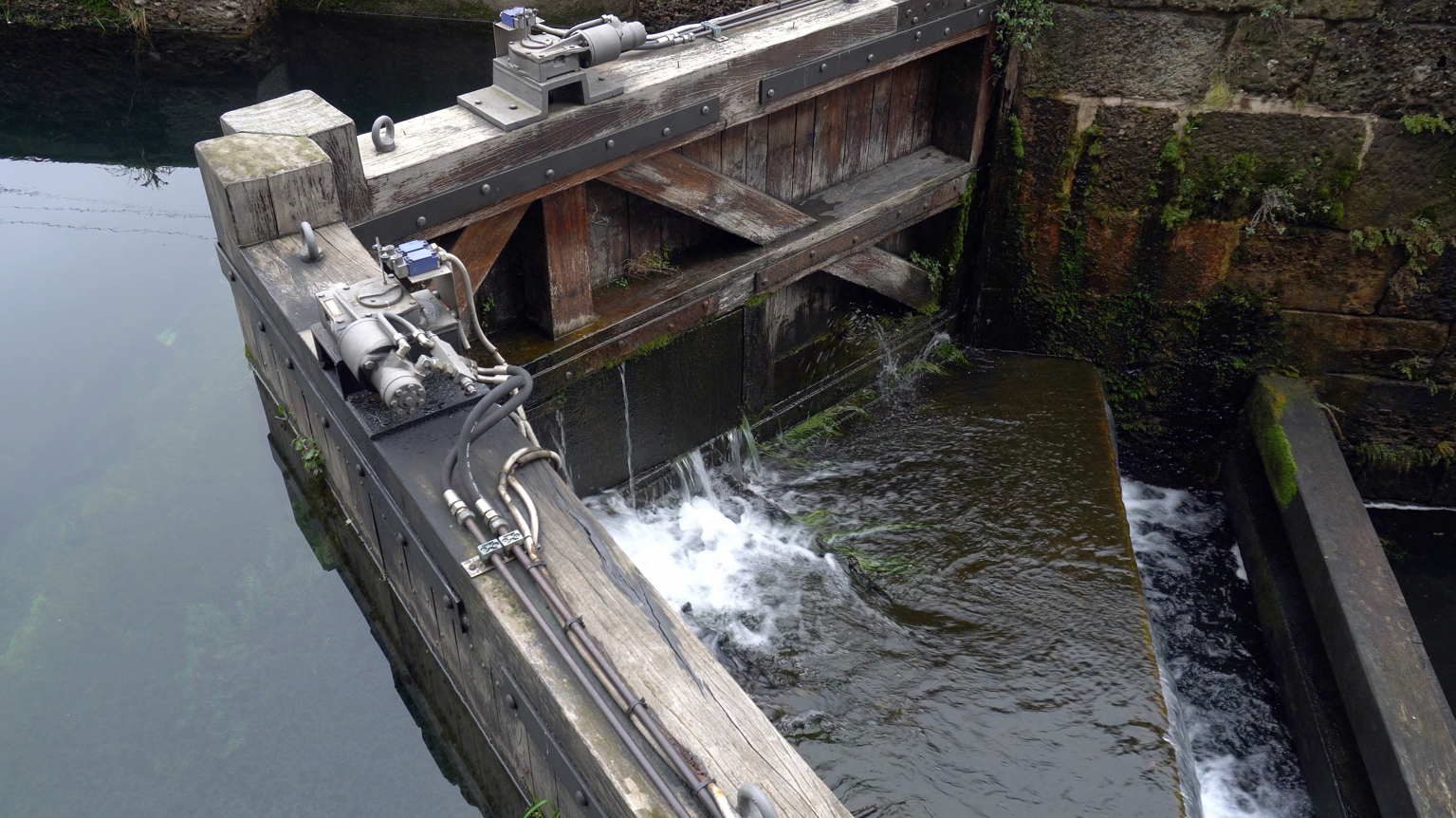
His canal lock was a "miter lock," named for its two gates that met at an angle, like a carpentry miter joint. This design was a departure from the standard straight-gated locks of his time.
The miter lock canal design enabled a stronger seal as water pressure forced the gates together, marking a significant step forward in the efficiency and reliability of canal locks.
Application of da Vinci's Canals
Several famous canals, such as the Martesana Canal in Italy, utilized his canal lock designs. This canal, among others, shows Leonardo's engineering prowess and the practical application of his miter lock design.
His influence extended far beyond Italy, eventually becoming a global standard in canal engineering. The adoption of his design marked a turning point in the development of effective water navigation systems.
From a Lock Design to a Renaissance Landscape
References to canals such as the Martesana point to a broader Italian network of waterways, workshops, and patrons that shaped Leonardo’s engineering. Exploring Milan—and nearby places connected to his work—can turn a technical diagram into a clearer picture of how Renaissance innovation moved through real cities.
The World's Most Renowned and Colossal Canal Locks
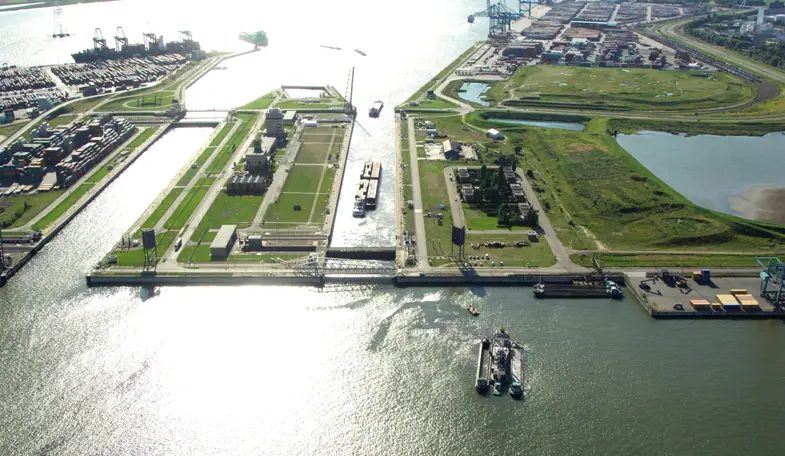
Berendrecht Lock
One of the most recognized canal locks in the world is the Berendrecht Lock. This lock is famous for its location in Antwerp, Belgium, a city known for its rich history, spectacular architecture, and innovative design.
Berendrecht Lock, Belgium
The Berendrecht Lock was designed to accommodate the largest seagoing vessels, making it a testament to incredible engineering. Its advanced lock technology makes it a marvel of modern engineering and a significant achievement in water navigation.
Location of the World's Largest Canal Lock
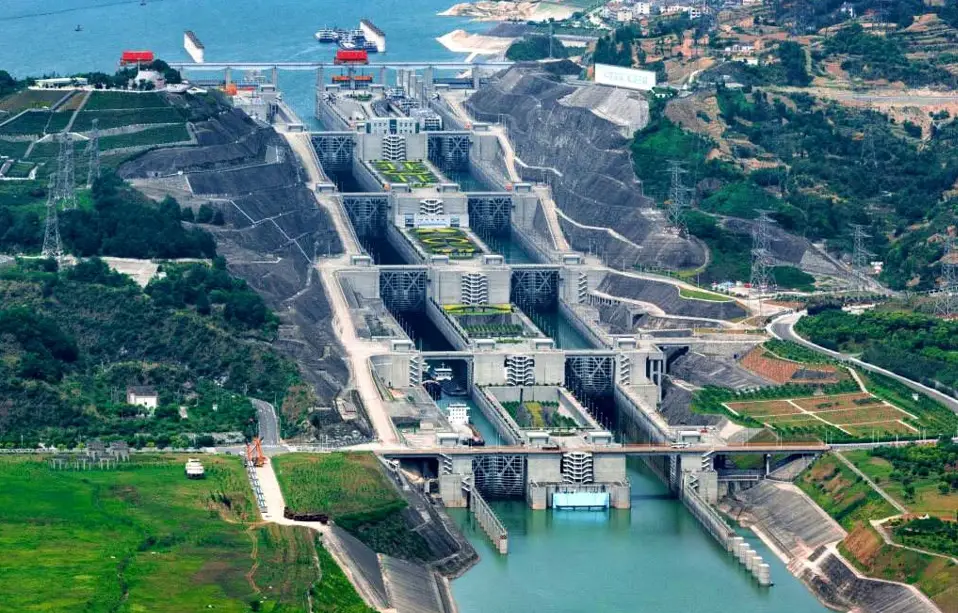
The Three Gorges Dam Ship Lift lock in China is a marvel of engineering. Its vertical design allows ships to ascend and descend an impressive 113 meters in the Yangtze River.
Unlike traditional locks, it uses a 'ship elevator' approach to move vessels vertically within a contained body of water. This method significantly reduces the time it takes for a ship to traverse the height difference.
Three Gorges Dam Ship Lift Lock, China
This colossal lock, along with its innovative design, has made the Three Gorges Dam a vital part of global shipping routes. It is a fitting symbol of China's significant contributions to modern canal engineering.
Profound Influence of Canal Locks on River Navigation and Trade
Role of Locks in River and Canal Systems
Canal locks are integral to our waterways, yet their importance is often overlooked. These innovative contrivances enable ships to traverse the varying elevations along rivers and canals smoothly. Acting as water elevators, they lift and lower vessels by manipulating water levels within enclosed chambers.
Advantages Canal Locks Offer to Navigation and Commerce
Besides aiding in navigation, canal locks have significantly bolstered trade and commerce. Here's how:
Streamlined Shipping: Canal locks enable faster, more efficient movement of goods. Allowing ships to bypass complex, lengthy routes around geographic obstacles enables a swift, direct path between commercial hotspots.
Cost Efficiency: Canal locks facilitate direct routes, helping reduce fuel consumption and overall shipping costs, which can ultimately lower consumer prices.
Global Connectivity: Canal locks have transformed isolated regions into bustling commercial hubs, fostering economic growth and international connectivity.
Da Vinci’s Impact on Today's Miter Locks
Da Vinci's innovative design laid the groundwork for the modern miter locks we see today. He was the first to introduce the miter gate – a pair of gates that meet at an angle, mirroring a 'V' shape near the water pressure. This design required less force to operate and utilized the water pressure to ensure a tighter seal, a principle that still holds today.
Miter Locks in Today's Canal Infrastructure
Today, the design of miter locks owes a significant debt to da Vinci's early work. His invention revolutionized how we manage water transport and navigate through waterways with differing levels. Modern miter locks, though more complex and mechanized, essentially follow the same principle established by da Vinci centuries ago.
Leonardo da Vinci Canal lock, Milan, Italy
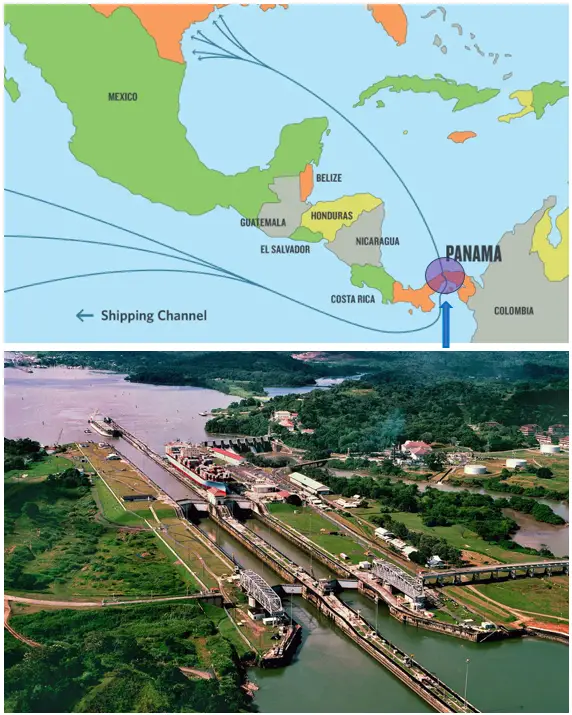
Da Vinci's Influence on the Panama Canal
The Panama Canal, one of the world's most critical shipping routes, illustrates the influence of da Vinci's work. This vital waterway, connecting the Atlantic and Pacific Oceans, relies heavily on a lock system.
They are the backbone of the canal's functionality, enabling it to handle massive vessels carrying enormous cargo. Without da Vinci's pioneering work in lock design, a marvel like the Panama Canal may not have been possible.
Panama Canal (blue circle location followed by the blue arrow), Panama
Leonardo da Vinci's influence is a testament to the timeless nature of true innovation. Even centuries after his death, his ingenious engineering continues to drive our world forward.
Final Thoughts
Da Vinci's unique miter lock design revolutionized water-level control, providing a more secure and efficient way to move vessels through waterways of varying heights.
This pioneering design has been incorporated into countless canal systems worldwide, a testament to da Vinci's enduring influence.
From enabling more efficient water transportation and facilitating global trade to influencing modern engineering marvels like the Panama Canal and its locks, Leonardo da Vinci's contributions to their evolution remain as relevant as ever.
As we sail into the future, the impact of canal locks on our society will continue to resonate, echoing the brilliance of innovators like Leonardo da Vinci.
The canal lock is just one more example of Leonardo's revolutionary spirit. It is also another example of his invention that has stood the test of time, long after its inventor, almost making the man himself immortal.
FAQs about Leonardo da Vinci Canal Lock
Did Leonardo da Vinci invent the canal lock?
Leonardo da Vinci did not invent the canal lock; it dates back to ancient China and earlier water systems. However, he significantly improved the technology by designing the miter lock gate, a V-shaped system that uses water pressure to seal tightly and control water levels efficiently.
What are three things that Leonardo da Vinci invented?
Leonardo da Vinci is credited with designing many innovative machines, including an ornithopter (a flying machine), a parachute, and an armored vehicle (an early tank concept). Although many were never built, his detailed sketches influenced later technological developments.
Why are there locks on the Rhine River?
Locks on the Rhine River are used to manage differences in water levels, allowing ships to travel safely through sections with dams or elevation changes. They make the river navigable for large commercial vessels by raising or lowering ships between different heights of water.
Who built the new locks at the Panama Canal?
The original Panama Canal locks were constructed in the early 20th century by engineers working under the United States, with major construction beginning in 1909. A new, expanded set of locks was later built as part of the Panama Canal expansion project, completed in 2016 to accommodate larger ships.
What is Da Vinci's most famous invention?
One of Leonardo da Vinci’s most famous inventions is his flying machine, inspired by the movement of birds. This design represents one of the earliest serious attempts to achieve human flight and remains a symbol of his visionary thinking.
What did Da Vinci say before he died?
There is no fully verified record of Leonardo da Vinci’s exact last words, but a commonly attributed quote suggests he regretted not fully realizing his potential, expressing that his work had not reached the quality he desired. This account comes from later historical reports rather than direct evidence.
Leonardo Bianchi is the founder of Leonardo da Vinci Inventions & Experiences, a cultural travel guide helping visitors explore Leonardo da Vinci’s art, inventions, and legacy across Italy and Paris.
Planning Milan?
See The Last Supper Without Missing the Details
Tickets are limited and visits are short. Start with the Milan guide before choosing your Last Supper experience.
If you're visiting Milan for Leonardo da Vinci, these are the experiences most travelers prioritize first — especially when tickets are limited and time is short.
This site is built for travelers who want more than surface-level sightseeing — helping you plan smarter visits around Leonardo da Vinci’s art, museums, and cities across Italy and Europe.


 Leonardo Bianchi is the founder of Leonardo da Vinci Inventions & Experiences, a cultural travel guide helping visitors explore Leonardo da Vinci’s art, inventions, and legacy across Italy and Paris.