
(Last updated: Sep 2026)
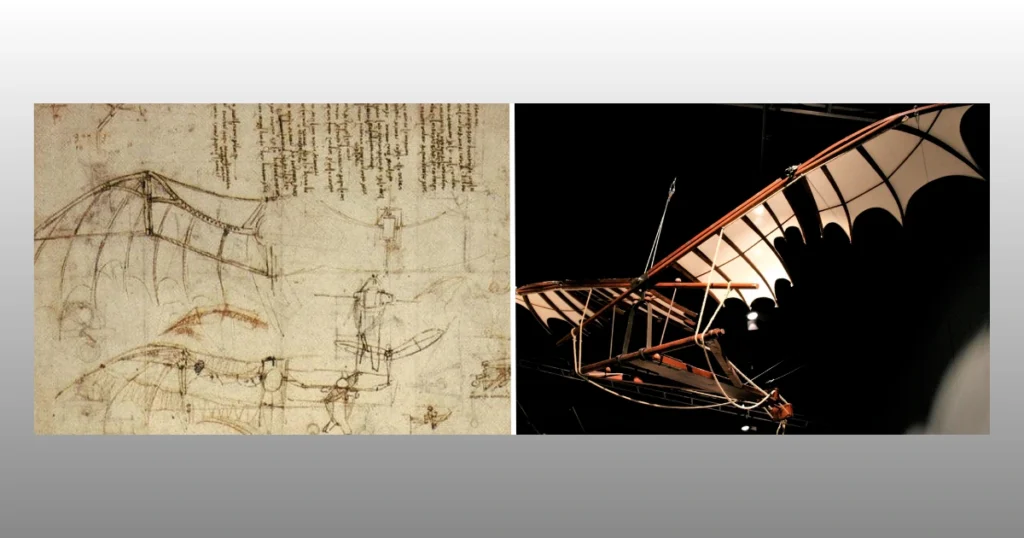
The Leonardo da Vinci glider represents one of history's boldest attempts to conquer the sky, sketched out nearly four centuries before the Wright brothers ever left the ground. Long before airplanes, propellers, or even the concept of aerodynamics existed as a science, one restless mind in Renaissance Italy was already drawing wings.
Leonardo da Vinci filled notebook after notebook with studies of birds, wind, and wing motion, treating flight not as fantasy but as an engineering problem waiting to be solved. Understanding his glider designs matters because they reveal how a single curious observer, working centuries ahead of his time, laid the intellectual foundation on which modern aviation would later stand.
Seeing these sketches and their reconstructed models in person adds a layer of wonder that no textbook page can fully capture — it turns an abstract historical fact into something you can walk around and study up close.
This post is all about the Leonardo da Vinci glider, how it came to be, how it was meant to work, and where you can still encounter its legacy today.
What is the Leonardo da Vinci Glider?
The Leonardo da Vinci glider was a fixed-wing flying apparatus designed in the late 15th century, based on his detailed studies of bird anatomy and wing structure. Unlike his flapping-wing ornithopter, the glider relied on rigid wings and air currents rather than mechanical wing-beating, making it more closely related in principle to modern gliders and early aircraft.
The Engineering Idea Behind the Leonardo da Vinci Glider
Leonardo's approach to flight was unusual for his era because it started with observation rather than myth. While earlier thinkers imagined flying machines powered by pure willpower or by wax wings, Leonardo approached the problem as an engineer.
He wanted to know exactly why birds could stay aloft, and he believed the answer was hidden in their anatomy.
Nature as Leonardo's Blueprint
Leonardo spent years watching birds of prey, particularly kites and eagles, gliding on rising air currents without flapping their wings. He noticed that they adjusted the angle and curvature of their wings to catch and ride the wind, rather than relying purely on muscle power.
This observation became the seed of his glider concept: a machine with wings that a human could angle and control, using air itself as the lifting force.
The Codex on the Flight of Birds
Much of this thinking is preserved in his famous manuscript now known as the Codex on the Flight of Birds, compiled around 1505. Within its pages, Leonardo da Vinci flying machine sketches show wing cross-sections, angle calculations, and notes on wind resistance that read remarkably like early aerodynamics.
He was not just drawing a dream machine; he was trying to calculate how one might actually function.
From Observation to Mechanical Design
Leonardo eventually translated these bird studies into mechanical form. His notebooks contain multiple Leonardo da Vinci glider design concepts, including wide, arched wings meant to be worn or piloted by a person lying in a harness beneath the frame.
This shift from watching nature to sketching hardware is what separates Leonardo's flying machines from earlier legends of human flight — his ideas were meant to be built, tested, and refined.
Many of these design choices were shaped by problems he never fully solved, especially the challenge of generating enough lift with human muscle alone, a limitation that pushes curious readers to explore guided visits to where his original manuscripts and models are displayed, since seeing the scale of these sketches in person makes the engineering challenge far easier to grasp than any description can.
How the Leonardo da Vinci Glider Works
Understanding how this machine was meant to function requires looking past the romantic idea of "a man with wings" and into the actual mechanics Leonardo proposed. His sketches of flying machines show a surprisingly systematic approach to lift, structure, and control.
Wing Structure and Materials
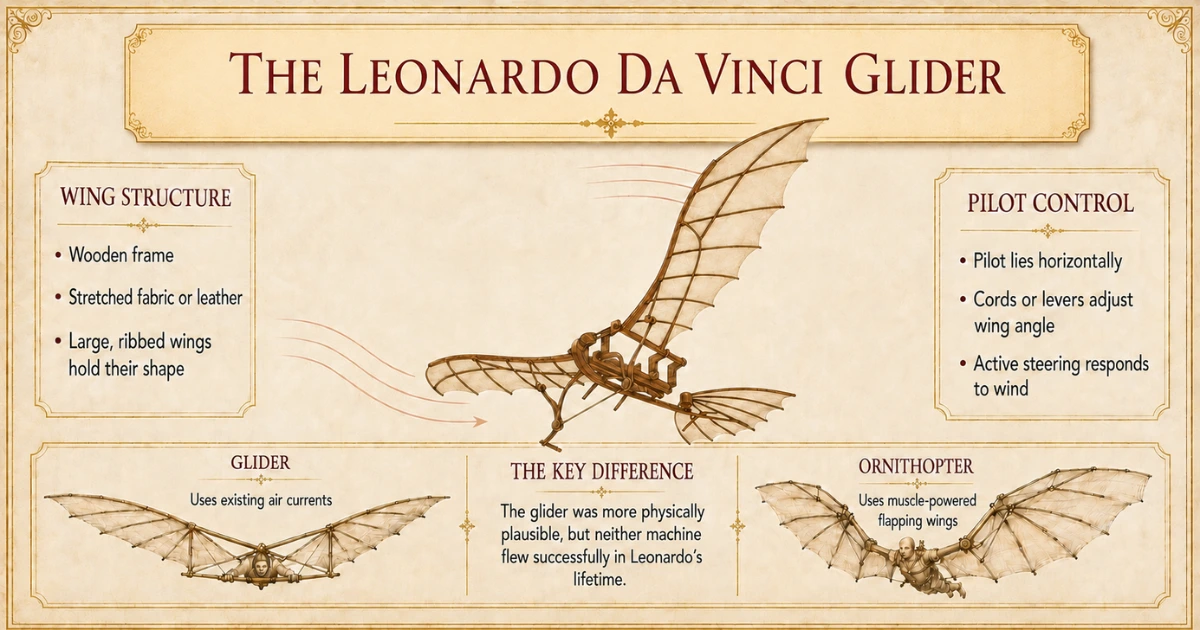
Leonardo's glider designs called for a wooden frame covered in tightly stretched fabric or treated leather, mimicking the lightweight yet rigid structure of a bird's wing.
The wings were large relative to the human body, since Leonardo understood, at least intuitively, that greater surface area was needed to generate enough lift. Ribs within the wing echoed the bone structure of a bird, allowing the surface to hold its shape against air pressure.
The Pilot's Role in Control
In several sketches, the pilot lies horizontally, connected to the wings by cords or levers designed to shift the wing's angle mid-flight. This reflects Leonardo's grasp of a key aviation principle: control matters as much as lift.
Rather than a passive rider, the pilot was meant to actively steer, adjusting for wind gusts much like the birds of prey he had studied for so long.
Comparing the Glider to the Ornithopter
It's worth distinguishing the glider from Leonardo's better-known ornithopter, a separate concept that relies on flapping wings powered by human arms and legs. The Leonardo da Vinci ornithopter aimed to generate its own lift through muscle-driven motion, while the glider depended on existing air currents, much closer to how modern gliders and early Leonardo da Vinci flying machines actually behave in practice.
Most historians agree the glider was the more physically plausible of the two, even though neither was built and flown successfully in his lifetime.
A Closer Look at Leonardo’s Flight Studies
Several museums have reconstructed working scale models based directly on Leonardo’s original wing diagrams
- Full-scale wing frames built from the original wood-and-fabric specifications
- Interactive displays showing how wing angle affects lift
- Side-by-side comparisons of the glider and the ornithopter designs
Visitors often note that seeing the wingspan at true scale changes how they understand the design's ambition.
Where to See the Leonardo da Vinci Glider Today
Leonardo never built a working, human-carrying glider during his lifetime, but his notebooks and reconstructed models survive, and they form the backbone of some of the most compelling Renaissance-era exhibits in the world. Seeing these pieces in person is where the history stops being abstract and starts feeling real.
Museo Nazionale Della Scienza e Della Tecnologia, Milan
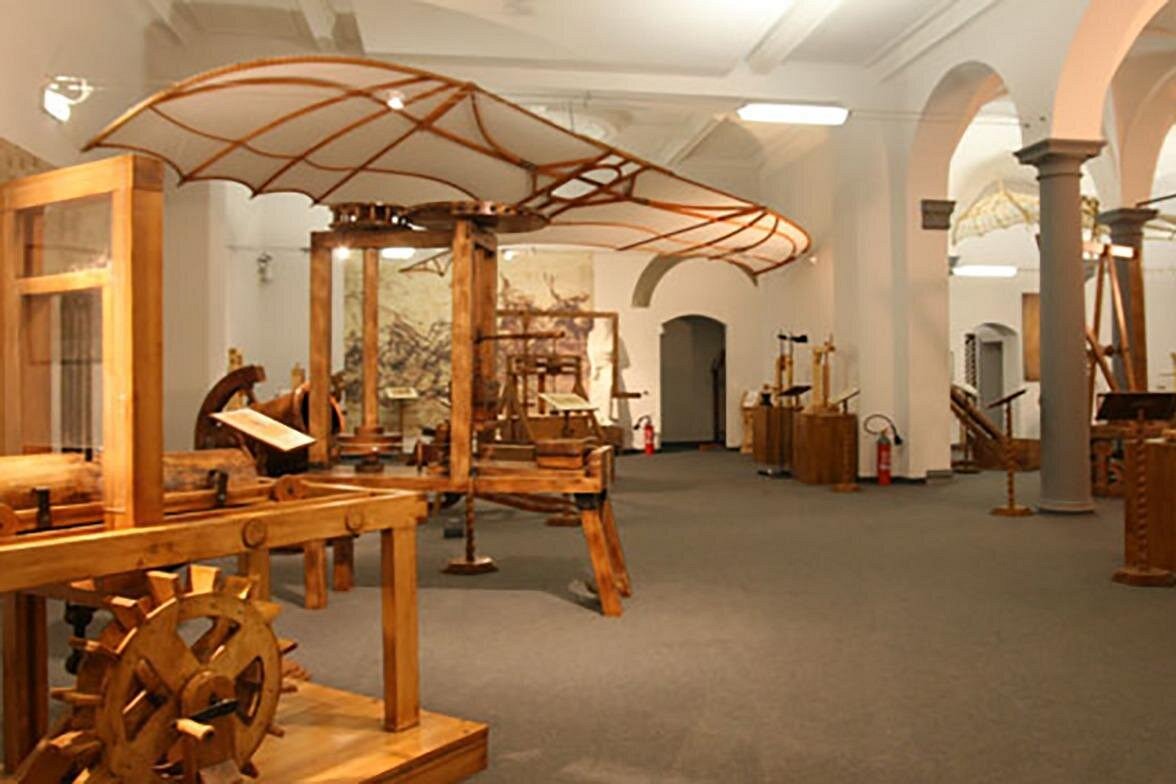
Milan's science and technology museum, named after Leonardo himself, houses one of the largest collections of models built from his engineering sketches, including several interpretations of his flying machines.
Wooden reconstructions of the glider's wing structure sit alongside models of his other inventions, giving visitors a sense of just how much of his notebook work reached beyond painting and into applied mechanics.
Replicas and Working Models
Engineers and historians have built multiple physical replicas of Leonardo's glider over the past century, testing his wing geometry against modern aerodynamic principles.
While these replicas confirm Leonardo's instincts about lift and wing curvature were remarkably sound, they also reveal why a human-powered version was never truly viable — the strength-to-weight ratio simply wasn't achievable with 15th-century materials or human muscle alone.
Experiencing Leonardo's Flight Legacy in Milan
Standing in front of a full-scale wing reconstruction does something a photograph cannot: it makes the ambition of the design tangible.
Visitors can walk the length of the wingspan, examine the joinery Leonardo proposed, and see firsthand how his bird studies translated into a mechanical object.
Discover Leonardo Machines in Milan
See full-scale reconstructions of Leonardo’s inventions and discover the engineering ideas behind his designs
Explore Leonardo's Glider ModelLeonardo da Vinci Science Museum, Milan
A guided walk through the museum's flying machine gallery, where Leonardo's glider and ornithopter designs are shown as full-scale reconstructions.
- Small-group access to the flying machine exhibits
- Context from a guide on how the sketches became working models
- Time to see Leonardo's other engineering inventions in the same visit
Many visitors find that having a guide explain the mechanics on-site makes the engineering easier to follow than reading the notebooks alone. See current availability
Exploring Leonardo da Vinci in Milan
Milan holds a special place in Leonardo's story, since it was here, working for the Sforza court, that he had the time and patronage to pursue engineering ideas like the glider alongside his painting commissions. The city's collection of models and manuscripts makes it one of the richest places to trace his mechanical thinking from sketch to structure.
Leonardo's story doesn't end in Milan, though. His curiosity about flight, anatomy, and mechanics followed him throughout his life, from his early training in Florence, through his engineering work connected to Venice, into his later studies referenced in Rome, and finally to Paris, where he spent his final years and where the Louvre now holds several of his most famous works.
Tracing his path across these cities builds a fuller picture of how one man's notebooks shaped the future of both art and engineering.
Final Thoughts
This post was all about the Leonardo da Vinci glider, tracing it from a set of careful bird studies to a fully sketched flying machine and, eventually, to the reconstructed models that stand in museums today.
What makes the story so compelling isn't just the machine itself, but the mind behind it — a painter who treated the sky as an engineering puzzle centuries before anyone had the tools to solve it.
Leonardo's glider never carried a person into the air, but the questions he asked about lift, wing shape, and control quietly shaped the path toward modern flight.
Standing next to a full-scale reconstruction of that wing, tracing the same curves he drew by candlelight, is a reminder that seeing Renaissance genius in person still makes history feel immediate rather than distant.
Related Post You May Like

Disclosure: This page may contain affiliate links. If you book through them, we may earn a small commission at no extra cost to you. Learn more.
Free Leonardo Milan Travel Guide
Plan Your Leonardo Trip in Milan
A premium mini guidebook for smarter Milan planning, including the best ticket strategy, Leonardo map, and practical visitor advice.
Get the Free Guide
Download the guide and receive practical Milan planning tips by email.
Download the Free Guide >> Leonardo Bianchi is the founder of Leonardo da Vinci Inventions & Experiences, a cultural travel guide helping visitors explore Leonardo da Vinci’s art, inventions, and legacy across Italy and Paris.