
(Last updated: Sep 2026)
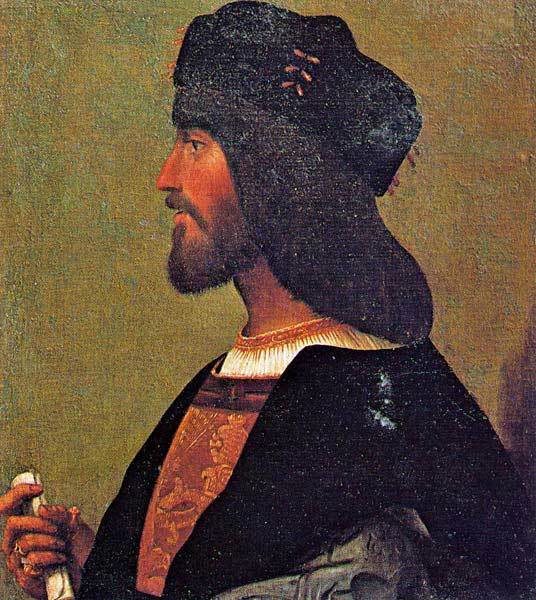
Cesare Borgia was the most feared warlord of Renaissance Italy, and for a brief, strange chapter in his life, Leonardo da Vinci worked for him.
Cesare Borgia's story is one of ambition, betrayal, brilliance, and a violent death far from home. It's a story that also explains why one of history's greatest painters spent a year drawing maps and designing fortresses instead of frescoes.
Understanding Cesare Borgia matters if you want to understand Leonardo's Italy at all. He shaped the political chessboard that artists, engineers, and popes were all forced to play on, and the cities he once ruled still carry his fingerprints.
This post is all about Cesare Borgia, the man behind Machiavelli's most famous case study, and the surprising thread that ties him to Leonardo da Vinci.
Who Was Cesare Borgia?
Cesare Borgia was the son of Pope Alexander VI and one of the most powerful and feared figures in Renaissance Italy. A soldier, cardinal-turned-warlord, and ruthless political strategist, he built a short-lived state across central Italy through conquest and cunning, and later became the model for Machiavelli's The Prince.
Historical Background
Born Into the Borgia Dynasty
Cesare Borgia was born in 1475, the son of Rodrigo Borgia, the Spanish-Italian cardinal who would become Pope Alexander VI in 1492. The Borgias were outsiders in Roman high society, Spanish by blood, and endlessly ambitious.
Cesare grew up watching his father climb toward the papacy, and he inherited both an appetite for power and a willingness to use almost any means to get it.
Cesare Borgia's Father and the Path to Power
As the son of Pope Alexander VI, Cesare had a head start most young men in Italy could only dream of. He was made a bishop at fifteen and a cardinal at eighteen, though he had no real interest in the Church.
In 1498, he did something almost unheard of: he resigned his cardinal's hat, becoming the first person in history to voluntarily step down from that position, so he could pursue a military and political career instead.
Lucrezia Borgia and the Borgia Family Web
Cesare's sister, Lucrezia Borgia, is almost as famous as he is, and the two were unusually close. Their relationship has been the subject of centuries of rumor and speculation, much of it exaggerated by political enemies of the Borgia family who had every reason to blacken their name.
What's certain is that Lucrezia was repeatedly married off for political advantage, and Cesare was deeply involved in managing the family's alliances through her.
Leonardo's Role and Influence
Military Architect for a Warlord
In 1502, Cesare Borgia hired Leonardo da Vinci as his chief military architect and engineer. This wasn't a ceremonial title. Leonardo traveled with Cesare's army through the Romagna region, inspecting fortresses, surveying towns, and designing defensive works.
He carried a document from Cesare granting him remarkable authority to access any fortification in Borgia territory, a level of trust few outsiders ever received from a man notorious for trusting almost no one.
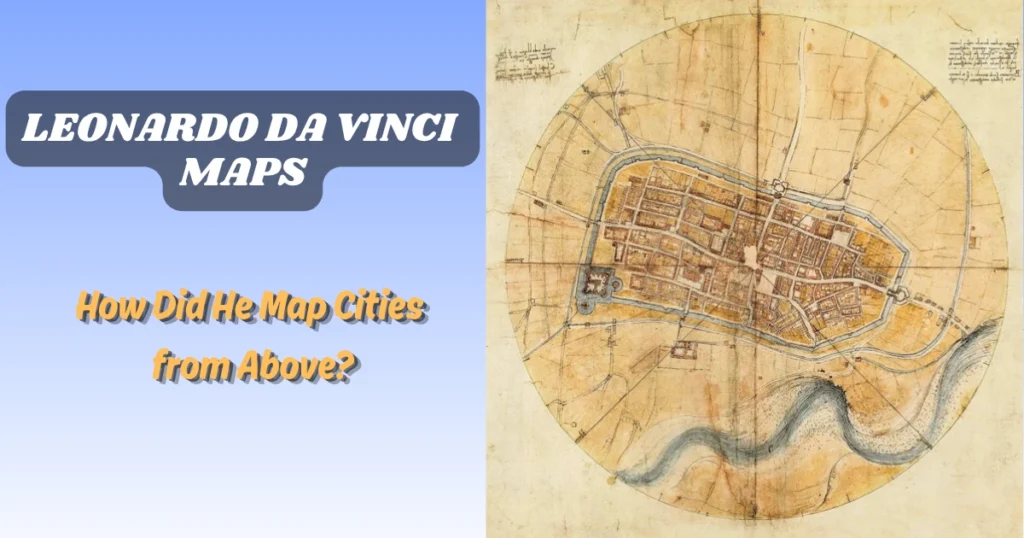
It was during this period that Leonardo produced some of his most important cartographic work, including a strikingly accurate map of the town of Imola, drawn from a bird's-eye perspective that was decades ahead of the era's standard mapmaking techniques.
Historians often cite this collaboration as evidence that Leonardo’s genius extended far beyond painting, and travelers interested in the military world of Renaissance Italy can explore that broader context by visiting San Leo Fortress, one of the region’s most dramatic hilltop strongholds.
Meeting Machiavelli in Borgia's Camp
Leonardo wasn't the only brilliant mind orbiting Cesare Borgia. Niccolò Machiavelli, then a Florentine diplomat, spent months observing Cesare firsthand as part of a political mission, and what he saw left a permanent mark.
Machiavelli watched Cesare eliminate rivals, betray allies, and consolidate power with cold efficiency, and he later used Cesare as the central real-world example in The Prince, his treatise on how rulers actually gain and keep power, rather than how they're supposed to.
Why This Collaboration Ended
Leonardo's employment with Cesare lasted less than a year. By 1503, he had left Borgia's service and returned to Florence, where he resumed work that would eventually include the Mona Lisa. Historians still debate exactly why he left, but Cesare's fortunes were about to change dramatically, and Leonardo's timing may have been more than coincidence.
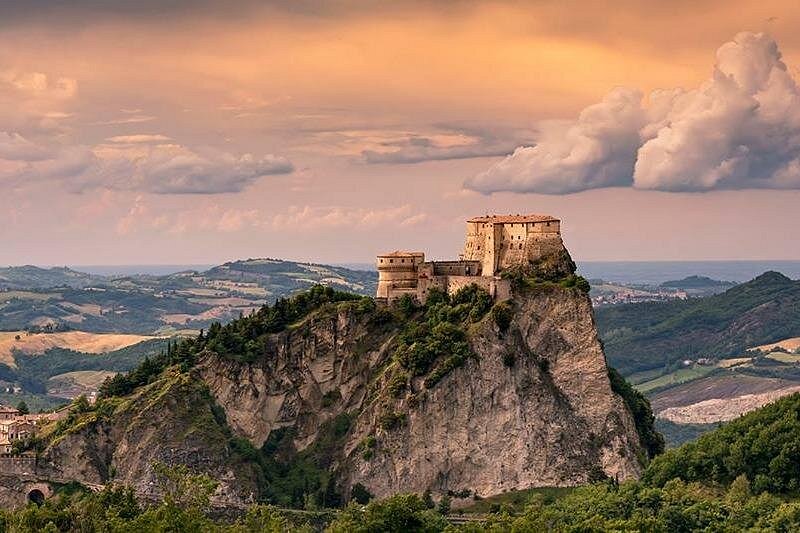
Explore a Romagna Fortress
Explore San Leo’s dramatic hilltop fortress and discover the military landscape of Renaissance Italy
See San Leo FortressWhat Was Cesare Borgia Famous For?
Conquering the Romagna
Cesare Borgia is most famous for carving out his own state in central Italy, the Romagna, through a rapid and often brutal military campaign between 1499 and 1503.
He took towns like Imola, Forlì, and Cesena, and governed them with a mix of harsh discipline and genuine administrative reform, reducing banditry and establishing courts that, for the time, were seen as relatively fair.
The Cesare Borgia Assassin's Creed Connection
Modern audiences often first encounter Cesare Borgia through Assassin's Creed II and its sequels, where he appears as a central antagonist.
The games take real liberties with the timeline and his personal life, but the core of his character, a calculating, ambitious son of a pope who will do almost anything to build a lasting state, is drawn directly from history.
It's one of the more accurate portrayals of the villain in the franchise, even if the specific plots are fictionalized.
How Did Cesare Borgia Die?
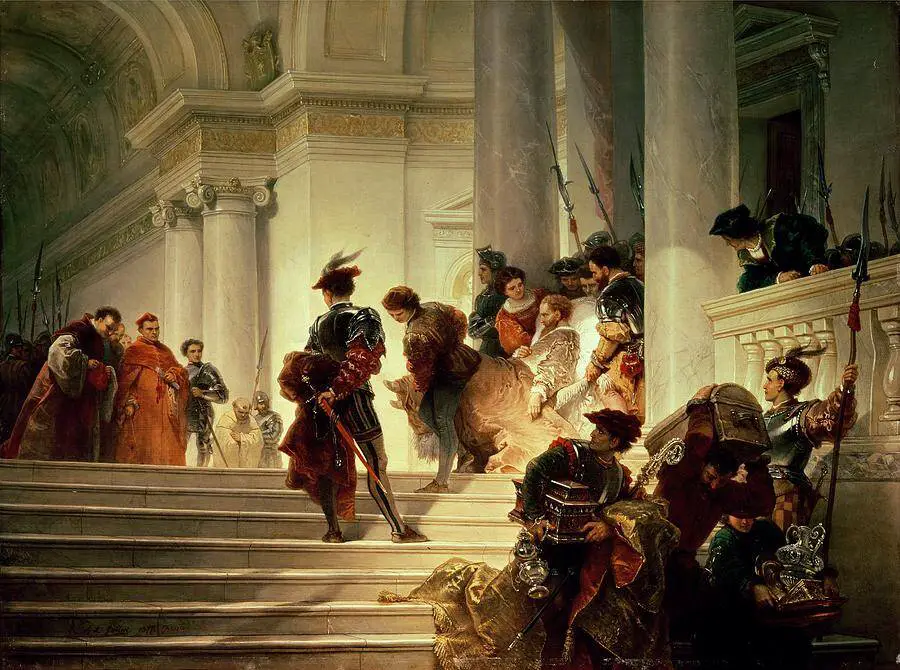
Cesare Borgia's fall was as swift as his rise. When his father died in 1503, Cesare lost his most powerful protector almost overnight, and his enemies moved quickly.
He was eventually captured, imprisoned in Spain, and later escaped to Navarre, where his brother-in-law ruled. Fighting on behalf of that brother-in-law, Cesare Borgia died in 1507 at the siege of Viana, ambushed and killed at just 31 years old.
The cause of death was multiple wounds sustained in that ambush, a strikingly anonymous end for a man who had once terrified all of Italy.
Where to Experience This Legacy Today
The world Cesare Borgia and Leonardo briefly shared still exists in the towns of the Romagna and in Rome, where the Borgia family's influence over the papacy left a physical mark.
The Borgia Apartments in the Vatican, commissioned by Pope Alexander VI himself, are decorated with frescoes that reflect the family's taste for grandeur and their complicated relationship with the Church they controlled. Walking through them, it's easy to sense why this family provoked as much fear as fascination.
In Imola and the surrounding Romagna towns, the fortresses Leonardo once surveyed for Cesare are still standing, and many are open to visitors. Seeing them in person makes Leonardo's map of Imola click into place in a way that photographs never quite manage.
Many visitors combine a Rome-based trip with a look at the Borgia Apartments and a side excursion into this less-touristed part of Italy, where the connection between engineering, warfare, and art is much easier to feel than to explain.
Exploring Leonardo da Vinci in Rome
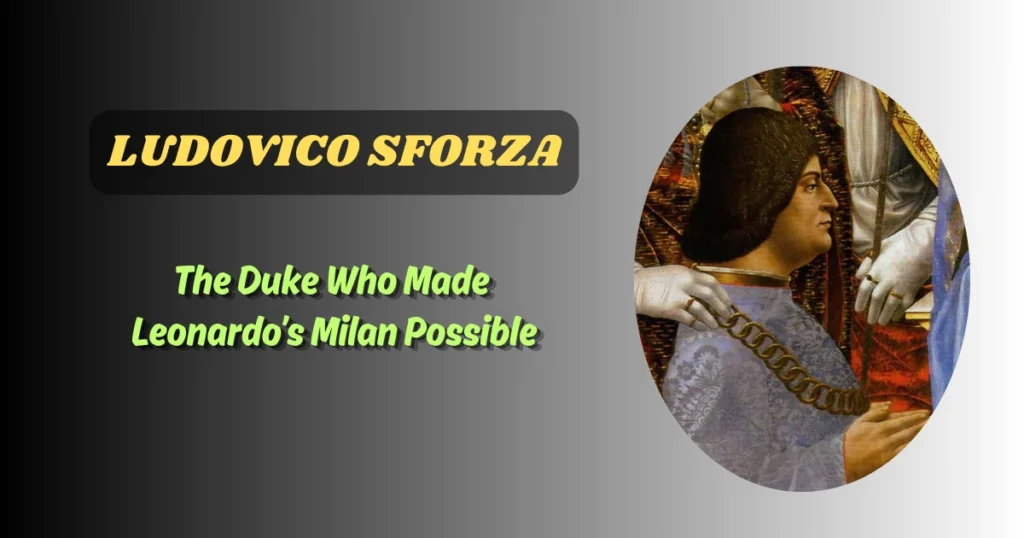
Rome sits at the center of the Borgia story, but it's only one stop in Leonardo's own life. He spent his final years in France, his formative decades in Florence, and some of his most productive engineering years in Milan under Ludovico Sforza, another Renaissance power broker who employed him long before Cesare Borgia did.
If Cesare Borgia's story drew you to this era, it's worth following Leonardo's path further. Explore his years in Milan, where he painted The Last Supper and served Ludovico Sforza; his formative training in Florence; his brief but important stop in Venice; and his final chapter in Paris, where he died under the patronage of King Francis I.
Final Thoughts
This post was all about Cesare Borgia, the Renaissance prince whose ambition reshaped central Italy and whose brief employment of Leonardo da Vinci reveals a side of the artist most people never learn about in school.
Cesare's genius for power and Leonardo's genius for observation crossed paths for less than a year, but that overlap tells us something important about the Renaissance itself: it wasn't produced only by artists in quiet studios; it was also shaped by soldiers, popes, and the engineers caught between them.
Seeing the towns Cesare conquered and the maps Leonardo drew of them is one of the more unusual ways to understand this period, precisely because it isn't the version of the Renaissance most tourists go looking for.
It's a reminder that behind every famous painting, there was often a much messier, more political world holding it up.
Related Post You May Like
Disclosure: This page may contain affiliate links. If you book through them, we may earn a small commission at no extra cost to you. Learn more.
Free Leonardo Milan Travel Guide
Plan Your Leonardo Trip in Milan
A premium mini guidebook for smarter Milan planning, including the best ticket strategy, Leonardo map, and practical visitor advice.
Get the Free Guide
Download the guide and receive practical Milan planning tips by email.
Download the Free Guide >> Leonardo Bianchi is the founder of Leonardo da Vinci Inventions & Experiences, a cultural travel guide helping visitors explore Leonardo da Vinci’s art, inventions, and legacy across Italy and Paris.