
Leonardo da Vinci
Leonardo da Vinci Drawings & Codices
Explore Leonardo da Vinci's drawings, notebooks, and surviving codices—from the Vitruvian Man and anatomical studies to the Codex Atlanticus and Codex on the Flight of Birds.
Why Leonardo's Drawings & Codices Still Matter
Leonardo da Vinci's inventions finished paintings and inventions reveal only part of his extraordinary creative life. His surviving notebooks, drawings, and manuscripts allow us to see something even more revealing: how he observed, questioned, tested, and developed ideas.
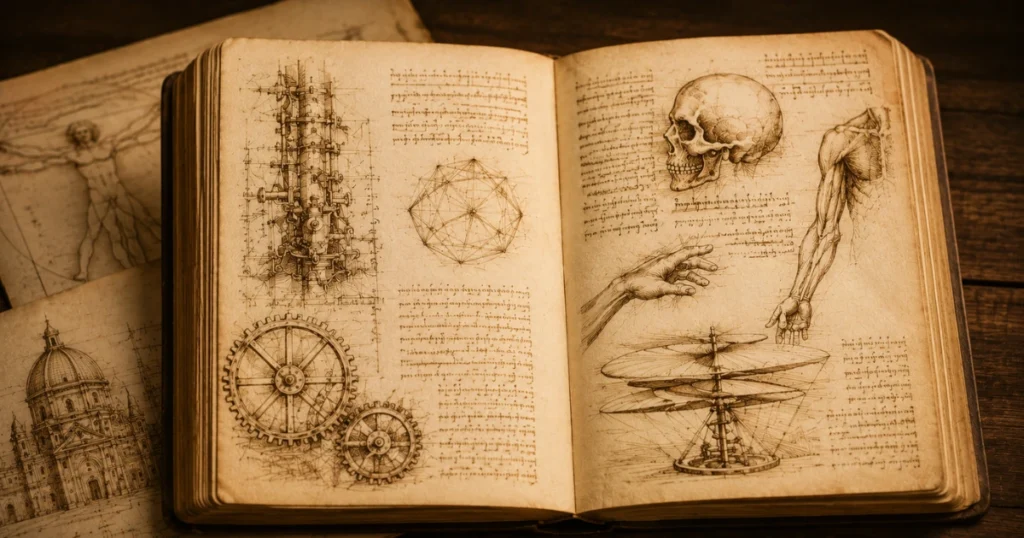
Leonardo used drawing as a tool for thinking. Across thousands of surviving sheets, he investigated the human body, machines, water, flight, plants, geometry, maps, artistic compositions, and many other subjects. Written observations often appear beside sketches, calculations, diagrams, and the distinctive mirror writing for which his notebooks are famous.
These pages connect almost every side of Leonardo's work. His engineering drawings lead naturally to Leonardo inventions, while his figure and composition studies help explain the development of Leonardo paintings. Together, they reveal the restless curiosity that made Leonardo one of the defining figures of the Italian Renaissance.
What Are Leonardo da Vinci's Codices and Notebooks?
Leonardo did not leave behind a single organized notebook or published scientific work. Instead, he filled loose sheets and small notebooks with observations, sketches, diagrams, calculations, and reminders over many decades.
After Leonardo's death, much of this material was dispersed, rearranged, collected, and bound into manuscript groups now known as the Codex Atlanticus, Codex Leicester, Codex Arundel, and Madrid Codices.
These surviving papers cover subjects ranging from mechanics and flight to anatomy, water, geology, geometry, art, and observations of nature. Drawings and written notes frequently appear together because Leonardo used both as part of the same investigative process.
For a broader introduction to how Leonardo created and used these manuscripts, start with our guide to his notebooks.
Explore Leonardo's Notebooks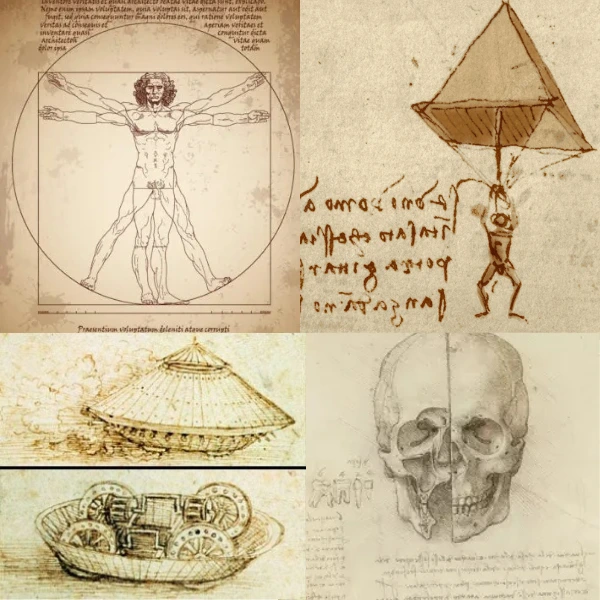
Codices & Notebooks
Explore Leonardo's Codices & Notebooks
Leonardo's surviving manuscripts preserve evidence of his investigation into engineering, nature, flight, mathematics, art, and the physical world. Explore the major surviving collections below.
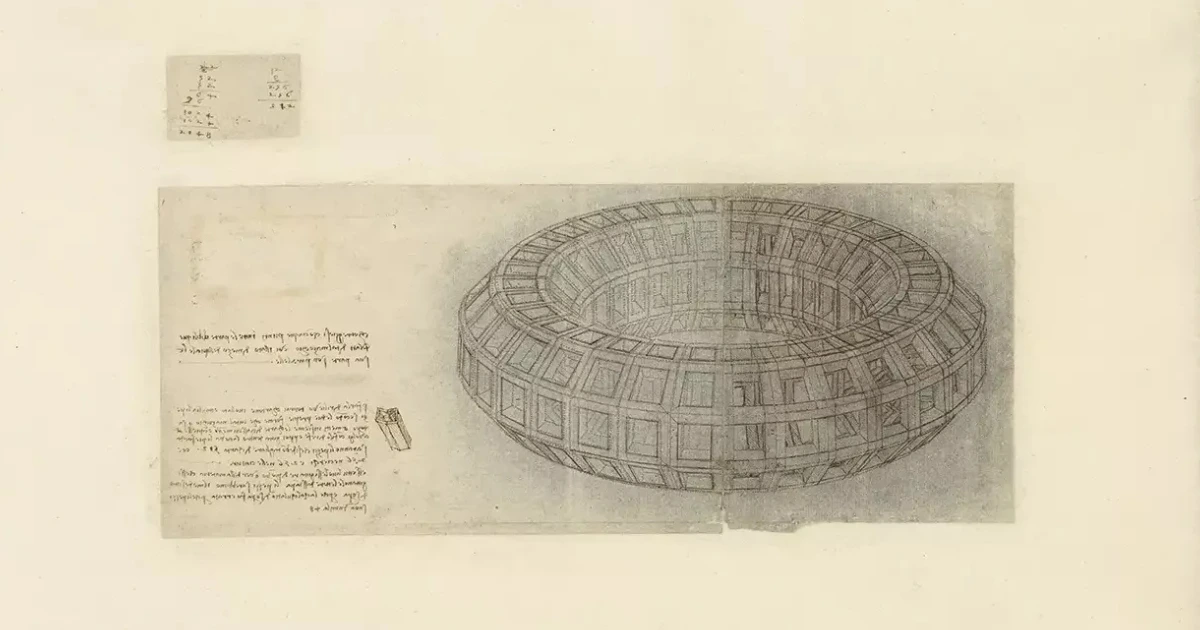
Codex Atlanticus
Explore Leonardo's largest surviving collection of drawings and writings, covering machines, mathematics, engineering, architecture, flight, and many other subjects.
Explore Codex Atlanticus >>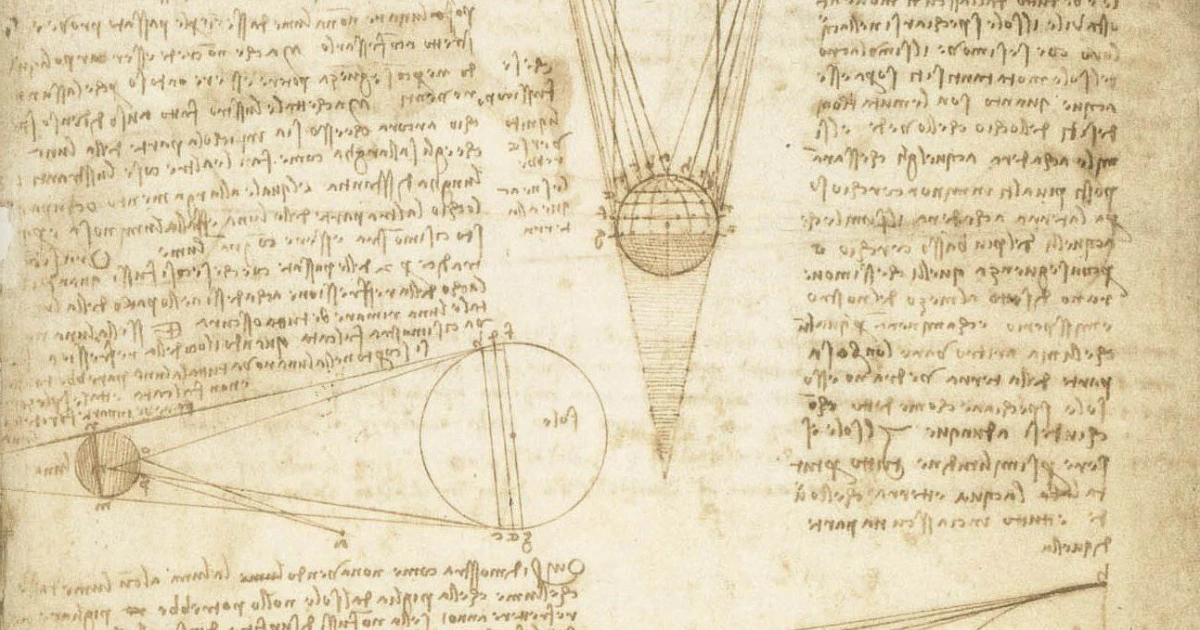
Codex Leicester
Discover Leonardo's investigations into water, geology, astronomy, fossils, and natural phenomena in one of his best-known surviving manuscripts.
Explore Codex Leicester >>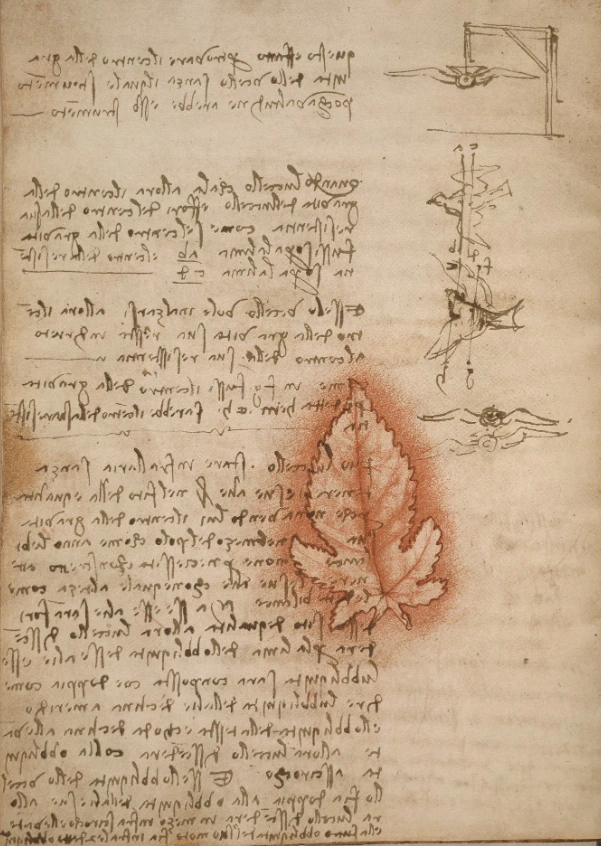
Codex on the Flight of Birds
See how Leonardo studied birds, air, balance, and movement while trying to understand principles that might make human flight possible.
Explore Flight of Birds >>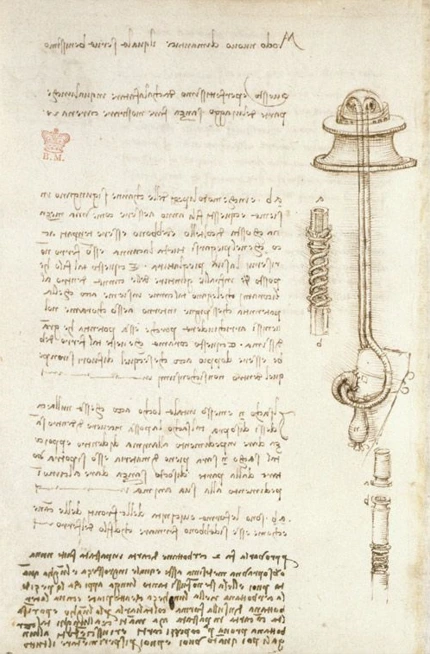
Codex Arundel
Explore a wide-ranging collection of Leonardo's papers covering science, mechanics, geometry, art, and personal working notes.
Explore Codex Arundel >>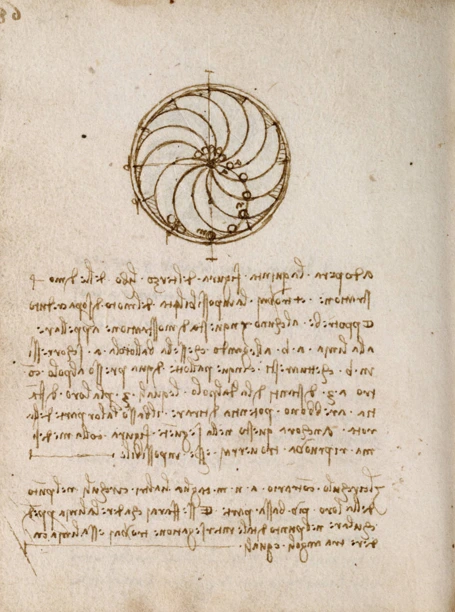
Codex Forster
Discover notebooks containing Leonardo's investigations of mechanics, hydraulics, geometry, proportions, anatomy, and other subjects.
Explore Codex Forster >>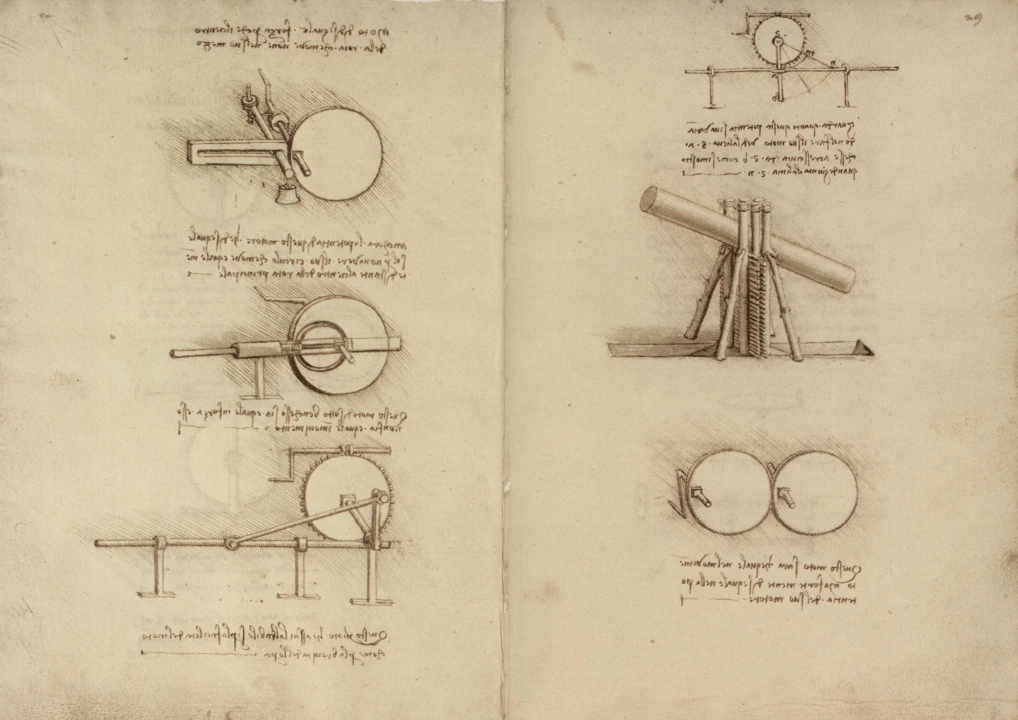
Madrid Codices
Explore two important manuscripts containing Leonardo's technical drawings, mechanical investigations, geometry, and handwritten notes.
Explore Madrid Codices >>Drawing as Investigation
How Leonardo Used Drawing to Think
For Leonardo, drawing was much more than a way to illustrate an idea after it had already been formed. Drawing was often part of the thinking itself.
A sketch could begin with a question about movement, proportion, structure, light, anatomy, or mechanics. Leonardo could then redraw the subject from another angle, add observations, isolate components, or compare several possible solutions on the same sheet.
This visual method appears across Leonardo's anatomical drawings, mechanical diagrams, maps, botanical studies, artistic preparations, and investigations of flight.
Drawings & Studies
Explore Leonardo's Drawings & Studies
Leonardo's drawings range from individual masterpieces to working investigations of anatomy, engineering, landscape, maps, plants, and preparations for paintings.
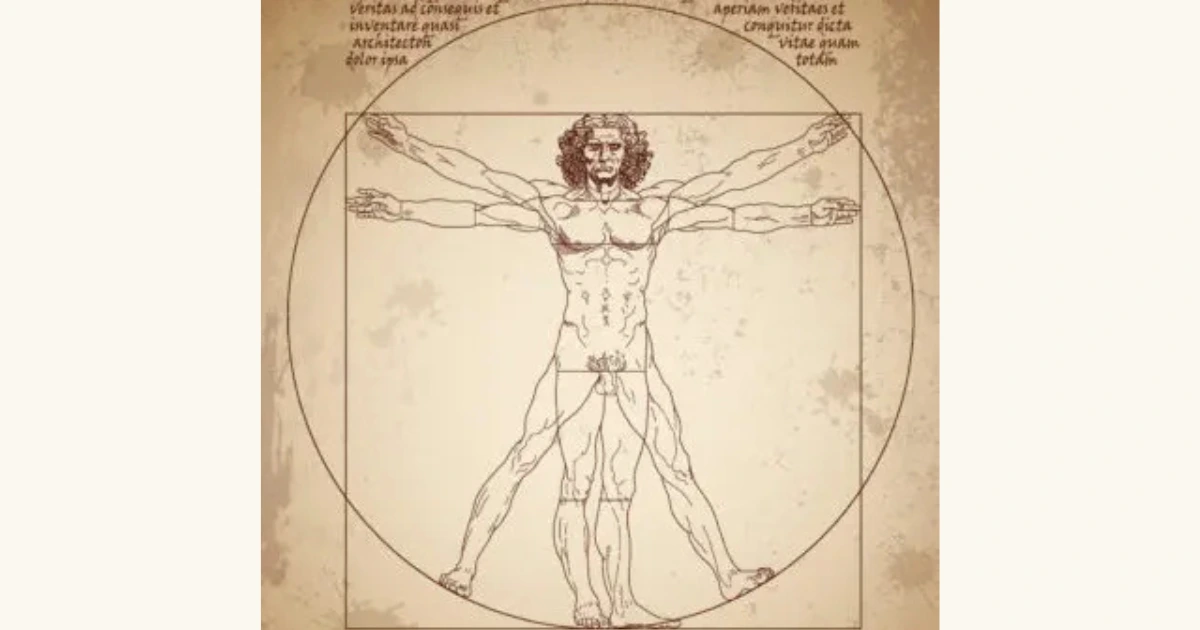
Vitruvian Man
Discover Leonardo's celebrated study of human proportion and the Renaissance relationship between art, mathematics, anatomy, and the human body.
Explore Vitruvian Man >>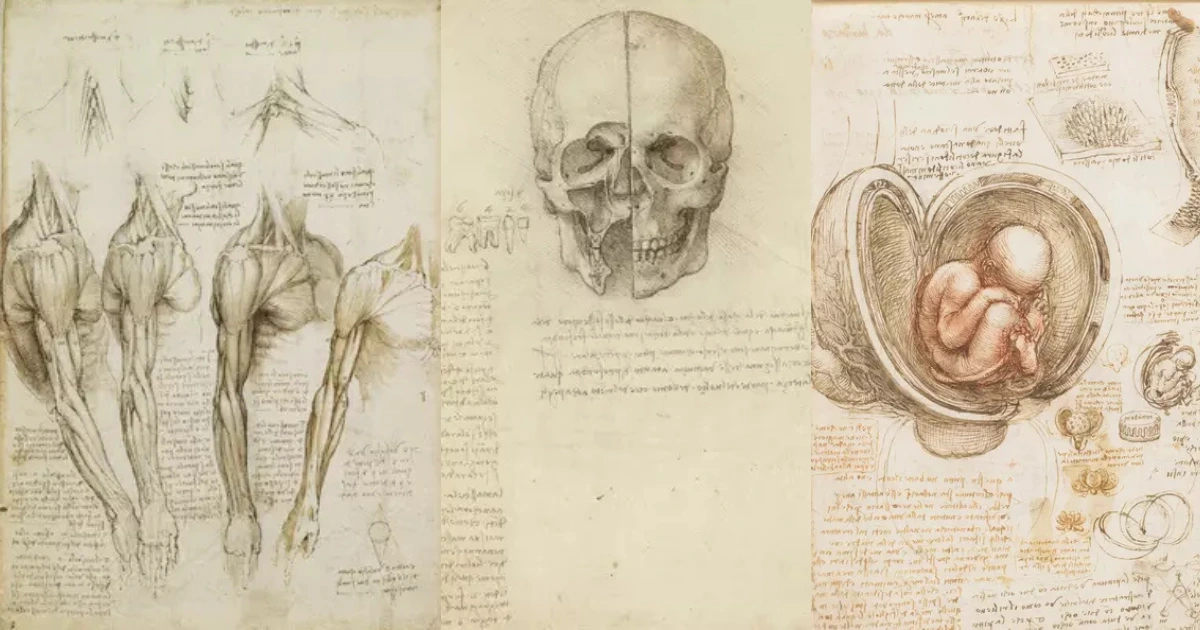
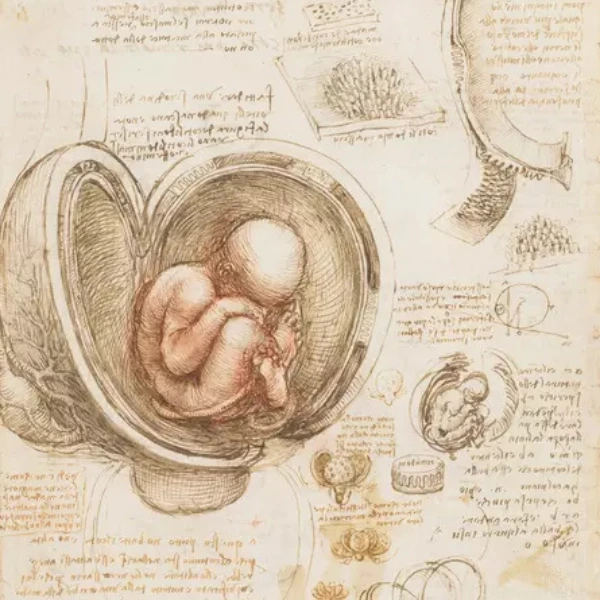
Anatomical Drawings
Explore Leonardo's studies of the human body, from muscles and bones to organs, movement, proportion, and structures beneath the surface.
Explore Anatomical Drawings >>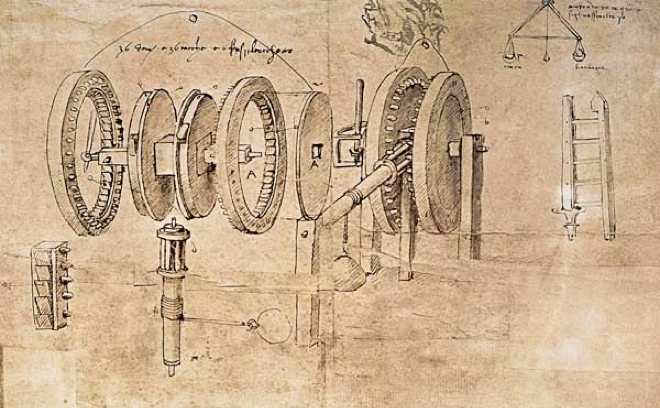
Engineering Drawings
See how Leonardo used diagrams, components, cutaway views, motion, annotations, and repeated sketches to investigate mechanical ideas.
Explore Engineering Drawings >>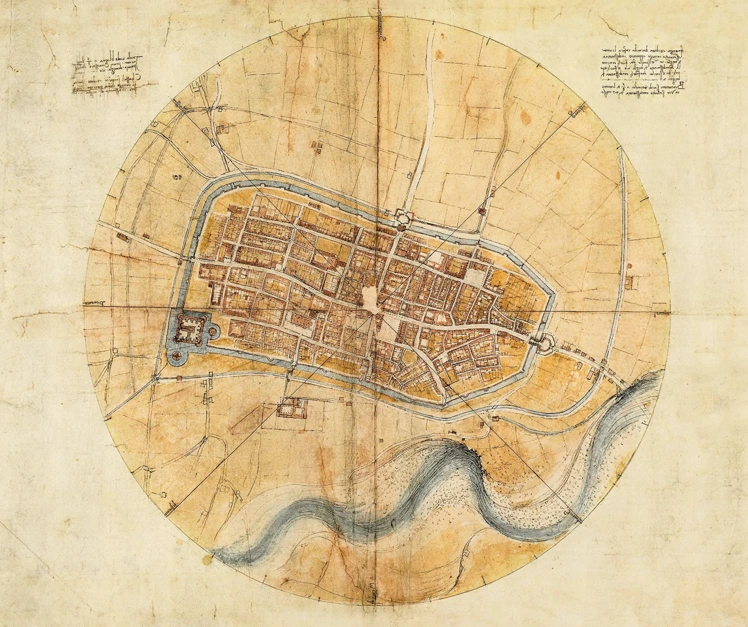
Maps & Cartography
Discover Leonardo's maps, surveying ideas, and attempts to represent landscapes, cities, waterways, and geography with visual clarity.
Explore Leonardo's Maps >>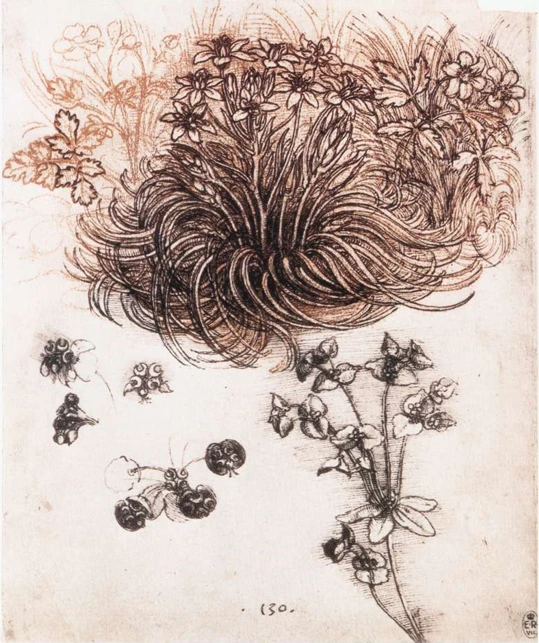
Nature & Botanical Studies
Explore Leonardo's close observation of plants, trees, landscape, water, and natural forms as continuing subjects of investigation.
Explore Nature Studies >>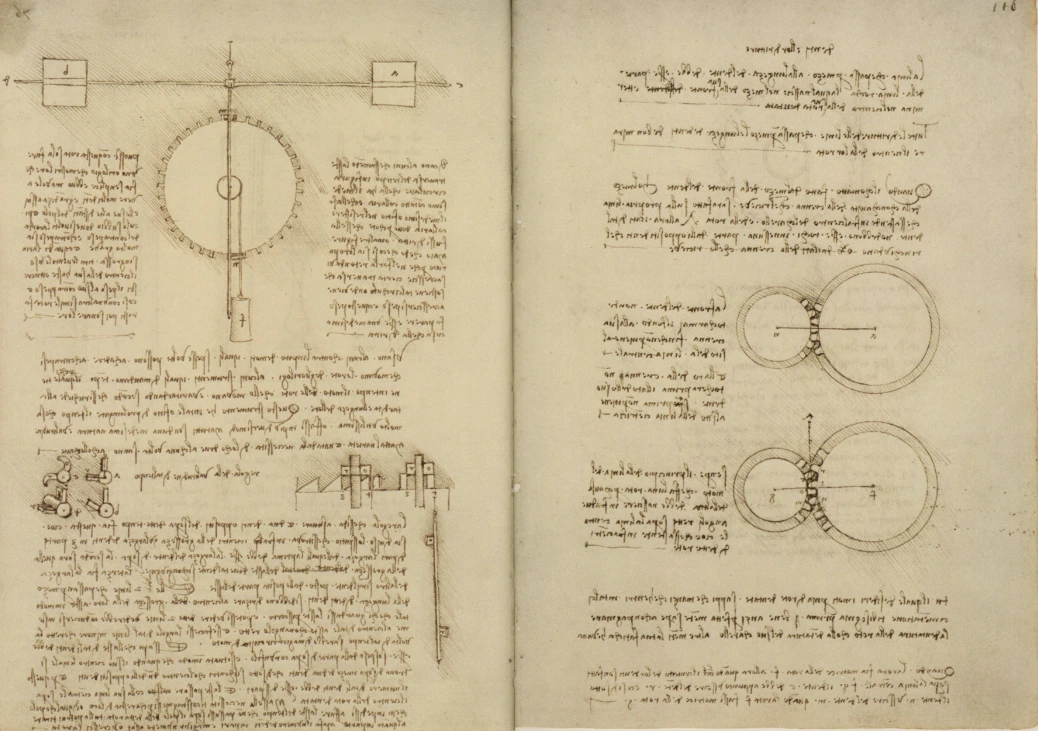
Mirror Writing
See how Leonardo used reversed right-to-left writing to record observations, sketches, calculations, and ideas across thousands of pages in his private notebooks.
Explore Mirror Writing >>Connected Ideas
Where Art, Science and Engineering Come Together
Leonardo rarely separated subjects as neatly as modern categories do. The same habits of observation appear in his paintings, anatomical studies, machines, maps, notebooks, and investigations of nature.
Flight
Leonardo's observations of birds connect the Codex on the Flight of Birds to his broader efforts to understand aerodynamics and to create flying machines.
Explore the Flying Machines >>Engineering
Mechanical drawings reveal how Leonardo examined motion, components, gears, mechanisms, and forces before developing many designs associated with his inventions.
Explore Leonardo's Inventions >>Painting
Preparatory studies allowed Leonardo to test figures, expressions, movement, and compositions before developing works such as The Last Supper and Virgin of the Rocks.
Explore Leonardo's Paintings >>Leonardo Across Europe
Where Are Leonardo's Drawings & Notebooks Today?
Leonardo's surviving drawings and manuscripts are dispersed among museums, libraries, and collections across Europe. Because works on paper are sensitive to light and conservation conditions, being held by an institution does not necessarily mean a particular work is permanently on display.
| Destination | Leonardo Connection |
|---|---|
| Milan | Codex Atlanticus — Biblioteca Ambrosiana |
| Venice | Vitruvian Man — Gallerie dell'Accademia |
| Turin | Codex on the Flight of Birds and Leonardo drawings — Biblioteca Reale |
| London | Codex Arundel — British Library; Codex Forster — V&A |
| Windsor | Major collection of Leonardo drawings — Royal Collection |
| Madrid | Madrid Codices — Biblioteca Nacional de España |
| Paris | Leonardo manuscripts — Institut de France |
Follow Leonardo Across Europe
Discover Leonardo Beyond the Page
Follow Leonardo's drawings and notebooks across Europe, from the Codex Atlanticus in Milan to the Vitruvian Man in Venice and major collections in Turin, London, Windsor, Madrid, and Paris.
Explore Where to See ThemContinue Exploring
Explore Leonardo's World
Leonardo's drawings and notebooks connect directly with his life, inventions, paintings, and the Renaissance world in which he worked.
The Life Behind the Notebooks
Follow Leonardo's life from Vinci and Florence to Milan, Rome, and his final years in France.
Explore Biography >>From Sketches to Machines
Explore the flying machines, mechanisms, engineering concepts, and technical ideas recorded throughout Leonardo's working papers.
Explore Inventions >>From Studies to Masterpieces
See how Leonardo transformed observation, drawing, experimentation, and preparation into some of history's most famous paintings.
Explore Paintings >>The World That Shaped Leonardo
Discover the artists, ideas, patrons, cities, and cultural forces that defined the Italian Renaissance around Leonardo.
Explore Renaissance >>FAQ: Leonardo da Vinci Drawings & Codices
What are Leonardo da Vinci's codices?
Leonardo's codices are collections of surviving manuscript sheets containing drawings, notes, diagrams, calculations, and observations. Major examples include the Codex Atlanticus, Codex Leicester, Codex Arundel, Codex Forster, Madrid Codices, and Codex on the Flight of Birds.
What is Leonardo da Vinci's most famous drawing?
The Vitruvian Man is Leonardo's most recognizable individual drawing. It combines the human figure with geometric forms and investigations of proportion.
What is the Codex Atlanticus?
The Codex Atlanticus is Leonardo's largest surviving manuscript collection. Its pages cover engineering, machinery, mathematics, architecture, flight, and other areas of investigation.
Why did Leonardo da Vinci write backward?
Leonardo frequently wrote from right to left in what is now known as mirror writing. This unusual habit appears throughout many of his surviving manuscripts and has become one of the most recognizable characteristics of his notebooks.
Where are Leonardo da Vinci's anatomical drawings?
A major body of Leonardo's anatomical drawings belongs to the Royal Collection at Windsor. Because works on paper require careful conservation, individual sheets are not necessarily permanently displayed.
Where can you see Leonardo da Vinci's drawings today?
Leonardo's drawings and manuscripts are held in major collections in Milan, Venice, Turin, London, Windsor, Madrid, Paris, and elsewhere. Availability varies, so travelers should distinguish between works held by a collection and those currently on display. Explore our guide to where Leonardo's drawings and notebooks are today.
Leonardo da Vinci
Continue Exploring Leonardo da Vinci
Free Leonardo Milan Travel Guide
Plan Your Leonardo Trip in Milan
A premium mini guidebook for smarter Milan planning, including the best ticket strategy, Leonardo map, and practical visitor advice.
Get the Free Guide
Download the guide and receive practical Milan planning tips by email.
Download the Free Guide >>Disclosure: This page may contain affiliate links. If you book through them, we may earn a small commission at no extra cost to you. Learn more.