The Ghent Altarpiece by Jan van Eyck (1432), renowned for its intricate detail, luminous oil technique, and rich religious symbolism.
(Last updated: April 2026)
Northern Renaissance art stands as one of the most extraordinary achievements in the history of Western civilization — a flowering of painting, printmaking, and intellectual inquiry that transformed how Europeans understood the world and their place within it.
While Italy blazed the early trail of Renaissance thinking, a parallel revolution was taking shape north of the Alps. In the workshops of Bruges, Ghent, Nuremberg, and Antwerp, artists developed a distinctive vision: meticulous detail, luminous oil paint, and an intense fascination with the human face and natural world.
Leonardo da Vinci occupies a unique position in this story. As an Italian master deeply aware of northern techniques, he bridges both worlds. Understanding northern European Renaissance art deepens our appreciation of Leonardo’s genius and enriches every visit to the great museums and Renaissance cities of Europe.
This guide explores the world of Northern Renaissance art — its origins, masters, defining characteristics, and places where you can still encounter it today.
What Is Northern Renaissance Art?
Northern Renaissance art was a cultural movement in Northern Europe (the Netherlands, Belgium, Germany, and France) from the late 14th to the 16th century, known for its detailed realism, mastery of oil painting, and focus on everyday life.
The Origins and Historical Context of the Northern Renaissance
To understand the Northern Renaissance, we need to step back to the late Middle Ages. Northern Europe in the 1300s and early 1400s was a world of prosperous trading cities, powerful merchant families, and a Church that commissioned art on a grand scale. This was the fertile ground from which a new kind of art would grow.
When Was the Northern Renaissance?
Historians generally date the Northern Renaissance from around 1380 to 1600, though the most celebrated period runs from the early 1400s through the mid-1500s. The movement did not appear overnight. It grew gradually as artists, scholars, and merchants exchanged ideas across the continent.
The invention of the printing press by Johannes Gutenberg around 1440 greatly accelerated the spread of Renaissance ideas. Books, illustrations, and prints could now reach audiences across Europe in ways never before possible.
What Was the Northern Renaissance?
The Northern Renaissance was not simply an imitation of Italian ideas. It was an independent movement shaped by local traditions, religious culture, and the particular needs of its patrons. Northern artists were fascinated by the visible world — light falling through a window, the texture of cloth, the expression on a merchant’s face.
While Italian Renaissance artists pursued idealized beauty and classical proportion, northern painters often embraced the particular and the specific. Their altarpieces, portraits, and landscapes feel startlingly real, as if we could step into the scene.
Trade, Cities, and the Rise of a New Art World
The cities of the Low Countries — Bruges, Ghent, and later Antwerp — were among the richest in Europe. Wealthy merchants and powerful guilds commissioned ambitious works of art. This commercial prosperity gave northern artists access to the finest materials and a sophisticated, demanding audience.
Italy had its Medici; the north had its merchant princes. Both groups understood that great art was also a statement of cultural authority.
Northern Renaissance Art Characteristics: What Makes It Distinctive?
One of the most common questions students and travelers ask is: What sets Northern Renaissance paintings apart?
The table below highlights the key characteristics that define Northern Renaissance art, from mastery of oil painting to detailed realism and expressive portraiture.
Characteristic
What It Means
Why It Matters
Oil Painting Mastery
Artists like Jan van Eyck perfected oil paint for smooth blending and light effects
Created rich colors, depth, and luminous paintings
Attention to Detail
Extreme precision in textures, objects, and fine elements
Reflected both technical skill and spiritual meaning
Portraiture & Realism
Focus on individual faces and psychological depth
Showed human identity and emotion more clearly
Landscape Integration
Detailed natural backgrounds and environments
Elevated nature as an important artistic subject
Light & Texture Effects
Use of layered glazes to capture light, reflections, and surfaces
Made artworks appear realistic and lifelike
The Mastery of Oil Paint
If there is one technical achievement that defines early northern Renaissance art, it is the development and perfection of oil painting. Jan van Eyck, working in Bruges in the early 1400s, brought oil paint to a level of refinement that astonished contemporaries and continues to astonish us today.
Oil paint dries slowly, which allows artists to blend colors smoothly, build up layers of translucent glaze, and capture effects of light that earlier tempera paint simply could not achieve. The result is paintings that seem to glow from within.
Extraordinary Attention to Detail
Northern Renaissance paintings are famous for their minute observation of the physical world. A Jan van Eyck altarpiece rewards hours of close looking — every jewel, every fold of fabric, every strand of hair is rendered with breathtaking precision.
This love of detail was not mere technical showing-off. It reflected a theological conviction that God’s creation was worth studying and celebrating in every particular. The visible world was a mirror of the divine.
Portraiture and the Human Face
Northern Renaissance painters were pioneers of portraiture. Works such as the Annunciation by Jan van Eyck in Washington (held in the National Gallery of Art) and the famous self-portrait of Albrecht Dürer — the Self Portrait at the Age of Twenty-Eight — reveal an intense interest in individual personality and psychological depth.
Dürer’s 1500 self-portrait is particularly striking. He depicts himself with a Christ-like gravity, asserting the dignity of the artist as a creative genius. It is one of the most powerful images produced by any northern Renaissance artist.
Landscape as Subject
Northern European Renaissance art gave landscape a prominence it had not enjoyed before. Flemish and German masters painted backgrounds of extraordinary depth and beauty — hills, rivers, cities glimpsed through windows. In time, landscape became an independent subject, a northern contribution to European art that would influence painting for centuries.
Famous Northern Renaissance Artists and Their Masterworks
Self-Portrait by Albrecht Dürer (1500), a striking image of identity and artistic genius.
The gallery of famous northern Renaissance artists is rich with extraordinary talent. These painters created works that continue to define how we understand art, humanity, and the natural world.
Jan van Eyck: Father of Flemish Painting
Jan van Eyck (c. 1390–1441) is arguably the greatest of all northern Renaissance painters. Working for the Duke of Burgundy and wealthy Bruges merchants, he produced works of staggering beauty and complexity.
His Ghent Altarpiece, completed in 1432, is considered one of the most important paintings in Western art. The Annunciation (Washington) and the Arnolfini Portrait (London) show his mastery of oil paint and his ability to transform ordinary scenes into moments of profound significance.
Albrecht Dürer: The Universal Genius of the North
If Leonardo was the universal genius of Italy, Albrecht Dürer (1471–1528) was his northern counterpart. Born in Nuremberg, Dürer traveled to Italy and absorbed Renaissance ideas about proportion, perspective, and the dignity of the artist.
His prints — woodcuts and engravings — spread Renaissance imagery across Europe more effectively than any other medium. His Self Portrait at the Age of Twenty-Eight remains one of the most analyzed paintings of the entire Renaissance period. We dedicate a full article to Dürer’s life, his Italian journeys, and his enduring influence.
Hans Holbein, Rogier van der Weyden, and Pieter Bruegel
The list of famous northern Renaissance artists extends far beyond van Eyck and Dürer. Rogier van der Weyden brought profound emotional intensity to religious painting. Hans Holbein the Younger became the supreme court portraitist of the Tudor age, capturing Henry VIII and his court with cool, penetrating clarity.
Pieter Bruegel the Elder turned to the everyday world — peasant festivals, winter landscapes, the chaos of village life — and elevated it to the level of high art. Each of these masters deserves a dedicated exploration, and our supporting articles cover their key works, techniques, and historical context in detail.
Northern Renaissance vs Italian Renaissance: Two Visions of a New Age
Portrait of Henry VIII by Hans Holbein the Younger, a commanding image of royal power and authority.
No question in Renaissance studies is more debated than this: how do the northern and Italian Renaissances compare? The answer is not simply that one was better or more advanced — they were genuinely different, shaped by different cultures, patrons, and artistic traditions.
When Did the Italian Renaissance Start?
The Italian Renaissance is generally dated from the late 13th and early 14th centuries, with figures like Giotto and Dante laying its foundations. The high point came in the 15th and early 16th centuries — the age of Donatello, Botticelli, Leonardo da Vinci, Michelangelo, and Raphael.
Italian Renaissance art placed enormous emphasis on the classical world of ancient Greece and Rome. Proportion, ideal beauty, and the nude human figure were central concerns. Italian Renaissance facts — such as the discovery of linear perspective by Brunelleschi around 1420 — had a profound impact on Western art.
Different Priorities, Shared Ambitions
Northern Renaissance painters were less interested in classical antiquity and more focused on the immediate, visible world. Where Italian artists idealized the human body, northern painters observed it in minute, unsentimental detail.
Yet both movements shared a core conviction: that the individual human being mattered, that careful observation of the world was worthwhile, and that art could illuminate the deepest truths of existence. The southern and northern Renaissances were, in a sense, two languages describing the same great transformation.
How Leonardo Bridges Both Worlds
Leonardo da Vinci is unique in Renaissance history because he was deeply aware of northern techniques. He studied Flemish paintings and shared the northern passion for natural observation — dissecting bodies, studying plants, and filling notebooks with meticulous drawings.
Understanding the northern European Renaissance helps us see Leonardo in a richer context. He was not simply an Italian genius working in isolation — he was part of a pan-European conversation about art, science, and what it means to be human.
Where to Experience Leonardo’s Legacy
For travelers inspired by the Northern Renaissance and Leonardo’s world, Europe offers an extraordinary range of museums, exhibitions, and historic sites. These places preserve masterpieces that have survived wars, revolutions, and the passage of centuries.
Florence and the Uffizi Gallery
Florence remains the spiritual capital of Renaissance art. The Uffizi Gallery holds Leonardo’s early Annunciation and Adoration of the Magi, alongside masterpieces by Botticelli, Raphael, and Titian. Walking through the Uffizi is like moving through the entire arc of Italian Renaissance history in a single afternoon.
The city itself is a living Renaissance monument. The Duomo, the Baptistery, the churches of Santa Croce and San Marco — all reward the curious traveler.
Milan and The Last Supper
Milan is home to Leonardo’s most famous work, The Last Supper, painted on the refectory wall of Santa Maria delle Grazie. This fragile masterpiece — damaged almost from the moment it was completed — can only be viewed in small groups by timed reservation. Booking well in advance is essential.
Milan’s Museo Nazionale della Scienza e della Tecnologia presents full-scale models of Leonardo’s machines, making it an ideal destination for visitors interested in his engineering inventions alongside his art.
Paris, the Louvre, and Northern Renaissance Treasures
The Louvre in Paris houses one of the world’s greatest collections of Renaissance art. Leonardo’s Mona Lisa and Virgin of the Rocks are here, but so are extraordinary examples of Netherlands Renaissance art — Flemish altarpieces, van Eyck-influenced panels, and portraits that illuminate the northern tradition.
The Louvre’s Department of Paintings and its dedicated Leonardo exhibitions make Paris an essential destination for any serious student of Renaissance art.
Ghent, Bruges, and the Heart of Flemish Painting
For travelers seeking the origins of northern European Renaissance art, the Belgian cities of Ghent and Bruges are unmissable. The Ghent Altarpiece by Jan van Eyck is installed in the Cathedral of Saint Bavo in Ghent — a work so important that it was stolen multiple times throughout history, most recently by the Nazis during World War II.
Bruges preserves its medieval character more completely than almost any other European city. Walking its canal-side streets, it is easy to imagine the world that Jan van Eyck and his contemporaries inhabited.
Experience Leonardo’s World in Person
Reading about the Northern Renaissance in books and articles is rewarding — but nothing compares to standing in front of the works themselves. The scale, texture, and luminosity of original paintings cannot be reproduced in photographs or on screens.
Planning Your Leonardo and Renaissance Tour
A well-planned Renaissance tour might begin in Florence, move north to Milan, cross the Alps to Nuremberg or Ghent, and end in Paris. Each city adds a new dimension to the story.
Florence shows you the Renaissance beginnings. Milan shows you Leonardo at the height of his powers. The Low Countries show you the northern tradition at its most brilliant.
Guided tours led by art historians can transform a visit from a pleasant sightseeing experience into a genuine intellectual adventure. Many specialist operators offer itineraries focused on Leonardo, the Italian Renaissance, or northern European painting — often combining museum visits with access to private collections and lesser-known sites.
Key Leonardo Museums and Exhibitions
Beyond the major cities, a number of dedicated Leonardo museums and exhibitions offer deep dives into his world. The Museo Nazionale della Scienza e della Tecnologia in Milan, the Château du Clos Lucé in Amboise (where Leonardo spent his final years), and the Museo Leonardiano in Vinci (his birthplace in Tuscany) all offer remarkable perspectives on his life and work.
Vinci itself — a small hilltop town in the Tuscan countryside — rewards a half-day visit. The museum houses models of Leonardo’s machines and provides a biographical context that larger institutions cannot.
Practical Tips for Museum Visits
Major Leonardo sites — especially The Last Supper in Milan — require advance booking, often months ahead. The Uffizi and the Louvre offer online ticketing that skips the longest queues. Many museums offer early-morning or late-evening openings that allow visitors to experience the works in relative quiet.
If your primary interest is northern Renaissance painting, consider visiting mid-week and outside peak summer months. Ghent and Bruges, in particular, are far more atmospheric in autumn or early spring.
Final Thoughts
This post was all about Northern Renaissance art — its origins in the prosperous cities of the Low Countries, its defining characteristics of oil painting and extraordinary detail, its master artists from Jan van Eyck to Albrecht Dürer, and its relationship to the Italian Renaissance tradition that produced Leonardo da Vinci.
The Northern Renaissance was not a footnote to the Italian achievement. It was a parallel revolution — different in emphasis, rooted in different soil, but equally ambitious and equally profound. Understanding it gives us a richer, more complete picture of one of history’s great creative eras.
Whether you are a student encountering these works for the first time, a traveler planning a European journey, or a lifelong admirer of Renaissance painting, the world of northern Renaissance art offers endless rewards. Explore the supporting articles on this site to go deeper into the stories, the paintings, and the places that bring this remarkable era to life.
FAQs about Northern Renaissance Art
What were the characteristics of the Northern Renaissance art?
Northern Renaissance art was defined by realism, meticulous detail, and the advanced use of oil painting. Artists focused on everyday life, religious themes, and symbolic meaning, often depicting textures, light, and natural settings with extraordinary precision.
What is a famous painting from the Northern Renaissance?
One of the most famous Northern Renaissance paintings is the Ghent Altarpiece by Jan van Eyck. Completed in 1432, it is celebrated for its intricate detail, luminous oil technique, and complex religious imagery.
Which artist was most influenced by Northern Renaissance art?
Albrecht Dürer was strongly influenced by Northern Renaissance art. He combined Northern realism and detail with ideas from Italy, helping spread these techniques across Europe and elevating printmaking and portraiture.
What is the difference between northern and southern Renaissance art?
Northern Renaissance art emphasized realism, detailed observation, and oil painting techniques, while Italian (southern) Renaissance art focused more on classical ideals, balance, and linear perspective inspired by ancient Greece and Rome.
What three style qualities were typical of Northern Renaissance paintings?
Three key qualities were: intense realism, intricate detail, and rich use of oil paint for light and texture. These elements enabled artists to create lifelike images rich in symbolic meaning and visual depth.
What are the 7 characteristics of the Renaissance?
The broader Renaissance is generally characterized by humanism, realism, perspective, classical influence, individualism, scientific inquiry, and artistic innovation. These qualities shaped both Northern and Italian Renaissance art, though each region expressed them differently.
A Medici family commissioned Botticelli’s The Birth of Venus to express cultural sophistication.
(Last updated: May 2026)
Renaissance patronage was the engine that powered one of the greatest cultural explosions in human history. Without wealthy sponsors willing to invest in artists, architects, and thinkers, the Renaissance as we know it might never have happened.
The Sistine Chapel, the dome of Florence Cathedral, and the notebooks of Leonardo da Vinci all owe their existence, at least in part, to a system where powerful individuals and institutions paid creative geniuses to make their visions real.
Leonardo da Vinci is perhaps the most compelling figure to emerge from this world. He worked under some of the most powerful patrons in Italy, including Lorenzo de’ Medici in Florence, Ludovico Sforza in Milan, and later Francis I of France.
This post is all about Renaissance patronage—how powerful patrons shaped Leonardo da Vinci’s career through their ambitions, tastes, and political goals.
What Is Renaissance Patronage?
Renaissance patronage was a system where wealthy individuals and institutions funded artists and scholars. In return, they received works that enhanced their prestige. This support drove the remarkable creativity of the Renaissance.
Who Were the Patrons of Renaissance Art?
The patrons of Renaissance art came from several overlapping worlds: merchant families who had grown rich through banking and trade, ruling dynasties seeking to legitimize their power, and the Catholic Church, which remained the largest single commissioner of art throughout the period.
Understanding who these individuals were and what they wanted is essential to understanding early Renaissance art and the High Renaissance art that followed.
The Medici Family: Florence’s Most Famous Renaissance Patrons
No family did more to shape Italian Renaissance art than theMedici of Florence. They were bankers who became rulers, and they used art as a tool of both personal expression and political power.
Cosimo de’ Medici funded Brunelleschi’s revolutionary architecture and supported the philosopher Marsilio Ficino. His grandson, Lorenzo the Magnificent, turned Florence into the intellectual capital of Europe.
It was in this Florentine environment that the young Leonardo da Vinci first developed his talents. Lorenzo de’ Medici recognized extraordinary talent and brought gifted young artists into contact with thinkers, scientists, and leaders. Leonardo absorbed it all.
→ Explore our detailed articles on the Medici family, their art collections, and their role in shaping early Renaissance art in Florence.
The Church as a Patron Renaissance Institution
The Catholic Church was the original and most consistent patron in Renaissance Italy. Popes, cardinals, and bishops commissioned paintings, frescoes, sculptures, and entire buildings to glorify God and demonstrate the Church’s authority. The Vatican itself became one of the world’s greatest collections of Renaissance art.
Pope Julius II, for example, commissioned Michelangelo to paint the Sistine Chapel ceiling and hired Raphael to decorate his private rooms. These projects were not just religious exercises. They were statements of power, prestige, and divine favor.
Ludovico Sforza and Patronage in the Milan Renaissance
When Leonardo left Florence for Milan around 1482, he entered the service of Ludovico Sforza, the Duke of Milan. This chapter of Leonardo’s life illustrates the personal and political dimensions of the patron-artist relationship perfectly.
Ludovico wanted a court artist who could design war machines, stage theatrical spectacles, engineer canals, and produce breathtaking paintings. Leonardo delivered on all fronts. The result was one of the most productive periods in Renaissance history, culminating in The Last Supper, painted on the wall of Santa Maria delle Grazie.
→ Read our in-depth article on Milan Renaissance culture and the Sforza court to learn more about this chapter of Leonardo’s life.
How the Patronage System Renaissance Worked
Florence Cathedral (Opera del Duomo) commissioned Michelangelo’s David as a symbol of Florence’s civic pride and independence.
The patronage system Renaissance was not simply a financial transaction. It was a complex social relationship with specific obligations on both sides. Artists were not free agents. They worked within a framework of expectation, loyalty, and reputation.
Patron Definition Renaissance: More Than a Sponsor
So what exactly is a patron? The patron Renaissance definition goes well beyond simple funding. A patron was a protector, a promoter, and often a creative collaborator. They decided what would be made, what themes it would explore, and where it would be displayed. What is a patron in a sentence? A patron held the keys to an artist’s career — and sometimes to their freedom and safety.
For Leonardo, this meant navigating the desires of powerful men while still pursuing his own insatiable curiosity. It was a balancing act he managed with extraordinary skill throughout his life.
Patronage Politics: Art as a Tool of Power
Patronage politics was real and deeply embedded in Renaissance culture. Commissioning a grand altarpiece or funding a public sculpture was a way of saying: I am powerful, I am pious, I am civilized. It was propaganda in marble and paint.
Families competed for the best artists. Cities competed for the grandest buildings. This competition drove quality upward. It is one reason why Italian Renaissance art produced such an extraordinary concentration of masterpieces within such a short period of time.
What Was a Humanist and Why Did Patrons Value Them?
To fully understand the patronage in Renaissance Italy, it helps to ask: What was a humanist? Humanism was the intellectual movement at the heart of the Renaissance. Humanists believed in the power of classical learning, in the dignity of human beings, and in the idea that education and art could improve society.
Wealthy patrons surrounded themselves with humanists because it signaled sophistication and culture. Supporting thinkers and artists was a way of participating in the great conversation of the age. Leonardo himself embodied the humanist ideal: painter, scientist, engineer, musician, and philosopher all in one.
Where to Experience Leonardo’s Legacy
Pope Julius II commissioned Michelangelo’s Sistine Chapel Ceiling, a powerful example of Church patronage shaping monumental religious art.
The story of Renaissance art patronage is not locked in the past. It lives in the museums, churches, and streets of Italy and beyond. Travelers today can walk in the footsteps of Leonardo and his patrons, standing before works commissioned centuries ago that remain breathtaking.
Florence: Birthplace of Renaissance Art Patronage
Florence is the city most associated with the birth of the Renaissance. The Uffizi Gallery houses one of the world’s greatest collections of Italian Renaissance art, including works from Leonardo’s formative years. The Palazzo Medici Riccardi offers visitors a direct connection to the family that shaped the era.
Walking through Florence is walking through living history. Every church, every piazza, every facade tells a story of patronage, ambition, and artistic vision. It remains one of the essential Renaissance sites for any serious traveler.
Milan: Leonardo’s Most Productive Renaissance Site
Milan is home to The Last Supper, Leonardo’s most famous painted work, and one of the most important Renaissance sites in the world. The refectory of Santa Maria delle Grazie, now a UNESCO World Heritage Site, preserves this masterpiece. Booking a visit well in advance is essential, as entry is tightly controlled to protect the fragile fresco.
The Pinacoteca Ambrosiana holds Leonardo’s Codex Atlanticus, the largest surviving collection of his manuscript pages, as well as the Portrait of a Musician, attributed to Leonardo. The Castello Sforzesco — Ludovico’s former residence — offers another direct link to the Milan Renaissance, which shaped Leonardo’s career.
Vinci, Paris, and Other Essential Leonardo Museums
The small Tuscan town of Vinci is Leonardo’s birthplace and home to the Museo Leonardiano, which displays detailed models of his inventions. It offers a quieter, more intimate connection to the artist’s origins.
In Paris, the Louvre houses the Mona Lisa and the Virgin of the Rocks, drawing millions of visitors each year. Other essential Leonardo artworks can be found in Warsaw — Lady with an Ermine at the Czartoryski Museum — and in London at the National Gallery. These Leonardo museums and galleries preserve works commissioned by the very patrons discussed in this guide.
Experience Leonardo’s World in Person
Reading about Renaissance history brings you so far. Standing in the actual spaces where Leonardo worked, observed, and imagined brings you much further. The experience of visiting Renaissance cities is transformative in a way that no book or screen can fully replicate.
Guided Tours of Renaissance Cities
Expert-guided tours of Florence, Milan, and Vinci offer context that neither a map nor an audio guide can provide. Specialist art historians and Renaissance guides can walk you through the political relationships between patrons and artists, pointing out details in paintings that reveal the dynamics of power and personality invisible to the untrained eye.
Look for small-group tours that include reserved entry to key sites such as The Last Supper. These tours often grant access to spaces and perspectives unavailable to independent travelers.
What to Look for in Leonardo Museums
When visiting any museum displaying Leonardo’s work, bring the knowledge of patronage with you. Ask yourself: Who commissioned this? What did they want it to say? How did Leonardo fulfill those expectations while still expressing his own vision?
The Mona Lisa, for example, may have been commissioned by a Florentine merchant named Francesco del Giocondo. The Lady with an Ermine was almost certainly painted for Ludovico Sforza as a portrait of his mistress. Every major Leonardo artwork carries within it the story of a specific patron relationship.
Leonardo Exhibitions: Temporary Shows Worth Traveling For
Major institutions around the world regularly mount important Leonardo exhibitions drawing on manuscripts, drawings, and loaned artworks. These temporary shows often reveal new research, recently restored works, or rarely seen pages from his notebooks.
Check listings at the Louvre, the National Gallery in London, the Uffizi, and the Pinacoteca Ambrosiana for upcoming Leonardo exhibitions. They represent some of the most exciting events in the global Renaissance history calendar.
Final Thoughts
This post was all about Renaissance patronage in depth: its definition, its major players, its political dimensions, and the extraordinary creative culture it produced. From the Medici in Florence to Ludovico Sforza in Milan to Francis I of France, Leonardo da Vinci moved through a world where art and power were inseparable. He shaped that world as much as it shaped him.
What makes Leonardo endlessly fascinating is not just his talent. It is the way he navigated the Renaissance patronage system with both flexibility and integrity. He served powerful men without becoming their servant. He fulfilled commissions while pursuing knowledge that had nothing to do with any patron’s needs. His notebooks — filled with observations about birds, water, anatomy, and light — are proof that his curiosity always ran deeper than any contract.
The Renaissance ended five centuries ago. But the works it produced, made possible by the patrons of art during the Renaissance, continue to speak to us. They hang on museum walls and stand in piazzas, still asking the questions that Leonardo and his world found so urgent: What is beauty? What is knowledge? What can a human being achieve? Visiting these works, in the cities where they were made, is one of the most rewarding journeys a curious person can take.
FAQs about Renaissance Patronage
What was patronage during the Renaissance?
Patronage during the Renaissance was a system in which wealthy individuals, families, or institutions financially supported artists, writers, and scholars. In return, they received artworks, buildings, or intellectual works that enhanced their prestige, power, or religious devotion. This system allowed artists to focus on their craft while relying on patrons for income and resources.
Who were the main patrons of the Renaissance?
The main patrons of the Renaissance included powerful banking families like the Medici in Florence, the Catholic Church (including popes and bishops), royal courts, and wealthy merchants. These groups used their wealth to commission art and architecture, often to display status, influence, and cultural sophistication.
What is an example of patronage?
A classic example of patronage is the Medici family’s support of artists such as Michelangelo, Leonardo da Vinci, and Botticelli. They commissioned famous works, such as Botticelli’s The Birth of Venus, and funded architectural and cultural projects that transformed Florence into a center of Renaissance art.
How did patrons impact the Renaissance?
Patrons had a major impact on the Renaissance by funding artistic and intellectual work, which encouraged innovation and creativity. Their support created a competitive environment where artists developed new techniques and produced masterpieces, helping drive the cultural and artistic flourishing of the period.
What is patronage in history?
Historically, patronage refers to the support, protection, or financial aid given by a powerful individual or institution to another person, often in exchange for services or loyalty. In the arts, it specifically means funding creative work such as painting, sculpture, or literature.
Who gave patronage?
Patronage was given by wealthy and influential figures, including rulers, nobles, church leaders, and rich merchants. These patrons commissioned artworks and funded projects to demonstrate power, express religious devotion, or leave a lasting cultural legacy.
Brunelleschi’s dome crowns Florence Cathedral (1420-1436), a Renaissance masterpiece of architecture
(Last updated: May 2026)
Architecture during the Renaissance was one of the most dramatic transformations in the history of human design — a moment when builders, artists, and thinkers deliberately turned away from the towering spires of the medieval world and reached instead toward the calm, rational beauty of ancient Greece and Rome.
This shift was not just aesthetic but reflected a new understanding of humanity’s place in the world. Renaissance architects designed buildings based on harmony, proportion, and classical ideals, creating spaces that felt deeply human.
Leonardo da Vinci, though he built little, explored bold architectural ideas through his notebooks, revealing remarkable insight. Understanding these principles transforms how you experience Renaissance cities like Florence, Milan, and Rome.
This post is all about architecture during the Renaissance — its origins, defining features, greatest buildings, and enduring legacy in the modern world.
What Is Architecture During the Renaissance?
Renaissance architecture began in 15th-century Italy and spread across Europe. Inspired by classical antiquity, it emphasized symmetry, proportion, and geometric design using columns, arches, and domes. It became the foundation for much of Western architecture.
The Origins of Renaissance Architecture
To understand the Renaissance, you first need to understand what came before it. For most of the medieval period, European architecture was defined by the Gothic style — soaring cathedrals with pointed arches, ribbed vaults, flying buttresses, and vast stained-glass windows that seemed to dissolve the stone walls in colored light.
Gothic vs. Renaissance architecture is one of the great contrasts in art history. Where Gothic buildings aimed for the vertical — reaching toward heaven — Renaissance buildings sought the horizontal. They emphasized the ground plane, the human scale, and the careful balance of parts. This was a revolution driven by ideas, not just by changing tastes in stone.
Humanism in Architecture: The Human at the Center
The philosophical movement known as humanism placed the human being, rather than the divine, at the center of intellectual life. In architecture, this translated into a new concern with human proportion.
Filippo Brunelleschi, working in Florence in the early 1400s, studied the ruins of ancient Rome with a tape measure in hand. He returned with a renewed understanding of the classical orders — Doric, Ionic, and Corinthian — and applied them to new buildings in ways that felt both ancient and thrillingly fresh.
The idea that architecture should reflect human dignity and rational order became one of the defining principles of the age. Buildings were no longer simply functional shelters or expressions of religious awe. They became statements about what it meant to be human in a newly confident civilization.
Architects During the Renaissance: The Founding Figures
Three figures of early Renaissance architecture and their contributions.
Architect
Key Contribution
Notable Works
Impact on Renaissance Architecture
Filippo Brunelleschi
Pioneered Renaissance architecture through engineering and classical design
Florence Cathedral Dome, Ospedale degli Innocenti
Launched Renaissance architecture and revived classical design principles
Leon Battista Alberti
Defined Renaissance architecture through scholarly theory
De re aedificatoria (architectural treatise)
Set classical design rules that shaped European architecture
Michelozzo di Bartolomeo
Applied Renaissance ideals to urban living and palace design
Medici Palace (Palazzo Medici Riccardi)
Blended grandeur with function in Renaissance homes
Later generations added new voices. Donato Bramante brought the style to Rome and designed the original plan for St. Peter’s Basilica.
Andrea Palladio, working in the Veneto in the 16th century, synthesized everything that had come before into a body of work so influential that it gave its name to an entire architectural tradition: Palladian architecture. His Four Books of Architecture became the bible of builders across Europe and the Americas for the next three centuries.
Leonardo da Vinci and the Architecture of the Mind
Leonardo da Vinci never built a major structure, but his architectural thinking was extraordinary. His notebooks contain hundreds of drawings of ideal cities, centrally planned churches, military fortifications, and hydraulic systems. He worked alongside Bramante in Milan and contributed ideas for the crossing tower of Milan Cathedral.
What set Leonardo apart was his insistence on understanding structure from the inside out. He studied how forces moved through arches and vaults, as he did how blood moved through the body. Architecture, for Leonardo, was not decoration applied to structure — it was structure made beautiful by necessity.
Renaissance Architecture Characteristics and Features
Leonardo da Vinci’s sketch (c. 1480–1490) shows a centrally planned church with symmetrical design and domes.
Renaissance architecture has a set of clearly recognizable features. Once you know what to look for, you will spot them everywhere — from the churches of Florence to the country houses of England to the neoclassical buildings of Washington, D.C.
The Defining Characteristics of Renaissance Architecture Style
The most fundamental characteristic is symmetry. Renaissance buildings are almost always symmetrical along a central axis. This was a deliberate rejection of the organic, asymmetric growth of medieval buildings, which were often added to over centuries without any master plan.
Key features of the Renaissance architectural style include:
Columns and pilasters based on the classical orders (Doric, Ionic, Corinthian)
Round arches, in contrast to the pointed Gothic arch
Hemispherical domes, often set on a drum to increase their visual height
Flat or coffered ceilings, replacing Gothic ribbed vaults
Rusticated stonework at the base of buildings, giving a sense of solidity
Pediments above doors and windows, borrowed from ancient temples
Mathematical proportions governing the relationship between all parts of a building
Renaissance Architecture Features in Religious Buildings
Renaissance cathedrals and churches represent some of the most ambitious architectural experiments of the age. The dome was the supreme challenge. Brunelleschi’s dome for Florence Cathedral, completed in 1436, remains one of the greatest engineering achievements in history.
It was built without a traditional wooden centering frame — a feat that had seemed impossible until Brunelleschi solved it through a combination of innovation and genius.
Later Renaissance churches, like Bramante’s Tempietto in Rome (1502), explored the idea of the centrally planned church — a building whose geometry radiates outward from a central point, like a circle or a Greek cross. Leonardo himself sketched numerous variations on this theme in his notebooks, imagining churches whose perfect geometry would mirror the perfection of divine creation.
The Renaissance Architecture Drawing Tradition
One of the signal achievements of the Renaissance was the development of architectural drawing as a discipline. Medieval builders worked from rough sketches and relied on accumulated craft knowledge. Renaissance architects developed precise orthographic drawings — plans, elevations, and sections — that allowed complex buildings to be fully designed on paper before a single stone was laid.
Leonardo’s architectural drawings are among the most beautiful and technically sophisticated of the period. His plans for centrally planned churches, his studies of staircase geometry, and his investigations of dome construction combine the precision of an engineer with the vision of an artist. These drawings are now preserved in codices in Milan, Paris, and Windsor, and they continue to astonish architects and historians.
Renaissance Architecture Examples
Palazzo Medici Riccardiin Florence was built by Michelozzo around 1444 as a classic Renaissance palace.
The best way to understand Renaissance architecture is to look at specific buildings. Each of the following examples illustrates a different aspect of the movement’s ideals and ambitions.
Italian Renaissance Architecture: The Florentine Foundations
Florence is where the Renaissance began, and its architecture tells the story better than any textbook. Brunelleschi’s Ospedale degli Innocenti (1419–1427) is often cited as the first true Renaissance building — a loggia of slender Corinthian columns and round arches that replaced the heavy, irregular forms of the Gothic period with something light, rational, and deeply satisfying.
The Palazzo Medici Riccardi, designed by Michelozzo, introduced the Renaissance palace type: three stories of rusticated stone, each story slightly lighter in weight and texture than the one below, crowned by a projecting classical cornice. This formula was copied across Italy and eventually across Europe.
Architecture in Florence during the Renaissance effectively invented the model for the urban residence that architects followed for the next four centuries.
High Renaissance Architecture: Rome and the Grand Vision
The High Renaissance, roughly from 1490 to 1527, saw the center of architectural innovation shift from Florence to Rome. The papacy, newly wealthy and newly ambitious, commissioned buildings on a scale that dwarfed anything built in Florence.
The project that dominated the age was the rebuilding of St. Peter’s Basilica, which consumed the energies of Bramante, Raphael, Antonio da Sangallo, Michelangelo, and finally Giacomo della Porta before it was completed.
Michelangelo‘s contribution — the great dome, completed after his death — is perhaps the single most influential piece of architecture in the Western tradition. It set the template for capital domes around the world, from the Pantheon in Paris to the Capitol in Washington, D.C.
French and Spanish Renaissance Architecture: The Style Goes North
As the 16th century progressed, Renaissance ideas spread northward across the Alps. In France, the style arrived through Italian artists and architects invited to the French court.
The Château de Chambord (begun 1519) is the most famous example of French Renaissance architecture — a vast hunting lodge that combines an Italian symmetrical plan with a French roofscape of towers and chimneys that owes much to the Gothic tradition.
Spanish Renaissance architecture, known as Plateresque in its early phase for its resemblance to silverwork, mixed Italian classical details with exuberant surface decoration rooted in the Gothic and Moorish traditions. The façade of the University of Salamanca is perhaps the finest example — a wall of stone so richly carved that it seems to vibrate.
Later Spanish Renaissance architecture, under the influence of Juan de Herrera, turned toward a severe, unornamented classicism, best seen in the massive monastery-palace of El Escorial.
Baroque and Renaissance Architecture
King Louis XIV expanded the Palace of Versailles in the late 17th century as a grand example of Baroque architecture.
The Baroque style that emerged around 1600 did not break completely with the Renaissance. It grew from it, keeping the classical vocabulary of columns, arches, and domes, but inflating and dramatizing them to create effects of overwhelming grandeur and emotional power.
Evolution of architectural styles (From Gothic to Baroque).
Perfected classical ideals; architecture became more refined and unified
Baroque
17th century
Dramatic forms, bold ornamentation, contrast of light and shadow
Emphasized emotion and grandeur; often used to express power and religion
Characteristics of Baroque Architecture: The Renaissance Pushed to Its Limits
Where Renaissance architecture prized calm and rational order, Baroque architecture sought movement, drama, and surprise. Curved facades replaced flat ones. Columns twisted like corkscrews. Light was manipulated through hidden windows to create theatrical effects that seemed almost supernatural.
The key characteristics of Baroque architecture include exaggerated ornamentation, dramatic use of light and shadow (known as chiaroscuro, a term borrowed from painting), curved and dynamic forms, grand staircases and spatial sequences, and a deliberate effort to engage the viewer’s emotions rather than simply satisfy the intellect.
Renaissance Revival Architecture: The Style Reborn
The influence of the Renaissance did not end with the Baroque period. In the 19th century, a wave of Renaissance revival architecture swept across Europe and North America. Architects looking for a style that combined grandeur with classical legitimacy returned to the models of 15th- and 16th-century Italy.
Banks, libraries, museums, and government buildings across the United States and Britain were built in this Renaissance revival mode — their rusticated stone bases, round-arched windows, and projecting cornices all echoing the Florentine palaces of Michelozzo and Alberti. The style communicated stability, learning, and civic virtue — qualities that the patrons of these institutions wanted their buildings to project.
Where to Experience Leonardo’s Legacy: Renaissance Cities and Museums
Understanding Renaissance architecture is one thing. Standing inside a Brunelleschi church or beneath the dome of St. Peter’s is something else entirely.
These buildings were designed to be experienced with the body, not just admired from photographs. For travelers, the cities of Italy — and several cities beyond — offer unmatched opportunities to encounter Renaissance architecture in person.
Florence: The Birthplace of Renaissance Architecture
Florence is the essential destination for anyone interested in Renaissance architecture. The Cathedral and Brunelleschi’s dome, the Ospedale degli Innocenti, the Palazzo Vecchio, the Palazzo Medici Riccardi, the Basilica of San Lorenzo — the city is an open-air museum of the style’s development from its earliest experiments to its fullest expression.
The Uffizi Gallery, one of the world’s great Leonardo museums and Renaissance art destinations, houses works that illuminate the connection between art and architecture during the Renaissance. Paintings by Botticelli, Leonardo, and Raphael are set against architectural backgrounds that tell you as much about Renaissance space as any building you can visit.
Milan: Where Leonardo Built His Ideas
Milan was Leonardo’s home for nearly twenty years, and the city retains powerful traces of his presence. The refectory of Santa Maria delle Grazie, where The Last Supper is painted on the wall, is both a Renaissance architectural space and one of the most important exhibitions of Leonardo’s work in the world. The building itself, with its elegant brickwork and graceful apse, conveys the refined Lombard Renaissance style that surrounded Leonardo during his most productive years.
The Biblioteca Ambrosiana holds important Leonardo manuscripts, including the Codex Atlanticus, his largest surviving collection of drawings. The Museo Nazionale della Scienza e della Tecnologia displays wooden models of many of his mechanical and architectural inventions — a remarkable way to see his ideas brought to life in three dimensions.
Vinci and Paris: Following Leonardo Across Borders
The town of Vinci, Leonardo’s birthplace in the Tuscan hills, houses the Museo Leonardiano — one of the finest specialist Leonardo museums in the world. Its collection of models, reproductions, and documents brings Leonardo’s inventive mind to life in a setting surrounded by the Tuscan landscape he knew as a child.
Paris is the other essential city on any Leonardo trail. The Louvre holds the Mona Lisa and several other Leonardo paintings, as well as one of the world’s richest collections of Renaissance art and architecture drawings.
Leonardo spent the last three years of his life in France as a guest of King Francis I, living at the Château du Clos Lucé near Amboise. That château is now a museum dedicated to his life and work, with an extraordinary park of full-scale models of his machines.
Experience Leonardo’s World in Person
Visiting Renaissance cities and Leonardo museums is one of the most rewarding cultural experiences available to modern travelers. The buildings, artworks, and archives of the Renaissance are remarkably well preserved, and the institutions that care for them are deeply committed to making them accessible to general visitors.
Guided Tours of Renaissance Architecture
A knowledgeable guide transforms a visit to any Renaissance site. In Florence, specialist architectural tours of the cathedral complex explain how Brunelleschi solved the engineering problems of the dome in ways that no photograph or diagram can fully convey.
In Milan, guided visits to The Last Supper are tightly controlled — only small groups are admitted for short periods — but the experience of standing before Leonardo’s masterpiece in its original architectural setting is unforgettable.
Leonardo Exhibitions and Permanent Collections
Major Leonardo exhibitions are held regularly across Europe, often marking anniversaries of his birth or death. These temporary exhibitions bring together drawings, codices, and paintings from collections around the world, offering the rare opportunity to see works that are normally scattered across different institutions.
Planning to explore Leonardo da Vinci’s world in 2026?
For travelers planning a dedicated Leonardo journey, the key permanent collections are at the Louvre in Paris, the Uffizi in Florence, the Pinacoteca Ambrosiana in Milan, the Royal Collection at Windsor (which holds the largest collection of Leonardo drawings in the world), and the Museo Leonardiano in Vinci.
Each of these institutions offers a different facet of Leonardo’s genius — and together they constitute an incomparable education in Renaissance art and architecture.
Practical Tips for Renaissance Architecture Tourism
Visiting Renaissance cities requires some planning. In Florence, book tickets for the dome climb and the Uffizi well in advance, especially in summer. In Milan, Last Supper reservations often sell out weeks or months ahead.
Many of the most rewarding Renaissance architecture experiences — simply walking the streets of a historic center, sitting in a piazza surrounded by 15th-century buildings, or visiting a smaller church with frescoes intact — require no ticket.
Final Thoughts
This post was all about architecture during the Renaissance, from its humanist origins in early 15th-century Florence to its global legacy in revival styles that shaped the modern built environment. Along the way, it traced the ideas of symmetry, proportion, and classical order that defined the movement — and the extraordinary minds, from Brunelleschi to Palladio, who gave those ideas physical form.
Leonardo da Vinci was not primarily an architect, but his work reveals the depth of his genius. He studied architecture as he did everything else—seeking to understand its underlying principles.
His drawings were not just artistic but showed how structures and the world itself function. Even today, Renaissance architecture continues to shape modern cities, reflecting Leonardo’s lasting influence and vision.
FAQs about Architecture During The Renaissance
What was architecture like during the Renaissance?
Architecture during the Renaissance marked a return to classical Greek and Roman design, replacing the Gothic style. Buildings emphasized symmetry, proportion, and geometry, with features like columns, arches, and domes. It reflected humanist ideas, focusing on balance and harmony in design.
What is a key characteristic of Renaissance architecture?
A key characteristic of Renaissance architecture is symmetry, where buildings are designed with balanced proportions around a central axis. This creates harmony and order, reflecting classical ideals of beauty and rational design.
What are the 7 characteristics of the Renaissance?
The Renaissance is characterized by humanism, a revival of classical antiquity, emphasis on proportion and symmetry, scientific inquiry, artistic realism, use of perspective, and cultural innovation across art, architecture, and science. These traits shaped both architecture and broader intellectual life.
What are some examples of Renaissance architecture?
Famous examples include Brunelleschi’s dome of Florence Cathedral, St. Peter’s Basilica in Rome, and the Palazzo Medici in Florence. These buildings showcase classical elements like domes, columns, and harmonious proportions.
Where did Renaissance architecture start?
Renaissance architecture began in Florence, Italy, in the early 15th century. From there, it spread across Italy and eventually throughout Europe, influencing cities like Rome, Venice, and beyond.
What defines the Renaissance style?
The Renaissance style is defined by a revival of classical Greek and Roman principles, including symmetry, proportion, and the use of architectural elements like columns, arches, and domes. It emphasizes harmony, balance, and a human-centered design approach.
Michelangelo’s The Creation of Adam, capturing the moment God reaches out to give life…
(Last updated: April 2026)
Italian Renaissance art stands as one of the most extraordinary achievements in human history. It emerged from Italian city-states between the 14th and 16th centuries, transforming ideas of beauty, nature, and the human body while redefining what painting, sculpture, and architecture could achieve.
No figure embodies this transformation more completely than Leonardo da Vinci. He was a painter, scientist, engineer, and philosopher rolled into one. His works — from the mysterious Mona Lisa to the awe-inspiring The Last Supper — continue to attract millions of visitors each year to museums and cities across Europe. For historians and travelers alike, Leonardo represents the full possibility of Renaissance genius.
Understanding the Italian Renaissance enriches every visit to a museum, gallery, or historic city. When you know what artists were trying to achieve — and why — a painting becomes far more than a pretty image. It becomes a window into a revolutionary moment in human thought.
This guide explores the world of Italian Renaissance art: its history, its defining characteristics, its greatest masters, and the places where you can still experience its power today.
What Is Italian Renaissance Art?
Italian Renaissance art refers to the painting, sculpture, and architecture created in Italy from about 1300 to 1600, marked by a shift toward realism, emotion, and technical innovation inspired by observation and classical Greek and Roman ideas.
The Historical Context: How the Renaissance Began
The Renaissance did not appear overnight. It grew slowly from a series of social, political, and intellectual changes that transformed Italy between the 13th and 15th centuries.
Why Italy? The Role of City-States and Patronage
Italy in the late Middle Ages was not a unified country. It was a patchwork of powerful city-states — Florence, Venice, Milan, Rome, and others — each competing for prestige and influence. Wealthy merchant families and church leaders became art patrons, commissioning works that would display their power, piety, and taste.
Renaissance art patronage was essential to the movement. Without it, artists like Leonardo, Michelangelo, and Raphael could not have created their masterpieces. The Medici family of Florence, in particular, transformed their city into the cradle of the Renaissance by funding artists, scholars, and architects for generations.
This system of patronage shaped the subjects and styles of Renaissance art. Patrons wanted images that honored religious devotion, celebrated classical learning, and demonstrated the prestige of their families.
From Medieval Art to the Renaissance: How Did Art Change?
Medieval art was largely symbolic. Figures were flat, stiff, and arranged according to spiritual hierarchy rather than realistic proportion. A painting of the Virgin Mary was not meant to look like a real woman — it was meant to convey her holiness through size, gold, and formal composition.
Renaissance artists rejected this approach. Inspired by the rediscovery of ancient texts and sculptures, they began to study the natural world directly. How did light fall on a face? How did muscles look under the skin? How did perspective make a room recede into the distance?
This shift — from symbolic to observational — is at the heart of how art changed during the Renaissance. It was both an artistic and an intellectual revolution.
The Early Italian Renaissance: Pioneers of the New Vision
Early Italian Renaissance art began with artists like Giotto di Bondone, who, in the early 1300s, began giving figures weight, emotion, and three-dimensional presence. Masaccio, a century later, achieved mastery of perspective and light that astonished his contemporaries.
These early pioneers established the foundations on which Leonardo, Michelangelo, and Raphael would later build. Without the experimental spirit of early Italian Renaissance art, the High Renaissance would never have been possible.
Italian Renaissance Art Characteristics: What Made It Revolutionary
Perugino’s The Delivery of the Keys depicts Christ entrusting Saint Peter with spiritual authority in a balanced Renaissance composition.
The characteristics of Italian Renaissance art are distinct and recognizable. Once you know what to look for, you will spot them in every major painting and sculpture of the period.
Humanism: Placing People at the Center
One of the defining characteristics of the Italian Renaissance was humanism — a philosophy that placed human beings at the center of intellectual and artistic inquiry. Renaissance artists were fascinated by the human body, human emotion, and human potential.
This is why Renaissance paintings look so alive. Figures breathe, gesture, and express feeling. The Virgin Mary looks like a real mother. A grieving apostle looks genuinely devastated. Humanism transformed religious subjects into deeply human stories.
Perspective, Light, and the Illusion of Space
Among the most important Italian Renaissance painting characteristics is the mastery of linear perspective. Developed by architect Filippo Brunelleschi and codified by Leon Battista Alberti in the early fifteenth century, perspective allowed artists to create convincing three-dimensional space on a flat surface.
Alongside perspective, Renaissance artists studied how light behaved. Leonardo da Vinci perfected the sfumato technique — a soft, smoky blending of light and shadow — that gave his figures an almost living quality. This attention to light and shadow is one of the most recognizable techniques in Renaissance art.
Classical Influence: Learning from Ancient Greece and Rome
The Italian Renaissance characteristics were also shaped by a passionate rediscovery of ancient classical culture. Artists, scholars, and architects studied ancient Roman ruins, sculptures, and manuscripts with enormous enthusiasm.
This classical influence is visible everywhere. Renaissance sculptures like Michelangelo’s David echo the idealized human proportions of ancient Greek statues. Renaissance architecture, including the great domes and colonnaded facades of churches, borrowed directly from Roman temples and civic buildings.
The High Renaissance: Leonardo, Michelangelo, and the Peak of Italian Art
The late 15th and early 16th centuries represent the High Renaissance — a brief, brilliant moment when Italian art reached its fullest expression. Three figures above all defined this period: Leonardo da Vinci, Michelangelo Buonarroti, and Raphael Sanzio.
Leonardo da Vinci: Scientist, Artist, and Renaissance Man
Leonardo da Vinci’s Renaissance period spanned roughly from the 1470s to his death in 1519. He worked in Florence and Milan before spending his final years in France at the invitation of King Francis I. In that time, he produced some of the most celebrated works in all of Western art.
Leonardo’s most famous paintings include the Mona Lisa, now in the Louvre in Paris; The Last Supper, painted on the wall of a Milan convent; the Lady with an Ermine, held in Krakow; and the Virgin of the Rocks, with versions in both Paris and London. Each of these works rewards close attention — the more you know about Leonardo’s methods and ideas, the more you see.
Leonardo’s notebooks reveal a mind that could not separate art from science. He studied anatomy, optics, geology, botany, and hydraulics with the same intensity he brought to painting. This integration of observation and imagination is what makes him such a compelling subject for historians and travelers today.
Michelangelo and Raphael: The Other Giants of High Renaissance Art
Michelangelo brought the Renaissance tradition of sculpting to its greatest heights. His David, housed in the Galleria dell’Accademia in Florence, is perhaps the most recognized sculpture in the world. His Sistine Chapel ceiling in Rome remains one of the most ambitious painted programs ever attempted.
Raphael, younger than both Leonardo and Michelangelo, synthesized everything the Renaissance had achieved into paintings of extraordinary grace and clarity. His School of Athens fresco in the Vatican is a defining image of Renaissance humanism.
Northern Renaissance Art vs. Italian Renaissance Art
The Italian Renaissance was not the only Renaissance. North of the Alps, artists in the Netherlands, Germany, and France developed their own distinct traditions. Understanding the difference between northern and Italian Renaissance art helps clarify what made each tradition unique.
Aspect
Italian Renaissance Art
Northern Renaissance Art
Style
Idealized and harmonious
Detailed and realistic
Focus
Perfect proportions and beauty
Everyday life and observation
Technique
Smooth surfaces, balanced composition
Precise textures and fine detail
Themes
Classical (Greek & Roman influence)
Domestic scenes and symbolism
Emotional Tone
Calm, balanced, idealized
Intimate, psychological, expressive
Notable Artists
Leonardo da Vinci, Raphael
Jan van Eyck, Albrecht Dürer
Both traditions were in conversation with each other, and both produced masterpieces of enduring power.
Where to Experience Leonardo’s Legacy
The greatest works of Italian Renaissance art are still accessible today, housed in some of the world’s finest museums and preserved in the very cities where they were created. A journey through Renaissance Italy is also a journey through the mind of Leonardo da Vinci.
Florence: The Cradle of the Renaissance
Florence is where the Renaissance began. The Uffizi Gallery holds one of the greatest collections of Renaissance paintings anywhere in the world, including works by Botticelli, Leonardo, Raphael, and Michelangelo. The Galleria dell’Accademia is home to Michelangelo’s David.
The city itself is a Renaissance site. Walking through the historic center, visitors encounter the Cathedral of Santa Maria del Fiore with Brunelleschi’s great dome, the Piazza della Signoria, and the Palazzo Vecchio — all built or transformed during the Renaissance.
Milan: Where Leonardo Painted The Last Supper
Milan is inseparably linked with Leonardo. He spent nearly two decades in the city serving Ludovico Sforza, producing The Last Supper at Santa Maria delle Grazie — a UNESCO World Heritage Site and one of the most visited Leonardo artworks in the world.
The Ambrosiana Library holds Leonardo’s Codex Atlanticus, the largest collection of his drawings and writings. The Pinacoteca di Brera offers another superb collection of Renaissance paintings. Milan rewards visitors who want to go beyond the obvious and explore Leonardo’s world in depth.
Paris, Vinci, and Beyond: Following Leonardo Across Europe
The Louvre in Paris holds the Mona Lisa, the Virgin of the Rocks, and a number of Leonardo’s other works. It is the single largest repository of his paintings and an essential destination for anyone serious about Italian Renaissance art.
The town of Vinci, Leonardo’s birthplace in Tuscany, houses the Museo Nazionale del Cinema and the Museo Leonardiano — dedicated Leonardo museums that trace his life, work, and inventions through models, reproductions, and archival materials.
Rome offers the Vatican Museums, the Sistine Chapel, and Raphael’s Stanze — frescoes that represent the High Renaissance at its most ambitious. Together, these cities form a circuit of Renaissance experience that no other region on earth can match.
A well-planned itinerary can take you from Florence to Milan to Rome in a single trip, allowing you to trace the full arc of the Italian Renaissance from its early experiments to its High Renaissance peak. Each city offers its own character, and each reveals a different dimension of Leonardo’s world.
Visitors to Milan can book timed entry to The Last Supper well in advance — places sell out months ahead, particularly in summer. The Uffizi in Florence also benefits from advance booking. Planning ahead ensures you can spend meaningful time with the works rather than rushing through crowded galleries.
Leonardo Museums and Exhibitions
In addition to the major galleries, a number of Leonardo museums offer interactive and educational experiences specifically designed around his inventions, drawings, and ideas. The Museo Nazionale della Scienza e della Tecnologia Leonardo da Vinci in Milan, for example, contains one of the finest collections of Leonardo-related exhibits in the world.
Temporary Leonardo exhibitions travel regularly to major cities around the world, bringing original drawings, reproductions of paintings, and models of his machines to new audiences. Checking current exhibition schedules before traveling can add unexpected discoveries to any Renaissance itinerary.
Planning to explore Leonardo da Vinci’s world in 2026?
👉 Tip: Many Leonardo exhibitions sell out quickly—booking in advance ensures a smoother, more enriching visit.
Guided Tours and Deep Dives
Guided tours led by specialists in Renaissance art and history transform what might otherwise be a quick look into a genuinely immersive experience. Expert guides can explain the historical context of a painting, reveal details invisible to the untrained eye, and connect individual works to the broader story of the Renaissance.
For travelers who want to go deeper, themed tours focused specifically on Leonardo — covering his art, science, notebooks, and cities — offer a uniquely coherent way to explore his legacy. These tours operate in Florence, Milan, Vinci, and beyond.
Final Thoughts
This post is all about Italian Renaissance art from its historical origins to its enduring legacy in Europe’s museums and cities. We traced the development of Renaissance paintings from the flat symbolism of the Middle Ages to the breathtaking realism of Leonardo, Michelangelo, and Raphael.
Leonardo da Vinci remains the defining figure of this era because he embodied everything the Renaissance aspired to. He was not content simply to paint beautiful pictures. He wanted to understand the world — how light moved, how water flowed, how the human body was constructed — and to bring that understanding into his art.
The Italian Renaissance was a moment when human beings believed, perhaps for the first time, that they could understand and improve everything around them. Art, science, architecture, and philosophy were not separate disciplines — they were all expressions of the same restless intelligence.
This same spirit of innovation extended beyond painting and sculpture into the built environment, where Renaissance architecture reshaped cities with harmony, proportion, and classical inspiration.
FAQs about Italian Renaissance Art
What defines Italian Renaissance art?
Italian Renaissance art is defined by a revival of classical Greek and Roman ideas, a focus on realism and observation of nature, and a human-centered (humanist) approach to subjects. Artists emphasized proportion, perspective, and the accurate depiction of the human body, creating works that were more natural and lifelike than earlier medieval art.
Who are the three great artists of the Italian Renaissance?
The three great artists of the Italian Renaissance are Leonardo da Vinci, Michelangelo, and Raphael, often called the “High Renaissance masters.” They set new standards in painting, sculpture, and architecture through their technical skill, innovation, and artistic vision.
Who are the four major artists of the Italian Renaissance?
In addition to Leonardo da Vinci, Michelangelo, and Raphael, Sandro Botticelli is often included as a fourth major figure. These artists represent different phases of the Renaissance and contributed significantly to its development in painting and artistic techniques.
Who was the greatest artist of the Italian Renaissance?
There is no single agreed-upon “greatest” artist, but Leonardo da Vinci, Michelangelo, and Raphael are most often considered the leading figures. Many historians highlight Leonardo for his combination of artistic genius and scientific curiosity, making him a defining symbol of the Renaissance ideal.
What were two themes of Italian Renaissance art?
Two major themes of Italian Renaissance art were religious subjects (such as biblical scenes) and humanism, which emphasized human experience, beauty, and individual potential. Artists also explored classical mythology inspired by ancient Greece and Rome.
What are the five characteristics of Renaissance art?
Five key characteristics of Renaissance art include linear perspective, realistic anatomy, humanism, use of light and shadow (chiaroscuro), and classical influence from ancient Greece and Rome. When combined, these elements created more natural, balanced, and three-dimensional artworks.
The Renaissance was one of the most transformative periods in human history — a sweeping cultural rebirth that changed how people thought about art, science, architecture, and the human body itself.
It spanned roughly the 14th to the 17th centuries, beginning in the Italian city-states and gradually spreading across Europe. At its heart was a bold new idea: that human beings, through observation, reason, and creativity, could understand and reshape the world around them.
Leonardo da Vinci perfectly represents the spirit of the Renaissance. Born in Tuscany in 1452, he was both an artist and a scientist who studied nature, the human body, and machines, believing that art and science were closely connected.
Understanding the Renaissance helps us appreciate his work more deeply. Famous paintings like the Mona Lisa and The Last Supper were created in a time of powerful patrons, creative rivalry, and great cultural change in Italy.
This post is all about the Renaissance — its origins, art and architecture, remarkable patrons, spread across Europe, and the enduring legacy it left in the cities and museums where you can still encounter it today.
What Is the Renaissance?
The Renaissance was a cultural movement that began in 14th-century Italy and spread across Europe. It means “rebirth” and reflects a renewed interest in the art and ideas of ancient Greece and Rome. During this time, major advances in art, architecture, and science helped shape the modern world.
Renaissance Art: A New Way of Seeing the World
Before the Renaissance, European painting followed the conventions of the medieval period. Figures were flat and symbolic. Backgrounds were often plain gold. The goal was to convey religious meaning, not to imitate the natural world.
Renaissance artists changed all of this. They looked at people, plants, light, and shadow with fresh eyes — and what they saw, they painted.
Famous Renaissance Paintings and Their Makers
The names of the great Renaissance artists are among the most recognized in all of human history. Leonardo da Vinci, Michelangelo, Raphael, Botticelli, and Titian each pushed painting in new directions.
Leonardo’s Mona Lisa introduced a sense of psychological depth that had never been achieved before. Michelangelo’s Sistine Chapel ceiling turned a room into a universe. Raphael’s School of Athens celebrated the very idea of human knowledge.
What unified these artists was a set of shared techniques.
Technique
Description
Purpose in Renaissance Art
Linear Perspective
Creates depth on a flat surface
Enhances realism and spatial depth
Chiaroscuro
The use of strong contrasts between light and shadow
Gives figures a sense of volume and depth
Sfumato
Leonardo’s soft blending technique
Creates smooth, lifelike depth
These tools together produced a Renaissance art style that felt alive in a way medieval painting never had.
Renaissance Style: From the Workshop to the Wall
Renaissance artists did not work alone. They trained in workshops — botteghe — under master painters who taught them to grind pigments, stretch canvas, and eventually handle a brush.
Leonardo himself trained under Andrea del Verrocchio in Florence, a sculptor and painter of considerable reputation. This apprenticeship system ensured that the Renaissance style was carefully transmitted, from hand to hand, across generations.
By the High Renaissance of the late 15th and early 16th centuries, Italian workshops had become centers of innovation. Artists competed openly, traded ideas, and sometimes stole from each other. This healthy rivalry produced some of the most famous Renaissance art the world has ever seen.
Explore further: discover the great Renaissance artists, their masterpieces, and the techniques that transformed European painting.
Renaissance Architecture: Building a New Ideal
Architecture during the Renaissance was, like painting, a project of recovery and reinvention. Architects looked back at the temples and public buildings of ancient Rome and asked: What made those structures so beautiful? The answer, they decided, lay in proportion, symmetry, and the disciplined use of classical forms — columns, arches, domes, and pilasters.
Italian Renaissance Architecture and Its Principles
Filippo Brunelleschi is often credited with launching Renaissance architecture. His dome for the Florence Cathedral — completed in 1436 — was an engineering marvel that had not been attempted since antiquity. It still dominates the skyline of Florence today.
Leon Battista Alberti followed with theoretical writings that provided a philosophical foundation for the new architecture. He argued that a beautiful building, like a beautiful painting, was governed by mathematical ratios that mirrored the order of nature.
Examples of Italian Renaissance architecture can be found throughout the cities of Tuscany, Lombardy, and the Veneto. The Palazzo Rucellai in Florence, the Tempio Malatestiano in Rimini, and Palladio’s Villa Rotonda near Vicenza all demonstrate the principles of Renaissance-style architecture: clean lines, balanced facades, human scale, and the deliberate echoing of classical antiquity.
Explore further: discover the principles of Italian Renaissance architecture and the iconic buildings of Brunelleschi, Alberti, and Palladio across Italy.
Renaissance Masterpieces in Stone and Space
Leonardo contributed to architectural thinking as well, though few of his designs were ever built. His notebooks contain studies for centrally planned churches, ideal cities, and fortifications — ideas that were startlingly modern in their conception.
Working for Ludovico Sforza, the Duke of Milan, he also contributed to urban planning projects that reflected the Renaissance ideal of reason applied to the built environment.
Renaissance Patronage: The Power Behind the Art
The Sistine Chapel ceiling by Michelangelo, commissioned by Pope Julius II
Great art requires more than great artists. It requires patrons — people with money, vision, and the ambition to be remembered. The Renaissance produced some of history’s most extraordinary patrons, and without them, most of what we admire today would never have been made.
The Medici Family and the Florentine Renaissance
No family shaped the Renaissance more profoundly than the Medici of Florence. Beginning with Cosimo de’ Medici in the early 15th century and reaching its height under Lorenzo the Magnificent in the late 15th century, the family used their banking fortune to commission art, support scholars, and turn Florence into the intellectual capital of Europe.
They funded Botticelli, supported the young Michelangelo, and created an environment in which artistic ambition was both expected and rewarded.
The relationship between the Medici and their artists was not purely philanthropic. Art was also power. A magnificent chapel, a portrait painted in oils, a bronze sculpture in the public square — all of these announced the donor’s wealth, taste, and divine favor. Renaissance art patronage was a form of politics as much as it was a form of love for beauty.
Explore further: discover how the Medici family used art patronage to shape Florence and fuel the Renaissance.
Ludovico Sforza and the Court of Milan
Leonardo spent nearly two decades at the court of Ludovico Sforza in Milan — the longest stretch he ever stayed in one place. Ludovico was a calculating ruler who understood that culture was a weapon. He wanted the finest musicians, engineers, and painters in Italy gathered around him.
Leonardo, hired as a court engineer and painter, thrived in this environment. It was here that he painted The Last Supper, completed his studies of anatomy and hydraulics, and developed ideas for weapons and flying machines that would fill his notebooks for years to come.
The Renaissance courts of Italy — Milan, Florence, Ferrara, Mantua, Urbino — were extraordinary incubators of talent. Each court competed for the best artists and scholars. Each ruler wanted to be remembered as a new Augustus, a patron of civilization. This competition raised the quality of Renaissance masterpieces to heights rarely equaled since.
The Northern Renaissance: A Different Kind of Rebirth
The Renaissance did not stay in Italy. By the late 15th century, it had crossed the Alps and taken root in the Netherlands, Germany, France, and England — and in the process, it changed.
Northern Renaissance art shared the Italian passion for observation and technique, but it had a different character: more detailed, more concerned with everyday life, and more influenced by the Protestant Reformation, which would soon reshape European religion.
Northern Renaissance Artists and Their Vision
The painters of the Northern Renaissance — Jan van Eyck, Albrecht Dürer, Hans Holbein, Pieter Bruegel the Elder — developed the Italian discoveries of oil painting into something uniquely their own. Van Eyck’s panels glow with a jewel-like intensity.
Every thread of fabric, every blade of grass, every reflection in a mirror is rendered with breathtaking precision. Dürer, who traveled to Italy and met with Venetian painters, brought Italian ideas of proportion and classical form back to Germany, fusing them with northern realism to produce some of the era’s most powerful prints and paintings.
Northern Renaissance artwork is not secondary to Italian achievement. It is a parallel tradition, equally inventive and equally important. The two streams fed each other through the movement of artists, printed books, and engraved reproductions of famous paintings that circulated across the continent.
Explore further: discover the Northern Renaissance artists and how their detailed realism transformed European painting.
Northern Renaissance vs Italian Renaissance
The key differences between Italian Renaissance and Northern Renaissance art lie in their focus, style, and techniques.
Aspect
Italian Renaissance
Northern Renaissance
Main Focus
Ideal beauty, the human body, and classical inspiration
Realistic details, everyday life, and individual people
Artistic Style
Balanced compositions and monumental scale
Highly detailed and intimate scenes
Subjects
Idealized figures influenced by ancient Greek and Roman sculpture
Portraits, domestic interiors, and natural landscapes
Technique Emphasis
Perspective, anatomy, and harmonious proportions
Oil painting techniques and precise textures
Artistic Approach
Artists aimed to idealize the human form
Artists aimed to record reality with great accuracy
Renaissance Masterpieces: The World’s Greatest Renaissance Art
The Renaissance masterpieces created between the 14th and 17th centuries remain the most visited and studied works of art in the world. Each painting, sculpture, and fresco tells a story of an era when artists, scientists, and philosophers united in pursuit of truth and beauty.
Iconic Renaissance Paintings
Leonardo da Vinci’s Mona Lisa captivates with her elusive expression and atmospheric depth, while his Last Supper in Milan captures a charged moment of human drama with extraordinary compositional precision.
Botticelli‘s The Birth of Venus, now in Florence‘s Uffizi Gallery, marked a turning point — elevating mythological subjects to the same grandeur previously reserved for sacred art.
Legendary Renaissance Sculptures and Frescoes
Michelangelo‘s David stands as a defining symbol of Renaissance idealism, its marble surface conveying both physical perfection and inner resolve.
His Sistine Chapel ceiling — anchored by The Creation of Adam — and Raphael‘s The School of Athens in the Vatican represent Renaissance masterpieces of an entirely different scale, transforming architectural spaces into monuments of human thought.
Artistic Innovations of the Renaissance
Renaissance artists grounded their work in humanism, centering the individual human experience as worthy of artistic and philosophical attention.
They applied linear perspective to achieve spatial realism and studied anatomy directly from the human body to render figures with new authenticity.
Leonardo pushed these foundations further with sfumato, his technique of imperceptibly blending light into shadow, alongside the broader use of chiaroscuro — contrasts that give Renaissance masterpieces their enduring sense of life and dimension.
Explore further: Discover how Leonardo da Vinci, Michelangelo, and Raphael shaped Renaissance art by exploring the stories, techniques, and locations behind their most famous masterpieces.
Experience Leonardo’s World in Person
A great museum visit is not simply about looking at paintings. It is a matter of preparation. Knowing something about the Renaissance — its history, its patrons, its techniques — transforms every painting from a beautiful object into a conversation across five centuries.
Guided Tours and Cultural Itineraries
Many travelers find that guided tours of Florence or Milan, led by art historians or specialist guides, open up levels of meaning that are impossible to find on your own. A good guide can explain why a particular gesture in The Last Supper carries theological significance, or why the light in a Florentine painting falls from the left.
These details are not trivial. They are the language Leonardo and his contemporaries were speaking — a language well worth learning before you walk through the museum door.
Several cultural travel companies now offer immersive Renaissance itineraries that combine visits to Leonardo sites in Florence, Vinci, Milan, and beyond, often pairing them with smaller venues — the Castello Sforzesco in Milan, the Opificio delle Pietre Dure in Florence — that give a more complete picture of how Renaissance art was actually made and preserved.
What to Look for in Renaissance Museums
When visiting a Renaissance gallery, resist the instinct to rush from one famous name to the next. Spend time with the preparatory drawings, if the museum has them.
Leonardo’s sketches reveal his thinking process more clearly than his finished paintings. Look at the way he drew hands. Look at how he used shading to suggest three-dimensional form.
These drawings are a window into one of the most restlessly curious minds in human history, and they are often displayed with far fewer crowds than the masterpieces that hang nearby.
Also, pay attention to the context that the museum provides. Good Renaissance exhibitions place works within their historical setting — the patronage, the commission, the religious or political meaning that shaped every compositional choice. The more you understand that context, the richer your experience of the paintings themselves will be.
Final Thoughts
This post was all about the Renaissance as the essential framework for understanding Leonardo da Vinci — not just as a great painter, but as the product of a specific cultural moment that valued curiosity, observation, and the pursuit of knowledge across every discipline.
Leonardo da Vinci was shaped by Florence and enriched by Milan, in a time when art and science were closely connected. Understanding the Renaissance helps explain how he could be both an artist and a scientist, reflecting a belief that human curiosity and learning can achieve extraordinary things.
That spirit still lives on today. From Renaissance paintings and architecture to museums in Florence and Paris, this period continues to shape how we think about art, knowledge, and human potential—with Leonardo da Vinci at its heart.
FAQs about the Renaissance
What exactly is the Renaissance?
The Renaissance was a period in European history, roughly from the 14th to the 17th centuries, marked by a “rebirth” of interest in classical Greek and Roman art, science, and knowledge. It followed the Middle Ages and introduced major cultural, artistic, and scientific advancements that helped shape the modern world.
What was the Renaissance period, 1500 to 1600?
The years 1500 to 1600 represent the High and Late Renaissance, when artistic and intellectual achievements reached their peak, especially in Italy. This era produced masterpieces by figures such as Leonardo da Vinci and Michelangelo, while Renaissance ideas spread across Europe before giving rise to new styles and movements.
What are 5 facts about the Renaissance?
The Renaissance began in Italy in the 1300s, emphasized humanism (focus on human potential), revived ancient Greek and Roman knowledge, produced iconic artists like Leonardo da Vinci, and led to major innovations such as the printing press and scientific discoveries.
What caused the Renaissance to start?
The Renaissance began due to several key factors, including the rediscovery of ancient Greek and Roman texts, the rise of wealthy patrons in cities like Florence who funded art, the invention of the printing press, and the arrival of scholars after the fall of Constantinople in 1453. These events helped spread knowledge and encouraged new ways of thinking.
What ended the Renaissance?
The Renaissance gradually ended in the 16th century due to major historical changes, including the Protestant Reformation, political instability, and the Sack of Rome in 1527. These shifts, along with the rise of new artistic styles, marked the transition into a new era of European history.
How to explain the Renaissance to a kid?
The Renaissance can be described as a time when people in Europe began learning, creating, and discovering new ideas again—like a “big restart” in art and science. People became curious, made beautiful art, and explored how the world works in new ways.
His name appears in art history, but not everyone is familiar with the details. If you’ve wondered how one artist could shake up sculpture so much, let’s dig in and see what made him stand out.
Donatello became a leading sculptor of the Italian Renaissance, creating lifelike works like his bronze David and The Feast of Herod.
These pieces brought a level of emotion and realism that hadn’t been seen since ancient times, shifting art toward Renaissance ideals.
His marble and bronze sculptures are notable for their technical skill and profound impact. If you want the key details and some surprising facts, stick around.
Donatello started in Florence, but his influence spread across Italy. He changed how artists approached anatomy, movement, and storytelling in stone and metal.
By examining his most significant creations, you’ll understand why his impact on art history remains substantial.
The Dawn of a Renaissance Sculptor: Donatello’s Early Years and Artistic Foundations
Donatello (left) was a leading Renaissance sculptor, known for his bronze David (right), the first free-standing nude since ancient times.
Donatello’s journey as a sculptor began in Florence, a city renowned for its artistic innovation. His early life, surroundings, and mentors shaped a talent that would eventually transform Renaissance sculpture through the use of realism and storytelling.
The Birth of the Italian Renaissance and Its Artistic Movement
The Italian Renaissance was a period of cultural rebirth, highlighting the individual. Florence, packed with wealth and innovation, became the center of this movement.
Artists and thinkers turned away from medieval traditions, drawing inspiration from ancient Rome and Greece. Donatello stood at the front of this artistic movement, focusing on realistic human forms and emotional expression.
From his earliest works, he helped define the Renaissance as a time when art told stories and valued detailed realism. His naturalism made him a pioneer.
The Cradle of Early Renaissance Art and the Florence Art Scene
Florence was the birthplace of Early Renaissance art. The city offered resources and audiences for creative breakthroughs, especially in sculpture.
Guilds, churches, and wealthy traders pushed artists to experiment and perfect their skills. Donatello’s career flourished alongside the vibrant Florence art scene, where competition and mutual support fostered innovative ideas.
He gained access to marble and bronze and had the opportunity to observe other masters at work. Florence’s focus on realism and public art allowed Donatello to blend Classical themes with storytelling.
Apprenticeship and Early Influences: Classical Sculpture and Humanism
As a young artist, Donatello apprenticed with Ghiberti, a master goldsmith and sculptor. He learned the techniques of lost-wax bronze casting, precision carving, and the study of classical sculpture.
He also soaked up the values of Humanism, focusing on the beauty and individuality of people. Inspired by Greek and Roman statues, he explored realistic proportions and lifelike detail.
Donatello’s attention to youthful confidence and expressive faces set new standards. He often chose mythological and biblical subjects to convey human emotion, as seen in his later bronze sculpture of David.
The Medici Family: Patrons of Artistic Innovation and Storytelling Through Art
The Medici family ruled Florence and significantly influenced the city’s cultural development. As powerful bankers and art lovers, they supported many artists, including Donatello.
Their patronage provided him with the resources and freedom to experiment. This support allowed Donatello to develop ways to tell stories and convey emotion in stone and bronze.
His works for the Medici showed not just technical skill but also a knack for storytelling. Their partnership led to projects like the Marble Cantoria (singing gallery).
Artistic Periods: From Early to Middle Renaissance Sculptural Mastery
Donatello’s early years showed his skill with materials and creativity. He first got noticed with works like the Marble Cantoria, where a frieze of infants danced with emotion and realism.
This work reflected Early Renaissance ideals and mastery of surface detail. As he grew, Donatello pioneered depth, movement, and psychological drama in his art.
His middle period included bronze sculptures with dynamic poses and naturalistic details. Donatello’s influence extended from Florence to Padua as he transitioned from classical themes to deep, lifelike expression.
The Climax of Donatello’s Career: Masterpieces that Redefined Sculpture
Donatello hit his stride with works that changed how people saw sculpture. His knack for capturing human emotions and realism set new standards in the Italian art world.
Bronze David: The Icon of Youthful Confidence and Beauty
Donatello’s Bronze David stands as one of the first free-standing nude statues since ancient times. Made in Florence, this sculpture shows David with a relaxed stance and a sense of youthful confidence.
Unlike earlier versions, Donatello’s David isn’t idealized but looks natural and real. The Medici family commissioned this bronze sculpture, and it became a symbol for Florence.
The slight smile and smooth form reveal a human-centric view, blending both strength and innocence. Donatello’s use of bronze allowed fine details and lifelike qualities.
Marble Cantoria (Singing Gallery): A Testament to Artistic Narrative and Emotions
The Marble Cantoria, or singing gallery, is a large marble balcony made for Florence Cathedral. Donatello decorated it with a frieze of children singing and dancing.
These “putti” are shown in lively motion, full of joy and energy. Their faces and poses bring out strong artistic emotions rarely seen before.
With the Cantoria, Donatello showed his mastery of narrative. Scenes flow together, telling a story through expressive movement.
The detailed carving and deep relief create shadows, giving the figures depth and realism. This frieze of infants influenced later artists and is still admired for its mix of artistic innovation and skill.
David and Goliath: Classical Themes Reimagined with Humanistic Depth
In his David and Goliath works, Donatello drew on classical themes but reimagined them with new humanistic ideas. He focused on the moment after victory, showing David as thoughtful and human instead of just heroic.
This approach gave the story a more personal, relatable feel. Donatello included emotions and details that made the story more real.
His human-centered approach marked a big shift for the time. He showed classical sculpture influence but added Renaissance values—emotion, naturalism, and personal experience.
This shift helped define the era’s move toward storytelling through art.
Artistic Mastery in Bronze Sculpture and Realistic Human Forms
Donatello proved his talent for bronze work in Florence and Padua. He created realistic human forms with lifelike muscles, natural movement, and careful anatomy.
Works such as the Gattamelata equestrian statue in Padua were major breakthroughs. Bronze let him show details like folds in clothing and muscle tension.
Donatello’s focus on naturalism set new standards for sculptors. His technical and creative achievements made him a leading artist of the Italian Renaissance.
Artistic Legacy: How Donatello Shaped the Italian Renaissance and Beyond
Donatello’s influence on the Italian Renaissance shows in the work of later artists. His drive for artistic realism and storytelling shaped how others approached sculpture.
He moved art away from stiff, formal styles and toward pieces that showed real human experiences. The changes he made—using new materials, focusing on emotion, and blending old and new ideas—created an artistic legacy that lasted for centuries.
Artists like Michelangelo built on Donatello’s foundation. He was a true pioneer in the artistic movement that defined a new era in Europe. For more on his influence, check out this overview of Donatello’s masterpieces.
Who Won and Why It Matters: Donatello’s Enduring Influence in Art and Culture
Donatello’s work stands as a marker of artistic innovation and human-centric thinking in the Italian Renaissance. His achievements set new standards for realistic human forms and influenced major cultural movements.
He shaped the spirit of places like Florence and Padua. Donatello transformed how sculpture was created and seen during the Renaissance.
Artistic Breakthroughs that Changed Sculpture Forever
He’s best known for his bronze David, the first freestanding nude male sculpture since ancient times. This artwork revived classical sculpture and brought a new level of realism and personality to art.
His marble Cantoria (the “singing gallery”) features a frieze of infants in lively, dynamic motion. This broke away from the stiff, flat style of the Gothic period.
Donatello’s ability to show real emotions and energy in his figures became a model for future sculptors. He mastered bronze, marble, and wood, showing what each material could do.
His works clearly mark a turning point between Medieval and Renaissance art—one that emphasized artistic mastery and breakthroughs in naturalism.
The Humanism Movement and Its Role in Donatello’s Work
The Italian Renaissance saw Humanism take center stage. This movement focused on human experience, emotions, and individual potential.
Donatello played a big role in bringing these ideas into art. Through lifelike expressions and natural postures, his sculptures—especially the bronze David—celebrated youthful confidence and beauty.
The focus shifted from religious symbolism to more relatable characters. Donatello championed a human-centric view, with sculptures that invited people to connect with the figures personally.
His approach bridged ancient classical themes with the new Humanist spirit. The result? Art that felt alive and deeply tied to everyday experience.
The Broader Impact on Florence, Padua, and the Renaissance World
Donatello lived and worked in Florence. The city buzzed with creativity, and his art quickly found strong supporters, especially the powerful Medici family.
They commissioned iconic pieces like the bronze David. Later, Donatello moved to Padua and left his mark on artists in Northern Italy too.
His presence energized local art scenes and sparked new ideas about sculpture and realism. These cities grew into hubs for bold artistic movements.
Donatello’s work pushed the limits of sculpture. He set a new standard for artistic realism that rippled out across Europe.
The Artistic Narrative of Donatello’s Life and Career: A Story of Rising Action and Resolution
Donatello’s artistic journey unfolded in stages: early, middle, and late periods. In the beginning, he focused on learning and experimenting with stone and bronze.
His middle period brought signature pieces like the marble Cantoria and the bronze David. Each new work felt more daring, full of emotion and movement.
He got more ambitious, weaving storytelling into his art. Even near the end, Donatello kept pushing himself to innovate.
He explored complex religious themes and psychological depth. His late works showed a sense of maturity and artistic resolution.
Why Donatello’s Fame Still Matters Today
Donatello stands out as one of the most important figures in art history. His focus on realism, emotion, and the human form shaped the Renaissance and modern sculpture alike.
Public collections around the world display his masterpieces. His techniques still spark inspiration in artists today.
Works like the bronze David and marble Cantoria get celebrated for their innovation and naturalism. Donatello showed that art could tell powerful stories—connecting past and present, and offering new ways to see ourselves and our history.
What was Donatello famous for, if not his lasting influence on Renaissance sculpture? He introduced realistic movement and emotion—pretty wild for his era.
His work with marble and bronze really set him apart. The bronze “David” stands out, its pose breaking away from the stiff styles that came before.
Donatello worked with major art patrons, including the Medici family. His busts and reliefs show an eye for detail and a real understanding of the human form.
Key Takeaways:
Donatello brought life and naturalism to sculpture.
His innovative techniques and partnerships left a major mark on the art world.
If you want to see other famous sculptors or Renaissance artworks, take a look at Britannica and Artst. The question of what Donatello was famous for will always matter to anyone digging into the evolution of European art.
Frequently Asked Questions
Donatello led the way as a sculptor in the Italian Renaissance. He changed the look of art with his work in bronze and marble, influencing many artists who followed.
What is Donatello best known for?
Donatello is best known for his sculptures, especially his bronze statue of David. That piece was the first freestanding nude statue made since ancient times.
He’s also admired for adding lifelike details and emotional expressions to his art.
What are 10 facts about Donatello?
Donatello was born around 1386 in Florence, Italy.
He worked with both marble and bronze.
He made the famous bronze David.
Donatello also created religious pieces like the Madonna of the Clouds.
His full name was Donato di Niccolò di Betto Bardi.
He was famous during his own lifetime.
He worked for powerful families in Florence.
Donatello helped develop the technique of shallow relief.
His art showed real human feelings and anatomy.
He died in 1466 in Florence.
What is Donatello remembered for?
Donatello is remembered as a master sculptor in marble and bronze. He introduced new levels of realism and emotion, setting himself apart from earlier artists.
His work shaped the direction of Renaissance sculpture.
What did Donatello inspire many artists to do?
Donatello’s attention to detail inspired later artists to focus on realistic human bodies and emotions. He proved that sculptures could tell stories and express deep feelings, which had a big effect on art in the Renaissance and beyond.
What is Donatello’s masterpiece?
His most famous sculpture is the bronze statue of David. This statue broke new ground as the first large freestanding nude since ancient times.
It showed a young David after his victory over Goliath.
Was Donatello religious?
Many of Donatello’s works were religious, like his Madonnas and saints. He created art for churches and chapels, often showing scenes from the Bible or featuring holy figures.
Why is Donatello still important?
Donatello changed how artists made sculptures by introducing lifelike figures and using new techniques. He helped kick off the Renaissance movement in Italy.
Museums still display his works, and students keep learning about his influence on Western art.
What is Raphael’s most famous painting called?
Raphael’s most famous painting is the School of Athens. It shows great philosophers of ancient Greece and is known for its balanced composition.
Who is better Michelangelo or Donatello?
Michelangelo and Donatello were both great sculptors. Michelangelo is known for his size and power, while Donatello stands out for realism and creativity.
Honestly, it’s tough to compare—both shaped art history in their own ways.
How did Donatello influence Leonardo da Vinci?
Donatello really cared about accurate anatomy and life-like details, and that inspired Leonardo da Vinci. His new sculpting styles nudged others, including Leonardo, to look closer at human structure and show more emotion in their art.
Leonardo Bianchi is the founder of Leonardo da Vinci Inventions & Experiences, a travel and research guide exploring where to experience Leonardo’s art, engineering, and legacy across Italy and Paris.

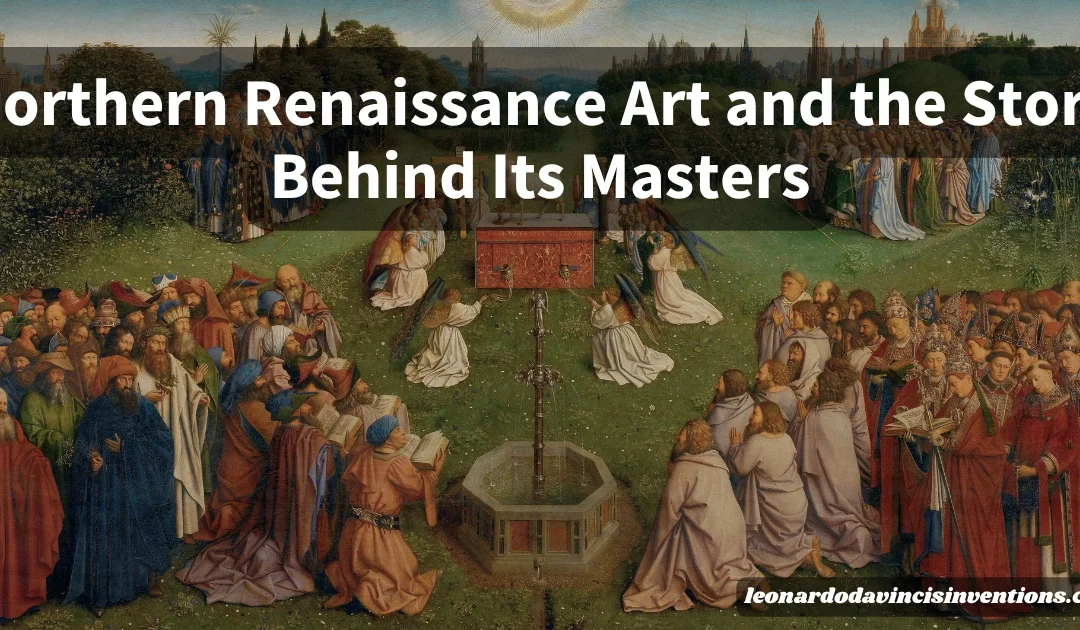
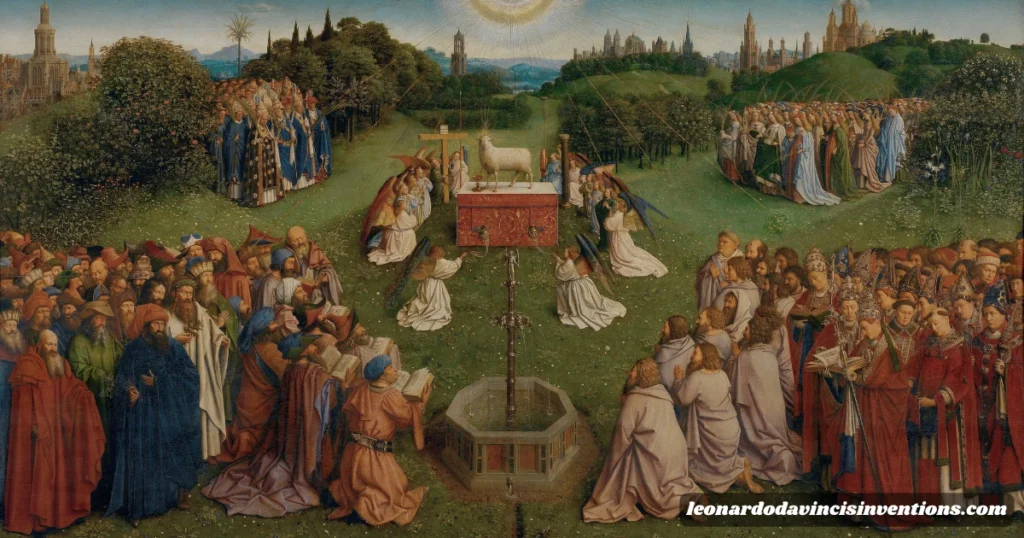
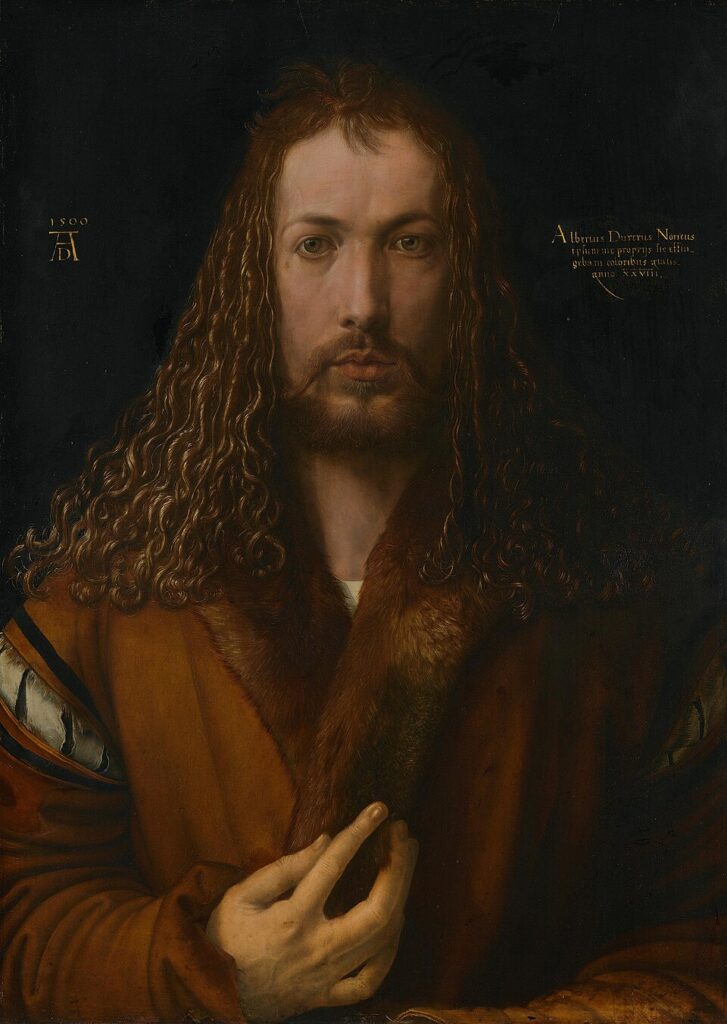
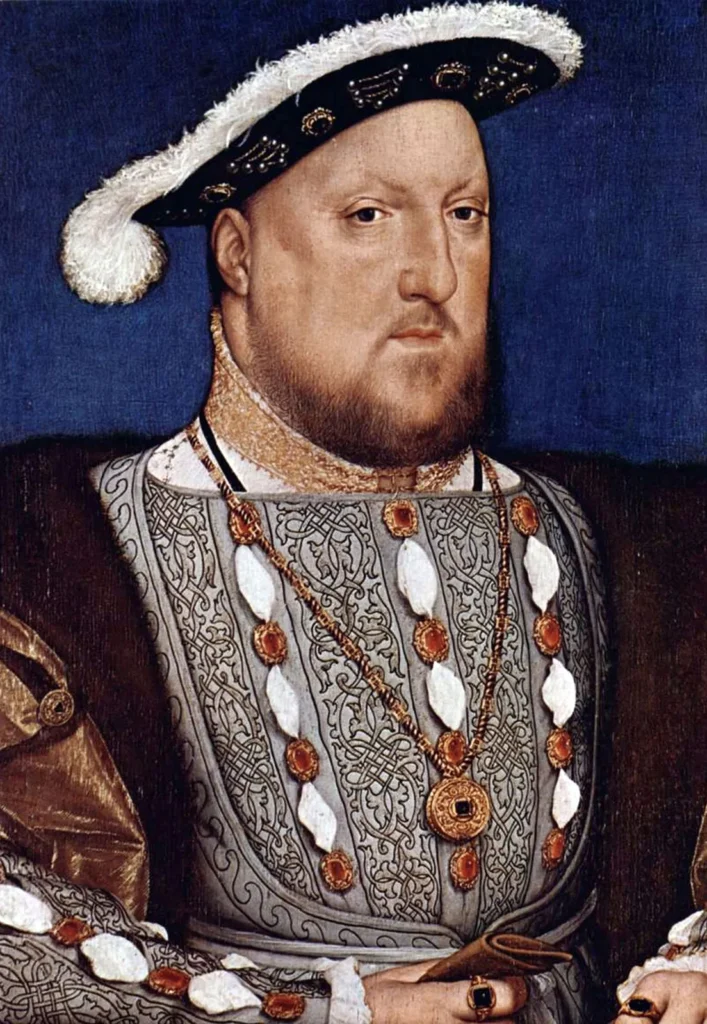
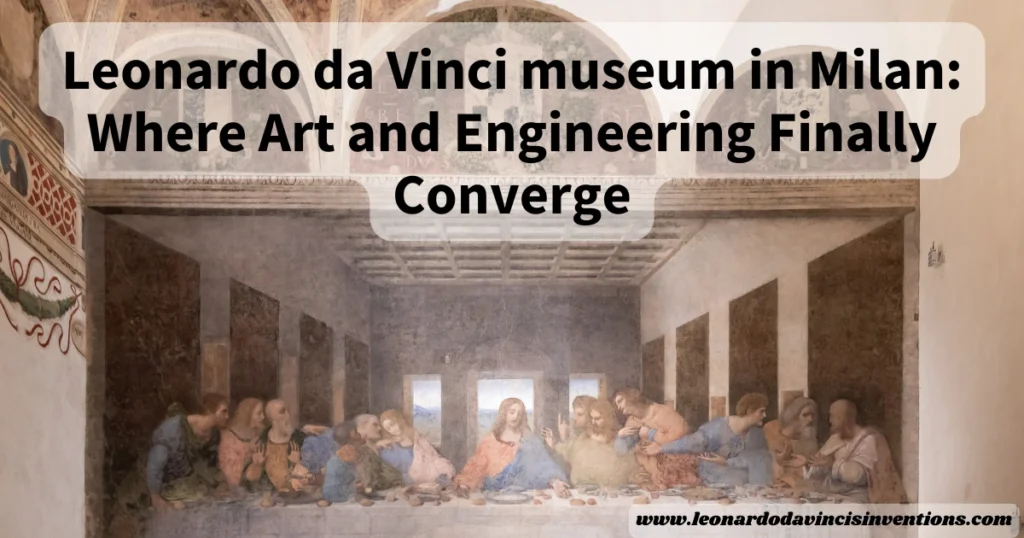
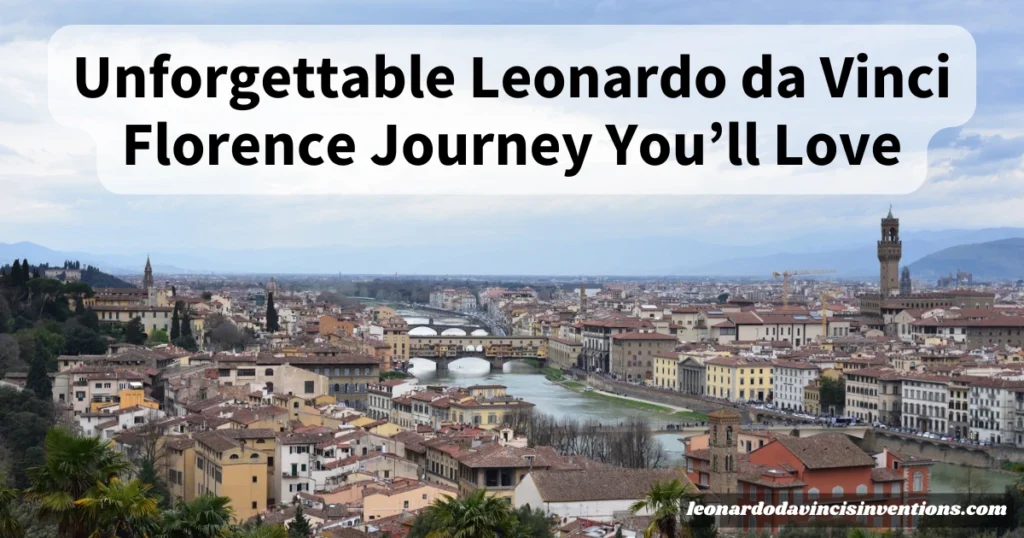

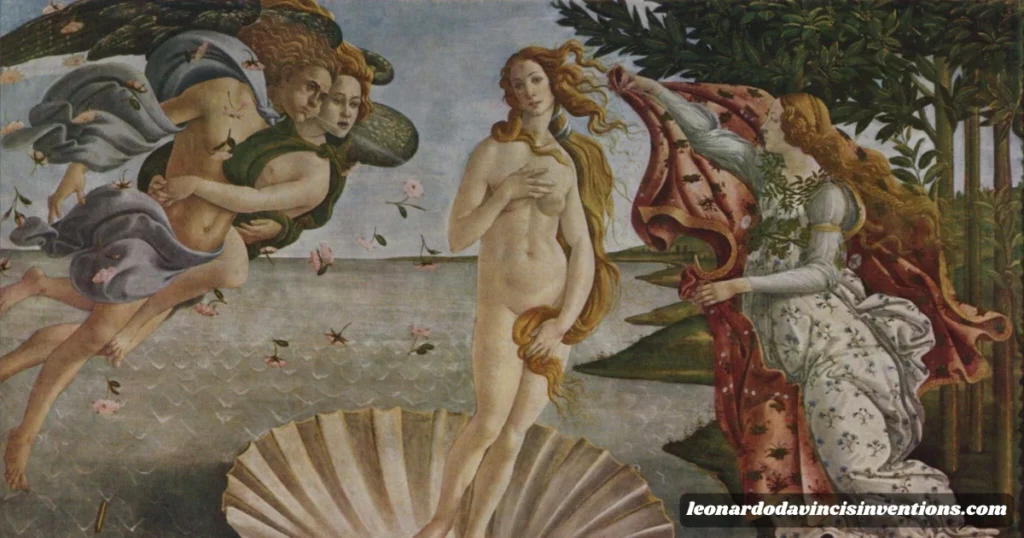
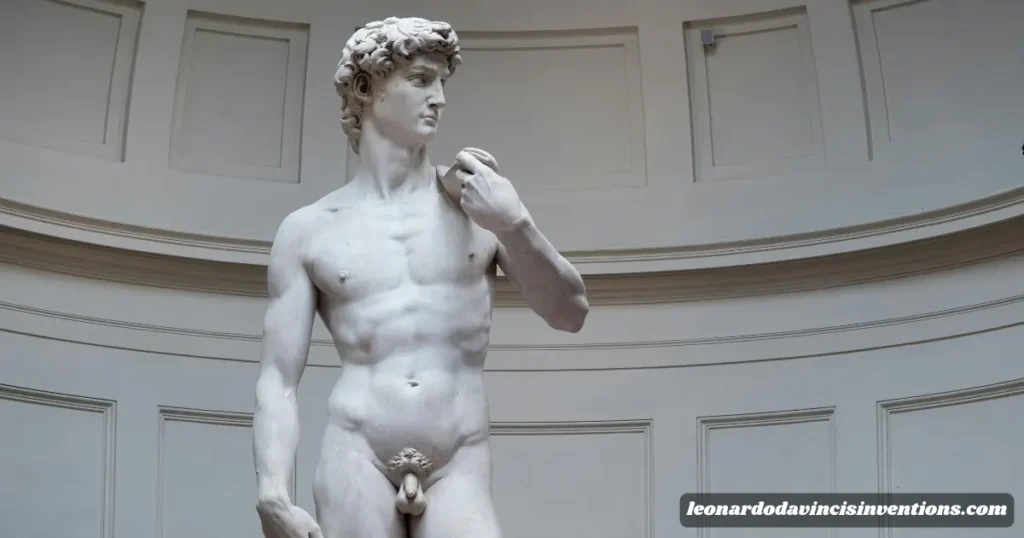
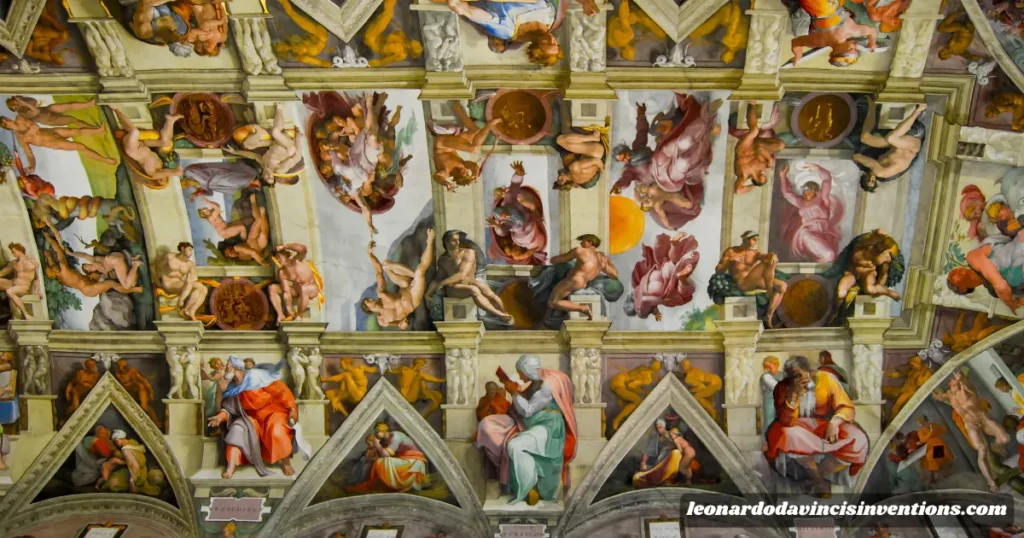
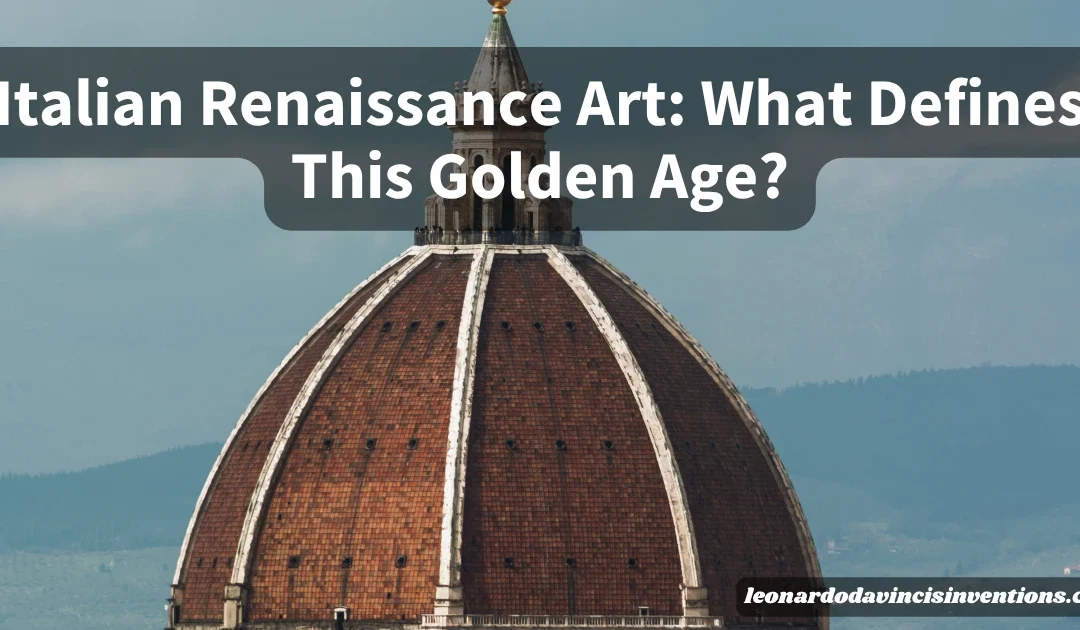
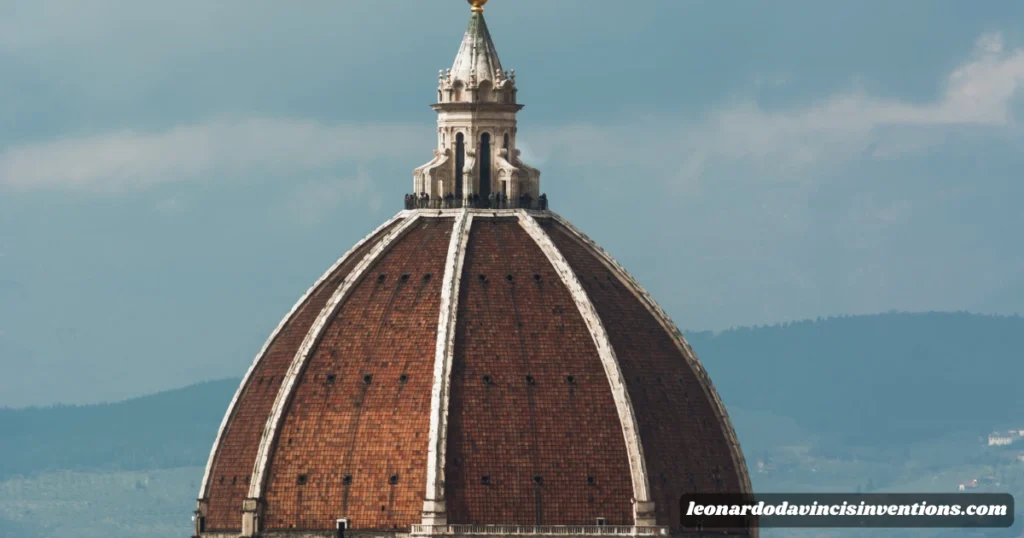
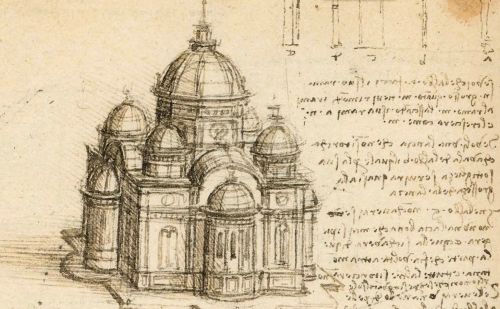
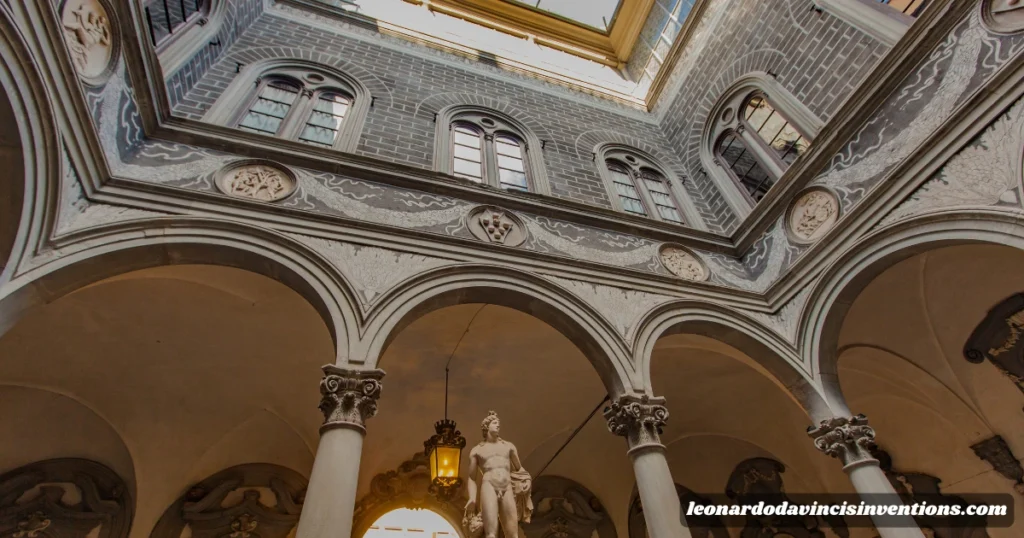
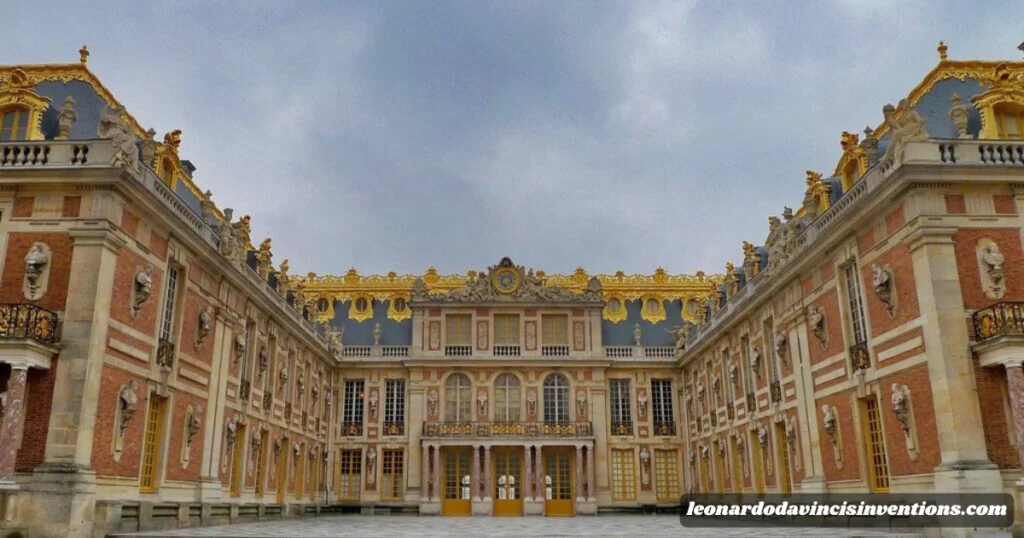
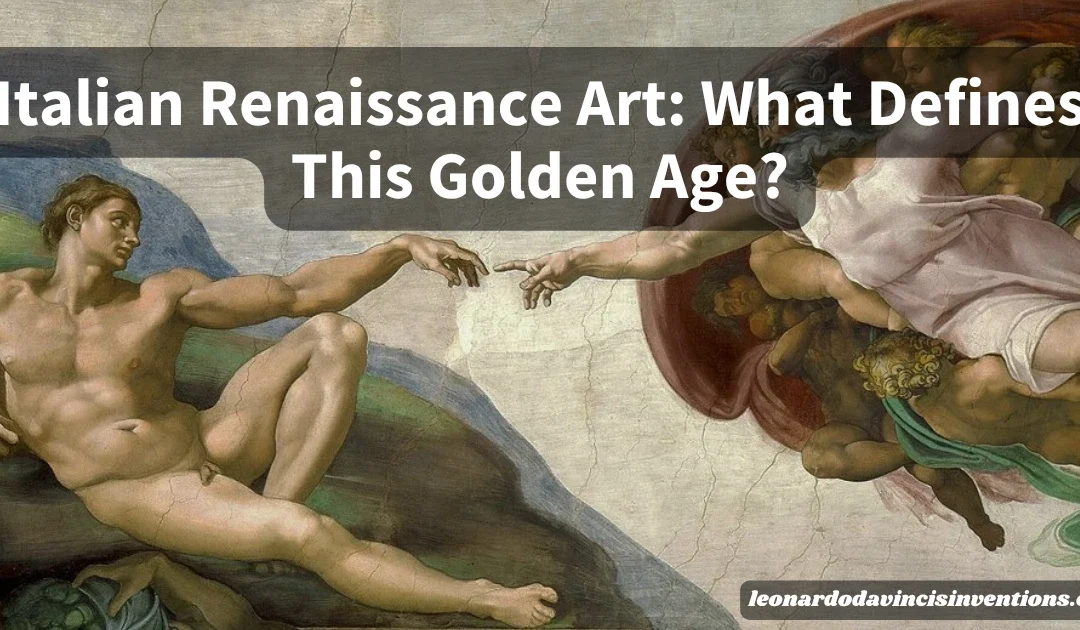
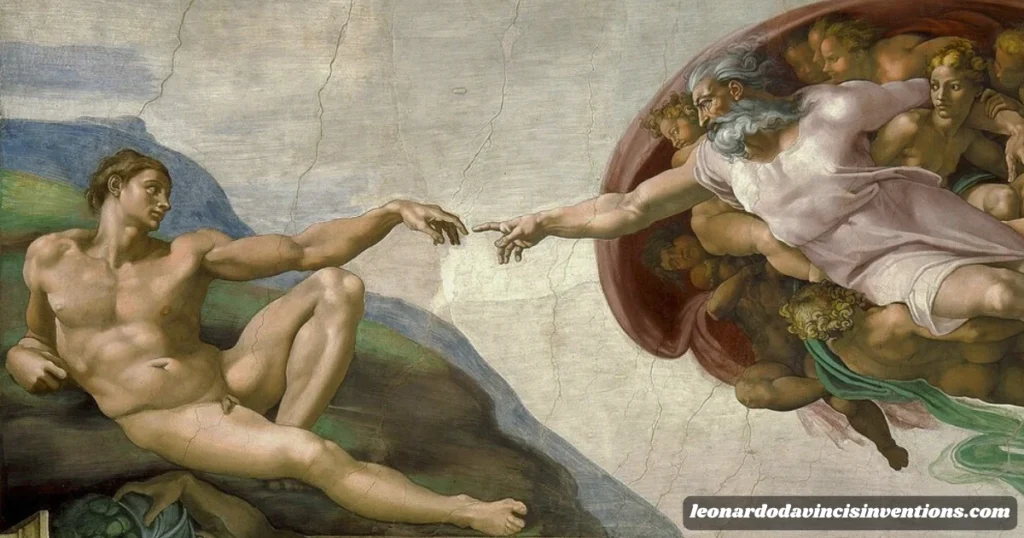
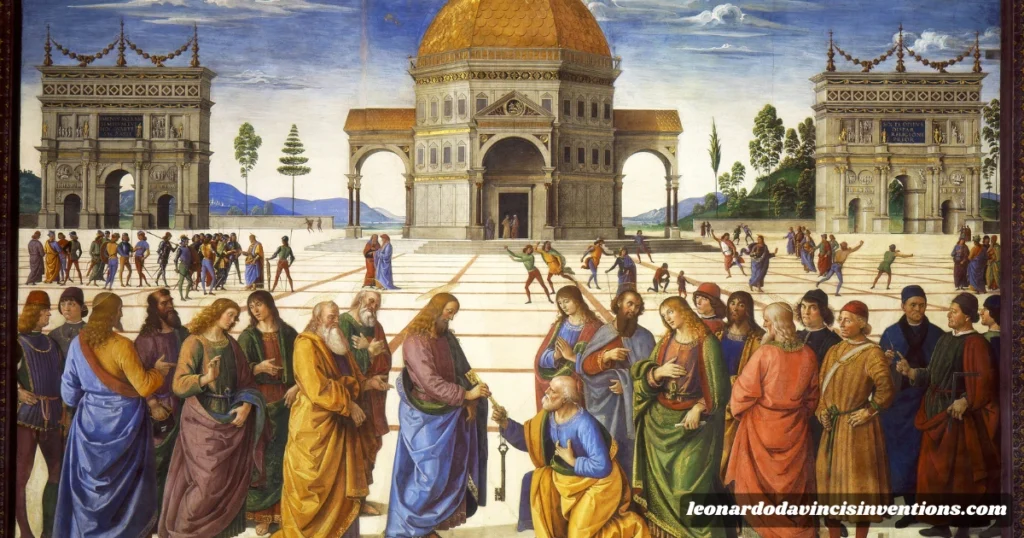
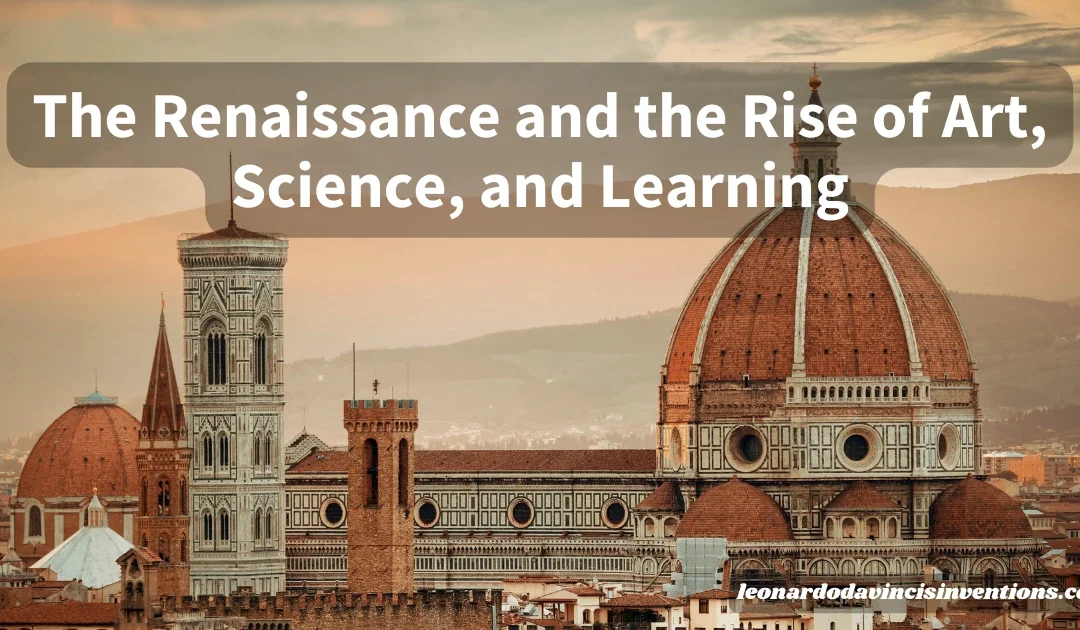
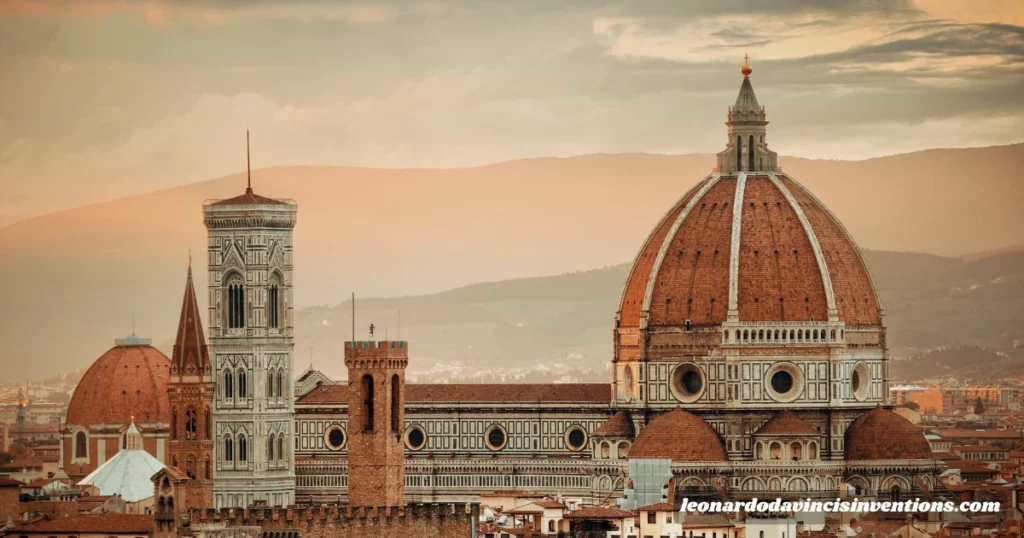
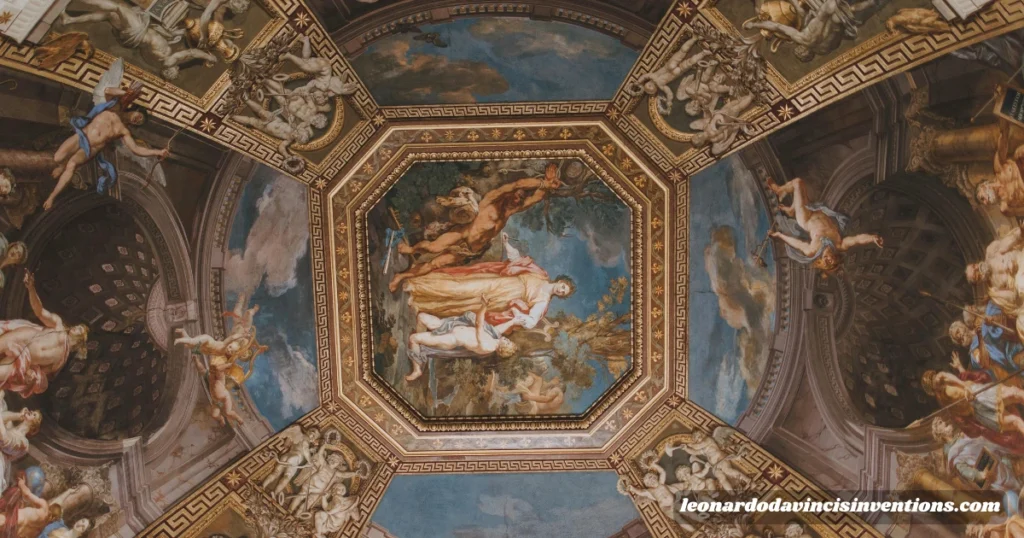
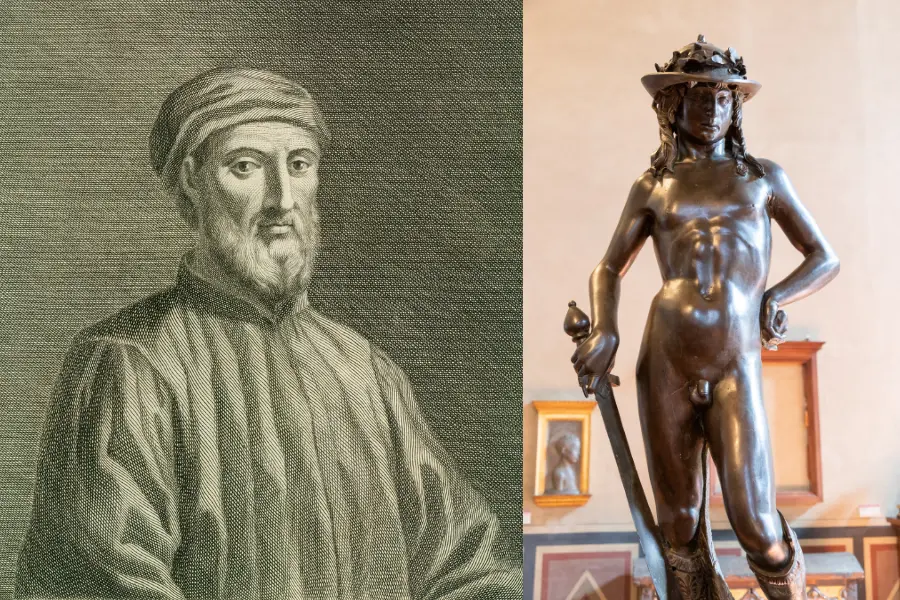
 Leonardo Bianchi is the founder of Leonardo da Vinci Inventions & Experiences, a travel and research guide exploring where to experience Leonardo’s art, engineering, and legacy across Italy and Paris.