
(Last updated: April 2026)
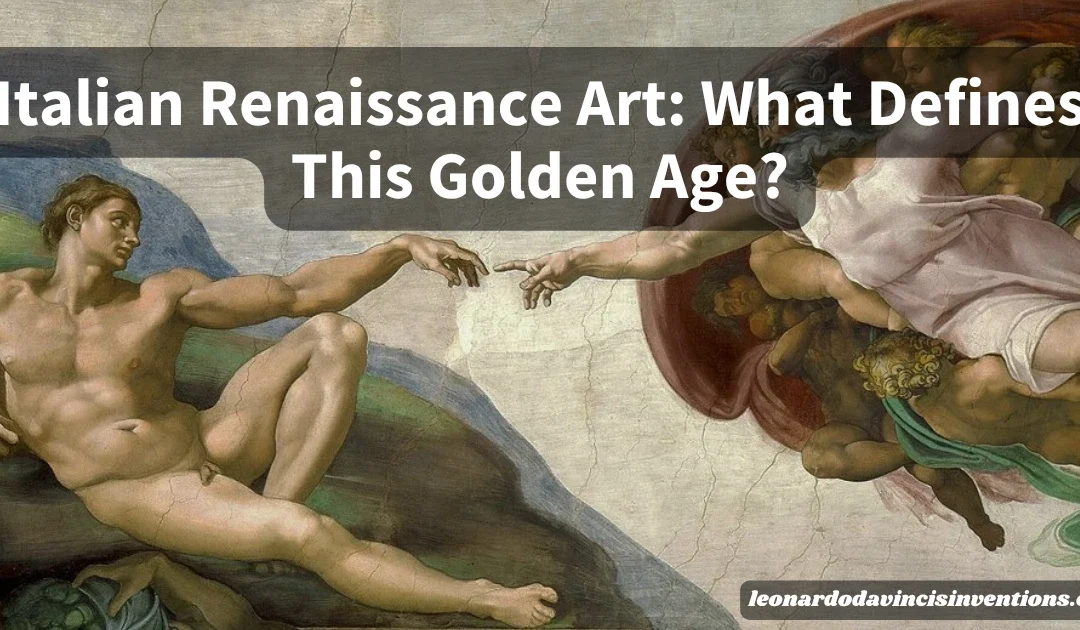
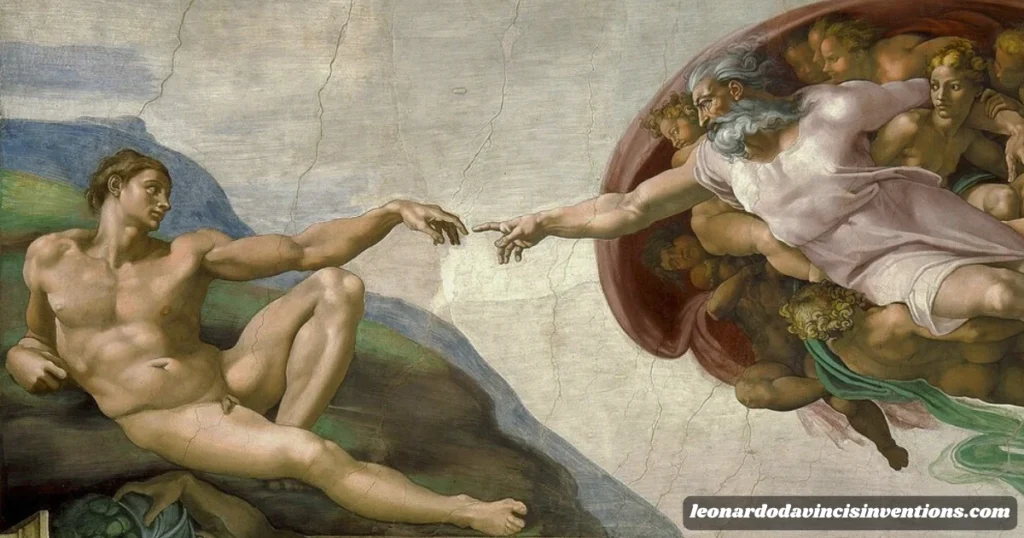
Italian Renaissance art stands as one of the most extraordinary achievements in human history. It emerged from Italian city-states between the 14th and 16th centuries, transforming ideas of beauty, nature, and the human body while redefining what painting, sculpture, and architecture could achieve.
No figure embodies this transformation more completely than Leonardo da Vinci. He was a painter, scientist, engineer, and philosopher rolled into one. His works — from the mysterious Mona Lisa to the awe-inspiring The Last Supper — continue to attract millions of visitors each year to museums and cities across Europe. For historians and travelers alike, Leonardo represents the full possibility of Renaissance genius.
Understanding the Italian Renaissance enriches every visit to a museum, gallery, or historic city. When you know what artists were trying to achieve — and why — a painting becomes far more than a pretty image. It becomes a window into a revolutionary moment in human thought.
This guide explores the world of Italian Renaissance art: its history, its defining characteristics, its greatest masters, and the places where you can still experience its power today.
What Is Italian Renaissance Art?
Italian Renaissance art refers to the painting, sculpture, and architecture created in Italy from about 1300 to 1600, marked by a shift toward realism, emotion, and technical innovation inspired by observation and classical Greek and Roman ideas.
The Historical Context: How the Renaissance Began
The Renaissance did not appear overnight. It grew slowly from a series of social, political, and intellectual changes that transformed Italy between the 13th and 15th centuries.
Why Italy? The Role of City-States and Patronage
Italy in the late Middle Ages was not a unified country. It was a patchwork of powerful city-states — Florence, Venice, Milan, Rome, and others — each competing for prestige and influence. Wealthy merchant families and church leaders became art patrons, commissioning works that would display their power, piety, and taste.
Renaissance art patronage was essential to the movement. Without it, artists like Leonardo, Michelangelo, and Raphael could not have created their masterpieces. The Medici family of Florence, in particular, transformed their city into the cradle of the Renaissance by funding artists, scholars, and architects for generations.
This system of patronage shaped the subjects and styles of Renaissance art. Patrons wanted images that honored religious devotion, celebrated classical learning, and demonstrated the prestige of their families.
From Medieval Art to the Renaissance: How Did Art Change?
Medieval art was largely symbolic. Figures were flat, stiff, and arranged according to spiritual hierarchy rather than realistic proportion. A painting of the Virgin Mary was not meant to look like a real woman — it was meant to convey her holiness through size, gold, and formal composition.
Renaissance artists rejected this approach. Inspired by the rediscovery of ancient texts and sculptures, they began to study the natural world directly. How did light fall on a face? How did muscles look under the skin? How did perspective make a room recede into the distance?
This shift — from symbolic to observational — is at the heart of how art changed during the Renaissance. It was both an artistic and an intellectual revolution.
The Early Italian Renaissance: Pioneers of the New Vision
Early Italian Renaissance art began with artists like Giotto di Bondone, who, in the early 1300s, began giving figures weight, emotion, and three-dimensional presence. Masaccio, a century later, achieved mastery of perspective and light that astonished his contemporaries.
These early pioneers established the foundations on which Leonardo, Michelangelo, and Raphael would later build. Without the experimental spirit of early Italian Renaissance art, the High Renaissance would never have been possible.
Italian Renaissance Art Characteristics: What Made It Revolutionary
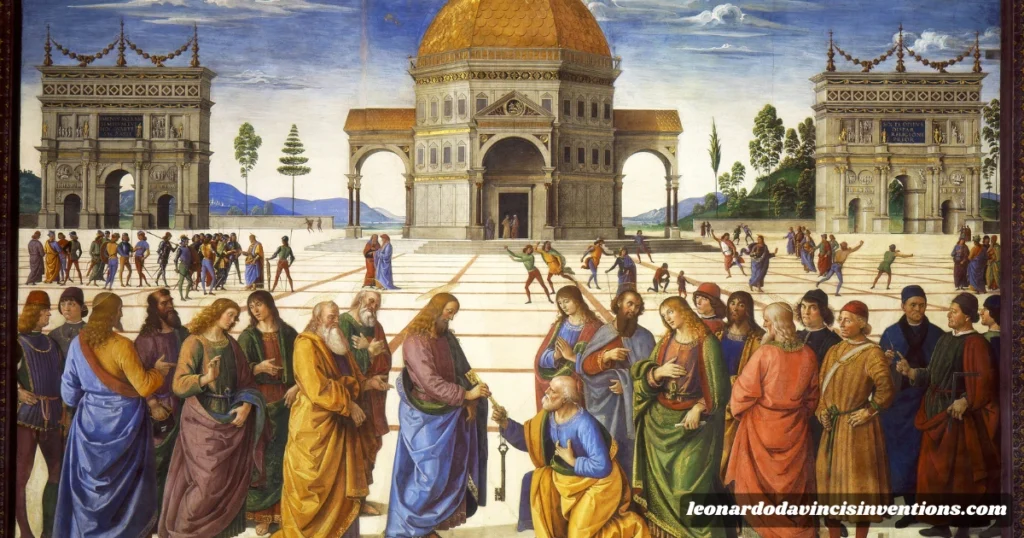
The characteristics of Italian Renaissance art are distinct and recognizable. Once you know what to look for, you will spot them in every major painting and sculpture of the period.
Humanism: Placing People at the Center
One of the defining characteristics of the Italian Renaissance was humanism — a philosophy that placed human beings at the center of intellectual and artistic inquiry. Renaissance artists were fascinated by the human body, human emotion, and human potential.
This is why Renaissance paintings look so alive. Figures breathe, gesture, and express feeling. The Virgin Mary looks like a real mother. A grieving apostle looks genuinely devastated. Humanism transformed religious subjects into deeply human stories.
Perspective, Light, and the Illusion of Space
Among the most important Italian Renaissance painting characteristics is the mastery of linear perspective. Developed by architect Filippo Brunelleschi and codified by Leon Battista Alberti in the early fifteenth century, perspective allowed artists to create convincing three-dimensional space on a flat surface.
Alongside perspective, Renaissance artists studied how light behaved. Leonardo da Vinci perfected the sfumato technique — a soft, smoky blending of light and shadow — that gave his figures an almost living quality. This attention to light and shadow is one of the most recognizable techniques in Renaissance art.
Classical Influence: Learning from Ancient Greece and Rome
The Italian Renaissance characteristics were also shaped by a passionate rediscovery of ancient classical culture. Artists, scholars, and architects studied ancient Roman ruins, sculptures, and manuscripts with enormous enthusiasm.
This classical influence is visible everywhere. Renaissance sculptures like Michelangelo's David echo the idealized human proportions of ancient Greek statues. Renaissance architecture, including the great domes and colonnaded facades of churches, borrowed directly from Roman temples and civic buildings.
The High Renaissance: Leonardo, Michelangelo, and the Peak of Italian Art
The late 15th and early 16th centuries represent the High Renaissance — a brief, brilliant moment when Italian art reached its fullest expression. Three figures above all defined this period: Leonardo da Vinci, Michelangelo Buonarroti, and Raphael Sanzio.
Leonardo da Vinci: Scientist, Artist, and Renaissance Man
Leonardo da Vinci's Renaissance period spanned roughly from the 1470s to his death in 1519. He worked in Florence and Milan before spending his final years in France at the invitation of King Francis I. In that time, he produced some of the most celebrated works in all of Western art.
Leonardo's most famous paintings include the Mona Lisa, now in the Louvre in Paris; The Last Supper, painted on the wall of a Milan convent; the Lady with an Ermine, held in Krakow; and the Virgin of the Rocks, with versions in both Paris and London. Each of these works rewards close attention — the more you know about Leonardo's methods and ideas, the more you see.
Leonardo's notebooks reveal a mind that could not separate art from science. He studied anatomy, optics, geology, botany, and hydraulics with the same intensity he brought to painting. This integration of observation and imagination is what makes him such a compelling subject for historians and travelers today.
Michelangelo and Raphael: The Other Giants of High Renaissance Art
Michelangelo brought the Renaissance tradition of sculpting to its greatest heights. His David, housed in the Galleria dell'Accademia in Florence, is perhaps the most recognized sculpture in the world. His Sistine Chapel ceiling in Rome remains one of the most ambitious painted programs ever attempted.
Raphael, younger than both Leonardo and Michelangelo, synthesized everything the Renaissance had achieved into paintings of extraordinary grace and clarity. His School of Athens fresco in the Vatican is a defining image of Renaissance humanism.
Northern Renaissance Art vs. Italian Renaissance Art
The Italian Renaissance was not the only Renaissance. North of the Alps, artists in the Netherlands, Germany, and France developed their own distinct traditions. Understanding the difference between northern and Italian Renaissance art helps clarify what made each tradition unique.
| Aspect | Italian Renaissance Art | Northern Renaissance Art |
|---|---|---|
| Style | Idealized and harmonious | Detailed and realistic |
| Focus | Perfect proportions and beauty | Everyday life and observation |
| Technique | Smooth surfaces, balanced composition | Precise textures and fine detail |
| Themes | Classical (Greek & Roman influence) | Domestic scenes and symbolism |
| Emotional Tone | Calm, balanced, idealized | Intimate, psychological, expressive |
| Notable Artists | Leonardo da Vinci, Raphael | Jan van Eyck, Albrecht Dürer |
Both traditions were in conversation with each other, and both produced masterpieces of enduring power.
Where to Experience Leonardo's Legacy
The greatest works of Italian Renaissance art are still accessible today, housed in some of the world's finest museums and preserved in the very cities where they were created. A journey through Renaissance Italy is also a journey through the mind of Leonardo da Vinci.
Florence: The Cradle of the Renaissance
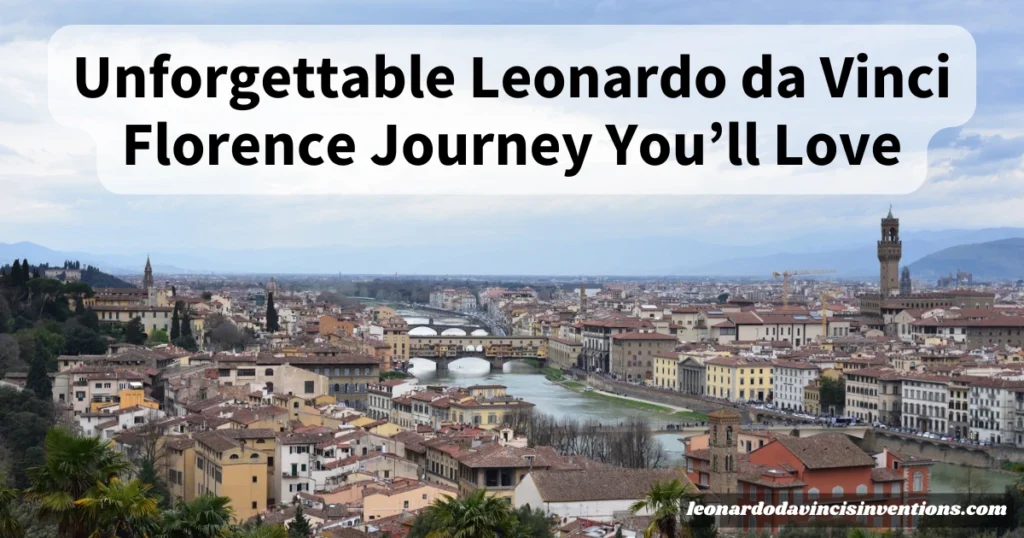
Florence is where the Renaissance began. The Uffizi Gallery holds one of the greatest collections of Renaissance paintings anywhere in the world, including works by Botticelli, Leonardo, Raphael, and Michelangelo. The Galleria dell'Accademia is home to Michelangelo's David.
The city itself is a Renaissance site. Walking through the historic center, visitors encounter the Cathedral of Santa Maria del Fiore with Brunelleschi's great dome, the Piazza della Signoria, and the Palazzo Vecchio — all built or transformed during the Renaissance.
Milan: Where Leonardo Painted The Last Supper
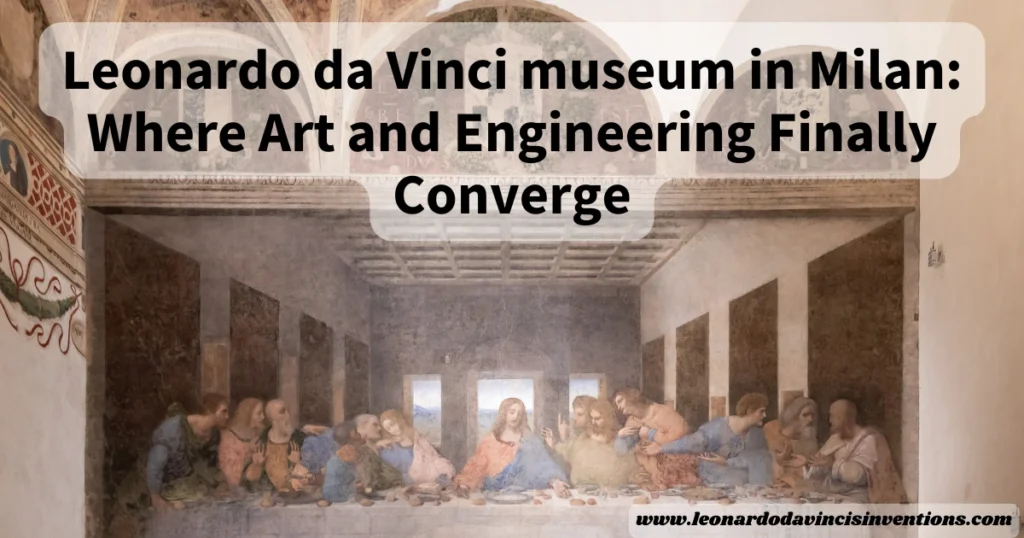
Milan is inseparably linked with Leonardo. He spent nearly two decades in the city serving Ludovico Sforza, producing The Last Supper at Santa Maria delle Grazie — a UNESCO World Heritage Site and one of the most visited Leonardo artworks in the world.
The Ambrosiana Library holds Leonardo's Codex Atlanticus, the largest collection of his drawings and writings. The Pinacoteca di Brera offers another superb collection of Renaissance paintings. Milan rewards visitors who want to go beyond the obvious and explore Leonardo's world in depth.
Paris, Vinci, and Beyond: Following Leonardo Across Europe
The Louvre in Paris holds the Mona Lisa, the Virgin of the Rocks, and a number of Leonardo's other works. It is the single largest repository of his paintings and an essential destination for anyone serious about Italian Renaissance art.
The town of Vinci, Leonardo's birthplace in Tuscany, houses the Museo Nazionale del Cinema and the Museo Leonardiano — dedicated Leonardo museums that trace his life, work, and inventions through models, reproductions, and archival materials.
Rome offers the Vatican Museums, the Sistine Chapel, and Raphael's Stanze — frescoes that represent the High Renaissance at its most ambitious. Together, these cities form a circuit of Renaissance experience that no other region on earth can match.
Experience Leonardo's World in Person
Seeing Renaissance art in photographs is one thing. Standing in front of the original is something else entirely. The scale, texture, and presence of these works have to be experienced to be fully understood.
Planning a Renaissance Art Journey
A well-planned itinerary can take you from Florence to Milan to Rome in a single trip, allowing you to trace the full arc of the Italian Renaissance from its early experiments to its High Renaissance peak. Each city offers its own character, and each reveals a different dimension of Leonardo's world.
Visitors to Milan can book timed entry to The Last Supper well in advance — places sell out months ahead, particularly in summer. The Uffizi in Florence also benefits from advance booking. Planning ahead ensures you can spend meaningful time with the works rather than rushing through crowded galleries.
Leonardo Museums and Exhibitions
In addition to the major galleries, a number of Leonardo museums offer interactive and educational experiences specifically designed around his inventions, drawings, and ideas. The Museo Nazionale della Scienza e della Tecnologia Leonardo da Vinci in Milan, for example, contains one of the finest collections of Leonardo-related exhibits in the world.
Temporary Leonardo exhibitions travel regularly to major cities around the world, bringing original drawings, reproductions of paintings, and models of his machines to new audiences. Checking current exhibition schedules before traveling can add unexpected discoveries to any Renaissance itinerary.
Planning to explore Leonardo da Vinci’s world in 2026?
| Exhibition / Museum | Location | Dates | What to See | Best For | Booking Needed |
|---|---|---|---|---|---|
| Leonardo da Vinci – 500 Years of Genius | Miami, USA | Until April 2026 | Immersive exhibits, interactive displays, reconstructed inventions | Families, interactive learners | Recommended |
| DaVinci The Exhibition | Detroit, USA | Oct 2025 – May 2026 | 65+ machine models, artwork studies, hands-on STEM displays | Students, engineering fans | Recommended |
| Leonardo da Vinci: Art & Science | Côte d’Azur, France | Feb – June 2026 | Art-science exhibits, cultural programs, educational displays | Art lovers, cultural travelers | Recommended |
| Leonardo da Vinci Museum (New Opening) | Pueblo, USA | Opening Spring 2026 | Permanent interactive museum, invention-focused exhibits | Families, year-round visitors | Optional |
👉 Tip: Many Leonardo exhibitions sell out quickly—booking in advance ensures a smoother, more enriching visit.
Guided Tours and Deep Dives
Guided tours led by specialists in Renaissance art and history transform what might otherwise be a quick look into a genuinely immersive experience. Expert guides can explain the historical context of a painting, reveal details invisible to the untrained eye, and connect individual works to the broader story of the Renaissance.
For travelers who want to go deeper, themed tours focused specifically on Leonardo — covering his art, science, notebooks, and cities — offer a uniquely coherent way to explore his legacy. These tours operate in Florence, Milan, Vinci, and beyond.
Final Thoughts
This post is all about Italian Renaissance art from its historical origins to its enduring legacy in Europe's museums and cities. We traced the development of Renaissance paintings from the flat symbolism of the Middle Ages to the breathtaking realism of Leonardo, Michelangelo, and Raphael.
Leonardo da Vinci remains the defining figure of this era because he embodied everything the Renaissance aspired to. He was not content simply to paint beautiful pictures. He wanted to understand the world — how light moved, how water flowed, how the human body was constructed — and to bring that understanding into his art.
The Italian Renaissance was a moment when human beings believed, perhaps for the first time, that they could understand and improve everything around them. Art, science, architecture, and philosophy were not separate disciplines — they were all expressions of the same restless intelligence.
This same spirit of innovation extended beyond painting and sculpture into the built environment, where Renaissance architecture reshaped cities with harmony, proportion, and classical inspiration.
FAQs about Italian Renaissance Art
Italian Renaissance art is defined by a revival of classical Greek and Roman ideas, a focus on realism and observation of nature, and a human-centered (humanist) approach to subjects. Artists emphasized proportion, perspective, and the accurate depiction of the human body, creating works that were more natural and lifelike than earlier medieval art.
The three great artists of the Italian Renaissance are Leonardo da Vinci, Michelangelo, and Raphael, often called the “High Renaissance masters.” They set new standards in painting, sculpture, and architecture through their technical skill, innovation, and artistic vision.
In addition to Leonardo da Vinci, Michelangelo, and Raphael, Sandro Botticelli is often included as a fourth major figure. These artists represent different phases of the Renaissance and contributed significantly to its development in painting and artistic techniques.
There is no single agreed-upon “greatest” artist, but Leonardo da Vinci, Michelangelo, and Raphael are most often considered the leading figures. Many historians highlight Leonardo for his combination of artistic genius and scientific curiosity, making him a defining symbol of the Renaissance ideal.
Two major themes of Italian Renaissance art were religious subjects (such as biblical scenes) and humanism, which emphasized human experience, beauty, and individual potential. Artists also explored classical mythology inspired by ancient Greece and Rome.
Five key characteristics of Renaissance art include linear perspective, realistic anatomy, humanism, use of light and shadow (chiaroscuro), and classical influence from ancient Greece and Rome. When combined, these elements created more natural, balanced, and three-dimensional artworks.
Related Post You May Like

Disclosure: This page may contain affiliate links. If you choose an experience through them, it helps support the site at no extra cost to you.
 Leonardo Bianchi is the founder of Leonardo da Vinci Inventions & Experiences, a cultural travel guide helping visitors explore Leonardo da Vinci’s art, inventions, and legacy across Italy and Paris.