The Mark I Tank was the first operational tank in military history. This article will guide you through its development, design, and impact on World War I.
The Mark I Tank debuted during the Battle of the Somme in 1916, overcoming the harsh challenges of trench warfare and introducing a new era in combat.
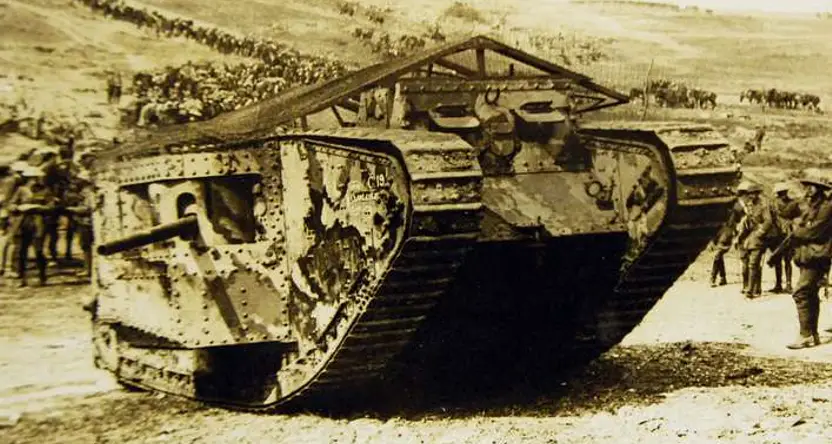
This innovative armored vehicle featured a distinctive rhomboidal shape, which allowed it to traverse rugged terrains, including trenches and barbed wire.
Equipped with a 6-pounder cannon and side machine guns, the Mark I became a formidable presence on the battlefield, transforming military tactics globally.
Explore how the Mark I changed everything in armored warfare and beyond to understand the full story behind its creation and its profound impact.
Development and Production
The Mark I Tank, known for its groundbreaking design, became essential to warfare during World War 1. Its development involved various key figures and manufacturers; many of these tanks were produced for military use.
Origins and Design
The origins of the Mark I Tank date back to the Landship Committee, which Lieutenant Walter Wilson and William Tritton led. They aimed to create a machine that could cross trenches and rough terrain.
The design emerged from issues identified in their earlier project, Little Willie, which struggled with movement and trench-crossing abilities.
To solve these problems, they developed a rhomboid shape and added extended tracks, improving its ability to navigate rugged terrains effectively.
The tank was also equipped with male and female variants, distinguishing them by armament types. This effort highlighted a significant innovation in military technology, marking the beginning of armored warfare.
Manufacturers and Numbers
Significant contributions from British companies were made to the production of the Mark I Tank. William Foster & Co. was critical in manufacturing these tanks after the initial prototype, known as “Mother” or “Big Willie.”
Around 150 Mark I tanks were built during its time, with variations in armaments and specific design features. These tanks first saw action on 15 September 1916 at the Battle of Flers-Courcelette, marking their debut in combat.
As more were produced, tanks became iconic parts of British military efforts during World War I, influencing future tank designs and strategies used by military forces worldwide.
Technical Specifications
The Mark I tank, introduced by the British in World War I, featured innovative elements such as advanced armor and a powerful engine, which were crucial for its operational success in the war.
Armor and Armament
The Mark I tank’s armor, which ranged from 6 to 12 mm in thickness, was designed to protect it against small arms fire and shrapnel.
This level of protection was vital for withstanding the conditions encountered during battles like the Battle of the Somme. The tank featured both male and female variants.
The male variant was equipped with two 6-pounder naval guns and four .303-inch Hotchkiss M1909 machine guns, while the female counterpart carried six Vickers .303 machine guns.
This dual variant design was a tactical response to varying combat roles, allowing the British Mark I tank to engage both infantry and fortified enemy positions effectively.
Engine and Mechanical Systems
The Mark I was powered by a Daimler 6-cylinder petrol engine producing 105 horsepower. This engine enabled the tank to reach up to 3.7 mph on rough terrain, typical for World War 1 tanks.
The transmission system required a crew member to steer using a combination of brakes and gears. The tank’s tracks were a new development, essential for navigating the muddy and uneven battlegrounds.
Despite mechanical challenges and a high crew workload, the British Mark I tank 1916 proved its worth as a pioneering armored vehicle during WW1.
Operational History
The Mark I Tank had a significant impact on WW1 combat. Its introduction marked a turning point in military tactics, paving the way for advances in armored vehicles in the following years.
First Deployment
The Mark I Tank was first deployed on September 15, 1916, during the Battle of Flers-Courcelette, part of the Somme Offensive. This battle marked the first time tanks were used in combat, aiming to break the trench warfare stalemate.
Out of 49 tanks shipped, only 32 engaged effectively due to mechanical failures. Despite these setbacks, the deployment showcased the tank’s potential to traverse rugged terrain and disrupt enemy lines.
The use of tanks during WW1 represented a bold shift in military strategy and British heavy tanks of the First World War.
Battlefield Performance
On the battlefield, the Mark I Tank faced numerous challenges, including mechanical issues and vulnerability to artillery. Its tracks allowed it to cross trenches, but mud and rough terrain often caused breakdowns. The slow speed and limited armor made it susceptible to enemy fire.
Operated by an eight-person crew, the tank’s internal conditions were harsh, with extreme heat and fumes. Yet, the Mark I tank model demonstrated the potential of armored vehicles as effective tools in warfare by achieving surprise and confusion among German forces.
Modifications and Variants
Following its initial deployment, the Mark I Tank underwent several modifications to improve performance. Changes included adjustments to the armor and mechanical systems to enhance reliability.
Variants known as “Male” and “Female” tanks featured different armaments; Males had two 6-pounder naval guns, while Females were equipped with machine guns.
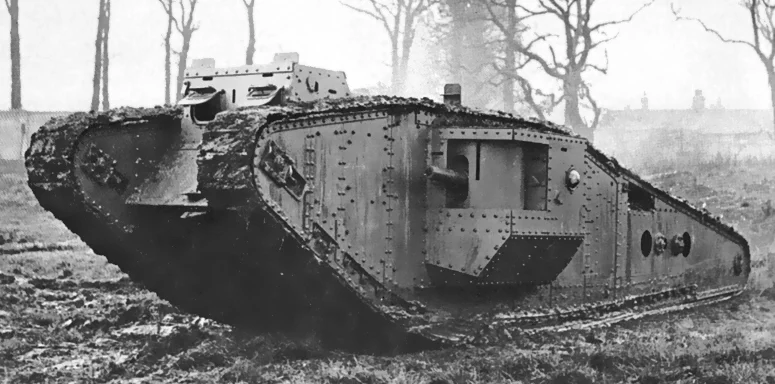
Mark IV tank in World War I
Further developments led to the Mark I Tank being succeeded by improved models, such as the Mark IV, which addressed many initial shortcomings and significantly enhanced battlefield effectiveness.
Comparing WW1 Tanks
The evolution of tanks during World War I was a testament to the rapid advancement in military technology, marked by incremental improvements and strategic variations. Among the most significant of these were the British Mark series tanks and the German tanks.
The Mark Series Tanks
Model
Key Features
Use in Combat
Mark I
First armored vehicle designed for frontline combat.
Used in World War I
Mark II
Slight modifications to the Mark I. Primarily used for training.
No combat usage
Mark III
Improved armor protection and better living conditions for the crew.
No combat usage
Mark IV
Thicker armor, improved fuel systems, and more reliable weaponry.
Used in World War I
Mark V
New transmission system for easier control and increased speed.
Used in World War I
Mark VI
Designed, but never made it past the prototype stage.
No combat usage
Mark VIII ‘Liberty’
Thicker armor, more powerful engine, a collaborative effort with America.
No combat usage during World War I, but used later
Impact on Warfare
The Mark I Tank revolutionized military tactics during World War I, significantly changing battlefield strategies and future tank designs. Its introduction marked a pivotal moment in mechanized warfare with long-lasting impacts on tactics and technology.
Tactical Doctrine Evolution
The Mark I Tank forced a dramatic shift in military tactics. Before its debut, trench warfare dominated World War I. No Man’s Land was a perilous zone, nearly impossible to cross without heavy casualties.
Introducing the Mark I offered a new way to traverse this deadly terrain. Its ability to withstand small arms fire and barbed wire made it an asset in breaking the stalemate of trench warfare.
The British forces could outmaneuver entrenched enemy lines by integrating tanks with infantry advances. This tactic marked the first steps toward modern armored warfare.
The impact of tanks during WW1 forced military strategists to rethink combat, leading to today’s sophisticated combined arms tactics.
Influence on Later Tank Designs
The Mark I Tank set a precedent for future tank development. Its design, featuring tracks to navigate rough terrain and armor for protection, became standard in later models.
Although primitive by today’s standards, its core design elements are evident in tanks that followed. The Mark I’s success accelerated the advancement of tank technology. It influenced later models like the British Mark V and others worldwide.
The concept of supporting infantry with armored vehicles took root, shaping future innovations in armored warfare. For more insights into the legacy of the Mark I Tank, consider its transformative role in military technology.
The German WW1 Tank
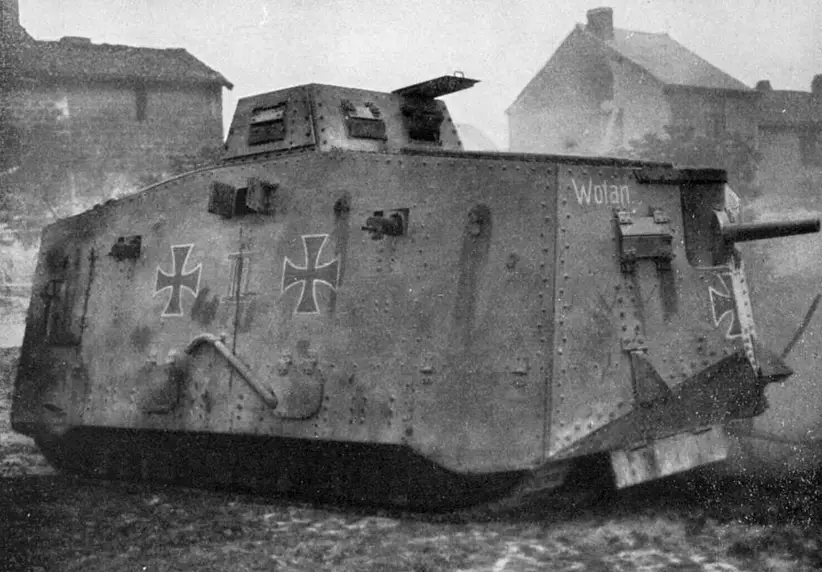
German A7V tank in World War I
Germany’s response to the British Mark series was the A7V.
Compared to the Mark I tank, the A7V was significantly faster, reaching speeds of up to 9 mph. It was also equipped with a main gun and six machine guns, offering a formidable mix of firepower.
However, Mark I and its successors had the advantage of being able to traverse difficult terrain due to their caterpillar track design. The A7V, in contrast, struggled with trenches and uneven landscapes.
From the imposing Mark I tank to the late arrival of Mark VIII, each iteration reflected a continuous process of learning and adaptation. They stood as symbols of the drive for innovation, much like the inventions of Leonardo da Vinci that pushed the boundaries of what was thought possible.
Similarly, the German A7V was a clear testament to the speed with which nations adapted to the changing nature of warfare during this period.
Looking at Tanks Throughout History
History has seen tanks evolve from the rudimentary designs of World War I to the technologically advanced machines of today. While there have been many formidable tanks, there have also been those that were less successful on the battlefield.
The Weakest Tanks
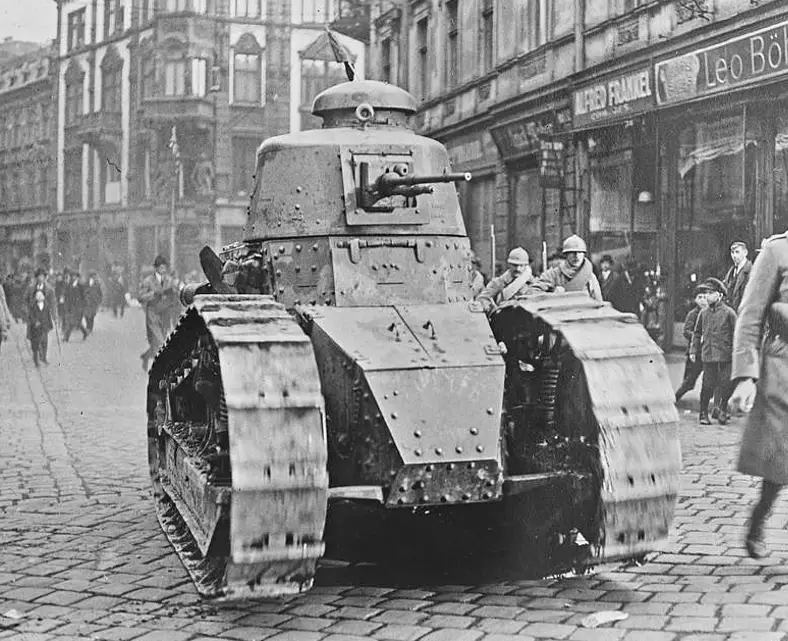
In WW1 tanks, the French FT-17 often comes to mind when discussing weaker models.
While revolutionary in its own right for introducing the classic turret design, the FT-17 was lightly armored and armed only with a machine gun or a light cannon, making it less effective against fortified positions and virtually defenseless against other tanks.
French FT-17 tank in World War I
Beyond World War I, the Italian L3/35 of World War II is often cited as one of the weakest tanks ever produced.
Despite its impressive mobility, the L3/35 was severely under-armored and under-gunned. Its twin machine guns provided little threat to enemy tanks or fortified positions.
The Most Effective Tanks
Soviet T-72 tank in World War II
The T-34, a Soviet tank from World War II, is often hailed as one of the most effective.
It combined a robust design with wide tracks (ideal for the Eastern Front’s harsh terrain), a powerful 76.2mm gun, decent speed, and sloped armor that increased the tank’s defensive capabilities.
The T-34 was a testament to the effectiveness of straightforward design and mass production, and it played a crucial role in the Soviet Union’s defensive and offensive operations.
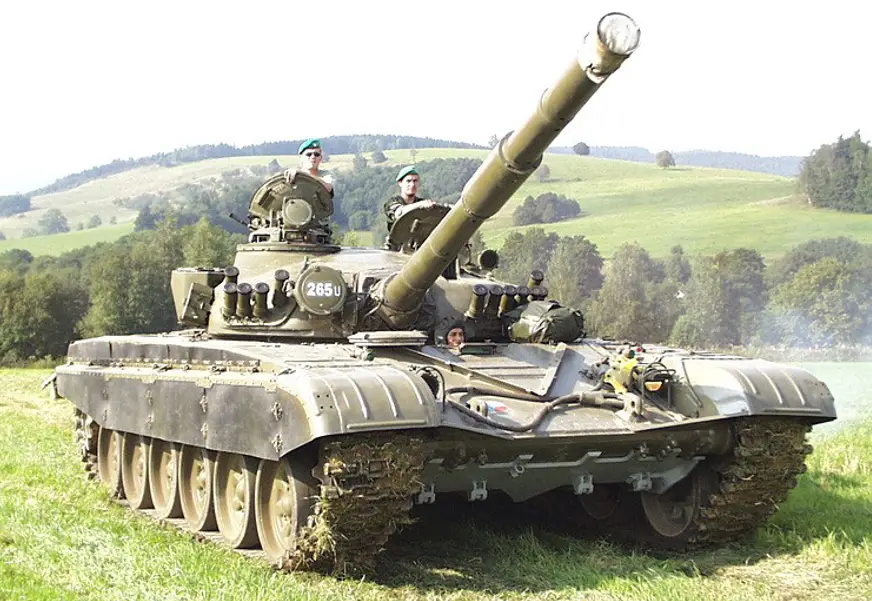
Modern tanks in the post-WWII era, such as the T-72, stand out as one of the most effective tanks in the Soviet Union. With over 20,000 units produced since its introduction in the late 1960s, the T-72 boasts a powerful 125mm smoothbore gun, composite armor, and a compact design, making it one of history’s most widely used tanks.
The analysis of tank designs, from the weakest to the most effective, mirrors the trajectory of human innovation.
Each model, regardless of its success or failure, represents a stepping stone towards progress, much like how Leonardo da Vinci’s creations helped shape the future of human invention.
Final Thoughts
The Mark I Tank was a groundbreaking innovation in military technology during World War I. It represented the first operational combat tank, fundamentally changing the dynamics of warfare.
Designed to overcome the challenges of trench warfare, the Mark I broke new ground in armored vehicle design.
A revolutionary feature of the Mark I was its tracked design, which allowed it to cross difficult terrain. This made it an essential tool in breaking the stalemate on the Western Front.
The Mark I served as a model for future tank development by introducing armor and mobility.
Key Takeaways:
Tracked Design: Enabled better movement across rough and muddy terrains.
Impact on Warfare: Paved the way for modern armored warfare.
Frequently Asked Questions
The Mark I Tank was the first combat tank used in warfare, marking a significant development in military technology. Despite its groundbreaking design, the Mark I faced limitations that influenced future improvements.
Are there any Mark 1 tanks left?
Very few Mark I tanks remain today. Most have been lost, but a couple are preserved in museums.
Was the Mark 1 tank effective?
The Mark I Tank had mixed effectiveness. It could cross trenches but often faced mechanical issues.
What was the worst tank in WW1?
Among WW1 tanks, the French Schneider FT-17 often received criticism for its poor performance and mechanical failures.
What is the difference between the Mark I and the Mark IV tank?
The Mark IV featured improvements over the Mark I. These include better armor and a more reliable powertrain.
What is the rarest tank in the world?
The Char B1 and other prototypes from the interwar period are considered among the rarest tanks because they were produced in limited numbers.
How fast could the Mark 1 tank go?
The Mark I Tank reached a top speed of about 4 miles or approximately 6.4 kilometers per hour.
Why were tanks unsuccessful in WW1?
Tanks in WWI faced mechanical unreliability, slow speeds, and difficulties in rough terrains.
How many Mark 2 tanks are left?
Very few Mark II tanks survive today. Only a handful are in museum collections.
What was the best tank in WW1?
The Mark IV tank was the most extensively used tank during World War I, with the Mark V and FT tanks also demonstrating significant effectiveness.
How many German Tiger 1 tanks are left?
Just a few German Tiger I tanks remain. They are preserved in museums around the world.
Modern tanks are a crucial component of military strength and technological advancements. When deciding which modern tank is the best today, various factors such as firepower, protection, and mobility should be considered.
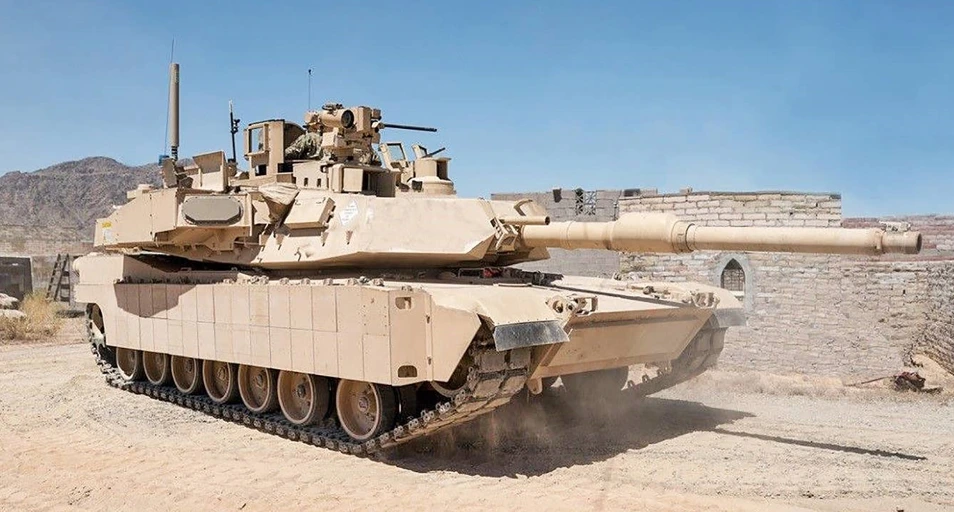
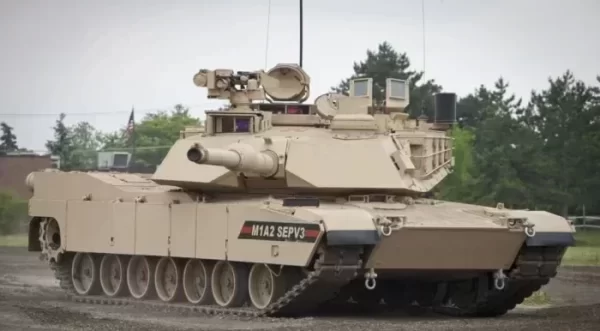
The Abrams M1A2 SepV3 has advanced features like improved communication systems and active protection capabilities.
Tanks such as the German KF51 Panther and the Russian T-14 Armata also rank among the top contenders in today’s military landscape.
Each of these machines showcases impressive engineering and battlefield readiness. These tanks represent the pinnacle of modern military technology, making it worthwhile to explore the features that set them apart.
If you are interested in military technology, this article will explain why these tanks lead the field. The article will clearly understand which modern tanks dominate today’s battlefields by examining their strengths.
Evolution and Role of Modern Tanks
Modern tanks have transformed significantly over the years, serving crucial roles on the battlefield. They reflect advancements in technology and military strategy, impacting how conflicts are managed and won.
Historical Development
The evolution of modern tanks began with the Mark I tank, which debuted during World War I. Early tanks emphasized armored protection and mechanized movement across rough terrains.
As technology advanced, WWII saw tanks becoming faster and more powerful.
Today’s modern-day tanks have enhanced firepower and sophisticated targeting systems. They incorporate lightweight materials, increasing mobility without sacrificing defense.
Prominent tanks such as the M1 Abrams from the United States and the Leopard 2 from Germany showcase these innovations.
Tanks have evolved from slow-moving war machines to rapid-response units capable of striking with precision.
Contemporary Use
Today, modern battle tanks play a pivotal role in military operations. They are crucial for ground assaults, providing robust firepower and protection for troops.
For example, modern US tanks, like the M1 Abrams, are known for their combat effectiveness and versatility in diverse environments.
Modern tanks are not just about power; they integrate advanced technologies such as GPS navigation and automated control systems. Nations like Russia and China continuously develop sophisticated models to maintain strategic advantages.
As warfare evolves, the role of modern tanks adapts, proving their integral presence in both offensive and defensive strategies on the battlefield.
Design and Technology
Modern tanks focus on operational efficiency, such as protection and firepower
Modern tanks are a marvel of engineering. They combine advanced materials and cutting-edge technology to dominate the battlefield.
These machines focus on superior protection, adequate firepower, agility, and crew comfort to ensure peak operational efficiency.
Armor Systems
Modern military tanks utilize composite armor that enhances protection while minimizing weight. This armor often consists of layered materials like ceramics, steel, and Kevlar, designed to absorb and deflect projectiles.
Reactive armor adds a layer of safety by exploding outward to neutralize incoming threats. Advances in modern us tanks demonstrate exceptional armor systems, such as the M1 Abrams, which uses depleted uranium for enhanced defense levels.
Weaponry
Cutting-edge weaponry in modern tanks underscores their strategic value. These tanks typically feature a main gun, often a smoothbore cannon, capable of firing armor-piercing rounds and guided missiles.
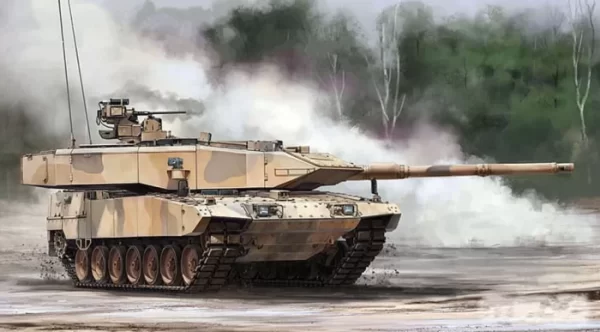
These firepower capabilities are complemented by machine guns for infantry defense. The Leopard 2A7, a prime example of modern German tanks, showcases a highly effective Rheinmetall 120mm gun optimized for various operations.
Mobility and Power
Modern-day tanks require potent engines to ensure quick maneuverability and strategic advantage. Turbine and diesel engines are standard, offering a blend of speed and reliability.
With advanced suspension systems, these tanks maintain stability over rough terrain. Russian modern tanks like the T-14 Armata are known for their mobility and speed, showcasing improvements in engines and transmission systems for optimal performance.
Crew Comfort and Support Systems
Modern tanks integrate ergonomic designs and technology for improved crew comfort. Climate control, padded seats, and advanced communication systems enhance the operational environment.
Systems like night vision, GPS, and automated tracking allow crews to remain effective during missions. The advancements in Japanese modern tanks, such as the Type 10, highlight innovations in crew-centric systems, ensuring efficiency and comfort during extended operations.
Notable Modern Tanks
US M1A2 SEP v3 Abrams tank
Modern tanks have become a crucial element in military strategy across various nations. Each country boasts unique designs with advanced technology, enhancing their capabilities on the battlefield.
Main Battle Tanks by Country
German Leopard 2A7 tank
German modern tanks are led by the Leopard 2, renowned for its powerful 120mm smoothbore cannon and excellent mobility. The United States fields the M1A2 Abrams, famous for its durable armor and advanced electronics.
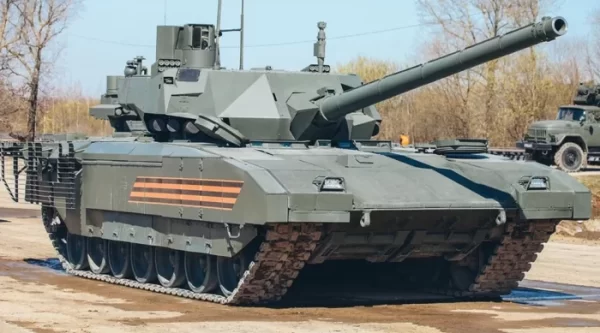
Russian modern tanks, like the T-14 Armata, feature innovative technology such as an unmanned turret and active protection systems.
French modern tanks include the Leclerc, which is valued for its speed and digital fire control systems. Japan’s Type 10 offers versatile performance tailored for its varied terrain.
The Leopard vs. Abrams
The Leopard 2 and the M1 Abrams are often compared due to their prominence in western armies.
The Leopard 2 emphasizes mobility and range with efficient fuel consumption. Its advanced thermal sights allow precision targeting.
The M1 Abrams focuses on strong defense, equipped with composite armor and powerful turbine engines. It excels in firepower and protection but is heavier and consumes more fuel.
Both tanks use sophisticated targeting systems, making them formidable players in modern warfare.
Table 1. Comparison between Leopard 2 and Abrams tanks
Features
Leopard 2 (Germany)
Abrams (USA)
Nickname
Swift Predator
Ironclad Juggernaut
Manufacturer
Germany
United States
Main Gun
120mm smoothbore gun
120mm smoothbore gun
Special Focus
Speed, Agility, and High-Tech Firepower
Superior Armor and Survivability
Mobility
Superior – thanks to a powerful multi-fuel engine and advanced suspension system
High – but not specifically highlighted in comparison to Leopard 2
Advanced Tech
Digital fire control systems, advanced optics, and sophisticated thermal imaging system
Advanced fire control system, sensors, and targeting system
Armor
Not specified
Advanced composite armor (Chobham armor)
Survivability
Not specifically highlighted
High – designed to withstand high-explosive anti-tank (HEAT) rounds and kinetic energy penetrators
Ability to Engage Targets
High accuracy in various combat conditions
Accurate in both day and night conditions, can track and engage moving targets while on the move
Terrain Versatility
Can traverse challenging terrain at high speeds
Not specified
Innovative Designs
Modern tank designs push boundaries with technology like artificial intelligence and stealth capability.
The PL-01 from Poland showcases a futuristic design with modular armor and an infrared suppression system. Such innovations aim to enhance survivability and adaptability in diverse combat environments.
The Most Dangerous Tanks in the World
Russian T-14 Armata tank
Formidable tanks with a reputation for dominance include the T-14 Armata, which is known for its cutting-edge tech and protection systems.
The M1A2 Abrams holds a prominent place due to its impressive combat record.
The Leopard 2’s versatility and robust defensive features make it a fearsome opponent. Tanks like these define military might and technological progression in modern warfare.
Advancements in Tank Technology
Modern tanks continue to evolve with new technologies that enhance their capabilities on the battlefield. Two significant areas of advancement include active protection systems and the integration of unmanned ground vehicles.
Active Protection Systems
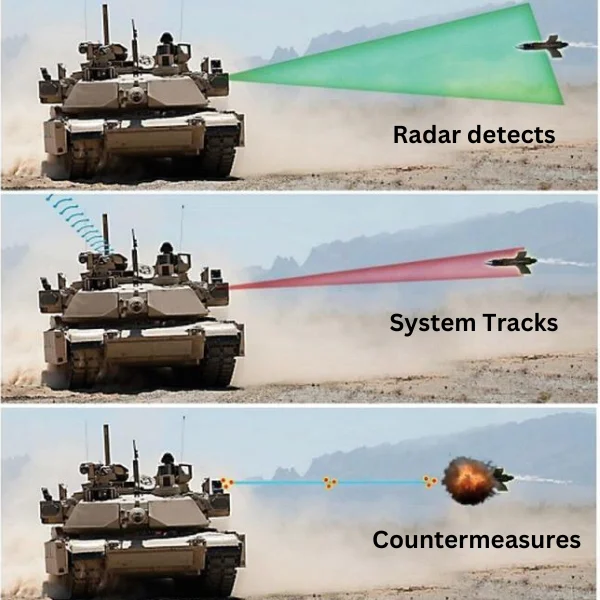
How to deal with an incoming threat by the Trophy APS system
Active protection systems (APS) safeguard modern tanks against incoming threats. These systems detect, track, and neutralize projectiles such as anti-tank missiles and rockets before they can cause harm.
For example, the Israeli Trophy system uses radar and sensors to identify threats and counterattacks by launching small projectiles to intercept them.
US modern tanks like the M1 Abrams are adopting such technologies, significantly increasing their survivability. Russian modern tanks, notably the T-14 Armata, also feature advanced APS capabilities.
This technology is a game-changer, providing extra defense layers and adapting to various war environments.
Unmanned Ground Vehicles Integration
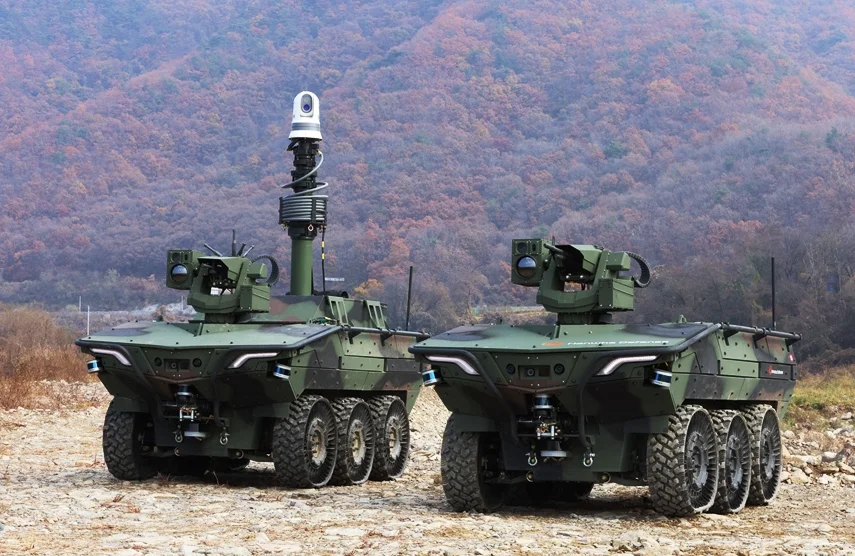
Arion-SMET UGV for supporting infantry operations such as transporting munition and weapons by US Army
Integrating unmanned ground vehicles (UGVs) with modern main battle tanks transforms operational scenarios. UGVs can perform various tasks, including reconnaissance, logistics support, and active conflict engagement.
By working alongside modern military tanks, UGVs help reduce the risk to human soldiers, allowing remote operations in dangerous zones.
Modern US tanks, for instance, are increasingly tested for compatibility with UGVs, expanding their tactical options on the battlefield. The military potential of UGVs is vast, ranging from resupply missions to combat support, and represents a future step in automating and enhancing tank warfare capabilities.
Comparative Analysis
Modern tanks vary significantly in design and capability, depending on country-specific needs and technological advancements. Key issues include tank-to-tank interactions and how defense budgets shape these innovations.
Tank Versus Tank Comparisons
A few models often come to mind when comparing tanks: the M1A2 Abrams, Leopard 2, and the T-14 Armata.
The M1A2 Abrams is a modern US tank known for its armor and advanced fire control systems. German modern tanks like the Leopard 2 are recognized for their precision engineering and versatility on the battlefield.
Russian modern tanks like the T-14 Armata feature advanced technology like unmanned turrets and heavy armor.
Modern Japanese tanks, like the Type 10, offer agility and cutting-edge electronics, making them suitable for maneuver warfare. Each tank model has its strengths: firepower, armor, or mobility. The choice often depends on the operational needs and strategy of the military using them.
Global Defense Spending
Global defense spending plays a significant role in the design and deployment of these tanks.
Countries with large budgets, such as the United States, Germany, and Russia, can afford experimental technologies for their modern military tanks.
Germany’s Leopard 2 is another example of a tank benefiting from a robust defense budget.
In contrast, countries with lower budgets may focus on upgrading existing models rather than developing new ones. While some nations field the most modern tanks, others rely on older but improved versions.
Final Thoughts
Modern tanks play a crucial role in military strategy today. Known for their advanced technology and robust design, these machines combine firepower, armor, and mobility to become powerful assets on the battlefield.
Several tanks are noted for their excellence. For example, the Leopard 2 is highly regarded in Europe for its ability to combat high-tech opponents and balance speed and protection.
The M1A2C Abrams from the U.S. boasts better armor, improved mobility, and superior fire control systems. Its main gun can penetrate most armor types, making it a formidable adversary.
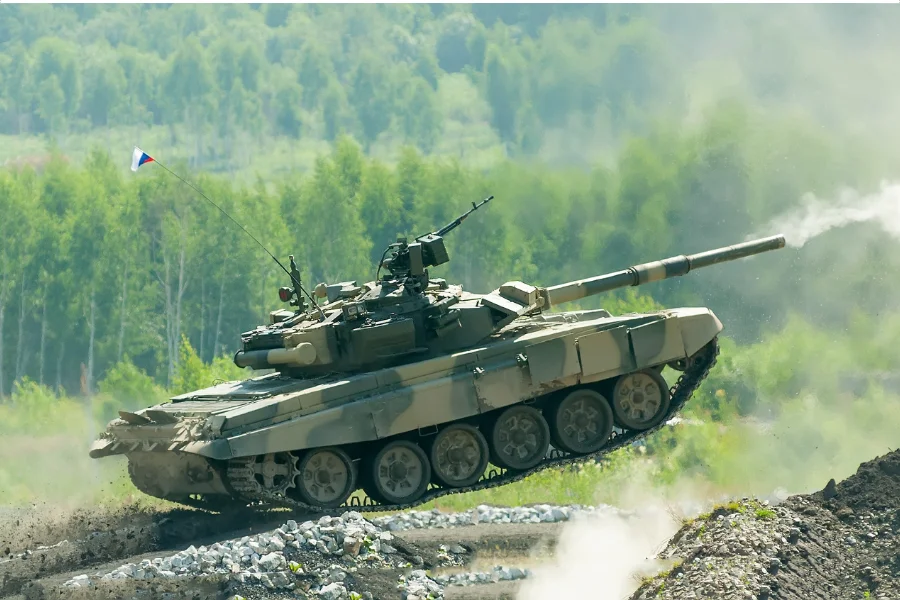
Different regions have their favorites. The Merkava V is preferred in Israel for its adaptability to local challenges. Meanwhile, Russian field models like the T-14 Armata and T-90M emphasize cutting-edge features and versatility.
Key Takeaways: Modern tanks, like the K2 Black Panther from Korea, integrate technology and performance to address diverse military needs. Rapid advancements suggest continued evolution in tank design and capability.
Frequently Asked Questions
Modern tanks vary widely in design and capabilities. This section explores various aspects of current military tanks, including comparisons and advancements.
What is the most modern tank?
The most modern tanks include the T-14 Armata and the M1A2 SEP V3 Abrams. These tanks feature advanced technology, such as upgraded armor and improved targeting systems. They represent the forefront of tank innovation today.
What is the best modern tank today?
Opinions on the best modern tank vary, but the M1A2C Abrams is often highlighted for its mobility and armor. Another contender is the Challenger 2, which is known for its combat experience. These tanks are widely recognized in military circles for their effectiveness.
Is T-90 better than Abrams?
The T-90 is less expensive and lighter, offering specific advantages in different terrains. However, the Abrams are noted for their superior armor and firepower. Each tank has unique strengths, making them suitable for other roles.
Are there any 4th gen tanks?
Fourth-generation tanks include the T-14 Armata. This tank features cutting-edge technologies like unmanned turrets, and it is a step up from previous generations with advanced automation and protection.
What is the top 1 tank in the world?
Currently, the M1A2 Abrams is often regarded as the top tank globally. Its robust design and combat performance set high standards and remain a prominent choice for many armed forces.
Has the US ever lost an Abrams tank?
The US has lost Abrams tanks in combat, though such losses are relatively rare. Situations in conflict zones have led to damage or destruction. These losses often result from anti-tank missiles or IEDs.
Why is the Abrams tank so good?
The Abrams tank is praised for its strong armor and firepower. Its advanced electronics and mobility make it versatile in various terrains. The tank’s reliability and continuous upgrades contribute to its excellence.
How many Abrams has Ukraine lost?
Ukraine has not operated Abrams tanks extensively, so verifiable loss data is limited. However, current military engagements and aid might alter their usage and potential losses in the future.
What country has the best tank?
Countries like the United States and Russia maintain some of the best tanks, such as the M1A2 Abrams and T-14 Armata. These tanks showcase superior military technology. The diverse strengths of these models make them highly regarded internationally.
Is America making a new tank?
Yes, America is working on developing new tank models. These projects aim to integrate future-ready technologies.
Continued research and development ensure that American tanks remain competitive globally.
Author Bio
Leonardo Bianchi is the founder of Leonardo da Vinci Inventions & Experiences, a cultural travel guide helping visitors explore Leonardo da Vinci’s art, inventions, and legacy across Italy and Paris.
Planning Milan?
See The Last Supper Without Missing the Details
Tickets are limited and visits are short. Start with the Milan guide before choosing your Last Supper experience.
If you're visiting Milan for Leonardo da Vinci, these are the experiences most travelers prioritize first — especially when tickets are limited and time is short.
This site is built for travelers who want more than surface-level sightseeing — helping you plan smarter visits around Leonardo da Vinci’s art, museums, and cities across Italy and Europe.

 Leonardo Bianchi is the founder of Leonardo da Vinci Inventions & Experiences, a cultural travel guide helping visitors explore Leonardo da Vinci’s art, inventions, and legacy across Italy and Paris.