
(Last updated: March 2026)
Da Vinci Louvre paintings represent the afterlife of Leonardo’s reputation in Paris.
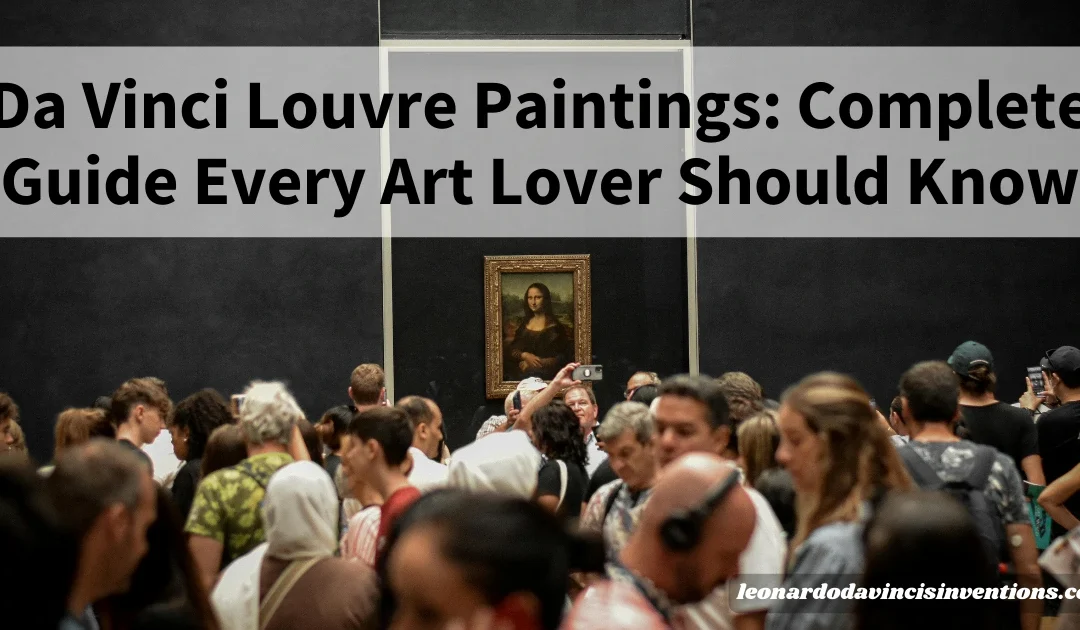
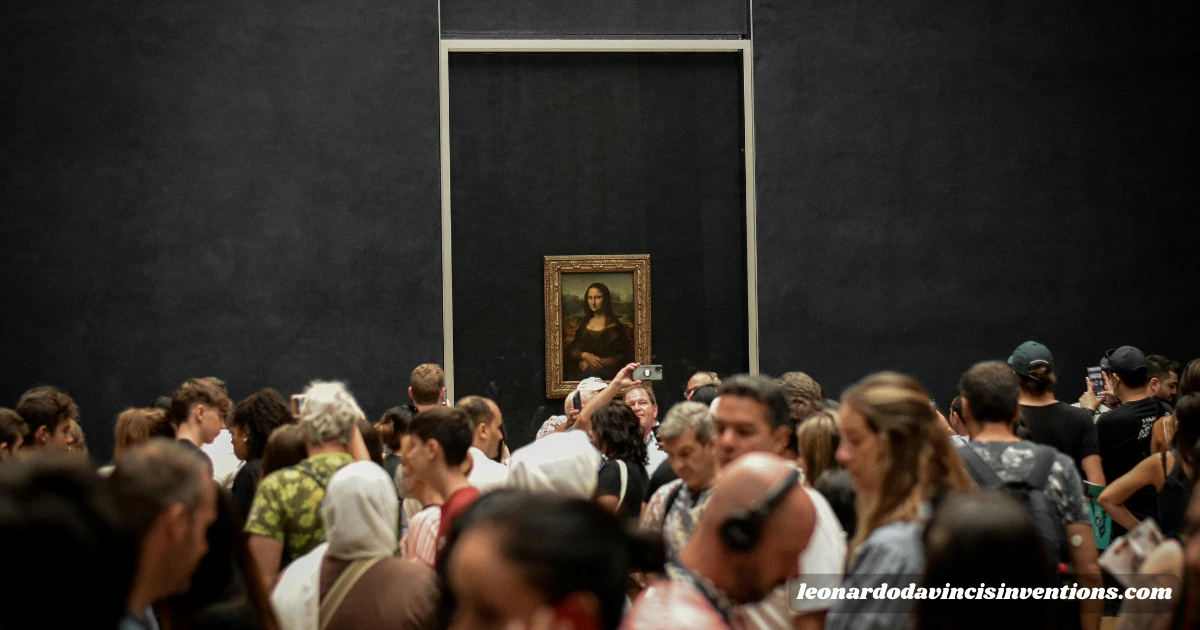
This is where his most famous work, the Mona Lisa, draws millions of visitors who encounter Leonardo’s genius for the first time inside the Louvre, displayed behind protective glass and surrounded by constant crowds.
If Milan is about creation and Florence is about formation, Paris is about legacy. This is where Leonardo’s reputation reached its modern scale, where his art became inseparable from global culture, and where his identity as “the ultimate genius” solidified.
This post is all about da Vinci Louvre paintings and why they matter for Leonardo-focused travelers visiting Paris. The Louvre reveals not so much how Leonardo worked in his studios, but what his art ultimately became—global icons of Renaissance genius.
What Paris Is Best For (Leonardo Perspective)
Paris excels at two things for Leonardo-focused travelers:
The Mona Lisa. Love it or hate it, the Mona Lisa is the most famous painting on earth. If it’s on your Leonardo bucket list—and for most people, it is—the Louvre is unavoidable. There’s no substitute for seeing it in person, even if the experience doesn’t live up to the mythology.
Experiencing Leonardo within world art history. The Louvre Museum da Vinci collection doesn’t just display Leonardo’s paintings in isolation. It frames them within the broader story of Renaissance art, influence, and legacy. You’ll see works by his contemporaries, followers, and the traditions he built upon. This context is valuable even if you’re not an art expert.
Paris is less about Leonardo the inventor and more about Leonardo the cultural icon.
The Mona Lisa: Setting Realistic Expectations
Let’s be honest about what you’re walking into.
The Louvre: The World’s Most Visited Museum
With nearly 9 million visitors per year, including a major collapse during COVID-19 (2020-2021), the Louvre is the most visited museum in the world and the place where millions of people encounter Leonardo da Vinci’s Mona Lisa for the first time.
| Year | Visitors |
|---|---|
| 2015 | ~8.6 million |
| 2016 | 7.3 million |
| 2017 | ~8.1 million |
| 2018 | 10.2 million (record) |
| 2019 | 9.6 million |
| 2020 | 2.7 million |
| 2021 | 2.8 million |
| 2022 | 7.8 million |
| 2023 | 8.9 million |
| 2024 | 8.7 million |
(Source: The Louvre Museum Press)
What Surprises Most Visitors
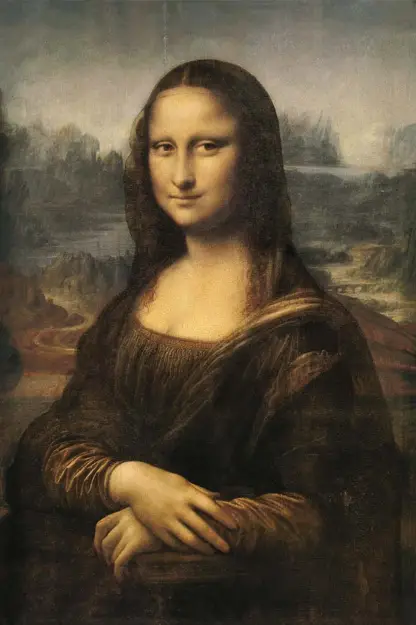
The painting is smaller than most people expect. It’s 77 cm × 53 cm (about 30 × 21 inches). After seeing it reproduced on everything from posters to coffee mugs, people are surprised by its actual scale.
The crowd is real and constant. The Mona Lisa room is packed. You’ll be behind barriers, several feet from the painting. People move quickly. Photography is allowed, which means many visitors spend more time taking photos than actually looking.
You won’t have a quiet, contemplative moment alone with the painting. That’s not how this works. The Louvre attracts millions of visitors each year, and most come specifically to see the Mona Lisa.
Why It’s Still Worth It
Despite the crowds and the chaos, seeing the Mona Lisa in person is different from seeing reproductions. The colors are more subtle. The expression is harder to pin down. The painting has a physical presence—light, texture, brushwork—that no photograph captures.
You’re also seeing the actual Mona Lisa. The one Leonardo worked on. The one that’s been studied, analyzed, stolen, recovered, and protected for centuries. That historical weight is part of the experience.
The visit won’t be serene, but it will be memorable.
How Long You’ll Actually Spend
Most visitors spend 5–10 minutes in the Mona Lisa room. That includes waiting to get close, taking a photo if you want one, and actually looking at the painting.
If you arrive at opening time or late afternoon, the crowd is slightly lighter. Mid-morning and early afternoon are peak chaos.
Guided tours help because they prepare you for what to expect and often strategically route you through the Louvre—seeing other da Vinci paintings first, hitting the Mona Lisa at a less crowded moment, then continuing to other galleries.
How to Make the Louvre Visit Smoother
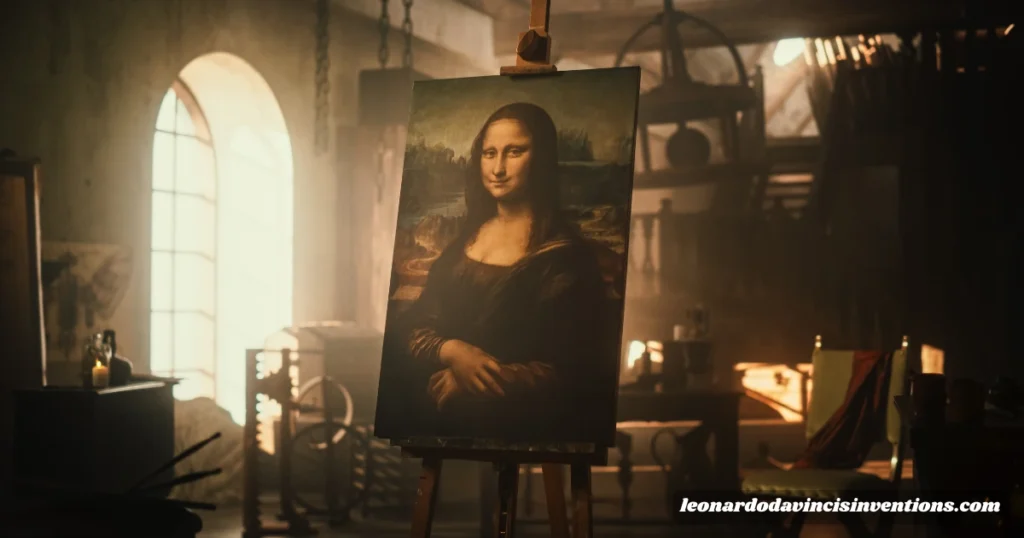
The Louvre is massive. It’s easy to feel overwhelmed, especially if you’re trying to navigate the crowds around the Mona Lisa on your own.
Strategies That Help
Book timed-entry tickets in advance. The Louvre limits daily visitors. Advance tickets guarantee entry and reduce wait times at security. This is especially important during peak season (April–September).
Arrive early or late. The museum is quietest in the first hour after opening and the last hour before closing. If you want a less chaotic Mona Lisa experience, aim for one of these windows.
Use a guided tour strategically. You don’t need a guide for the entire Louvre. But a 2–3 hour guided tour covering da Vinci Louvre paintings and Renaissance highlights accomplishes several things:
- Gets you to the Mona Lisa efficiently
- Shows you other Leonardo works without requiring you to hunt for them
- Provides context that makes the visit more meaningful
Focus on sections, not the entire museum. Trying to “see everything” at the Louvre guarantees exhaustion and diminishing returns. Choose 2–3 sections (e.g., Italian Renaissance paintings, da Vinci at the Louvre, and one other area of personal interest) and give yourself permission to skip the rest.
Take breaks. The Louvre has cafés and seating areas. Museum fatigue is real. If you feel your attention drifting, take a 15-minute break rather than pushing through.
Other Da Vinci Paintings in the Louvre: Quiet Alternatives to the Mona Lisa
The Louvre da Vinci collection holds more than just the Mona Lisa. If you want a calmer Leonardo experience—paintings you can actually stand in front of without barriers or crowds—these are the works to seek out.
The Virgin of the Rocks
This painting depicts the Virgin Mary, the infant Jesus, John the Baptist, and an angel in a rocky grotto. Leonardo painted two versions—one in the Louvre, one in London’s National Gallery. The Louvre version is earlier and shows Leonardo’s mastery of light, shadow, and atmospheric perspective.
The room is quieter. You can get close. The painting rewards careful looking.
Saint John the Baptist
This is one of Leonardo’s last paintings, depicting John the Baptist emerging from the shadows with an enigmatic expression and a pointing gesture. The use of sfumato—Leonardo’s signature soft, smoky blending technique—is especially pronounced here.
Like The Virgin of the Rocks, this painting is less mobbed. You can spend time with it.
The Virgin and Child with Saint Anne
This unfinished painting depicts the Virgin Mary sitting on her mother, Saint Anne’s, lap, reaching for the infant Jesus. The composition is complex, layered, and emotionally subtle. It’s one of Leonardo’s most psychologically intricate works.
Why These Leonardo da Vinci Louvre Paintings Matter
These paintings aren’t as famous as the Mona Lisa. But they’re better for actually looking at Leonardo’s technique. You can see his brushwork, his glaze layering, and his use of light and shadow to create volume and mood.
If you care about Leonardo’s artistic process—not just seeing the most famous image—these works are more rewarding to stand in front of.
Your Best Paris Itineraries: Half-Day and Full-Day Leonardo Focus
Half-Day Paris Leonardo Plan
Best for: Travelers passing through Paris who want the essential Leonardo experience without dedicating a full day to the Louvre.
Morning or afternoon (2–3 hours): Louvre highlights tour. Focus on da Vinci in the Louvre (Mona Lisa, The Virgin of the Rocks, Saint John the Baptist, The Virgin and Child with Saint Anne) plus key Renaissance context works.
Why this works: A guided tour maximizes efficiency. You see all the major Leonardo da Vinci paintings, get context, and avoid spending hours wandering to find them on your own.
Full-Day Paris Leonardo Plan
Best for: Travelers who want depth and time to explore the Louvre beyond just Leonardo.
Morning (3–4 hours): Self-guided or guided Louvre visit. Start with Leonardo da Vinci Louvre paintings, then explore related Italian Renaissance galleries. See works by Raphael, Titian, and other contemporaries who shaped or were influenced by Leonardo.
Lunch break (1–2 hours): Leave the museum. Eat nearby. Rest. Museum fatigue accumulates faster than most people realize.
Afternoon (2–3 hours): Return to the Louvre or explore nearby areas. If you return, focus on one additional section (Northern Renaissance, French painting, sculpture). If you’ve had enough museum time, walk through the Tuileries Garden or explore the surrounding neighborhood.
Why this works: The break prevents burnout. You give yourself time to absorb what you’ve seen without rushing. The full day allows for both focused viewing of Leonardo and broader exploration of art.
How Paris Fits Into an Italy-Based Leonardo Trip
Paris works best when combined with Italy, not as a standalone destination for Leonardo.
Why Paris Is an Add-On, Not the Core
Leonardo’s life, work, and legacy are centered in Italy—Florence (formation), Vinci (birthplace), Milan (mature career). Paris represents his final years and his posthumous fame, but it doesn’t give you the full story on its own.
Most common multi-city combinations:
Florence + Milan + Paris (7+ days total): The full Leonardo circuit. Inventions and context in Florence, The Last Supper in Milan, da Vinci Louvre paintings in Paris.
Milan + Paris (4–5 days total): The two-masterpiece route. The Last Supper and the Mona Lisa, plus museums and context in both cities.
Paris as a final chapter: If you’re building a longer Italy trip (Florence, Vinci, Milan, Venice), Paris can serve as the concluding stop—a shift from Leonardo’s life to his legacy.
Seeing the Mona Lisa Without Losing the Louvre
The Louvre is vast enough to overwhelm even experienced museum visitors. If your Leonardo focus centers on the Mona Lisa, it can help to approach the museum with a clear route rather than wandering through miles of galleries.
Experiencing the painting within a guided highlights framework often makes the visit feel more coherent — not just a brief stop before a famous portrait, but part of a larger artistic and historical conversation.
Explore the Louvre with a Guided Highlights Route
A guided visit offers structure within one of the world’s largest museums, connecting the Mona Lisa to the broader story of the Louvre’s collection. With expert context and a curated path through the essential works, the experience feels more focused and less overwhelming — especially if your time in Paris is limited.
Practical Tips for Paris Leonardo Travelers
Book Louvre tickets in advance, especially in high season. Timed entry is your friend. It guarantees access and reduces stress.
Don’t let the Mona Lisa crowd discourage you. Yes, it’s chaotic. But the experience is still worth having. Go in with realistic expectations, and you’ll be fine.
Spend time with the quieter da Vinci paintings in the Louvre. The Virgin of the Rocks, Saint John the Baptist, and The Virgin and Child with Saint Anne are all in the Louvre and all accessible without barriers or massive crowds. These are the works where you can actually see Leonardo’s technique up close.
Consider a guided tour if it’s your first visit to the Louvre. The museum is enormous and confusing. Guides save time, reduce decision fatigue, and provide context that makes the art more meaningful.
Give yourself permission to skip sections. The Louvre is not complete in one visit. Choose what matters most to you—Leonardo, Renaissance art, one other area—and let the rest go.
Final thought
This post is all about da Vinci Louvre paintings and what it’s really like to see Leonardo’s most famous works inside the Louvre.
The museum can be crowded, and the Mona Lisa moment can be brief, but with realistic expectations and a little planning, the experience becomes memorable and deeply meaningful.
FAQs about Da Vinci Louvre Paintings
The da Vinci Louvre paintings include five works attributed to Leonardo da Vinci: Mona Lisa, The Virgin of the Rocks, The Virgin and Child with Saint Anne, Saint John the Baptist, and La Belle Ferronnière. Together, they form the largest collection of Leonardo paintings in one museum and reveal his evolving style, technique, and mastery of light and expression.
The Louvre’s “big three” masterpieces are generally considered the Mona Lisa, Venus de Milo, and Winged Victory of Samothrace. These iconic works represent painting, classical sculpture, and ancient Greek art, and attract millions of visitors each year, making them the museum’s most famous highlights.
Leonardo da Vinci’s most famous paintings are located in major European museums. The Mona Lisa and Saint John the Baptist are in the Louvre in Paris, The Last Supper is in Milan’s Santa Maria delle Grazie, and another version of The Virgin of the Rocks is displayed at the National Gallery in London.
The Mona Lisa by Leonardo da Vinci is widely considered the most impressive and famous painting in the Louvre. Created in the early 1500s, the portrait is celebrated for Leonardo’s subtle technique, mysterious expression, and groundbreaking use of sfumato, making it one of the most studied artworks in history.
The Mona Lisa is widely regarded as the most valuable artwork in the Louvre. Although it has never been sold, the painting was insured for $100 million in 1962, which would be equivalent to hundreds of millions today. Its cultural significance and global fame make it one of the most valuable artworks in the world.
Related Post You May Like


Disclosure: This page may contain affiliate links. If you choose an experience through them, it helps support the site at no extra cost to you.
 Leonardo Bianchi is the founder of Leonardo da Vinci Inventions & Experiences, a travel and research guide exploring where to experience Leonardo’s art, engineering, and legacy across Italy and Paris.