Why da Vinci Louvre Paintings Matter Today

Why da Vinci Louvre Paintings Matter Today

da Vinci Louvre paintings

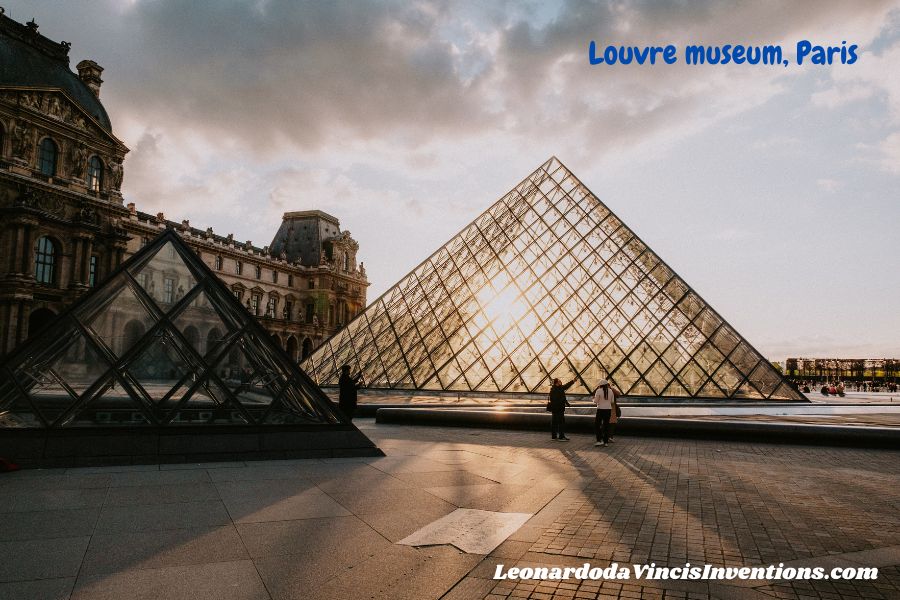
Paris represents the afterlife of Leonardo’s reputation.

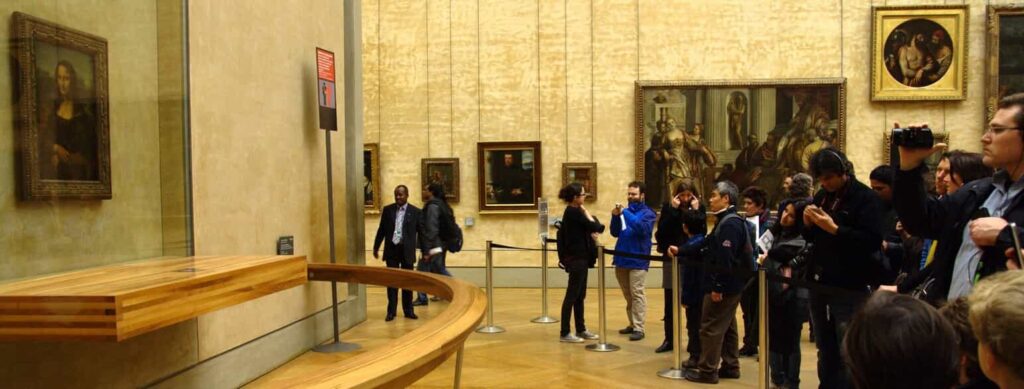
This is where his most famous painting lives—and where millions of modern visitors encounter Leonardo for the first time. The Mona Lisa hangs in the Louvre, behind protective glass, surrounded by crowds that never stop.

It’s smaller than most people expect. It’s harder to see clearly than photographs suggest. And it’s still absolutely worth seeing.

If Milan is about creation and Florence is about formation, Paris is about legacy. This is where Leonardo’s reputation reached its modern scale, where his art became inseparable from global culture, and where his identity as “the ultimate genius” solidified.

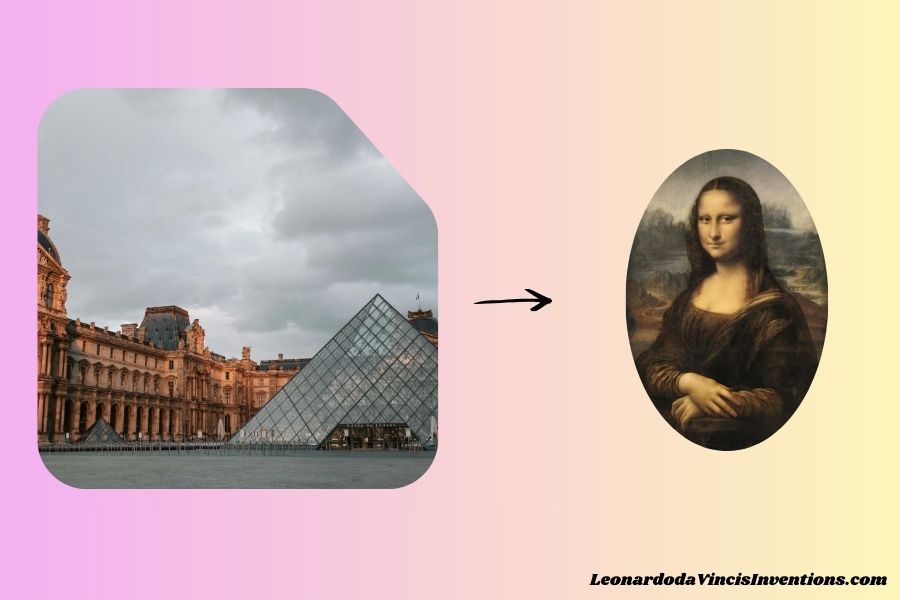
Paris matters for Leonardo travelers—not because it shows you how Leonardo worked, but because it shows you what his work became. The da Vinci Louvre paintings collection includes not just the Mona Lisa, but several other works that offer quieter, more accessible encounters with his technique.

What Paris Is Best For (Leonardo Perspective)

Paris excels at two things for Leonardo-focused travelers:

The Mona Lisa. Love it or find it overrated, the Mona Lisa is the most famous painting on earth. If it’s on your Leonardo bucket list—and for most people, it is—the Louvre is unavoidable. There’s no substitute for seeing it in person, even if the experience doesn’t match the mythology.

Experiencing Leonardo within world art history. The Louvre Museum da Vinci collection doesn’t just display Leonardo’s paintings in isolation. It frames them within the broader story of Renaissance art, influence, and legacy. You’ll see works by his contemporaries, followers, and the traditions he built upon. This context is valuable even if you’re not an art expert.

Paris is less about Leonardo the inventor and more about Leonardo the cultural icon.

The Mona Lisa: Setting Realistic Expectations

Let’s be honest about what you’re walking into.

What Surprises Most Visitors

The painting is smaller than most people expect. It’s 77 cm × 53 cm (about 30 × 21 inches). After seeing it reproduced on everything from posters to coffee mugs, people are surprised by its actual scale.

The crowd is real and constant. The Mona Lisa room is packed. You’ll be behind barriers, several feet from the painting. People move quickly. Photography is allowed, which means many visitors spend more time taking photos than actually looking.

You won’t have a quiet, contemplative moment alone with the painting. That’s not how this works. The Louvre sees millions of visitors annually, and most of them come specifically to see the Mona Lisa.

Why It’s Still Worth It

Despite the crowds and the chaos, seeing the Mona Lisa in person is different from seeing reproductions. The colors are more subtle. The expression is harder to pin down. The painting has a physical presence—light, texture, brushwork—that no photograph captures.

You’re also seeing the actual Mona Lisa. The one Leonardo worked on. The one that’s been studied, analyzed, stolen, recovered, and protected for centuries. That historical weight is part of the experience.

The visit won’t be serene, but it will be memorable.

How Long You’ll Actually Spend

Most visitors spend 5–10 minutes in the Mona Lisa room. That includes waiting to get close, taking a photo if you want one, and actually looking at the painting.

If you arrive at opening time or late afternoon, the crowd is slightly lighter. Mid-morning and early afternoon are peak chaos.

Guided tours help because they prepare you for what to expect and often strategically route you through the Louvre—seeing other da Vinci paintings first, hitting the Mona Lisa at a less crowded moment, then continuing to other galleries.

How to Make the Louvre Visit Smoother
Leonardo Mona Lisa

The Louvre is massive. It’s easy to feel overwhelmed, especially if you’re trying to navigate the crowds around the Mona Lisa on your own.

Strategies That Help

Book timed-entry tickets in advance. The Louvre limits daily visitors. Advance tickets guarantee entry and reduce wait times at security. This is especially important during peak season (April–September).

Arrive early or late. The museum is quietest in the first hour after opening and the last hour before closing. If you want a less chaotic Mona Lisa experience, aim for one of these windows.

Use a guided tour strategically. You don’t need a guide for the entire Louvre. But a 2–3 hour guided tour covering da Vinci Louvre paintings and Renaissance highlights accomplishes several things:

  • Gets you to the Mona Lisa efficiently
  • Shows you other Leonardo works without requiring you to hunt for them
  • Provides context that makes the visit more meaningful

Focus on sections, not the entire museum. Trying to “see everything” at the Louvre guarantees exhaustion and diminishing returns. Choose 2–3 sections (e.g., Italian Renaissance paintings, da Vinci at the Louvre, and one other area of personal interest) and give yourself permission to skip the rest.

Take breaks. The Louvre has cafés and seating areas. Museum fatigue is real. If you feel your attention drifting, take a 15-minute break rather than pushing through.

Other Da Vinci Paintings in the Louvre: Quiet Alternatives to the Mona Lisa

The Louvre da Vinci collection holds more than just the Mona Lisa. If you want a calmer Leonardo experience—paintings you can actually stand in front of without barriers or crowds—these are the works to seek out.

The Virgin of the Rocks

This painting depicts the Virgin Mary, the infant Jesus, John the Baptist, and an angel in a rocky grotto. Leonardo painted two versions—one in the Louvre, one in London’s National Gallery. The Louvre version is earlier and shows Leonardo’s mastery of light, shadow, and atmospheric perspective.

The room is quieter. You can get close. The painting rewards careful looking.

Saint John the Baptist

This is one of Leonardo’s last paintings, showing John the Baptist emerging from shadow with an enigmatic expression and a pointing gesture. The use of sfumato—Leonardo’s signature soft, smoky blending technique—is especially pronounced here.

Like The Virgin of the Rocks, this painting is less mobbed. You can spend time with it.

The Virgin and Child with Saint Anne

This unfinished painting depicts the Virgin Mary sitting on her mother, Saint Anne’s, lap, reaching for the infant Jesus. The composition is complex, layered, and emotionally subtle. It’s one of Leonardo’s most psychologically intricate works.

Why These Leonardo da Vinci Louvre Paintings Matter

These paintings aren’t as famous as the Mona Lisa. But they’re better for actually looking at Leonardo’s technique. You can see his brushwork, his layering of glazes, and his use of light and shadow to create volume and mood.

If you care about Leonardo’s artistic process—not just seeing the most famous image—these works are more rewarding to stand in front of.

Your Best Paris Itineraries: Half-Day and Full-Day Leonardo Focus

Half-Day Paris Leonardo Plan

Best for: Travelers passing through Paris who want the essential Leonardo experience without dedicating a full day to the Louvre.

Morning or afternoon (2–3 hours): Louvre highlights tour. Focus on da Vinci in the Louvre (Mona Lisa, The Virgin of the Rocks, Saint John the Baptist, The Virgin and Child with Saint Anne) plus key Renaissance context works.

Why this works: A guided tour maximizes efficiency. You see all of the major Louvre Leonardo da Vinci paintings, get context, and avoid spending hours wandering trying to find them on your own.

Full-Day Paris Leonardo Plan

Best for: Travelers who want depth and time to explore the Louvre beyond just Leonardo.

Morning (3–4 hours): Self-guided or guided Louvre visit. Start with Leonardo da Vinci Louvre paintings, then explore related Italian Renaissance galleries. See works by Raphael, Titian, and other contemporaries who shaped or were influenced by Leonardo.

Lunch break (1–2 hours): Leave the museum. Eat nearby. Rest. Museum fatigue accumulates faster than most people realize.

Afternoon (2–3 hours): Return to the Louvre or explore nearby areas. If you return, focus on one additional section (Northern Renaissance, French painting, sculpture). If you’ve had enough museum time, walk through the Tuileries Garden or explore the surrounding neighborhood.

Why this works: The break prevents burnout. You give yourself time to absorb what you’ve seen without rushing. The full day allows for both focused viewing of Leonardo and broader art exploration.

How Paris Fits Into an Italy-Based Leonardo Trip

Paris works best when combined with Italy, not as a standalone destination for Leonardo.

Why Paris Is an Add-On, Not the Core

Leonardo’s life, work, and legacy are centered in Italy—Florence (formation), Vinci (birthplace), Milan (mature career). Paris represents his final years and his posthumous fame, but it doesn’t give you the full story on its own.

Most common multi-city combinations:

Florence + Milan + Paris (7+ days total): The full Leonardo circuit. Inventions and context in Florence, The Last Supper in Milan, da Vinci Louvre paintings in Paris.

Milan + Paris (4–5 days total): The two-masterpiece route. The Last Supper and the Mona Lisa, plus museums and context in both cities.

Paris as a final chapter: If you’re building a longer Italy trip (Florence, Vinci, Milan, Venice), Paris can serve as the concluding stop—a shift from Leonardo’s life to his legacy.

Paris Standalone (If That’s Your Only Option)

If you can’t visit Italy but want to experience Leonardo, Paris still offers value. The Louvre Leonardo da Vinci paintings give you access to several of his works, not just the Mona Lisa. Guided tours can provide a Renaissance context even without visiting Florence or Milan.

But be aware: you’re seeing the result, not the process. Paris shows you Leonardo’s fame. Italy shows you Leonardo’s work.
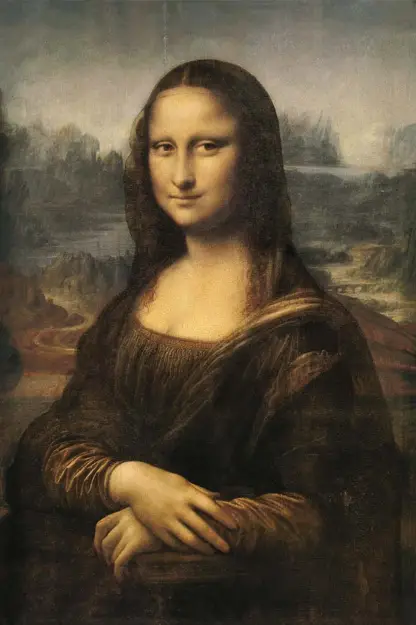
Louvre tickets and guided Leonardo tours

Skip-the-line Louvre tickets and guided tours help you navigate the museum efficiently and see da Vinci Louvre paintings with context. Guides often include other Renaissance highlights alongside the Mona Lisa.

Optional experiences • No extra cost • Supports this site

Practical Tips for Paris Leonardo Travelers

Book Louvre tickets in advance, especially in high season. Timed entry is your friend. It guarantees access and reduces stress.

Don’t let the Mona Lisa crowd discourage you. Yes, it’s chaotic. But the experience is still worth having. Go in with realistic expectations, and you’ll be fine.

Spend time with the quieter da Vinci paintings in the Louvre. The Virgin of the Rocks, Saint John the Baptist, and The Virgin and Child with Saint Anne are all in the Louvre and all accessible without barriers or massive crowds. These are the works where you can actually see Leonardo’s technique up close.

Consider a guided tour if it’s your first visit to the Louvre. The museum is enormous and confusing. Guides save time, reduce decision fatigue, and provide context that makes the art more meaningful.

Give yourself permission to skip sections. The Louvre is not complete in one visit. Choose what matters most to you—Leonardo, Renaissance art, one other area—and let the rest go.

Related Leonardo Pages

Want to go deeper? Here are other Leonardo-focused pages that connect to Paris:

  • [Travel Hub] – Full Leonardo travel guide covering Florence, Milan, Paris, Vinci, and Venice
  • [Mona Lisa] – History, analysis, and what to expect when visiting
  • [Florence guide] – Leonardo’s inventions and Renaissance context
  • [Milan guide] – The Last Supper and Leonardo’s mature career

Final thought: Paris asks for patience. The Louvre is crowded, the Mona Lisa experience is brief, and the visit requires planning. But seeing Leonardo’s most famous works in person—even through the chaos—connects you to something larger than yourself. Go with realistic expectations, focus on what matters to you, and give yourself space to absorb what you’re seeing. The experience will be imperfect. It will also be unforgettable.

Disclosure: This page may contain affiliate links. If you choose an experience through them, it helps support the site at no extra cost to you.
Why Leonardo da Vinci Museum Milan Is Unique

Why Leonardo da Vinci Museum Milan Is Unique

Leonardo da Vinci museum Milan

Milan is where Leonardo da Vinci moved from a promising genius to a fully realized master.

If Florence shaped his mind, Milan tested it. Leonardo spent nearly two decades in Milan, working for Duke Ludovico Sforza on projects ranging from monumental art to military engineering to urban planning. This wasn’t theoretical work—these were real commissions, real constraints, real applications of his ideas.

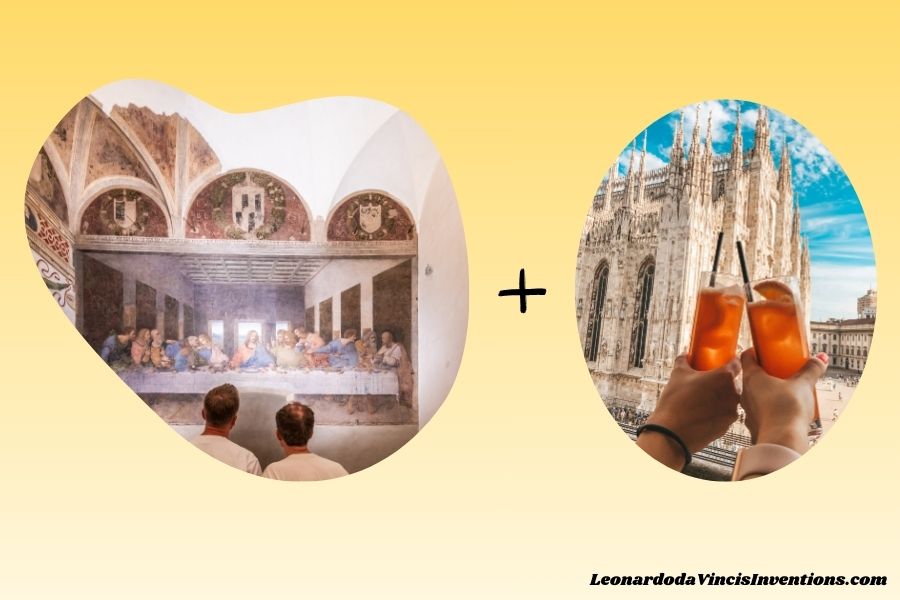
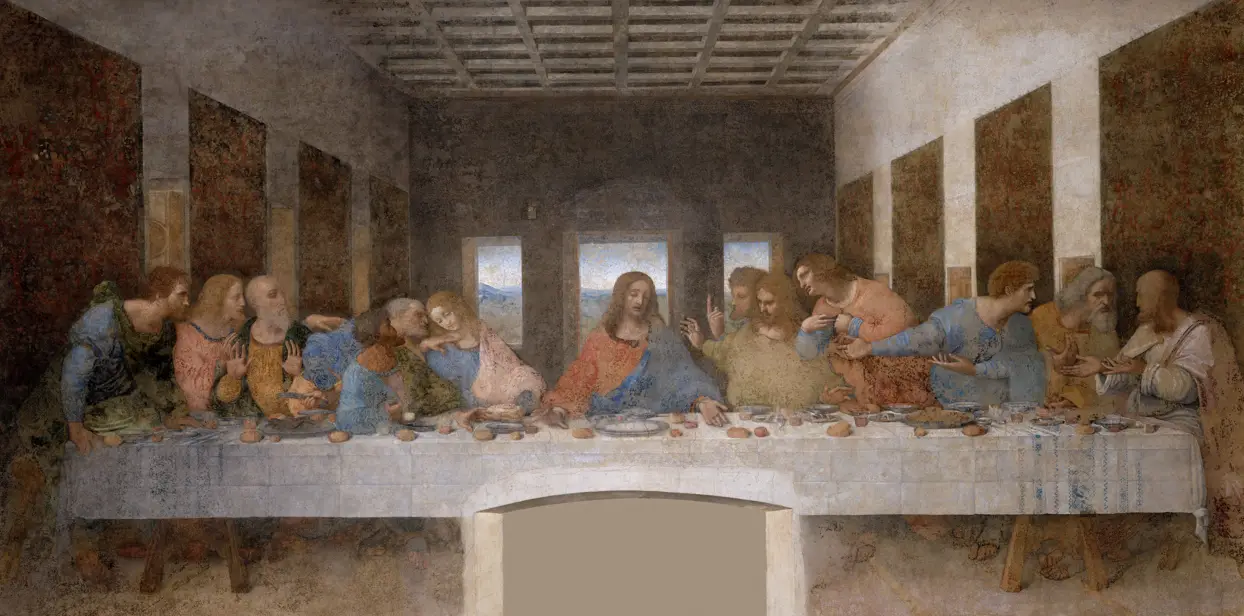
Most importantly, Milan is home to The Last Supper, one of the most studied and emotionally powerful artworks in history. Seeing it in person—on the refectory wall where Leonardo painted it over 500 years ago—is why most people come to Milan to see Leonardo.

But Milan offers more than a single masterpiece. The Leonardo da Vinci museum Milan scene includes science exhibits, invention galleries, and walking tours that explore his mature thinking, applied engineering work, and the years when his ability to merge art, structure, and innovation reached its peak.

What Milan Is Best For (Leonardo Perspective)

Milan excels at two things for Leonardo-focused travelers:

The Last Supper. This is non-negotiable. If you care about Leonardo’s art, you eventually have to come to Milan. The painting is here, and only here, in the Convent of Santa Maria delle Grazie. No reproduction or photograph captures what it feels like to stand in that room.

Leonardo’s mature career and applied engineering. Milan Leonardo museum locations and exhibits tell the story of his working years—not just what he painted, but what he designed, built, and tested. You’ll find material on his mechanical inventions, military projects, hydraulic studies, and urban planning ideas. This is Leonardo as a working engineer, not just a romantic genius.

Milan represents Leonardo at his most productive and practically engaged.

The Last Supper: Visiting Reality and What You Need to Know

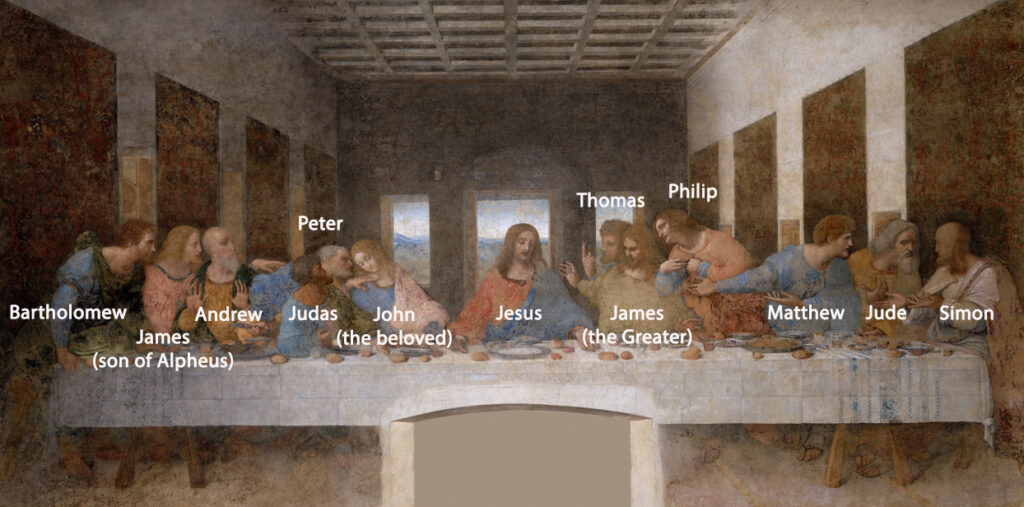
Who is who in the Last Supper painting

Let’s be direct: visiting The Last Supper is complicated. But it’s absolutely worth the effort.

Why The Last Supper Is Different

This isn’t a painting you can walk up to at any time. The mural is fragile. Decades of restoration work have stabilized it, but protecting it requires strict environmental controls.

Here’s what that means in practice:

Visits are timed and limited. You’re allowed 15 minutes inside the room. Groups enter in controlled intervals. The number of daily visitors is capped.

Demand is extremely high. Tickets sell out weeks (sometimes months) in advance, especially during spring and summer. Last-minute availability is rare.

Booking independently requires planning. You need to check availability early and be flexible with your Milan dates if necessary.

This isn’t meant to discourage you. It’s meant to help you plan realistically.

The Booking Logic: What to Book First

If The Last Supper is a priority—and for most Leonardo travelers, it is—book it before you book anything else in Milan.

Not after you book your hotel. Not after you book your flights. Before.

Choose your Milan dates based on Last Supper availability, not the other way around. This single decision eliminates most of the stress people experience when visiting.

Your Ticket Options: Independent vs Guided

You have two main options for visiting The Last Supper. Neither is “better”—they serve different needs.

Option 1: Timed-entry tickets (book directly)

  • Most affordable option
  • Requires checking availability early and monitoring for openings
  • No added context or explanation—just entry to the room
  • Best if you’ve already researched the painting and prefer exploring on your own

Option 2: Guided entry with context

  • Slightly more expensive
  • Includes guaranteed entry plus explanation before and after your viewing
  • Guides typically explain the composition, psychology, historical context, and technical challenges Leonardo faced
  • Best if you want meaning and story without doing extensive research beforehand, or if independent tickets are already sold out

Both options give you the same 15 minutes inside the room. The difference is what happens before and after.

What the 15-Minute Visit Actually Feels Like

Fifteen minutes sounds short. And it is. But the experience is designed to be contemplative, not rushed.

You enter a quiet, climate-controlled room. The painting covers the far wall. You have space to look, absorb, move closer, step back. There’s no jostling for position like at the Mona Lisa. The room can hold about 25 people at a time.

What surprises most visitors:

  • How much can you see in 15 minutes when the environment is calm
  • How the composition reveals itself gradually as your eyes adjust
  • How different it feels from seeing reproductions

The time limit isn’t arbitrary. It’s what makes the experience possible.

Understanding The Last Supper Beyond the Image

What makes The Last Supper extraordinary isn’t scale or color—both have been compromised by time and Leonardo’s experimental painting technique. What endures is composition, psychology, and the moment Leonardo chose to depict.

Guides and pre-visit research often explain:

Why the moment matters. Leonardo didn’t paint a serene dinner. He painted the instant after Jesus says, “One of you will betray me.” The painting captures reaction—disbelief, anger, confusion, denial. Each apostle responds differently.

How geometry directs attention. The perspective lines converge on Jesus’s head. The architecture frames him. The composition creates a visual focal point that mirrors the narrative focal point.

How emotion is structured visually. Leonardo grouped the apostles into clusters of three, each group forming its own mini-drama. The painting is psychologically layered.

This context transforms a 15-minute viewing into something that stays with you. If you’re choosing between ticket-only and guided entry, consider whether you want to do this research yourself or have it explained on-site.

Leonardo da Vinci Museum Milan Options Beyond The Last Supper

Milan offers more than a single artwork. If you’re interested in Leonardo’s inventions, engineering, and applied thinking, Milan has strong material at multiple Leonardo museum locations.

Science and Technology Museums

The Museo Nazionale Scienza e Tecnologia Leonardo da Vinci features permanent Leonardo galleries with reconstructed machines, annotated drawings, and interactive explanations. You’ll see models of his flying devices, mechanical systems, hydraulic studies, and military designs.

This museo Leonardo da Vinci helps connect Leonardo’s art to his engineering mindset. The same observational skills he used to paint faces, he applied to water flow, wing mechanics, and gear ratios.

The museum is accessible, family-friendly, and doesn’t require advance booking during most of the year. Plan 2–3 hours if you want to explore the Leonardo galleries thoroughly.

Leonardo-Themed Exhibitions

Milan regularly hosts temporary exhibitions focused on Leonardo’s work, ranging from multimedia presentations to traveling collections of drawings and codices. These change seasonally, so check current listings if you’re interested in going deeper than the permanent collections.

Some da Vinci museum Milan exhibitions focus specifically on his Milan years—his projects for Duke Sforza, his urban planning ideas, and the engineering challenges he tackled during this period.

Walking Milan’s Leonardo-Era Districts

Some walking tours focus on Leonardo’s Milan years—his studio locations, his projects for the Duke, and the city’s role in his career. These are less common than art-focused tours, but worth seeking out if you want spatial and historical context for your experience at the Milan Leonardo da Vinci museum.

Your Best Milan Itineraries: 1-Day and 2-Day Leonardo Focus

1-Day Milan Leonardo Plan

Best for: Travelers passing through Milan who want the essential Leonardo experience without adding extra days.

Morning or afternoon (depending on your Last Supper time slot): The Last Supper. Arrive 15 minutes early. Use the time before or after to explore the surrounding Santa Maria delle Grazie area.

Remaining time: Visit the Museo Nazionale Scienza e Tecnologia Leonardo da Vinci or another Leonardo da Vinci museum in Milan. Spend 1–2 hours exploring mechanical models and invention displays.

Why this works: You see Leonardo’s most famous artwork and get a taste of his engineering mindset in a single day. The pacing is tight but manageable.

2-Day Milan Leonardo Plan

Best for: Travelers who want depth and time to absorb what they’re seeing.

Day 1 – The Last Supper and Context

  • Morning or afternoon: The Last Supper (booked in advance)
  • Before or after: Walk through the Santa Maria delle Grazie neighborhood
  • Evening: Explore central Milan, settle into the city

Day 2 – Leonardo’s Engineering and Innovation

  • Morning: Leonardo da Vinci museum Milano visit—Museo Nazionale Scienza e Tecnologia (2–3 hours)
  • Afternoon: Additional Leonardo museum exhibit (if available) or broader Milan exploration
  • Optional: Leonardo-focused walking tour covering his studio locations and Duke Sforza’s Milan

Why this works: Day 1 focuses entirely on the Last Supper experience without rushing. Day 2 explores Leonardo’s mechanical and engineering legacy at a Milan museum da Vinci location. The two-day structure prevents fatigue and allows time to reflect.

The Last Supper: Your guided entry options

Visiting The Last Supper requires advance booking and timed entry. Guided experiences include guaranteed entry plus context that makes the 15-minute visit more meaningful.

Optional experiences • No extra cost • Supports this site

How Milan Fits Into a Multi-City Leonardo Trip

Milan works best as:

Your art centerpiece. If Florence is your invention and context focus, Milan becomes your masterpiece focus. The Last Supper is the reason you add Milan to a Leonardo itinerary—everything else at the Leonardo da Vinci museum Milan locations supports or complements it.

The middle stop in a Florence → Milan → Paris route. This is one of the most common Leonardo travel patterns. Florence gives you the Renaissance context and inventions. Milan gives you The Last Supper and a mature career. Paris gives you the Mona Lisa and modern fame.

A standalone 1–2 day addition. Milan is well-connected by train to Florence (2 hours), Venice (2.5 hours), and other northern Italian cities. You can add Milan as a focused side trip without restructuring your entire itinerary.

Most Common Multi-City Combinations

Florence + Milan (3–4 days total): The strongest short route for Leonardo travelers. Inventions and context in Florence; The Last Supper and mature work in Milan.

Milan + Paris (4–5 days total): The two-masterpiece route. The Last Supper and the Mona Lisa, plus museum exhibits in both cities.

Florence + Milan + Paris (7+ days total): The full Leonardo circuit across invention, masterpiece, and legacy.

Milan anchors these itineraries because The Last Supper is irreplaceable. Everything else in a Leonardo trip is flexible—Milan is not.

Practical Tips for Milan Leonardo Travelers

Book The Last Supper first, before anything else. This cannot be emphasized enough. Availability determines your Milan dates, not the other way around.

Choose guided entry if it’s your first visit. The 15-minute time limit makes context especially valuable. Guides explain what to look for before you enter, which maximizes what you absorb during your brief viewing.

Balance art with invention-focused museums. If you’re spending two days in Milan, dedicate one to The Last Supper and one to a Leonardo da Vinci museum Milan location focused on engineering. The variety keeps the experience engaging.

Don’t rush. Milan’s Leonardo experience is intentionally slow and contemplative. Resist the urge to pack too much into one day. The Last Supper deserves space around it—time to arrive calm, time to absorb, time to reflect afterward.

Morning visits are often quieter. If you have flexibility in choosing your Last Supper time slot, early-morning entries tend to feel less hurried than late-afternoon ones.

Related Leonardo Pages

Want to go deeper? Here are other Leonardo-focused pages that connect to Milan:

  • [Travel Hub] – Full Leonardo travel guide covering Florence, Milan, Paris, Vinci, and Venice
  • [Last Supper] – Everything you need to know about visiting The Last Supper
  • [Florence guide] – Leonardo’s inventions and Renaissance context
  • [Paris guide] – The Mona Lisa and Leonardo’s works at the Louvre

Final thought: Milan asks something different from you than Florence or Paris. Florence asks for curiosity. Paris asks for patience with crowds. Milan asks for planning and presence. Book early, arrive calm, and give yourself space to absorb what you’re seeing. The 15 minutes will be enough.

Disclosure: This page may contain affiliate links. If you choose an experience through them, it helps support the site at no extra cost to you.
Why Leonardo da Vinci in Florence Matters

Why Leonardo da Vinci in Florence Matters

Leonardo da Vinci Florence museum

Florence is not the city most people associate with Leonardo da Vinci’s greatest fame. That’s Milan, with The Last Supper. Or Paris, with the Mona Lisa.

But Florence may be the most important city for understanding how Leonardo’s mind was formed.

Florence gave Leonardo something no single painting or invention could: a culture obsessed with geometry, anatomy, mechanics, art, and observation. A city where workshops trained apprentices to think across disciplines. Where patrons like the Medici family funded experimentation, not just decoration.

If you’re interested in Leonardo’s inventions, engineering concepts, and the Renaissance mindset that made him possible—not just famous masterpieces—Leonardo da Vinci in Florence is the strongest place to begin.

What Florence Is Best For (Leonardo Perspective)

Florence excels at three things for Leonardo-focused travelers:

Invention museums with working models. Florence hosts multiple Leonardo da Vinci museum Florence locations featuring physical reconstructions of his designs. You’ll see self-supporting bridge concepts, flying machines like his helicopter and glider, pulleys, gears, and hydraulic systems—machines you can watch in motion and understand without a technical background.

Renaissance cultural context. Leonardo didn’t emerge from nowhere. Florence explains how workshops like Verrocchio’s trained minds to move fluidly between painting, engineering, anatomy, and mechanics. You get the “why” behind Leonardo’s interdisciplinary thinking.

Access to his birthplace and the surrounding region. Vinci and Anchiano are about an hour away. Florence makes a natural base for exploring Leonardo’s origins without logistical headaches.

Florence doesn’t just show what Leonardo created—it shows why his thinking was different.

What to See in Florence: Leonardo Highlights

Leonardo da Vinci Museum in Florence Options

Florence is home to several Leonardo da Vinci museum Florence, Italy locations dedicated to his mechanical and engineering ideas. These aren’t dusty displays. They’re designed to help you understand how Leonardo’s mind connected observation to design.

What makes these exhibits effective:

  • Physical reconstructions instead of only drawings
  • Clear explanations of how ideas worked (and why some didn’t)
  • Focus on curiosity and experimentation, not hero worship

Common themes you’ll encounter:

  • Bridge designs and structural engineering
  • Flying machines (the helicopter aerial screw and gliders)
  • Military inventions (the tank, siege machines, defensive systems)
  • Gears, pulleys, and mechanical transmission systems
  • Hydraulic studies and water control concepts

These museums are accessible even if you have no engineering background. The goal is to see Leonardo as a problem-solver, not just memorize facts.

Most Leonardo da Vinci museum Florence tickets can be purchased on-site or online in advance. Unlike the Last Supper in Milan, timed entry is rare, though booking ahead during peak season (April–October) helps avoid lines.

Leonardo da Vinci Paintings in Florence

While Leonardo in Florence isn’t primarily about finished paintings, you’ll encounter works by his teacher Verrocchio and contemporaries like Raphael at the Uffizi. Leonardo da Vinci paintings in Florence are limited—he completed few works here and most were later moved to other collections.

But the artistic tradition he grew up in is everywhere: perspective studies, anatomical accuracy, and light modeling techniques that defined the period.

Walking through these galleries shows you what Leonardo was reacting to, building on, and eventually surpassing.

Leonardo da Vinci House in Florence

Leonardo da Vinci in Florence

There is no preserved “Leonardo da Vinci house in Florence” in the traditional sense. Leonardo lived and worked in various locations in Florence during his years there, primarily in workshop settings such as Verrocchio’s studio. None of these sites functions as a house museum today.

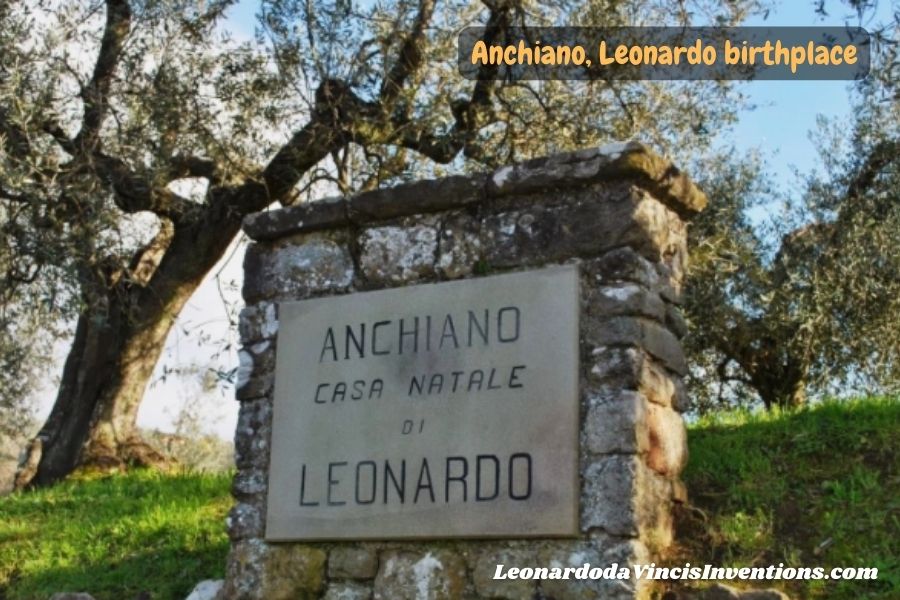
However, his actual birthplace—a stone farmhouse in Anchiano, near Vinci—still stands and is open to visitors.

How far is Vinci from Florence? About 50 kilometers (30 miles), roughly an hour by car or 90 minutes by regional train and bus. Florence makes the most practical base for visiting this authentic Leonardo location.

Renaissance Walking Tours

Florence rewards context. A good Renaissance walking tour doesn’t just show you buildings—it explains how Florence’s guild system, political structure, and patronage networks created an environment where someone like Leonardo could thrive.

You’ll learn:

  • How Medici patronage shaped artistic experimentation
  • Why did artists study anatomy, geometry, and engineering
  • How workshops functioned as training grounds for polymaths
  • What made Florence different from other European cities in the 15th century

Guided tours are most helpful when you want a framework quickly. They’re less essential if you enjoy self-directed exploration and reading museum labels at your own pace.

Practical Visiting Realities: Crowds, Pacing, and Museum Fatigue

Florence is walkable, compact, and tourist-friendly. But it’s also heavily visited, and museum fatigue is real.

Crowds are manageable but present. Florence isn’t as overwhelming as the Louvre or the Sistine Chapel, but expect lines at major museums (especially Uffizi and Accademia). Leonardo-focused invention museums tend to be quieter.

Museum fatigue sets in faster than you think. Most people can focus on detailed exhibits for 90 minutes to 2 hours before their attention drifts. Plan breaks. Don’t try to visit three museums in one afternoon.

Walking distances are short. Florence’s historic center is small. You can walk from one end to the other in about 20 minutes. This makes it easy to split your day between museums, walking tours, and downtime.

Timed entry is less common than in Milan. Most Leonardo da Vinci museum Florence locations operate on first-come, first-served or same-day availability. The exception is the Uffizi and Accademia during peak season—book those in advance if they’re on your list.

Morning visits are quietest. Leonardo invention museums and smaller exhibits are least crowded in the first hour after opening.

Explore Leonardo’s inventions and Renaissance Florence

Florence offers multiple Leonardo da Vinci museum in Florence options and walking tours that bring his machines and ideas to life. Guided experiences help when you want context fast or prefer explanations over reading every label.

Optional experiences • No extra cost • Supports this site

Your Best Florence Itineraries: 1-Day and 2-Day Leonardo Focus

1-Day Florence Leonardo Plan

Best for: Travelers passing through Florence who want a concentrated Leonardo experience without adding extra cities.

Morning (9:00 AM – 12:00 PM): Visit the Leonardo da Vinci Museum in Florence. Spend 2–3 hours exploring working models, annotated drawings, and interactive exhibits. Focus on the machines that interest you most—flying devices, military engineering, structural systems.

Lunch break (12:00 PM – 1:30 PM): Eat near the historic center. Use this time to rest and avoid museum fatigue.

Afternoon (1:30 PM – 4:00 PM): Renaissance walking tour or a visit to the Uffizi. If you choose a walking tour, focus on workshops, Medici history, and the cultural environment that shaped Leonardo. If you choose the Uffizi, prioritize the rooms covering 15th-century Florentine art.

Why this works: You get both the inventions and the context in a single day without being overloaded. Florence is compact enough that you won’t waste time on logistics.

2-Day Florence Leonardo Plan

Best for: Travelers who want depth and a slower pace.

Day 1 – Leonardo Inventions and Mechanics

  • Morning: Leonardo da Vinci Florence museum visit (2–3 hours)
  • Afternoon: Second Leonardo museum or science-focused exhibit (if available)
  • Evening: Walk through the historic center, focusing on workshop districts and guild architecture

Day 2 – Renaissance Art and Cultural Context

  • Morning: Uffizi or Galleria dell’Accademia (focus on 15th-century Florentine art)
  • Afternoon: Renaissance walking tour, focusing on Medici patronage and workshop culture
  • Optional: Visit the Museo di San Marco to see Fra Angelico’s frescoes (context for how Florence trained artistic minds)

Why this works: Day 1 immerses you in Leonardo’s mechanical thinking. Day 2 gives you the artistic and cultural world that made him possible. The pacing prevents fatigue and allows time to absorb what you’re seeing.

How Florence Fits Into a Multi-City Leonardo Trip

Florence works best as either:

Your starting point. If you’re building a multi-city Leonardo trip, starting with Leonardo da Vinci in Florence gives you the foundational context—the Renaissance culture, the workshop training, the Medici environment—that makes Milan and Paris more meaningful.

Your invention focus. If Milan is your art focus (The Last Supper) and Paris is your fame focus (Mona Lisa), Florence becomes your invention and engineering focus. This creates a balanced trip across Leonardo’s different contributions.

Your base for exploring Vinci. Leonardo’s birthplace is a short trip from Florence. If you want to visit Vinci and Anchiano (his actual birthplace farmhouse), Florence is the most practical base. How far is Vinci from Florence? About 50 kilometers—easily manageable as a half-day or full-day excursion.

Most Common Multi-City Combinations

Florence + Milan (3–4 days total): The strongest short route. Florence for inventions and context; Milan for The Last Supper and a mature career.

Florence + Vinci + Milan (5–6 days total): Adds the birthplace pilgrimage for true fans.

Florence + Milan + Paris (7+ days total): The full Leonardo art + invention tour across Europe.

Florence anchors all of these itineraries. It’s the context city that makes the other stops richer.

Can You Do a Day Trip to Florence from Rome?

Yes, but it’s tight. The high-speed train from Rome to Florence takes about 90 minutes. A day trip is technically possible—you’d have roughly 6–7 hours in Florence—but it works best if your focus is narrow (one Leonardo museum plus a walking tour, for example). For a deeper experience of Leonardo da Vinci in Florence, staying overnight gives you the time and pace you need.

Related Leonardo Pages

Want to go deeper? Here are other Leonardo-focused pages that connect to Florence:

Final thought

Florence is not about checking boxes. It’s about understanding the world that made Leonardo possible. Take your time. Focus on what interests you most. Let the city explain itself.

Disclosure: This page may contain affiliate links. If you choose an experience through them, it helps support the site at no extra cost to you.
How to Plan Leonardo da Vinci Experience Guide (2026)

How to Plan Leonardo da Vinci Experience Guide (2026)

Leonardo da Vinci museum Italy

Leonardo da Vinci painted like a scientist and engineered like an artist. Five centuries later, his legacy lives in museum galleries, reconstructed machines, and walls that still hold his masterpieces.

This guide is for travelers who want to experience Leonardo in person—not just read about him. Whether you found him through the Mona Lisa, a documentary about his self-supporting bridge design, or curiosity about Renaissance genius, you’ll find the best cities, museums, and Leonardo da Vinci tours to make it real.

You’ll learn where to find Leonardo da Vinci’s most important works, how to navigate timed-entry queues without stress, and which Leonardo da Vinci museums in Italy offer the strongest experiences. From Florence’s invention exhibits to Milan’s Last Supper to Paris’s Louvre crowds, this is your planning toolkit.

Quick Trip Planner: Choose Your Leonardo da Vinci Experience Path

Not sure where to start? Ask yourself what pulled you toward Leonardo.

The Art Lover Route

You want paintings, masterpieces, and Leonardo da Vinci important works in person.

Your must-visit cities:

  • Milan – The Last Supper (the single most important Leonardo da Vinci location for art pilgrims)
  • Paris – Mona Lisa at the Louvre, plus other Leonardo paintings
  • Florence – Renaissance context and the artistic culture that shaped it

The Inventions & Engineering Route

You want working models, reconstructed machines, and “how it works” explanations.

Your must-visit cities:

  • Florence – Multiple Leonardo da Vinci museum Florence locations with interactive exhibits
  • Milan – Science museums and innovation-focused displays
  • Vinci – Smaller-scale inventions tied to his birthplace

The Balanced “Best of Both” Route

You want art, inventions, and the full story of Leonardo’s world.

Your must-visit cities:

  • Florence – Inventions, Renaissance culture, and the world of the Medici family
  • Milan – The Last Supper plus Leonardo’s mature career period
  • Vinci – Optional add-on for a personal connection to his origins

If you only have time for two cities, Florence and Milan offer the strongest all-around Leonardo da Vinci experience.

Florence: Leonardo da Vinci Museum Florence Locations & Renaissance Context

Leonardo da Vinci experience

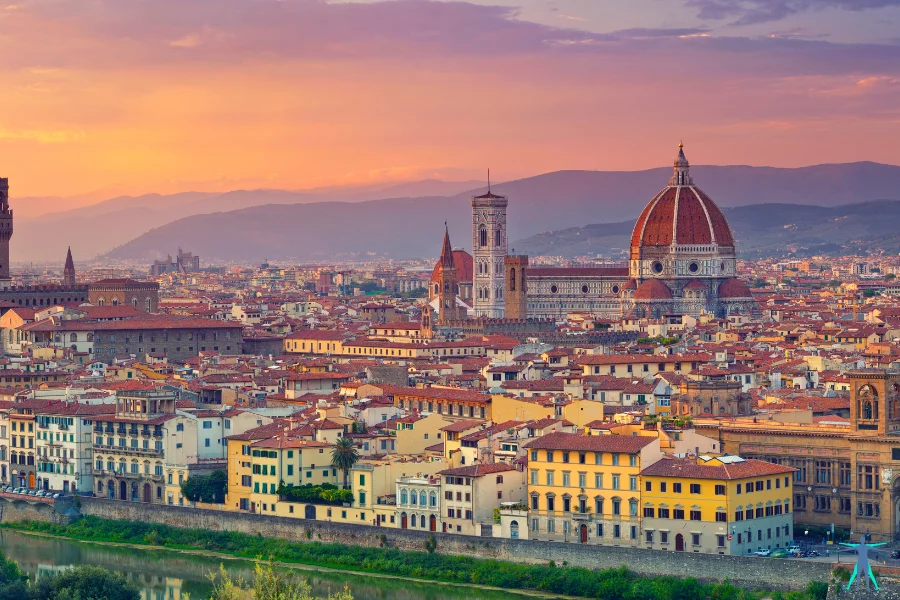
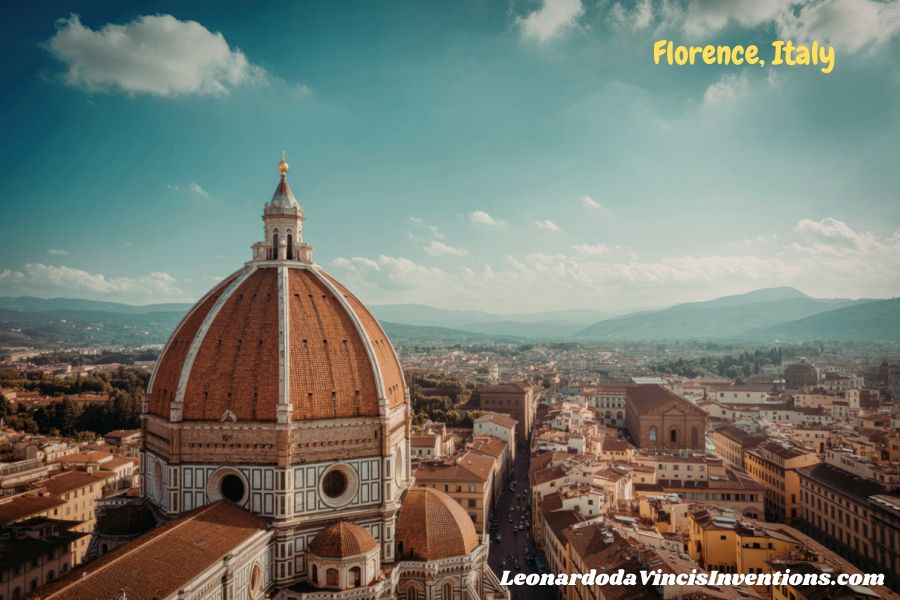
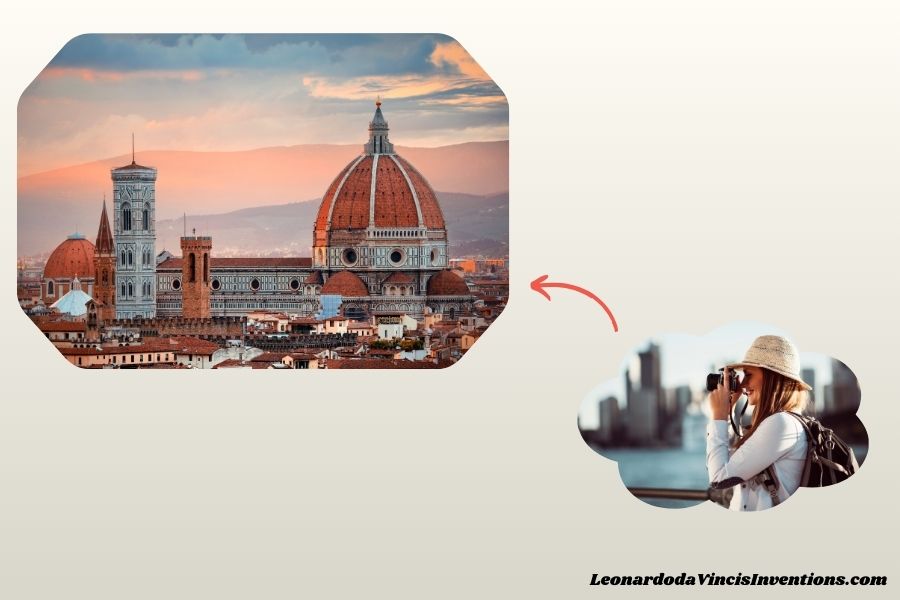
Florence is where many travelers fall in love with the Renaissance—not just as history, but as a living idea. Even when Leonardo isn’t the headliner, Florence explains the world that shaped him: workshops obsessed with geometry, patrons who funded genius, and a culture that bridged art and science.

What Florence Is Best For

Florence delivers three things for Leonardo-focused travelers:

Interactive invention exhibits. Multiple Leonardo da Vinci museum Florence locations feature working models of his designs—machines you can see in motion, touch, and understand without reading every placard. You’ll find reconstructions of his glider, pulleys, hydraulic systems, and military devices.

Renaissance cultural context. Leonardo didn’t emerge from nowhere. Florence explains how workshops like Verrocchio’s trained minds to think across disciplines. You get the “why” behind Leonardo’s approach.

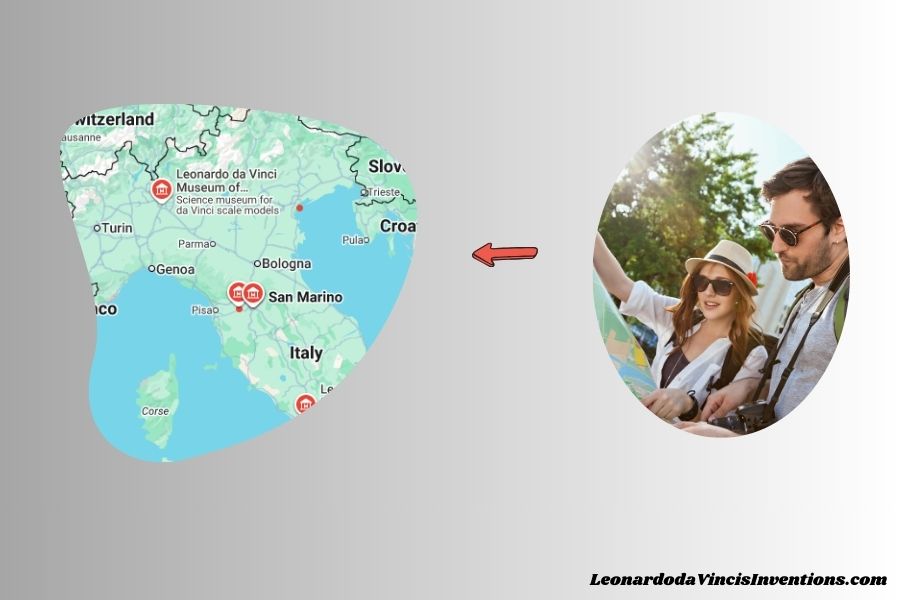
Day trip access to Leonardo sites. Vinci and Anchiano (his birthplace) are short trips from Florence, making it easy to build a layered itinerary.

What to See in Florence

Leonardo invention museums and exhibits. Florence hosts multiple museum Leonardo da Vinci experience options with reconstructed machines, annotated drawings, and hands-on explanations. These aren’t dusty displays—they’re designed to help you see how Leonardo’s mind connected observation to engineering.

Renaissance walking tours. A good walking tour doesn’t just show you buildings. It explains how Florence’s political structure, guild system, and patronage networks created an environment where someone like Leonardo could thrive. The Medici family plays a major role in this story.

Art museums with Leonardo influence. While Leonardo’s finished paintings aren’t heavily represented in Florence, you’ll see the artistic tradition he grew up in—works by his teacher Verrocchio, contemporaries like Botticelli, and the techniques (perspective, anatomy, light) that defined the period.

When Guided Experiences Help Most in Florence

You don’t need a guide for everything. But Leonardo da Vinci tours are worth considering in Florence when:

  • You want a narrative framework that connects Leonardo to the Medici, the workshops, and the Renaissance mindset
  • You’re interested in inventions but don’t want to spend an hour reading technical descriptions
  • You’re short on time and need someone to prioritize what matters

Explore Leonardo inventions in Florence

Florence offers multiple Leonardo da Vinci museum Florence locations and walking tours that bring his machines and ideas to life. Guided experiences help when you want context fast or prefer explanations over reading labels.

Optional experiences • No extra cost • Supports this site

Milan: Leonardo da Vinci Museum Milan & The Last Supper Strategy

If you’re building a Leonardo da Vinci experience around one single moment, Milan is it.

Leonardo spent nearly two decades in Milan, working for Duke Ludovico Sforza. This is where he created The Last Supper, designed military fortifications, experimented with theatrical engineering, and developed some of his most ambitious invention concepts. Milan isn’t just “a Leonardo stop.” It’s where Leonardo became Leonardo.

What Milan Is Best For

The Last Supper. This is the reason most people visit Milan for a Leonardo da Vinci experience. It’s one of the most famous artworks on earth, and seeing it in person—on the wall of a refectory where it was painted over 500 years ago—is profound.

Leonardo’s mature career period. Leonardo da Vinci museum Milan locations tell the story of his working years, not just his paintings. You’ll find material on his engineering projects, court inventions, and the intellectual world he moved through.

Science and innovation exhibits. Milan has strong science museums that align with Leonardo’s interdisciplinary mindset. Even exhibits not explicitly about Leonardo often feature his influence on mechanics, optics, and engineering.

The Last Supper: How to Visit Without Stress

Let’s be direct: The Last Supper is complicated to visit, but it’s absolutely worth it.

Here’s what you need to know:

Visits are time-limited. You’re allowed 15 minutes inside the room. Groups enter in controlled intervals to protect the fragile mural.

Demand is extremely high. Tickets sell out weeks (sometimes months) in advance, especially in high season.

Booking independently requires planning. You need to check availability early and be ready to adjust your Milan dates if necessary.

Your options:

Timed tickets booked directly (well in advance). This is the most affordable option, but requires vigilance and flexibility with your schedule.

Guided entry with context. Slightly more expensive, but includes an explanation before and after your viewing, plus guaranteed entry. Helpful if you want meaning and story without doing research beforehand.

The single most important tip: Book The Last Supper before you book anything else in Milan.

If The Last Supper is a priority, make it the anchor of your Milan plans. Choose your Milan dates based on Last Supper availability, not the other way around.

Milan’s “Leonardo Layer” Beyond The Last Supper

If your curiosity leans toward inventions and engineering, Milan offers additional Leonardo da Vinci museum Milan material:

Science and technology museums. Milan’s Museo Nazionale Scienza e Tecnologia features Leonardo invention galleries with models, drawings, and interactive explanations.

Leonardo-themed exhibitions. Temporary and permanent exhibitions often showcase reconstructed machines, annotated codices, and multimedia presentations of Leonardo’s ideas.

Milan walking tours. Some tours focus on Leonardo’s Milan years—his projects for the Duke, his studio locations, and the city’s role in his career.

Explore the Last Supper in Milan

Beyond The Last Supper, Milan offers science museums and Leonardo-focused exhibits that explore his inventions, engineering projects, and intellectual legacy.

Optional experiences • No extra cost • Supports this site

Vinci & Anchiano: Leonardo da Vinci Location Origins (A Quieter Add-On for True Fans)

If Florence and Milan are the “big chapters,” Vinci is the quiet prologue.

Leonardo was born in 1452 in the small town of Vinci, in the Tuscan countryside between Florence and Pisa.

The actual birthplace—a stone farmhouse in the nearby hamlet of Anchiano—still stands, and visiting it offers something the major museums can’t: a sense of place, scale, and the rural world from which Leonardo came.

What Vinci Is Best For

A more personal, reflective experience with Leonardo da Vinci. Vinci isn’t a blockbuster stop. It’s intimate. You’re walking the landscape Leonardo walked, seeing the hills and olive groves that shaped his early observations.

Smaller-scale invention exhibits. The Museo Leonardiano in Vinci features models and drawings, similar to Leonardo da Vinci museum Florence locations but in a quieter, less crowded setting.

A half-day or day trip for fans who want something beyond the famous stops. Vinci works best as an add-on, not a standalone destination.

How to Visit Vinci

Vinci is about an hour from Florence by car or regional train (with a short bus connection). Most travelers visit as a half-day trip, often combined with a stop in the nearby town of Pistoia or a wine-focused detour through Tuscan vineyards.

Day trips and guided experiences from Florence make logistics easier, especially if you want transportation and context taken care of.

Venice: Vitruvian Man Context and Museum Leonardo da Vinci Experience Alternatives

Venice presents a unique situation for Leonardo travelers. The original Vitruvian Man drawing is housed in Venice’s Gallerie dell’Accademia—but it’s rarely on public display due to its fragility.

Does that mean Venice isn’t worth a stop for Leonardo fans? Not at all.

What Venice Is Best For

Renaissance mood and intellectual context. Venice was a center of printing, mapmaking, and the exchange of ideas during Leonardo’s lifetime. The city’s museums and architecture give you a sense of the broader Renaissance world Leonardo inhabited.

Museums and exhibits that explain the period. Even without the original Vitruvian Man on view, Venice museums use replicas, contextual exhibits, and multimedia presentations to explain Leonardo’s proportional studies and their connection to classical ideas.

Combining Leonardo with a world-class Venice visit. Venice is worth visiting for many reasons beyond Leonardo da Vinci. If you’re already planning a stop in Venice, adding a Leonardo layer enhances the experience without requiring a separate trip.

The Vitruvian Man Reality Check

The original drawing is fragile and light-sensitive. When it is displayed, it’s typically for short periods during special exhibitions.

Most travelers who want to “see” the Vitruvian Man in Venice end up experiencing it through:

  • High-quality reproductions in museum exhibits
  • Multimedia presentations that explain the drawing’s significance
  • Context about Leonardo’s anatomical studies and classical influences

If seeing the original is essential to your trip, check the Gallerie dell’Accademia’s website for current exhibition schedules before booking your trip to Venice.

Paris: The Louvre, the Mona Lisa, and Managing Expectations

Leonardo da Vinci tours

Paris is where Leonardo’s modern fame reaches maximum volume—because the Louvre is where millions of visitors meet Leonardo through the Mona Lisa.

What Paris Is Best For

Seeing Leonardo’s most famous painting. The Mona Lisa is in Paris, and if it’s on your Leonardo bucket list, the Louvre is unavoidable.

Experiencing Leonardo in a broader art context. The Louvre also houses other Leonardo da Vinci important works, including The Virgin of the Rocks and Saint John the Baptist. Seeing them together gives you a sense of Leonardo’s evolution as a painter.

Combining Leonardo with a world-class museum day. The Louvre is one of the greatest museums on earth. If you’re going anyway, adding a Leonardo focus is seamless.

The Mona Lisa Reality Check (And How to Enjoy It)

Let’s be honest about what you’re walking into.

The crowd is real. The Mona Lisa is the most visited artwork in the world. The room is packed. You’ll be behind barriers. You’ll move through quickly.

The painting is smaller than most people expect. It’s 77 cm × 53 cm (about 30 × 21 inches). After seeing so many reproductions, the actual scale surprises people.

The experience is still worth it—if you set realistic expectations. You’re not going to have a quiet, contemplative moment alone with the painting. But you are seeing the actual Mona Lisa, and that’s something.

How to Make the Louvre Visit Smoother

Book timed-entry tickets in advance. The Louvre limits daily visitors. Booking ahead guarantees entry and reduces wait times.

Consider a guided tour if you want structure. A good Louvre guide will:

  • Get you to the Mona Lisa efficiently
  • Show you other Leonardo works
  • Provide context that makes the visit more meaningful

Visit other Leonardo paintings in the Louvre. Don’t let the Mona Lisa crowd distract you from The Virgin of the Rocks and Saint John the Baptist. These are quieter, less mobbed, and give you space to actually look.

Experience Mona Lisa at the Louvre

Skip-the-line Louvre tickets and guided tours help you navigate the museum efficiently and see Leonardo da Vinci important works with context. Guides often include other Renaissance highlights alongside the Mona Lisa.

Optional experiences • No extra cost • Supports this site

Your Best Leonardo da Vinci Experience Itineraries: 1 Day, 3 Days, 5 Days, and 7 Days

1-Day Leonardo Focus (Florence Only)

Best for: Travelers passing through Florence who want a concentrated Leonardo da Vinci experience without adding extra cities.

Morning: Leonardo invention museum. Spend 2–3 hours exploring working models, annotated drawings, and interactive exhibits at a Leonardo da Vinci museum Florence location.

Afternoon: Renaissance walking tour. Focus on the workshops, patrons, and cultural context that shaped Leonardo’s early career.

Why this works: Florence gives you both inventions and context in a single city. You don’t need to juggle train schedules or timed entries.

3-Day Leonardo Circuit (Florence + Milan)

Best for: Most Leonardo travelers. This is the “strongest short route” for experiencing art, inventions, and context.

Day 1 – Florence (Inventions + Renaissance story)

  • Morning: Leonardo da Vinci museum Florence visit
  • Afternoon: Renaissance walking tour or Uffizi visit for artistic context

Day 2 – Travel to Milan

  • Afternoon/evening: Explore Milan, settle in

Day 3 – Milan (The Last Supper + career context)

  • Morning or afternoon: The Last Supper (booked in advance)
  • Remaining time: Leonardo da Vinci museum Milan, or the science exhibit

Why this works: You get the two most important Leonardo da Vinci museum Italy cities without overextending. Florence provides inventions and context; Milan delivers the art masterpiece and mature-career story.

5-Day Deep Dive (Florence + Vinci + Milan)

Best for: True Leonardo fans who want the full arc—origins, inventions, masterpieces.

Days 1–2 – Florence

  • Day 1: Leonardo inventions and Renaissance museums
  • Day 2: Walking tour, Uffizi, or day trip prep

Day 3 – Vinci & Anchiano

  • Half-day or full-day trip to Leonardo’s birthplace
  • Optional: Combine with Tuscan countryside exploration

Days 4–5 – Milan

  • Day 4: The Last Supper + city exploration
  • Day 5: Science museum, Leonardo exhibits, or departure

Why this works: You add the personal, reflective Vinci Leonardo da Vinci location experience without sacrificing Florence or Milan. The pacing feels complete.

7-Day Leonardo Grand Tour (Florence + Milan + Paris)

Best for: Travelers who want to see Leonardo da Vinci important works across Europe and have time for a multi-city art journey.

Days 1–2 – Florence

  • Inventions, Renaissance context, Leonardo da Vinci tours

Day 3 – Vinci (optional add-on)

  • Birthplace visit, countryside

Days 4–5 – Milan

  • The Last Supper, science museums, Leonardo exhibits

Days 6–7 – Paris

  • Day 6: Louvre (Mona Lisa + other Leonardo paintings)
  • Day 7: Broader Paris exploration or departure

Why this works: You experience Leonardo’s legacy in three distinct contexts—invention culture (Florence), mature masterpiece (Milan), and modern fame (Paris).

Practical Tips for Planning Your Leonardo da Vinci Experience

Book High-Demand Experiences First

The Last Supper is the classic example. If it’s a priority, book it before you book flights, hotels, or anything else. Choose your Milan dates based on Last Supper availability, not the other way around.

Timed-entry sites and limited-access artworks sell out. Flexibility is your friend.

Understand the Timed-Entry Reality

The Last Supper allows 15 minutes inside the room. The Louvre uses timed entry for crowd control. Some Leonardo da Vinci museums in Italy limit group sizes.

This isn’t a bad thing—it protects the artworks and improves the experience. But it means spontaneous “I’ll just show up” visits often don’t work.

Use Guided Experiences Strategically (Not for Everything)

You don’t need a guide for every museum. Use Leonardo da Vinci tours when:

  • Entry is complicated or competitive (Last Supper, Louvre)
  • You want the story fast without reading every placard
  • The museum experience is more meaningful with context (Renaissance walking tours, art history explanations)

Skip the guides when you’re happy to explore on your own, or when the exhibit is self-explanatory.

Best Seasons for Leonardo Travel

Spring (April–May) and fall (September–October) offer the best balance of weather, crowd levels, and availability.

Summer (June–August) is high season. Expect crowds, heat, and higher prices. Book timed entries even further in advance.

Winter (November–March) is quieter and more affordable, but some smaller museums (especially in Vinci) may have reduced hours.

Keep Your Leonardo da Vinci Experience Balanced

A great trip includes variety:

  • 1 day focused on inventions and models (Florence museums, Milan science exhibits)
  • 1 day focused on art masterpieces (The Last Supper, Mona Lisa)
  • 1 day focused on context and story (Renaissance walking tours, Medici history, Vinci birthplace)

Don’t try to see every Leonardo site in every city. Choose what resonates with your interests and build around that.

Related Leonardo Pages on This Site

Want to go deeper on specific topics? Here are other Leonardo-focused pages you might find helpful:

Final thought

Leonardo traveled constantly, observed relentlessly, and never stopped asking questions. The best way to honor that legacy isn’t to see everything—it’s to follow what makes you curious. Whether that’s a painting, a machine, or a quiet farmhouse in the Tuscan hills, trust your curiosity. It’s what Leonardo would do.

Disclosure: This page may contain affiliate links. If you choose an experience through them, it helps support the site at no extra cost to you.