
(Last updated: March 2026)
Leonardo da Vinci in Florence was not yet the universally celebrated master most people associate with his name today. His greatest fame is usually tied to Milan, home of The Last Supper, or to Paris, where the Mona Lisa now resides.
But Florence may be the most important city for understanding how Leonardo’s mind was formed.
Florence gave Leonardo something no single painting or invention could: a culture obsessed with geometry, anatomy, mechanics, art, and observation. A city where workshops trained apprentices to think across disciplines. Where patrons like the Medici family funded experimentation, not just decoration.
This post is all about the historical facts of Leonardo da Vinci in Florence, where his early artistic training, engineering ideas, and Renaissance mindset first took shape.
What Florence Is Best For (Leonardo Perspective)
Florence excels at three things for Leonardo-focused travelers:
| Focus Area | What You’ll Experience | Why It Matters |
|---|---|---|
| Invention Museums with Working Models | Working reconstructions of bridges, flying machines, gears, and hydraulic systems. | Makes his engineering ideas visual, practical, and easy to grasp. |
| Renaissance Cultural Context | Insight into workshop training like Verrocchio’s interdisciplinary studio. | Explains the roots of Leonardo’s art–science mindset. |
| Access to His Birthplace (Vinci & Anchiano) | Easy day access to Vinci and Anchiano from Florence. | Insight into workshop training, like Verrocchio’s interdisciplinary studio. |
Florence doesn’t just show what Leonardo created—it shows why his thinking was different.
What to See in Florence: Leonardo Highlights
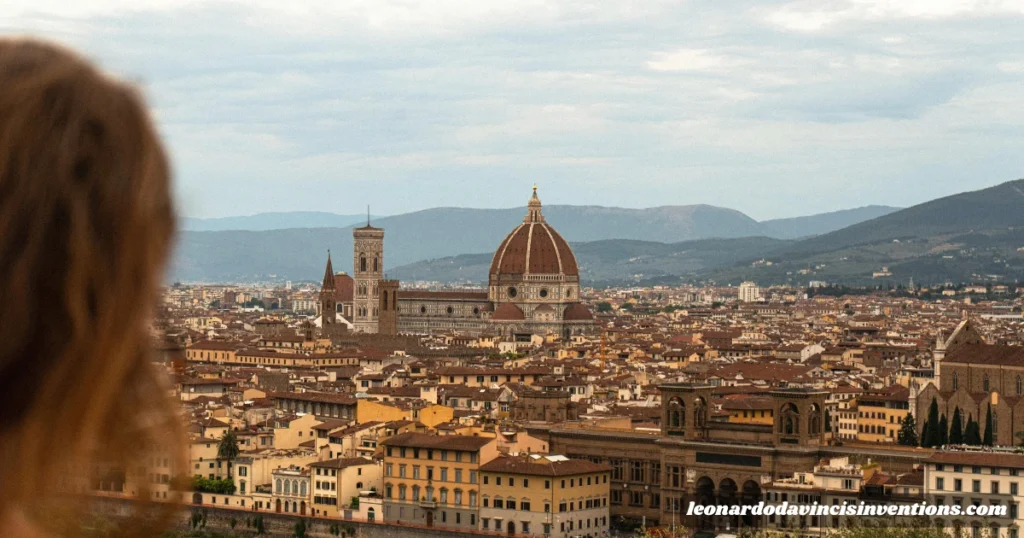
Leonardo da Vinci Museum in Florence Options
Florence is home to the Leonardo da Vinci Museum, dedicated to his mechanical and engineering ideas. These aren’t dusty displays. They’re designed to help you understand how Leonardo’s mind connected observation to design.
What makes these exhibits effective:
- Physical reconstructions instead of only drawings
- Clear explanations of how ideas worked (and why some didn’t)
- Focus on curiosity and experimentation, not hero worship
Common themes you’ll encounter:
- Bridge designs and structural engineering
- Flying machines (the helicopter, aerial screw, and gliders)
- Military inventions (the tank, siege machines, and defensive systems)
- Gears, pulleys, and mechanical transmission systems
- Hydraulic studies and water control concepts
These museums are accessible even if you have no engineering background. The goal is to see Leonardo as a problem-solver, not just memorize facts.
Most Leonardo da Vinci Museum Florence tickets can be purchased on-site or in advance online. Unlike the Last Supper in Milan, timed entry is rare, though booking ahead during peak season (April–October) helps avoid lines.
Leonardo da Vinci Paintings in Florence
While Leonardo in Florence isn’t primarily about finished paintings, you’ll encounter works by his teacher Verrocchio and contemporaries like Raphael at the Uffizi. Leonardo da Vinci’s paintings in Florence are limited—he completed a few works here, and most were later moved to other collections.
But the artistic tradition he grew up in is everywhere: perspective studies, anatomical accuracy, and light modeling techniques that defined the period.
Walking through these galleries shows you what Leonardo was reacting to, building on, and eventually surpassing.
Leonardo da Vinci House in Florence
There is no preserved “Leonardo da Vinci house in Florence” in the traditional sense. Leonardo lived and worked in various locations in Florence during his years there, primarily in workshop settings such as Verrocchio’s studio. None of these sites functions as a house museum today.
However, his actual birthplace—a stone farmhouse in Anchiano, near Vinci—still stands and is open to visitors.
How far is Vinci from Florence? About 50 kilometers (30 miles), roughly an hour by car or 90 minutes by regional train and bus. Florence makes the most practical base for visiting this authentic Leonardo location.
Renaissance Walking Tours
Florence rewards context. A good Italian Renaissance walking tour doesn’t just show you buildings—it explains how Florence’s guild system, political structure, and patronage networks created an environment where someone like Leonardo could thrive.
You’ll learn:
- How Medici patronage shaped artistic experimentation
- Why did artists study anatomy, geometry, and engineering
- How workshops functioned as training grounds for polymaths
- What made Florence different from other European cities in the 15th century
Guided tours are most helpful when you want a framework quickly. They’re less essential if you enjoy self-directed exploration and reading museum labels at your own pace.
Practical Visiting Realities: Crowds, Pacing, and Museum Fatigue
Florence is walkable, compact, and tourist-friendly. But it’s also heavily visited, and museum fatigue is real.
Crowds are manageable but present. Florence isn’t as overwhelming as the Louvre or the Sistine Chapel, but expect lines at major museums (especially Uffizi and Accademia). Leonardo-focused invention museums tend to be quieter.
Museum fatigue sets in faster than you think. Most people can focus on detailed exhibits for 90 minutes to 2 hours before their attention drifts. Plan breaks. Don’t try to visit three museums in one afternoon.
Walking distances are short. Florence’s historic center is small. You can walk from one end to the other in about 20 minutes. This makes it easy to split your day between museums, walking tours, and downtime.
Timed entry is less common than in Milan. Most Leonardo da Vinci museum locations in Florence operate on a first-come, first-served or same-day basis. The exception is the Uffizi and Accademia during peak season—book those in advance if they’re on your list.
Morning visits are quietest. Leonardo’s invention museums and smaller exhibits are least crowded in the first hour after opening.
If You Want to See Where It Began
Florence explains how Leonardo’s thinking was shaped — the workshops, the guild culture, the Medici environment. But the story doesn’t end within the city walls. A short journey into the Tuscan countryside brings you to Anchiano and Vinci, where Leonardo was born and where his early life is interpreted in depth.
Seeing his birthplace adds a different dimension to your experience in Florence. It shifts the experience from understanding his ideas to standing in the landscape that formed them.
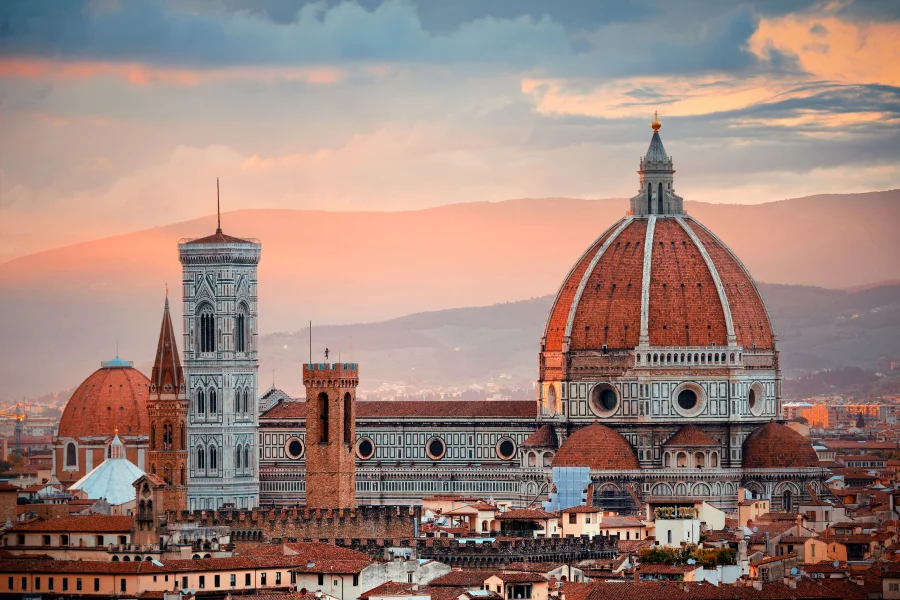
Step Inside Leonardo’s Birthplace in the Tuscan Hills
Travel from Florence to Anchiano and Vinci to explore where Leonardo’s life began and how his early environment shaped his thinking. This private day experience combines museum context, countryside landscapes, and a relaxed Tuscan lunch with seamless round-trip transport.
Your Best Florence Itineraries: 1-Day and 2-Day Leonardo Focus
1-Day Florence Leonardo Plan
Best for: Travelers passing through Florence who want a concentrated Leonardo experience without adding extra cities.
Morning (9:00 AM – 12:00 PM): Visit the Leonardo da Vinci Museum in Florence. Spend 2–3 hours exploring working models, annotated drawings, and interactive exhibits. Focus on the machines that interest you most—flying devices, military engineering, structural systems.
Lunch break (12:00 PM – 1:30 PM): Eat near the historic center. Use this time to rest and avoid museum fatigue.
Afternoon (1:30 PM – 4:00 PM): Renaissance walking tour or a visit to the Uffizi. If you choose a walking tour, focus on workshops, Medici history, and the cultural environment that shaped Leonardo. If you choose the Uffizi, prioritize the rooms covering 15th-century Florentine art.
Why this works: You get both the inventions and the context in a single day without being overloaded. Florence is compact enough that you won’t waste time on logistics.
2-Day Florence Leonardo Plan
Best for: Travelers who want depth and a slower pace.
Day 1 – Leonardo’s Inventions and Mechanics
- Morning: Leonardo da Vinci Florence museum visit (2–3 hours)
- Afternoon: Second Leonardo museum or science-focused exhibit (if available)
- Evening: Walk through the historic center, focusing on workshop districts and guild architecture
Day 2 – Renaissance Art and Cultural Context
- Morning: Uffizi or Galleria dell’Accademia (focus on 15th-century Florentine art)
- Afternoon: Renaissance walking tour, focusing on Medici patronage and workshop culture
- Optional: Visit the Museo di San Marco to see Fra Angelico‘s frescoes (context for how Florence trained artistic minds)
Why this works: Day 1 immerses you in Leonardo’s mechanical thinking. Day 2 gives you the artistic and cultural world that made him possible. The pacing prevents fatigue and allows time to absorb what you’re seeing.
How Florence Fits Into a Multi-City Leonardo Trip
Florence works best as either:
Your starting point. If you’re building a multi-city Leonardo trip, starting with Leonardo da Vinci in Florence gives you the foundational context—the Renaissance culture, the workshop training, the Medici environment—that makes Milan and Paris more meaningful.
Your invention focus. If Milan is your art focus (The Last Supper) and Paris is your fame focus (Mona Lisa), Florence becomes your invention and engineering focus. This creates a balanced trip across Leonardo’s different contributions.
Your base for exploring Vinci. Leonardo’s birthplace is a short trip from Florence. If you want to visit Vinci and Anchiano (his actual birthplace farmhouse), Florence is the most practical base. How far is Vinci from Florence? About 50 kilometers—easily manageable as a half-day or full-day excursion.
Most Common Multi-City Combinations
Florence + Milan (3–4 days total): The strongest short route. Florence for inventions and context; Milan for The Last Supper and a mature career.
Florence + Vinci + Milan (5–6 days total): Adds the birthplace pilgrimage for true fans.
Florence + Milan + Paris (7+ days total): The full Leonardo art + invention tour across Europe.
Florence anchors all of these itineraries. It’s the context city that makes the other stops richer.
Can You Do a Day Trip to Florence from Rome?
Yes, but it’s tight. The high-speed train from Rome to Florence takes about 90 minutes. A day trip is technically possible—you’d have roughly 6–7 hours in Florence—but it works best if your focus is narrow (one Leonardo museum plus a walking tour, for example). For a deeper experience of Leonardo da Vinci in Florence, staying overnight gives you the time and pace you need.
Final thought
This post was all about Leonardo da Vinci in Florence — not as a checklist of attractions, but as the environment that shaped his way of thinking.
Florence is less about rushing through sites and more about understanding the world that made Leonardo possible. Take your time, follow what genuinely interests you, and allow the city’s history to reveal itself.
Frequently Asked Questions
Leonardo trained and worked in Florence at key moments of his life: he developed as an artist and designer in the city’s workshop culture, and later returned as an established master to take on technical and artistic projects for the Florentine state—most notably work connected to engineering surveys and planning around the Arno River.
Not exactly. Leonardo was born in the Tuscan town of Anchiano, near Vinci—in the countryside outside Florence—so he’s closely tied to the Florentine region, but he was not born in Florence itself.
He moved to Florence as a teenager to train professionally, entering the world of elite Renaissance workshops where advanced drawing, painting, and technical skills were taught and where major patrons and commissions were concentrated.
The main place to see Leonardo’s paintings in Florence is the Uffizi Galleries, which hold major works from his early career—most famously the Annunciation (a youthful painting associated with his time in Verrocchio’s circle).
No. Leonardo died in France and is traditionally associated with a tomb at the Chapel of Saint-Hubert at the Château d’Amboise, not in Florence.
A strong contender for “most famous” is Botticelli’s The Birth of Venus, housed in Florence’s Uffizi Gallery—widely described as one of the most famous paintings in the world.
Related Post You May Like
Disclosure: This page may contain affiliate links. If you choose an experience through them, it helps support the site at no extra cost to you.
 Leonardo Bianchi is the founder of Leonardo da Vinci Inventions & Experiences, a travel and research guide exploring where to experience Leonardo’s art, engineering, and legacy across Italy and Paris.