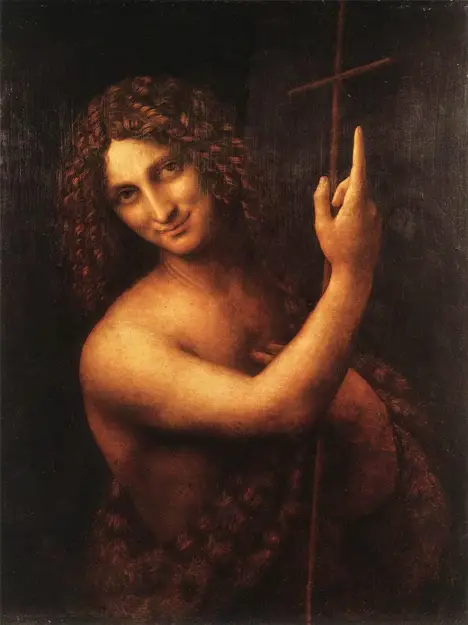
Saint John the Baptist by Leonardo da Vinci is a High Renaissance masterpiece that continues to captivate art lovers and scholars alike. This painting, believed to be da Vinci’s final work, showcases his skill in capturing the subject’s mystical essence through chiaroscuro.
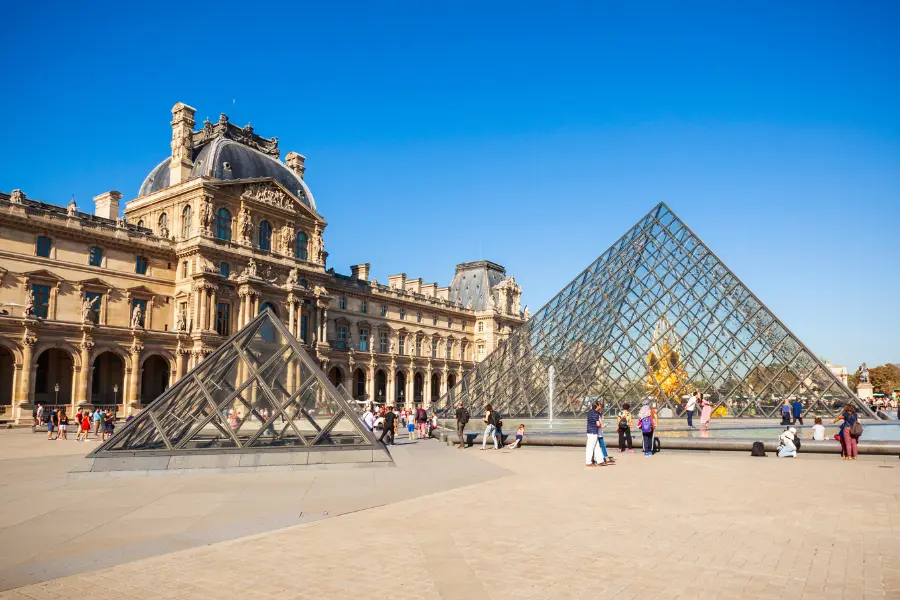
Currently housed at the Louvre Museum in Paris, this painting is notable for depicting Saint John the Baptist with an enigmatic smile and gesture, symbolizing his important role in the Christian narrative.
Leonardo da Vinci’s Saint John the Baptist was created between 1513 and 1516, during the High Renaissance’s transition into Mannerism. The painting is crafted in walnut oil on walnut wood and measures 69 x 57 cm.
Soft light and shadow give the figure a three-dimensional appearance, embodying da Vinci’s unparalleled technique and philosophical depth.
The painting’s restoration at the Louvre Museum has allowed the public to view this work in its renewed glory. This exhibition rekindled interest in da Vinci’s ingenious use of light and anatomy, drawing visitors worldwide.
The artwork’s serene and detailed depiction inspires fascination, making it a must-see for anyone interested in Renaissance art.
Historical Context
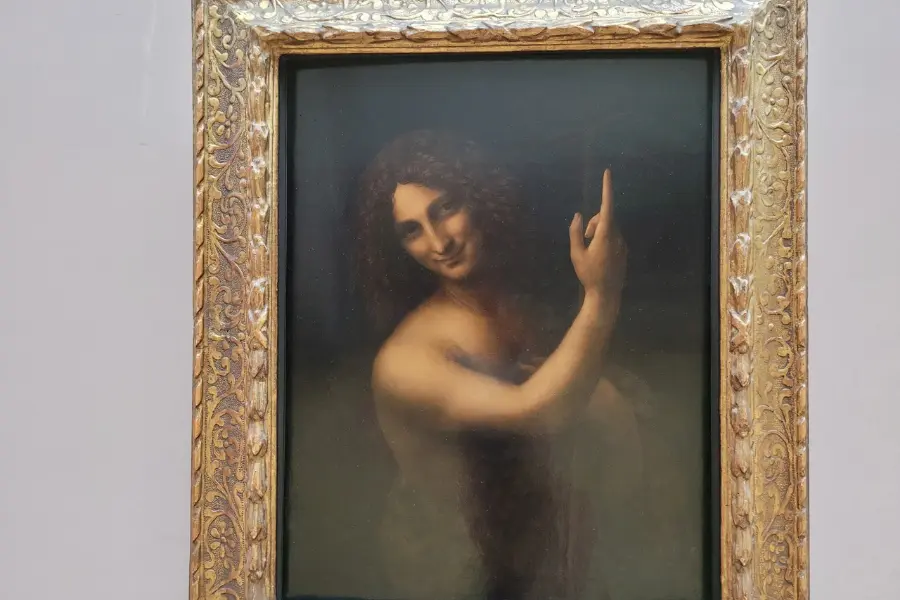
Saint John the Baptist painting by Leonardo da Vinci
Saint John the Baptist da Vinci reflects the artist’s mastery of Renaissance techniques and deep exploration of religious themes. The painting emerged during a period of significant cultural and artistic achievements, highlighting Leonardo’s innovation and unique style.
Leonardo da Vinci’s Early Life
Leonardo da Vinci was born in 1452 in Vinci, Italy. His early fascination with nature and art likely influenced his future works, including the notable Saint John the Baptist by Leonardo da Vinci.
Leonardo apprenticed to the artist Andrea del Verrocchio in Florence, where he honed his skills in a vibrant creative environment. During this apprenticeship, Leonardo contributed to pieces like The Baptism of Christ, on which Verrocchio and Leonardo collaborated.
Leonardo’s early exposure to diverse artistic techniques set the stage for his future masterpieces, allowing him to develop a unique approach that blended observation with imagination.
Art and Culture in Renaissance Italy
The Italian Renaissance marked a revival of interest in classical art and culture, greatly influencing artists such as Leonardo da Vinci. Artists during this era found inspiration in humanism, emphasizing the potential of individuals to improve the world through creativity.
Within this context, the Saint John the Baptist painting showcases Leonardo’s use of chiaroscuro and his ability to portray enigmatic figures.
The supportive environment of Renaissance Italy provided Leonardo with opportunities to experiment with technique and form. His work on pieces such as the Annunciation, Leonardo, and John the Baptist demonstrates the era’s shift towards naturalism and detailed human expression.
Artistic Significance
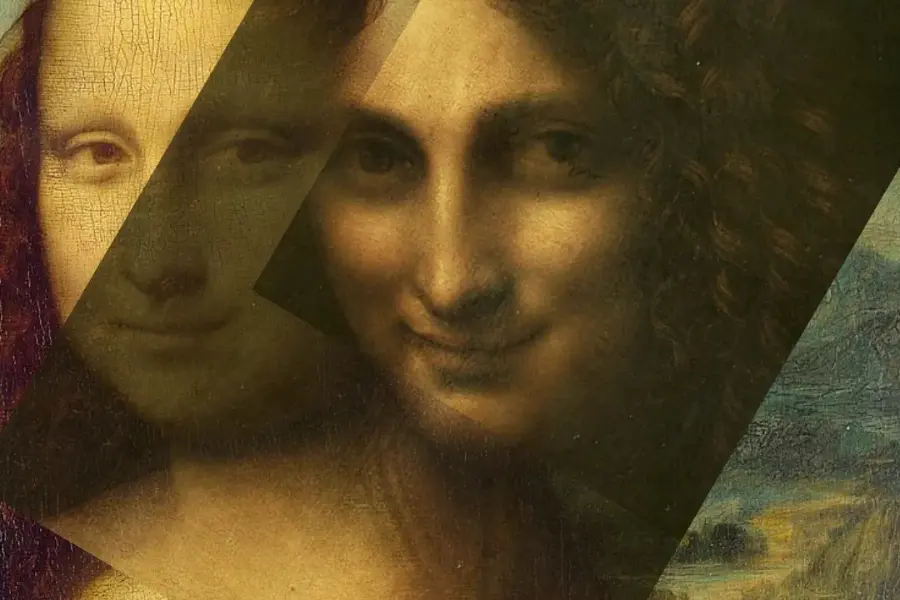
Saint John the Baptist and Mona Lisa are renowned for their enigmatic smiles, innovative perspectives, and exceptional realism
Saint John the Baptist by Leonardo da Vinci is a masterpiece renowned for its dramatic use of light and shadow. This painting illustrates groundbreaking techniques at the time and captures rich symbolic elements.
Symbolism in ‘Saint John the Baptist’
Leonardo da Vinci’s Saint John the Baptist painting carries deep symbolic meaning. The figure of John the Baptist is depicted pointing upward, a gesture interpreted as a symbol of spiritual awakening and divine revelation.
His enigmatic smile and serene expression add to the mystic aura, reflecting inner knowledge and spiritual themes.
The contrast between light and dark, known as chiaroscuro, highlights the duality of human existence and spiritual enlightenment. This painting invites viewers to contemplate the earthly and divine connection.
Such symbolic representation makes Saint John the Baptist not just a visual experience but a thought-provoking meditation on faith and spiritual insight.
Innovations in Technique and Style
The painting John the Baptist by Leonardo da Vinci is celebrated for its innovative techniques.
Da Vinci’s use of chiaroscuro creates a striking three-dimensional effect, setting this work apart from his contemporaries.
The subtle play of light and shadow gives John’s figure a lifelike presence and a suggestive, almost ethereal aura.
Da Vinci also employed sfumato, a technique that softens transitions between colors and forms, enhancing the painting’s depth and realism.
Critics often laud Leonardo John the Baptist for these groundbreaking techniques, which influenced countless artists and marked a pivotal moment in art history.
These stylistic choices help define Saint John the Baptist as a timeless work that continues to inspire admiration and study.
The Painting’s Journey
Saint John the Baptist is housed in the Louvre Museum in Paris.
Leonardo da Vinci’s “Saint John the Baptist” journey has been as intriguing as its creation. Each aspect, from possession history to modern preservation, plays a crucial role in maintaining its legacy.
Provenance and Ownership
“Saint John the Baptist,” painted by Leonardo da Vinci, was completed between 1513 and 1516. It is now housed in the Louvre Museum in Paris.
The painting’s first known owner was King Francis I of France, who acquired it shortly after its completion. During Leonardo’s final years, he was a notable patron of the arts and a supporter of the artist.
Throughout its history, the painting has remained in France, surviving the French Revolution and various regime changes. During World War II, it was hidden to protect it from damage or theft.
Its continuous presence in a stable environment has contributed significantly to its preservation, a testament to the French commitment to cultural heritage.
Restoration and Preservation Efforts
Preservation of “Saint John the Baptist” involves careful management. Over the years, the painting has undergone various conservation efforts.
These have focused on preserving its walnut-wood panel base and vibrant oil paint, while maintaining Leonardo’s use of chiaroscuro.
In recent years, experts have used advanced technologies, such as infrared reflectography, to study artworks without causing damage.
These efforts help understand the painting’s original state and guide future restoration work.
Conservators must balance maintaining the painting’s integrity with the challenges of age-related deterioration. This delicate balance ensures that future generations can appreciate da Vinci’s masterpiece.
Influence and Legacy
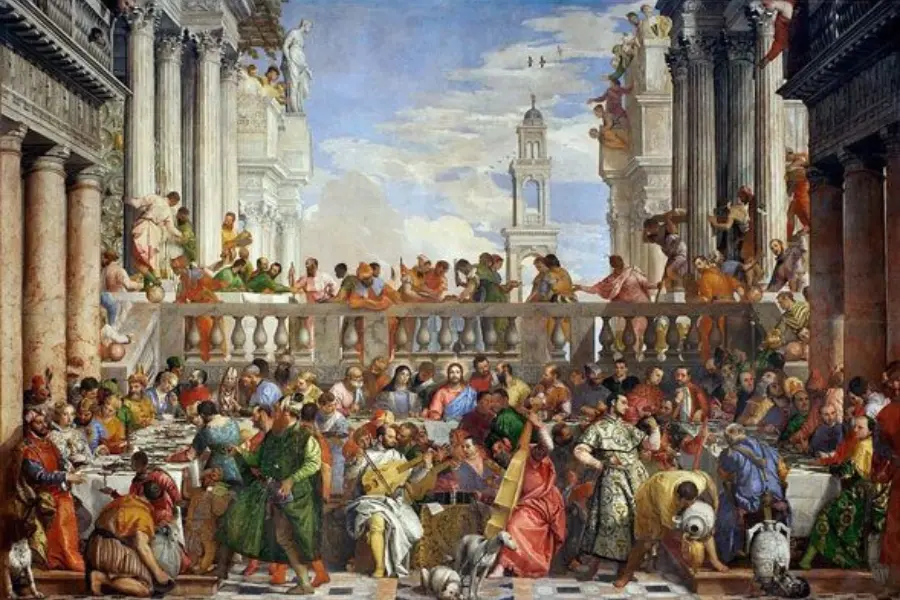
The Wedding Feast at Cana by Paolo Veronese, Leonardo’s unique artistry laid the foundation for the Mannerism movement during the Renaissance
Leonardo da Vinci’s Saint John the Baptist painting has left a significant mark on the art world. It impacted later art movements and shaped how Saint John was depicted.
Da Vinci’s innovative techniques have inspired countless artists. Two key areas of influence are its role in art movements and its legacy in depicting Saint John.
Impact on Later Art Movements
The Saint John the Baptist painting introduced innovative techniques like chiaroscuro and sfumato, which added depth and realism.
These methods greatly influenced the development of Baroque art, where artists like Caravaggio explored dramatic lighting and soft transitions between colors.
Saint John’s expressive pose and enigmatic gaze challenged traditional portrayals, laying the groundwork for styles that emphasize emotion and personality.
Leonardo’s unique artistic approaches became foundational for the Mannerism movement during the Renaissance. This movement adopted the elongated forms and sophisticated compositions seen in works by artists inspired by Leonardo.
Art movements across Europe absorbed aspects of Leonardo’s methods, ensuring his techniques left a lasting legacy on the development of Western art.
Depictions of Saint John the Baptist in Art
In Saint John the Baptist, Leonardo presents the subject with a mysterious smile and pointing gesture, which became iconic in many later artworks.
The portrayal emphasizes spiritual themes and inner contemplation, focusing on John’s spiritual and prophetic nature. It captures an intimate moment with a deep connection to divine inspiration.
Leonardo’s portrayal of John has inspired artists like Raphael and El Greco. The painting’s stylistic elements echo the depictions of John in various artworks throughout the centuries.
This painting remains an enduring influence, celebrated in collections worldwide for its artistic innovation and profound spiritual impact.
Current Exhibition and Accessibility
Saint John the Baptist by Leonardo da Vinci is a highly regarded masterpiece. Visitors can explore the artwork’s rich history and significance through various exhibitions and virtual platforms.
Display Locations and Public Viewing
The Saint John the Baptist painting is part of the Musée du Louvre’s collection in Paris. It remains a central piece in the museum, drawing crowds interested in Renaissance art.
In addition, the painting occasionally goes on loan to other prestigious institutions, such as the Louvre Abu Dhabi, allowing a broader audience to experience da Vinci’s work firsthand.
When displayed, the painting is usually accompanied by detailed information panels that delve into its creation’s context and significance.
The Louvre Abu Dhabi welcomes the painting, enhancing the city’s reputation for cultural curiosity.
These exhibitions enable art lovers to engage with the painting deeply and closely study Leonardo’s technique and style.
Virtual Exhibitions and Catalogs
For those unable to view the painting in person, virtual exhibitions provide an accessible way to enjoy Leonardo da Vinci’s works.
Online platforms often host detailed images, allowing viewers to appreciate the painting’s intricate details.
These virtual exhibits include interactive elements, such as zooming in on specific areas, learning about the painting’s history, and comparing it with other works, such as Leonardo’s Annunciation.
Furthermore, digital catalogs often accompany these virtual exhibitions, offering insightful essays and analyses.
Art enthusiasts can access these resources to enhance their understanding of the Saint John the Baptist painting through historical context and expert commentary.
These digital platforms broaden accessibility, ensuring that da Vinci’s artistry reaches a global audience.
Final Thoughts
Saint John the Baptist da Vinci is a captivating artwork from the High Renaissance. Leonardo da Vinci’s portrayal of the saint combines mystery and symbolism, capturing the viewer’s imagination.
The painting stands out with its use of chiaroscuro, creating a dramatic contrast between light and shadow.
Leonardo’s depiction of Saint John is intriguing. Contrary to traditional images of the saint as rugged and masculine, Leonardo presents him with a softer and more effeminate look.
This choice prompts viewers to reflect on the identity and interpretation of biblical figures.
The painting features Saint John with a gentle smile and his finger pointing upwards, a gesture interpreted in various ways. Some see this as a sign pointing to the heavens, while others see it as a symbol of the divine message he represents.
Despite its simplicity, this gesture has layers of meaning.
Technically, the painting exemplifies Leonardo’s mastery. The smooth brushwork and delicate attention to detail showcase his skill.
Chiaroscuro highlights Saint John and adds depth to the background, inviting observers to consider what lies beyond the canvas.
Saint John’s expression and pose evoke a sense of calm and contemplation, contrasting with more assertive depictions often seen in religious art of the time. This sets Leonardo’s work apart, encouraging viewers to engage with its subtle nuances.
FAQs about Saint John the Baptist
What is St. John the Baptist known for?
St. John the Baptist is best known as a prophet and forerunner of Jesus Christ, preparing people for his arrival through preaching repentance and baptizing believers in the Jordan River. He is also famous for baptizing Jesus himself, marking a key moment in Christian tradition.
What happened to Saint John the Baptist?
John the Baptist was imprisoned and later executed by beheading on the आदेश of Herod Antipas. This happened after John publicly criticized Herod’s unlawful marriage, which angered Herodias and ultimately led to his death.
Why was John the Baptist made a saint?
John the Baptist is honored as a saint because of his holy life, prophetic mission, and role in preparing the way for Jesus. He is considered a model of faith and repentance, and uniquely, both his birth and death are commemorated in Christian tradition.
How was Saint John the Baptist related to Jesus?
John the Baptist and Jesus were relatives through their mothers, as Elizabeth (John’s mother) is described as a relative of Mary (Jesus’s mother). This makes them family, often understood as cousins, though the exact relationship is not precisely defined.
Who is the greatest prophet of all time?
In the Bible, Jesus himself states that “no one greater has arisen than John the Baptist” among those born of women, highlighting John’s unique importance as a prophet. However, different religions and traditions may recognize other figures as the greatest prophet.
Who died first between Jesus and John the Baptist?
John the Baptist died before Jesus. Historical and biblical accounts indicate that John was executed earlier during the rule of Herod Antipas, prior to the crucifixion of Jesus.
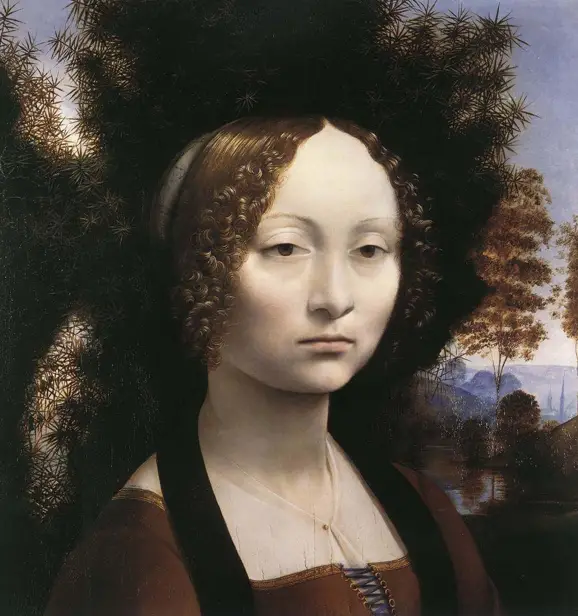
The Ginevra de’ Benci is a portrait of the 15th-century Florentine aristocrat Ginevra de’ Benci (born around 1458) by Leonardo da Vinci. Ginevra de’ Benci, age 16 or 17, is a babysitter who is dressed in a brown dress with blue laces and gold trim, as well as a black scarf. She wears a delicate white shirt with a golden pin beneath the outfit. Her skin is flawless, and her hair is done in ringlets.
Her look is a little irritated on the one hand and proud on the other. Her eyes make this clear. Her left eye is focused on the spectator, but her right eye appears to be staring down at something. Ginevra’s facial expression has been viewed by experts as an indicator that she is unhappy with the (upcoming) marriage. Take note of Ginevra’s sparse brows. Shaving the brows was typical for women at the time, as shown in Leonardo da Vinci’s Mona Lisa.
A juniper bush grows behind Ginevra. The halo of spikes from juniper leaves contrasts wonderfully with Ginevra’s depiction. Mountains, trees, water, a tiny village, and a hazy sky are typical of Leonardo da Vinci’s style in the right background. It is the only Leonardo painting on public display in the Americas, at the National Gallery of Art in Washington, D.C.
History of The Ginevra de’ Benci Painting
In the leonardo da vinci Ginevra de’ Benci painting, Ginevra de Benci, a well-known young Florentine woman, is largely regarded as a sitter. Leonardo created the picture in Florence between 1474 and 1478, presumably to commemorate Ginevra’s 16th-year marriage to Luigi di Bernardo Niccolini. It is more than likely a commemoration of the engagement.
Contemporary portraits of females were typically commissioned for one of two reasons: betrothal or marriage. Wedding pictures were customarily done in pairs, with the woman on the right facing left and the man on the left. Because this portrait faces right, it most likely signifies betrothal.
The juniper bush that surrounds Ginevra’s head and fills much of the background serves a purpose beyond decoration. The juniper was considered a symbol of female virtue in Renaissance Italy, and the Italian term for juniper, Ginepra, is also a play on Ginevra’s name.
The laurel and palm on the back of the artwork represent Ginepra’s intelligence and moral standards, respectively. However, the laurel and palm were also Bernardo Bembo’s personal insignia, as he was considered to be having a platonic affair with Ginevra. Bernardo Bembo was the Venetian ambassador to Florence, and he most likely commissioned the rear of this painting (as well as the front, according to others, though this is unverified).
Ginevra de’ Benci worth
Unlike Leonardo’s previous female portraits, this lady appears sulky, unforgiving, and arrogant, highlighted by the slightly smaller cast of one eye, which makes her seem withdrawn. Her left eye appears to be looking directly at us, while her right eye appears to be looking beyond some intangible point.
Ginevra, like other Florentine ladies of the time, has shaved her brows (this is also obvious in the Mona Lisa). Perhaps her expression shows that she was not fully enthusiastic about her impending marriage.
Later in life, she would go into self-imposed exile in order to recover from a terrible illness; she was also plagued by an ill-fated love affair.
FAQs about Ginevra de’ Benci painting
What painting sold for $70 million?
Several artworks have approached or exceeded $70 million, but one notable example is Pablo Picasso’s Garçon à la pipe, which sold for about $104 million in 2004 and helped push the market into that price range. Today, many major masterpieces routinely sell for tens or hundreds of millions, depending on rarity and demand.
Why is Ginevra de Benci famous?
Ginevra de’ Benci is famous as one of Leonardo da Vinci’s earliest portrait paintings and the only Leonardo work permanently displayed in the Americas, at the National Gallery of Art in Washington, D.C. It is also admired for its innovative realism and symbolic use of juniper, which represents virtue.
Who bought the $450 million painting?
The $450.3 million painting Salvator Mundi was purchased in 2017 by Saudi Prince Badr bin Abdullah Al Saud, widely believed to have acted on behalf of Crown Prince Mohammed bin Salman.
What is Da Vinci’s most famous piece?
Leonardo da Vinci’s most famous work is widely considered the Mona Lisa, known for its mysterious expression and global cultural significance. It is housed at the Louvre Museum in Paris and is among the most visited artworks in the world.
What painting sold for $500 million?
No painting has officially sold for $500 million. However, Leonardo da Vinci’s Salvator Mundi, sold for $450.3 million, is the closest confirmed sale and remains the most expensive painting ever sold at auction.
What painting just sold for $230 million?
Recent high-value art sales have approached this level, though prices vary in private transactions. For example, works by artists like Jean-Michel Basquiat and Pablo Picasso have sold for $100–200+ million in private deals, though exact figures such as $230 million are often not publicly confirmed.
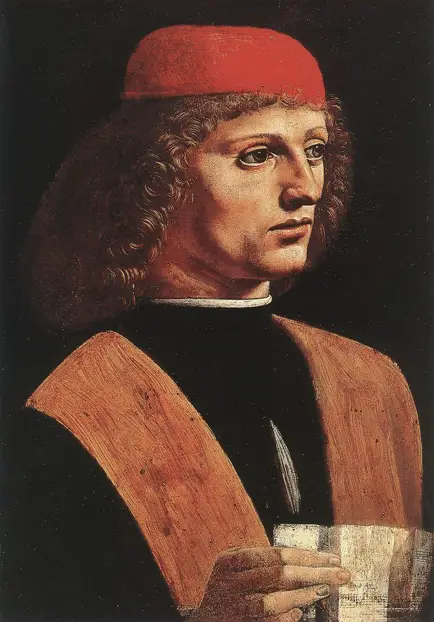
The Portrait of a Musician depicts a young man with wavy, shoulder-length hair, wearing a red cap, and intently focused on something beyond. His look is heightened by clever lighting that draws emphasis to his face, particularly his huge, glassy eyes.
He’s dressed in a tight white undershirt. His black doublet is unfinished, and his brownish-orange stole is barely painted. The colors have faded, most likely due to modest repainting and inadequate care. The doublet was most likely originally dark red, and the stole was bright yellow, according to a technical inspection of the piece.
The man’s mouth suggests a smile, or that he is about to or has just finished singing; the impression of the light beyond the frame of his eyes is a distinguishing aspect of his face. The light dilates the pupils of both eyes, but the proper right pupil dilates significantly more than the left, which is not conceivable.
Some claim this is purely for dramatic effect, so the audience perceives movement from the musician’s left to the right side of his face.
Leonardo da Vinci Portrait of a Musician was created in oils and perhaps tempera on a small walnut wood panel measuring 44.7 x 32 cm. It represents a young man in a three-quarter view with a bust-length right hand. The painting is mostly incomplete, except for the face and hair, but it’s in decent shape overall, with only the bottom right corner damaged. According to art historian Kenneth Clark,
The Musician is arguably the best-preserved of Leonardo’s extant paintings, despite the colors having diminished over time.
History of the Portrait of a Musician
The Portrait of a Musician is a painting from the same era as Lady with an Ermine. If Leonardo did paint it, Portrait of a Musician would be his only portrait of a man, according to some. There is no documentation for this painting, nor is there any record of anyone ever commissioning it. Despite being widely regarded as his least important work, fate has decreed that it be the best preserved.
Unfortunately, the sitter’s identity remains unknown today. The sheet of paper was not visible before restoration in the early twentieth century, and it was believed to be a portrait of Ludovico Sforza himself. Initially, the main candidate was Sforza’s court musician, Franchinus Gaffurius (1451-1522). Because both men worked at Duke’s court and thus knew one another, this theory became very believable.
Many people feel that the subject’s face is strained because he is in the middle of a performance. The painting has also been seen as a reflection of Leonardo’s self-conceived idea of painting’s superiority over other creative forms, such as poetry and music. Leonardo famously claimed at the start of his unfinished Libro de pittura
Original painting of the Portrait of a Musician
Although the attribution of Leonardo’s Portrait of a Musician to him was contentious in earlier centuries, current art historians consider it one of his original works. For virtually as long as the painting has been known, there have been doubts about its attribution to Leonardo.
It was identified by Leonardo in a 1672 catalog for the Pinacoteca Ambrosiana, while a 1686 inventory of the collection assigned it to Bernardino Luini. This was shortly removed and replaced by Leonardo.
When it comes down to it, all we can say for certain about Portrait Of A Musician is what we see in front of our eyes: how well Leonardo obviously understood the bone structure under the flesh, how free the pose is, the exquisitely wavy hair, and graceful fingers that are so common in Leonardo’s work.
FAQs about Portrait of a Musician
Who bought the $450 million painting?
The $450.3 million painting, Salvator Mundi by Leonardo da Vinci, was officially purchased at auction by Saudi Prince Badr bin Abdullah. However, multiple reports indicate he acted on behalf of Crown Prince Mohammed bin Salman, making the true buyer a subject of ongoing discussion.
How much did Portrait of an Artist sell for?
David Hockney’s Portrait of an Artist (Pool with Two Figures) sold for about $90.3 million at a Christie’s auction in New York in 2018, setting a record at the time for a living artist.
What is the summary of Portrait of an Artist?
Portrait of an Artist (Pool with Two Figures) is a modern painting by David Hockney depicting a man swimming underwater while another figure looks down from the poolside. The work explores themes of relationships, observation, and emotional distance, combining realism with Hockney’s signature vibrant style.
Did Michelangelo ever marry?
No, Michelangelo never married and had no children. Historical records suggest he devoted most of his life to his artistic work, maintaining a highly private personal life.
Was Leonardo da Vinci married, and did he have children?
Leonardo da Vinci never married and had no children. His personal life remains largely undocumented, and he left no direct descendants.
What caused Leonardo da Vinci’s death?
Leonardo da Vinci died on May 2, 1519, at the age of 67 in France. While the exact cause is not definitively known, historians widely believe he died of a stroke.
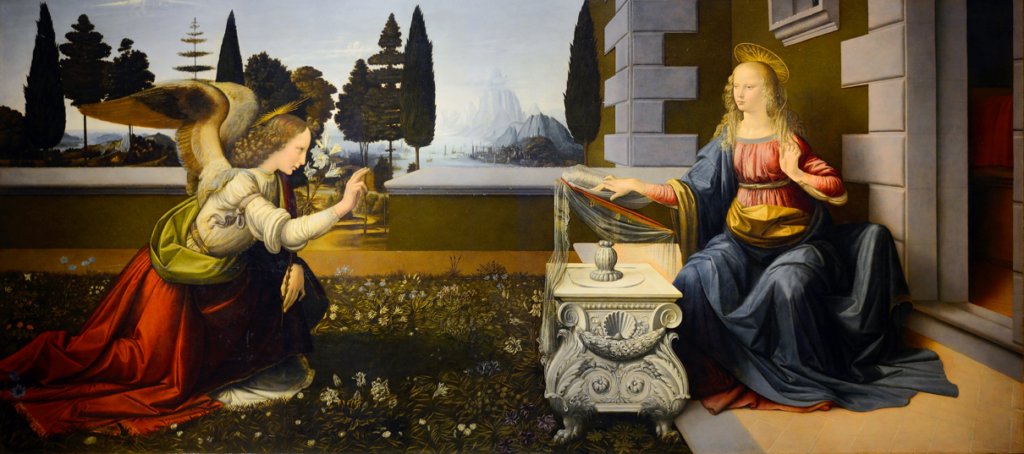
Leonardo da Vinci The Annunciation is a masterpiece that has captivated art enthusiasts and historians alike. If you’re trying to understand its significance and beauty, exploring its elements and historical context can provide clarity and appreciation.
This painting, completed around 1472-1476, marks Leonardo’s earliest major work and showcases the influence of his master, Andrea del Verrocchio.
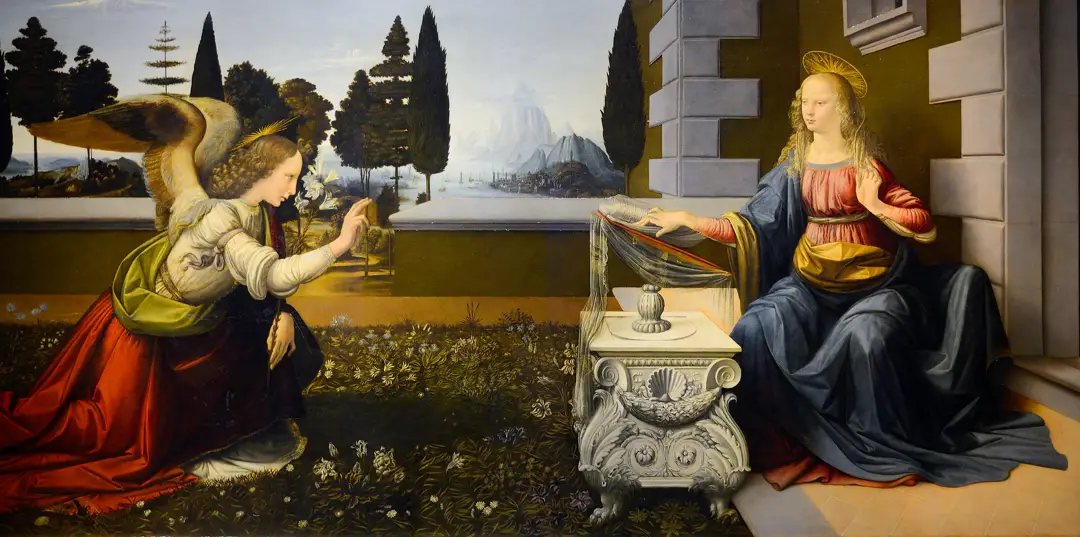
Set in a serene, natural landscape, the painting captures the biblical moment when the angel Gabriel announces to Mary that she will give birth to Jesus.
Leonardo’s use of oil and tempera on a poplar panel reflects his innovative spirit and technical prowess. The composition features the angel on the left, the Virgin on the right, and a lectern between them, creating a harmonious scene rich in symbolism and depth.
This early work of da Vinci can be found at the Uffizi Gallery in Florence, where it continues to draw visitors worldwide. The artwork highlights Leonardo’s emerging style and offers a glimpse into the rich artistic traditions of the Italian Renaissance.
By studying this piece, you can gain insight into the young da Vinci’s skill and the cultural heritage of 15th-century Florence.
Historical Context of ‘The Annunciation’
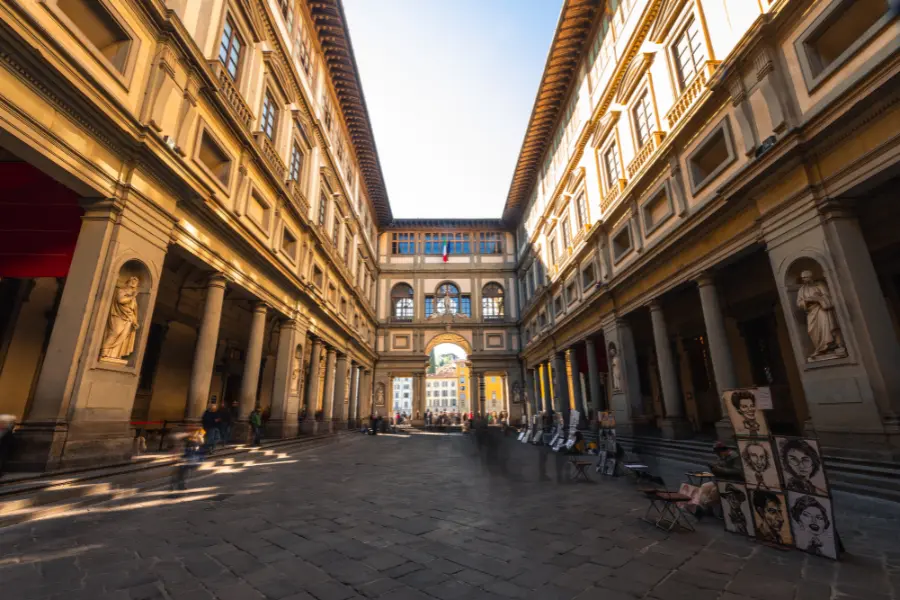
Uffizi Gallery in Florence, Italy
The Annunciation painting by Leonardo da Vinci is of great significance, emerging from the rich cultural and artistic tradition of 15th-century Florence. During this time, Leonardo was still in the early stages of his career, developing distinct techniques that would later define his masterpieces.
Cultural and Artistic Climate of the 15th Century
Florence was a vibrant center of artistic innovation during the 15th century. Wealthy families commissioned works from the most talented artists, and the city saw a surge in patronage.
This period, known as the Renaissance, brought a renewed interest in classical art, science, and humanism. Artists began exploring realistic human forms, perspective, and dramatic lighting.
Leonardo da Vinci and contemporaries such as Botticelli worked in an environment that encouraged experimentation and creativity.
The Annunciation painting exemplifies this, showcasing Leonardo’s early exploration of perspective and human anatomy.
This painting, created using oil and tempera on a large poplar panel, demonstrates a skillful blend of innovation and traditional religious themes. It captures the moment the Angel Gabriel announces to Mary that she will give birth to Jesus.
Leonardo da Vinci’s Early Career
Leonardo began his career as an apprentice in the studio of Andrea del Verrocchio, a leading Florentine artist. This apprenticeship allowed Leonardo to learn various artistic techniques and skills.
The influence of Verrocchio’s workshop is evident in da Vinci’s early works, including The Annunciation.
At the time, Leonardo was tasked with experimenting and perfecting his craft. The Annunciation painting by Leonardo da Vinci marks his emergence as a talented artist, showcasing his ability to blend scientific observation with artistic expression.
His intricate detailing and innovative use of perspective reflect his potential, setting the stage for future masterpieces like the Mona Lisa and The Last Supper.
Analysis of the Painting
Leonardo da Vinci Annunciation showcases the artist’s early expertise in composition, color, and symbolic representation. This painting features complex spatial design, remarkable use of light and shadow, and layered iconography.
Composition and Use of Space
The painting, completed between 1472 and 1476, illustrates da Vinci’s proficiency in linear perspective. He uses a vanishing point to create a sense of depth.
The figures of the angel and Mary are harmoniously placed, creating a balanced composition. Mary is on the right, reading a book, while the angel Gabriel is kneeling on the left.
The background showcases a garden and mountains, adding depth and drawing viewers into the scene. This careful arrangement demonstrates da Vinci’s early commitment to achieving naturalism in his work.
Color and Light Techniques
In The Annunciation, Leonardo da Vinci brilliantly employs a mix of oil and tempera on poplar wood, creating a rich texture.
Natural light pouring over the scene highlights the delicate details of the figures’ clothing and faces. Soft shadows provide depth, creating a three-dimensional effect.
The varied hues establish a serene atmosphere, enhancing the spiritual nature of the event being depicted.
Symbolism and Iconography
The Annunciation painting by da Vinci expertly incorporates symbols common to the Annunciation narrative.
Mary’s posture and the book suggest wisdom and devotion. The angel Gabriel holds a lily, a symbol of Mary’s purity. In the background, the garden refers to innocence and paradise.
Leonardo da Vinci’s The Annunciation showcases masterful use of perspective and materials typical of the Italian Renaissance. Its conservation has involved meticulous efforts to preserve the painting’s intricate details and vibrant colors.
Materials and Methods
Leonardo da Vinci created The Annunciation using oil and tempera on a large poplar panel. This choice of materials allowed him to produce fine details and subtle gradations in tone and color.
The painting features a well-established use of linear perspective, effectively creating depth by having parallel lines converge at a vanishing point.
The sfumato technique, for which Leonardo was known, is evident in the soft transitions between light and shadow. This creates a lifelike and almost three-dimensional effect. Delicate brushwork brings out the figures’ textures and the serene landscape.
History of Restoration
The Annunciation has undergone several restorations to preserve its original brilliance.
Significant attention has been given to cleaning the surface and stabilizing the panel. Old varnishes were removed in past restorations to reveal Leonardo’s vibrant color palette.
X-ray imaging has played a crucial role in analyzing the painting’s layers, helping conservators understand the artist’s process and correct alterations introduced during previous restorations.
These insights have been crucial for preserving delicate features like the angel Gabriel’s wings and the Virgin Mary’s expression.
Such careful restoration ensures that future generations can continue to enjoy The Annunciation painting as a masterpiece of Renaissance art.
Leonardo’s Influence and Legacy
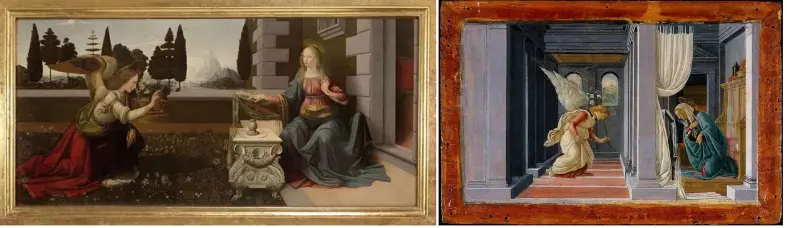
The Annunciation by Leonardo da Vinci (left) and Botticelli (right)
Leonardo da Vinci’s works have deeply impacted both artistic and scientific fields. His painting, The Annunciation, exemplifies his legacy’s blend of creative talent and innovative thought.
Impact on Renaissance Art
Leonardo da Vinci was a driving force in advancing Renaissance art. His use of perspective and human anatomy in The Annunciation revolutionized artistic techniques.
The painting’s detailed portrayal of figures and architecture reflects a mastery of spatial awareness, inspiring artists like Michelangelo and Raphael.
His ability to convey emotion and movement differed from the rigid styles of earlier periods. The fluid grace of figures in The Annunciation influenced countless artists, establishing new standards in art while furthering the humanist movement that defined the Renaissance.
Modern Perceptions and Interpretations
Today, The Annunciation by Leonardo da Vinci continues to captivate audiences and art scholars. Its intricate details and pioneering use of light and shadow invite ongoing analysis and interpretation.
The painting is often celebrated for its artistic value and for embodying the era’s intellectual curiosity.
Contemporary art historians often compare Leonardo’s work with his peers, recognizing the pantheon in which he stands among Renaissance greats.
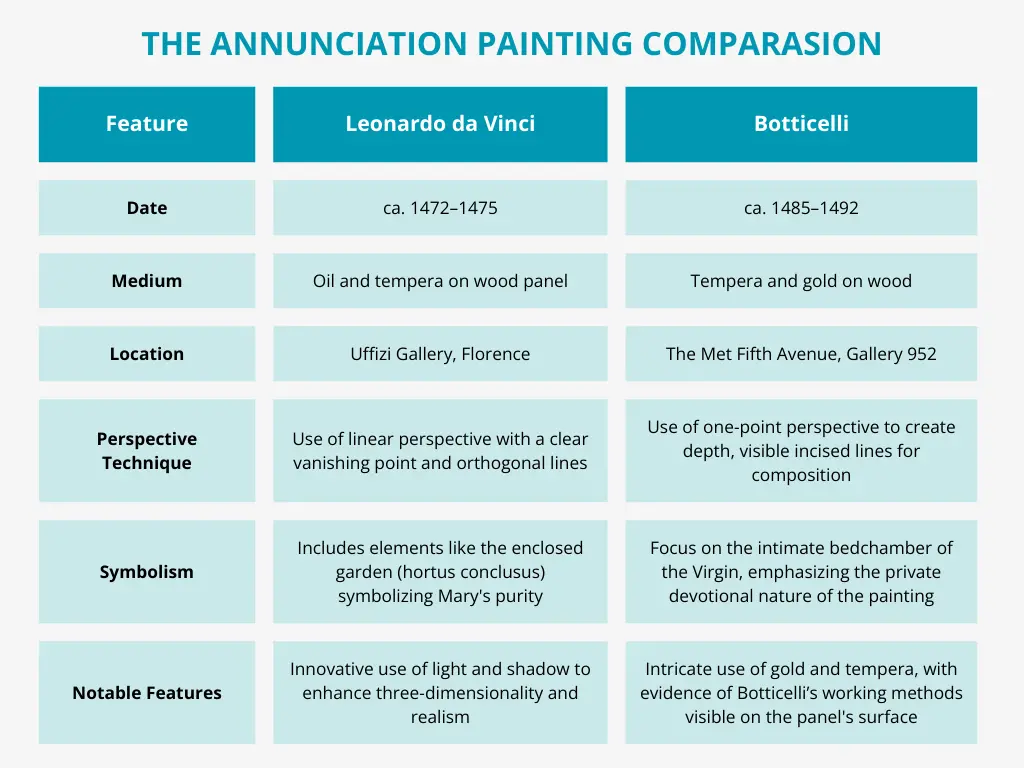
In particular, comparisons with works like Botticelli’s Annunciation help highlight Leonardo’s unique contributions.
The enduring relevance of his techniques and vision is evident in modern discussions surrounding innovation and creativity in art.
The Annunciation by Leonardo da Vinci is housed at the Uffizi Gallery in Florence, a prominent location that attracts global art enthusiasts. Visitors can explore the public exhibition, which offers insights into this iconic Renaissance work.
The Uffizi Gallery
The Uffizi Gallery in Florence, Italy, is the home of The Annunciation by Leonardo da Vinci. This esteemed gallery is one of the most significant art museums in the world. It offers a chance to view masterpieces from the Renaissance period, including this renowned work.
Arriving at the gallery in 1867, the painting was transferred from the San Bartolomeo Monastery.
Situated in a spacious room dedicated to Leonardo, the gallery offers ample opportunities to appreciate the artwork’s details. The painting signifies da Vinci’s early work, highlighting his initial style influenced by Andrea del Verrocchio.
Exhibition and Accessibility
Visitors to the Uffizi Gallery can see The Annunciation, displayed in a well-organized botanical hall. The gallery’s layout enhances viewing by providing clear sightlines and adequate lighting.
The lighting allows viewers to see the subtleties of da Vinci’s technique.
The gallery’s key feature is accessibility. Guides and information in multiple languages, including brochures and audio tours, allow viewers to engage deeply with the art.
The gallery also ensures accommodations for individuals with mobility challenges, making it inclusive. Regular exhibitions and special events further encourage the public to learn about Leonardo da Vinci’s legendary works of art.
Final Thoughts
Leonardo da Vinci’s The Annunciation is a remarkable example of early Renaissance art. Painted between 1472 and 1476, it showcases Leonardo’s developing style and use of perspective.
The painting is a collaborative effort. While Leonardo completed the final touches, he might have worked alongside other artists. This gives the painting a unique blend of styles, with Leonardo’s touch evident in the intricate details.
Several elements in The Annunciation carry deep symbolic meanings. The angel Gabriel holds a lily, symbolizing purity, while Mary’s book represents divine wisdom.
Such symbols highlight themes of innocence and faith.
The painting also demonstrates Leonardo’s mastery of light and shadow. The gentle transition of shades creates depth, illustrating his grasp of three-dimensional effects. This technique contributes to the painting’s realistic quality.
Key Takeaways: Leonardo da Vinci, The Annunciation blends artistic brilliance and symbolism. Its details and composition reveal the hallmarks of Leonardo’s genius during his formative years.
Understanding the context and craft of this artwork enhances appreciation for its enduring legacy.
FAQs about Leonardo da Vinci The Annunciation
What is the meaning of the Annunciation by Leonardo da Vinci?
Leonardo da Vinci’s Annunciation depicts the biblical moment when the angel Gabriel tells the Virgin Mary she will miraculously conceive and give birth to Jesus. This scene represents the Incarnation—God becoming human—and the beginning of salvation in Christian belief, often symbolized by elements such as light, gardens, and lilies.
When did Leonardo paint the Annunciation?
Leonardo painted the Annunciation around 1472–1476, during his early years as an apprentice in Andrea del Verrocchio’s workshop in Florence. It is considered one of his earliest surviving major works, showing both his developing skill and experimentation with perspective and light.
What did Da Vinci say on his deathbed?
According to the Renaissance writer Giorgio Vasari, Leonardo reportedly said he had “offended God and mankind” because his work did not reach the quality he desired. However, historians note this account may not be fully reliable, as it was recorded after his death and may include legend.
Why was Da Vinci’s grave destroyed?
Leonardo was originally buried at the Church of Saint-Florentin in Amboise, France. His grave was disturbed and partly destroyed during the French Revolution, when the church was demolished in 1802, scattering remains and leaving the exact location of his bones uncertain.
Who got Mary pregnant?
According to Christian belief, Mary conceived Jesus through divine intervention by the Holy Spirit, not through a human father. This miraculous conception, announced by the angel Gabriel, is a central element of the Annunciation and the doctrine of the Virgin Birth.
Why is the Annunciation so important?
The Annunciation is one of the most important events in Christianity because it marks the moment of the Incarnation—when God became human in the form of Jesus Christ. It has been a central theme in theology and art for centuries and is widely celebrated in Christian tradition.
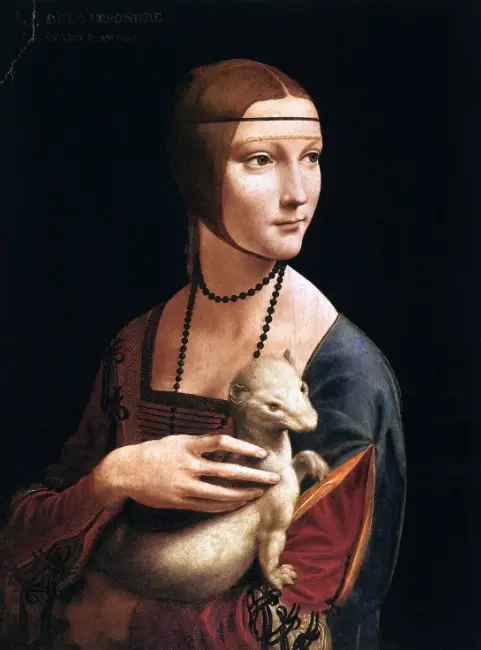
The Lady with an Ermine painting is a portrait generally attributed to Leonardo da Vinci, an Italian Renaissance artist. The Da Vinci Lady with an Ermine, dating from 1489 to 1491, is painted in oil on a walnut panel.
It depicts a half-length woman, rotated three-quarters to the right, with her face turned to the left. The animal in her arms twists similarly, creating significant contrapposto with the lady, a technique Leonardo had previously explored in the angel in the Virgin of the Rocks.
What is the meaning of Lady with an Ermine Painting?
A layer of white gesso and a layer of brownish underpaint are used to prepare the painting. The paint is applied evenly overall, similar to the Mona Lisa, while certain areas of the lady’s skin are more layered.
Its subject is Cecilia Gallerani, an enticing young woman from the Milanese court who was the favorite mistress of Ludovico Sforza, Duke of Milan, at the time of its execution; Leonardo was a painter to the Sforza court in Milan at that time.
For 18 years, the duke was da Vinci’s patron and champion, earning him the moniker “the white ermine.” It is the second of Leonardo’s only four surviving portraits of women, the others being La Belle Ferronnière, Ginevra de’ Benci, and the Mona Lisa.
What is an Ermine?
The Lady with an Ermine painting was purchased by the young Prince Adam Czartoryski (a hero of the war for Polish independence) during his 1800 trip to Italy. Leonardo da Vinci’s Lady with an Ermine was commissioned by his mother, an avid collector and the founder of the Czartoryski Museum.
Art experts first assumed that the animal in the picture was merely a decorative element. They later discovered that ermine is an allusion to Lodovico Sforza. Why is this so? He was also known as Ermellino Bianco (white ermine) at times. Leonardo was unable to paint a couple together due to the upcoming wedding of Ludovico and Beatrice d’Este. That is why he was portrayed allegorically as an ermine, which also covers Cecilia’s pregnancy; Cesare, his son, was born soon after.
The image vanished for generations after Cecilia’s death until resurfacing in Poland around 1800. For many years, it was mistakenly thought to be the likeness of the so-called “Belle Ferronière,” a rumored mistress of King Francis I.
The inscription LA BELE FERONIERE / LEONARD D’AWINCI in the upper left corner alongside the artist’s surname, which is spelled in Polish, attests to this. However, given Poland’s twentieth-century history, it is remarkable that the Lady with an Ermine painting has survived.
What is the price of Lady with an Ermine?
There is substantial debate over whether the Lady with an Ermine picture was created by da Vinci, Boltraffio, or da Predis. During one of his visits, Prince Adam Czartoryski purchased the picture of Lady with an Ermine in Italy.
In 1800, he added the artwork to the Czartoryski Family collection. The picture is now housed at the Czartoryski Museum in Krakow, Poland, but it is currently traveling to museums across the world because the museum is undergoing renovations that began in 2010.
On December 29, 2016, the Princes Czartoryski Foundation, represented by Adam Karol Czartoryski, the last direct offspring of Izabela Czartoryska Flemming and Adam George Czartoryski, who brought the painting to Poland from Italy in 1798, sold it to the Polish government for €100 million.
FAQs about
What is the meaning of the Lady with an Ermine painting?
Leonardo da Vinci’s Lady with an Ermine symbolizes purity, virtue, and nobility, represented by the ermine animal, which was traditionally associated with moral purity. The painting also portrays Cecilia Gallerani, the mistress of Ludovico Sforza, and may subtly reflect her status, pregnancy, and connection to the duke through symbolic imagery.
How much money is the Lady with an Ermine worth?
The Lady with an Ermine is considered priceless and is not for sale, as it is part of Poland’s national cultural heritage. It was included in the Czartoryski Collection, which the Polish government acquired for about €100 million in 2016—far below its estimated market value—making the painting extremely valuable.
Where is the Lady with an Ermine located today?
Today, Lady with an Ermine is housed in the Czartoryski Museum in Kraków, Poland, where it is regarded as one of the country’s most important national treasures and a highlight for visitors interested in Leonardo da Vinci’s work.
Why is Salvator Mundi so controversial?
Salvator Mundi is controversial mainly because of ongoing disputes about its authorship and authenticity, with some experts questioning whether Leonardo da Vinci painted it entirely. Its disappearance from major exhibitions and secretive ownership have further fueled debate and speculation.
What happened to Elisabeth Lederer?
Elisabeth Lederer was the subject of a portrait by Gustav Klimt. During World War II, many artworks owned by her family were seized, but her portrait survived because it was not confiscated. After the war, it was returned to her family and later passed through private collections before being sold.
Why was Da Vinci’s grave destroyed?
Leonardo da Vinci was buried in the Church of Saint-Florentin in Amboise, France, but his grave was disturbed and largely destroyed during the French Revolution when the church was demolished in 1802. As a result, the exact location of his remains is uncertain today.
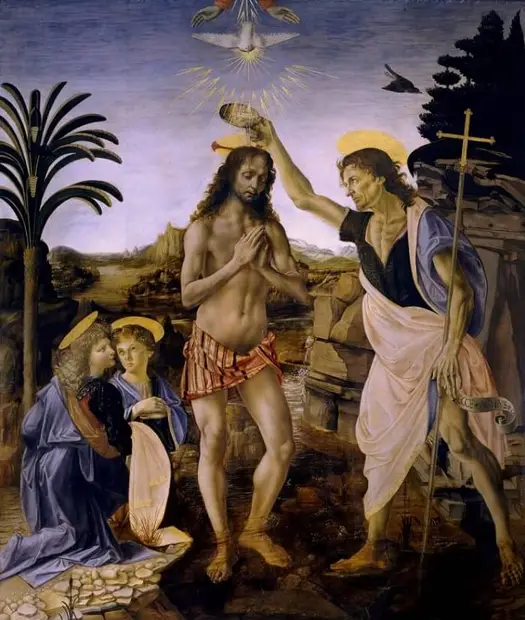
Leonardo da Vinci Baptism of Christ is a captivating masterpiece that beautifully illustrates the artistic collaboration between Leonardo and his master, Andrea del Verrocchio.
This artwork is notable for John the Baptist’s graceful depiction of the Baptism of Jesus, which highlights Leonardo’s early contributions.
Verrocchio and Leonardo’s combined effort resulted in a fascinating blending of styles, particularly evident in the meticulously painted angels.
This painting is a crucial reference point for those interested in Leonardo da Vinci‘s career progression.
At just 18 years old, Leonardo demonstrated remarkable talent, contributing to the piece’s detailed parts, especially the angel.
The painting is housed in the Uffizi Gallery, making it accessible to art enthusiasts who want to witness this historic work firsthand.
Art historians find “The Baptism of Christ” particularly intriguing as it showcases the transition from traditional techniques to innovative approaches that Leonardo would later master.
The panel’s use of oil and tempera reflects the period’s experimentation, setting the stage for future developments in Renaissance art.
This work exemplifies how youthful creativity and experienced guidance can produce an enduring legacy.
Historical Context of the Painting
The Baptism of Christ painting, a collaboration primarily between Leonardo da Vinci and Andrea del Verrocchio, reflects significant influences from the Early Renaissance. This artwork showcases the blend of individual innovation and traditional techniques prevalent at the time.
Early Renaissance Influence
During the Early Renaissance, artists focused on bringing realism into their works through perspective and human anatomy. The Baptism of Christ painting is an excellent example of this transition.
This period was marked by advancements in understanding light, shadow, and three-dimensionality. Artists strived to depict religious themes with more naturalism.
Leonardo’s work on the Baptism of Jesus painting demonstrates these developments.
His understanding of human emotions and anatomy is evident in the angel figures he contributed to.
The softness of his facial features and the detailed depiction of drapery showcase techniques ahead of their time. This reflects the Renaissance’s move towards scientific inquiry and thorough observation.
Collaboration with Verrocchio
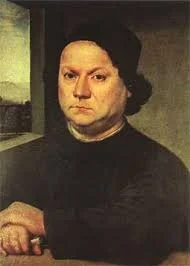
Andrea del Verrocchio (1435-1488)
The collaboration between Verrocchio and Leonardo on the Baptism of Christ marks a pivotal moment in art history. Verrocchio, a master in Florence, often worked with talented apprentices in his studio.
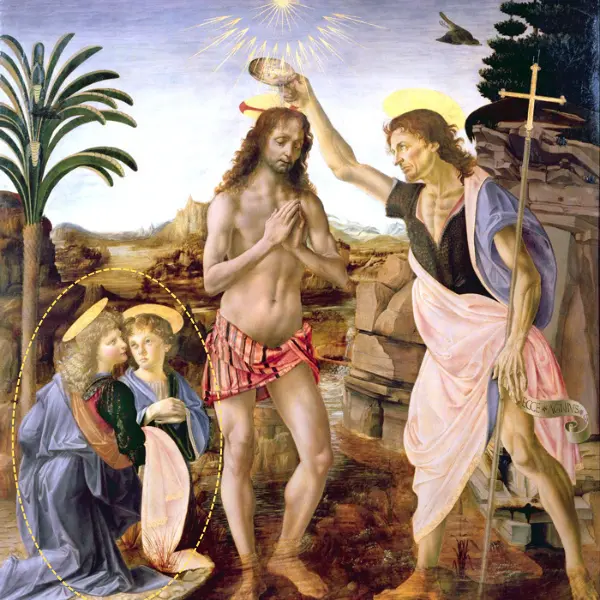
Leonardo’s role was significant; he painted some figures, especially the angel on the left. His use of light and texture indicated his emerging style.
Verrocchio’s mentorship allowed da Vinci to explore his talents while conforming to the studio’s established techniques.
This partnership produced a unique synthesis of styles. Leonardo’s soft, expressive profiles complement Verrocchio’s strong outlines and careful compositions.
This partnership highlights how mentorship and collaboration were crucial to the Renaissance art community.
The Baptism of Christ Leonardo da Vinci’s work remains invaluable for understanding these early collaborative efforts between a master and a protégé.
Artistic Analysis of ‘Baptism of Christ’
Leonardo da Vinci‘s involvement in the Baptism of Christ painting, alongside Andrea del Verrocchio, exemplifies his early mastery of composition and symbolic depth. The piece beautifully combines technical skill with thematic richness.
Composition and Technique
The Baptism of Christ demonstrates remarkable composition and technique attributed to Verrocchio and Leonardo da Vinci.
The painting depicts Jesus being baptized by John the Baptist, a pivotal moment in religious art.
Da Vinci’s role was primarily to paint parts of the composition, including the detailed angel on the left, showcasing his advanced grasp of human anatomy and emotion.
Leonardo’s use of light and shadow adds depth, and his chiaroscuro technique gives the figures a lifelike quality.
The composition is balanced. The central figures of Jesus and John draw the viewer’s eye, while the angels add a heavenly touch.
These elements underscore the collaborative dynamic between master and apprentice present in the studio.
Symbolism and Themes
The Baptism of Christ painting is rich in symbolism, conveying themes of spiritual renewal and divine purity.
The central act of baptism symbolizes cleansing, and the figures’ serene expressions suggest inner peace and acceptance.
The significant figures of water and the dove in the background represent the Holy Spirit, adding layers of symbolic meaning.
His and Verrocchio’s work imbues the painting with a sense of divine intervention, highlighting the transformative power of Christ’s baptism.
The meticulous attention to theme and detail makes it a significant work of the Renaissance.
Leonardo da Vinci’s Contribution
Leonardo da Vinci played a significant role in the collaborative creation of The Baptism of Christ. His innovations added depth and vitality to the work, showcasing his emerging talent during his formative years as an artist. The painting is a fusion of expertise, blending Verrocchio’s mastery with Leonardo’s unique touch.
Innovative Use of Light
Da Vinci mastered the use of light and shadow to enhance the realism of The Baptism of Christ.
His technique, known as chiaroscuro, brought figures to life, making them appear three-dimensional against the background.
This groundbreaking approach demonstrated his deep interest in how light interacts with surfaces.
Leonardo’s expertise in this area was revolutionary at the time.
By observing the play of light, he added depth that differed from the flatter depictions common in earlier paintings.
This skillful treatment of light was an early indicator of his genius and would continue to influence his later works.
Figures Painted by da Vinci
Leonardo da Vinci painted angels (yellow circle on the left) for the Baptism of Christ
Leonardo da Vinci contributed significantly to the painting of the Baptism of Christ by focusing on particular figures within the composition.
Notably, he painted an angel, infusing it with delicacy and grace.
This painting section demonstrated his ability to render detailed anatomical features with precision.
His portrayal of the angel stood out for its refined elegance, distinct from other figures in the piece.
This distinction highlights Leonardo’s emerging individual style, which differed from that of other workshop artists.
His skillful depiction of the human form would become a hallmark of his later masterpieces.
Restoration and Preservation Efforts
The “Baptism of Christ” painting by Leonardo da Vinci and Andrea del Verrocchio has undergone various restoration and preservation efforts. These efforts aim to maintain the artwork’s integrity and ensure its survival for future generations.
Conservation History
Leonardo da Vinci Baptism of Christ faced challenges common to many Renaissance paintings.
Initially housed in Florentine churches, it was subject to environmental factors such as humidity and dust.
Restoration efforts began early in the 19th century, focusing on cleaning and stabilizing the artwork.
In the 20th century, restorers employed techniques to remove varnish, address color degradation, and repair physical damage.
Documentation from the Uffizi Galleries highlights these interventions.
Conservators examined the paint layers and composition, revealing not just Leonardo’s hand but contributions from other artists in Verrocchio’s workshop.
These detailed analyses ensured authenticity and fidelity to the original work.
Modern Restoration Techniques
Today, advanced technology plays a crucial role in preserving Leonardo da Vinci’s painting of the Baptism of Christ.
Infrared reflectography and X-ray fluorescence are commonly used to study the underdrawings and materials.
These techniques help identify pigments and map the artist’s changes during painting.
Recently, efforts have focused on controlling the painting’s environment.
Humidity control and minimal light exposure in display areas are vital to prevent further deterioration.
Innovations in restorative materials also help fill cracks and stabilize faded areas without altering the original texture.
The Wikipedia entry on the Baptism of Christ notes these advancements have significantly improved the painting’s condition, ensuring that this masterpiece by da Vinci and Verrocchio remains vibrant and well-preserved.
Impact and Legacy
Leonardo da Vinci’s collaboration on the Baptism of Christ showcases his early artistic skills and sets a precedent for the transformative techniques for which he would become famous. This painting, completed around 1475, is significant in the art world and in da Vinci’s career development.
Influence on Later Artists
The Baptism of Christ contributed significantly to Renaissance art.
Leonardo was responsible for painting the angel on the left, introducing innovative techniques such as sfumato and fine details that captured emotion and anatomy with unprecedented precision.
Other painters took notice of this blend of realism and detail.
Leonardo’s methods later influenced masters such as Michelangelo and Raphael, who incorporated aspects of his approach into their artworks.
This painting is a foundational example of Leonardo’s artistry, showcasing traits that would define his later works, such as The Last Supper and the Mona Lisa.
Place in da Vinci’s Oeuvre
The Baptism of Christ is one of Leonardo da Vinci’s earliest works.
Though primarily attributed to Andrea del Verrocchio, this project marked Leonardo’s first major contribution.
It was a collaborative effort in Verrocchio’s workshop, where Leonardo learned and refined his skills.
The angel’s expressive features and soft form show his burgeoning talent for conveying human emotion and anatomical accuracy.
This early involvement in the Baptism of Christ painting shaped his future style, which is why this work is often highlighted in discussions of Leonardo’s artistic development.
Final Thoughts
Leonardo da Vinci Baptism of Christ is a significant example of Renaissance art. The painting displays a remarkable blend of artistic skill and innovative techniques.
Leonardo’s contribution to the work, especially the rendering of human anatomy and emotion, showcases his deep understanding of art and science.
Key Takeaways: Leonardo da Vinci’s work on the Baptism of Christ reflects his unique artistic perspective and collaborative spirit. The harmonious combination of intricate details and expressive figures highlights his role in advancing Renaissance art.
FAQs about Leonardo da Vinci Baptism of Christ
Did Leonardo da Vinci paint the Baptism of Christ?
Leonardo da Vinci did not paint the entire scene of the Baptism of Christ. The work was mainly created by his master, Andrea del Verrocchio, around 1472–1475. However, Leonardo—then a young apprentice—contributed key elements, especially one of the angels and parts of the landscape, making it one of his earliest known works.
Did Leonardo da Vinci believe in Jesus Christ?
Leonardo da Vinci’s personal beliefs remain uncertain because he left no clear statements of faith. While he painted many Christian subjects, such as The Last Supper, some historians believe he viewed nature as a reflection of divine truth rather than strictly adhering to traditional religious doctrine.
Why is Salvator Mundi so controversial?
Salvator Mundi is controversial due to ongoing debates about its authorship, as some experts question whether Leonardo fully painted it. Its extensive restoration and damaged condition have also raised doubts, despite its record-breaking auction price.
What is the Baptism of Christ painting about?
The painting depicts the biblical moment when John the Baptist baptizes Jesus in the Jordan River. It includes symbolic elements such as angels, a dove representing the Holy Spirit, and divine light from heaven, all of which emphasize Jesus’s spiritual significance.
What was Leonardo da Vinci’s most controversial painting?
One of Leonardo’s most controversial paintings is Salvator Mundi, mainly because of disputes over its authenticity and restoration. Additionally, The Last Supper has sparked centuries of speculation and debate about hidden meanings and interpretations.
What were Leonardo da Vinci’s last words before he died?
Leonardo da Vinci is widely reported to have said, “I have offended God and mankind because my work did not reach the quality it should have.” While often quoted, historians note that the exact wording is based on later accounts and may not be fully verified.
Leonardo Bianchi is the founder of Leonardo da Vinci Inventions & Experiences, a travel and research guide exploring where to experience Leonardo’s art, engineering, and legacy across Italy and Paris.

 Leonardo Bianchi is the founder of Leonardo da Vinci Inventions & Experiences, a travel and research guide exploring where to experience Leonardo’s art, engineering, and legacy across Italy and Paris.