
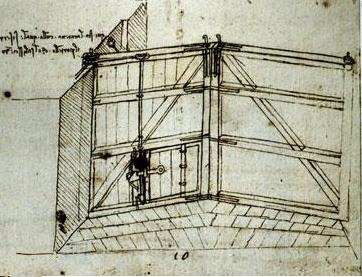
Leonardo da Vinci’s canal lock innovation was a pivotal moment in engineering. This is the solution if you’ve ever wondered how ships travel smoothly across different water levels without a hitch.
Leonardo da Vinci revolutionized water navigation with his design of the miter gate.
By manipulating water levels, his canal lock allowed boats to move seamlessly through waterways of varying heights.
His ingenuity is still reflected in modern structures, such as the locks of the Panama and Suez Canals.
Many regard Leonardo’s design as a remarkable engineering achievement. His unique approach significantly improved water navigation and laid the foundation for future innovations in civil engineering.
Modern canal locks continue to benefit from his innovative thinking, proving the timelessness of his work.
When you think of Leonardo da Vinci, your mind likely wanders to his remarkable contributions to the art world, including masterpieces like The Last Supper and the Mona Lisa.
But what if we told you that da Vinci’s genius extended beyond his paintbrush, significantly shaping a critical piece of our modern navigation system: the Canal Lock?
In this article, we examine the distinctive features that make our waterways navigable and the profound impact of Leonardo da Vinci’s designs on their development.
Leonardo da Vinci’s Contributions to Engineering
Leonardo da Vinci played a crucial role in engineering during the Renaissance. His work on hydraulic systems, particularly his design of canal locks, showcased his innovative thinking and technical expertise.
The Renaissance Context
During the Renaissance, a period marked by cultural awakening, Leonardo da Vinci emerged as a pivotal figure in engineering. He was a polymath who excelled in both art and scientific exploration.
His work went beyond traditional boundaries, combining his knowledge of anatomy, physics, and mechanics.
His art often overshadows Leonardo’s engineering innovations. One of his significant contributions was developing the miter lock design.
This invention enabled better water-level management, assisting boats navigating waterways with varying depths.
Advancements in Hydraulic Engineering
Leonardo made pioneering advancements in hydraulic engineering. His designs of canal locks were particularly noteworthy.
He developed innovative mechanisms that enhanced the efficiency and safety of water transport systems.
The Da Vinci canal lock system revolutionized waterway navigation. These locks had specific dimensions crafted to manage water flow and vessel movement.
By understanding the principles of water dynamics, Leonardo provided practical solutions that still influence modern engineering.
His work on the canals of Milan involved intricate designs that aided irrigation and flood control.
This blend of art and engineering demonstrated his ability to foresee and solve real-world problems through innovative solutions. His contributions laid the foundation for the principles that drive engineering today.
Where Leonardo Tested Water Ideas in Milan
Leonardo’s canal work wasn’t abstract theory—it was shaped by the real waterways and practical needs of Renaissance Milan. Seeing how canals fit into the city’s landscape can help explain why his lock ideas mattered, and how engineering, trade, and daily life intersected in one place.
The Canal Lock System
Leonardo da Vinci played a crucial role in advancing canal lock technology. This system featured several innovations that improved transportation and commerce, enabling boats to navigate varying water levels quickly.
Early Canal Lock Designs
Early canal locks emerged in the 14th century, primarily in regions like the Netherlands. These initial designs featured guillotine locks with gates at both ends.
These locks functioned by raising and lowering their gates vertically. Guillotine locks laid the groundwork for more advanced mechanisms.
These early locks enabled boats to navigate canals of varying heights by controlling water levels. Their designs were fundamental yet pivotal in shaping future innovations, including Leonardo’s.
Da Vinci’s Innovations
Leonardo da Vinci introduced a double miter lock in the 15th century. This design used water pressure to keep the gates tightly shut and is recognized for its efficiency.
This innovation significantly reduced the effort needed to operate the locks.
His approach replaced the cumbersome older portcullis-style gates. By simplifying the mechanism, canal navigation became more practical.
His contributions are a key part of the history of canal engineering.
Impact on Transportation and Commerce
The innovations introduced by Leonardo da Vinci had a profound impact on transportation and commerce. Da Vinci’s canal lock simplified the movement of goods and people, thereby boosting trade between distant regions.
This transformation enabled more efficient travel and significantly contributed to Europe’s economic growth.
The ability to transport larger volumes of goods through canals also enhanced trade routes, making logistics more reliable and efficient. Da Vinci’s advancements laid the groundwork for future developments in waterway engineering.
Architectural and Artistic Aspects
Leonardo da Vinci’s canal lock is a marvel of both engineering and art. He created a harmonious balance of efficient and visually engaging architecture by integrating form with function.
Integration with the Surrounding Environment
Da Vinci’s canal lock design emphasized harmony with the environment. He placed significant importance on aligning the lock with the natural landscape and existing infrastructure.
It required careful planning to ensure it fit naturally into its surroundings without disrupting existing waterways.
The Leonardo da Vinci canal lock exemplifies this through its smooth transitions and materials that blend seamlessly with the natural surroundings.
This design approach preserved the environment and enhanced the area’s aesthetic value, showcasing Leonardo’s holistic view of engineering and nature.
Aesthetic Considerations in Functionality
Functionality and beauty coexisted gracefully in Leonardo’s designs. The canal lock’s dimensions and structure were not merely about practicality but also about creating something visually pleasing.
Da Vinci incorporated elegant lines and symmetrical shapes, making the mechanisms functional and beautiful.
In his miter lock design, the curvature and proportions of the gates added an artistic touch, showing his dedication to aesthetics even in mechanical designs.
The miter lock, used in the Panama and Suez canals, still retains this blend of practicality and beauty, underscoring the timelessness of Leonardo’s creations.
Decoding the Mechanics of Canal Locks
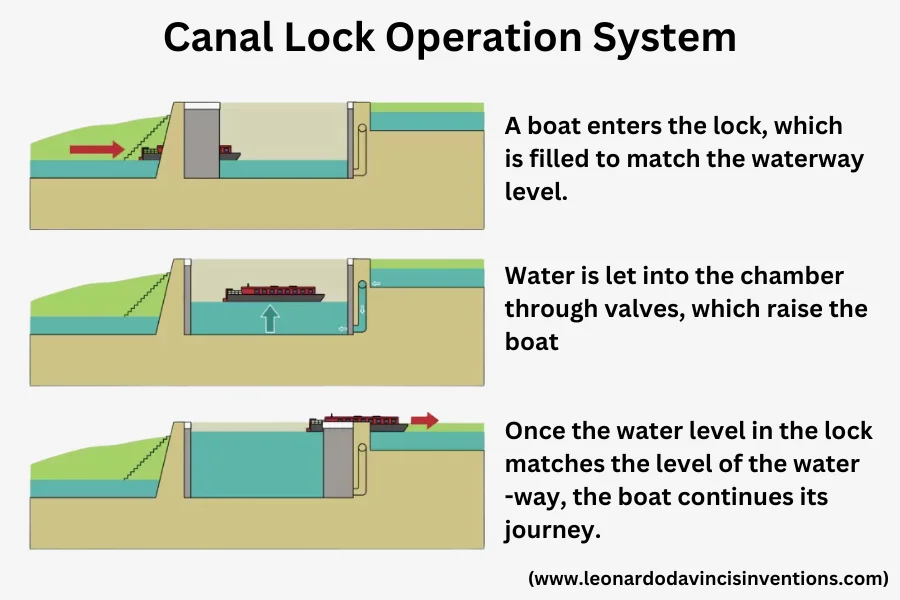
Before we delve into Leonardo’s impact, it’s crucial to grasp the mechanics of the canal lock. But what exactly are canal locks, and how do they work?
Canal Lock Operation System
A canal lock is a water-filled chambers that serve as an elevator for boats. They allow vessels to traverse changes in water levels in our rivers and canals. The process may sound complicated, but it follows a basic yet ingenious step-by-step principle:
- A boat enters the lock, which is filled to match the waterway level from which the ship is coming.
- The gates close behind the boat, sealing it within the chamber.
- If the boat moves upstream, water is admitted to the chamber through valves, raising the water level. If it goes downstream, water is released from the chamber, lowering the chamber’s level.
- Once the water level in the lock matches the level of the waterway the boat is moving to, the gates at the other end of the lock open, and the ship continues its journey.
The Birth of Canal Locks
The Maiden Lock and Its Conception
The first lock dates back to the 3rd century BC in Ancient Greece, at Palaipaphos (modern Kouklia). It was a simple yet effective design, using a single gate and a sluice system.
Who invented the canal lock? When was the canal lock invented?
- In 983 AD in China, an engineer named Chiao Wei-Yo introduced a novel idea.
- His concept involved positioning two barriers a short distance apart.
- This arrangement created a calm water pond or basin between the two barriers.
- The water in this pond could be filled or emptied at will, offering complete control over its level.
- Despite the water’s one-way flow, his design allowed boats to travel both upstream and downstream.
Leonardo da Vinci’s Revolutionary Canal Lock Design
Leonardo da Vinci, the renowned polymath, was an artist and an innovative inventor. One area where his inventive genius shone was in the design and development of canal locks.
Distinguishing Leonardo’s Canal Lock from Predecessors
Da Vinci’s canal lock design was distinctly different from those that came before. It showcased his unique ability to analyze problems and develop more efficient solutions.
His canal lock was a “miter lock,” named for its two gates that met at an angle, like a carpentry miter joint. This design was a departure from the standard straight-gated locks of his time.
The miter lock canal design enabled a stronger seal as water pressure forced the gates together, marking a significant step forward in the efficiency and reliability of canal locks.
Application of da Vinci’s Canals
Several famous canals, such as the Martesana Canal in Italy, utilized his canal lock designs. This canal, among others, shows Leonardo’s engineering prowess and the practical application of his miter lock design.
His influence extended far beyond Italy, eventually becoming a global standard in canal engineering. The adoption of his design marked a turning point in the development of effective water navigation systems.
From a Lock Design to a Renaissance Landscape
References to canals such as the Martesana point to a broader Italian network of waterways, workshops, and patrons that shaped Leonardo’s engineering. Exploring Milan—and nearby places connected to his work—can turn a technical diagram into a clearer picture of how Renaissance innovation moved through real cities.
The World’s Most Renowned and Colossal Canal Locks
Berendrecht Lock
One of the most recognized canal locks in the world is the Berendrecht Lock. This lock is famous for its location in Antwerp, Belgium, a city known for its rich history, spectacular architecture, and innovative design.
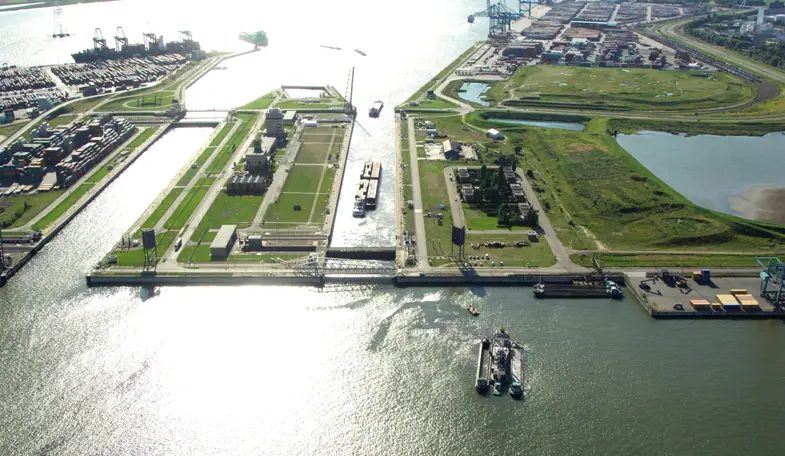
The Berendrecht Lock was designed to accommodate the largest seagoing vessels, making it a testament to incredible engineering. Its advanced lock technology makes it a marvel of modern engineering and a significant achievement in water navigation.
Location of the World’s Largest Canal Lock
The Three Gorges Dam Ship Lift lock in China is a marvel of engineering. Its vertical design allows ships to ascend and descend an impressive 113 meters in the Yangtze River.
Unlike traditional locks, it uses a ‘ship elevator’ approach to move vessels vertically within a contained body of water. This method significantly reduces the time it takes for a ship to traverse the height difference.
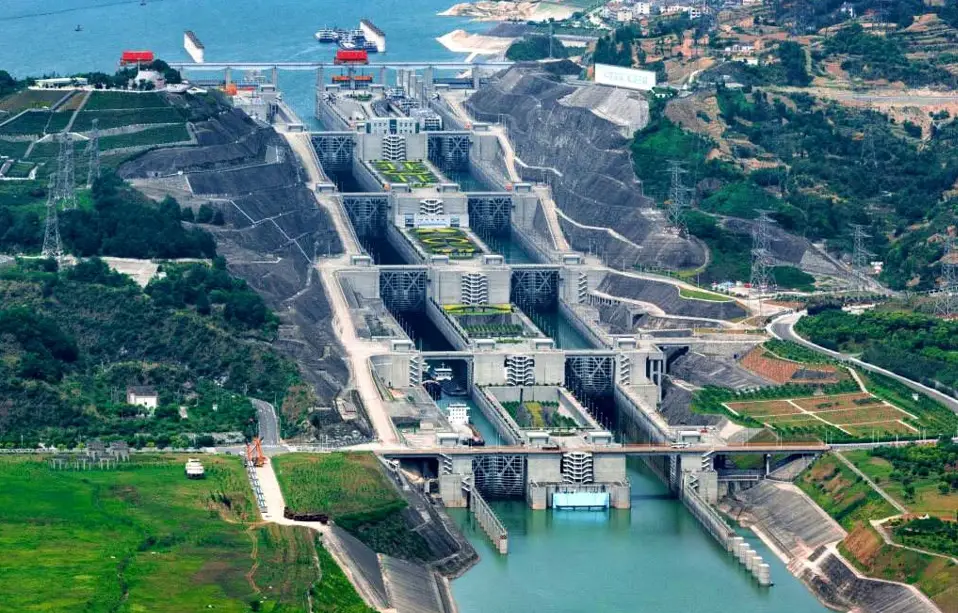
This colossal lock, along with its innovative design, has made the Three Gorges Dam a vital part of global shipping routes. It is a fitting symbol of China’s significant contributions to modern canal engineering.
Role of Locks in River and Canal Systems
Canal locks are integral to our waterways, yet their importance is often overlooked. These innovative contrivances enable ships to traverse the varying elevations along rivers and canals smoothly. Acting as water elevators, they lift and lower vessels by manipulating water levels within enclosed chambers.
Besides aiding in navigation, canal locks have significantly bolstered trade and commerce. Here’s how:
- Streamlined Shipping: Canal locks enable faster, more efficient movement of goods. Allowing ships to bypass complex, lengthy routes around geographic obstacles enables a swift, direct path between commercial hotspots.
- Cost Efficiency: Canal locks facilitate direct routes, helping reduce fuel consumption and overall shipping costs, which can ultimately lower consumer prices.
- Global Connectivity: Canal locks have transformed isolated regions into bustling commercial hubs, fostering economic growth and international connectivity.
Da Vinci’s Impact on Today’s Miter Locks
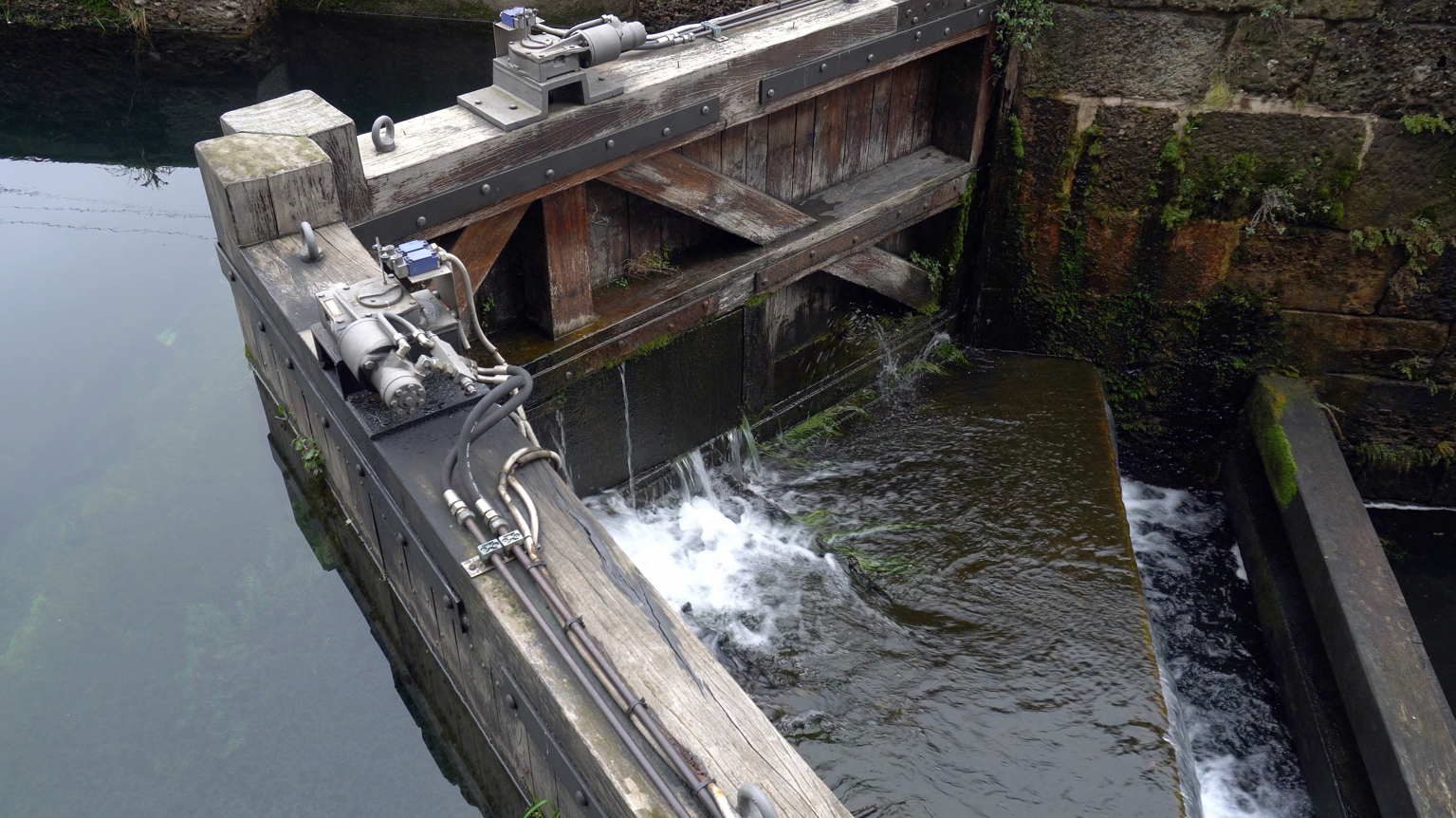
Da Vinci’s innovative design laid the groundwork for the modern miter locks we see today. He was the first to introduce the miter gate – a pair of gates that meet at an angle, mirroring a ‘V’ shape near the water pressure. This design required less force to operate and utilized the water pressure to ensure a tighter seal, a principle that still holds today.
Miter Locks in Today’s Canal Infrastructure
Today, the design of miter locks owes a significant debt to da Vinci’s early work. His invention revolutionized how we manage water transport and navigate through waterways with differing levels. Modern miter locks, though more complex and mechanized, essentially follow the same principle established by da Vinci centuries ago.
Da Vinci’s Influence on the Panama Canal
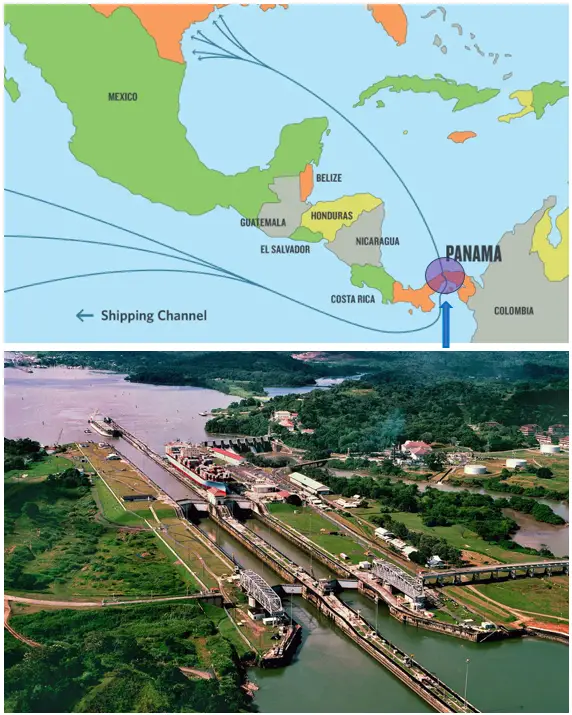
The Panama Canal, one of the world’s most critical shipping routes, illustrates the influence of da Vinci’s work. This vital waterway, connecting the Atlantic and Pacific Oceans, relies heavily on a lock system.
They are the backbone of the canal’s functionality, enabling it to handle massive vessels carrying enormous cargo. Without da Vinci’s pioneering work in lock design, a marvel like the Panama Canal may not have been possible.
Leonardo da Vinci’s influence is a testament to the timeless nature of true innovation. Even centuries after his death, his ingenious engineering continues to drive our world forward.
Final Thoughts
Da Vinci’s unique miter lock design revolutionized water-level control, providing a more secure and efficient way to move vessels through waterways of varying heights.
This pioneering design has been incorporated into countless canal systems worldwide, a testament to da Vinci’s enduring influence.
From enabling more efficient water transportation and facilitating global trade to influencing modern engineering marvels like the Panama Canal and its locks, Leonardo da Vinci’s contributions to their evolution remain as relevant as ever.
As we sail into the future, the impact of canal locks on our society will continue to resonate, echoing the brilliance of innovators like Leonardo da Vinci.
The canal lock is just one more example of Leonardo’s revolutionary spirit. It is also another example of his invention that has stood the test of time, long after its inventor, almost making the man himself immortal.
FAQs about Leonardo da Vinci Canal Lock
Leonardo da Vinci did not invent the canal lock; it dates back to ancient China and earlier water systems. However, he significantly improved the technology by designing the miter lock gate, a V-shaped system that uses water pressure to seal tightly and control water levels efficiently.
Leonardo da Vinci is credited with designing many innovative machines, including an ornithopter (a flying machine), a parachute, and an armored vehicle (an early tank concept). Although many were never built, his detailed sketches influenced later technological developments.
Locks on the Rhine River are used to manage differences in water levels, allowing ships to travel safely through sections with dams or elevation changes. They make the river navigable for large commercial vessels by raising or lowering ships between different heights of water.
The original Panama Canal locks were constructed in the early 20th century by engineers working under the United States, with major construction beginning in 1909. A new, expanded set of locks was later built as part of the Panama Canal expansion project, completed in 2016 to accommodate larger ships.
One of Leonardo da Vinci’s most famous inventions is his flying machine, inspired by the movement of birds. This design represents one of the earliest serious attempts to achieve human flight and remains a symbol of his visionary thinking.
There is no fully verified record of Leonardo da Vinci’s exact last words, but a commonly attributed quote suggests he regretted not fully realizing his potential, expressing that his work had not reached the quality he desired. This account comes from later historical reports rather than direct evidence.
 Leonardo Bianchi is the founder of Leonardo da Vinci Inventions & Experiences, a travel and research guide exploring where to experience Leonardo’s art, engineering, and legacy across Italy and Paris.