
(Last updated: April 2026)
Leonardo da Vinci Robotic Knight stood as a fantastic feat of engineering during the Renaissance. This humanoid automaton, designed in the late 15th century, showcased Leonardo’s visionary mind and deep understanding of mechanics.
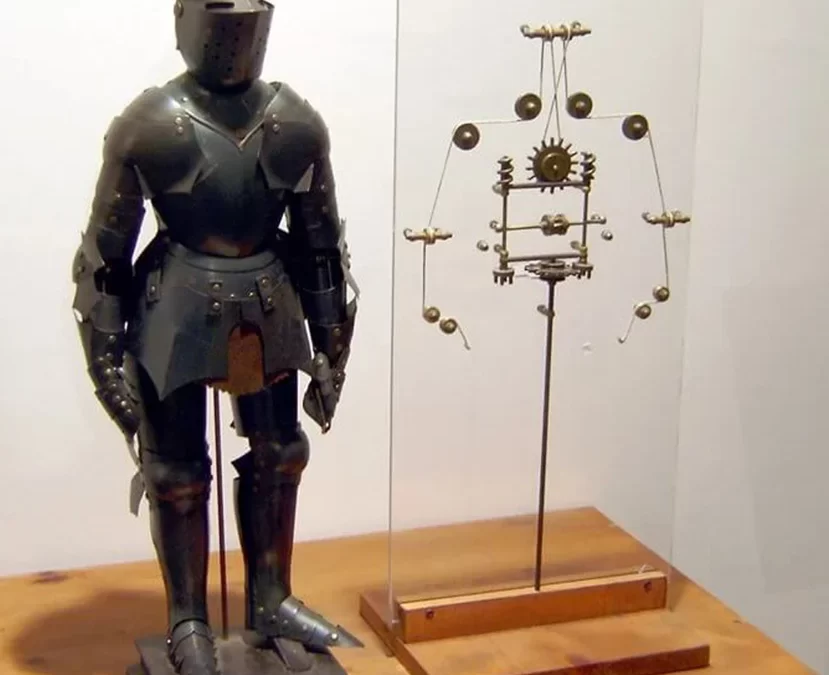
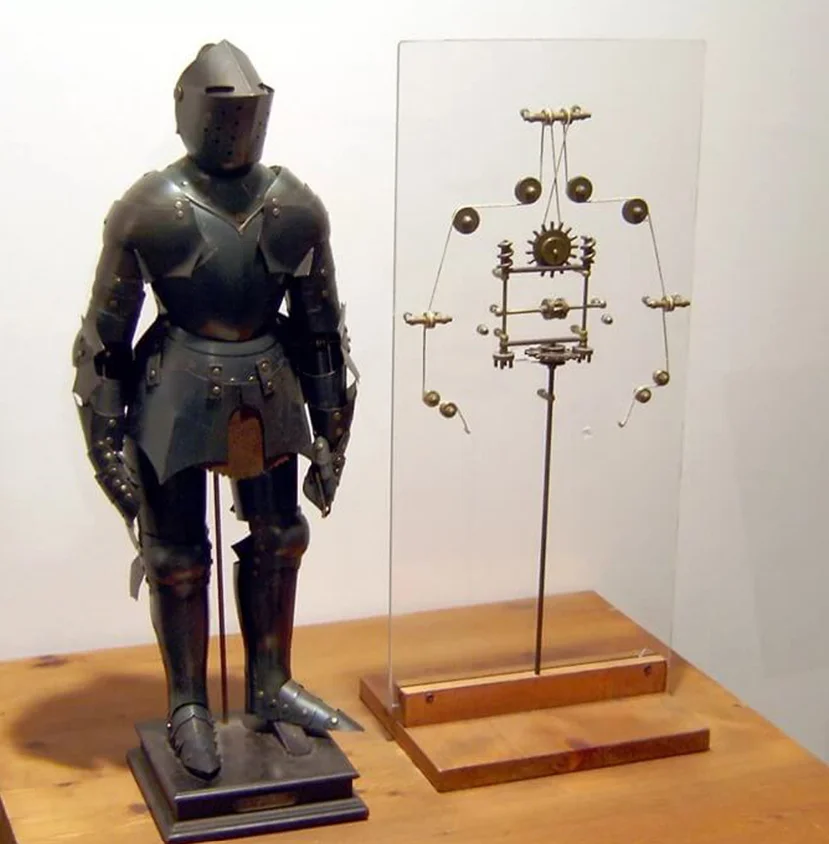
The Robotic Knight could perform human-like motions, such as moving its arms and sitting down, employing a complex system of gears and pulleys.
For modern enthusiasts, the Robotic Knight remains a fascinating study of early robotics and mechanical design. Its creation involved a German suit of armor fitted with an intricate cable-and-pulley system that allowed it to mimic human movements.
Leonardo’s invention highlights his genius and influences today’s technology in robotics and automation.
Historical Context of Leonardo da Vinci Robotic Knight
The development of the Leonardo da Vinci Robotic Knight showcases the Renaissance’s innovative spirit and the budding exploration of robotic technology.
Groundbreaking inventions and a surge in scientific curiosity marked this era.
Leonardo da Vinci’s Era
Leonardo da Vinci lived during the Italian Renaissance, a period of creativity and new ideas spanning the 14th to the 17th century. This era was characterized by significant advancements in art, science, and technology.
Da Vinci was a central figure in this movement, known for his wide-ranging interests and talents.
His work went beyond painting; he delved into anatomy, engineering, and physics.
During this time, da Vinci explored various mechanical concepts, including the Leonardo da Vinci Robot Knight, a humanoid machine designed around 1495. This design demonstrated his understanding of mechanics and motion and reflected the era’s fascination with machines and automation.
Advent of Renaissance Robotics
The Renaissance laid the groundwork for modern technology, with figures like Leonardo leading the way.
Da Vinci’s interest in mechanics and engineering led to the creation of the Robotic Knight. He designed this automaton using a complex system of gears, pulleys, and cables—an innovation for its time.
This mechanical knight could stand, sit, and raise its visor, capturing the imagination of future inventors.
Although it is uncertain whether the knight was ever built, the designs highlight the era’s adventurous spirit in exploring new technologies.
Da Vinci’s work in robotics was just one aspect of his diverse inventions, which included the self-propelled cart and diving suit.
The Robotic Knight
The Robotic Knight, created by Leonardo da Vinci, is one of his most fascinating inventions. It blends art with mechanical ingenuity and showcases Leonardo’s ability to think ahead of his time.
Design and Inspiration
Leonardo da Vinci robotic knight was a remarkable feat of design. Constructed in the late 15th century, this automaton was housed in a German-style armor suit. The design involved a series of complex gears, pulleys, and cables.
These components allowed the knight to perform various movements, including sitting, standing, and moving its arms.
The inspiration for the robot knight came from Leonardo’s deep interest in the human body and mechanics.
His studies in anatomy greatly influenced the robot’s motion mechanics, enabling it to simulate human actions with impressive accuracy.
This creation was not merely a display piece; it represented Leonardo’s vision of what machines could achieve, mirroring the human form and movement.
Leonardo’s ability to interlace art with engineering laid a foundation for future developments in robotics.
Mechanical Engineering Feats
The mechanical engineering behind Leonardo da Vinci robotic knight was truly ahead of its time.
Using basic principles of physics and mechanics, Leonardo created a humanoid automaton that could mimic human gestures.
The internal structure comprised sophisticated gear systems, allowing a range of motion not seen before in mechanical creations.
This invention highlighted Leonardo’s genius in combining artistic vision with technical prowess. The engineering principles seen in the knight influenced later developments in automation and robotics.
His work on this device exemplifies his trailblazing ideas, paving the way for future engineers and inventors.
Functionality and Characteristics
Leonardo da Vinci robotic knight was a groundbreaking invention that showcased his genius in mechanical design and automation. Thanks to its sophisticated system of pulleys and gears, the robotic knight could perform human-like motions.
Simulated Anatomy
Leonardo da Vinci robot knight was engineered to mimic the functions of a human body. It could sit, stand, move its arms, and even tilt its head.
This creation was largely possible thanks to Leonardo’s innovative use of anatomy, which enabled the knight to mimic human motion. The internal structure included complex systems of cables and pulleys resembling muscles and tendons.
His meticulous study of human anatomy heavily influenced his design. Each joint and limb of the da Vinci robot knight was carefully crafted to allow fluid movement.
Through these designs, Leonardo demonstrated his vision of human-machine interaction, blending mechanical engineering with biological insight to form a mechanical knight that remains a topic of fascination.
Innovative Mechanisms
Leonardo’s robot showed innovation through its mechanisms, which used gears and pulleys to bring the knight to life.
This mechanical setup powered the knight’s arms in a lateral embrace, simulating human motion. Leonardo da Vinci’s mechanical genius is evident in his ability to incorporate flexible neck movement into the knight’s design.
By integrating these components, Leonardo da Vinci robots were far ahead of their time, paving the way for later advancements in robotics.
The robotic knight was not merely a mechanical marvel but also an embodiment of da Vinci’s forward-thinking approach, showcasing how art, science, and technology could merge.
Cultural and Historical Impact
The Leonardo da Vinci Robotic Knight is a notable creation that has significantly influenced robotics and left a lasting mark on popular culture. It demonstrates Leonardo’s foresight in mechanical engineering.
Influence on Modern Robotics
Leonardo da Vinci’s mechanical knight, designed in 1495, represents a pivotal moment in the history of robotics. This early robot knight featured a complex system of gears and pulleys, allowing it to mimic human movements.
It has inspired contemporary engineers and roboticists, offering a glimpse into automated machines long before the technology was feasible.
This invention highlights how Renaissance innovations laid the groundwork for future developments.
It is considered a precursor to modern robotic designs, embodying principles that continue to influence today’s robotic engineering.
Inventors often return to da Vinci’s work for inspiration, examining the balance of form and function he achieved.
The combination of creativity and technology in the robotic knight exemplifies the timelessness of Leonardo da Vinci’s vision of robotics.
Representation in Popular Culture
The da Vinci robotic knight is featured prominently across various media, and its story captivates audiences across generations.
This Leonardo da Vinci robot has appeared in documentaries, books, and exhibitions, educating the public about its unique design and functionality.
It brings magic to historical explorations of da Vinci’s life, merging the fantastical with the factual.
In popular culture, the robot knight Leonardo da Vinci is an emblem of the Renaissance period.
It showcases the intersection of art and science that defines Leonardo’s legacy.
By influencing storytellers and artists, the knight perpetuates Leonardo da Vinci’s revolutionary ideas, underscoring his lasting impact on technology and culture.
Preservation and Study
The preservation of Leonardo da Vinci robotic knight involves physical restoration efforts and various exhibitions showcasing this remarkable invention. These activities help maintain the knight’s historical significance and advance its understanding and appreciation among audiences.
Restoration Efforts
The study and restoration of Leonardo da Vinci robotic knight requires meticulous attention to detail.
Efforts focus on preserving mechanical integrity and historical accuracy.
Historians and engineers collaborate to ensure the reconstruction aligns with da Vinci’s original sketches. The Codex Madrid, for example, captures essential insights into the knight’s mechanism.
Preservation involves analyzing materials and techniques from the Renaissance to maintain authenticity.
Teams use non-invasive methods to study and restore the gears and pulley systems without damaging them. These careful routines help maintain the knight’s condition for future generations.
Exhibitions and Displays
Exhibitions are crucial in showcasing Leonardo da Vinci’s robotic knight to the public.
Museums worldwide, such as the Leonardo3 Museum, offer visitors opportunities to explore the intricacies of the knight’s design.
These displays often use interactive models and digital reconstructions, allowing visitors to experience the knight’s functionality visually and physically.
Special exhibitions sometimes feature the knight alongside da Vinci’s other innovations, such as the self-propelled cart and the armored car.
Such presentations highlight Leonardo’s ingenuity and emphasize the advanced nature of his thinking for his time. These events help enhance public interest and deepen appreciation for Leonardo’s inventions.
Final Thoughts
Leonardo da Vinci Robotic Knight is a testament to his incredible vision and inventive spirit. This creation, designed in the late 15th century, highlights da Vinci’s deep understanding of mechanics and anatomy.
His work paved the way for future developments in robotics.
The Robotic Knight was envisioned to move via gears and pulleys, depicting Leonardo’s innovative mastery of mechanical devices. This invention displayed his foresight, anticipating advancements that would captivate minds centuries later.
Leonardo was well ahead of his time in his fascination with human and machine movement. His designs merged artistry with engineering, emphasizing the importance of interdisciplinary thinking.
Key Takeaways:
- Leonardo da Vinci’s Robotic Knight is a prime example of early robotics.
- His designs have inspired many modern-day engineers and artists.
Leonardo’s contributions to mechanical inventions continue to influence and inspire, showcasing how art and engineering can interconnect seamlessly.
FAQs about Leonardo da Vinci Robotic Knight
The first widely recognized human death caused by a robot was Robert Williams, a factory worker who was killed in 1979 in Michigan when a robotic arm struck him while he was retrieving parts. This incident is considered the first documented fatality involving an industrial robot.
Leonardo da Vinci did not invent the first robot in the modern sense, but he designed one of the earliest known humanoid automata—the mechanical knight around 1495. His design used pulleys, gears, and cables to mimic human movement, making it one of the earliest recorded concepts of a robot.
Yes, experts widely expect robots to be even more advanced and common by 2050. Robotics is already rapidly evolving, with applications in healthcare, manufacturing, and daily life, and current trends suggest robots will become more autonomous, intelligent, and integrated into society.
There is no documented or verifiable IQ score for Leonardo da Vinci, as IQ testing did not exist during the Renaissance. However, historians widely regard him as a genius due to his extraordinary achievements in art, science, and engineering.
Leonardo da Vinci is not known to have had any children. Historical records indicate that he never married, and his estate and notebooks were passed to his student, Francesco Melzi, after his death.
Leonardo da Vinci died on May 2, 1519, at the age of 67, likely from natural causes. Some historical accounts suggest he may have suffered a stroke in his later years, which could have contributed to his declining health before his death.
 Leonardo Bianchi is the founder of Leonardo da Vinci Inventions & Experiences, a travel and research guide exploring where to experience Leonardo’s art, engineering, and legacy across Italy and Paris.