

Leonardo da Vinci
Italian Renaissance
Explore the art, science, architecture, cities, and ideas that shaped Leonardo da Vinci and transformed Renaissance Italy.
What Was the Italian Renaissance?
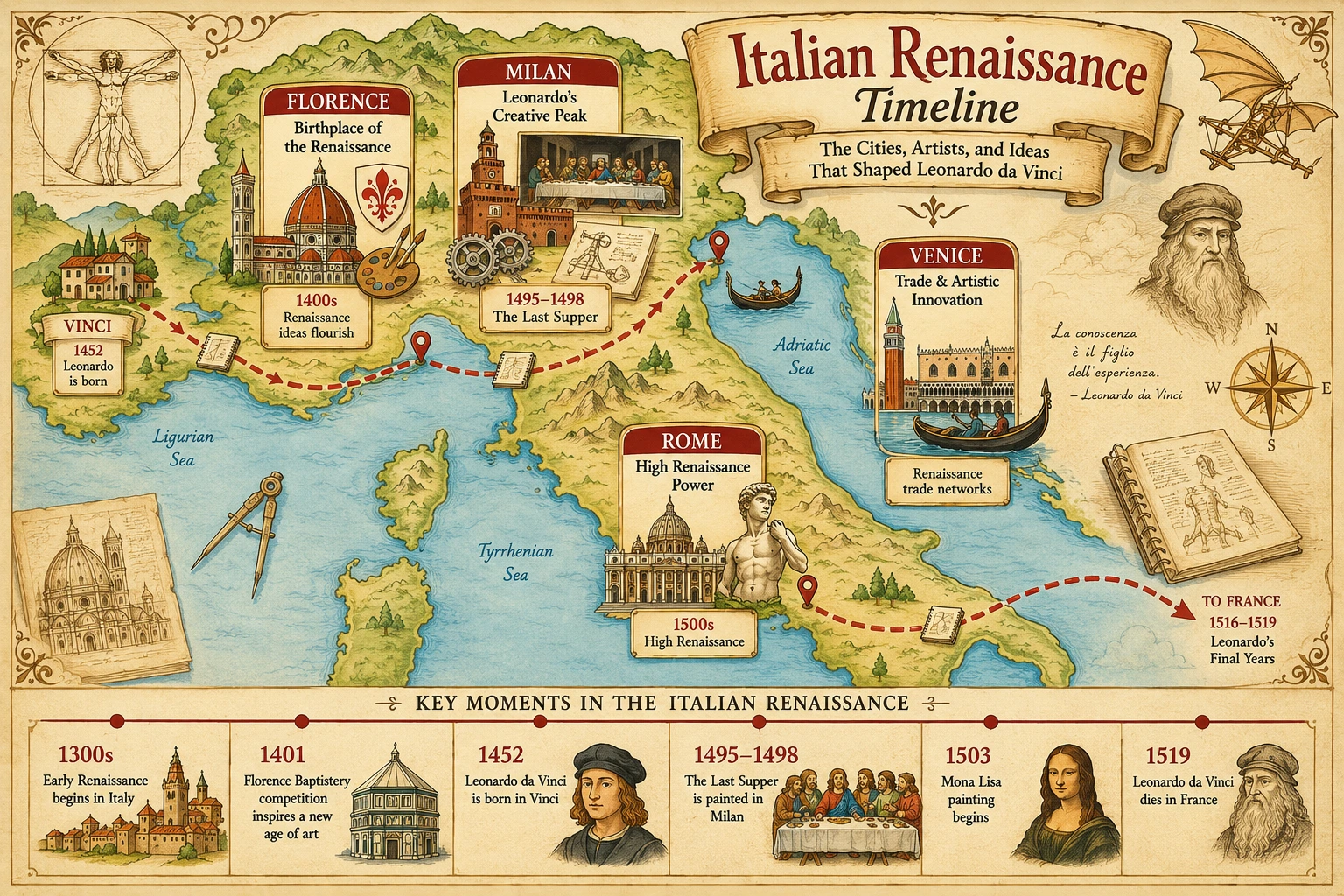
The Italian Renaissance was a period of extraordinary creativity in art, science, architecture, literature, and human thought. Beginning in cities such as Florence and later flourishing in Milan, Venice, and Rome, it revived classical learning while encouraging new ways of observing the world.
Leonardo da Vinci belongs at the center of this story because he brought together painting, anatomy, engineering, invention, and scientific curiosity in a way that perfectly represents the Renaissance mind.
Explore the Renaissance World
Use these topics to understand the world that shaped Leonardo da Vinci.
Renaissance Art
Discover perspective, realism, portraiture, and religious masterpieces.
Renaissance Science
Explore observation, anatomy, mechanics, and early scientific thinking.
Renaissance Cities
Follow the story through Florence, Milan, Venice, and Rome.
Why Florence Started the Renaissance
Florence played a central role in the Italian Renaissance because it combined wealth, artistic workshops, classical learning, political ambition, and powerful patrons such as the Medici family. It was also where Leonardo trained as a young artist in Andrea del Verrocchio's workshop.
For Leonardo travelers, Florence helps explain the beginning of his artistic identity before his later achievements in Milan and France.
Why Milan Matters for Leonardo Travelers
Milan is one of the most important cities for understanding Leonardo at his creative peak. Under Ludovico Sforza, Leonardo worked as an artist, engineer, designer, inventor, and court thinker.
It was in Milan that Leonardo painted The Last Supper, one of the defining masterpieces of the Renaissance.
The Great Minds of the Renaissance
Leonardo was part of a wider world of artists, architects, thinkers, and patrons who changed European culture.

Ideas That Defined the Renaissance
| Idea | Meaning |
|---|---|
| Humanism | A renewed interest in human potential, classical learning, literature, and moral philosophy. |
| Observation | Artists and thinkers studied nature, anatomy, light, movement, and the physical world more closely. |
| Perspective | Linear perspective helped artists create convincing depth and space in painting and architecture. |
| Classical Revival | Renaissance thinkers returned to Greek and Roman ideas while creating something new for their own age. |
The Great Renaissance Cities
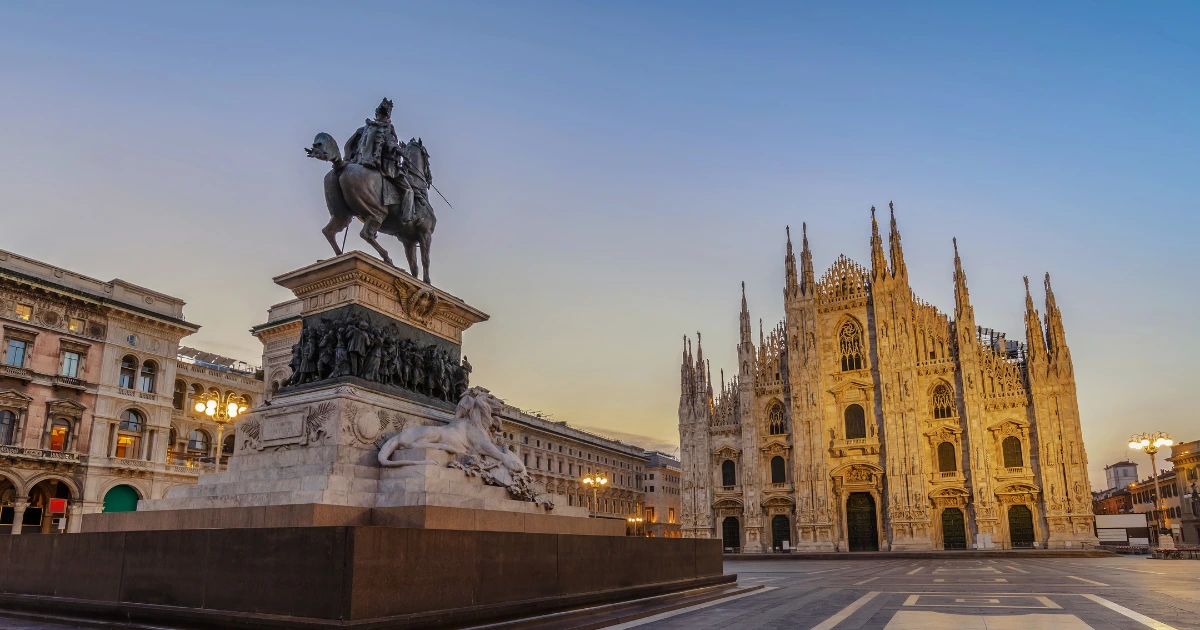
The Italian Renaissance was not confined to a single city. Each place gave Leonardo’s world a different shape.



Why Leonardo Represents the Renaissance
Leonardo da Vinci represents the Italian Renaissance because he refused to separate art from science. He studied the human body, designed machines, observed water and flight, painted emotional masterpieces, and filled notebooks with questions about how the world worked.
To understand Leonardo is to understand the Renaissance itself: curiosity, beauty, invention, observation, and the belief that knowledge could transform human life.
FAQ: Italian Renaissance
What was the Italian Renaissance?
The Italian Renaissance was a period of cultural renewal in Italy, known for major advances in art, science, architecture, literature, and humanist thought.
Why did the Renaissance begin in Florence?
Florence had wealthy patrons, skilled artists, humanist scholars, banking power, and a competitive civic culture that encouraged artistic innovation.
Was Leonardo da Vinci part of the Renaissance?
Yes. Leonardo da Vinci was one of the most important figures of the Italian Renaissance, combining painting, invention, engineering, anatomy, and scientific observation.
Why is Milan important to Leonardo?
Milan was where Leonardo created The Last Supper and worked as an artist, engineer, designer, and court thinker under Ludovico Sforza.
What was the Italian Renaissance known for?
The Italian Renaissance was known for advances in art, science, architecture, and humanist thought, producing masters like Leonardo, Michelangelo, and Raphael.
Who were the 4 giants of the Renaissance?
The four giants of the Renaissance were Leonardo da Vinci, Michelangelo, Raphael, and Donatello, who shaped Renaissance art and sculpture.
Continue Exploring Leonardo’s World
Follow Leonardo from Renaissance Italy to Milan, Florence, paintings, inventions, and the experiences that bring his world to life today.
Free Leonardo Milan Travel Guide
Plan Your Leonardo Trip in Milan
A premium mini guidebook for smarter Milan planning, including the best ticket strategy, Leonardo map, and practical visitor advice.
Get the Free Guide
Download the guide and receive practical Milan planning tips by email.
Download the Free Guide >>Disclosure: This page may contain affiliate links. If you book through them, we may earn a small commission at no extra cost to you. Learn more.