
(Last updated: May 2026)
The Leonardo da Vinci life story is one of the most extraordinary personal histories ever recorded — a journey from an obscure hillside village in Tuscany to the grandest courts of Renaissance Europe, driven entirely by the force of one restless, endlessly curious mind.
Few figures in history have crossed so many boundaries. Leonardo was a painter who changed how we see the human face, an engineer who sketched machines that would not exist for centuries, an anatomist who studied the body with a surgeon’s precision, and a naturalist who filled thousands of notebook pages with questions the world was not yet ready to answer.
For historians and travelers alike, Leonardo remains fascinating precisely because he refused to stay in one lane. Understanding his life doesn’t just deepen appreciation for a painting or an invention — it transforms a visit to Florence, Milan, or Paris into something far more meaningful.
This post is all about Leonardo da Vinci life story, from his earliest years in the rolling hills of Tuscany to his final days in the Loire Valley of France.
What is Leonardo da Vinci life story?
The Leonardo da Vinci life story spans from his birth in Vinci, Tuscany, in 1452 to his death in France in 1519. It tells the story of a Renaissance polymath whose achievements in painting, science, anatomy, and engineering transformed European intellectual history.
Leonardo da Vinci Biography: From Village Boy to Renaissance Master
To understand the man, you have to start with the circumstances that shaped him. Leonardo’s story begins not in a palace or a university, but in a small farmhouse.
When and Where Was Leonardo da Vinci Born?
Leonardo was born on April 15, 1452, in or near the town of Vinci, a small hilltop settlement in the Florentine Republic of Tuscany. His full name at birth was Lionardo di ser Piero da Vinci — literally, “Leonardo, son of Ser Piero, from Vinci.”
He was the illegitimate son of a Florentine notary, Piero da Vinci, and a young peasant woman, Caterina. Because of his birth status, Leonardo was legally barred from following his father into the notarial profession — a restriction that, in an ironic twist of fate, may have freed him to pursue everything else.
He spent his earliest years in the countryside of Vinci, surrounded by the olive groves, vineyards, and limestone hills that would later appear as backgrounds in his paintings. That early immersion in the natural world left a lifelong mark.
Leonardo da Vinci Education: Learning Without a University
Leonardo received no formal university education — a fact that sets him apart from almost every other great Renaissance thinker. He never studied Latin as a young man, which cut him off from much of the scholarly literature of his day. He later taught himself Latin in his forties, driven by sheer determination.
What he did receive, around age 14, was an apprenticeship in the workshop of Andrea del Verrocchio in Florence — one of the finest artistic workshops in Europe. There, alongside painters, sculptors, goldsmiths, and engineers, Leonardo learned not just to paint but to observe. He studied optics, anatomy, mechanics, and metallurgy, all under one roof.
His early notebooks show a mind absorbing everything simultaneously, never separating art from science, never treating beauty and function as opposites.
Leonardo da Vinci Family: Wife, Children, and Personal Life
Leonardo never married. He had no known wife, no children, and left very little written record of his personal emotional life. Some historians, including Walter Isaacson in his definitive Leonardo da Vinci biography, suggest he was almost certainly gay — a fact that carried serious legal risks in Renaissance Florence.
He was deeply close to several students and apprentices over the decades, most famously a young man named Gian Giacomo Caprotti, whom Leonardo nicknamed “Salaì” — meaning “little devil” — and who appears in several of his paintings.
Despite the mysteries of his personal life, Leonardo’s family connections to Vinci remained strong. He maintained contact with his father and half-siblings, and legal disputes over inheritance would follow him even in his later years.
Leonardo da Vinci Facts: The Life Behind the Legend
The broad outlines of Leonardo’s career are well known. But the specific details of how he moved through the world — the cities he lived in, the patrons he served, the projects he abandoned — reveal a life of constant motion and perpetual reinvention.
Where Did Leonardo da Vinci Live?
Leonardo lived in several major Italian cities across his lifetime. After his apprenticeship in Florence, he moved to Milan around 1482, where he spent approximately seventeen years in the service of Ludovico Sforza, the powerful Duke of Milan. It was in Milan that he painted The Last Supper and compiled much of his scientific work.
After French forces invaded Milan in 1499, Leonardo became a wanderer. He returned briefly to Florence, traveled to Venice, worked for a short time as a cartographer and military engineer for the military commander Cesare Borgia, and eventually settled again in Florence around 1503, the period during which he almost certainly began the Mona Lisa.
In 1513, he moved to Rome at the invitation of Giuliano de’ Medici. His final years were spent in France, at the Château du Clos Lucé near Amboise, as a guest of King Francis I.
What Was Leonardo da Vinci Famous For?
Leonardo is famous for an astonishing range of achievements. In painting, his most celebrated works are the Mona Lisa, now housed in the Louvre in Paris, and The Last Supper, a mural painted on the wall of a Milan convent. In engineering, he filled his notebooks with designs for flying machines, armored vehicles, hydraulic pumps, and solar power concentrators — most of which were never built in his lifetime.
He also made significant contributions to anatomy, geology, optics, hydrodynamics, botany, and cartography. He has been described as the ultimate “Renaissance man” — a phrase that, in his case, is not an exaggeration.
Leonardo da Vinci Death: How Did He Die?
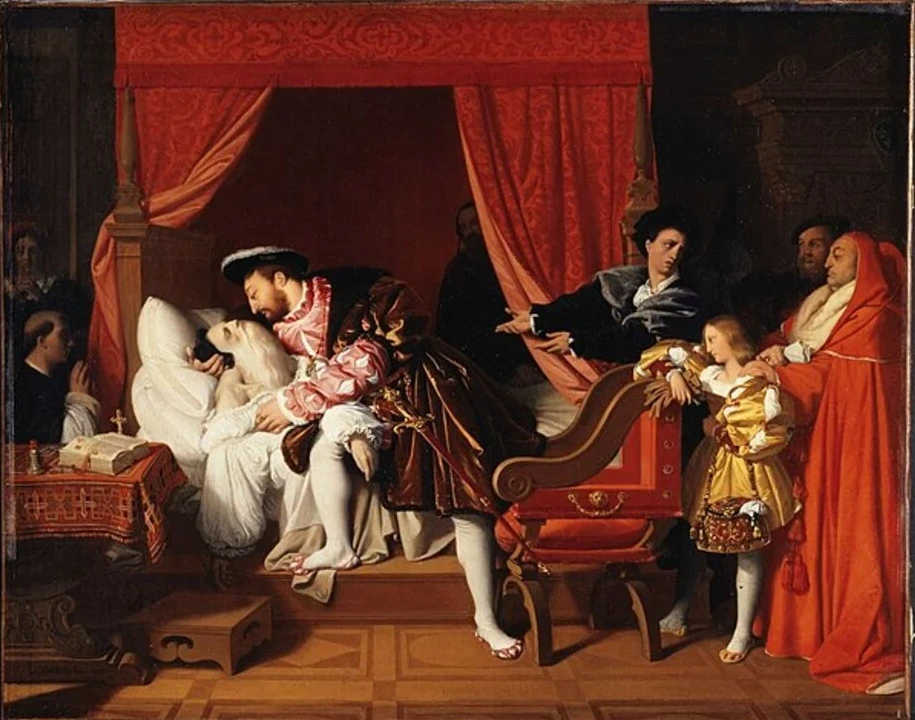
Leonardo da Vinci died on May 2, 1519, at the Château du Clos Lucé in Amboise, France. He was 67 years old. The cause of death is generally believed to have been a stroke, though the historical record is not entirely certain.
According to legend — one that appears in Giorgio Vasari’s 16th-century biography — King Francis I was at Leonardo’s bedside when he died and cradled the old master’s head in his arms. Whether or not this is literally true, it captures something real: by the end of his life, Leonardo was not a forgotten craftsman but a figure of immense prestige, honored by one of Europe’s most powerful monarchs.
He was buried in the Collegiate Church of Saint-Florentin in Amboise, France, though the exact location of his remains has been the subject of ongoing historical debate.
Leonardo da Vinci Quotes: Windows Into a Remarkable Mind

Leonardo’s notebooks contain thousands of observations, diagrams, and reflections. Many of his written remarks have endured as some of the most quoted lines in the history of human thought.
What His Words Reveal About His Philosophy
Leonardo’s quotes consistently return to a few themes: the primacy of direct observation over received authority, the unity of art and science, and the inexhaustible complexity of the natural world. He famously wrote that a painter who does not doubt himself is nearly always wrong — a striking statement of intellectual humility from a man of supreme talent.
He also wrote extensively about time, comparing it to a river, and about the foolishness of those who pursue wealth at the expense of knowledge.
How His Notebooks Preserve His Thinking
Leonardo wrote in a distinctive mirror script — right to left across the page, readable only when held up to a mirror. Whether this was for secrecy, left-handedness, or simple habit remains debated. What is certain is that his notebooks, scattered across European libraries after his death, represent one of the greatest intellectual archives ever created.
Walter Isaacson’s biography, Leonardo da Vinci, published in 2017, draws extensively on these notebooks to reconstruct how Leonardo actually thought — not just what he produced.
How Did Leonardo da Vinci Contribute to the Renaissance?
The Renaissance was a period of profound cultural and intellectual transformation across Europe, roughly spanning the 14th through the 16th centuries. It was defined by a renewed interest in classical antiquity, an elevation of the individual human intellect, and a dramatic expansion of artistic and scientific ambition.
Leonardo’s Artistic Innovations
In painting, Leonardo introduced and perfected techniques that redefined European art for generations. His development of sfumato — a method of blending tones so subtly that outlines dissolve into soft shadows — gave his figures a psychological depth and atmospheric reality that no painter before him had achieved.
The Mona Lisa remains the most studied painting in the world precisely because of this technique. The subject’s ambiguous expression, the hazy landscape behind her, the almost imperceptible smile — all are products of Leonardo’s mastery of light, shadow, and observation.
Leonardo’s Scientific Legacy
Leonardo’s scientific contributions were equally transformative, even though most of his research remained unpublished in his lifetime. His anatomical drawings, produced after dissecting more than thirty human corpses, were the most accurate representations of the human body that had ever been made. His studies of water flow, geological formations, and the mechanics of flight anticipate discoveries that would not be formalized for another century or two.
He embodied the Renaissance belief that the careful study of the natural world was both a moral and intellectual duty — that observation itself was a form of wisdom.
Where to Experience Leonardo’s Legacy
One of the most rewarding ways to encounter Leonardo da Vinci’s genius is to visit the places where he actually lived and worked. Across Europe, museums, historical sites, and Renaissance cities preserve his paintings, his notebooks, and the environments that shaped him.

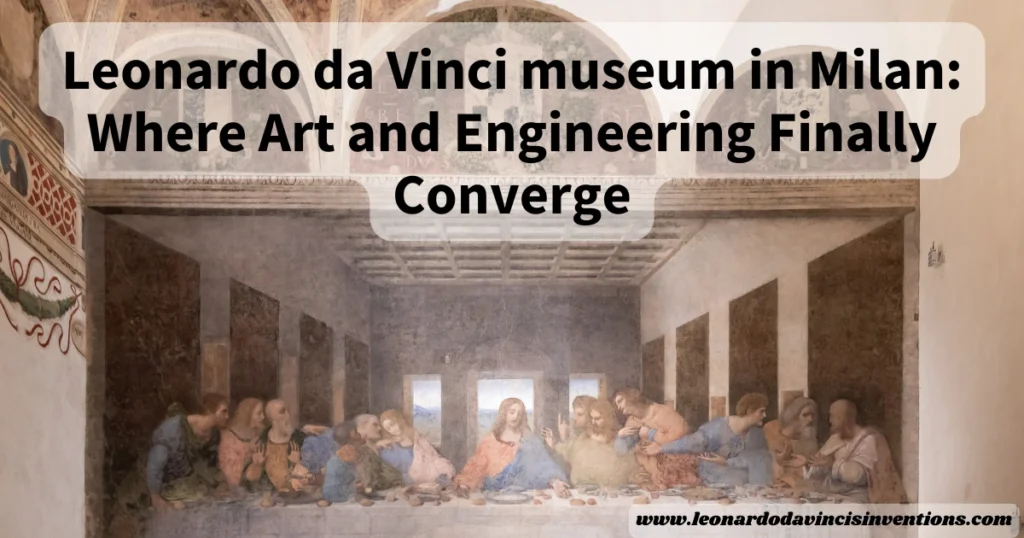

Each of these cities offers a different window into Leonardo’s world — Florence for his artistic formation, Milan for his scientific and engineering work, Paris for his greatest painting, and Vinci for the origins of the man himself.
Experience Leonardo’s World in Person
Visiting a museum is one thing. Experiencing Leonardo’s world means going further — tracing his path through multiple cities, standing in the actual spaces where he worked, and approaching his notebooks and paintings with the context to understand what you are seeing.
Leonardo Museums and Permanent Collections
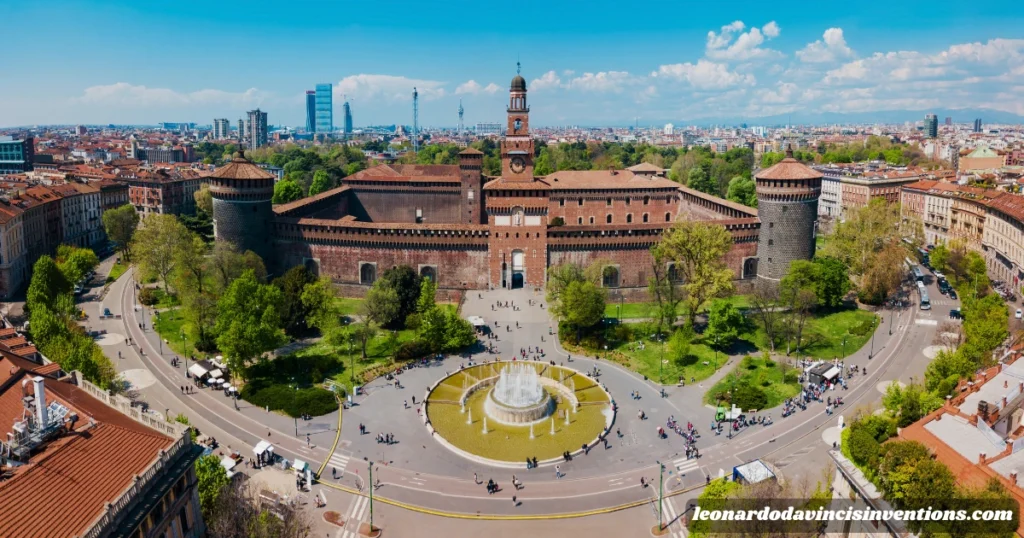
Beyond the major institutions already mentioned, smaller Leonardo museums and collections exist across Italy and Europe. The Castello Sforzesco in Milan, where Leonardo worked for years under Ludovico Sforza, contains frescoes attributed to him. The Royal Collection in Windsor holds the largest collection of Leonardo’s drawings outside of Italy.
Many of these collections now offer digital access as well, allowing you to study his anatomical drawings or engineering sketches in extraordinary detail from anywhere in the world.
Renaissance Cities as Living Museums
Florence and Milan are not simply cities with Leonardo-related museums — they are themselves Renaissance environments. Walking through the historic center of Florence, passing the Baptistery, the Cathedral, and the Piazza della Signoria, is to move through spaces that Leonardo knew intimately. The same is true of Milan’s historic center, with its canals (some of which Leonardo helped design) and its dense concentration of Renaissance architecture.
Guided Tours and Leonardo-Themed Itineraries
Specialized guided tours now exist for travelers who want to follow Leonardo’s life in sequence — beginning in Vinci, moving to Florence, then north to Milan, and finally to France. These itineraries combine art history, scientific history, and cultural travel in a way that no single museum visit can replicate.
Booking in advance is essential for sites like The Last Supper in Milan, which limits visitors to small groups for timed entry, often weeks or months in advance.
Final Thoughts on the Leonardo da Vinci Life Story
This post was all about Leonardo da Vinci life story in its full sweep — from the olive-scented hills of Vinci to the royal estates of the French Loire Valley, from the bustling workshops of Florence to the grand courts of Milan. What emerges is the portrait of a man who never stopped questioning, never stopped observing, and never stopped filling pages with ideas that the world was not yet ready to use.
Leonardo’s contribution to the Renaissance was not simply a matter of producing great paintings or clever inventions. He modeled a way of being in the world — curious, patient, humble before the complexity of nature, and convinced that art and science are not opposites but two expressions of the same desire to understand. That combination of qualities is what makes his story feel so alive and so relevant five centuries after his death.
FAQs about Leonardo da Vinci Life Story
The story of Leonardo da Vinci follows the life of a Renaissance polymath born in 1452 in the small Tuscan town of Vinci, Italy. Over his lifetime, he became one of history’s most influential figures, working as a painter, scientist, engineer, and inventor. Leonardo created masterpieces such as The Mona Lisa and The Last Supper, while filling thousands of notebook pages with studies of anatomy, engineering, and nature that anticipated scientific discoveries centuries later.
As a child growing up in the countryside near Vinci, Leonardo spent much of his time observing nature, which sparked his lifelong curiosity about how the world works. Around the age of 14, he moved to Florence and became an apprentice in the workshop of the artist Andrea del Verrocchio, where he learned painting, sculpture, and technical skills that shaped his future career.
Leonardo da Vinci was originally buried in the Church of Saint-Florentin in Amboise, France. During the French Revolution in the late 18th century, the church was heavily damaged and eventually demolished, which led to the destruction and disturbance of many graves, including Leonardo’s. Later remains believed to belong to him were reburied in the nearby Chapel of Saint-Hubert at Château d’Amboise.
According to Renaissance writer Giorgio Vasari, Leonardo expressed regret near the end of his life, saying he had not accomplished as much as he hoped. A commonly cited version of his final sentiment is that he had “offended God and mankind by doing so little with his life,” reflecting his perfectionism and the many projects he left unfinished.
There is no definitive historical proof about Leonardo da Vinci’s sexuality, but many historians believe he may have been gay. In 1476, he was anonymously accused of sodomy in Florence along with several other men, though the case was dismissed due to lack of evidence. Because Leonardo never married and wrote little about his personal life, scholars continue to debate the topic.
The Mona Lisa does not have an official market price because it belongs to the French government and is considered priceless. However, the painting was insured for $100 million during a U.S. exhibition in 1962; adjusted for inflation today, that figure would be roughly equivalent to hundreds of millions of dollars, leading some estimates to suggest it could exceed $1 billion if it were ever sold.
Disclosure: This page may contain affiliate links. If you choose an experience through them, it helps support the site at no extra cost to you.
 Leonardo Bianchi is the founder of Leonardo da Vinci Inventions & Experiences, a cultural travel guide helping visitors explore Leonardo da Vinci’s art, inventions, and legacy across Italy and Paris.