
(Last updated: April 2026)
Leonardo da Vinci Parachute is a fascinating invention from the Renaissance era that combines creativity with intricate design.
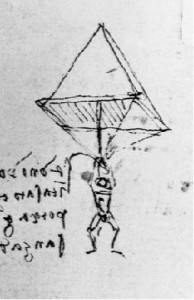
Da Vinci‘s parachute, designed in the 1480s, is remarkable because it aimed to prove that a human could safely descend from heights using a canopy of sealed linen cloth supported by wooden poles.
In the late 20th century, daredevil Adrian Nicholas tested da Vinci’s concept. Nicholas constructed the parachute according to da Vinci’s original design specifications and boldly jumped from a hot-air balloon at 10,000 feet. The successful flight affirmed that da Vinci’s ideas, though centuries old, were revolutionary and feasible.
The invention reflects da Vinci’s forward-thinking approach to science and engineering, showcasing his desire to push the boundaries of human exploration. Leonardo da Vinci’s story continues to inspire engineers, scientists, and artists by bridging the gap between art and science.
The Invention of the Leonardo da Vinci Parachute
Leonardo da Vinci parachute was a groundbreaking concept in the history of flight devices. This section explores the parachute invention’s historical origins, da Vinci’s time context, and the process behind his design.
Who Invented the Parachute?
The idea of the parachute can be traced back to Leonardo da Vinci, who sketched the initial concept in the late 15th century. His drawing depicted a pyramid-shaped device made from sealed linen cloth and wooden poles.
Although Leonardo da Vinci’s innovations in art and science were ahead of his time, Sebastien Lenormand wasn’t credited with the first practical parachute jump until the 18th century. While da Vinci’s parachute was not built or tested during his lifetime, it laid the groundwork for a critical advance in aviation. His idea remained theoretical until much later, illustrating his forward-thinking approach to invention.
The Historical Context of the Leonardo da Vinci Parachute
During the Renaissance, thinkers like Leonardo da Vinci explored new concepts in science and technology. The parachute was one of many visionary projects da Vinci worked on. His fascination with flight also led to the creation of the ornithopter, another innovative design intended to mimic bird flight.
The Renaissance era was a period of questioning and innovation, and da Vinci’s parachute reflects his curiosity about the laws of nature and movement. Although the technology of the time limited the feasibility of these inventions, his work laid the foundation for future innovations.
How Leonardo da Vinci’s Parachute Design Came to Be
Leonardo da Vinci’s parachute design was unique for its time. He proposed a pyramid-shaped canopy made of wood and linen to slow a person’s descent from a height.
His sketches show a meticulous attention to detail, blending his artistic skills with scientific inquiry. Although da Vinci never saw his ideas come to fruition, modern tests have validated the effectiveness of his design.
Recently, replicas of his parachute have been built and successfully tested, proving the concept he originated centuries ago. Da Vinci’s ability to conceptualize complex mechanics remains impressive, showcasing his unparalleled genius.
Understanding the Design of the Leonardo da Vinci Parachute
Leonardo da Vinci parachute was a remarkable concept demonstrating his forward-thinking approach in the Renaissance era. The design featured innovative elements, unique materials, and a distinctive shape that set it apart from modern parachutes.
Key Features of the Leonardo da Vinci Parachute Design
The Leonardo da Vinci parachute design included a pyramid shape that deviated from the circular canopy typical in today’s parachutes. It was intended to control descent with a frame attached to a square canopy.
Da Vinci believed this design could slow a person’s fall and allow for a safe landing. This innovation showcased his understanding of aerodynamics and physics.
Despite being conceptualized in the 15th century, the parachute has been discussed and tested to see if it would function as intended. This further underlines his advanced thinking and creativity during his time.
Materials Used in the Leonardo da Vinci Parachute
Leonardo’s parachute was designed using wood and canvas. The wooden frame provided structure and support for the canopy, while the canvas served as the main surface that captured the air.
These materials were readily available during da Vinci’s time, making it possible to construct such devices without modern technology.
The emphasis was on creating a lightweight yet robust design. The choice of wood and canvas reflects da Vinci’s ability to utilize existing materials effectively in his inventions. This design paved the way for later advancements in parachute construction using similar principles.
The Pyramid Shape of the Leonardo da Vinci Parachute
One of the most intriguing aspects of the Leonardo da Vinci parachute was its pyramid shape. Unlike typical rounded parachutes, it featured a square base and an angular canopy. This shape was intended to control airflow and provide stability during descent.
The unique design demonstrated da Vinci’s foresight in anticipating potential challenges of free fall and landing. His drawings and concepts were remarkably ahead of their time, influencing later developments in parachute technology. This design was a testament to his ingenuity and an early exploration of flight and aerodynamics.
Testing the Leonardo da Vinci Parachute
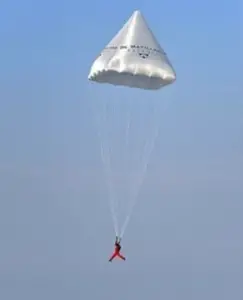
Leonardo da Vinci parachute was an innovative concept that eventually led to practical field tests. Modern skydivers like Adrian Nicholas dared to bring da Vinci’s designs into the real world, providing significant insights.
Did Leonardo da Vinci’s Parachute Work?
Leonardo da Vinci’s parachute design featured a pyramidal shape made from wood and canvas. The question of whether Leonardo da Vinci’s parachute worked captured enthusiasts and experts alike.
In 2000, British skydiver Adrian Nicholas undertook a bold experiment. He built a parachute based on Leonardo’s original drawings.
Nicholas successfully descended using a parachute from an altitude of 10,000 feet, proving Leonardo’s concept viable despite prior skepticism. This experiment demonstrated that even a 500-year-old design can be effective when constructed precisely, challenging the doubts of earlier experts who believed it would fail.
Modern Interpretations of the Leonardo da Vinci Parachute
Modern interpretations of Leonardo da Vinci’s parachute reflect a blend of admiration and curiosity. Skydivers and historians revisit da Vinci’s design to test its principles against contemporary standards.
Who invented the parachute has fascinated many, with da Vinci’s version representing a significant stepping stone.
Leonardo’s parachute is far from sleek, modern fabric chutes, yet enthusiasts appreciate the historical and technical insights such experiments provide.
Tests have inspired innovations in parachute design, blending the old with the new. They confirm the enduring appeal of Leonardo da Vinci’s inventions and showcase his genius in seeing beyond his time.
How to Make a Leonardo da Vinci Parachute: A DIY Guide
Creating a replica of Leonardo da Vinci’s parachute can be engaging. To start, you need to study Leonardo’s original parachute sketch.
The framework involves lightweight wood cut into a pyramidal shape. Cover the frame with sturdy fabric, such as canvas. Ensure the joints are secure to withstand air pressure. Follow the proportions closely to maintain stability and integrity.
This project allows enthusiasts to connect with history and offers insights into da Vinci’s inventive process. It serves as an accessible yet enlightening way to explore the fusion of art and science in Leonardo da Vinci’s inventions.
Final Thoughts
Leonardo da Vinci parachute design was a remarkable example of his inventive mind.
Conceived in the late 15th century, this design featured a pyramid-shaped canopy made from wood and cloth. Although the concept was theoretical during his time, modern experiments have proven that his design could indeed work.
Da Vinci’s creativity extended beyond the parachute. His sketches and notes included ideas for flying machines, which were well ahead of their time. These inventions showcased his deep interest in aerodynamics and the possibilities of human flight.
A key element of the parachute’s design was its simplicity. Unlike modern parachutes, da Vinci’s concept relied on basic materials and a straightforward structure. This simplicity made it a fascinating subject for enthusiasts who wish to recreate historical innovations.
The legacy of da Vinci’s parachute continues to inspire innovators and historians alike. His work is a testament to the enduring impact of visionary ideas.
Key Takeaways: Leonardo da Vinci’s parachute highlights his genius and forward-thinking nature. Even centuries later, his ideas continue to captivate and inspire. His work bridges the gap between art and science, paving the way for future technological advancements.
FAQs about Leonardo da Vinci Parachute
Leonardo da Vinci did not invent the parachute, but he created one of the earliest known designs in the late 15th century. His sketches show a pyramid-shaped parachute made of linen and wood, demonstrating an early understanding of air resistance and controlled descent.
The first recorded successful parachute jump was made by André-Jacques Garnerin in 1797, when he descended safely from a hydrogen balloon over Paris. Earlier experiments existed, but his jump is considered the first true high-altitude parachute descent.
The Renaissance figure most commonly associated with the parachute is Leonardo da Vinci, who sketched one of the earliest designs around 1485–1495. Although not the true inventor, his concept greatly influenced later developments.
Leonardo da Vinci’s glider and flying machine designs did not work in practice during his lifetime. They remained theoretical because the materials and power sources available in the Renaissance were insufficient for sustained flight.
The first practical parachutes were developed in the 18th century, particularly by Louis-Sébastien Lenormand, who performed an early public jump in 1783. Later inventors refined the design into the modern parachute used today.
Leonardo da Vinci designed many groundbreaking inventions, including the flying machine (ornithopter), the aerial screw (helicopter concept), the parachute, the armored vehicle (tank), and the self-propelled cart. Most were never built but influenced future technology.
 Leonardo Bianchi is the founder of Leonardo da Vinci Inventions & Experiences, a travel and research guide exploring where to experience Leonardo’s art, engineering, and legacy across Italy and Paris.