
(Last updated: April 2026)
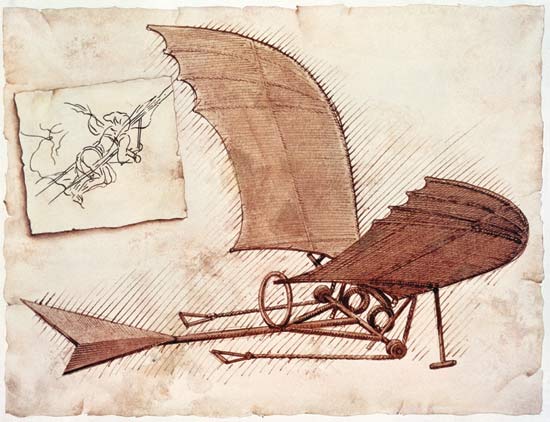
Leonardo da Vinci Glider has captivated minds for centuries, drawing interest from historians, engineers, and dreamers alike.
With his glider, Leonardo da Vinci sought to bring the dream of human flight to life, a revolutionary idea for his time.
He laid the groundwork for modern aviation technology through detailed sketches and innovative designs.
If you’ve ever wondered how Leonardo’s designs pushed the boundaries of science and art, you are not alone.
His glider, with wings inspired by birds and bats, harmoniously blended nature and engineering. This invention was not just a flight of fancy; it demonstrated his deep inquiry into aerodynamics and human potential.
Leonardo da Vinci: The Inventor
Leonardo da Vinci exemplified the spirit of the Renaissance with his wide-ranging talents and curiosity. He integrated art and science, leading to significant developments during this transformative period.
Renaissance Context
Leonardo da Vinci emerged as a pivotal figure during the Renaissance, a time of renewed interest in science, art, and human potential. He pushed boundaries and reshaped his thinking.
Born in 1452, he bridged the gap between the medieval world and modernity.
Leonardo engaged with diverse disciplines, including anatomy, geology, and engineering. His work laid the groundwork for future innovations.
Da Vinci’s notebooks, full of sketches and designs, provide insight into his brilliant mind. These included plans for the Leonardo da Vinci Glider, showcasing his vision of human flight.
Contributions to Aeronautics
Leonardo da Vinci’s fascination with flight led to groundbreaking aviation concepts. His studies of bird flight inspired designs such as the ornithopter and Leonardo da Vinci Glider. These ideas predated modern aeronautics, illustrating his forward-thinking approach.
Da Vinci meticulously observed the world and sought to replicate natural phenomena.
For instance, his Codex on the Flight of Birds contained insights into flight mechanics.
Although his flying machines, including attempts at a da Vinci plane, didn’t achieve flight in his lifetime, they impacted future generations. His imaginative designs paved the way for the development of modern aircraft.
Leonardo da Vinci Glider Concept
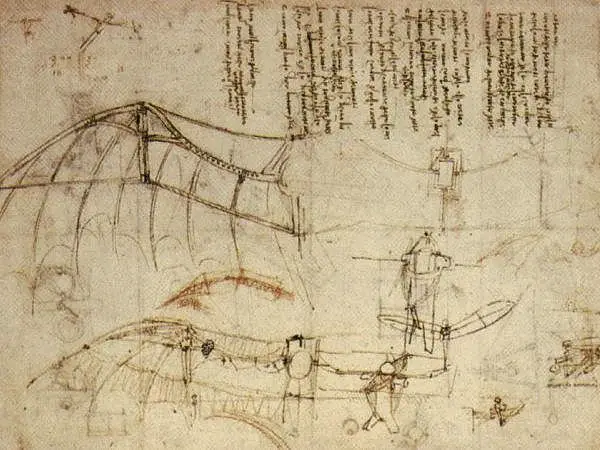
Leonardo da Vinci’s glider designs showcase an innovative approach to flight. He blended his keen observations of nature with bold engineering concepts, laying important groundwork for modern aviation.
Design Principles
Leonardo da Vinci glider was a marvel of his time. Inspired by his studies of bird flight, he aimed to emulate the mechanics of avian wings, focusing on the structure and maneuverability needed for sustained flight.
His sketches include detailed plans for a human-carrying machine with large, bat-like wings.
These designs reveal his intention to balance weight, lift, and flight control, which were revolutionary for the 1500s.
Using natural elements, da Vinci wanted his glider to rely on wind currents, as a modern hang glider does.
His drawings in the Codex on the Flight of Birds illustrate his attention to detail in wing design.
This included concepts such as movable wings and tail adjustments, which are crucial to aerodynamics.
Although not built during his lifetime, these ideas marked an influential step toward the development of aviation technology.
Aerodynamics Insights
Leonardo da Vinci made groundbreaking observations about aerodynamics long before modern terminology existed.
He recognized the importance of airflow over and under wings and its role in creating lift.
His glider concept incorporated these insights, aiming to maximize the efficiency of wind currents during flight.
He observed birds in flight and noted the role of the “thumbs,” or alulae, in controlling descent and ascent.
Through his studies, da Vinci identified vortices formed by wing movement, a concept still relevant to aerospace engineering today.
His work demonstrated a deep understanding of the physics involved, paving the way for later advances in flight mechanics.
Leonardo da Vinci Flight
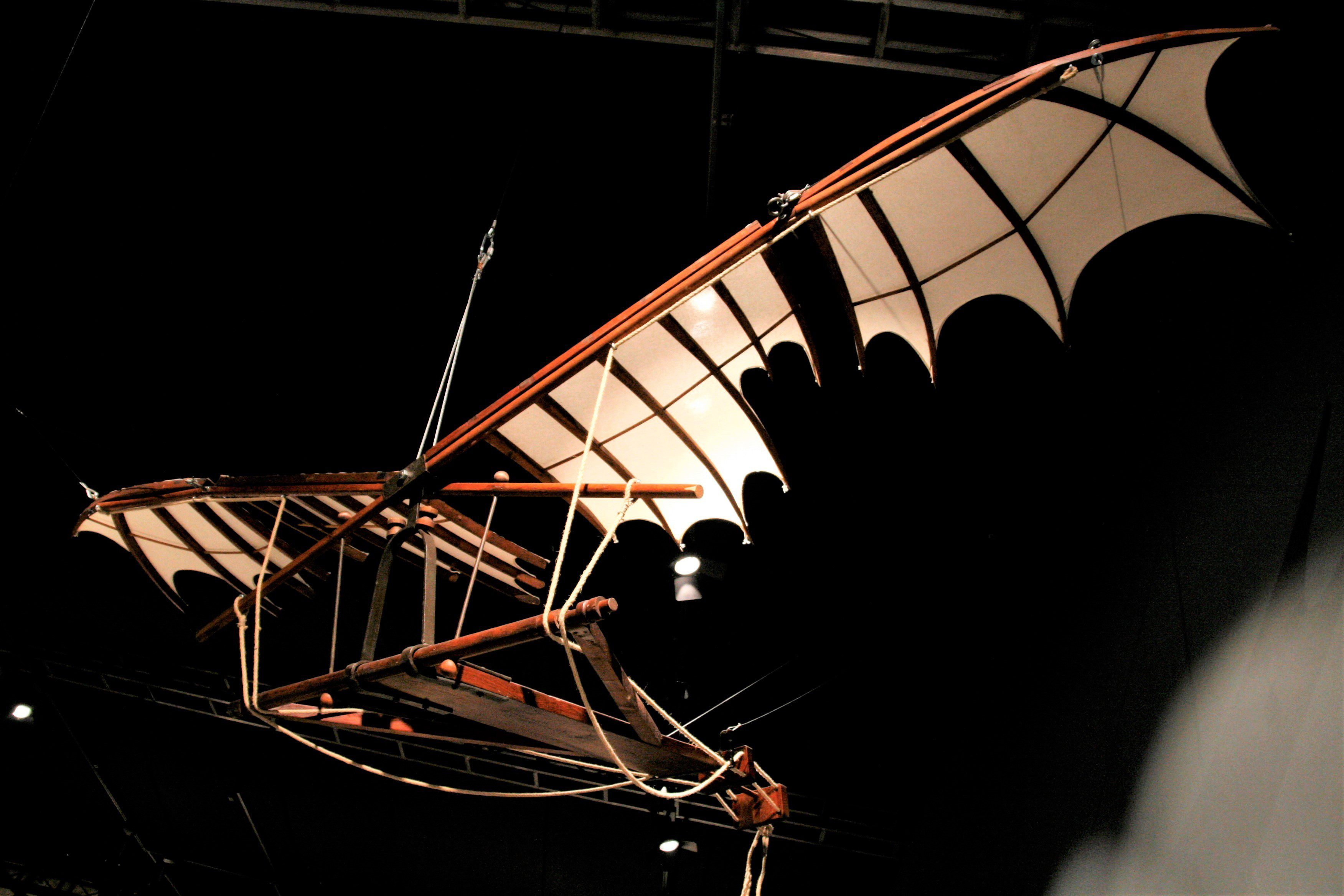
Leonardo da Vinci‘s exploration of human flight paved the way for future technologies. His inventions, detailed sketches, and studies reflect his vision for flight using naturally inspired designs.
Did Leonardo da Vinci Invent the Glider?
Leonardo da Vinci is often credited with the concept and design of the glider, but historical evidence indicates that his machines were never built or flown successfully.
His designs laid the groundwork for future advancements in aviation by inspiring others to refine and test his ideas.
While he did not invent a working glider, his contributions to aviation remain foundational. The Leonardo da Vinci glider demonstrated his commitment to solving the problem of flight through innovative design and thorough research.
The Timeline of Leonardo da Vinci’s Flight Inventions
During the late 15th and early 16th centuries, da Vinci dedicated significant efforts to designing flying machines.
His famous sketches, such as the Codex on the Flight of Birds, document his early theories and designs.
By around 1505, he had developed several machine concepts, including the glider and the flying machine.
Though none of his creations took flight in his time, they showcased his forward-thinking vision.
His work influenced aviation pioneers centuries later, marking a significant historical milestone in the quest for human flight.
Leonardo da Vinci’s Other Aerial Inventions
The Ornithopter
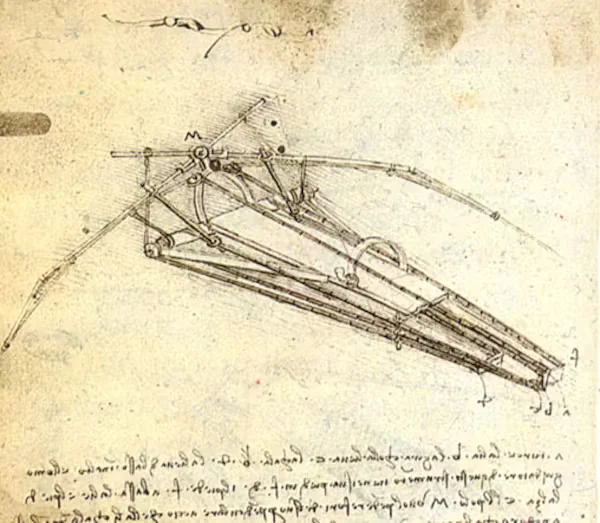
Among Leonardo da Vinci’s numerous flight designs, the ornithopter stands out for its ambitious goal of achieving powered, flapping-wing flight similar to a bird. Unlike the glider, which was designed for passive flight, the ornithopter aimed to mimic birds’ active wing movements.
An ornithopter is a machine that achieves flight by flapping its wings. The term “ornithopter” is derived from the Greek words “orthos,” meaning bird, and “pteron,” meaning wing. Leonardo’s design featured large, flapping wings and a pilot lying at the machine’s center.
This invention highlights Leonardo’s detailed study of bird flight and his innovative approach to replicating their wing movements.
The Functionality of da Vinci’s Ornithopter
Would Leonardo’s ornithopter have been capable of flight? This question has intrigued scholars and aviation enthusiasts for years. While it is captivating to envision such a machine soaring in Renaissance Italy, historians generally agree it would have been unlikely.
Leonardo’s design depended on the pilot’s muscle power to generate sufficient lift for takeoff and sustained flight. This would have been practically impossible, given the machine’s size and weight.
Nonetheless, the ornithopter remains a brilliant conceptual exercise and a leap of imagination far ahead of its time.
Did da Vinci Invent the Propeller?
Another intriguing aspect of Leonardo’s aerial inventions is the propeller. Did this Renaissance genius indeed create this crucial component of modern aviation?
Leonardo da Vinci’s notebooks include sketches of spiral-shaped air screws that closely resemble modern propellers.
The concept behind his design was revolutionary: when spun rapidly, the air screw would generate lift, potentially pulling the device and its occupant upward. This simple yet groundbreaking idea showcases Leonardo’s forward-thinking approach to flight.
Reconstructions and Experiments
Leonardo da Vinci’s glider continues to inspire fascination and exploration today. Enthusiasts and experts attempt to reconstruct and test his pioneering designs to understand their potential. These activities provide insights into da Vinci’s contributions to aviation.
Modern Replicas
Modern enthusiasts have meticulously recreated the Leonardo da Vinci glider, bringing his sketches to life.
These replicas often incorporate materials such as wood and canvas to stay true to the original designs.
Some replicas highlight the glider’s wingspan and aerodynamic features.
While the original designs remain difficult to replicate exactly, these modern efforts illuminate the practicality and innovation inherent in da Vinci’s work.
Creators focus on accurately replicating da Vinci’s drawings and respecting the historical context.
The reconstructions demonstrate his understanding of aerodynamics long before modern aviation emerged.
Historians and engineers aim to bridge the gap between da Vinci’s concepts and contemporary flight technology by studying these replicas.
These efforts prove instrumental in appreciating the genius behind his inventions, such as the famous ornithopter concept.
Testing da Vinci’s Theories
Testing da Vinci’s theories involves practical experiments to evaluate his flying machine designs. These attempts helped determine whether Leonardo da Vinci’s glider could have flown successfully.
Investigators analyze the effectiveness of the glider’s design by examining wind resistance and lift generation.
Although there are debates, some experiments suggest the glider might have worked under optimal conditions. The evaluations include computer simulations and wind tunnel tests.
Researchers strive to align historical feasibility with modern scientific methods.
By reenacting these designs, they reveal da Vinci’s foundational role in advancing aviation and shaping ideas that led to breakthroughs.
While conclusive proof of da Vinci’s glider success remains elusive, such endeavors honor his innovative spirit and highlight his influence on future aviation developments.
Leonardo da Vinci’s Flight Legacy
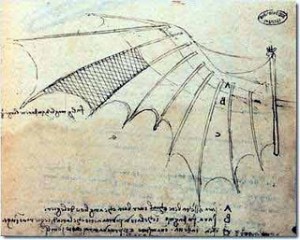
Leonardo da Vinci’s work in aviation inspired countless innovators and left a lasting impact. His designs highlighted the possibilities of human-powered flight and continue to influence modern engineering and science.
Da Vinci’s Influence on Modern Aviation
Leonardo da Vinci revolutionized the concept of human flight with inventions such as the Leonardo da Vinci glider.
While many of his machines were theoretical, his ideas laid the groundwork for modern aerodynamics.
His observations of bird flight informed current understandings of lift and thrust.
Although he never built a working model, da Vinci’s ideas on aviation principles, such as control surfaces and structural integrity, are mirrored in today’s aircraft designs.
Engineers draw on da Vinci’s sketches to develop technologies such as drones and gliders, echoing da Vinci’s genius and visionary approach.
Models and Sketches of Da Vinci’s Flying Machines
Leonardo da Vinci’s flying machines, detailed in numerous sketches, remain a testament to his inventive mind. His ornithopter design mimicked bird wings, aiming to achieve controlled flight.
While never built, it sparked interest in mechanical flight systems.
His most famous model, the helicopter-like aerial screw, showcased his understanding of rotational dynamics.
These models and sketches reflect a bold pursuit of flight centuries ahead of his time.
By incorporating springs and levers, da Vinci captured the complex movements of bird wings. His work is vital to understanding the history of flight innovation.
Final Thoughts
Leonardo da Vinci Glider represents one of the earliest attempts to understand and imitate bird flight. His designs, captured in detailed sketches, reveal his innovative approach to aerodynamics.
Da Vinci’s glider incorporated elements such as bat-like wings. These wings were held steady with cords, aiming for a balance of flexibility and control in the air.
Though never built during his lifetime, the Leonardo da Vinci Glider laid the foundational ideas for future aviation.
Da Vinci’s work inspired later inventors who continued to explore the potential of human flight.
His ideas on flight, including his examination of the aerodynamics of bird flight, display remarkable depth of insight. They predated the serious aeronautical developments of the late 19th and 20th centuries.
Key Takeaways: Leonardo da Vinci Glider showcases his forward-thinking in human flight. These ancient designs continue to inspire imagination and advance aviation technology.
FAQs about Leonardo da Vinci Glider
Leonardo da Vinci did not invent a fully functional glider, but he designed early concepts of gliding and flying machines based on his studies of birds. His sketches included devices that resemble gliders and laid important groundwork for later aviation developments.
Leonardo’s glider designs were visionary but unlikely to work effectively with the materials and technology available to him at the time. His machines relied on human strength and lacked lightweight materials and engines, making sustained flight impractical.
Yes—Leonardo da Vinci’s parachute design has been successfully tested in modern times. In 2000, a replica built using similar materials proved that his pyramid-shaped parachute could safely slow a descent, confirming the soundness of his idea.
Leonardo’s ornithopter (flapping-wing machine) was never successfully built or flown in his lifetime. While the concept was innovative, human-powered flight using flapping wings was not feasible with Renaissance technology.
The first successful practical gliders were developed much later by Otto Lilienthal, a German aviation pioneer in the 19th century. He made over 2,000 controlled glider flights and is often called the “father of aviation.”
The inventor who died in a glider crash in 1896 was Otto Lilienthal. He suffered a fatal neck injury after his glider stalled during a flight, marking one of the earliest recorded aviation fatalities.
 Leonardo Bianchi is the founder of Leonardo da Vinci Inventions & Experiences, a travel and research guide exploring where to experience Leonardo’s art, engineering, and legacy across Italy and Paris.