
(Last updated: April 2026)
Leonardo da Vinci ball bearing is a fascinating piece of engineering history. You might wonder how such a small invention can have a significant impact on technology.
This post will explore how da Vinci’s design reduced friction between moving parts and enabled advancements in modern machinery.
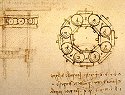
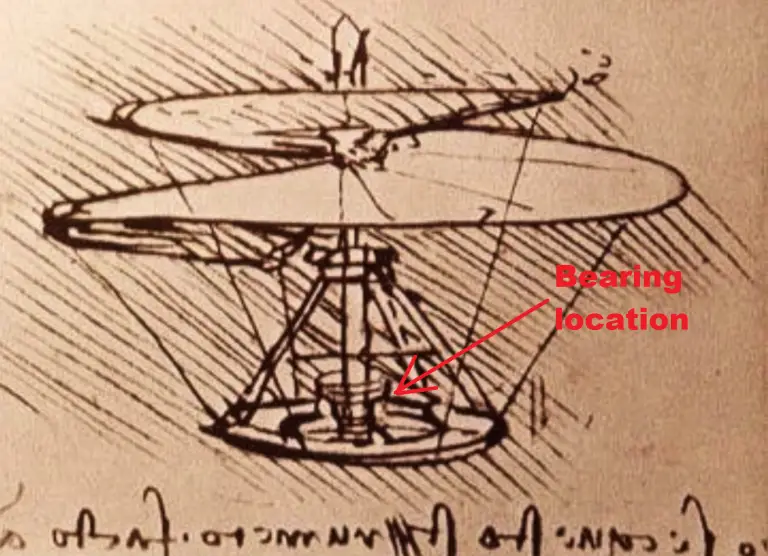
Leonardo da Vinci designed the ball bearing between 1498 and 1500 to reduce friction in his other inventions, like the helicopter.
Though his helicopter never achieved actual flight, the principles behind ball bearings were revolutionary. Their design allows for smoother motion, essential in many mechanical devices today.
His ingenious sketches show a vision ahead of his time. Leonardo’s work laid the foundation for many modern innovations.
Understanding Leonardo da Vinci’s contributions to engineering allows one to appreciate the lasting impact of his ideas on technology and beyond. His notebooks contain more information about his conceptualization of bearings.
Leonardo da Vinci Ball Bearing: Historical Context
Leonardo da Vinci made notable advancements in engineering and art during the Renaissance. His diverse interests extended to mechanics, where his designs, including the ball bearing, displayed his ingenuity.
Leonardo da Vinci’s Life
Leonardo da Vinci, born in 1452 in Vinci, Italy, is one of history’s most renowned polymaths. During his lifetime, he excelled as an artist and gained a reputation as an engineer and inventor. His works reflect a deep curiosity and relentless pursuit of knowledge.
Da Vinci studied anatomy, physics, and engineering, which contributed to his well-rounded approach to invention. Among his many creations, the Leonardo da Vinci Ball Bearing stands out for its innovative attempt to reduce friction, an insight that remains valuable in modern engineering.
His legacy can still be seen in the fields of art and science today, particularly in his remarkable works such as the Mona Lisa and The Last Supper.
Inventions and Mechanical Contributions
Leonardo’s mechanical designs were varied and imaginative. His inventions ranged from war machines to flying devices. One significant design was the ball bearing, sketched around 1498–1500.
This invention aimed to decrease friction between surfaces. It has practical applications, including use in rotating parts, as seen in today’s machinery.
Leonardo dared to conceptualize devices like early helicopters and tanks. While many of his ideas were never built during his lifetime, they laid foundational concepts for future technological advancements.
Historians often view the ball bearing as a critical development, reinforcing da Vinci’s importance in mechanical engineering. His extensive sketches and notes remain a testament to his visionary approach and continue to inspire engineers and inventors worldwide.
Analysis of the Ball Bearing Concept
The Leonardo da Vinci Ball Bearing design is a remarkable blend of mechanical insight and innovation. It reduces friction and supports rotational motion, laying the groundwork for modern engineering. This concept highlights Leonardo’s forward-thinking and mechanical genius.
Mechanical Principles
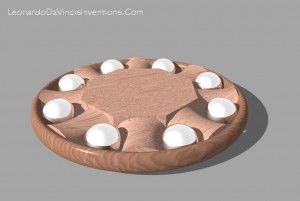
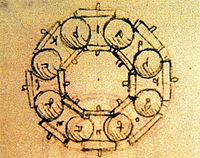
Leonardo da Vinci’s sketches reveal his intention to reduce friction between moving parts. He conceptualized a bearing that utilized small metal balls to maintain smooth motion.
This mechanism required a ‘cage’ to keep the balls evenly spaced, which was key in providing stability and efficient motion. His work shows a deep understanding of friction dynamics and mechanical systems.
Da Vinci’s design aimed to optimize the power-to-weight ratio, a crucial factor for inventions like his helicopter. Devices could function more smoothly and efficiently by lowering friction, marking a significant leap in mechanical design.
These principles of friction management and motion optimization have remained relevant, influencing countless subsequent engineering feats.
Comparison to Modern Ball Bearings
Today’s ball bearings differ significantly in materials and precision. They use high-grade stainless steel and other advanced materials, which ensure durability and efficiency.
Despite these advancements, the core idea of using balls to reduce friction remains a testament to Leonardo da Vinci’s foresight.
Unlike Leonardo’s design, modern bearings can handle higher loads and run at incredible speeds. Nonetheless, his sketches demonstrate an early understanding of bearings’ advantages in mechanical systems.
Exploring da Vinci’s inventive spirit offers insight into his role as a pioneer in engineering. It highlights how his concepts have evolved into essential components of modern machinery.
Influence on Subsequent Technology
Leonardo da Vinci’s exploration of ball bearings marked a significant leap in engineering. His designs have fueled numerous advancements in machinery and engineering that continue to benefit modern technology.
Advancements Inspired by da Vinci’s Design
Leonardo da Vinci’s ball-bearing concept provided engineers with a framework for reducing friction between moving parts. His sketches, dated between 1498 and 1500, demonstrated how spherical elements could support axial loads in rotating applications. Though Leonardo did not construct a functioning ball bearing, he laid the groundwork for later developments.
Over time, da Vinci’s ideas led to technological enhancements. The first patented ball bearing, credited to Philip Vaughan, appeared in 1794.
This invention applied the principles initially detailed by Leonardo, highlighting his enduring influence on mechanical design. Engineers today utilize similar concepts in machinery, showing Leonardo’s pivotal role in technological progress.
Ball Bearing Uses
Ball bearings can be found in any machine with rotary motion. If you read this post on a PC or laptop, the CPU fan is a ball-bearing fan.
Ball-bearing machines are still used in engines, kitchen appliances, bicycles, and many other machines. They were so important that the Royal Air Force (RAF) regularly bombed German Ball-Bearing Factories during World War II to try to stop the German War Machine.
Nowadays, ball bearings are machine-created and can attain an accuracy of within thousandths of a millimeter. The most undersized ball bearings are found in watches and remote-controlled (RC) helicopters. You can learn more about Leonardo’s use of ball bearings in his helicopter.
Ball Bearings in Contemporary Machinery
Ball bearings are essential to modern machinery, enabling smooth, efficient movement. Inspired by Leonardo da Vinci’s insights, these components reduce friction and wear in countless applications. They are integral in automotive, aerospace, and industrial equipment.
Ball bearings enhance machine performance and longevity, enabling higher speeds and greater precision. Companies continuously innovate to improve materials and design, ensuring adaptability to technological demands.
Leonardo da Vinci’s vision is evident as contemporary engineers refine these components, proving the sustained impact of his idea. His pioneering concept remains a foundation for ongoing advancements in machinery and engineering, emphasizing his importance in technological history.
Final Thoughts
Leonardo da Vinci’s contribution to the concept of the ball bearing showcases his pioneering spirit and scientific curiosity. His sketches, made between 1498 and 1500, demonstrate his understanding of how to reduce friction to enable smoother machine movement. These early designs hint at modern ball bearings, which are critical to technological advancements today.
Throughout history, figures like Philip Vaughan and John Harrison built upon da Vinci’s foundation, refining the ball bearing for practical use.
Vaughan, in particular, is credited with creating the first recorded patent for a ball bearing in 1794. His work allowed for significant improvements in the mechanical industry, enhancing the efficiency of various machines.
Key Takeaways:
- Leonardo da Vinci’s sketches laid the groundwork for future innovations.
- Philip Vaughan’s ball-bearing patent brought this invention into widespread use.
FAQs about da Vinci Ball Bearing
Leonardo da Vinci did not invent the modern ball bearing, but he was one of the first to sketch a working design. His drawings showed balls placed between rings to reduce friction—very similar to modern bearings. However, practical ball bearings were only developed and patented centuries later.
Leonardo da Vinci is most famous for conceptual inventions such as the aerial screw (an early helicopter), armored vehicles (tanks), and flying machines. Although many were never built in his lifetime, these designs demonstrated advanced engineering ideas far ahead of their time.
There is no single “best” ball bearing brand, as performance depends on the application. However, leading manufacturers such as SKF, Timken, NSK, and FAG are widely recognized for their quality, durability, and precision in industrial and automotive applications.
Leonardo da Vinci is often called the “father of the modern bearing” because he designed the basic structure of ball bearings (rings, rolling elements, and a cage). However, the first modern patented bearing was later created by Philip Vaughan in 1794.
Yes, Leonardo da Vinci designed many innovative machines, including flying devices, military equipment, and mechanical tools. While few were built during his lifetime, his notebooks show working concepts that influenced future engineering and technology.
According to historical accounts recorded by Giorgio Vasari, Leonardo’s last words expressed regret, saying he had not fully achieved the potential of his work. A commonly cited version is that he felt he had “offended God and mankind” by failing to achieve perfection in his art.
 Leonardo Bianchi is the founder of Leonardo da Vinci Inventions & Experiences, a travel and research guide exploring where to experience Leonardo’s art, engineering, and legacy across Italy and Paris.