
(Last updated: April 2026)
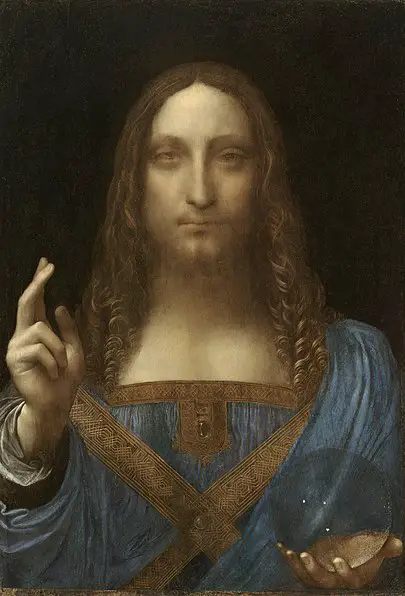
Salvator Mundi is a masterpiece that has fascinated and puzzled art enthusiasts worldwide. This painting, attributed to Leonardo da Vinci, portrays Christ with his right hand raised in blessing and a crystal orb in his left hand.
Salvator Mundi’s iconic status skyrocketed when it was sold for $450.3 million at Christie’s auction in 2017, becoming the most expensive painting ever sold.
For those questioning the painting’s sky-high price and authenticity, this article will unravel the mystery of its attribution and restoration.
Salvator Mundi’s journey includes its rediscovery, extensive restoration, and controversial sale, which have contributed to its title as the world’s most controversial painting.
You will gain insight into the controversies and history surrounding this enigmatic artwork.
Art historians and enthusiasts alike ponder the symbolism captured in Salvator Mundi. The painting’s eschatological themes and religious iconography provoke discussion on its deeper meanings.
Exploring the historical context and its secrets reveals why Salvator Mundi remains a captivating subject for debate and admiration today.
Historical Overview
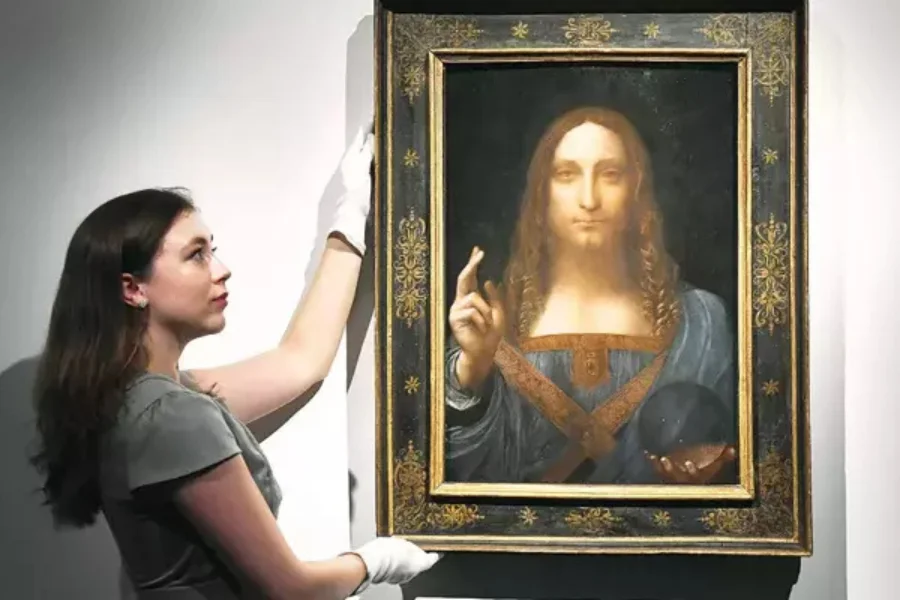
Leonardo da Vinci’s “Salvator Mundi” is a painting with a rich and complex history. Its journey and the mysteries surrounding its creation and ownership have intrigued historians and art lovers.
Creation and Artist
“Salvator Mundi,” which means “Savior of the World,” is attributed to the legendary artist Leonardo da Vinci.
The painting, created around 1500, depicts Jesus holding a crystal orb, symbolizing his role as a savior. Leonardo’s signature style shines through the detailed rendering of textures and Jesus’s serene expression.
Though Leonardian, debates continue about whether the master himself painted it entirely or if it involved contributions from his workshop, a common practice during the Renaissance.
This painting exemplifies the artist’s talent in capturing divine serenity and depth, making it one of the most debated artworks globally. It has been a subject of extensive analysis and study, highlighting its importance in art history.
Provenance and Ownership
The painting has had a turbulent ownership history, adding to its allure and controversy.
Rediscovered in 2005, “Salvator Mundi” was initially bought at a small auction in New Orleans despite being heavily overpainted and in poor condition.
Art collectors and experts debated its authenticity until it was restored and authenticated as a da Vinci work, significantly increasing its value. In 2017, it made headlines when it sold at auction for a record Salvator Mundi price of $450.3 million, making it the most expensive painting ever sold.
The current owner is believed to be Mohammed bin Salman, the Crown Prince of Saudi Arabia, though its exact location remains uncertain. This ownership history reflects the painting’s complex journey through time and the intrigue it has sparked.
Artistic Significance
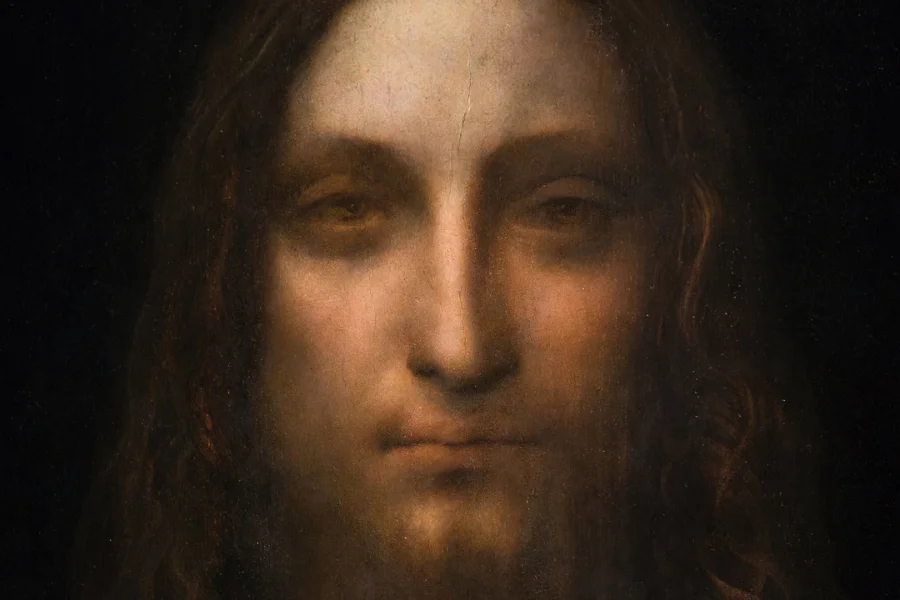
The Salvator Mundi painting, attributed to Leonardo da Vinci, holds a unique place in art history for its intricate composition and masterful techniques. Its symbolism and style offer deep insights into the artistic vision and the period during which it was created.
Composition and Subject
The composition of the Salvator Mundi centers on a serene figure of Christ, depicted as the Savior of the World, which is what “Salvator Mundi” translates to.
Christ’s right hand is raised in blessing, while his left holds a transparent orb, possibly symbolizing the cosmos. The figure’s calm expression and divine gesture are typical of Leonardo da Vinci’s mastery of portraying subtle human emotions.
Da Vinci’s attention to detail is evident in the intricate curls of Christ’s hair and the delicate rendering of his robes. The painting’s symmetrical balance and light guide the viewer’s eyes toward the focal point, his face and hands.
This compositional structure enhances the viewer’s engagement and reflects the spiritual significance inherent in the subject matter.
Style and Techniques
Leonardo da Vinci’s Salvator Mundi showcases his unparalleled techniques, such as sfumato, which softens the transitions between colors, creating a lifelike quality. The muted color palette aligns with the Renaissance ideals of harmony and balance, emphasizing the spiritual over the earthly.
The translucent quality of Christ’s orb is achieved through layers of thin glazes, a hallmark of da Vinci’s style. This technique adds depth and realism, underscoring his innovative approach to painting.
The contrast between the detailed rendering of Christ’s face and the softer edges of the surrounding elements enhances the portrait’s focal impact. This combination of style and technique highlights why the painting is considered a significant work of art today.
Controversies
The Salvator Mundi painting has sparked significant debates over its authenticity and the perplexing details surrounding its sales and auctions. These controversies have captivated the art world and the general public alike.
Authenticity Debates
The main contention is whether Leonardo da Vinci truly crafted the Salvator Mundi. Some experts assert it is a genuine work by Leonardo, while others argue it could be a product of his workshop or the work of a skilled later artist.
This disagreement arises partly because the painting’s restoration efforts have been significantly retouched. The actual authorship is critical because it impacts the painting’s monetary and historical value.
Many analysts scrutinize the painting’s techniques, comparing them with known Leonardo works to ascertain its authenticity. This continual debate underscores the complexity and intrigue surrounding Leonardo da Vinci’s Salvator Mundi.
Sale and Auction History
The Salvator Mundi has a contentious sale history, further fueling its notoriety. Initially bought for under $10,000 in 2005, it was sold at auction in 2017 for a staggering $450 million, cementing its place as the most expensive painting ever sold.
This dramatic increase has raised eyebrows regarding the dynamics of the art market and the motivations behind its purchase. The painting’s provenance has been questioned, with disputes over its ownership and legal proceedings involving prominent figures such as Russian billionaire Dmitry Rybolovlev.
Speculation about its buyer, Saudi Arabia’s Mohammed bin Salman, added another layer of mystery and intrigue to its already complex tale.
Conservation and Restoration
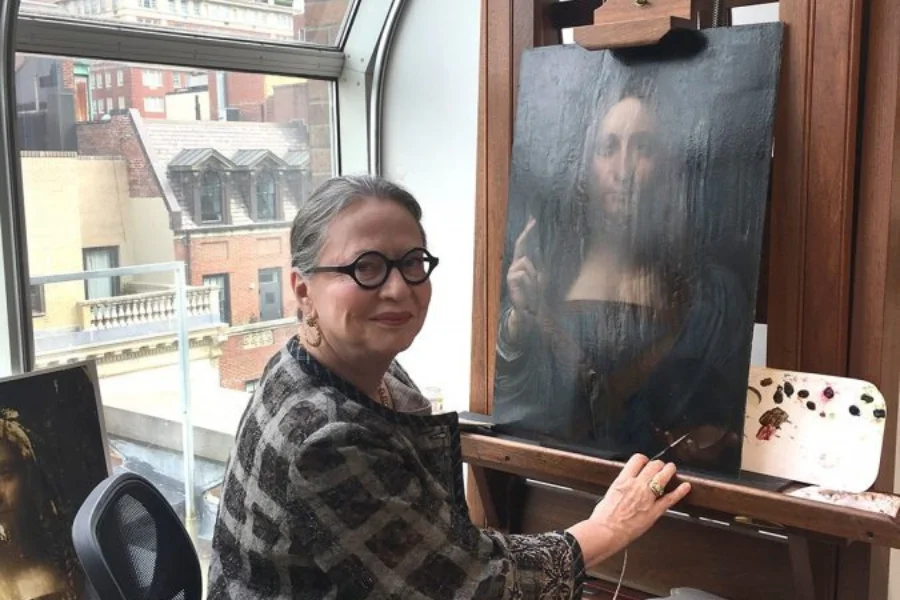
Leonardo da Vinci’s masterpiece Salvator Mundi has undergone significant conservation and restoration efforts to preserve its historical and artistic value. Detailed condition reports and thoughtful restoration efforts have been crucial in maintaining the integrity of this iconic artwork.
Condition Reports
Over the years, experts have meticulously documented the condition of the Salvator Mundi painting. Condition reports provide a comprehensive understanding of the artwork’s state, detailing areas of damage and previous restoration attempts.
These reports typically highlight issues such as paint loss, surface scratches, and areas where the original layers have deteriorated.
Maintaining an up-to-date record is crucial for a painting of this significance. The reports help us understand the current state and guide future conservation efforts.
Leonardo da Vinci’s Salvator Mundi requires careful monitoring to preserve its historical and aesthetic qualities for future generations.
Restoration Efforts
The restoration of Leonardo da Vinci’s Salvator Mundi has involved many complex processes to address areas of damage and wear. Skilled conservators like Dianne Modestini have played key roles in these efforts.
Modestini worked intensively to clean and restore the painting, which had been overpainted and was in poor condition. Restorers carefully removed varnish and non-original paint layers to reveal Leonardo da Vinci’s underlying artistry.
Challenges included matching the original pigments and ensuring that any added elements did not alter the original composition. The successful restoration of the Salvator Mundi painting has secured its structural integrity and enhanced its appreciation, influencing factors like its historical significance and awe-inspiring price.
Cultural Impact

The Salvator Mundi by Leonardo da Vinci has left a profound mark on literature, media, and public exhibitions. Its mysterious history and astonishing auction price have sparked significant global interest.
In Literature and Media
Numerous books and documentaries have explored the Salvator Mundi painting. Authors often explore its mysterious provenance and the debate surrounding its attribution to Leonardo da Vinci.
This intrigue is fueled by the painting’s record-breaking sale at Christie’s auction house in 2017 for a staggering $450.3 million, which made headlines worldwide.
Documentaries delve into the complexities of the painting’s history and authenticity, raising questions about Salvator Mundi’s true origins and meaning. The painting’s elusive history and the controversy over its authenticity captivate audiences, making it a frequent topic in both scholarly and popular media.
Public Exhibitions and Displays
Due to its private ownership, public exhibitions of the Salvator Mundi are rare. The painting’s limited public display adds to its allure, as enthusiasts worldwide eagerly seek opportunities to see it. When it is like during the previews before the auction, the events attract significant attention.
Speculation about its future public appearances continues, especially given its acquisition by the Saudi Crown Prince Mohammed bin Salman.
The painting’s significance as a portrayal of Jesus resonates deeply, drawing religious and art scholars alike. Although the Salvator Mundi is often out of view, its mystique ensures it remains a central figure in global art discussions.
Final Thoughts
Salvator Mundi holds a unique position in art history. It merges spiritual depth with artistic mastery.
The work reflects Gian Lorenzo Bernini‘s focus on salvation, with Christ depicted raising his hand in blessing. This sculpture can be seen at Rome’s Leonardo Da Vinci-Fiumicino Airport, emphasizing its significance even in contemporary settings.
Bernini’s version, distinct from the famous painting attributed to Leonardo da Vinci, showcases the diversity in artistic interpretation. The da Vinci painting sold for a record $450 million, adding to its allure by sparking debate and appreciation in the art world.
Key Takeaways:
Salvator Mundi exemplifies profound religious and artistic themes. Understanding its history enriches one’s appreciation of these masterpieces. Visiting exhibitions and online resources can provide valuable insights for those interested in exploring Bernini and da Vinci further.
FAQs about Salvator Mundi
Salvator Mundi was sold at auction in 2017 for about $450.3 million to Saudi Prince Badr bin Abdullah Al Saud. However, reports indicate he likely acted on behalf of Saudi Crown Prince Mohammed bin Salman or Abu Dhabi’s Department of Culture and Tourism.
The painting is controversial due to doubts about whether it was fully painted by Leonardo da Vinci, its heavy restoration, and its poor original condition. Critics also question how a damaged and debated work could achieve such a record-breaking price.
Salvator Mundi is believed to be one of the very few surviving paintings by Leonardo da Vinci, making it extremely rare. It depicts Christ holding a crystal orb symbolizing the universe and became famous after being rediscovered and authenticated in the 21st century.
The Mona Lisa is not officially for sale, but it is considered priceless. It was insured for $100 million in 1962, which is equivalent to over $1 billion today when adjusted for inflation.
There is no single definitive “richest painter,” but historically, modern artists like Pablo Picasso and Andy Warhol generated enormous wealth through their works. However, Leonardo da Vinci’s paintings—especially Salvator Mundi—have reached the highest prices ever at auction.
The most expensive painting ever sold is Salvator Mundi by Leonardo da Vinci, which fetched approximately $450.3 million at a Christie’s auction in 2017.
 Leonardo Bianchi is the founder of Leonardo da Vinci Inventions & Experiences, a travel and research guide exploring where to experience Leonardo’s art, engineering, and legacy across Italy and Paris.