
(Last updated: April 2026)
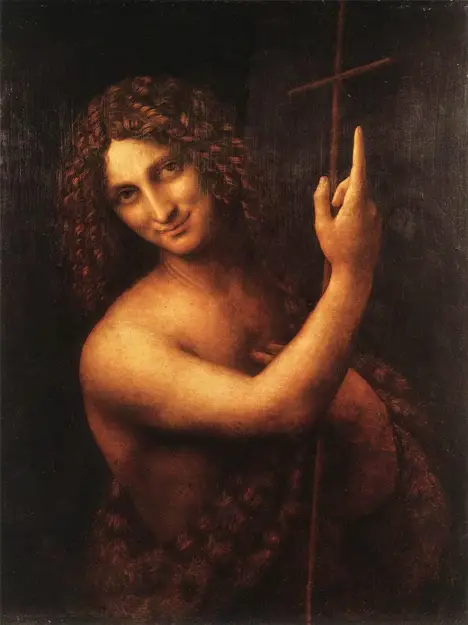
Saint John the Baptist by Leonardo da Vinci is a High Renaissance masterpiece that continues to captivate art lovers and scholars alike. This painting, believed to be da Vinci’s final work, showcases his skill in capturing the subject’s mystical essence through chiaroscuro.
Currently housed at the Louvre Museum in Paris, this painting is notable for depicting Saint John the Baptist with an enigmatic smile and gesture, symbolizing his important role in the Christian narrative.
Leonardo da Vinci’s Saint John the Baptist was created between 1513 and 1516, during the High Renaissance’s transition into Mannerism. The painting is crafted in walnut oil on walnut wood and measures 69 x 57 cm.
Soft light and shadow give the figure a three-dimensional appearance, embodying da Vinci’s unparalleled technique and philosophical depth.
The painting’s restoration at the Louvre Museum has allowed the public to view this work in its renewed glory. This exhibition rekindled interest in da Vinci’s ingenious use of light and anatomy, drawing visitors worldwide.
The artwork’s serene and detailed depiction inspires fascination, making it a must-see for anyone interested in Renaissance art.
Historical Context
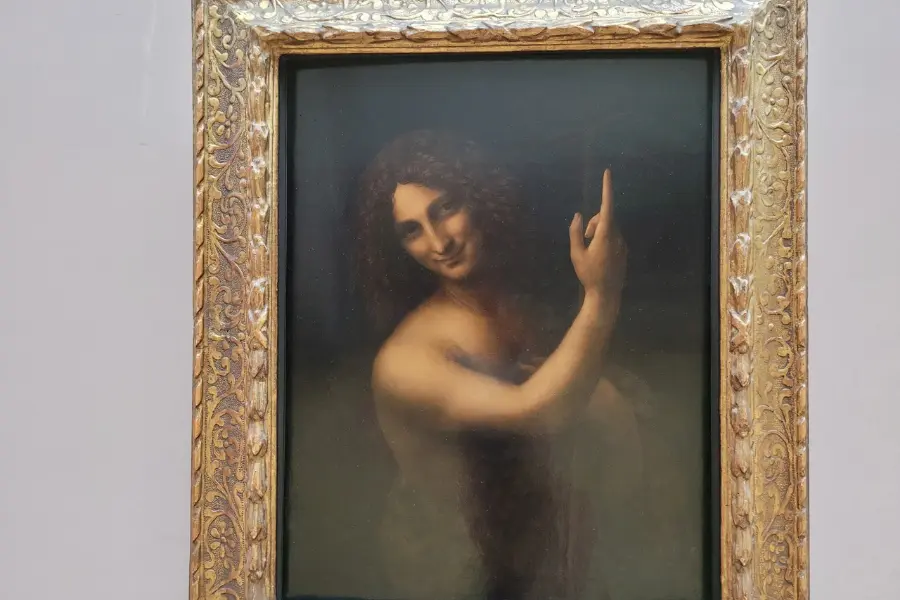
Saint John the Baptist da Vinci reflects the artist’s mastery of Renaissance techniques and deep exploration of religious themes. The painting emerged during a period of significant cultural and artistic achievements, highlighting Leonardo’s innovation and unique style.
Leonardo da Vinci’s Early Life
Leonardo da Vinci was born in 1452 in Vinci, Italy. His early fascination with nature and art likely influenced his future works, including the notable Saint John the Baptist by Leonardo da Vinci.
Leonardo apprenticed to the artist Andrea del Verrocchio in Florence, where he honed his skills in a vibrant creative environment. During this apprenticeship, Leonardo contributed to pieces like The Baptism of Christ, on which Verrocchio and Leonardo collaborated.
Leonardo’s early exposure to diverse artistic techniques set the stage for his future masterpieces, allowing him to develop a unique approach that blended observation with imagination.
Art and Culture in Renaissance Italy
The Italian Renaissance marked a revival of interest in classical art and culture, greatly influencing artists such as Leonardo da Vinci. Artists during this era found inspiration in humanism, emphasizing the potential of individuals to improve the world through creativity.
Within this context, the Saint John the Baptist painting showcases Leonardo’s use of chiaroscuro and his ability to portray enigmatic figures.
The supportive environment of Renaissance Italy provided Leonardo with opportunities to experiment with technique and form. His work on pieces such as the Annunciation, Leonardo, and John the Baptist demonstrates the era’s shift towards naturalism and detailed human expression.
Artistic Significance
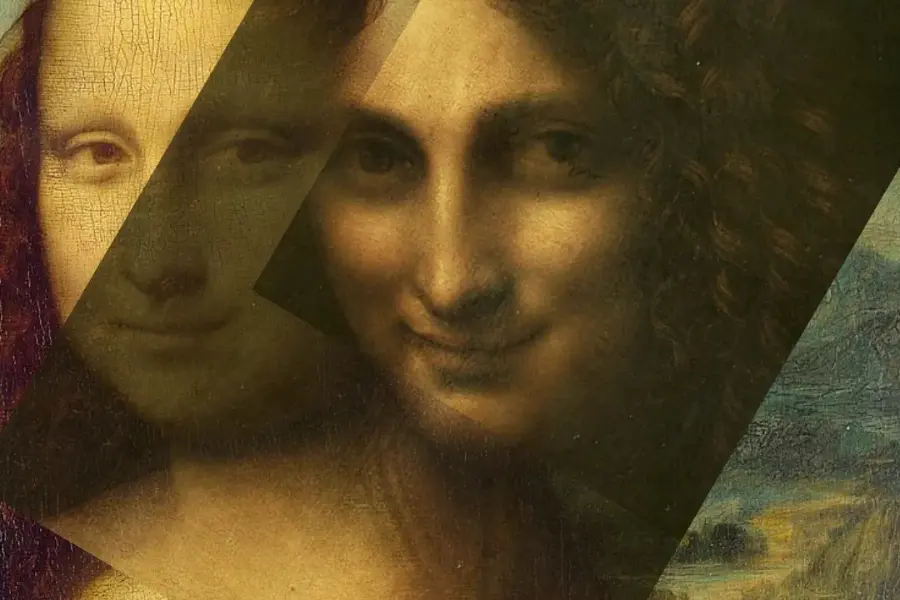
Saint John the Baptist by Leonardo da Vinci is a masterpiece renowned for its dramatic use of light and shadow. This painting illustrates groundbreaking techniques at the time and captures rich symbolic elements.
Symbolism in ‘Saint John the Baptist’
Leonardo da Vinci’s Saint John the Baptist painting carries deep symbolic meaning. The figure of John the Baptist is depicted pointing upward, a gesture interpreted as a symbol of spiritual awakening and divine revelation.
His enigmatic smile and serene expression add to the mystic aura, reflecting inner knowledge and spiritual themes.
The contrast between light and dark, known as chiaroscuro, highlights the duality of human existence and spiritual enlightenment. This painting invites viewers to contemplate the earthly and divine connection.
Such symbolic representation makes Saint John the Baptist not just a visual experience but a thought-provoking meditation on faith and spiritual insight.
Innovations in Technique and Style
The painting John the Baptist by Leonardo da Vinci is celebrated for its innovative techniques.
Da Vinci’s use of chiaroscuro creates a striking three-dimensional effect, setting this work apart from his contemporaries.
The subtle play of light and shadow gives John’s figure a lifelike presence and a suggestive, almost ethereal aura.
Da Vinci also employed sfumato, a technique that softens transitions between colors and forms, enhancing the painting’s depth and realism.
Critics often laud Leonardo John the Baptist for these groundbreaking techniques, which influenced countless artists and marked a pivotal moment in art history.
These stylistic choices help define Saint John the Baptist as a timeless work that continues to inspire admiration and study.
The Painting’s Journey
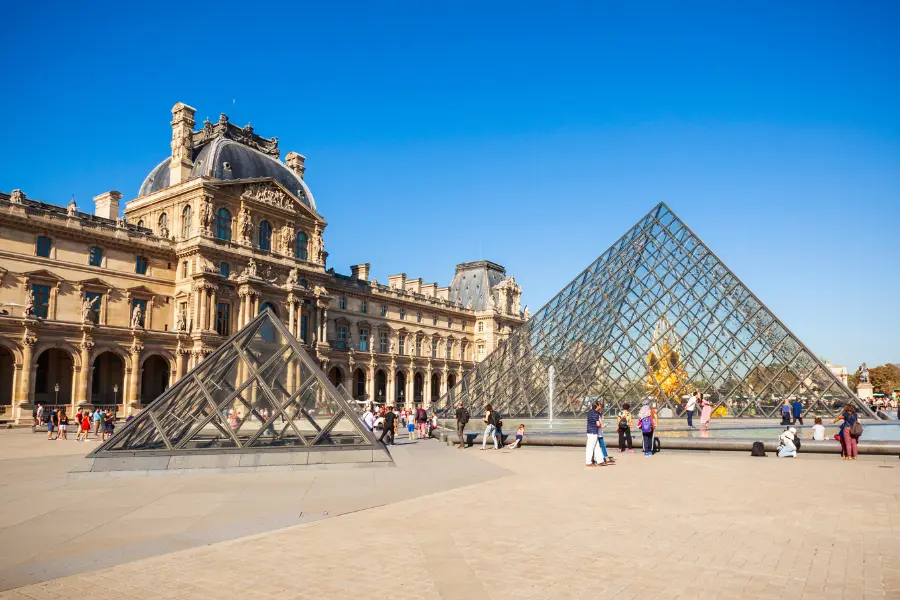
Leonardo da Vinci’s “Saint John the Baptist” journey has been as intriguing as its creation. Each aspect, from possession history to modern preservation, plays a crucial role in maintaining its legacy.
Provenance and Ownership
“Saint John the Baptist,” painted by Leonardo da Vinci, was completed between 1513 and 1516. It is now housed in the Louvre Museum in Paris.
The painting’s first known owner was King Francis I of France, who acquired it shortly after its completion. During Leonardo’s final years, he was a notable patron of the arts and a supporter of the artist.
Throughout its history, the painting has remained in France, surviving the French Revolution and various regime changes. During World War II, it was hidden to protect it from damage or theft.
Its continuous presence in a stable environment has contributed significantly to its preservation, a testament to the French commitment to cultural heritage.
Restoration and Preservation Efforts
Preservation of “Saint John the Baptist” involves careful management. Over the years, the painting has undergone various conservation efforts.
These have focused on preserving its walnut-wood panel base and vibrant oil paint, while maintaining Leonardo’s use of chiaroscuro.
In recent years, experts have used advanced technologies, such as infrared reflectography, to study artworks without causing damage.
These efforts help understand the painting’s original state and guide future restoration work.
Conservators must balance maintaining the painting’s integrity with the challenges of age-related deterioration. This delicate balance ensures that future generations can appreciate da Vinci’s masterpiece.
Influence and Legacy
Leonardo da Vinci’s Saint John the Baptist painting has left a significant mark on the art world. It impacted later art movements and shaped how Saint John was depicted.
Da Vinci’s innovative techniques have inspired countless artists. Two key areas of influence are its role in art movements and its legacy in depicting Saint John.
Impact on Later Art Movements
The Saint John the Baptist painting introduced innovative techniques like chiaroscuro and sfumato, which added depth and realism.
These methods greatly influenced the development of Baroque art, where artists like Caravaggio explored dramatic lighting and soft transitions between colors.
Saint John’s expressive pose and enigmatic gaze challenged traditional portrayals, laying the groundwork for styles that emphasize emotion and personality.
Leonardo’s unique artistic approaches became foundational for the Mannerism movement during the Renaissance. This movement adopted the elongated forms and sophisticated compositions seen in works by artists inspired by Leonardo.
Art movements across Europe absorbed aspects of Leonardo’s methods, ensuring his techniques left a lasting legacy on the development of Western art.
Depictions of Saint John the Baptist in Art
In Saint John the Baptist, Leonardo presents the subject with a mysterious smile and pointing gesture, which became iconic in many later artworks.
The portrayal emphasizes spiritual themes and inner contemplation, focusing on John’s spiritual and prophetic nature. It captures an intimate moment with a deep connection to divine inspiration.
Leonardo’s portrayal of John has inspired artists like Raphael and El Greco. The painting’s stylistic elements echo the depictions of John in various artworks throughout the centuries.
This painting remains an enduring influence, celebrated in collections worldwide for its artistic innovation and profound spiritual impact.
Current Exhibition and Accessibility
Saint John the Baptist by Leonardo da Vinci is a highly regarded masterpiece. Visitors can explore the artwork’s rich history and significance through various exhibitions and virtual platforms.
Display Locations and Public Viewing
The Saint John the Baptist painting is part of the Musée du Louvre’s collection in Paris. It remains a central piece in the museum, drawing crowds interested in Renaissance art.
In addition, the painting occasionally goes on loan to other prestigious institutions, such as the Louvre Abu Dhabi, allowing a broader audience to experience da Vinci’s work firsthand.
When displayed, the painting is usually accompanied by detailed information panels that delve into its creation’s context and significance.
The Louvre Abu Dhabi welcomes the painting, enhancing the city’s reputation for cultural curiosity.
These exhibitions enable art lovers to engage with the painting deeply and closely study Leonardo’s technique and style.
Virtual Exhibitions and Catalogs
For those unable to view the painting in person, virtual exhibitions provide an accessible way to enjoy Leonardo da Vinci’s works.
Online platforms often host detailed images, allowing viewers to appreciate the painting’s intricate details.
These virtual exhibits include interactive elements, such as zooming in on specific areas, learning about the painting’s history, and comparing it with other works, such as Leonardo’s Annunciation.
Furthermore, digital catalogs often accompany these virtual exhibitions, offering insightful essays and analyses.
Art enthusiasts can access these resources to enhance their understanding of the Saint John the Baptist painting through historical context and expert commentary.
These digital platforms broaden accessibility, ensuring that da Vinci’s artistry reaches a global audience.
Final Thoughts
Saint John the Baptist da Vinci is a captivating artwork from the High Renaissance. Leonardo da Vinci’s portrayal of the saint combines mystery and symbolism, capturing the viewer’s imagination.
The painting stands out with its use of chiaroscuro, creating a dramatic contrast between light and shadow.
Leonardo’s depiction of Saint John is intriguing. Contrary to traditional images of the saint as rugged and masculine, Leonardo presents him with a softer and more effeminate look.
This choice prompts viewers to reflect on the identity and interpretation of biblical figures.
The painting features Saint John with a gentle smile and his finger pointing upwards, a gesture interpreted in various ways. Some see this as a sign pointing to the heavens, while others see it as a symbol of the divine message he represents.
Despite its simplicity, this gesture has layers of meaning.
Technically, the painting exemplifies Leonardo’s mastery. The smooth brushwork and delicate attention to detail showcase his skill.
Chiaroscuro highlights Saint John and adds depth to the background, inviting observers to consider what lies beyond the canvas.
Saint John’s expression and pose evoke a sense of calm and contemplation, contrasting with more assertive depictions often seen in religious art of the time. This sets Leonardo’s work apart, encouraging viewers to engage with its subtle nuances.
FAQs about Saint John the Baptist
St. John the Baptist is best known as a prophet and forerunner of Jesus Christ, preparing people for his arrival through preaching repentance and baptizing believers in the Jordan River. He is also famous for baptizing Jesus himself, marking a key moment in Christian tradition.
John the Baptist was imprisoned and later executed by beheading on the आदेश of Herod Antipas. This happened after John publicly criticized Herod’s unlawful marriage, which angered Herodias and ultimately led to his death.
John the Baptist is honored as a saint because of his holy life, prophetic mission, and role in preparing the way for Jesus. He is considered a model of faith and repentance, and uniquely, both his birth and death are commemorated in Christian tradition.
John the Baptist and Jesus were relatives through their mothers, as Elizabeth (John’s mother) is described as a relative of Mary (Jesus’s mother). This makes them family, often understood as cousins, though the exact relationship is not precisely defined.
In the Bible, Jesus himself states that “no one greater has arisen than John the Baptist” among those born of women, highlighting John’s unique importance as a prophet. However, different religions and traditions may recognize other figures as the greatest prophet.
John the Baptist died before Jesus. Historical and biblical accounts indicate that John was executed earlier during the rule of Herod Antipas, prior to the crucifixion of Jesus.
 Leonardo Bianchi is the founder of Leonardo da Vinci Inventions & Experiences, a travel and research guide exploring where to experience Leonardo’s art, engineering, and legacy across Italy and Paris.