

Why Is the Mona Lisa So Famous? The Mystery and Genius Behind Leonardo’s Most Famous Painting

(Last updated: March 2026)
Why is the Mona Lisa so famous?
It’s one of the most asked questions in all of art history — and the answer is more interesting than you’d think.
Leonardo da Vinci started painting the Mona Lisa around 1503. But he wasn’t just painting a person’s face — he was creating something that made people think and feel in a totally new way. Over 500 years later, people still can’t stop talking about it.
So why is it so famous? A few big reasons: Leonardo was a genius ahead of his time, the painting has a wild and dramatic history, and there’s something about it that just sticks with people. To really understand it, you need to look at who made it, what happened to it, and why it still matters today.
This little painting has been stolen, copied, made fun of, and studied to death — and it’s still drawing millions of visitors to the Louvre museum in Paris every year.
This post is all about why is the Mona Lisa so famous — exploring the artistic genius behind it, the historical events that propelled it to global celebrity, and why it remains the most recognized painting on earth.
Why Is the Mona Lisa So Famous?
The Mona Lisa is famous for Leonardo da Vinci’s groundbreaking painting techniques, its mysterious expression, and its dramatic history. Painted between 1503 and 1519, the portrait introduced the sfumato technique and psychological depth. Its 1911 theft transformed it into a global cultural icon.
The Artistic Genius Behind the Mona Lisa
To understand what makes the Mona Lisa so special, you first need to understand how different it was from everything else at the time. Back in the early 1500s, portraits were stiff and formal — basically just fancy photos of rich people. Leonardo threw all those rules out the window.
Leonardo’s Revolutionary Technique: Sfumato and the Veil of Atmosphere
Leonardo’s secret weapon was a technique called sfumato — an Italian word meaning “smoke.” Instead of drawing sharp lines between light and shadow, he blended them so gradually that the edges almost disappear.
That’s why the Mona Lisa’s smile looks different depending on where your eyes are focused. Glance at her eyes, and she seems to be smiling. Look directly at her mouth, and the smile fades. It’s basically an optical illusion painted in oil.
No artist had ever pulled this off before. It made the face feel alive rather than flat.
When did Leonardo paint the Mona Lisa?
Most experts believe he worked on it from around 1503 to 1517 — and possibly kept working on it until he died. That’s over a decade spent on one painting.
The Subject: Is Mona Lisa a Real Person?
Yes — she was a real person. Her name was Lisa Gherardini, a woman from Florence whose husband, Francesco del Giocondo, likely commissioned the portrait around 1503. That’s also why the painting is called La Gioconda in Italy and La Joconde in France.
Lisa was an ordinary merchant’s wife — but Leonardo turned her into something that feels timeless and almost mysterious.
The background behind her is also deliberately strange. The landscape with its winding roads and misty mountains doesn’t look like any real place. Leonardo painted an imaginary world — one that exists only in the mind.
Renaissance Innovation and the Transformation of Portraiture
Before the Mona Lisa, portrait subjects were almost always painted from the side. Leonardo did something bold: he turned her to face you, folded her hands in view, and had her look directly into your eyes. It felt like you were in the same room as a real person, not just staring at a flat image.
Why the Mona Lisa Became the Most Famous Painting in the World
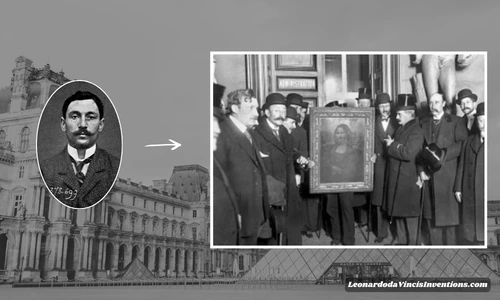
Being a great painting isn’t enough to become the most famous painting on earth. The Mona Lisa also had some seriously wild things happen to it throughout history.
The Mona Lisa Stolen: The 1911 Heist That Made Her a Celebrity
In August 1911, a man named Vincenzo Peruggia — an Italian handyman who had worked at the Louvre — hid inside the museum overnight, grabbed the painting off the wall, tucked it under his coat, and walked out.
The next day, the empty wall drew bigger crowds than the painting ever had. The theft was front-page news worldwide for two years. Even Pablo Picasso was brought in for questioning.
When Peruggia was finally caught in Florence in 1913 trying to sell it, the painting’s return to Paris in 1914 was treated like a national celebration. Before the theft, it was famous. After the theft, it was a legend. Getting stolen was basically the best thing that ever happened to its reputation.
How Big Is the Mona Lisa Painting? The Paradox of a Small Giant
Here’s something that surprises almost every visitor: the Mona Lisa is tiny. It measures about 77 cm × 53 cm — roughly the size of a large hardcover book.
After seeing it on posters, t-shirts, and coffee mugs your whole life, you’d expect it to fill an entire wall. It doesn’t. And weirdly, that smallness makes it feel even more special — like something rare and private that Leonardo made just for one person to see up close.
How Much Is the Mona Lisa Painting Worth?
The honest answer: priceless. France government legally owns it, and it will never be sold. The last time anyone put a number on it was in 1962, when it was insured for $100 million for a trip to America, which would be around $1 billion today.
No one can really put a price on it. It’s too important, too irreplaceable, and too tied to French national identity to ever be treated like a normal object for sale.
Mona Lisa in the Louvre: Visiting Leonardo’s Masterpiece Today
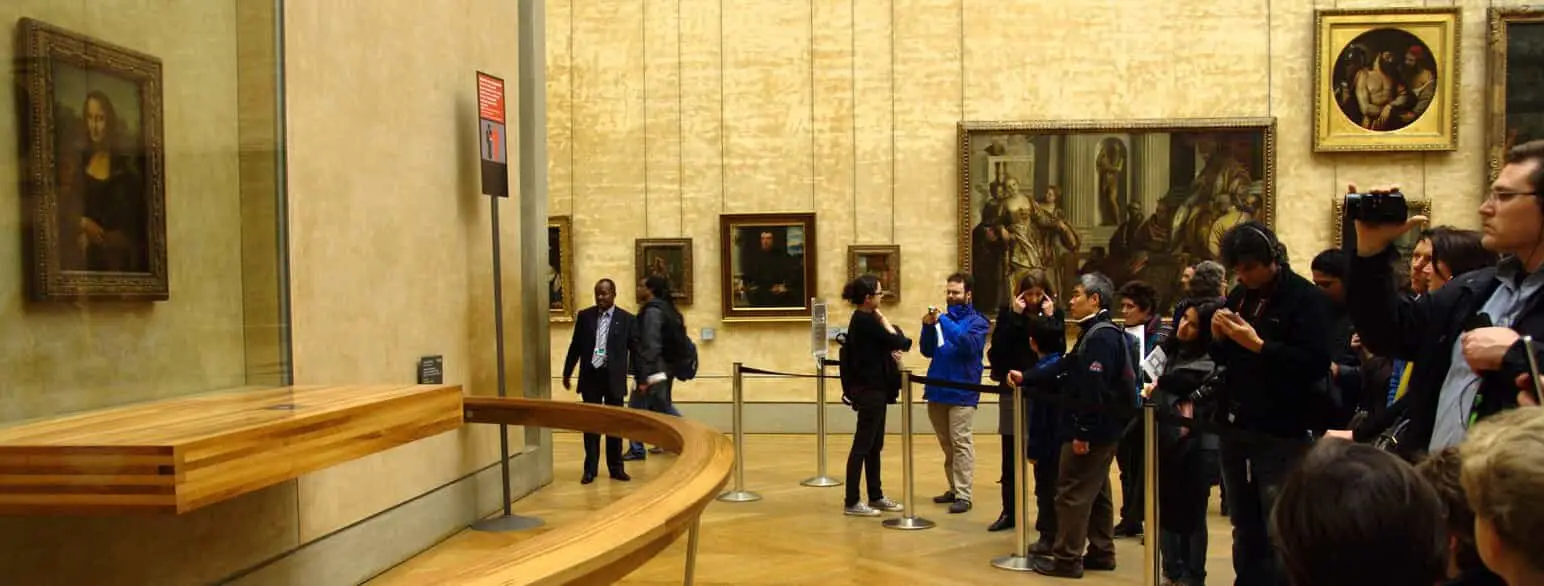
The Mona Lisa lives in Room 711 (Salle des États) in the Louvre’s Denon Wing in Paris. It hangs on its own wall behind bulletproof glass, with a velvet rope keeping the crowd back. There’s nothing else quite like standing in front of it.
The Louvre Experience: What to Expect
About 9 million people visit the Louvre every year, and a huge chunk of them are there specifically for the Mona Lisa. The room gets packed. You’ll notice the weird contrast between how small the painting actually is and the enormous circus of cameras, guards, and spotlights surrounding it.
Pro tip: arrive right when the museum opens at 9 AM, go straight to the Denon Wing, and get there before the tour groups flood in. Even five quiet minutes with the painting feels completely different from fighting through a crowd.
Also, don’t forget to turn around. The massive painting directly behind you, Wedding at Cana by Veronese, is spectacular, and almost nobody looks at it.
Nearby Leonardo Works and Related Masterpieces
Just a short walk away in the same wing, you’ll find two more Leonardo paintings: The Virgin of the Rocks and Saint John the Baptist. These rooms are far less crowded and give you a much more relaxed chance to experience Leonardo’s genius.
Some art historians actually think The Virgin of the Rocks is Leonardo’s most technically perfect work. It’s worth slowing down for.
Visitor Tips for a Meaningful Museum Experience
- Book tickets online in advance — walk-up queues can run over an hour.
- The Louvre is closed on Tuesdays.
- Try visiting on a Wednesday or Friday evening — the museum stays open until 9:45 PM, and the crowds thin out noticeably. The evening lighting in the galleries feels completely different, and you’ll have a much more relaxed experience.
Exploring Leonardo da Vinci in Paris
Leonardo wasn’t born in Paris and didn’t paint the Mona Lisa there — but Paris is where his story ends. In 1516, the French King Francis I personally invited Leonardo to come live in France. Leonardo spent his final three years at the Château du Clos Lucé in Amboise, and he likely brought the Mona Lisa with him.
If you want to follow Leonardo’s trail beyond the Louvre, the Musée des Arts et Métiers in Paris has fascinating displays connected to Renaissance science and engineering. And if you can take a day trip to the Loire Valley, the Château du Clos Lucé has a whole park dedicated to life-size models of Leonardo’s inventions.
Leonardo died in 1519 in France — reportedly in the arms of King Francis I himself. Exploring these places connects you to the full story of his life, from his beginnings in Florence to his final days in the French countryside.
Experience Leonardo’s Legacy in Person
Just showing up at the Louvre is one thing. Actually understanding what you’re looking at is another. Knowing about sfumato, who Lisa Gherardini was, and the crazy theft in 1911 changes the whole experience — it goes from “cool, I saw it” to genuinely feeling connected to something 500 years old.
Guided tours at the Louvre are worth considering. A good guide can point out technical details you’d never notice on your own, and help you make sense of the collection as a whole rather than just ticking off the famous ones.
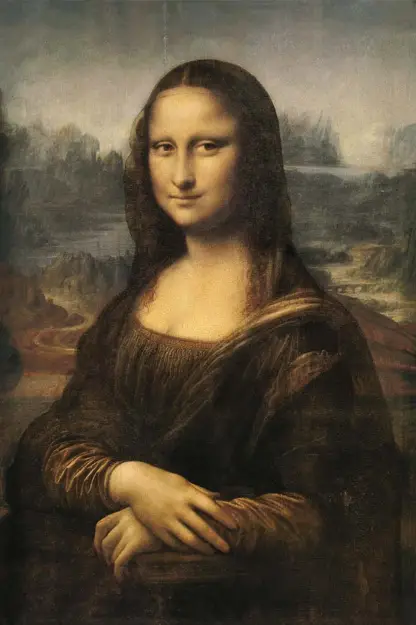
Explore Leonardo’s Legacy by City
If the Mona Lisa sparked questions about Leonardo’s methods and influences, exploring his story through place can add clarity. The Leonardo Travel Hub connects key cities—Florence, Milan, and Vinci—so you can see how his art, studies, and Renaissance world fit together across Italy.
For a bigger adventure, guided multi-day tours connecting Paris, Florence, and Milan let you follow Leonardo’s actual life journey — from where he grew up to where he worked to where he died. Many visitors choose guided museum experiences to better understand Leonardo da Vinci’s extraordinary genius.
Final Thoughts
This post is all about why the Mona Lisa is so famous — and the answer comes down to a perfect storm: one of history’s greatest artists, a technique nobody had used before, a real woman turned into a timeless mystery, a dramatic theft, and hundreds of years of the whole world paying attention.
Leonardo didn’t keep working on this painting because he had to. He kept working on it because he couldn’t stop. Every tiny adjustment to the smile, the light, the landscape — it was all part of his obsession with understanding how people see and feel.
The result is a painting that seems to change every time you look at it. It doesn’t just show you a face — it makes you think about what it means to be looked at, and what it means to really see someone. Standing in front of it at the Louvre, even in a crowd, you’re joining a conversation that’s been going on for 500 years.
FAQ: Why Is the Mona Lisa So Famous
The Mona Lisa has many fascinating facts. First, it was painted by Leonardo da Vinci around 1503–1519 on a poplar wood panel, not canvas. Second, the portrait is believed to depict Lisa del Giocondo, a Florentine woman. Third, the painting became globally famous after it was stolen from the Louvre in 1911 and recovered in 1914. Fourth, it is relatively small—about 77 × 53 cm (30 × 21 inches). Fifth, it holds the highest insurance valuation ever for a painting, estimated at about $100 million in 1962.
The Mona Lisa is widely believed to depict Lisa del Giocondo, the wife of a wealthy Florentine silk merchant, Francesco del Giocondo. The portrait was likely commissioned around 1503 in Florence, possibly to celebrate the family’s new home or the birth of their child. However, Leonardo da Vinci never delivered the painting to the family and instead kept refining it for years before bringing it with him to France later in his life.
The Mona Lisa is famous for its mysterious smile, innovative painting techniques, and lifelike realism. Leonardo used a technique called sfumato, which softly blends colors and shadows to create subtle transitions around the eyes and mouth. This technique makes the expression appear to change as viewers view the painting, contributing to its enduring intrigue and artistic importance.
The Mona Lisa is widely considered the most famous painting in the world. Art historians describe it as the most visited, most written about, and most recognized artwork ever created. Today, it attracts millions of visitors each year to the Louvre Museum in Paris and has become a global symbol of Renaissance art.
Leonardo da Vinci likely never finished the Mona Lisa because he continually refined and experimented with it over many years. Historical accounts suggest he worked on it intermittently and may have continued adjusting details until around 1516–1517. Some historians also believe health problems later in life, including possible paralysis in his right hand, prevented him from completing the work.
The Mona Lisa is owned by the French government and is part of France’s national art collection. After Leonardo da Vinci’s death in 1519, the painting was acquired by King Francis I of France. Today, it is permanently displayed at the Louvre Museum in Paris, where it remains one of the most visited artworks in the world.
Related Post You May Like


Disclosure: This page may contain affiliate links. If you choose an experience through them, it helps support the site at no extra cost to you.
 Leonardo Bianchi is the founder of Leonardo da Vinci Inventions & Experiences, a travel and research guide exploring where to experience Leonardo’s art, engineering, and legacy across Italy and Paris.